Overview
The best things to take home from Colombia are the ones made in the places they come from: coffee from the highlands, woven bags from La Guajira and the Sierra Nevada, a straw hat from the northern savanna, black clay pots from the Andes, hammocks and chocolate from the coast. Most are affordable, light enough for a suitcase and legal to carry into the United States. The items that cause trouble are the ones that tempt first-time visitors: emeralds from a street seller, an "antique" pre-Columbian figure and anything made of feathers, shell or skin.
This page covers what to buy and where, how bargaining works, taxes and receipts, what US Customs and Border Protection (CBP) allows you to bring home, Colombia's limits on exporting cultural objects, the airport exit, and how to ship things. Where a Colombian rule is unconfirmed, we name the official body to ask. Rules change, so check cbp.gov and the Colombian customs authority (DIAN) before you travel.
Price tags in Colombia use a "$" sign for pesos; see the money guide for how prices are written.
Souvenirs at a glance
This table lists the main purchases, where to find them and what to check at US customs. It is a starting point, not legal advice.
| Souvenir | Where to buy | What to check | At US customs |
|---|---|---|---|
| Coffee (roasted beans or ground) | Coffee-region farms, roasters, supermarkets in any city | Roast date, sealed bag, origin | Generally admissible; declare it |
| Emeralds | Certified jewelers and established dealers with a written certificate | Invoice, stone certificate, return policy | Declare gems and jewelry; keep receipts |
| Mochila bags (mochilas) | Craft shops, markets, La Guajira and Sierra Nevada communities | Hand-woven, not machine-made; fair price | No special issue for plain fiber bags; declare |
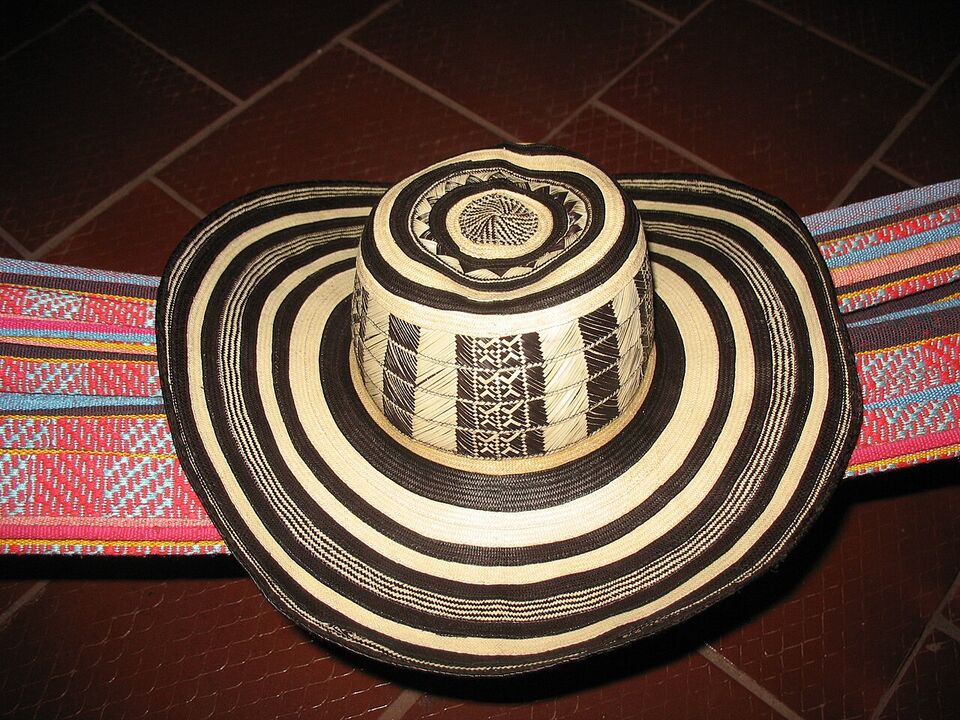
| Sombrero vueltiao | Craft shops in the Caribbean region and in cities | Cane quality, pattern, stitching; flat packing | Natural fiber hats are usually fine; declare |
| Ceramics | Craft villages and shops | Packing, weight, lead-free glaze claims | Declare; no special rule for ordinary pottery |
| Hammocks | Caribbean markets, craft shops | Cotton or nylon, weight, size | Declare; wooden spreader bars are fine unless an exotic wood |
| Chocolate and sweets | Supermarkets, chocolate shops | Sealed, labeled | Many packaged foods are admissible; no meat products |
| Aguardiente and rum | Supermarkets, airport shops | Sealed bottle, receipt | Alcohol has its own limits; excess is taxed |
| Musical instruments | Music shops and luthiers | Wood species, documentation | Check ivory, skins and exotic woods |
| Anything made from wildlife (feathers, shell, skin, tortoiseshell, ivory) | Do not buy | Illegal or restricted in both countries | Often prohibited or needs permits |
| Pre-Columbian or archaeological objects | Do not buy | Protected heritage | Risk of seizure and prosecution |
Emeralds
Colombia is the world's largest producer of emeralds, according to reference sources. That reputation also attracts scams, so buy only from a reputable, established jeweler or dealer with a physical shop, a street address and a track record. Ask for three things in writing: an invoice that names the stone and its weight, a certificate from an independent gemological laboratory for any stone of value, and a clear return or exchange policy.
Do not buy emeralds, gold or "mining-town" stones from a street seller, a taxi driver's cousin or a stranger who approaches you in a plaza or on a beach. Fakes, glass and treated stones are common, and the price of a real stone depends on quality in ways that a visitor cannot judge on the spot. If the seller says the price is only good today, walk away. Many jewelers in Cartagena and Bogotá sell to visitors; ask your hotel for the names it trusts, and compare two or three before you decide. We have not named a store because we could not confirm which are open and reputable in 2026.
Watch out
Never carry a large amount of cash to buy gems, and do not agree to buy anything at a private home, a hotel room or a location suggested by a stranger. Pay by card at the shop, and keep the invoice and certificate. At US customs, declare gemstones and jewelry and keep your receipts.
Coffee, chocolate and aguardiente
Coffee is the easiest and best-loved souvenir. Roasted beans or ground coffee in a sealed bag are the safest choice, and coffee-region farms (see the coffee region and the coffee guide) and specialty roasters sell small-farm lots. Buy a small bag with a roast date, and avoid very large amounts if you are close to a customs limit. CBP lists coffee and tea among items that are generally admissible, but you must declare all food and plant items. Green (unroasted) beans can raise extra questions; choose roasted.
Chocolate is made in several regions. Buy bars or tablets in sealed, labeled packs. CBP says many prepared foods are admissible, but almost anything containing meat products (bouillon cubes, soup mixes) is not, and rice is discouraged. Skip fresh fruit: CBP says fresh fruit and vegetables depend on type and origin and advises against bringing them, and the civil penalty for failing to declare agricultural items starts at $300 for a first offense.
Aguardiente is an anise-flavored sugarcane liquor, the most popular spirit in the Andean regions (rum is more popular on the Caribbean coast). A sealed bottle is a fun gift. Alcohol has its own rules at US customs: CBP's example is that if you bring two liters, one is duty-free and the rest is taxed at a low rate plus Internal Revenue tax, even if you have not used up your general exemption, and the amount that is duty-free depends on age and state law. Check the current limit on cbp.gov, and wrap bottles well in your checked bag.
Mochilas, hats, ceramics and hammocks
Mochila bags
Colorful woven shoulder bags made by the Wayuu people of La Guajira (and, in a different style, by Indigenous communities in the Sierra Nevada). A genuine handmade bag takes days or weeks to make, so very cheap ones are often machine-made or imitations. Check the stitching, the weight of the weave and the pattern, and buy from a craft shop, a cooperative or a trusted market stall. Ask whether the money goes to the weaver.
Sombrero vueltiao
The black-and-white woven hat associated with the Zenú people of the Caribbean region and considered a national symbol. Quality varies widely: a fine hat has narrow, even bands and costs far more than a tourist-grade one. Ask to see how it is made, buy from a reputable shop, and pack it flat in a box rather than crushed in a suitcase.
Ceramics
Black clay pots from the Tolima area (La Chamba) and the pottery villages of Boyacá, such as Ráquira, are popular. They are heavy, so weigh the cost of baggage fees against the price. Ask the seller to wrap pieces, and do not use unlined pots for food unless the seller confirms they are food-safe.
Hammocks
Hammocks are sold in coastal towns and in craft shops. Cotton is comfortable; nylon dries faster. Check the size (single or double), the cord and the weight limit. A hammock packs small and weighs little, so it is one of the easiest large gifts.
Textiles and leather
The ruana (a woolen poncho-style wrap) is a Colombian classic, practical in the Andes. For leather, ask what animal it comes from. Leather from farm animals is generally fine; anything from reptiles, wild cats or other wildlife is not.
Where to shop in each main city
Cartagena
The walled city has many craft shops, jewelers and boutiques, and Las Bóvedas (the vaults built into the city walls) is the traditional place for craft stalls, though we could not confirm what is open now. Prices start higher in the walled city than in Getsemaní or in other parts of town, and street sellers quote tourist prices. Be prepared to compare, and avoid buying gems on the street. See our Cartagena guide.
Bogotá
Bogotá has malls such as Unicentro (a mall dating to the 1970s) and Santa Ana in the north, the Sunday flea market in Usaquén (Mercado de las Pulgas), which sells handicrafts and snacks, and craft shops in La Candelaria and the north. Bogotá is at about 8,660 ft (2,640 m), so give yourself time; shopping all day at altitude is tiring. Museum shops are a good place to ask for clearly labeled replicas. See Bogotá.
Medellín
Medellín has many malls, especially around El Poblado, and craft shops sell handicrafts. We could not confirm which markets suit visitors now, so ask your hotel for current suggestions. See Medellín.
Cali, Barranquilla, Santa Marta and the coffee region
Cali and Barranquilla have malls and craft shops. In Santa Marta, craft shops sell mochilas; ask who made the bag and where. In Salento, in the coffee region, the main street sells locally made handicrafts, and nearby farms sell coffee. See Cali and the coffee region guide.
How to bargain at markets
- Know where bargaining is normal. In open-air markets and with street sellers, a counteroffer is expected. In shops with fixed prices, malls and certified jewelers, it is not.
- Start friendly. Greet the seller (buenos días), ask the price, and look at several items.
- Counter at about two-thirds. Aim to settle somewhere between the first price and your offer, then stop. If the price is too high, politely walk away; you will often be called back.
- Keep small bills. Carry smaller notes so that you can pay the exact amount. Change is often scarce for large notes.
- Do not haggle over a few cents. The difference is small to you and may matter to the seller. Pay a fair price for handmade work.
- Be patient and polite. Never touch or move goods without asking.
Save money
The best price is usually away from the main plaza. Compare two or three sellers, buy several items from one stall for a discount, and carry cash for markets and cards for shops. Avoid exchanging money on the street; see the money guide.
Sales tax, receipts and the tourist refund question
Colombia's sales tax is the IVA (value-added tax), 19% for most goods. Ask in a shop whether the tag price includes it. Ask for a receipt (factura) for every purchase of value; you will need it for warranty claims, for customs and for any refund process.
Whether a foreign tourist can get a VAT refund on goods is something we could not confirm. For hotels, foreign visitors have often not paid VAT on stays, but the rules were under review in 2026. Ask your hotel before you book, bring your passport and your entry stamp, and never count on a refund in your budget. If a store offers one, ask for the exact terms in writing, since the process may need the goods, receipt and passport to be presented at the airport. See the budget guide.
Shop hours vary. Malls are normally open daily, small shops often close on Sundays and public holidays, and markets start early. We could not confirm hours for specific places, so ask locally. On holidays, shops can close; see the festivals and holidays guide.
What you may bring home: US customs rules
Coming home, you are a returning US resident. CBP's key rules for visitors from Colombia:
- The exemption: a returning resident can bring back $800 of goods duty-free, once every 31 days, after at least 48 hours abroad. Anything above that is dutiable.
- Declare everything. Anything you acquired abroad, including gifts, must be declared.
- Tobacco: within the exemption, up to 200 cigarettes and 100 cigars; more is taxed.
- Alcohol: beyond the duty-free allowance, it is dutiable. Check cbp.gov.
- Food: coffee, tea, honey, packaged spices, oils and vinegar are generally admissible; meat products are not; rice is discouraged; fresh fruit and vegetables depend on type and origin, so leave them.
- Plants and seeds: restricted. Do not bring live plants, soil or seeds without a permit from the US Department of Agriculture's APHIS; declare any plant product.
- Wildlife products: endangered species and products made from them generally may not be imported. CBP's examples include ivory, tortoiseshell, skins, feathers and bone. Coral and some shells are also commonly regulated, so do not buy them.
- Gemstones and cash: declare gemstones and jewelry; large sums of cash must be reported at the border (check CBP's money page for the current rule).
The penalty for failing to declare agricultural items starts at $300 for a first offense, according to CBP. When in doubt, declare. Customs officers are far friendlier to a traveler who declared and was wrong than to one who did not and was caught.
Colombian export limits on cultural and archaeological items
Colombia protects its archaeological and cultural heritage, including pre-Columbian gold, ceramics and stone figures from cultures such as the Muisca, the Tairona and the people of San Agustín. Real pieces cannot normally be bought, sold or exported without authorization, and a visitor who is found with one can be prosecuted. We could not read the legal text, so we cannot give details; for the current rules, ask the Ministry of Culture or the Colombian Institute of Anthropology and History (ICANH), and ask the airline or DIAN about exporting any old object.
The simple rule: do not buy anything old that is offered as an antique, a "guaca" (a looted grave object) or an archaeological piece. Buy replicas that are labeled as replicas, with a receipt, from museum shops and craft stores. Replicas are an excellent souvenir; see the Bogotá museums for good examples.
The airport exit, departure tax and shipping
For the airport, we advise arriving early for an international flight and checking your airline's recommended time. We could not confirm whether any departure tax applies. El Dorado airport's site lists an airport-fee page with no figure, so check whether your ticket includes the airport fees, and ask your airline. Keep a small amount of pesos for the exit if the airline says you may need it.
Pack fragile and valuable items in carry-on bags, and keep receipts accessible. Liquids over the usual security limits (for example, a bottle of aguardiente) go in checked bags. At US arrival, you will fill out your customs declaration, and declare coffee, chocolate and anything else you bought.
Shipping: shops that sell large items (furniture, large ceramics, hammocks) often offer shipping, but we could not confirm prices or rules for mailing to the United States. If you ship, use a reputable courier, get a tracking number and insurance, and expect to pay customs duty if the goods exceed your allowance. Do not ship items made from wildlife or plants. Mailed items are still subject to CBP rules. For flight details see flights.
Common mistakes
Watch out
Buying gold or emeralds from street sellers, and bringing home an antique. Both can cost you money, and the second can cost you your souvenir, a fine or worse. Buy from established shops, get written receipts and declare what you buy.
- Paying the first price for a handmade bag or hat without comparing.
- Assuming that a "tourist VAT refund" exists without asking the store for the exact terms.
- Packing a sombrero or a ceramic pot without protection.
- Leaving your declaration blank because you think a few small items do not count.
- Buying bags, jewelry or ornaments made of feathers, shell, tortoiseshell or skin.
- Carrying a large amount of cash to the market.
Plan your shopping with the planning guide, and see Salsa and Music for buying an instrument.
Add it to a route in the trip builder, or ask us to plan the hotels, trains and guides for you.