Overview
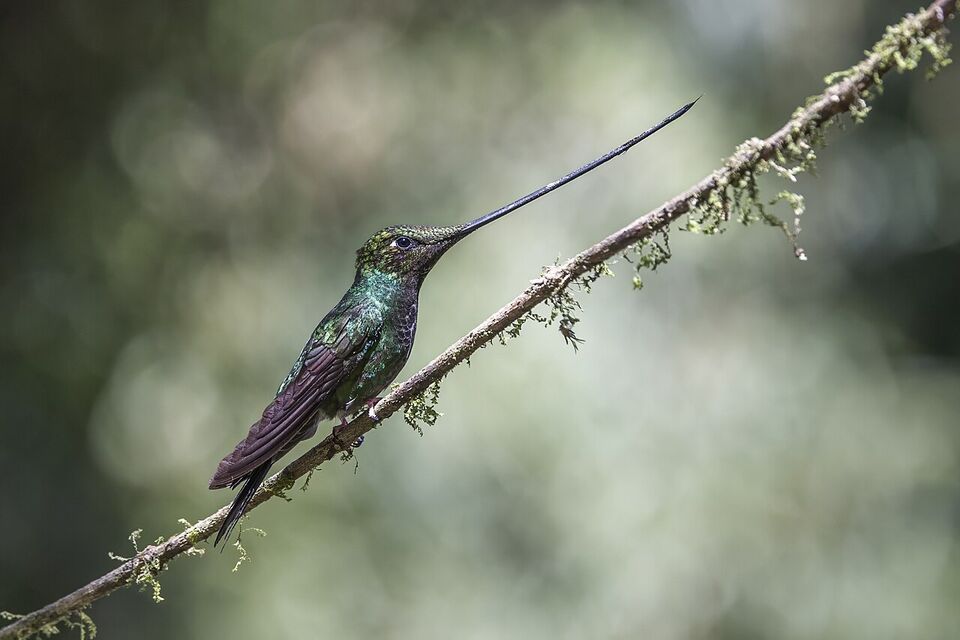
Colombia is one of the best places in the world to look at birds, and you do not need to be an expert to enjoy it. Hummingbirds visit feeders at lodges and cafés, colorful tanagers appear on forest edges, and parrots and macaws are seen in the Amazon and on the Caribbean coast. The country's range of altitudes, from sea level to snow, explains much of the variety: each climate zone has its own birds.
The common claim is that Colombia has more bird species than any other country. We attribute it carefully: Wikipedia's Colombia entry says the country ranks first in bird species and lists more than 1,900, and says that is more than Europe and North America combined. Counts differ by checklist authority and change as scientists split or add species, so treat the figure as "about 1,900 or more" and use the Cornell Lab of Ornithology's eBird (ebird.org) for current regional lists, recent sightings and bar charts that show when each bird is reported.
This page covers the main hotspots, how to hire a local bird guide, what lodges and reserves offer, how to carry your equipment safely, hummingbird feeders, packing and the best months. It pairs well with our hiking and nature page and the interest hub.
Insider tip
Download the eBird and Merlin Bird ID apps and the offline Colombia bird pack before you go. You can compare your sightings with what others have reported at the same place, and you can identify songs by recording them.
Regions compared
The table shows the main regions, the kinds of birds they are known for and the season notes we could support. Species lists change, so confirm with eBird or a local guide.
| Region | Typical birds | Season notes | Access |
|---|---|---|---|
| Coffee region and Andean cloud forest (Salento, Manizales, Pereira) | Hummingbirds, tanagers, toucans, motmots, parrots; high forest species | Driest roughly June to August; rain falls often at any time | Easy: road access, many day trips |
| Santa Marta mountains and Minca | Local specialties such as the Santa Marta warbler and Santa Marta parakeet; hummingbirds | Caribbean drier months roughly December to April | Moderate: mountain roads, guides advised |
| Tayrona and the Caribbean coast | Military macaw, antbirds, manakins, raptors | Hot and drier December to April; park closures apply | Moderate: park entry rules and insurance |
| Amazon (Leticia and Amacayacu) | Parrots, macaws, river birds, forest birds | Least rain roughly June to September; heavy rain at other times | Moderate to hard: flight plus river transport |
| Los Nevados and high Andes | High-altitude species, Andean condor, páramo birds | Weather changes fast; cold and wet | Hard: altitude and weather |
| Pacific coast (Nuquí, Bahía Solano) | Rainforest and coastal species, seabirds | Wet most of the year | Hard: small plane or boat |
| Llanos (eastern plains) | Wetland and savanna birds; large waterbirds | Varies with flood cycle; ask a guide | Hard: long road or flight; limited lodging |
The coffee region and the Andean cloud forest
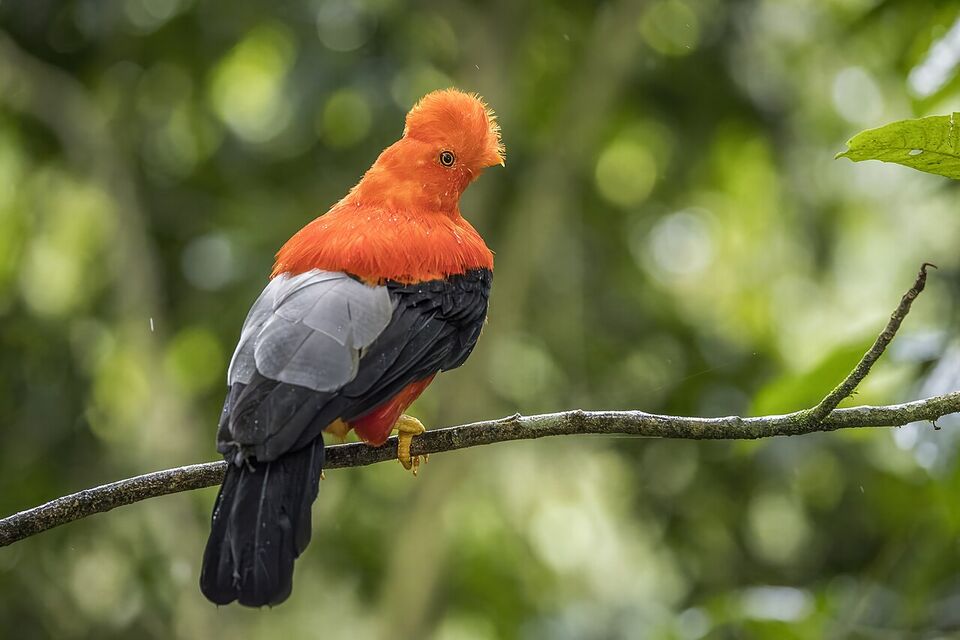
For a first trip, the coffee region (Eje Cafetero) is the easiest place to start. Roads are good, towns have guesthouses, and elevation gives you cool forest within a short drive. The Cocora Valley near Salento, at roughly 5,900-7,900 ft (1,800-2,400 m), is known for its wax palms and for a wildlife list that includes the Andean condor, the black-billed mountain-toucan, the Andean guan and the endangered yellow-eared parrot, along with many hummingbirds. Salento's own page notes the barranquero (the Andean motmot) as a commonly seen bird.
Wikipedia also lists the Acaime Natural Reserve, reached on foot or horseback along a trail from Cocora, with a visitor center and restaurant and six to eight hummingbird species. See our coffee region guide for the towns and the road links. Manizales, in the northern part of the coffee axis, sits near the Nevado del Ruiz, and the higher forests and páramo above it have their own species. Cool, wet cloud forest rewards patience: go early, listen first and expect mist.
The driest months in the coffee region are roughly June to August, according to the weather records for Armenia, but rain can fall at any time, and the forest is better in damp weather than you might expect because birds are active after rain. Plan flexible days.
Santa Marta mountains and Minca
The Sierra Nevada de Santa Marta rises to about 18,700 ft (5,700 m) just 26 miles (42 km) from the coast, and it is isolated from the Andes, so some of its birds live nowhere else. Wikipedia's entry for the Sierra Nevada mentions about 440 bird species in the national park, including the black-fronted wood-quail, king vulture, Andean condor, Santa Marta warbler and Santa Marta parakeet, and says the park has several endemic hummingbirds. Birders often base themselves in or near Minca, a village in the hills above Santa Marta, and take guided early-morning trips to higher forest.
Access matters here. Much of the Sierra Nevada is Indigenous territory, and some areas are closed to visitors, so use a guide or lodge that has permission and follow their instructions. See the Santa Marta and Tayrona guide for the base.
Tayrona National Park, at lower elevation, is listed with about 300 bird species, including the military macaw, black-backed antshrike, white-bellied antbird and lance-tailed manakin. It is a national park with insurance requirements, a daily cap, fees and ceremonial closures, so check its status before you go. The park's rules also restrict music devices, which helps with listening.
The Amazon at Leticia
Leticia sits on the Amazon River beside Brazil's Tabatinga and across from Peru's Santa Rosa, and it is reached by plane from Bogotá or by river. The town is hot and humid: Leticia's average temperature is about 79°F (26°C), and rain falls on most days of the year, with the least in roughly June to September. Birding here is by boat and on short forest walks with a local guide. You may see parrots and macaws at dawn, river birds and, with luck, forest species.
Amacayacu National Park is the main protected area nearby. A reported 2026 fee was about COP 27,500 (about $8), category not stated, so check with the park or your lodge. The CDC recommends yellow fever vaccination for most of Colombia and the Amazon is not on the exempt list, so see your doctor early. Our Amazon page and the health page cover this.
Los Nevados, the Pacific coast and the Llanos
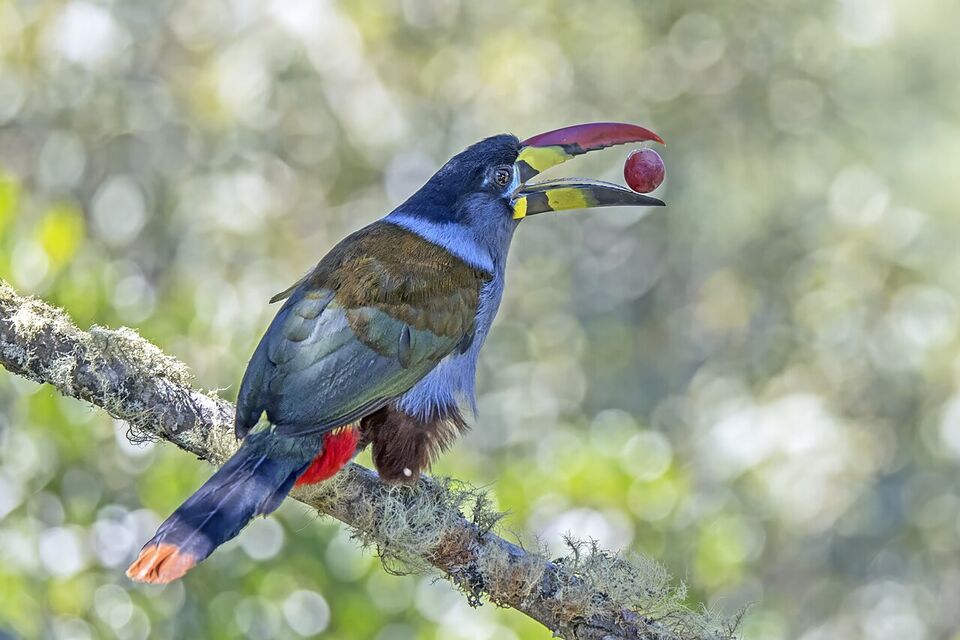
Los Nevados National Park is high, cold and often cloudy, and it suits experienced hikers with a guide. Birders go for páramo and high-Andean species and for the chance of an Andean condor. Do not push your pace at altitude, and see our hiking page for altitude advice.
The Pacific coast, around Nuquí and Bahía Solano, is one of the wettest areas of the country, with rainforest running to the beach. It offers lodge-based birding by boat and on trails, plus the whale season for non-birders in the group. Transport is by small plane or boat, and rain disrupts plans, so build in extra days. Malpelo Island, a remote Pacific rock, is recognized by BirdLife International as an Important Bird Area because of its large Nazca booby colony, but it is a diving destination reached by liveaboard, not a casual birding stop; see the diving page.
The Llanos, the plains of eastern Colombia, are known for wetland and savanna birds, but plan seasons, lodges and access with a local birding guide. If the Llanos interest you, ask a specialist operator what is practical for your dates. The Caño Cristales area has about 420 bird species on its tableland according to Wikipedia, but it is a visit controlled by park rules; see the hiking page.
How to hire a local bird guide
A local guide will almost always add to your list. They know the spots, the habits and the calls, and they spot birds that you would walk past. A good guide also handles permissions on private land and in Indigenous territory.
- Look for local knowledge. The best guides live in the area and know the seasonal changes in each spot.
- Ask for references and a trip plan. A good guide explains the day, the target birds, the walking distance and the pace.
- Ask about group size. Small groups, often one to four people, see more and disturb less.
- Ask what is included. Transport, entry fees, meals, a scope, recordings and a checklist are common extras. Prices vary by region, so we give none.
- Check registration. Ask whether the guide or agency is registered for tourism, and whether they carry first-aid training.
- Look for ethical practice. A good guide avoids overusing playback, keeps a respectful distance from nests and does not bait birds.
- Book ahead. Guides at popular reserves fill up in high season and on long weekends.
Most guides speak some English, and the best birding guides usually do, but Spanish helps. Our Spanish page has useful phrases.
Lodges and reserves
Lodges and private reserves provide feeders, trails, early breakfasts and guides on site, and are the best way to see forest birds without hard logistics. We are not naming individual lodges in this guide, because we could not confirm that specific lodges are open and what their current rules are. Instead, here is how to choose.
- Check the lodge's own website for current rates, a recent trip report or eBird hotspot page, and a direct email contact.
- Ask whether the reserve has resident guides, a bird list and feeders, and what hours it opens. Early arrival is important.
- Check access: a 4x4 road, a boat ride and a short hike can all be part of the journey.
- Look for the lodge on eBird. A hotspot with many recent checklists is likely active.
- Ask about cancellation, especially for flights to the Pacific or Amazon, where weather can interrupt plans.
Prices are usually quoted in pesos or US dollars, and some lodges only take cash. Ask which currency is quoted before you book. Our where to stay page explains hotel tiers and booking.
Hummingbird feeders
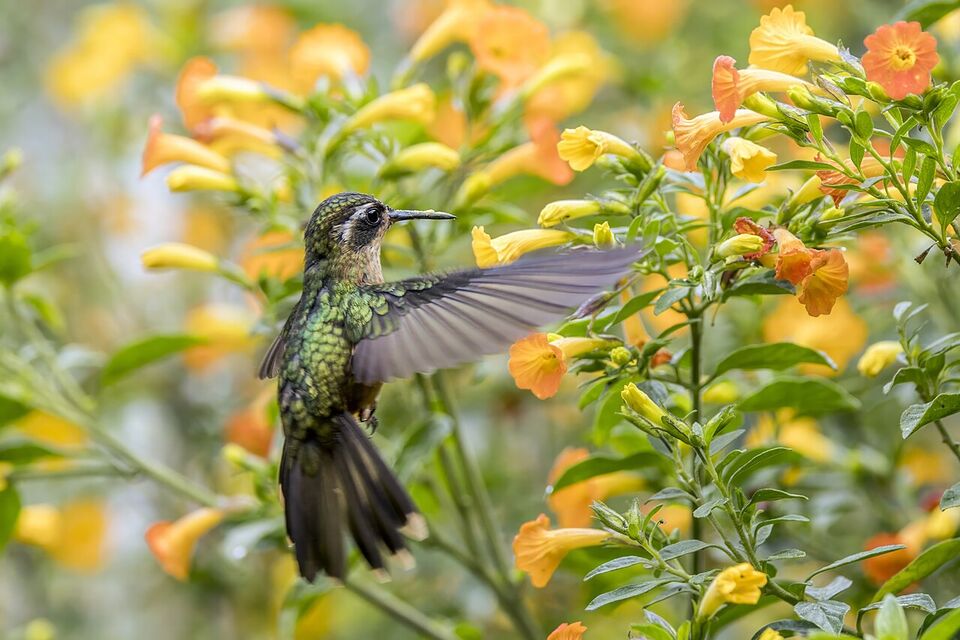
Feeders are the easiest way to see hummingbirds at close range. Many lodges and cafés in the coffee region and the Andes keep them; ask your lodge or guide where to watch. Watching from a seat on a terrace in the early morning, you can see several species in a few minutes, often with different sizes, colors and tail shapes.
- Go early and late. Activity is highest soon after dawn and again late in the afternoon.
- Bring a camera with a fast shutter speed or use a phone in burst mode. Hummingbirds are very quick.
- Stay still and move slowly. Sit quietly and let the birds get used to you.
- Do not touch or handle the feeders. Hosts maintain them, and a sticky nectar mix can attract insects.
- If you are photographing, do not use flash.
- Do not set up your own feeder in the field. Ask the reserve.
Binoculars, camera and safe carrying
Binoculars and cameras are expensive, and they attract attention in towns. Use common sense, but do not let worry spoil your trip.
- Use a binocular harness rather than a neck strap. It spreads the weight and keeps the binoculars close to your chest.
- Keep gear in a daypack when you walk through a town or travel by bus, and take it out only at the reserve or the trailhead.
- Never leave gear in a parked car, a taxi or on a table while you eat.
- Use a rain cover and a dry bag. Humidity and rain can damage electronics.
- Carry a lens cloth and silica gel packets, and let gear dry before you store it.
- Insure valuable equipment. Our safety page covers the broader picture on street safety, including the US advisory (Level 3: Reconsider Travel, as of November 2026).
Watch out
A birding trip often starts before dawn and ends with a long ride home. Do not walk in a town at night with binoculars and a camera on view, and use a registered taxi or the transport your guide or lodge arranges. Do not hike alone on remote trails; go with a guide.
Best months and what to pack
There is no single best month, but a few simple rules help. Pick drier months for the region you choose, since trails are easier and flights are more reliable. Those are roughly December to April on the Caribbean coast, June to August in the coffee region and June to September in the Amazon. Many migratory birds from North America spend the northern winter in Colombia, and eBird's bar charts show when each species is reported at a location, so use them to plan. The weather agency IDEAM said on November 12, 2026, that a strong El Niño would continue into early 2027, with fewer rains and higher temperatures expected, so conditions may be drier than the averages.
Holiday weeks fill lodges and transport: Monday, November 16, December 8 and December 25 are national holidays. See when to go for the seasons overall, and see the hiking page for guidance on altitude and weather.
- Binoculars (8x42 is a common all-round choice) with a harness, and a spare lens cloth
- A field guide, or the eBird and Merlin apps with offline packs
- A light rain jacket and a poncho, quick-dry clothes in muted colors and sturdy shoes
- A hat, sunscreen and insect repellent
- A headlamp for dawn starts and a water bottle
- A small notebook or app for your checklist
- Pesos in small bills for guides, entrance fees and snacks
Our packing page has a full list.
A day in the field
A typical birding day starts early, often before first light. Your guide or lodge will suggest a time, and it is worth following. Birds are most active in the first hours after dawn, and many forest sites are quiet by late morning. Expect a light breakfast, a walk or a boat ride, a long break at midday and a second shorter outing in the late afternoon.
- Listen first. In dense forest, most birds are heard before they are seen. Ask the guide to name the calls, and try to learn a few.
- Move slowly and quietly. Stop often, scan the edges and look at the middle layers of the forest as well as the canopy.
- Keep records. Log your sightings on eBird, which turns your trip into data other birders can use, and keep a short note of each bird's habitat.
- Respect the birds. Keep a distance from nests, limit playback of recorded calls (many reserves ask you not to use it) and never chase a bird off a nest or feeder.
- Respect the place. Stay on the trail, carry out your trash and follow the rules of the reserve or community land.
Plan rest into the day. Altitude, heat and early starts are tiring, and a short nap between outings makes the second walk better. If a bird does not appear, accept it: most birding trips are about the long list of what you see, not the one species you miss.
Save money
Share a guide with one or two other birders to split the cost, and ask lodges whether a dawn trip and a full day cost the same. Compare what is included, such as entry fees, transport and meals, before you compare prices. Many lodges quote in pesos or US dollars, so check which one.
Mistakes to avoid
- Expecting to see everything in one day. Even in the best spots, a day gives you a fraction of the possible species. Build in several mornings per region, and accept misses.
- Picking too many regions. Each move costs time and money. Choose two regions for a one- or two-week trip.
- Skipping the local guide. You will find more birds and learn more with one.
- Sleeping late. Birds are most active in the first hours of light.
- Ignoring altitude. Bogotá is at about 8,660 ft (2,640 m), and many birding sites are higher. Rest and drink water.
- Leaving gear unattended. Keep binoculars and cameras with you.
- Booking a park without checking closures. Tayrona, Caño Cristales and other protected areas close for periods, so check first.
Add it to a route in the trip builder, or ask us to plan the hotels, trains and guides for you.