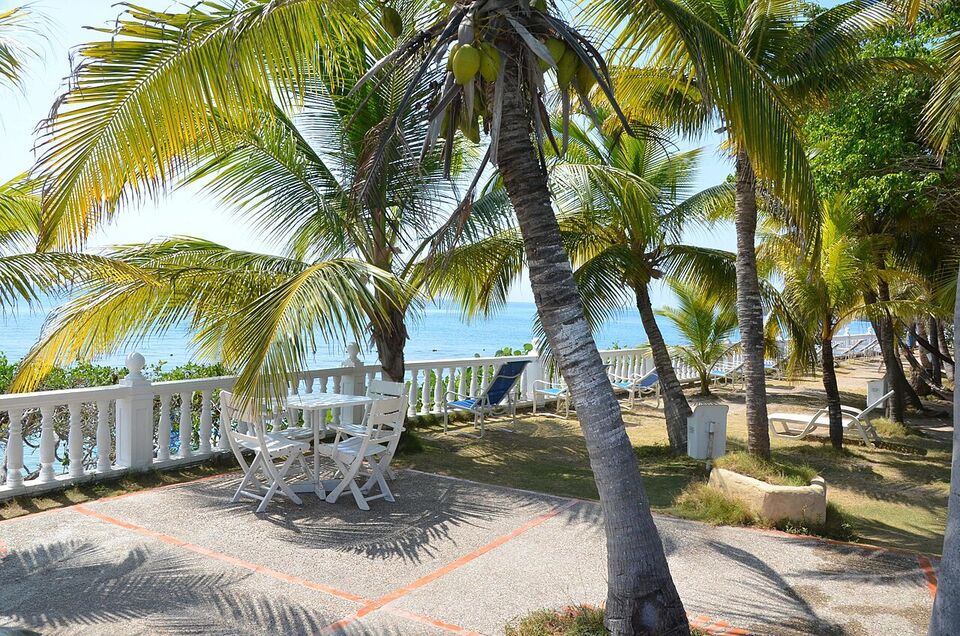
What the Rosario Islands and Barú are
The Rosario Islands (Islas del Rosario) are an archipelago in the Caribbean about 12 miles (20 km) from Cartagena. Most of them are an hour or less from the city docks by boat. They sit inside Corales del Rosario y San Bernardo National Natural Park, which was created in 1988 to protect coral reefs, seagrass beds and mangroves. Visitors come for clear water, snorkeling and a beach day that Cartagena's own city beaches do not offer.
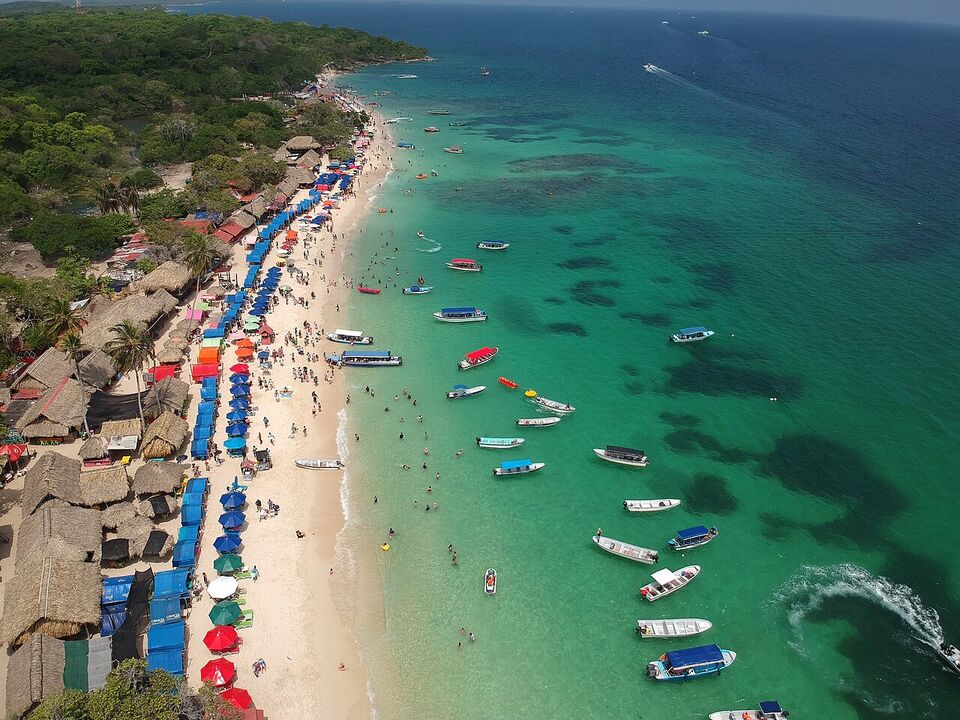
Barú lies south of Cartagena, across the Canal del Dique. Its best-known beach, Playa Blanca, can be reached by road and by boat, and it is among the busiest beaches near the city. Many "Rosario Islands" tours include a stop on Barú or go to beach clubs near it, so it helps to know the names. This page explains the options and how to choose.
The islands are a good day out for most people staying in Cartagena, and we describe the city itself in our Cartagena guide and its sights in Cartagena Things to Do.
How to get there from Cartagena
There are three common ways to reach the islands and Barú. All of them start in or near Cartagena, and the prices change with the season, so ask for the total price in writing.
- Boat from the city docks: tours commonly leave from the Muelle de La Bodeguita, next to the walled city, in the morning, and return in mid-afternoon. A tour boat ride to the islands is about an hour or less. Confirm the departure point and time when you book, because some operators use a different pier.
- Shared tour boat: the cheapest option. You share a fast boat (a lancha) with other passengers, usually with a stop at an aquarium, a snorkeling spot and a beach club for lunch.
- Private boat or charter: you choose the time and stops, and the boat is for your group. It costs more per boat, but it can be cheaper per person for a group of six or more and lets you go early to beat the crowds.
- The Barú road: a road runs from Cartagena across the Canal del Dique to Barú, and some tours and taxis use it to reach Playa Blanca by land. We could not confirm journey times or current road conditions; traffic and works can add a lot, so ask your operator and allow a long day.
If you book through your hotel, ask whose boat and which license you are using. Our getting around guide has general advice on transport in Colombia.
Day trip or overnight stay
A day trip is the right choice for most first-time visitors. You leave after breakfast, return by mid-afternoon, and sleep in your hotel in Cartagena. The downside is that you share the beaches with everyone else's day trip between about 11 a.m. and 3 p.m., which is the busiest part of the day.
An overnight stay (in a small hotel or lodge on one of the islands) gives you the beaches in the early morning and the evening, when the day boats are gone, and a night sky without city lights. It costs more and the facilities are simpler, so book ahead, confirm the transfer boat in both directions, and ask about electricity, air conditioning, water and food. We could not confirm room prices or availability, so check with the lodge. Some lodges are on islands within the national park, and a few have only basic services; read recent guest reports.
Insider tip
If you can stay only one night, take the boat out in the afternoon after the day crowds start leaving, or go early in the morning on a private boat. Either way you swim and snorkel when the water is calmest and the beaches are least crowded.
Comparing the day-trip options
| Option | Who it suits | Crowds | What to ask |
|---|---|---|---|
| Shared boat tour with lunch | Solo travelers, couples, first-timers on a budget | High at beach clubs and aquarium | What is included (lunch, snorkel gear, park fee); group size; return time |
| Private boat or charter | Groups, families, anyone who wants to choose stops | Lower, because you can leave early | Boat capacity, life jackets, price per boat, fuel, who pays the park fee |
| Beach-club package (with transfer) | Travelers who want a sun lounger and a pool | Medium to high | Minimum spend, food and drink prices, how long the transfer takes |
| Barú and Playa Blanca by road or boat | People who want a long, flat beach and do not mind crowds | Very high on weekends and holidays | Vendor rules, chair prices, what the tour includes |
| Overnight on an island | Travelers who want quiet beaches and a slow pace | Low in the morning and evening | Room prices, transfers both ways, power, water, food, weather policy |
We have not confirmed prices for any of these, and they change with season and operator. Ask for the total in pesos, and ask whether it includes the park entrance and any dock fee. If a price seems too low, it probably excludes something.
Beaches, the aquarium and the islands
The islands and beaches differ more than the tour brochures suggest.
Playa Blanca (Barú)
A long white beach with shallow water. It is the best known and the busiest, with rows of chairs, music and many sellers. It is fun for people who like a lively scene and a difficult place for those who want quiet.
Isla Rosario and the aquarium
Isla Rosario has an aquarium and an open-sea oceanarium. Tours often stop here for a show or a snorkel; check the price and whether the animals' conditions seem acceptable to you before you pay.
Isla Grande
An island with beaches and small hotels. It is a common base for an overnight stay. Pablo Escobar's former villa on the island is a half-demolished ruin, overgrown by vegetation.
Beach clubs on small islands
Many day tours end at a private beach club with a restaurant and loungers. They are comfortable but crowded in the middle of the day, and drinks are expensive.
Bays and snorkel stops
Boats usually stop at reef patches for a snorkel. Reef health varies by site and season; the best reef is on the windward side of the islands, where waves help coral grow.
The crowded beaches are those closest to Cartagena that are named in every tour: Playa Blanca on Barú, the beach clubs on the main islands and the lagoon-style bays popular with party boats. The quieter options are the farther or less-publicized islands, the early morning hours and the evenings on an overnight stay. Ask the operator which beach you will actually stop at, and for how long.
Park entrance fee, insurance and closures
The islands are inside a national natural park, which charges an entrance fee. A report from January 2026 gave the 2026 fees as about COP 13,500 (about $4) for most of the park and about COP 11,000 (about $3) for the San Bernardo sector. The report does not say which visitor category those figures apply to, and the fee for foreigners can be higher, so treat the numbers as a guide only and check with the operator and the national park authority (Parques Nacionales Naturales) before you pay.
Two other points are unconfirmed. In January 2026, Colombian news reported that Cartagena had resumed checks requiring tourists to hold insurance for visits to Barú and the Rosario Islands, and there was a public debate about restrictions on reaching Playa Blanca by sea. We did not read the details, so ask your operator whether insurance is required and whether it is included, and whether the sea route to Playa Blanca is allowed. Also ask whether the dock or "tourist" fee is included.
We found no confirmed information on a visitor cap or closure for the islands in 2026, but parks can close beaches or sectors for conservation or weather reasons. Check the notices on the Parques Nacionales site (parquesnacionales.gov.co) and ask your operator on the day you book and the day before you go.
Save money
A cheap tour often leaves out the park fee, lunch, snorkel gear or the aquarium ticket, and then charges for each on the island. Ask for a written list of what is included and the total in pesos, and carry small bills for extras. Prices on islands are higher than in the city.
Boat safety and licensed operators
Boats are the main risk on this trip, and it is worth five minutes to choose carefully. The maritime authority in Colombia is the Dirección General Marítima (DIMAR), and operators of tourist boats should be registered with it and with the national tourism registry. We could not check any operator for you, so check before you pay:
- Ask the operator for its Registro Nacional de Turismo (RNT) number and the boat's registration, and check them with the authorities if you have any doubt. A registered agency has an office and a phone number, not just a table at the dock.
- Insist on a life jacket for every passenger, including children in child sizes, and wear it on the boat. If there are not enough, do not board.
- Do not board an overloaded or very crowded boat, and do not sit on the bow or the roof while it moves.
- Check the weather and the sea before you go. If the operator cancels for rough weather, accept it and ask for a refund or a new date in writing.
- Do not buy boat trips from people who approach you on the street or the beach. Book through your hotel, a registered agency or the official dock offices.
Watch out
The most common mistake is booking a day trip with the cheapest person who speaks to you near the Clock Tower. Unregistered operators may use unsafe boats, skip life jackets, add hidden charges or change the itinerary. If a boat feels unsafe, you can walk away and lose a deposit; that is better than the alternative.
Scams and aggressive vendors on Playa Blanca
Playa Blanca is known for persistent sellers. You will be offered massages, braids, jewelry, fruit, cold drinks, lobster, oysters, boat rides and chairs, often one after another. Most are just trying to earn a living, and a polite "no, gracias" is usually enough. These are the common problems.
- Prices not stated: massages, food and drinks sometimes have no stated price, and the price jumps after the service. Agree the total before you accept anything.
- Chair and umbrella rental: there are often minimum spends. Ask what you pay for a chair and whether it comes with a drink.
- Lunch at the beach: some restaurants add charges at the end. Ask for a price list or the menu first.
- Sellers who follow you: a firm, calm "no" is enough. Do not hand over money for something you did not ask for.
- Drugs and sex: offers of drugs are common on tourist beaches, and they carry the same risks and laws we describe in the Cartagena guide. Decline, and do not buy from strangers.
- Valuables: do not leave phones, wallets or passports on the sand when you swim. Use a waterproof pouch, or bring only what you need.
If you want fewer vendors, choose an overnight stay or a private island club with an entrance fee, or go on a weekday outside school holidays and the long weekends.
Snorkeling basics and respecting the reef
The reefs are the reason the islands are a national park, and several things damage them quickly: touching, standing on coral, feeding fish, and sunscreen. The area has 28 known diving sites, according to a reference page, and the reef is healthiest on the windward sides of the islands, where waves help it grow.
- Do not touch or stand on coral, and do not kick it with fins. Coral is alive, and even a touch can damage it.
- Wear a life jacket or float if you are not a confident swimmer. Many tour boats offer them.
- Practice breathing in the shallows before you go to the reef. A mask that does not fit is the most common reason for trouble.
- Do not feed fish or collect shells, coral or starfish. Taking items from a national park is not allowed.
- Use a mineral sunscreen or cover up with a rash guard and a hat, and apply sunscreen well before you swim.
- Keep your distance from boats in the snorkel area, and stay with the group. Currents can be strong.
If you are a certified diver, see our diving guide. For beach ideas elsewhere in the country see beaches.
What to bring, sea conditions and the best months
Bring a hat, mineral sunscreen, a rash guard or light long-sleeve shirt, a towel, a dry bag, water shoes (the sea floor can have urchins and coral), a reusable bottle, small bills, and a copy of your passport photo page. Leave jewelry and expensive electronics in the hotel. Keep your phone in a waterproof pouch.
Sea conditions change with the weather and the wind. Cartagena's dry period runs from December to April, which is the best time for clear skies. This is also the windy season, and the sea can be choppier. The wettest months are around October and November, and November averages about 178 mm (7 inches) of rain in Cartagena. A strong El Niño is expected to continue until early 2027, with less rain and higher temperatures than average, according to Colombia's weather institute, IDEAM. We cannot predict conditions, so ask your operator the day before. If you get seasick, take a remedy before boarding, sit near the middle of the boat and watch the horizon.
Boat tours can be cancelled for weather, and the sea can be rougher in the afternoon. For seasons across the country, see our when to go page. And if you want a longer island trip, consider San Andrés and Providencia.
Add it to a route in the trip builder, or ask us to plan the hotels, trains and guides for you.