Overview: what to do in Medellín
Medellín's best sights are a mix of art, public spaces and rides above the city. In a few days you can cross the valley on the metro, see Fernando Botero's sculptures in the open air, ride a cable car over hillside neighborhoods, walk through a hill community with a local guide, and spend a morning in a forest park. Most of it is cheap or free, and the metro connects almost everything.
This page is the things-to-do companion to the main Medellín guide, which covers the neighborhoods, the airport and the safety questions. Read that guide first if you have not booked a hotel. For the day trip to the painted lake town, see Guatapé and El Peñón.
Opening hours, closing days and ticket prices change, and several are not published in a form we could check. We flag every price that we could not verify. Before you go to any attraction, open its official site or the city's visitor site (medellin.travel) and check the day's hours.
Sights by effort and time
This table sorts the main sights by how much effort they take and how long to allow. "Entry" notes say whether we could confirm the price; where we could not, the entry says "check".
| Sight | Where | Effort | Time to allow | Entry |
|---|---|---|---|---|
| Plaza Botero and Museo de Antioquia | Center | Easy: flat, in the open | 2-3 hours | Plaza is a public space; museum price: check |
| Comuna 13 (with a licensed guide) | West, San Javier | Moderate: steps and slopes | 3-4 hours | Tour prices vary, so check; the area itself has no gate |
| Metrocable Line K or J | Hillside districts | Easy | 1-2 hours round trip | Metro fare of COP 3,820 (about $1.20) with a Cívica card |
| Parque Arví (Line L) | Northeast hills | Easy to moderate | Half to full day | Extra fare and park fees: check |
| Pueblito Paisa and Nutibara Hill | Central-west | Easy to moderate: uphill | 1-2 hours | Check on arrival |
| Parque Explora and the botanical garden | North of center | Easy | 2-4 hours | Check the official sites |
| Football match | Laureles | Easy, crowded | 3-4 hours | Club or official seller only |
Comuna 13: go with a licensed guide
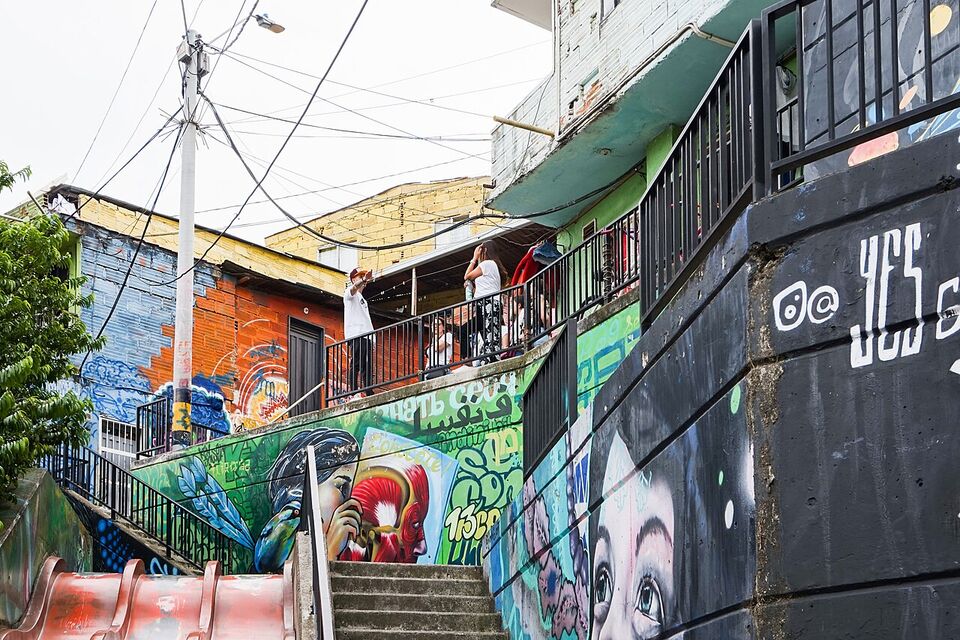
Comuna 13, also called San Javier, is one of 16 communes of the city and home to about 160,000 people. It climbs the western hills in tightly packed brick houses, and today it is known for murals, hip-hop and dance, and a set of outdoor electric escalators that connect the lower streets to the upper ones. It is one of the most visited places in the city, and on weekends it can draw up to about 6,000 visitors in a day.
Its past is not a story for sightseeing alone. The commune was long contested by guerrilla militias, paramilitaries and drug-trade gangs. On May 21, 2002, the army and police entered in a 12-hour operation (Operation Mariscal) that left 15 people dead, including minors, and in October 2002 another operation (Operation Orión) followed. Many residents lost family members, and murals along the streets record that history. A good local guide tells it plainly and respectfully.
Why a licensed local guide
- The route is hard to read alone. Streets are steep, there are no clear signs, and the best-known murals and viewpoints are not on one obvious path.
- The money stays in the community. Community groups, including some run by former residents of the neighborhood, offer graffiti tours, and residents of the areas that receive tourists sell food, art and drinks along the route.
- You get the history in context. Without a guide, many visitors take photographs and miss what they are looking at.
- It reduces risk. A guide knows the route and the local conditions. The US advisory warns about crime across Colombia, so keep your phone out of sight on any hillside walk.
"Licensed" means an operator and guide registered under Colombia's tourism rules (the national tourism registry, Registro Nacional de Turismo, or RNT). Ask for the registration number and the guide's name before you pay, and book through your hotel or the city's official tours list on medellin.travel. We could not read the city's current rules for Comuna 13 tours when we wrote this page, so check them and the tour company's own site for hours, group size, price and the meeting point.
Getting there and what to bring
Take Metro Line B to San Javier station, which is also the base of Metrocable Line J, and let your guide handle the last stretch. Go in the morning, wear shoes with grip for the steps, and carry water, sunscreen and a small amount of cash for snacks. Leave your passport at the hotel and bring a photocopy, and carry nothing you cannot afford to lose. Ask before you photograph any resident, and do not photograph children.
Watch out
Avoid unlicensed walking tours in Comuna 13, and do not accept an offer from someone on the street who says he is a guide. Three other mistakes: flashing a phone on the Metro or on the hill, getting into an unmarked taxi, and staying after dark. Book a return ride or a metro trip before the tour ends.
The Metrocable and Parque Arví
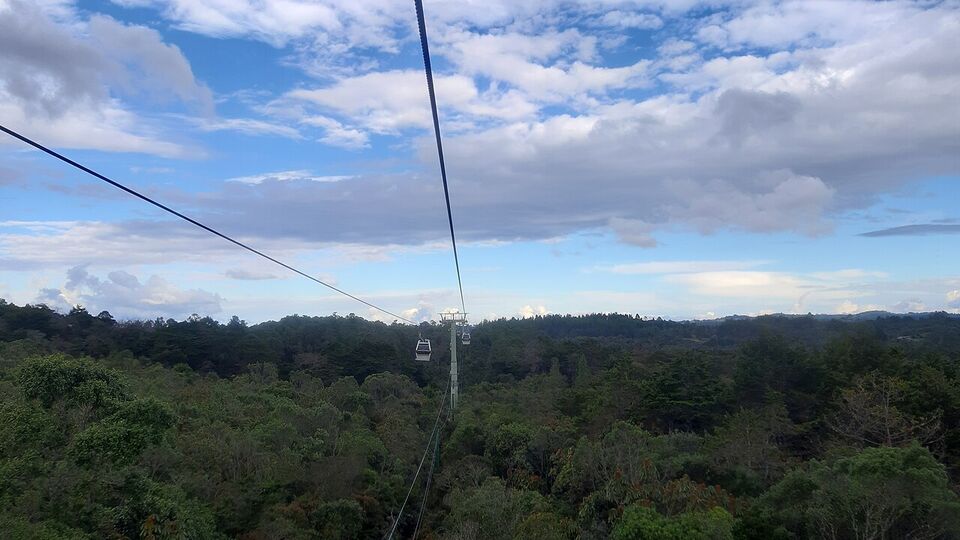
The Metrocable is a network of six gondola lines that serve hillside districts and join the metro. It has 20 stations along about 9 miles (14.6 km) of line, and it carried 22.5 million riders in 2025. It is public transit first and a sight second, so ride it as locals do: use the same Cívica card, avoid the morning and evening peaks, and do not block the cabin door.
Line K, from Acevedo station on Metro Line A up to Santo Domingo, opened in 2004. Line J climbs from San Javier station. Both give views over the valley and the dense hillside neighborhoods. Queues can reach 45 minutes at peak times for the people who use the line to get to work, so go in mid-morning if you are riding for the view. The fare is the standard metro fare, COP 3,820 (about $1.20) with a Cívica card, or COP 4,400 (about $1.30) without, according to January 2026 reports.
Parque Arví
Line L is the tourist line. It continues from the Santo Domingo station to Parque Arví, an ecological park of 16,000 hectares with 1,760 hectares of natural forest and about 54 miles (87 km) of trails, in the hills northeast of the city. The line opened in February 2010. A food market sits next to the cable car station, and one trail follows part of a pre-Hispanic stone road that may be more than 1,500 years old.
An extra fare applies on Line L, and park entry, guided walks and opening hours were not confirmed for 2026. Check the metro's "Arví fares" page and the park's own site, and go early. The park is cooler and often cloudier than the valley, so bring a light rain jacket, closed shoes and water. It suits a half day if you walk one trail and a full day if you hike, bike or join a guided nature walk.
The cable car incident of June 26, 2024, when a cabin fell about 20 ft (6 m) with only minor injuries, is worth knowing about, but it was a single incident on a system that carries millions of riders. If you feel nervous about heights, ride one line once and decide.
Downtown: Plaza Botero and the Museo de Antioquia
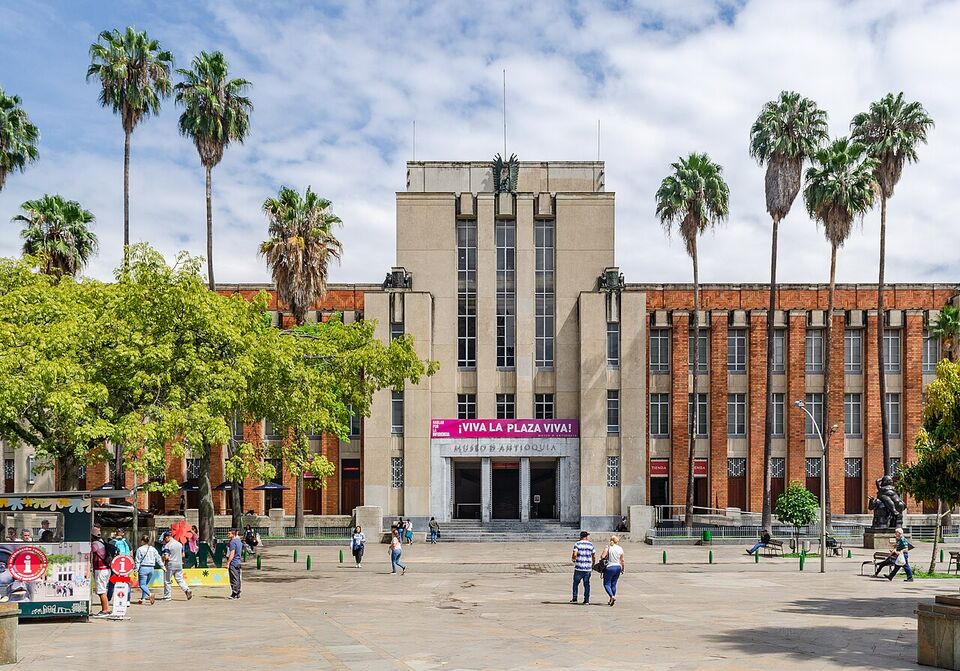
The Museo de Antioquia sits in the former Municipal Palace, built in 1928, in front of Plaza Botero. The plaza opened in 2002 and holds 23 large bronze sculptures by Fernando Botero, the Medellín-born artist known for rounded, oversized figures. The sculptures are outdoors and free to see; the museum inside has its own ticket and hours, which we could not confirm, so check the museum's site.
Next to the plaza are Plazuela Nutibara and the Palace of Culture, a Gothic-style building from the 1920s, and a short walk takes you to Berrío Park, the heart of the old center, with its cathedral nearby. Spend a morning here, before the crowds and the heat. The area is busy during business hours and quiet in the evening.
Insider tip
Visit the plaza early or on a weekday morning when the light is good and there are fewer people. Keep your phone in a front pocket, and take photos near the sculptures with your back to a wall.
Pueblito Paisa and Nutibara Hill
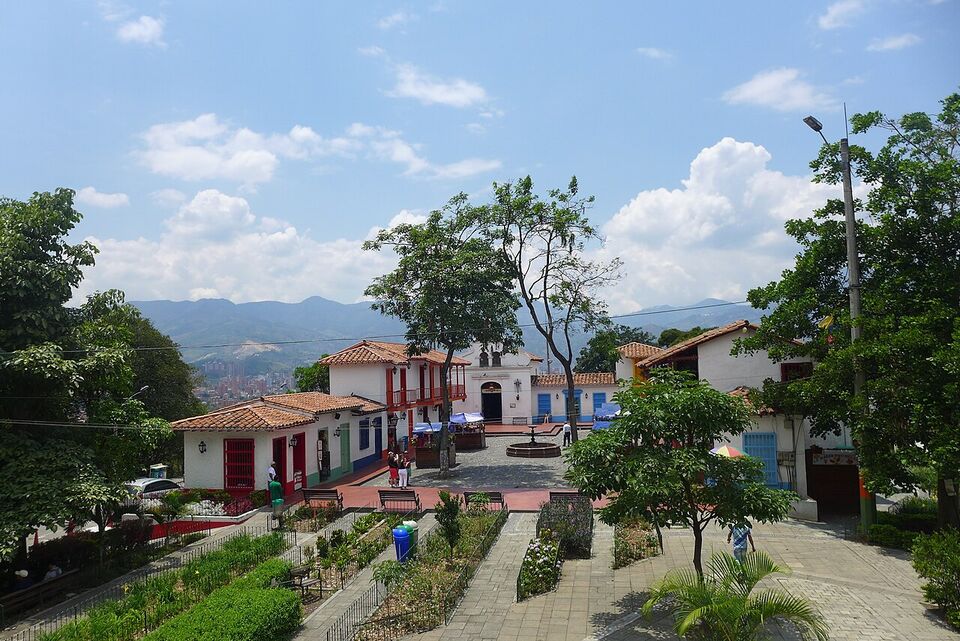
Nutibara Hill is one of seven hills that ring the city, and it gives a good view of the center and the valley. At the top is Pueblito Paisa, a small replica of a traditional Antioquian village with a plaza, a chapel and crafts shops. It is a short and easy outing, best for the view, not for authenticity. Go in the late afternoon for the light, and take a taxi both ways; a hilltop is not where to walk down in the dark. Hours and entry details were not confirmed.
Parks and science: Parque Explora, the botanical garden and more
Parque Explora is an interactive science museum and one of several modern parks the city built for learning and play, along with Barefoot Park (Parque de los Pies Descalzos), Wishes Park (Parque de los Deseos) and the Bicentennial Park. Explora and the city's botanical garden are in the north of the center, and the metro runs close by. Both suit families with children and a rainy afternoon. Entry prices and opening hours were not confirmed, so check the official sites.
The Santa Fe Zoo, founded in 1960, has about 1,000 animals. Whether you want to visit a zoo is a personal choice; check its site for hours if you do. The seven hills around the city, including Nutibara, also have walking trails, viewpoints and bird-watching, and the city's visitor site lists routes.
Museum closing days and hours
Closing days differ by museum, and many Colombian museums close one weekday. In Bogotá, the Gold Museum closes on Mondays (including Monday holidays) and the Botero Museum is usually closed on Tuesdays; Medellín's museums follow their own calendars. We could not confirm the Museo de Antioquia's schedule, so check it the day before you go.
Colombia has Monday public holidays that shift a long weekend. The next ones are November 16, 2026 and January 11, 2027, with others in March and May 2027. Expect crowds at parks, cable cars and Guatapé on those weekends, and some museums on special hours. Some Colombian museums close on December 24, 25 and 31 and January 1, so check ahead; see Festivals for the calendar.
Football match tips
Football is a good way to see Medellín's civic energy. The city's two main clubs, Atlético Nacional and Independiente Medellín, play at the Atanasio Girardot stadium in Laureles, which is near a metro station, so you can arrive without a taxi. Fixtures are announced by the league and often change at short notice, so check the club sites a week or two ahead and again two days before.
- Buy tickets from the club or its official outlet, not from resellers on the street. Fake tickets are a standard scam.
- Choose the section carefully. Ask your hotel which stand suits a first-time visitor, and arrive with time to clear the security check.
- Carry only what you need: one card, a little cash, a photocopy of your passport. Leave jewelry and cameras at the hotel.
- Leave in a group and use the metro or a taxi booked by your hotel, since crowds and street sellers fill the nearby streets.
- Skip any plan to confront or tease rival supporters; the stands have strong loyalties.
Cooking classes and coffee tours
Several companies offer cooking classes that include a market visit and a meal of local dishes, and coffee tastings that explain how beans are grown and roasted. Quality varies, and the city's visitor site lists tours; look for the registration number and read recent reviews on the operator's own page. A tasting in the city gives you the flavor, but not the farm. For plantations, harvest walks and the landscape itself, plan time in the coffee region; see the coffee region and Colombian coffee.
A cooking class also gives you a gentle way to learn what you are eating. A bandeja paisa is the platter of beans, rice, pork, egg, plantain and avocado that locals eat at lunch; see Colombian food for dishes to try.
The Feria de las Flores and seasonal events
The Feria de las Flores is Medellín's flagship festival, held each August. It began in the late 1950s and moved from May to August in 1958. It includes a parade of silleteros, farmers from the hills who carry large flower arrangements on their backs; an antique-car parade; and a horse parade. The festival draws large crowds, and hotels fill up and raise prices, so book early. The 2027 dates were not published in the sources we read, so check the city's visitor site and the festival's own site.
The city's Christmas lights usually start in late fall and run into the new year; the 2026 switch-on date was not confirmed. Check medellin.travel for the schedule. The night of December 7 is Día de las Velitas, when families light candles, and December 8 (Immaculate Conception) is a national holiday, so expect crowds and some closed shops. More festivals are on Festivals.
Evening safety and mistakes to avoid
The US Embassy's January 10, 2024 alert recorded eight suspicious deaths of US citizens in Medellín in late 2023, linked to apparent drugging or suspected homicide, and warned about dating-app lures. The State Department's advisory for Colombia is Level 3: Reconsider Travel (as of November 2026). See the safety section of the Medellín guide for the full text. For sightseeing, the practical rules are short.
- Do sightseeing by day, and be back at your hotel or in a busy, lit area at night.
- Take a taxi called by your hotel or a restaurant, or an app ride, after dark.
- Keep your phone away from the edge of metro platforms and out of sight on the street.
- Do not accept drinks, food or offers of drugs from strangers.
- Do not join an unlicensed walking tour, and do not take an unmarked taxi.
- Check the metro's last-train times on the Metro site so you are not stranded.
Please also read Is Colombia safe? before you finalize plans.
A sample two-day plan
- Day 1
Center, art and a hill view
Start at 8:30 a.m. at Plaza Botero while it is quiet, then the Museo de Antioquia (check its hours). Walk to Berrío Park and the cathedral, and have a bandeja paisa or a set lunch nearby. In the afternoon, take a taxi up Nutibara Hill to Pueblito Paisa for the view, and return by taxi before dark. Dinner in El Poblado or Laureles, with a taxi home.
- Day 2
Comuna 13 and a cable car
Take a morning tour of Comuna 13 with a licensed local guide (book ahead). After lunch, ride Metrocable Line K or J for the view, or visit Parque Explora and the botanical garden if you prefer a quieter afternoon. Ask your hotel to arrange a taxi back.
- Optional day 3
Parque Arví or Guatapé
Ride Line L to Parque Arví and walk one trail, or take the day trip to the rock and lake; see Guatapé and El Peñón. Leave early for either.
Save money
Most of the city's sights cost little: the plaza is free, and the metro and cable car rides are priced as ordinary public transit. Your biggest expense is likely a guided tour, so compare two or three licensed operators for what is included, group size and language. For a wider budget view, see Money.
Add it to a route in the trip builder, or ask us to plan the hotels, trains and guides for you.