Overview
Colombia works well for families who plan fewer places and shorter travel days. Children usually enjoy the beaches and boat rides on the Caribbean coast, Medellín's cable cars and science museum, the animals and farms of the coffee region, and the museums of Bogotá. The things that go wrong are predictable: too many stops, sun and heat that wear out small children, altitude that makes the first night in Bogotá hard, and bags that do not roll over cobblestones.
This page covers how to choose regions for your children's ages, how to handle altitude and heat, food, health and vaccines, car seats and taxis, strollers and sidewalks, family-friendly lodging, and the rules and documents for flying with children. It also gives a table of activities by age and a sample route. The US State Department's advisory for Colombia is Level 3: Reconsider Travel (as of November 2026), citing crime, terrorism, civil unrest, kidnapping and natural disasters; read the safety overview and check travel.state.gov for the current list of areas before you book.
Our advice is based on published health guidance, official sources and the structure of the country; we cannot vouch for individual hotels or tours, so ask for current information, and talk to your child's pediatrician before you go.
Which regions suit children
Cartagena and the Rosario Islands
Warm sea, beaches and the walled city's sights. Cartagena is at sea level and hot all year, with highs near 88-89°F (31°C) and lows near 75-78°F (24-26°C). The Rosario Islands national park lies about 12 miles (20 km) from the city and is visited by boat tour; ask your tour about life jackets in children's sizes and about insurance, which may be required. See Cartagena and the Rosario Islands guide.
Medellín
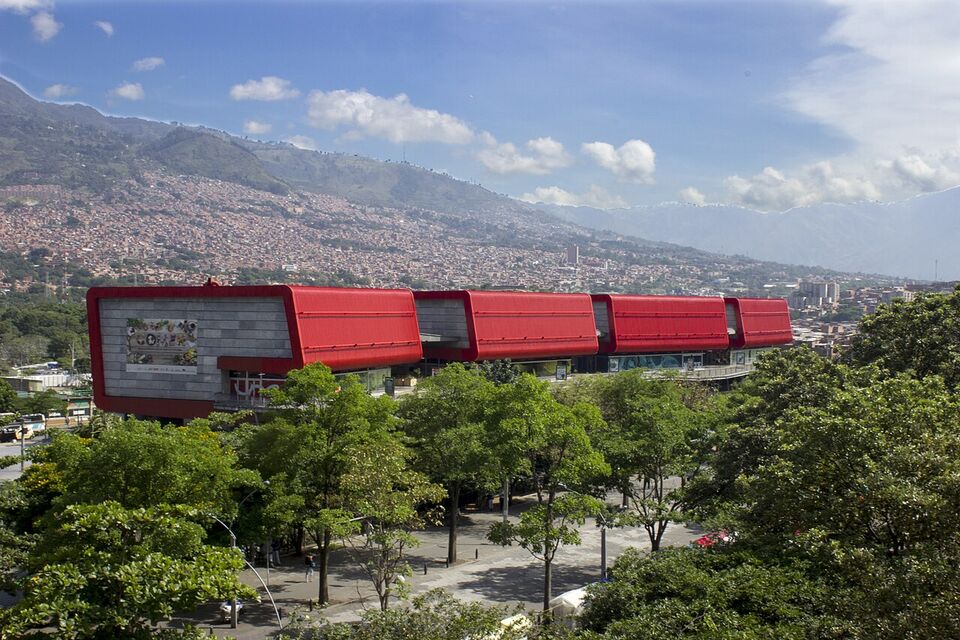
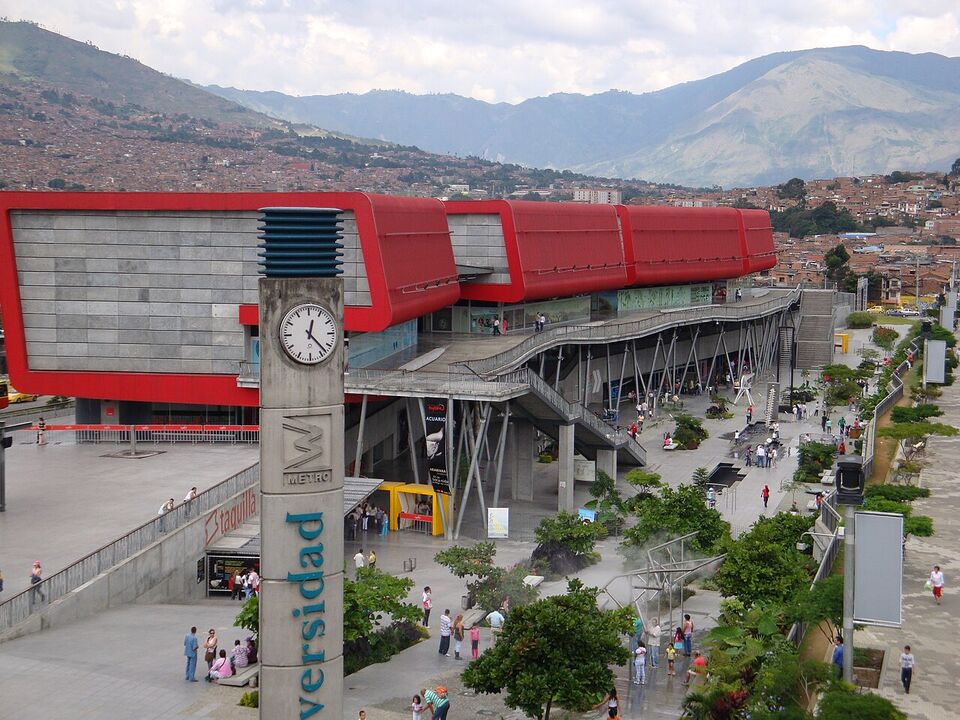
The metro and cable cars (Metrocable) are an attraction in themselves for children, and Parque Arví, a large nature park of about 16,000 hectares with 54 miles of trails, sits at the end of one cable line. Parque Explora, a science museum, is a popular family stop; we could not confirm its current hours or prices, so check its website. Daytime highs are in the 80s°F (about 27-28°C). See Medellín.
The coffee region
Coffee farms, horses, jeep rides and gentle walks suit children who like animals and outdoors. Salento sits at about 6,200 ft (1,895 m) and is cooler than Armenia. Wax-palm hikes in the Cocora Valley can be long and wet; choose short options. See the coffee region guide.
Bogotá
Museums, parks and the Monserrate cable car. Bogotá is high and cool, so plan the first day lightly. The Gold Museum is free for children under 12. See Bogotá and Bogotá sights.
The Amazon
Boat trips, wildlife and river communities, best for children of about 8 or 10 and older. Leticia is at 315 ft (96 m), hot and very humid (85-88%). The yellow fever recommendation applies here. See the Amazon guide.
San Andrés
A Caribbean island with clear shallow water. Yellow fever vaccine is not recommended for San Andrés and Providencia by CDC. A tourist card is required on arrival (about COP 105,000 (about $32) or more, per reference sources; check the current amount). See San Andrés.
Altitude and heat with children
Colombia's climate depends on height, not on the season. Bogotá sits at 8,660 ft (2,640 m), and its airport, El Dorado, is at about 8,360 ft (2,548 m). Many adults feel breathless, tired or headachy on the first day, and children can too. Plan an easy first day, avoid steep walks, offer water often and keep meals light. Medellín (4,900 ft, 1,495 m) and the coffee region (about 4,800-6,200 ft, 1,450-1,895 m) are gentler. If a child is unusually sleepy, vomits repeatedly or has a severe headache, go down to a lower altitude and see a doctor. Ask your pediatrician about altitude, especially for infants and any child with a heart, lung or blood condition.
Bogotá is cool, with daytime highs near 66-68°F (19-20°C) and nights near 43-47°F (6-9°C) between November and January, so pack layers and rain jackets. The coast and the Amazon are the opposite: Cartagena is near 88°F (31°C) and humid, Santa Marta reaches the 90s°F, and Leticia is 88°F (31°C) with very high humidity. IDEAM, the national weather service, said on November 12, 2026 that a strong El Niño would continue into early 2027, with fewer rains and higher temperatures than usual, so plan for heat.
- Sun: use a broad-spectrum sunscreen with SPF 30 or higher, hats and long-sleeved rash guards, and reapply often. CDC notes that sun exposure is greater at high elevation and near water.
- Water: give children plenty of fluids; many travelers drink bottled or filtered water, so ask locally.
- Rest: schedule shade and a siesta from about noon to 3 p.m. on the coast.
- Time: Colombia is on UTC-5 all year, the same as New York in winter and one hour behind during US summer time, so jet lag is small for East Coast families.
Watch out
The sun is the quiet danger of a Colombian family trip. Children burn in under an hour at the coast, and in the high Andes the air is thin and the UV is strong even when it is cool or cloudy. Do not let a cool morning in Bogotá fool you into skipping sunscreen.
Health and vaccines for children
Start the health conversation with a travel clinic or pediatrician four to six weeks before departure. We use the CDC's Colombia travel page for the points below; the CDC updates it often, so check it for current notices.
- Yellow fever: CDC recommends the vaccine for all travelers 9 months and older, except generally for trips limited to Barranquilla, Cali, Cartagena or Medellín, and not for trips limited to areas above 7,550 ft (2,300 m), San Andrés and Providencia, or Bogotá. CDC issued a Level 2 notice on October 16, 2026 about an increased number of cases. The CDC page also lists an entry requirement for arriving travelers aged 1 year and older (updated July 2025, subject to change), which Colombia's immigration pages we read do not mention, so confirm with Colombia's health ministry and your airline. Tayrona's park authority says no certificate is demanded at the park entrance but recommends vaccination. Babies under 9 months fall outside CDC's recommendation, so ask a travel-medicine doctor about your plans.
- Hepatitis A: recommended for unvaccinated travelers 1 year and older; CDC says infants 6 to 11 months should also be vaccinated (that dose does not count toward the routine series).
- Measles: all international travelers should be fully vaccinated with the MMR vaccine, including an early dose for infants 6 to 11 months.
- Other: typhoid is considered for rural stays or a month or more, and hepatitis B for unvaccinated travelers under 60.
- Malaria: CDC recommends prescription prevention for areas below 5,600 ft (1,700 m), and says there is no malaria transmission in Bogotá, Cartagena or Medellín. Ask a doctor about the Amazon and other lowland areas.
- Dengue: a Level 1 notice was updated November 10, 2026. Use insect repellent that is safe for children, long sleeves at dawn and dusk and screened rooms.
- Zika: pregnant travelers are at risk; see a doctor if anyone in your family is pregnant.
Carry a small kit: children's pain reliever, oral rehydration salts, any prescription medicines in original bottles, a thermometer and bandages. See the health guide for travel insurance and finding a clinic.
Food with children
Colombian home cooking is child-friendly. Look for arepas (corn cakes), plain rice with chicken, fries, empanadas, soups such as sancocho (a hearty soup of meat and vegetables), fresh fruit and juices. Spicy sauce (ají) is usually served on the side. Large plates such as the bandeja paisa (a big platter of beans, rice, pork and more) are made for sharing. See the food guide.
Wash hands before meals, choose busy restaurants with fresh-cooked food, and ask whether juices are made with bottled or filtered water. Many restaurants add a suggested 10% tip (propina) to the bill; it is voluntary. We could not confirm whether restaurants offer children's menus, so ask. In the high Andes, appetite can drop on the first day, so offer small, frequent snacks.
Getting around: taxis, car seats and strollers
Taxis in Colombia usually do not carry child seats, and we could not confirm any national rule for children's restraints. If you rent a car or hire a driver, ask in advance for a child seat or booster in the size you need, and consider bringing a lightweight travel booster. For airport and city rides, use registered taxis or a ride app; ride apps are widely used, but their legal status is unclear, so ask your hotel. See getting around.
Strollers are harder than at home. Sidewalks are often narrow, uneven and interrupted by curbs, and the old cities have cobblestones. A baby carrier or a compact, sturdy stroller is more practical than a large one. Public transit is crowded at peak hours, so use it with children when it is not busy. Medellín's metro and cable cars have a base fare of COP 3,820 (about $1.20) with a Cívica card, or COP 4,400 (about $1.30) for a single ride; we could not confirm the children's fare. TransMilenio in Bogotá costs COP 3,550 (about $1.10) per ride. Both can be very crowded.
Insider tip
Pack a baby carrier even if you also bring a stroller. For Cartagena's walled city, with its cobblestones and heat, a carrier or a stroller with large wheels saves a lot of effort. Go out in the morning and late afternoon, and rest at midday.
Family-friendly hotels and apartments
Families usually do best in places with a pool, air conditioning on the coast, a kitchenette and room for a crib. In Medellín, El Poblado and Laureles have hotels and apartments with family rooms; in Cartagena, beach hotels in Bocagrande give pool and sea access, while the walled city offers charm but fewer pools and more steps. A lodging in the coffee region with a farm setting gives children space to run. We cannot recommend a specific hotel, because we could not confirm which are open or suitable in 2026. Family rooms and apartments for four usually cost more than a double, so compare the total for your group.
- Ask for connecting rooms or a suite with two bedrooms, and book family rooms early in festival weeks and on long weekends.
- Check cribs, high chairs, pool fences and lifeguards before you book, and ask whether the hotel can arrange a babysitter.
- Ask whether the hotel quotes in pesos or US dollars, and whether taxes are included. Foreign visitors have often not paid VAT on hotel stays, but the rules were under review in 2026, so ask and bring your passport and entry stamp.
- Choose a location near a pharmacy and a restaurant, so that a child who is tired can get food and rest quickly.
See where to stay for the areas and how to choose.
Flying with children: documents and rules
Each child needs a passport of their own for the flight and for entry into Colombia. US citizens do not need a visa for tourism; the stay on arrival is up to 90 days, as of November 2026 (see entry requirements). Plan to complete the online Check-Mig form for every traveler, children included, unless the official site says otherwise. It is required before you are seen at migration control, from 72 hours to 1 hour before travel, using only the official site (apps.migracioncolombia.gov.co/pre-registro); a fee is not stated on the official pages, so do not pay a third party.
When a child travels with one parent, or with grandparents or other relatives, carry a notarized consent letter from the absent parent or parents, with a copy of that parent's ID and the child's birth certificate. Colombia's immigration page lists consent from the absent parent as a requirement when a Colombian minor leaves the country, along with a ticket and Check-Mig. We could not confirm what Colombia requires for foreign children entering, so check the Colombian immigration site (migracioncolombia.gov.co) and your airline's rules before you fly. Carry proof of onward or return travel; airlines or officers may ask to see it.
From the United States, flights to Bogotá, Medellín and Cartagena run from several cities; new routes from Orlando start in December 2026 (Frontier to Bogotá on December 14, Medellín on December 10 and Cartagena on December 19), which suits families. Flight time from Miami is roughly 3 to 4 hours. See flights and domestic flights. Medellín's international airport is in Rionegro, about 18 miles (29 km) southeast of the city; allow 45 minutes to an hour by road. Choose seats together when you book, bring snacks and a change of clothes, and build in a long layover rather than a tight one.
Kid-friendly activities by age
This table matches activities to ages. Ages are a guide; use your own judgment, and check each operator's age and height rules.
| Activity | Where | Good for ages | Notes |
|---|---|---|---|
| Beach and pool days | Cartagena, Santa Marta, San Andrés | All ages | Shade, sunscreen, life jackets; check sea and flag conditions |
| Rosario Islands boat day | Cartagena | 5 and up | Long boat ride and sun; park about 12 miles (20 km) away; insurance may be required |
| Metro and Metrocable rides | Medellín | 3 and up | Crowded at rush hour; Line L to Parque Arví is a longer outing |
| Parque Explora (science museum) | Medellín | 4 to 12 | Check opening hours and prices before you go |
| Parque Arví trails | Medellín | 6 and up | 16,000 hectares and 54 miles of trails; choose short loops |
| Coffee farm tour and jeep ride | Coffee region | 5 and up | Book a family-friendly farm; Willys jeeps run from Salento to the valley |
| El Peñón de Guatapé | Guatapé | 8 and up | 708 steps built into the rock; fee applies; steady shoes |
| Gold Museum | Bogotá | 6 and up | Free for children under 12; closed Mondays |
| Monserrate cable car | Bogotá | 4 and up | 10,341 ft (3,152 m); cold and thin air; child fares not confirmed |
| Tayrona walks | Santa Marta | 12 and up for trails | The park advises children over 12 for the trails; insurance required |
| Amazon boat trips | Leticia | 8 to 10 and up | Hot, humid; yellow fever and malaria advice applies |
The Gold Museum in Bogotá is open Tuesday to Saturday from 9 a.m. to 6 p.m. and Sundays and holidays from 10 a.m. to 4 p.m. (as of 2026; check the museum's site). It is free for children under 12 and for everyone on Sundays; foreigners otherwise pay COP 21,000 (about $6). The Monserrate cable car costs COP 35,000 (about $11) round trip Monday to Saturday as of 2026, and the peak is at 10,341 ft (3,152 m), so go on a clear day, bring jackets and take it slowly.
A sample 10-day family route
- Days 1 to 2
Bogotá, easy altitude start
Arrive, rest, walk a park, and visit the Gold Museum on day two. Keep the schedule light; the altitude is the main challenge.
- Days 3 to 5
The coffee region
Fly to the coffee region (see domestic flights), stay on or near a farm, and do short activities: a coffee tour, a jeep ride and a gentle walk.
- Days 6 to 7
Medellín
Ride the metro and cable cars, visit the science museum and Parque Arví, and keep the evenings quiet.
- Days 8 to 10
Cartagena and the beach
Fly to the coast, rest and swim, and take one boat trip to the Rosario Islands. End with a gentle evening walk in the walled city, when the heat has eased.
Common mistakes
Watch out
Overscheduling and ignoring the sun are the two mistakes that ruin family trips. Children need downtime, and Colombia's distances are larger than they look on a map: a short flight can still take half a day with transfers. Plan one main activity a day and leave room for the pool.
- Trying to see four or five regions in a week.
- Skipping the altitude plan in Bogotá or the heat plan on the coast.
- Not checking each child's vaccines and passport in time.
- Leaving a consent letter at home when only one parent travels.
- Relying on taxis with car seats that may not exist.
- Letting children walk or swim unsupervised in open water.
Save money
Children often go free or at reduced rates in museums, so ask at each ticket window. Apartments with kitchens cut restaurant bills, and a few days at one beach hotel cost less than island-hopping. See the budget guide and packing list.
Add it to a route in the trip builder, or ask us to plan the hotels, trains and guides for you.