Overview
Colombian food is hearty, mild and built around corn, potatoes, rice, beans, plantains, pork, beef, chicken and fish, with a long list of tropical fruit that most Americans have never tasted. The country has no single national cuisine: what you eat changes with the region and the altitude, so a cold Bogotá evening calls for a soup, and a hot Caribbean afternoon calls for fried fish and coconut rice. Colombian cuisine is usually described as six regional traditions (island, Caribbean, Pacific, Andean, Orinoco plains and Amazon) shaped by Indigenous, Spanish and African cooking, with some Arab influence on the coast.
This page covers what to order, a table of dishes by region, breakfast, the fruit and juices, the lunch set menu, how to order and pay, tipping, vegetarian and allergy tips, water and street-food sense, markets and a short glossary. For coffee and drinks, see our page on coffee and drinks. For money basics, see money in Colombia.
Different from home
Colombians write pesos with a "$" sign and a point for thousands. A menu price of "$25.000" is COP 25,000 (about $7.50), not twenty-five dollars. In our own text we write COP first and use commas, at the site rate of US$1 = COP 3,300. If a price on a menu looks like a decimal, it is almost certainly a peso amount in thousands. A few tourist businesses quote in US dollars, and then the sign says so.
How meals work
The big meal of the day in Colombia is almuerzo (lunch), eaten in the middle of the day, often with soup first. Dinner (comida or cena) is usually lighter, and in towns outside the big cities kitchens may close early. Mid-afternoon, many people have onces (a snack with coffee, hot chocolate or a fruit drink and something baked), a habit you will see in bakeries. Restaurants in tourist areas keep longer hours, but a small-town kitchen can be closed by 8 p.m., so ask when you book.
Menus are in Spanish. English menus exist in restaurants in tourist districts of Bogotá, Medellín and Cartagena, but a neighborhood restaurant, a market stall or a small-town place will not have one, and staff may speak little English. Learn the food words in the glossary below, and see our Spanish phrases page for ordering lines. A translation app with a camera mode helps with menus.
Two mistakes are common. The first is assuming the menu will be in English or that the waiter will explain it; the second is ordering too much of one rich dish. A bandeja paisa or a full lechona plate is built for a hungry farm worker, and two people can share one. Order one rich dish for the table, add a soup or a salad, and order more if you are still hungry.
Dishes by region
The table lists the dishes visitors meet most often, the region each belongs to and what you will actually get. Many dishes appear far from home (you will find bandeja paisa in Bogotá and ajiaco in Medellín), but they taste best where they began.
| Dish | Region | What it is |
|---|---|---|
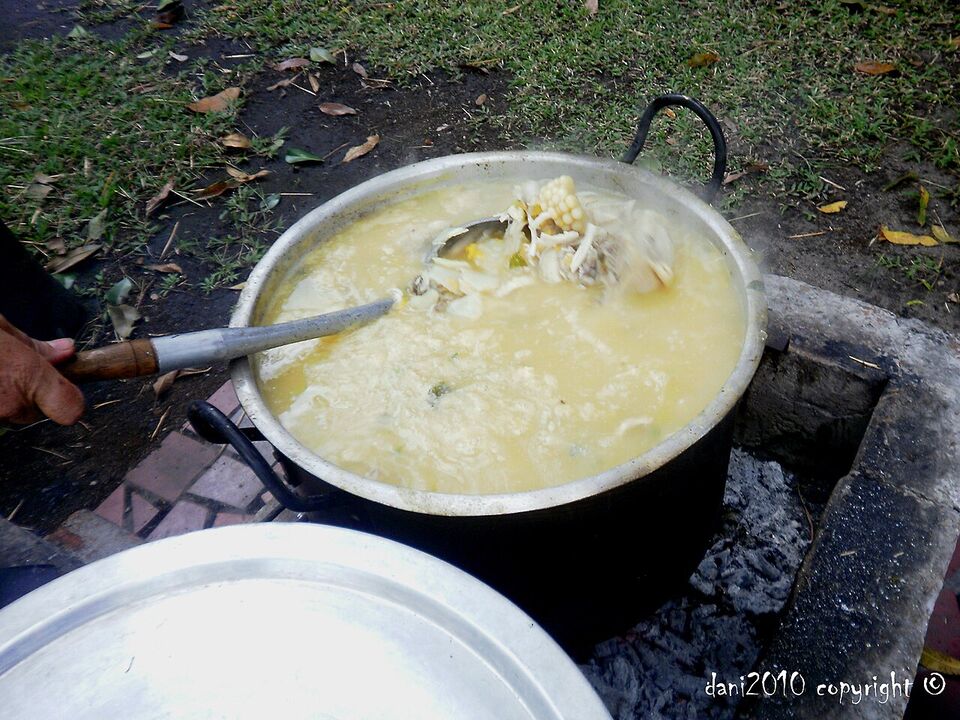
| Ajiaco (ajiaco santafereño) | Bogotá and the high Andes | A chicken, corn and potato soup flavored with a local herb called guasca. Usually served with rice, avocado and capers or cream on the side. Altitude makes it welcome on a cold evening. |
| Changua | Bogotá, Boyacá, Cundinamarca | A milk and egg soup with cilantro and bread, eaten at breakfast. An acquired taste for many Americans. |
| Caldo de costilla | Andean highlands | Beef rib broth with potato and cilantro, a traditional breakfast on a cold morning. |
| Cuchuco and cocido boyacense | Boyacá and the Altiplano Cundiboyacense | Thick country soups and stews of wheat or barley, potatoes, beans and meat. |
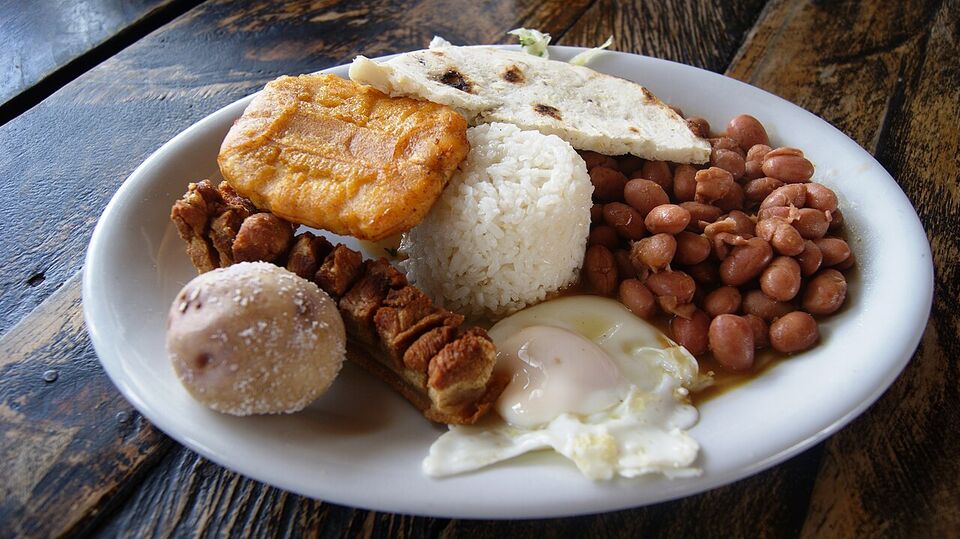
| Bandeja paisa | Medellín, Antioquia and the coffee region | A platter of red beans cooked with pork, white rice, ground beef, chicharrón (fried pork belly or rind), a fried egg, ripe plantain, chorizo, morcilla (blood sausage), an arepa, avocado and hogao sauce. It is very large. |
| Sancocho de gallina | Cali and the Valle del Cauca; versions in many regions | A chicken soup with plantain, corn and yuca (cassava), served with rice and avocado. Fish and beef versions exist on the coast and inland. |
| Aborrajado, marranita, pandebono | Cali and the Valle del Cauca | A fried ripe plantain stuffed with cheese (aborrajado), a fried plantain ball with pork rind inside (marranita) and a chewy cheese bread (pandebono). |
| Lechona | Tolima | A roasted pig stuffed with rice, peas and seasoning, sold by the portion. Often eaten on weekends and at celebrations. |
| Tamal | Many regions, with strong versions in Tolima, Santander and Bogotá | A corn-dough package with chicken, pork, potato, peas and carrot, wrapped in a plantain leaf and steamed for hours. A weekend breakfast in many homes. |
| Mute santandereano, hormigas culonas | Santander | A hearty tripe, corn and meat soup, and the large roasted ants the department is known for, sold as a crunchy snack. |
| Cuy asado | Nariño | Roasted guinea pig with potatoes, a dish of the southern Andes. Rare for visitors outside the region. |
| Arroz con coco and fried fish | Caribbean coast | Rice cooked in coconut milk, often with raisins, served with a whole fried fish or seafood, patacones and salad. |
| Arepa de huevo, carimañola | Caribbean coast | A fried arepa with an egg cooked inside, and a fried yuca roll stuffed with meat or cheese. Common breakfast and snack food from street stalls. |
| Rondón | San Andrés, Providencia | A stew of fish, conch, yuca, sweet potato and other roots cooked in coconut milk and seasoned with chili and herbs. See San Andrés for the islands. |
| Ternera a la llanera | The Llanos (eastern plains) | Barbecued beef or veal cooked over fire, with river fish in the same region. |
The Pacific coast has its own seafood and coconut stews, and the Amazon draws on Brazilian and Peruvian influence along the river. Most visitors reach those regions only on organized trips, so ask the guide or hotel what is local.
Breakfast
Breakfast (desayuno) at a hotel will be eggs, fruit, bread, an arepa, coffee or hot chocolate. In a local place it can be heavier. In Bogotá and the highlands, a soup such as changua or caldo de costilla is a normal breakfast on a cold morning. On the Caribbean coast, an arepa de huevo is a street breakfast. Across the country you will see huevos pericos (scrambled eggs with tomato and onion) and plain arepas with cheese and butter. Pandebono (cheese bread) is often eaten with hot chocolate.
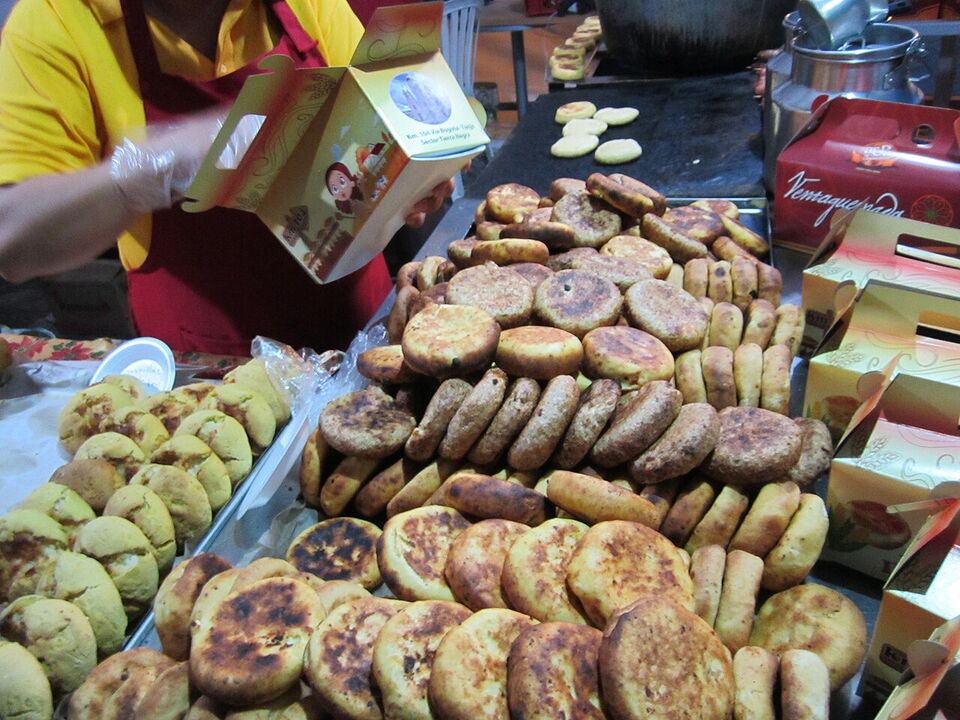
The arepa deserves a note of its own. It is a round cake of ground corn, grilled, fried or baked, and some 75 forms are counted across the country. Sizes and fillings differ: a thin white arepa with butter and salt in the Andes, a thick one stuffed with cheese in a stand by the road, a sweet corn arepa with melted cheese. Take whatever the place is known for.
Insider tip
If you want to eat like a local at breakfast, ask for the tinto (small black coffee) and whatever the person next to you is eating. A heavy breakfast soup is easier to start on at altitude if you already feel well; at Bogotá's height of 8,660 ft (2,640 m), many visitors feel full and tired faster on the first day, so go light at first.
The corrientazo and set lunches
The best value in Colombian food is the fixed-price lunch, called a corrientazo, menú del día, almuerzo ejecutivo or simply el almuerzo. It is usually a bowl of soup, then a plate with rice, a protein (chicken, pork, beef or fish), a small salad, plantain or potato, and a glass of juice, all for one price written on a board outside. You do not order from a long menu; you choose between two or three proteins and eat.
These lunches are aimed at local workers, so they are filling, quick and much cheaper than a tourist-area dinner. We have no confirmed 2026 price for them because prices vary by city and neighborhood, so check the board. The price is what you pay for the whole set, including the drink. If you want to skip the soup, say so, as the set still costs the same. In a small-town place, an almuerzo may be the only meal on offer after about 2 p.m., so eat it when it is ready.
Save money
Eat your main meal at lunch from a set menu and have something light in the evening. You get a full meal for much less than a dinner out, and many dinner kitchens in tourist districts cost far more for the same plate. See our budget page for how food fits into a trip.
Arepas, empanadas and street food
Street food is a good way to try the cuisine cheaply. The usual finds:
- Arepas from a grill, with cheese, egg, chicken or shredded beef.
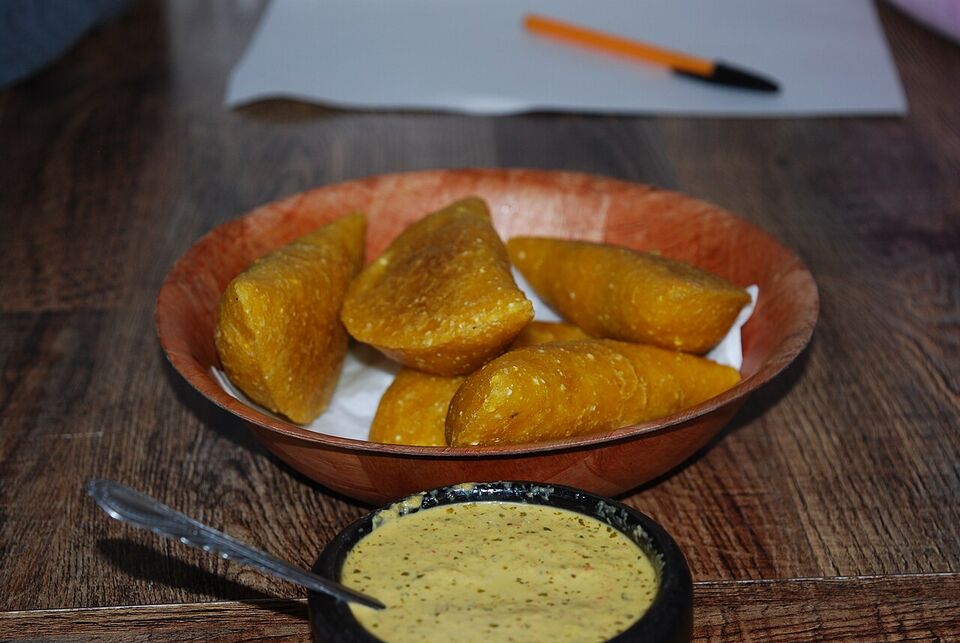
- Empanadas: fried corn-dough turnovers filled with seasoned meat and potato, often with a small cup of ají to dip. Valle del Cauca (Cali) is known for them.
- Patacones (fried flattened green plantain) with hogao sauce, or topped with cheese or meat.
- Buñuelos and almojábanas: fried cheese-dough balls and soft cheese buns, a bakery and Christmas staple.
- Chicharrón, fritanga and picada: sharing platters of fried meats, sausages, plantain and potato. Often ordered with beer.
- Obleas (thin wafers filled with arequipe, a milk caramel) and cocadas (coconut sweets) for dessert.
- Jugo de caña: fresh sugarcane juice, on hot days and on the coast.
Hogao, a tomato and onion sauce, goes on many dishes. Ají, the fresh cilantro-based sauce you will see in a small bowl on the table, is generally mild to hot depending on the cook: try a little on the side first.
Fruit and juices
Fruit is one of the best parts of eating in Colombia. Markets, supermarkets and juice stands sell fruit that is rarely seen in the United States. If a fruit has a name you do not know, ask the seller to cut one so you can taste it.
Lulo
A small orange fruit with a sharp, citrus-like flavor, usually blended into a juice or the drink called lulada. Good if you like sour drinks.
Guanábana
A large spiny green fruit with white, creamy pulp. Usually blended with milk or water; sweet and slightly tart.
Granadilla and maracuyá
Granadilla has a hard orange shell and gelatinous seeds you slurp; maracuyá is passion fruit, a very common juice flavor.
Curuba and tomate de árbol
Curuba (banana passion fruit) and tree tomato (tamarillo) are sharp fruits usually served sweetened in juice.
Uchuva, feijoa, mora
Cape gooseberry, pineapple guava and Andean blackberry, sold in baskets and blended. Mora juice is a standard breakfast drink.
Mamoncillo, chontaduro, borojó
Mamoncillo is a small green fruit you suck from the skin. Chontaduro is a boiled palm fruit sold with salt or honey, and borojó is a dark fruit made into juices.
Juices (jugos) come en agua (with water) or en leche (with milk). Ask for it sin azúcar (without sugar) or poquito azúcar (a little sugar) because many places add a lot. If you worry about ice or water, ask for the juice sin hielo (without ice); many tourist cafes use filtered water, but you cannot always tell. Hotel and restaurant staff in Bogotá, Medellín and Cartagena will tell you what the cafe uses if you ask. See our drinks page for more.
Watch out
US customs rules limit what produce you can bring home. Fruit and vegetables can be restricted depending on type and origin, and all food and plant items must be declared. Do not pack Colombian fruit in your luggage without checking the CBP site first. Coffee and honey are generally allowed, while meat products are not.
How to order, pay and tip
In sit-down restaurants, the waiter will not bring the bill until you ask. Say la cuenta, por favor (the check, please) and wait. Asking for the check is not rude. In many places you pay at the table by card or cash; in casual places you may pay at the register on the way out. Always check whether the bill includes a tip.
Many restaurants add a suggested tip (propina) of about 10% to the bill. It is voluntary, so you can accept it, ask to change the amount or decline it. If the line is on the bill, say con propina (with the tip) or sin propina (without) when the card machine is brought. We do not give other tipping percentages, because we could not confirm them. At a market stall, a corner bakery or a street vendor, a tip is usually not expected. See our etiquette page for tipping outside restaurants.
Cards are common in city restaurants. Small towns, markets and street stalls may take only cash, so carry some small bills. If a bill seems wrong, ask politely for it to be itemized (la cuenta detallada) and check it against the menu prices.
Vegetarians, vegans and allergies
Colombia is a meat-heavy country, and vegetarians need to plan. Beans are often cooked with pork, soups are made with chicken or beef broth, and rice may be cooked in stock or served with a meat sauce. Cheese, eggs, arepas, plantains, potatoes, fruit and salads are everywhere. Many bigger cities have vegetarian restaurants, and Bogotá, Medellín and Cartagena have the most, so a search on a map app finds them in the tourist districts. Smaller towns have few.
These phrases help:
- Soy vegetariano (or vegetariana): I am a vegetarian. Add no como carne, ni pollo, ni pescado, ni jamón: I do not eat meat, chicken, fish or ham. Many people do not count chicken, ham or fish as "meat", so list them.
- ¿Tiene caldo de carne? Does it have meat broth? Ask about soups, rice and beans.
- Sin carne, por favor: Without meat, please.
Vegans have it harder because cheese, eggs and milk are in so many dishes (arepa con queso, aborrajado, papas chorreadas, changua). Plan on cooking or on the few dedicated restaurants in the big cities.
For allergies, say what you cannot eat in Spanish, and show it written down. Useful words: maní (peanuts), nueces (tree nuts), mariscos (shellfish), pescado (fish), leche (milk), huevo (egg), trigo (wheat) and gluten. A card that says Soy alérgico a... (I am allergic to...) followed by the item and puede ser peligroso (it can be dangerous) is clearer than a spoken explanation. Arepas are made of corn but some are sold with cheese, flour or other fillings, so ask. Cross-contact in street kitchens is hard to control. If you carry epinephrine, keep it on you. For an emergency, 123 is Colombia's national emergency number (police, ambulance and fire), and the US Embassy's 24/7 line for US citizens is +1-202-501-4444 from abroad.
Water, street food and food safety
Most visitors eat well and have no problems. A few plain rules reduce the chance of a bad stomach.
- Eat where it is busy and where the food is cooked in front of you and served hot.
- Be careful with food that has been sitting out, raw seafood in the heat and anything with unwashed salad.
- Wash or sanitize your hands before eating; carry hand sanitizer.
- Many travelers drink bottled or filtered water; ask locally, and do not assume the answer is the same in every city.
- Peel fruit yourself or choose fruit that has been washed and cut in front of you.
- If the fish smells strong or the ceviche has been sitting, skip it.
The CDC lists hepatitis A as a vaccine to consider for travelers to Colombia, and typhoid vaccine for travelers who go to rural areas, stay a month or more or visit friends or relatives. It also advises safe food and water habits, including hand washing. Ask your doctor or a travel clinic well before you leave, and see our health page for vaccines and altitude. Stomach upsets are often just a change of diet, and plain rice, bananas and plenty of safe fluids help. If you have a fever, blood in the stool or symptoms that last more than a couple of days, see a doctor. Your hotel can name a clinic.
Insider tip
On your first few days, start with cooked, hot food and fruit you peel yourself, and add salads and street snacks as your stomach settles. Do not drink or eat anything from a stranger or a new friend you met on a dating app or in a bar; see the drink-safety section on our coffee and drinks page and our safety page.
Markets
Public markets are among the best places to see the fruit, the cheeses and the cooked food of a region. Large markets in the main cities are commonly reported to include Paloquemao in Bogotá, the Plaza Minorista in Medellín, the Galería Alameda in Cali and Bazurto in Cartagena. We could not confirm their current hours, so ask your hotel for the best days and times; many markets are busiest in the morning and quiet by mid-afternoon.
Markets are crowded, and pickpocketing is a risk in any crowd. Carry only what you need, keep your phone out of sight and consider going with a local guide or a food tour from a licensed operator the first time, especially at Bazurto, which is large and busy. Buy fruit by the piece or by weight, and ask the price before you pick (¿cuánto cuesta?). Many sellers are friendly about samples, but do not take a taste you cannot pay for. For the big-city picture, see Bogotá, Medellín and Cartagena.
Menu glossary
| Word | Meaning |
|---|---|
| desayuno, almuerzo, comida / cena | breakfast, lunch, dinner |
| la carta, el menú | the menu (el menú can also mean the set meal) |
| menú del día, corrientazo, almuerzo ejecutivo | the fixed-price lunch |
| sopa, seco | soup; the main plate after the soup |
| res, cerdo, pollo, pescado, mariscos | beef, pork, chicken, fish, shellfish |
| arroz, frijoles, papa, yuca, plátano | rice, beans, potato, cassava, plantain |
| maduro, tajadas, patacón | sweet ripe plantain; ripe plantain slices; flattened fried green plantain |
| aguacate, ensalada | avocado, salad |
| ají, hogao | fresh hot sauce; tomato and onion sauce |
| asado, frito, al vapor, a la plancha | roasted or grilled, fried, steamed, griddled |
| jugo, batido, en agua, en leche | juice, blended drink or shake, with water, with milk |
| sin hielo, sin azúcar | without ice, without sugar |
| para llevar, para aquí | to go, to eat here |
| propina | tip; propina voluntaria means the suggested tip is voluntary |
| la cuenta | the bill |
Plan your eating
A good first-week plan: eat the set lunch as your main meal, taste one regional dish in the region where it belongs, try a new fruit every day and keep dinners light. In Bogotá, order an ajiaco; in Medellín or the coffee region, share a bandeja paisa; on the coast, order fried fish and coconut rice; in Cali, try the empanadas and sancocho. Check the food calendar of the places you visit on our festivals page, as many regional dishes are tied to holidays. For the whole itinerary, see the destinations overview, and our coffee region page for farm lunches in coffee country.
Add it to a route in the trip builder, or ask us to plan the hotels, trains and guides for you.