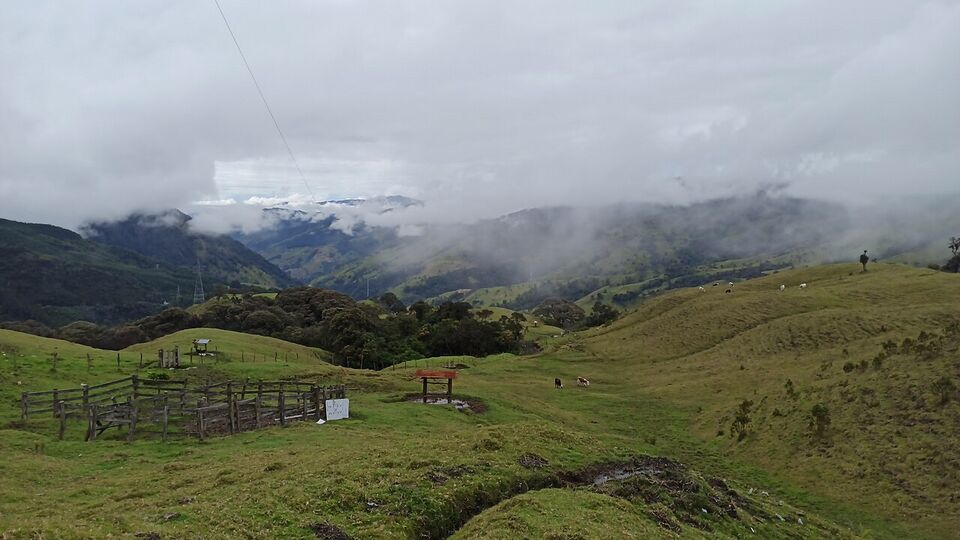
How long to stay and where to base yourself
For a first trip to Colombia, plan on 7 days if you want two bases and 10 to 14 days if you want three. The country is large, its cities sit at very different heights, and the roads between them climb and twist through mountains, so each extra stop costs most of a day. Fewer bases, with day trips from each, is the plan we suggest for nearly every American traveler.
The classic trio is the Caribbean coast (Cartagena), Medellín and Bogotá. They give you three climates in one trip: hot and humid on the coast, warm and spring-like in Medellín, and cool at altitude in Bogotá, which sits at about 8,660 ft (2,640 m). The coffee region, a few hours from Medellín by road or a short flight to Pereira, is the usual fourth base for a second week.
This page is the hub of the planning section. It covers how to split your days, how to choose a base, two sample trips (one for a first visit, one for a return), a booking timeline and a budget outline, then points you to the pages that go deeper: entry rules and the Check-MIG form, when to go, money, phones and power, flights to Colombia and side trips to Panama, Ecuador and beyond.
All times in Colombia are on Colombia Time (UTC-5) all year, with no daylight saving. That is the same as New York in winter and one hour behind New York during US summer time, so jet lag is mild from the East Coast.
Why fewer bases beat a long list of stops
Colombia is not a country where you hop between towns on a quick train. The Andes split into three ranges, the big cities sit in different valleys and on different plateaus, and the best-known sights are often an hour or two from the nearest city. A trip that tries to include six cities in ten days spends much of its time in airports and on winding roads.
Each move also changes your body clock and your clothes. Going from sea level in Cartagena to Bogotá takes you up to about 8,660 ft (2,640 m) within hours, and some visitors feel it in the first day or two as a headache, short breath on stairs or poor sleep. Our health and altitude guide covers this, but for planning the point is simple: one high-altitude stop is easy to manage, and a string of them wears people out.
A base also lets you use the city properly. Public transit in Bogotá and Medellín is cheap (a TransMilenio ride is COP 3,550, about $1.10, and a Medellín metro ride with a Cívica card is COP 3,820, about $1.20, as of 2026), so you can reach many sights without paying for a tour each time. Hotels often hold a bag for you, so day trips do not require changing beds.
Insider tip
Count travel days honestly. A flight between two big cities is short in the air, but with airport time and the trip to and from each airport, it uses a morning or an afternoon. Give each base at least two full days on the ground, and a transfer day does not count as one.
Choosing a base: the comparison
The table sets the main bases side by side. Temperatures are the long-term averages from IDEAM station data for November to January; altitude and climate matter more than the month, so read them before you pack. Our when to go page gives the full picture by region.
| Base | Height and feel | Best for | Days to allow | Notes |
|---|---|---|---|---|
| Cartagena | Sea level; hot and humid, highs about 88°F (31°C), lows 75 to 78°F (24 to 26°C) | The walled city, Getsemaní, the fortress, beach and island day trips | 3 to 4 | See Cartagena and the Rosario Islands; midday heat is strong |
| Medellín | About 4,900 ft (1,490 m); warm days near 80°F (27°C), mild nights near 63°F (17°C) | Metro and cable cars, Comuna 13, Guatapé, restaurants, a comfortable climate | 3 to 4 | See Medellín; the airport is in Rionegro, about 18 miles (29 km) southeast of the city |
| Bogotá | About 8,660 ft (2,640 m); cool, highs near 67 to 68°F (19 to 20°C), lows 43 to 48°F (6 to 9°C) | Museums, La Candelaria, Monserrate, day trips toward Boyacá | 3 to 4 | See Bogotá; bring layers; the airport is at about 8,360 ft (2,548 m) |
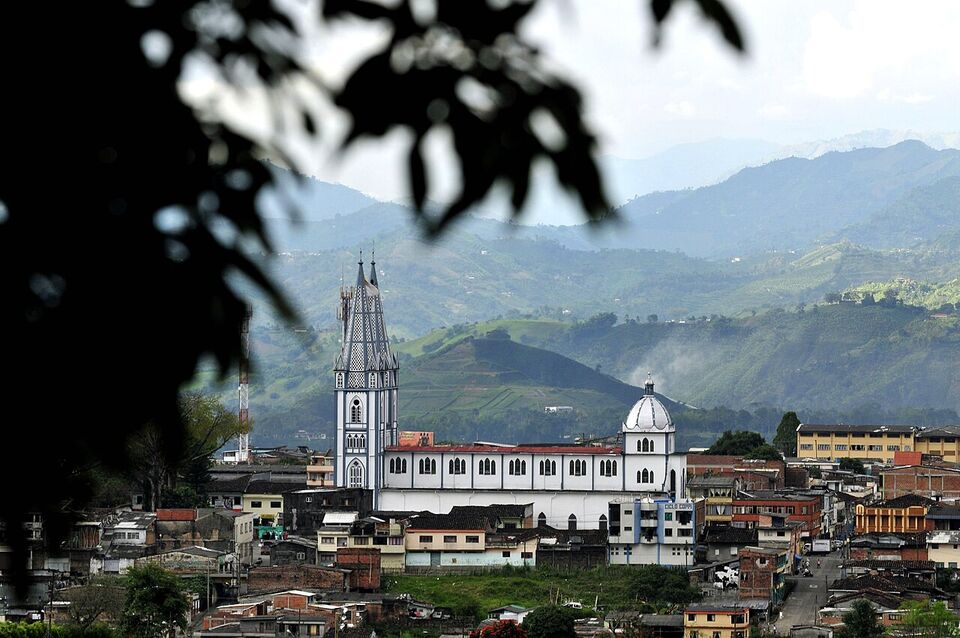
| Coffee region | About 4,800 ft (1,450 m) at Armenia; highs near 77°F (25°C); cooler in Salento | Coffee farms, Cocora Valley, small towns, walking | 3 to 4 | See the coffee region; choose Salento or a farm stay as your base |
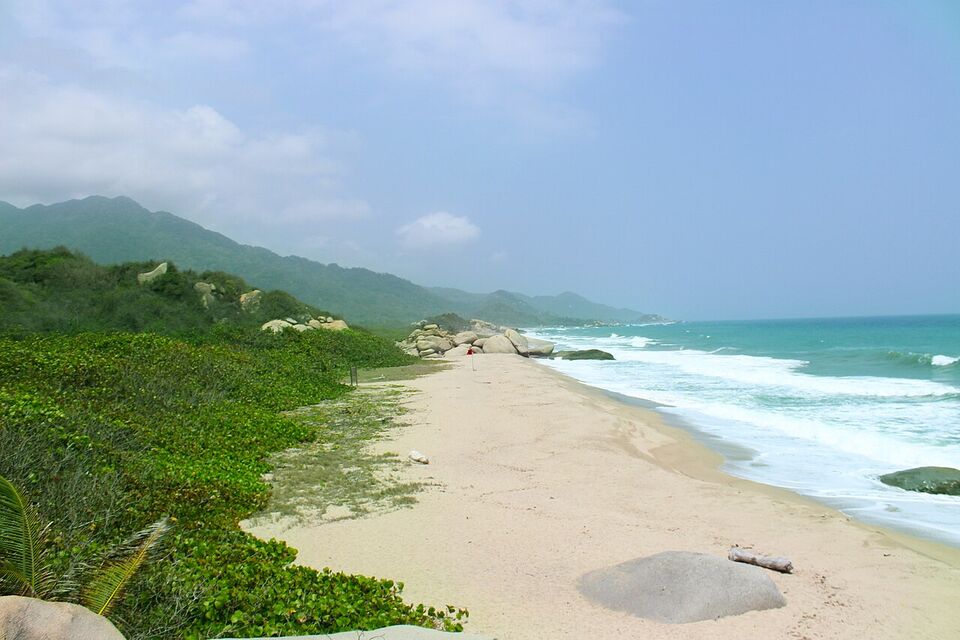
| Santa Marta area | Sea level; hot, highs 90°F (32°C) or more | Tayrona's beaches and trails, Minca, Ciudad Perdida | 3 to 4 (plus 4 to 6 for Ciudad Perdida) | See Santa Marta and Tayrona and the Ciudad Perdida trek |
Medellín's altitude is for the valley floor at the Olaya Herrera station; the airport at Rionegro is higher, at about 7,028 ft (2,142 m). The coffee region figure is for Armenia, one of its cities, and Salento sits higher and cooler, so check a forecast for your exact town.
Which base suits which traveler
First trip, short on time
Cartagena plus Medellín, or Bogotá plus Medellín. A coast and a city, or two cities, keeps flights to one and leaves room for a day trip from each.
First trip, a week and a half
Cartagena, Medellín and Bogotá in that order or reverse. This fits most open-jaw flight tickets and gives you the three main climates.
Hikers and nature lovers
Add Cocora Valley and the Tayrona trails. Both involve walking on uneven ground in heat or at altitude, so allow rest days.
Beach and island travelers
Cartagena with a Rosario Islands day or overnight, or a separate flight to San Andrés. Our San Andrés guide covers the islands, which have their own entry step.
Families with young children
Medellín and the coast are easier than Bogotá for small children because of altitude. See our families guide for details.
How to split your days
A simple way to plan is to start with the number of nights and divide them by base, keeping at least three nights in each place so you can unpack once. The table below shows splits for common trip lengths. They assume you arrive and leave on international flights that you can book into different cities, which is often cheap enough to be worth checking (see flights to Colombia).
| Trip length | Split | Internal flights |
|---|---|---|
| 5 to 6 days | One base only, or 3 nights Cartagena plus 2 to 3 nights Medellín | 0 to 1 |
| 7 to 9 days | 4 nights Cartagena, 3 to 4 nights Medellín; or Bogotá plus Medellín | 1 |
| 10 to 12 days | 3 to 4 nights each in Cartagena, Medellín and Bogotá | 2 |
| 13 to 16 days | Three bases plus a coffee region stay (3 to 4 nights), or plus Santa Marta and Tayrona | 2 to 3 |
| 17 days or more | Add Ciudad Perdida, San Andrés, Villa de Leyva or the Amazon, one at a time | 3 or more |
Most routes between Colombia's big cities are short flights, roughly an hour to under two hours in the air (check each airline's timetable). Avianca, LATAM Colombia, JetSMART Colombia, Wingo, Clic and SATENA operate domestic routes. Our domestic flights guide covers baggage rules and when flying beats the bus, and buses, taxis and apps covers the ground side.
Different from home
One short flight can change the weather by 20 degrees or more. Bogotá is cold at night while Cartagena is still warm at 11 p.m., so keep a jacket in your carry-on, not your checked bag, when you fly toward the mountains.
A sample first trip: 10 days, three bases
This plan fits the Cartagena, Medellín and Bogotá triangle. It follows a common ticket pattern: arrive in Cartagena, leave from Bogotá, and use two short flights in between. Swap the order if your flights are cheaper the other way, and see the trip builder to adapt it to your dates.
- Day 1
Arrive in Cartagena
Take an official airport taxi or a pre-booked transfer to your hotel. Keep the first evening easy: a walk inside the walled city (Ciudad Amurallada) in the cooler hours and an early dinner.
- Day 2
Walled city and Getsemaní
Start early, before the midday heat, with the main plazas and the walls. Take a long lunch and a rest, then walk Getsemaní in the evening. Details on our Cartagena things to do page.
- Day 3
Fortress or islands
The Castillo San Felipe de Barajas is open daily 7 a.m. to 6 p.m. and costs about COP 38,000 (about $12) at the full rate. Or choose a day boat to the Rosario Islands with a licensed operator and ask what is included before you pay.
- Day 4
Fly to Medellín
Morning flight, then settle in. The airport is about 18 miles (29 km) from the city, so allow 45 minutes to an hour on the road. Spend the evening in a calm neighborhood.
- Day 5
Metro, cable cars and Comuna 13
Use the metro and Metrocable. A Cívica card ride is COP 3,820 (about $1.20) as of 2026. Visit Comuna 13 with a local guide who is from the area.
- Day 6
Guatapé
A day trip to the painted village and the El Peñón rock, which has 708 steps to the top. See Guatapé and El Peñón. Book an early start to avoid crowds.
- Day 7
Fly to Bogotá
Expect cool air and thin air at about 8,660 ft (2,640 m). Drink water, avoid heavy meals and alcohol on the first night, and keep the afternoon light.
- Day 8
La Candelaria and the Gold Museum
The Gold Museum closes on Mondays, so schedule it for another day. Entry for foreign visitors is COP 21,000 (about $6) and free on Sundays, as of 2026.
- Day 9
Monserrate and a market or museum
The round-trip cable car or funicular is COP 35,000 (about $11) Monday to Saturday as of 2026. The peak is 10,341 ft (3,152 m), so go slowly. Our Bogotá things to do page lists alternatives.
- Day 10
Fly home
Allow extra time at El Dorado, and check whether your ticket already includes airport fees. Follow the entry page for what to have ready for the return side, including customs and the US exemption.
A sample repeat trip: 14 days, a different Colombia
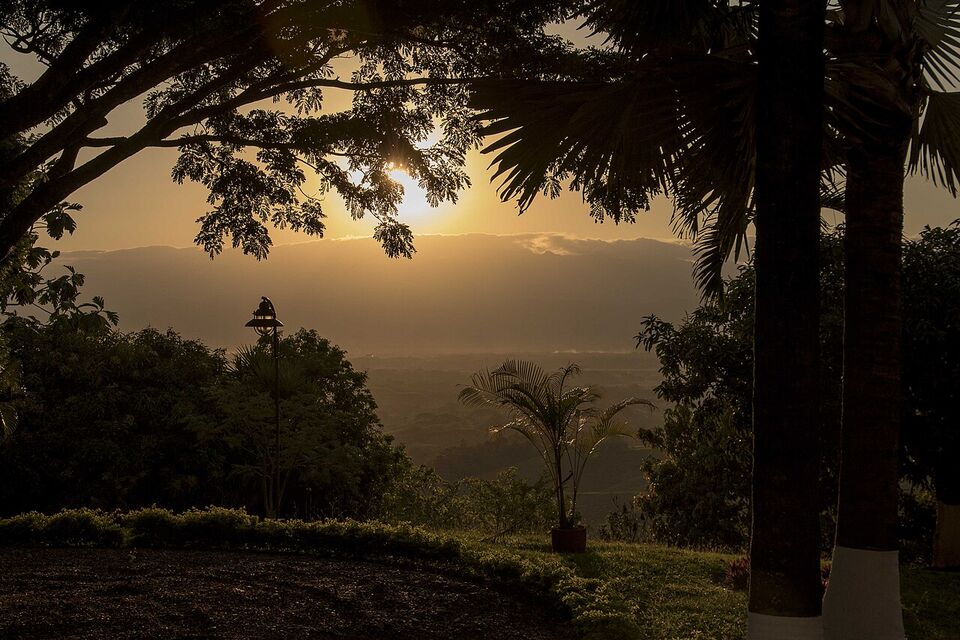
If you have been to the big three, or you already know you prefer the outdoors, build the second trip around the coffee region and the Santa Marta coast. It uses the same logic, three or four nights in each place, but swaps two cities for places that are slower and greener.
- Nights 1-3
Medellín, a lighter version
Arrive in Medellín and use it as a gentle start. Pick a different area from your first visit, or skip it if you have been before and fly straight to the coffee region.
- Nights 4-7
Coffee region
Use Salento or a farm stay as a base. Cocora Valley is reached by Willys jeep from the town square, 11 km (7 miles) up the valley. Our coffee region guide covers how to choose.
- Nights 8-11
Santa Marta and Tayrona
Fly from Pereira or Medellín to Santa Marta (check connections). Tayrona requires an all-risk insurance policy, and a daily limit of 6,900 visitors applies. The park has traditional closure periods, so read the section on permits below.
- Nights 12-13
Minca, Palomino or Cartagena
Cool off in the hills at Minca, or take a beach stop at Palomino. See Santa Marta and Tayrona.
- Day 14
Fly home
Fly out from Cartagena or Barranquilla, or return to Bogotá or Medellín for an international flight.
Options for longer trips
If you have three weeks, add one self-contained module rather than another city: the Ciudad Perdida trek (usually a guided trek of 4 to 6 days with a licensed operator), San Andrés and Providencia, Villa de Leyva for a night or two from Bogotá, or the Amazon at Leticia. If you want a neighboring country, see Panama, Ecuador and beyond.
The hot coast and the cool Andes
Altitude, not the calendar, decides the weather on any day. Two lines are enough for planning, with more in when to go:
- The Caribbean coast (Cartagena, Santa Marta, Tayrona) is hot and humid all year. The driest months are roughly December to April, and midday sun is strong everywhere.
- The high Andes (Bogotá and the plateau around it) are cool all year, with cold nights, so pack layers and a rain jacket even in the dry months.
Medellín and the coffee region sit between the two and are mild. The Amazon at Leticia is hot, humid and wet in most months. San Andrés is a Caribbean island with its own wet and trade-wind patterns.
Booking timeline
Work backward from your travel dates. These are the steps in the order we suggest, with the reasons that make some of them urgent.
- Passport. Check expiry now. Bring a passport valid for your whole stay and check your airline for any longer rule (see entry rules).
- Tayrona and Ciudad Perdida (first of all). Both have limited places, and Tayrona closes for set periods (in 2026, February 1-15, June 1-15 and October 19-November 2; the 2027 dates were not published as of November 2026). A blog also reported Ciudad Perdida as closed in October. Check each operator and the park authority before you pick dates.
- International flights. For Christmas, New Year and Holy Week (March 25-28, 2027), book as early as you can; our flights page has routes and arrival tips.
- Hotels. In Cartagena, Medellín and Bogotá, book early for holiday weeks and Monday-holiday long weekends. See where to stay.
- Domestic flights. Book once your cities and days are fixed. Prices vary by airline and date; check baggage rules before you pay.
- Health. Talk to a travel clinic or your doctor well before you go about yellow fever vaccination, which the CDC recommends for most of Colombia, and other items. See health and altitude.
- Travel insurance. Buy it when you book, and check medical and evacuation cover, since Tayrona also requires its own insurance policy.
- Phone plan. Ask your carrier about Colombia roaming before you go; see phones, data and power.
- Check-MIG. Fill it in only on the official site, from 72 hours to 1 hour before your trip.
- Safety. Read the US State Department advisory (Level 3: Reconsider Travel, as of November 2026) on travel.state.gov and consider enrolling in the Smart Traveler Enrollment Program, STEP (step.state.gov). See safety.
Peak weeks and long weekends
Colombians travel a lot on holidays, and many national holidays move to a Monday to make long weekends. Hotel prices, buses and domestic flights get busy around them. The next ones are Monday, November 16, 2026; December 8 (a Tuesday) and Christmas Day on Friday, December 25; and in 2027 the expected Mondays of January 11, March 22, May 10, May 31 and June 7 (computed from the holiday rule, so check the official calendar). The night of December 7, Día de las Velitas (Day of the Little Candles), is a popular evening event. Our festivals page and when to go have more.
Watch out
Do not buy non-refundable tours for Tayrona, Ciudad Perdida or a Caño Cristales trip until you have confirmed the park or trail is open on your dates. Closures for ceremonies, conservation or public order have happened in 2026, and the reopening dates were not always known in advance.
A budget outline in dollars
We do not give a single daily figure for Colombia, because costs change enormously with where you sleep and how often you fly. Most of a trip's cost is the flights, the hotel tier and the tours. Plan with these building blocks and then use our budget calculator for a total.
- Hotels. We group them in three tiers: $ under $120 a night for a double, $$ $120 to $300 and $$$ over $300. Prices rise in holiday weeks and in Cartagena.
- Local transit. A Bogotá TransMilenio ride is COP 3,550 (about $1.10); a Medellín metro ride on a Cívica card is COP 3,820 (about $1.20) (2026 fares).
- Entrance fees. Gold Museum for foreigners COP 21,000 (about $6); Monserrate round trip COP 35,000 (about $11); Castillo San Felipe COP 38,000 (about $12); Tayrona for foreign visitors COP 81,000 (about $25) in low season, COP 96,500 (about $29) in high season, COP 43,500 (about $13) for the Bahía Concha sector (a news report of the 2026 rates).
- Phone. Verizon lists its TravelPass at $12 a day in more than 210 countries, billed only on days you use it; check that Colombia is covered and ask other carriers.
- Tours and trekking. Ciudad Perdida prices depend on the operator and change often; ask for the total, with food, permits and guides.
- Extras to ask about. Airport fees on your ticket, VAT on hotels (foreign visitors have often not paid it, but rules were under review in 2026, so ask your hotel and bring your passport and entry stamp), the San Andrés tourist card (about COP 105,000 or more, about $32 or more) and the Leticia tourist card (about COP 30,000, about $9).
Save money
Cheaper fares often appear when you fly into one city and out of another, and by flying domestically on weekdays outside holiday weeks. Compare with the cost of a day lost on a bus, which is rarely the saving it seems on a short trip.
Money, phones and entry in brief
These topics have their own pages; here is the short version.
- Money. The currency is the Colombian peso (COP). We use US$1 = COP 3,300 on this site; the official market rate was about COP 3,297 on November 11-12, 2026, and rates move daily. Colombians write pesos with a "$" sign, so check how prices are written before you read a menu. Cards are common in cities; carry some cash for small towns. See money.
- Phones. Colombia uses 110 V, 60 Hz power with US-style plugs, so US chargers fit. Ask your carrier about roaming or buy an eSIM. See phones, data and power.
- Entry. US citizens do not need a visa for tourism and can stay up to 90 days on arrival (as of November 2026), extendable to 180 days in a calendar year. You fill in the Check-MIG online form from 72 hours to 1 hour before you travel, and only on the official site. See entry rules.
Common planning mistakes
- Too many stops. Six places in ten days means five transfers. Cut to three bases and use day trips.
- Heat and altitude in the wrong order. Arriving in Bogotá after a long flight and booking a hard hike the next morning is a common error. Take it easy the first day at about 8,660 ft (2,640 m).
- Booking park tours before checking closures. Tayrona and Ciudad Perdida have set closure windows, and Caño Cristales has a season. Check the official notices first.
- Booking only the cheapest fare. Check bag fees and the airport you land in; a slightly dearer ticket into the right city saves a day.
- Using unofficial sites for the entry form. Only the Migración Colombia site is official; see the entry page.
- Ignoring the advisory. The State Department lists areas it says not to travel to. Check travel.state.gov before you book anything outside the main tourist cities, and read our calm answer on safety.
Add it to a route in the trip builder, or ask us to plan the hotels, trains and guides for you.