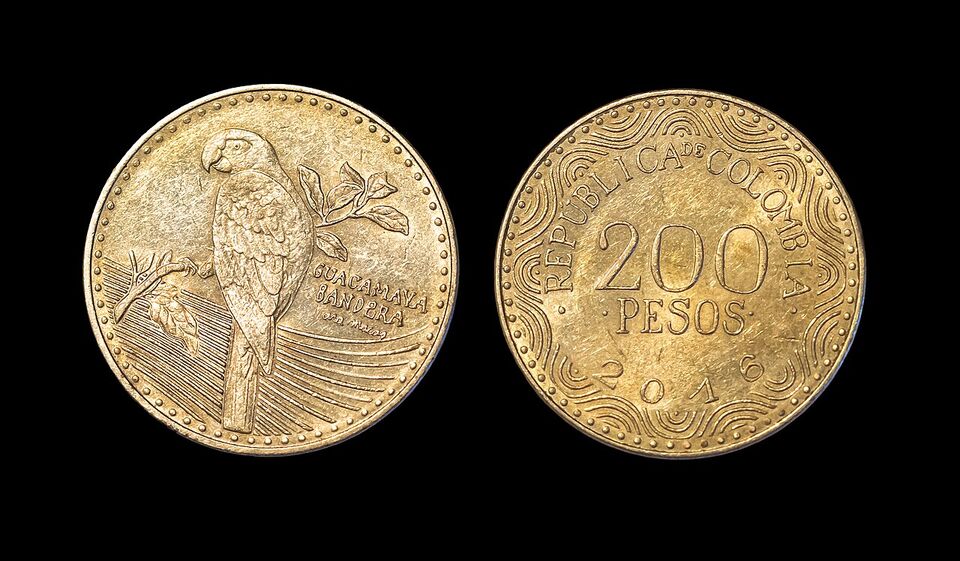
Overview: the peso, and how to carry money
Colombia uses the Colombian peso, code COP. For most Americans the easy plan is a mix: a US debit card for cash from a bank ATM, a credit card with no foreign transaction fee for hotels, restaurants and shops, and a small cushion of pesos in cash for everything else. Cards are common in the big cities, but cash still matters in small towns, markets, taxis, rural buses and some park entrances and tours.
We use one rate on this site so prices stay consistent: US$1 = COP 3,300. The official market rate (the TRM, or tasa representativa del mercado) was about COP 3,297 for US$1 on November 11 and 12, 2026, so our rate is a fair round figure. It does move every day, and it was lower (about COP 3,183 for US$1) at the end of October, so treat every dollar figure here as "about" and check a current converter before you change money. Our converters page has a peso calculator, and the budget guide shows what a day costs in different travel styles.
Money is one piece of the trip basics. Before you book, read the entry guide for passport and form rules and how to plan the trip for the big picture.
Reading prices: the "$" sign means pesos
This is the first thing that confuses visitors. In Colombia the peso uses the same "$" sign as the US dollar, and thousands are marked with a point, not a comma. So a menu that says "$25.000" is asking COP 25,000 (about $7.50), not twenty-five thousand dollars and not twenty-five dollars. Decimals, when they appear, follow a comma, the reverse of what you are used to. In our own text we write amounts the American way, with commas and the code first: COP 25,000 (about $7.50).
Many prices are also shortened. A hand-written sign that says "12 mil" or "12k" means COP 12,000 (about $3.60); mil is Spanish for thousand. Say the number aloud in Spanish if you are not sure; vendors will correct you, and it is a good habit to confirm a price before you order or board anything that is not metered.
| You see | It means | US$ (about) |
|---|---|---|
| $2.000 on a street stall | COP 2,000 | $0.60 |
| $5.000 or "5 mil" | COP 5,000 | $1.50 |
| $12.500 on a lunch menu | COP 12,500 | $3.80 |
| $25.000 for a main course | COP 25,000 | $7.50 |
| $50.000 on a tour board | COP 50,000 | $15 |
| $100.000 for a taxi or a night out | COP 100,000 | $30 |
| $1.250.000 on a hotel site | COP 1,250,000 (two points means millions) | $380 |
Different from home
The comma and the point swap jobs. If you see "$1.250.000", that is COP 1,250,000 (about $380). If a hotel or tour site shows "USD" or "US$", it is quoting in dollars; check the currency code before you pay.
The money itself: notes and coins
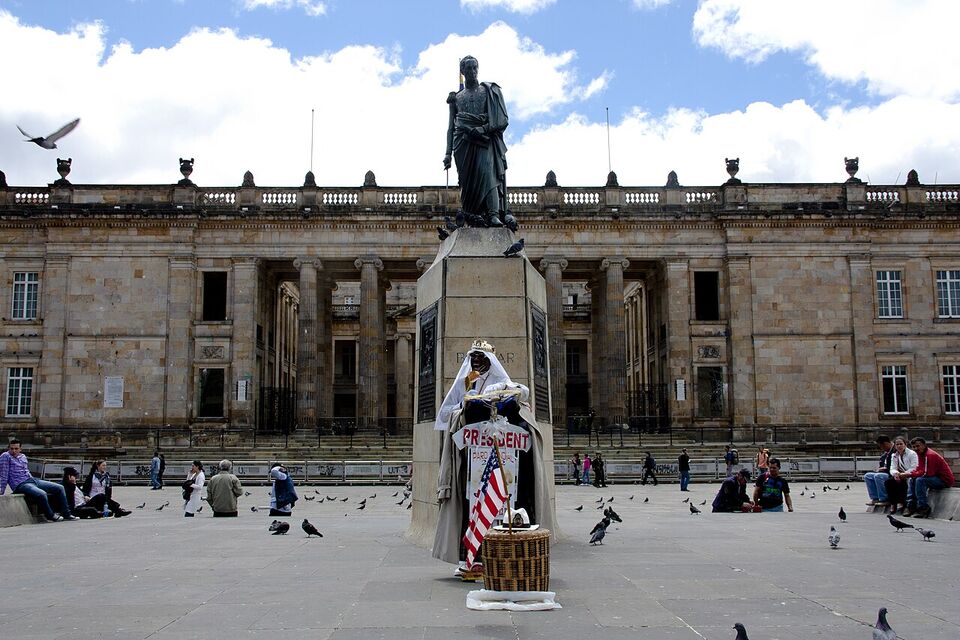
Banknotes in common use run from COP 2,000 (about $0.60) up to COP 100,000 (about $30), with 5,000, 10,000, 20,000 and 50,000 notes in between. The old 1,000 note has been discontinued, and you will mostly see coins for smaller amounts. The biggest note is worth about $30, which is why a pile of cash feels bigger than it is: a typical night out can mean a few of the largest notes. A banknote's colors and size differ by value, so learn the 20,000, 50,000 and 100,000 notes before you pay in a hurry.
Small bills are a real problem. A taxi driver, a street vendor or a small shop may not have change for COP 50,000 (about $15) or COP 100,000 (about $30), especially early in the morning. Break large notes at a supermarket, a pharmacy or a restaurant, where change is expected, and keep a few COP 5,000, 10,000 and 20,000 notes (about $1.50, $3 and $6) in a separate pocket for taxis, tips and snacks. ATMs may hand out mostly large notes, so ask the cashier or the bank for smaller ones when you can.
Cards versus cash
Visa and Mastercard are widely used in cities, malls, hotels, larger restaurants, airlines and tour operators. American Express and Diners Club are accepted less reliably. For one example of this, the immigration agency Migración Colombia says on its own site that its payments accept only Visa and Mastercard; that matters if you plan a long stay and need to pay for an extension.
Use a credit card with no foreign transaction fee if you have one. Many US cards add a fee, commonly a few percent of each purchase, but some travel cards charge none. Check your issuer's terms before you go, and tell the issuer you are traveling so a fraud filter does not block your card at a restaurant. Bring two cards from different networks or banks, in case one fails or is lost, and keep one in the hotel safe.
Cash is still the default for small towns, farmers' markets, street food, local buses, rural boats and jeeps, small guesthouses and some entrances and tours in national parks. If you plan a trek or a beach park trip, bring pesos in small bills and ask the operator or the park authority what payment methods apply. The getting around guide covers payments on city transit, where a stored-value card is often the only option.
The dynamic currency conversion trap
Some card machines and ATMs offer to charge you in US dollars rather than pesos. It looks helpful (you see a familiar number), but it is called dynamic currency conversion, and the exchange rate and fees built into it are usually worse than the rate your own card network applies. Always choose to pay in pesos. At a restaurant, say en pesos, por favor. At an ATM, decline the "convert to US dollars" screen. If the receipt shows dollars, ask for it to be cancelled and run again while you are still at the counter.
ATMs: limits, fees and the safest places
An ATM (cajero automático) with your US debit card is usually the simplest way to get pesos, and the rate is normally better than at an exchange counter. Three costs can stack: a fee from the Colombian bank that owns the machine, a fee from your own bank for using a foreign ATM, and a foreign transaction or currency fee. We could not confirm 2026 fee amounts from an official source, so check your own bank's rates, and read the ATM screen for any fee notice before you confirm.
Limits matter more than fees. A Colombian ATM may cap each withdrawal, and your US bank also sets a daily limit. Because each withdrawal can carry a fixed fee, a larger single withdrawal often costs less than several small ones, as long as you are comfortable carrying the cash. If a machine refuses, try another bank; do not keep retrying the same card at the same machine.
Where you use the machine is the main safety choice. We suggest ATMs inside bank branches, shopping malls, large hotels and airports, in daylight, where there is a guard or other people. Avoid ATMs on the street at night, in empty lobbies, or with someone standing close. Cover the keypad when you type your PIN, never accept help from a stranger, and pocket your cash and receipt before you walk away. See the safety guide for the wider picture on nightlife and taxis.
Watch out
Skimming (a device that copies your card) and "helpful" strangers at ATMs are the usual tricks. Look at the card slot: if it wobbles or has loose parts, use a different machine. If your card is swallowed, call your bank straight away from a secure place, not from a number a stranger gives you.
Cash exchange: houses, banks and the airport
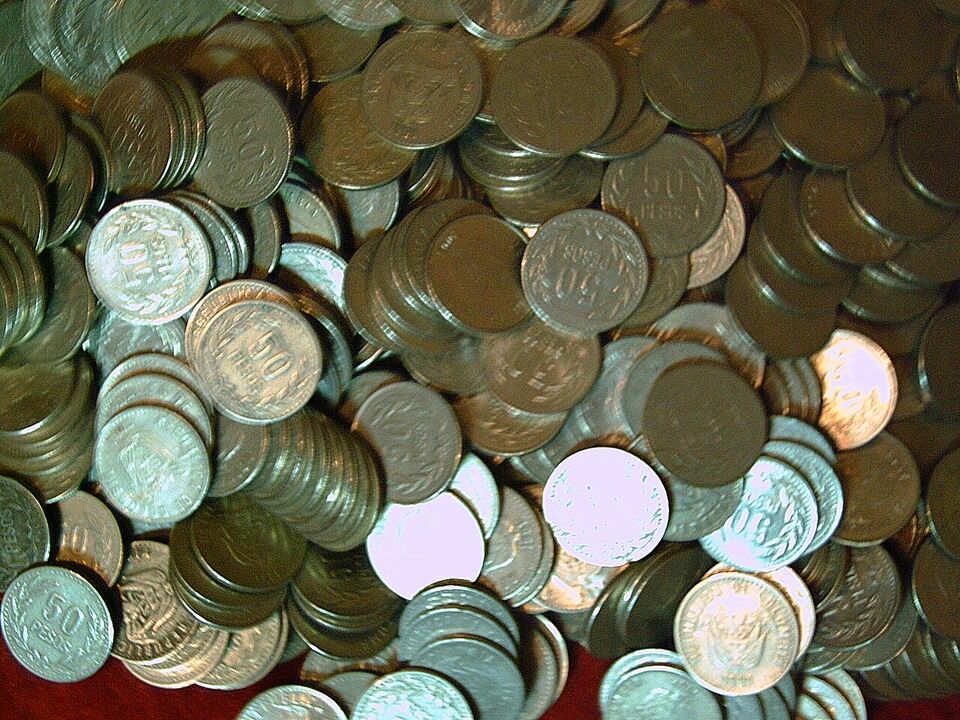
You do not need to bring pesos from home. If you want some cash on arrival, take a small amount from an airport ATM, or exchange a small amount of US dollars. Exchange houses (casas de cambio) in cities pay a rate that is below the official market rate, with a gap between the "we buy" and "we sell" price. For example, on November 11, 2026, houses in Bogotá bought US$1 for about COP 3,187 (US$1 sold for about COP 3,284), against a market rate of about COP 3,297 for US$1; Medellín and Cali houses also paid less than the market rate. Compare two or three houses, read the board, and ask what the final amount will be after any commission before you hand over any dollars.
Banks may exchange dollars only for their own customers, and branches that do will ask for your passport. Airport counters are convenient and usually have the worst rates. Do not change money with people on the street, however friendly: it is a common route for counterfeit notes and short-changing. Bring clean, undamaged US bills if you plan to exchange any, since torn or marked notes can be refused.
Tipping, service charges and taxes
Tipping in Colombia is customary in restaurants and voluntary everywhere. The word to know is propina (tip). Many restaurants add a suggested tip of about 10% to the bill, shown as propina sugerida or servicio. It is voluntary, and you are allowed to pay it, adjust it or ask for it to be removed. You can ask ¿Está incluida la propina? (is the tip included?) when the bill arrives. If the line is on the bill and you were happy with the service, leaving it is the simplest answer; if it is not there, a similar amount is a normal gesture. For taxis, rounding up is fine. We could not find an official source on other tipping rules, so for guides, drivers and hotel staff, give what feels fair for good service, in cash and in pesos.
Taxes appear in two forms. The national sales tax is IVA (19%). If a bill looks higher than the menu, ask what was added. A different matter is hotel VAT: foreign visitors have often not paid it on hotel stays when they show their passport and entry stamp. That rule was under review in 2026 (the government that took office on August 7, 2026 inherited a proposal to remove the exemption and keep a refund instead). We could not confirm its current status, so ask your hotel before you book, bring your passport, and check the national tax authority at dian.gov.co.
Some countries refund sales tax to tourists on goods when they leave. We found no confirmed refund scheme for shoppers in Colombia in 2026, so do not count on one; if a shop offers a refund form, ask what the airport counter requires before you buy, and keep receipts and the item unused. For goods you bring home, see the US customs allowances in the shopping and bringing things home guide.
Insider tip
Ask a simple question when the bill arrives: ¿La propina viene incluida o es voluntaria? It shows you know the custom, and it avoids paying twice if a tip was already added.
What costs what: rough price tiers
We do not give daily budgets here because prices vary widely by city and change often; the budget guide has the numbers. Instead, here is how costs tend to fall in tiers, so you know what to expect before you look at a menu.
- Low: city buses, metro and TransMilenio rides, a tinto (small black coffee), street snacks such as an arepa (corn cake), a set lunch (almuerzo corriente or menú del día) in a local restaurant, a bus ticket for a short trip, and a museum with a modest entry fee.
- Mid: a sit-down dinner with drinks, a taxi ride across a big city, a day tour to a town or a viewpoint, a hostel or simple hotel room, and domestic bus journeys of several hours.
- High: international-standard hotels and boutique stays in Cartagena, Medellín and Bogotá, boat day trips to the islands, guided multi-day treks, scuba, domestic flights, and car rental.
Public transport is a good example of how low the low tier can be. In 2026, a TransMilenio ride in Bogotá costs COP 3,550 (about $1.10), and a Medellín metro ride on a Cívica card is COP 3,820 (about $1.20). Fares change in January, so check the operator's site if you travel in a different year.
Tourist prices and two-tier pricing
Some attractions charge foreigners more than Colombians. The Gold Museum in Bogotá charges foreign visitors COP 21,000 (about $6) and Colombians COP 10,000 (about $3), and it is free for everyone on Sundays, as of 2026. Parks and some tours do the same. Carry your passport or a copy if you expect a resident or student rate, and do not be surprised when a local price does not apply to you. In tourist hot spots, prices without a posted list may start high; the rule is to ask the price before you say yes.
Bargaining and who to pay
Prices are fixed in supermarkets, malls, restaurants, hotels and most shops. Bargaining is normal at craft markets, with street sellers and for private tours or boat trips that have no posted rate. A polite counter-offer (¿Me puede hacer un mejor precio?) is enough; do not haggle over small amounts or over a service that is already cheap by your standards. Remember that a few thousand pesos is only a dollar or two.
For any taxi ride without a working meter, agree on the fare before you get in. Better still, use a registered taxi or a ride app, which shows the price in advance; see phones, data and power for the apps and why the hotel desk can help. Never pay a deposit in cash to a stranger for a tour, a room or a taxi "reservation".
Save money
Eat the set lunch (menú del día) as your main meal: it usually bundles a soup, a main plate and a juice. It is the easiest way to eat well on a modest budget, and the price is on a board outside.
Scams: counterfeit notes and card tricks
Counterfeit pesos exist, as in any country, and the most common risk for visitors is being handed a bad large note as change, or receiving one from an ATM or an exchange. Check large notes: feel the paper, hold them to the light for the watermark and the security thread, and compare them with a note you know is genuine. Count your change in front of the seller. If you doubt a note, ask to swap it at once; do not accept a note that looks worn, taped or oddly colored.
For cards, keep the card in your sight at restaurants (ask for the portable terminal at the table) and check your statements. Report any unknown charge immediately. Never share a PIN or a one-time code with anyone who calls you, even if they claim to be from your bank. If you are targeted by a suspicious "friend" or a "police officer" asking to inspect your cash, do not hand it over; walk into a shop or a hotel and ask for help. For emergencies and phone theft, see phones, data and power.
What US card fees to expect
Every US issuer sets its own fees, so there is no single answer, but the pieces are the same. A foreign transaction fee (commonly a few percent of each purchase, but zero on some travel cards). A cash advance fee and interest for credit-card ATM withdrawals, which start accruing at once (use a debit card for cash, not a credit card). An ATM fee from your bank on each foreign withdrawal, plus the Colombian machine's own fee. A currency conversion if you accept the "pay in dollars" option, which you should decline.
Before you leave, check these things: that your cards are active and your PINs work (ask your bank which PIN length works on foreign machines), that you know how to freeze a lost card in your bank's app, and that you have a way to call your bank from abroad. Take a photocopy or a phone photo of your passport, kept separately from the passport itself. Our packing guide has a short checklist for documents and cash.
- Two cards on different networks, one with no foreign transaction fee
- A debit card for ATM cash, and your bank's international phone number
- A cushion of small peso bills, kept in more than one pocket
- The habit of paying in pesos, not dollars, on every card machine
- A hotel safe for spare cards and most of your cash
Anything that changed in 2026
As of November 2026 we are not aware of a confirmed change to the basic rules for visitors: pesos remain the currency, cards work in cities, and ATMs and exchange houses operate as described. Two items are worth checking before you travel. The first is the hotel VAT exemption for foreign tourists, which was under review (see above). The second is the tourist card amount for the islands: visitors to San Andrés pay a card on arrival, about COP 105,000 (about $32) or more, and Leticia a smaller amount; the San Andrés price was reported to have gone up in 2026 and a digital version began, so check the current amount with your airline or the island's tourism office.
Also check whether your ticket includes airport fees, since we could not confirm a departure tax figure (see the flights guide). Rates, fares and prices rise at the start of the year, so verify any figure here against the official site before you plan around it. For help with your trip budget, the FAQ collects short answers to the most common questions.
Add it to a route in the trip builder, or ask us to plan the hotels, trains and guides for you.