Overview: a colonial town in the Boyacá hills
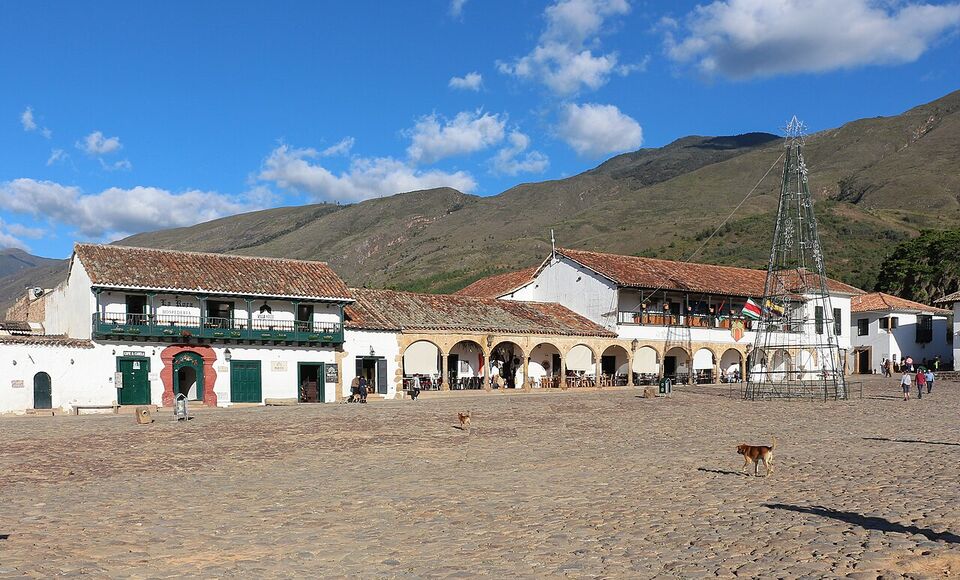
Villa de Leyva is a small colonial town in the department of Boyacá, northeast of Bogotá, and it is the most popular overnight trip out of the capital. It is known for its enormous cobbled square, whitewashed houses with red tile roofs, quiet streets and a landscape of dry hills, with fossils, a pre-Hispanic astronomical site and small wineries a short drive away. Wikipedia describes it as one of the few towns in Colombia to have kept its original colonial architecture almost completely.
The town was founded on June 12, 1572 and was declared a national monument on December 17, 1954 to preserve its buildings. It was named a Pueblo Patrimonio (heritage town) of Colombia in 2010 and is on Colombia's tentative list for UNESCO World Heritage. It is small, about 17,000 people in the municipality according to a 2015 figure, and sits in a valley about 23 miles (37 km) west of the departmental capital, Tunja.
This page covers the ways to get there from Bogotá, whether to go for a day or a night, what to see in town and in the countryside, the weather, the weekend crowds and a short walking plan. Our Bogotá guide and Bogotá things to do cover the city you will leave from, and Colombia's destinations shows where the town fits in a wider trip.
Getting there from Bogotá
Villa de Leyva has no airport or train, so every trip is by road. The trip from Bogotá is a long one, usually several hours each way; the time varies a lot with traffic leaving Bogotá, especially on Friday afternoons and holiday weekends. We could not confirm current bus times, fares, terminals or companies, so verify those with the bus company or your hotel before you go.
| Option | How it works | Cost level | Best for | Watch for |
|---|---|---|---|---|
| Direct intercity bus | Scheduled buses from a Bogotá bus terminal, or a bus to Tunja and a change to a local bus or minibus | Lowest | Budget travelers who can handle Spanish and flexible times | Confirm which terminal your company uses; weekend departures fill |
| Guided day tour | Operator picks you up in Bogotá and visits the town and a few sights, often with a stop on the way | Moderate | First-timers with one day | A long day on the road; you leave before the quiet evening hours |
| Private driver | A car and driver booked by your hotel or a reputable operator, one way or round trip | Highest | Families, small groups, anyone with luggage | Agree the price, the stops and the return time in writing first |
| Rental car | Drive yourself on the highway toward Tunja, then the local road | Moderate to high | Experienced drivers who want to see the countryside | Mountain roads, heavy traffic leaving Bogotá, and plate-based driving limits; ask the rental company about the rules |
Most visitors choose between the bus and a private driver. The bus costs the least but takes the most planning: find out whether your company leaves from a terminal in the north of Bogotá or from the main bus terminal, and buy the ticket in advance on weekends and holidays. Use a registered taxi or a ride app to reach the terminal, not a cheap street cab, and keep your phone and bag close in the terminal. Our getting around page explains intercity buses and what to expect at terminals.
A guided tour or a private driver is easier if you are carrying bags, arriving at altitude after a long flight or traveling as a family. When you book, ask what is included (hotel pickup, entrance fees, lunch), what time you will be back in Bogotá and which sights are on the stop list. Also ask whether the route passes the Zipaquirá salt cathedral, which some tours combine with Villa de Leyva.
Insider tip
Ask your Bogotá hotel to call the bus company or the driver, not just a travel desk. Hotels often know which companies run the safest and most reliable service, and a call in Spanish avoids confusion about terminals and times.
One day or one night?
A day trip works, but it is tight. With several hours of travel each way, a Bogotá day trip gives you perhaps four to five hours in the town, mostly in the afternoon crowds. An overnight gives you the early-morning plaza and the evening, when day-trippers have left and the town is calm.
- One day: best if you are short on time and take a guided tour or a private driver. Pick two things only, such as the main square and the fossil museum.
- One night: our suggestion. Arrive by midday, see the town on foot and one nearby sight, stay for dinner and see the square in the morning light before you leave.
- Two nights: good if you want the countryside as well: the observatory, the wineries, the waterfalls or a hike in the Iguaque area.
The town sits at about 7,050 ft (2,150 m), so it is lower than Bogotá by about 1,600 ft (500 m). If you have already spent a few days in the capital, you will feel the altitude much less here, but the sun is strong and the nights are cold, so bring layers. Our health page has altitude advice.
Weather and the dry climate
Villa de Leyva sits in a high, semi-arid valley, which gives it more sun and drier air than most Andean towns. The nearby weather station, at 7,267 ft (2,215 m), records average daily highs between 72°F and 75°F (22°C to 24°C) all year and lows between 50°F and 53°F (10°C to 12°C), so every month is cool at night. Plan for shirts and a fleece or jacket, a hat and sunscreen.
It is not a desert. The same station records about 39 in (997 mm) of rain a year and 149 rain days, and the wettest months are April, May, October and November, with the driest from June to August and in January. The sun is typically strongest in the dry months (January records around six hours of sunshine a day), while the rains bring cloud and cooler afternoons. Dry air and altitude can leave your lips and skin dry, so carry lip balm and water.
| Month | Average high | Average low | Rain |
|---|---|---|---|
| January | 74°F (23°C) | 50°F (10°C) | 2.0 in (50 mm), 9 days |
| April | 74°F (23°C) | 53°F (12°C) | 4.8 in (123 mm), 16 days |
| July | 72°F (22°C) | 51°F (11°C) | 1.6 in (40 mm), 10 days |
| October | 73°F (23°C) | 52°F (11°C) | 5.9 in (149 mm), 17 days |
| November | 72°F (22°C) | 52°F (11°C) | 4.7 in (119 mm), 17 days |
Colombia's weather agency said on November 12, 2026 that a strong El Niño is expected to last into early 2027, with fewer rains and higher temperatures than usual. For a trip in the coming months, expect it to be drier and a little warmer than the averages above. See our when to go page for the national picture.
The Plaza Mayor and the old town
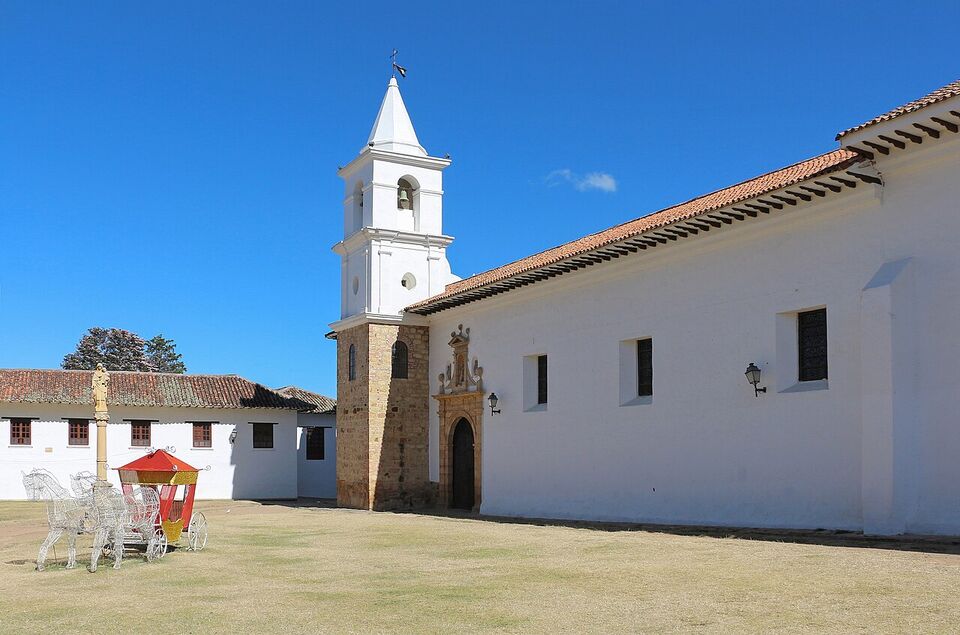
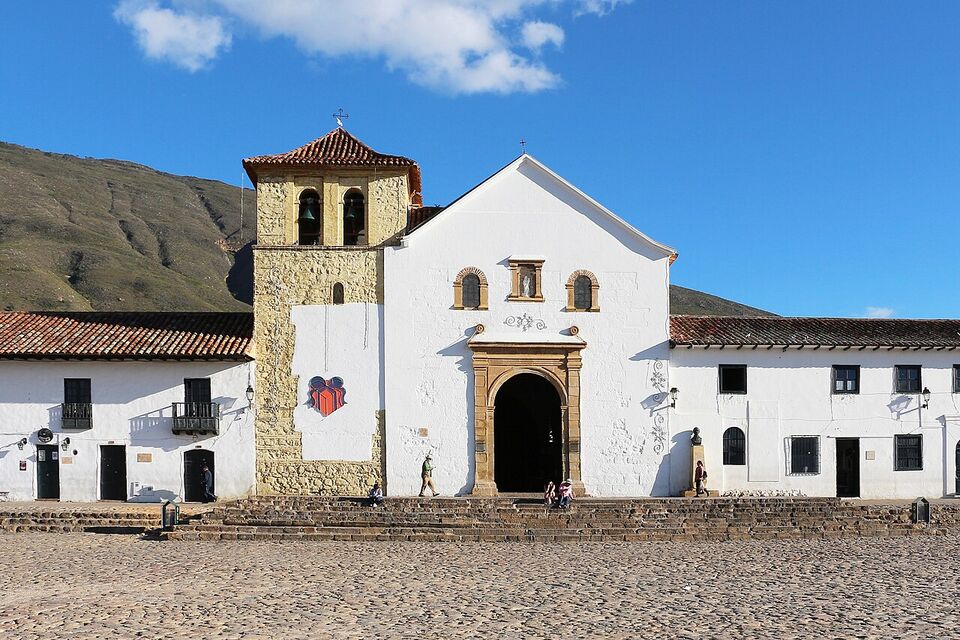
The main square, the Plaza Mayor, covers about 14,000 square meters (about 150,000 sq ft), which makes it the largest square in Colombia and, according to Wikipedia, believed to be the largest entirely cobbled square in South America. It is bordered by the parish church (Nuestra Señora del Rosario) and by low whitewashed colonial buildings with arcades, cafés and shops. Walk across it slowly: the cobbles are uneven and the plaza is huge, and the best time to see it is early morning or at dusk.
Around the square you can visit several small house museums. The house where Captain Antonio Ricaurte (a hero of the independence wars) was born is now a military museum, Antonio Nariño (the translator of the Rights of Man into Spanish) spent his last years in the town, and the painter Luis Alberto Acuña lived and worked there. The House of the First Congress, where the first Congress of the United Provinces of Nueva Granada met on October 4, 1812, is on the north corner of the square and is now used by the municipal council. Opening hours and entrance fees for these small museums change, and we could not confirm them, so check at the tourist office in town.
Festivals fill the calendar. Wikipedia lists a gastronomic festival in November, a water festival, a tree festival, a jazz festival in July, an international kite festival in August, an onion beauty pageant in October and a Festival of Lights on December 7. We have not confirmed the 2026 dates for any of them. Ask the town's tourism office whether the main square also hosts a weekend market, and check the festival dates before you book a room: events and Monday holidays make the town busier and hotel prices higher. The tourism office and the Boyacá department's tourism pages are the best places to check.
Nearby sights
The countryside around the town is the main reason to stay a second night. Most places are a short drive from the square, so ask your hotel to arrange a car or a tour, or hire a taxi for half a day. Entrance fees and hours change, so we give none here: confirm each one with the site or the tourism office.
El Fósil (the fossil museum)
The most famous find is a near-complete marine reptile, a Monquirasaurus, discovered in 1977 and left where it was found, with a museum built around it. A second smaller specimen found nearby is displayed beside it. The area is rich in Cretaceous fossils from an ancient sea.
El Infiernito (astronomical park)
A Muisca observatory made of upright stones, used by the Muisca to read the sky and the seasons. The Spanish named it "little hell" because they were shocked by its carvings and forms. Visit on a clear day and bring a hat, since there is little shade.
Pozos Azules
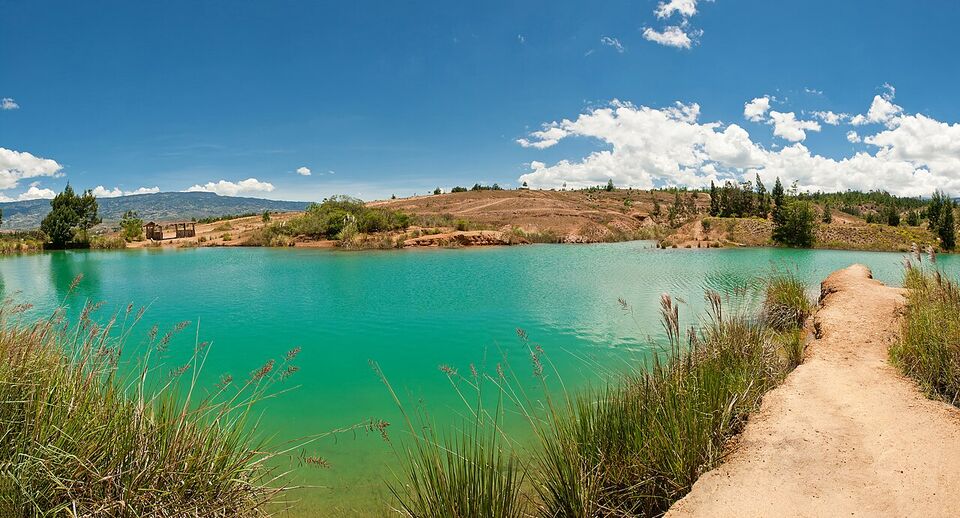
A group of blue-green pools set in the dry hills, popular with day-trippers. Check the current access, fees and whether swimming is allowed.
Wineries
The cool, dry climate and rich soil have made the area a small wine region, with several wineries around the town. Tastings and tours are usually arranged by the winery, so confirm times first. Do not drink and drive on the rural roads.
The convent (Santo Ecce Homo)
A colonial convent in the nearby countryside, often combined with a morning in the hills. We could not confirm its current hours or entry rules, so ask the tourism office before you go.
Iguaque and La Periquera
To the northeast, the land rises into cloud forest in Iguaque National Park, with a group of seven waterfalls called La Periquera about 9 miles (15 km) from the town center. Treat it as a hike at altitude: go early, take water and a rain layer, and confirm the park's entry rules and any closures with Parques Nacionales Naturales (parquesnacionales.gov.co).
Watch out
Rural roads and trails have little cell coverage and few signs. Go with a driver or a guide for the farther sights, tell your hotel where you are going and return before dark. Check travel.state.gov for the current US advisory for the country (Level 3: Reconsider Travel as of November 2026) and our safety page for the basics.
A short walking plan
- Arrival
Plaza, streets and sunset
Settle into your hotel, then walk across the Plaza Mayor, past the parish church and along the quiet side streets with their house museums. Stop for a coffee at an arcade café, then have dinner near the square. Evenings are cold, so bring a jacket.
- Day 2
Countryside half day
After a slow breakfast, go by taxi or tour to El Fósil and El Infiernito in the morning, then a winery or the Pozos Azules after lunch. Be back in town before the afternoon, and take the bus or driver back to Bogotá in the late afternoon.
If you have only one day, go straight to the square, see one nearby sight (the fossil museum is the easiest) and leave early enough to avoid the worst traffic on the way back to Bogotá, especially on Sunday evenings and the final day of a long weekend.
Where to eat and stay
The streets around the Plaza Mayor have many restaurants, cafés and bakeries, and some restaurants have live music in the evening. The area is also known for its wineries and for regional Boyacá dishes, and Wikipedia says the town hosts a gastronomic festival in November. We do not recommend a specific restaurant here because we cannot confirm which ones are open and good in 2026; pick one with a busy dining room and a menu with prices on display. For ordering and what to expect on a Colombian menu, see our food page.
Many restaurants add a suggested tip of about 10%, which is voluntary; check the bill. See money for how menu prices are written. Carry some cash, since smaller shops, taxis and village sites may not take cards.
For lodging, choose between small hotels and guesthouses within a few blocks of the square, which are best for walking, and country lodges outside town, which are quieter but need a car or a taxi. Prices rise on weekends and holidays, so book early for Friday and Saturday nights and for Monday holidays: the next ones are November 16, 2026 and, as we compute it, January 11, 2027. Weekday visits are cheaper and calmer.
Common mistakes to avoid
- Trying to do it as a rushed day trip. The travel eats most of the day. Stay one night if you can.
- Arriving without a plan for the return. Buses fill on Sundays and holiday Mondays. Buy your return ticket in advance or arrange a driver.
- Underdressing for the evening. The sun is warm, but nights fall to about 50°F (10°C). Bring a jacket.
- Skipping sunscreen and water. The altitude and dry air make the sun harsh and dehydrating.
- Assuming everything is open. Small museums and sites keep their own hours and may close one day a week. Check before you go.
- Cheap street taxis in Bogotá on the way out. Book a registered car or use an app to reach the terminal. See our Bogotá guide for safe transport.
For packing, see the packing page. After Villa de Leyva, many travelers fly on from Bogotá to Cartagena, Medellín or the coffee region; domestic flights explains how.
Add it to a route in the trip builder, or ask us to plan the hotels, trains and guides for you.