Overview
Colombia's best-known festival is the Barranquilla Carnival, four days of parades, music and costumes that end on the Tuesday before Lent. Around it sit a dozen others: the Blacks and Whites Carnival in Pasto in early January, the silent Holy Week processions in Popayán and Mompox, Medellín's Flower Fair in August, Cali's salsa-filled fair after Christmas, and a long Christmas season of lights. Most of them are free to watch, and most are built on one idea: the whole town comes outside.
The practical lesson is the same for all of them. Dates are tied either to Easter (which moves) or to a tradition that the organizers confirm only months ahead, and small cities have few hotel rooms. Pick the festival first, confirm the dates on the organizers' own site, and book a room before you book anything else. This page gives you the general season of each festival, the dates that we could confirm for 2027, how to book, how to stay safe in a crowd, and what each celebration means in plain words.
All dates below are as of November 2026. Festivals are sometimes moved, shortened or canceled (for weather, security or budget reasons), so treat every date here as a starting point and check the organizer before paying for anything that cannot be refunded. For the rest of the calendar, see the when to go guide and the monthly pages for November, December and January.
Festivals at a glance
This table lists each festival by place and general season, with no exact dates, because most organizers publish the program late. Where we found a date for 2027, it appears in the sections that follow, marked as a date to confirm.
| Festival | Where | General season | What you see | Book ahead? |
|---|---|---|---|---|
| Barranquilla Carnival | Barranquilla | February or early March (four days before Ash Wednesday) | Parades, folk dances, costumes, orchestras | Yes, hotels and parade seats |
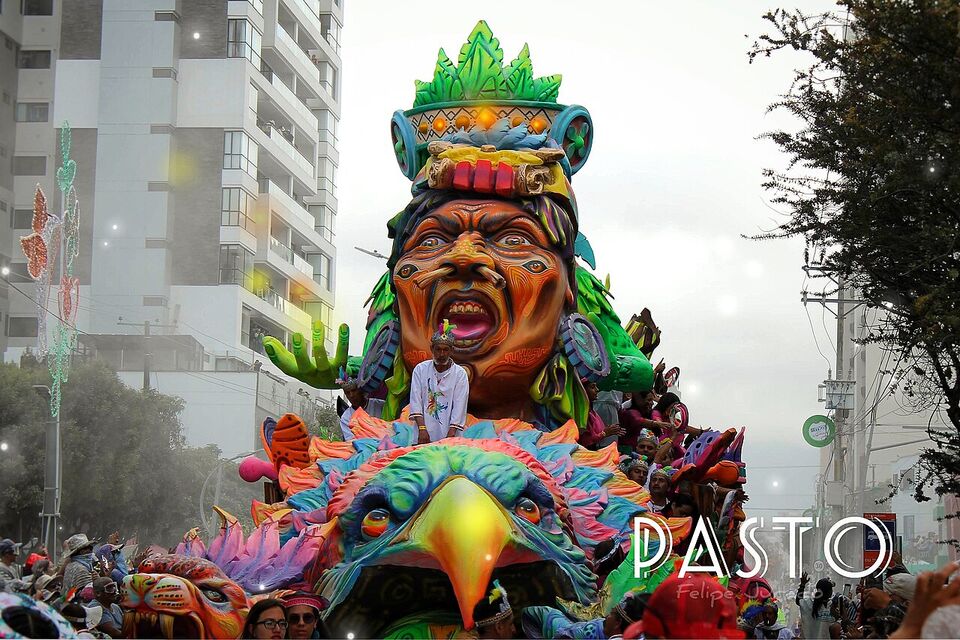
| Blacks and Whites Carnival | Pasto | Early January | Parades, floats, painted faces, a day of white powder | Yes, rooms are few |
| Holy Week (Semana Santa) | Popayán, Mompox, also Villa de Leyva and many towns | March or April (the week before Easter) | Night processions of carried statues | Yes, months ahead |
| Vallenato Legend Festival | Valledupar | End of April | Accordion contests and street music | Yes |
| Feria de las Flores | Medellín | August | Flower carriers' parade, classic cars, concerts | Yes |
| Feria de Cali | Cali | Late December (traditionally December 25-30) | Salsa shows, horse parade, concerts | Yes |
| Christmas lights | Medellín, Bogotá and many towns | From late fall through early January | Light displays, candles on December 7 | Hotels near lights, yes |
| Cartagena International Music Festival | Cartagena | January | Classical concerts in the walled city | Yes, for concerts |
| Hay Festival Cartagena | Cartagena | Late January | Talks and readings by writers | Yes, tickets and hotels |
| Independence celebrations | Cartagena (November), the whole country (July and August) | November 11 in Cartagena; July 20 and August 7 nationwide | Parades, concerts, local holidays | Beach and city hotels on long weekends |
Barranquilla Carnival
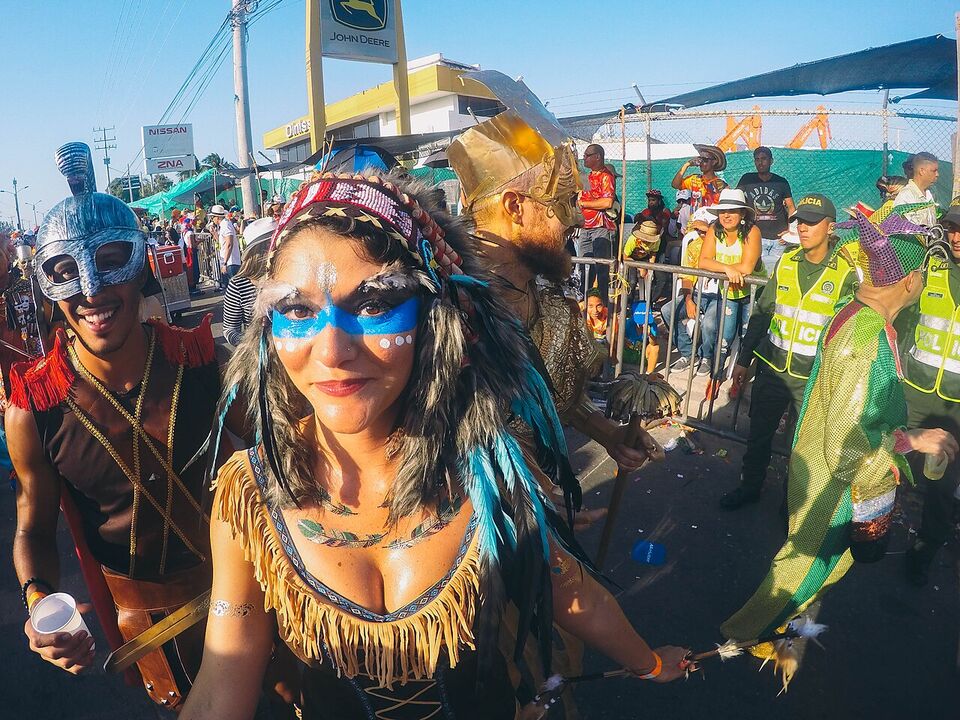
Barranquilla's Carnival is the big one: one of the largest carnivals in the world, according to the usual descriptions, and a UNESCO-listed masterpiece of oral and intangible heritage since 2003. It runs for four days that end on the Tuesday before Ash Wednesday. The dates listed for the next editions are February 6-9, 2027 (Saturday to Tuesday) and February 26-29, 2028. In 2026 it ran February 14-17. Confirm the program with the official carnival organization before you book.
The days follow a pattern. Saturday opens with the Batalla de Flores (Battle of the Flowers), a parade of floats and dance groups. Sunday brings the Gran Parada (Great Parade) of folkloric groups, and Monday adds an orchestra festival with Caribbean and Latin bands. On Tuesday the city mourns and buries Joselito Carnaval, a cheerful ritual that closes the party. The weeks before the main weekend have their own events, including a night parade called La Guacherna, a children's parade, the reading of the carnival proclamation and the crowning of the queen. If you cannot be there for the full four days, the pre-carnival nights are quieter and easier.
The dances and music come from three roots: European (the paloteo stick dance), African (the congo) and Indigenous, and the most common sound is cumbia. Costumes include the marimonda and the many dancing groups that train all year. Monday and Tuesday of Carnival are local holidays in Barranquilla only, so shops and offices are closed there but not in the rest of the country.
Insider tip
Decide how much of the carnival you want. Grandstand seats along the parade route are sold by the organizers and are the comfortable way to watch (shade, a place to sit, a toilet nearby); free street viewing is lively but hot, crowded and loud. Check the carnival organization's official site for seating and ticket sales, and avoid reselling that you cannot verify. Barranquilla is at sea level and hot, so plan for the sun and for water.
Barranquilla itself is a working port city on the Caribbean coast, and many visitors treat the carnival as the reason to come. Ask your hotel which neighborhoods suit you, return by registered taxi or a ride app, and see the regions guide for how it fits with Cartagena and Santa Marta. For the music behind the carnival, see Salsa and Music.
Pasto: the Blacks and Whites Carnival
The Blacks and Whites Carnival (Carnaval de Negros y Blancos) takes place in Pasto, in southern Colombia near the Ecuador border, in the first days of January. The traditional core days are January 5 (Blacks' Day) and January 6 (Whites' Day), and a pre-carnival period begins around December 28. We could not confirm the 2027 program, so plan for early January (about January 2-7) and confirm the days with the carnival's official organizers before you book.
On Blacks' Day people paint their faces and skin dark, and on Whites' Day they throw white powder and foam. Bring clothes that you do not mind ruining, protect your eyes and phone, and expect to be covered. The floats and costumed groups are the artistic heart of the event, and many are made by neighborhood teams that work for months. Pasto sits high in the Andes, so evenings are cool.
Watch out
Check the US advisory before choosing how to get to Pasto. As of November 2026 the advisory for Colombia is Level 3: Reconsider Travel, and secondary sources list Cauca (except Popayán) among the areas with a "Do Not Travel" designation. The land route between Popayán and Pasto crosses that department. Many travelers fly to Pasto instead; confirm the current list on travel.state.gov and read our safety overview and domestic flights page.
Rooms in Pasto sell out well before January. If you cannot find one, a day trip is unrealistic for most visitors, so choose another festival instead of arriving without a bed.
Holy Week in Popayán and Mompox
Holy Week (Semana Santa) is the week before Easter. In 2027 Easter Sunday is March 28, which makes Holy Thursday March 25 and Good Friday March 26, both national holidays (expected, computed from the holiday rules; check the official calendar). It is the busiest religious travel week of the year, and tourism sources list it among the high seasons.
Popayán, in the department of Cauca, is the best-known place for the processions. Its Holy Week processions have been on UNESCO's intangible heritage list since 2009. Each night, carved wooden scenes called pasos (each depicts an episode of the Passion) are carried on the shoulders of bearers through the white colonial streets. The mood is silent and solemn, closer to a funeral procession than to a party. Secondary sources list Popayán as an exception inside Cauca, but the department around it is listed as a "Do Not Travel" area, so base yourself in the city, avoid road trips outside it, and check the advisory.
Santa Cruz de Mompox (usually written Mompox, or Mompós) is a small river town in the department of Bolívar. Its historic center is a UNESCO World Heritage site (1995), and its Holy Week is another quiet, traditional one. We found no 2027 schedule and no reliable transport details, so check with the town's tourism office and your lodging, allow extra travel time, and book early because there are few rooms.
- Wear closed shoes and light layers; the processions are long, and the evenings cool down in the mountains.
- Stay for the whole night procession only if you can leave easily; the streets close to traffic.
- Be respectful: no flash photography close to the statues, no loud talk and no blocking the bearers.
- Villa de Leyva, the Zipaquirá Salt Cathedral and Monserrate in Bogotá also fill with visitors during Holy Week. See Villa de Leyva and Bogotá.
Feria de las Flores in Medellín
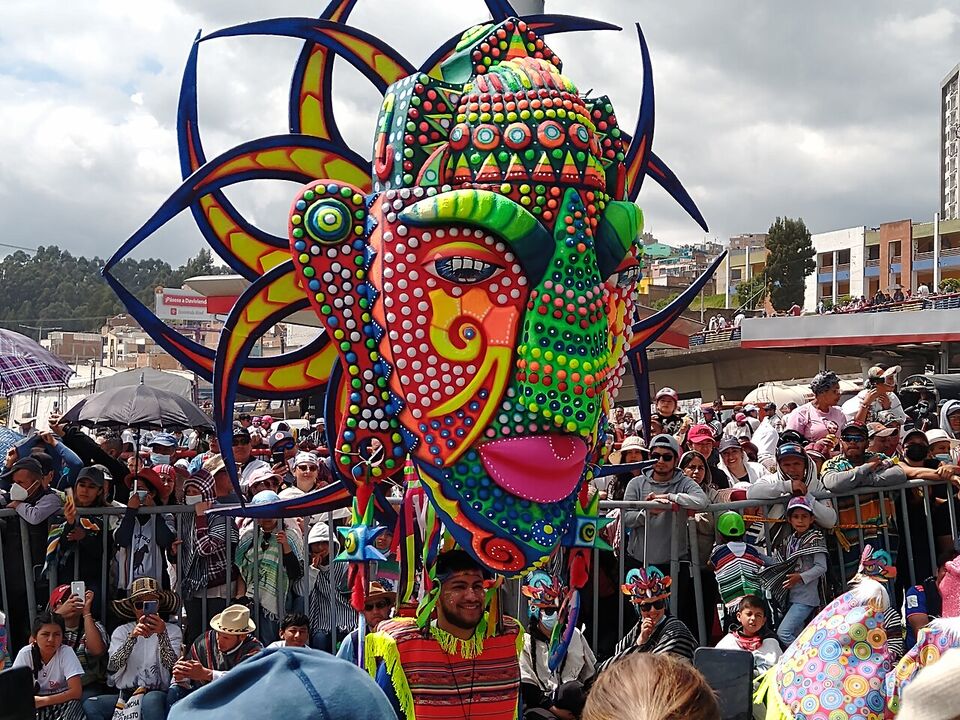
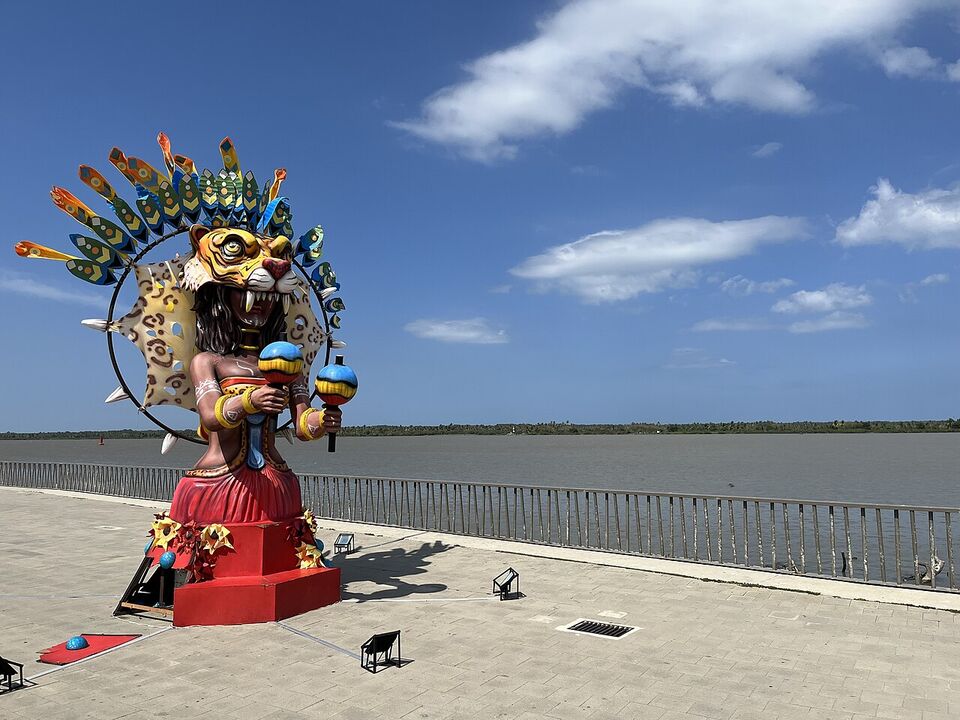
The Feria de las Flores (Flower Fair) is Medellín's main festival. It was first held in May 1957 and moved to August in 1958 to celebrate the independence of Antioquia. Its central event is the Desfile de Silleteros, a parade in which more than 500 flower growers (silleteros, from the mountain village of Santa Elena) carry flower arrangements on their backs in wooden frames called silletas. The tradition recalls the way farmers once carried goods, and, in the story told at the fair, people on their backs. Other events include a classic car parade, a trova (humorous song) contest, concerts and an orchid exhibition. The city government offers free access to many of these events.
We could not find the 2027 dates. In recent years the fair has started around the beginning of August, so plan for August and confirm on the city's official festival site and at our Medellín guide. Hotels in El Poblado and Laureles fill early, and prices rise.
Different from home
A Colombian festival is usually free and city-wide, not a ticketed event on a fairground. You do not buy a pass; you find a good spot on the parade route, often hours early. Bring water, a hat and a small bag.
Cali's Feria and the Christmas season
The Feria de Cali is held after Christmas, traditionally from December 25 to 30, and has run since 1957. It is known for the salsa marathon (Salsódromo), a horse parade (cabalgata), a classic car parade, the Cali Viejo Carnival (traditionally on December 28), and big concerts. We could not read a 2026 program, so confirm the dates and ticketed events with the organizers. Cali calls itself the world capital of salsa, and December is when the whole city goes dancing. See our Cali guide.
The advisory's secondary sources list Valle del Cauca (except Cali) as a "Do Not Travel" area, so the simplest plan, as far as the advisory goes, is to base yourself in Cali and not make long road trips around it. Check travel.state.gov for the current list.
Christmas lights and the night of the little candles
Colombia's Christmas season starts early. The night of December 7 is the Día de las Velitas (Day of the Little Candles), when families and neighborhoods put candles and paper lanterns on sidewalks and in windows for the Immaculate Conception, a national holiday on Tuesday, December 8, 2026. It is a beautiful, family-friendly night, and a good reason to be outdoors in the evening. Public lights (alumbrados) are switched on in many cities, and Medellín's displays are especially popular; the switch-on dates for 2026 were not announced in the sources we could read, so check the city's tourism site. December 25 (Friday in 2026) is a national holiday, and many museums and attractions close on December 24, 25, 31 and January 1 (usually; check each one).
Christmas week is the most expensive and crowded time to travel in Colombia. For tips on the month, see December in Colombia.
Music festivals and the Vallenato Festival
The Vallenato Legend Festival (Festival de la Leyenda Vallenata) is held in Valledupar, in the northeast, around the end of April. The 60th edition is listed for April 28 to May 1, 2027. Vallenato, the accordion music of Colombia's Caribbean region, is recognized by UNESCO as intangible heritage in need of urgent safeguarding, and the festival's accordion contests are its main event. Rooms are few, so book early, and check the organizers' site for tickets. Valledupar is hot, so plan for the sun, and check travel.state.gov for the current list of areas before you choose a route.
Other events worth knowing:
- Hay Festival Cartagena: a literary festival listed for Thursday, January 28 to Sunday, January 31, 2027, with ticket sales opening in November 2026 (check hayfestival.com).
- Cartagena International Music Festival: a classical music festival held in January in the walled city. We could not confirm 2027 dates.
- Rock al Parque (Bogotá) and Estéreo Picnic: large music festivals named in tourism sources; we found no 2027 dates, so check the organizers.
- Cali's Summer Salsa Festival: reported for early July, lasting about a week (reference source; confirm).
For genres, venues and how to dance, see Salsa and Music.
Independence celebrations and national holidays
Colombia has many public holidays, and most of the movable ones are observed on the following Monday, a rule dating to a 1983 law. The result is the puente (literally "bridge"), a three-day weekend. In 2026 the remaining holidays are Monday, November 16 (Cartagena's independence, moved from November 11), Tuesday, December 8 and Friday, December 25. Expected holidays in 2027 (computed, not read from an official calendar) include Monday, January 11; Monday, March 22; Thursday and Friday, March 25-26 (Holy Week); Monday, May 10; Monday, May 31; Monday, June 7; Monday, July 5; Tuesday, July 20; Saturday, August 7; Monday, August 16; Monday, October 18; Monday, November 1; and Monday, November 15. Check the official calendar before you plan.
Independence is celebrated in several ways. July 20 and August 7 are national days. In Cartagena, November 11 marks the city's independence and is one of its annual festivals, with the holiday observed on a Monday. Expect parades and concerts, closed offices and banks, and busy highways on the long weekends.
Save money
On puente weekends, beach hotels and domestic flights cost more. If your dates are flexible, leave on Tuesday or return on Tuesday and avoid the Friday and Monday rush. Gold Museum in Bogotá closes on Mondays, even holiday Mondays, so use long weekends to see it on a Sunday (it is free on Sundays) or a Saturday.
How to book for a festival
- Confirm the dates first. Use the organizers' own website or the city's tourism office, not a blog. Also check whether that year's edition has been moved or canceled.
- Book the room before the flight. In small cities, a bed is the scarce resource. Pick a refundable rate and read the cancellation terms. See where to stay.
- Book flights and buses early. Domestic flights fill before long weekends and Christmas; see domestic flights and getting around.
- Buy seats only from the organizers. For ticketed parades and concerts, use the official seller. Prices are in pesos, even when written with a "$" sign (see money in Colombia).
- Carry some cash. Cards are common in cities, but street food, taxis and small vendors are easier with small bills. See the money guide.
- Plan your exit. Know how you will get back at night (a registered taxi, a ride app or a hotel car) before the party starts.
Staying safe in the crowds
Large festivals are mostly friendly, family-centered events, and many Colombians bring children. Crowds also attract petty thieves, and nightlife attracts people who drug drinks. The US State Department's advisory for Colombia is Level 3: Reconsider Travel (as of November 2026), citing crime, terrorism, civil unrest, kidnapping and natural disasters, and its text mentions drugging, extortion, kidnapping and armed break-ins. Check travel.state.gov for the current text.
- Carry one card, a small amount of cash and a photocopy or photo of your passport; leave the rest in the hotel safe.
- Keep your phone in a front pocket or a zipped bag, and do not hold it up at street corners.
- Do not accept drinks, food or cigarettes from strangers, and watch your drink being poured. Scopolamine and similar drugs have been used against tourists in nightlife areas.
- Go with a group, tell someone where you are, and leave before the crowd thins.
- Avoid meeting strangers from dating apps in private places. The US Embassy's January 2024 security alert described criminals using dating apps to lure victims.
- Use a registered taxi or a ride app and check the plate; ask your hotel whether apps are used locally.
- Stay away from drugs entirely. They are illegal, and tourists have been robbed, drugged and arrested.
For more, read the safety guide. If you need help, dial 123 in Colombia (the national emergency number); US citizens can also call the embassy's 24-hour line at +1-202-501-4444 from abroad.
What the festivals mean
- Carnival: a party before Lent, the 40 days of fasting before Easter. Barranquilla's mixes Spanish, African and Indigenous traditions, and its closing "burial" of Joselito is a joke about the end of the fun.
- Blacks and Whites: a celebration of the mix of peoples in southern Colombia, and a day to play with white powder.
- Holy Week: a religious week, not a party. Dress modestly and watch quietly.
- Flower Fair: a tribute to Antioquia's flower growers and to the tradition of carrying flowers (and, in the older story, people) up the mountain.
- Velitas: candles lit on the eve of the Immaculate Conception, which begins the Christmas season.
- Vallenato: a festival of accordion storytelling, and a source of Caribbean-coast pride.
Common mistakes
Watch out
The most common mistake is arriving without a hotel booked in festival weeks. In Barranquilla, Pasto, Popayán, Mompox, Valledupar and Cali, rooms can be gone months ahead, and prices at the last minute can double. Book first, and keep a cancellable reservation until the dates are firm.
- Assuming the date from last year. Easter-linked festivals move, and organizers change the program.
- Carrying a passport, a laptop and extra cards into the crowd.
- Wearing good clothes to the Pasto carnival or to a foam party.
- Treating Holy Week as a party; it is a religious week.
- Arriving by long overland routes at night. See getting around and the planning guide.
Add it to a route in the trip builder, or ask us to plan the hotels, trains and guides for you.