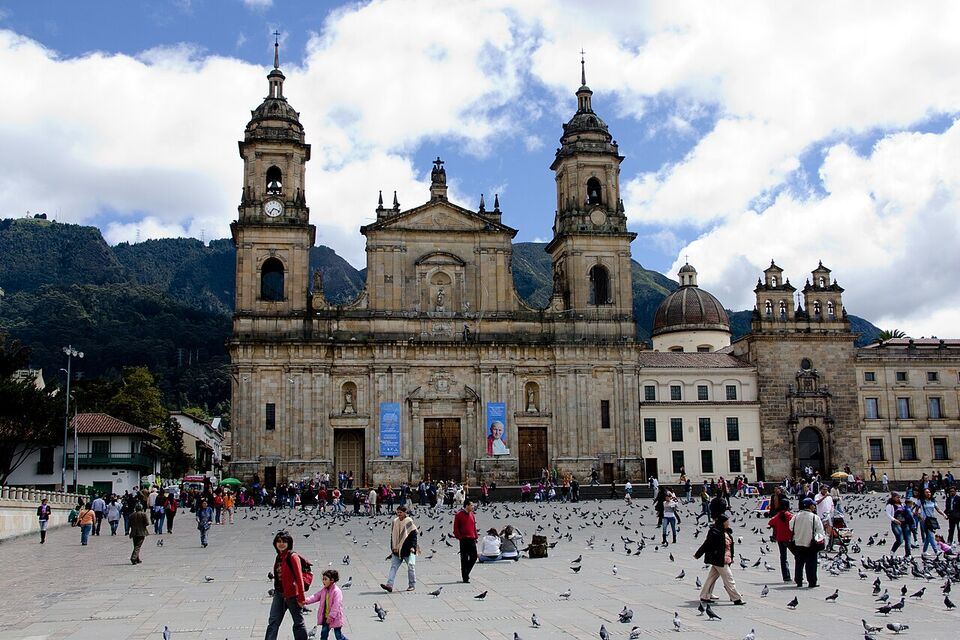
Overview: a high, cool, big city
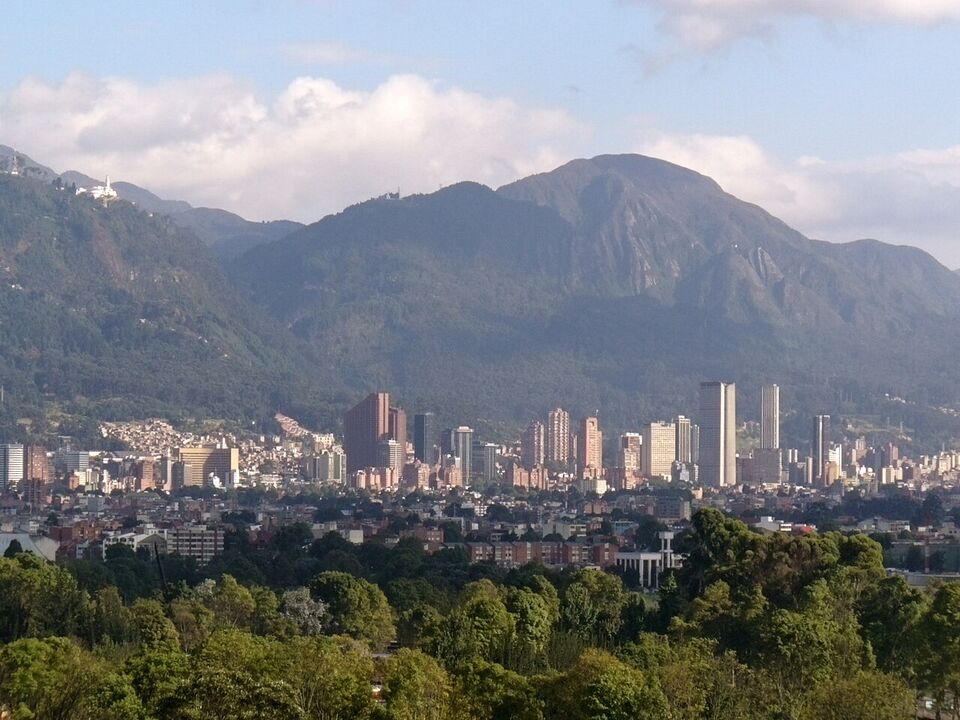
Bogotá is Colombia's capital and its largest city, home to about 8 million people on a high plateau in the Andes. It sits at about 8,660 ft (2,640 m), which makes it one of the highest big cities in the world, and that single fact shapes almost everything about a visit: the cool weather, the way you feel when you climb stairs, how much you should plan for your first day and what you pack.
Most Americans arrive here by direct flight from Miami, Dallas/Fort Worth, Atlanta, Houston and other US cities, so it is often the first stop of a Colombia trip. The airport and the historic center are roughly 45 minutes to an hour apart depending on traffic (a rough guide, not an official time), and the city is spread out, so choosing the right neighborhood to sleep in matters more than in a compact town. See our flights page for the US routes and our trip planner for how Bogotá fits into a longer route.
What follows covers the altitude and weather, the neighborhoods (with a table for choosing where to stay), how to get in from the airport, buses and taxis, the Sunday bike streets, where to eat and drink coffee, and the night-time precautions that matter. For specific sights, hours and tickets, go to Bogotá things to do. For vaccines and altitude health advice, see our health page.
Bogotá is on Colombia Time (UTC-5), with no daylight saving time. That is the same as New York in winter and one hour behind New York during US summer time.
Altitude: what to expect and how to handle it
At 8,660 ft (2,640 m) the air holds noticeably less oxygen than at sea level. For most healthy visitors that means breathlessness on stairs and hills, poor sleep for a night or two, a mild headache and unusual tiredness. These effects normally fade within a few days. The sun feels sharp at midday, and the air cools quickly once clouds roll in or the sun sets.
Practical ways to ease in:
- Keep the first day light. Skip an early Monserrate climb, a long walk or a bike ride on arrival day.
- Drink water through the day and go easy on alcohol, which hits harder at altitude. Many travelers drink bottled or filtered water; ask your hotel.
- Eat regular, lighter meals and rest when you feel tired rather than pushing through.
- Use sunscreen and sunglasses even when it feels cool.
- If you have heart, lung or blood conditions, are pregnant, or have had altitude trouble before, talk to your doctor before the trip. Ask about preventive medicine well ahead of time, since some options need a prescription and a start date before you arrive.
- If you develop severe symptoms (a pounding headache that does not ease, confusion, vomiting, severe breathlessness at rest), seek medical care and plan to go lower. Our health page has the details and emergency numbers.
The CDC does not recommend the yellow fever vaccine for a trip limited to Bogotá, and it says there is no malaria transmission in the city. If your trip continues to the Amazon, the Caribbean national parks or other low areas, the advice changes, so check the health page before you plan the rest of your route.
Different from home
Bogotá is higher than Denver (about 5,280 ft, or 1,609 m) and higher than any major US city. If you have only ever been to the mountains for a weekend, give yourself a slow first afternoon instead of a full sightseeing schedule.
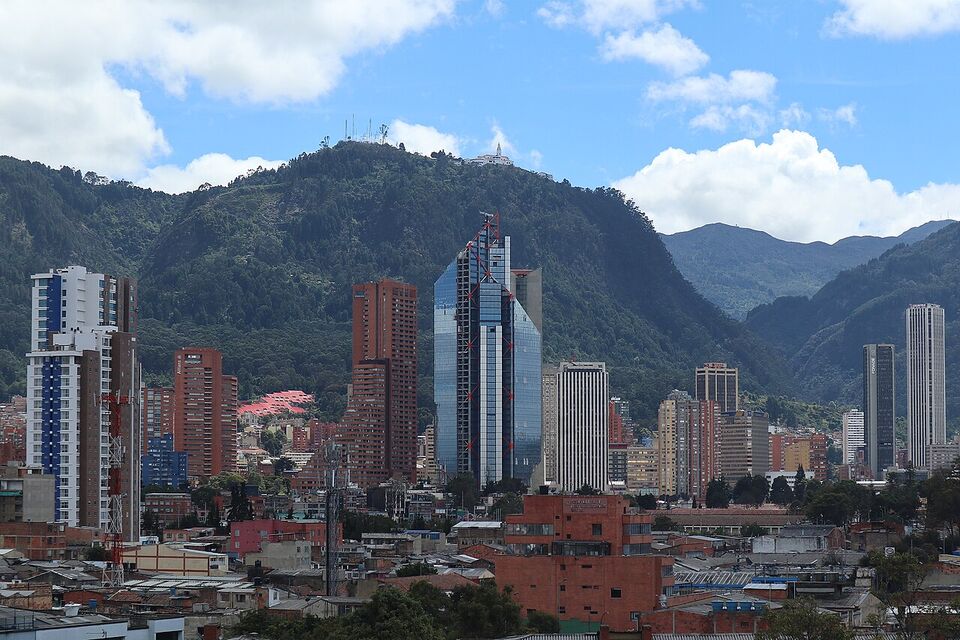
Weather and when to go
Bogotá has no hot season or cold season in the American sense. The temperature barely changes through the year; what changes is the rain. The city's weather station at the airport records the following averages (given in °F first):
| Month | Average high | Average low | Rain days | Rainfall |
|---|---|---|---|---|
| January | 68°F (20°C) | 44°F (6°C) | 5 | 1.3 in (33 mm) |
| March | 68°F (20°C) | 47°F (9°C) | 11 | 3.3 in (83 mm) |
| May | 67°F (19°C) | 49°F (10°C) | 14 | 4.3 in (109 mm) |
| July | 65°F (18°C) | 48°F (9°C) | 10 | 1.9 in (49 mm) |
| October | 67°F (19°C) | 47°F (8°C) | 12 | 4.3 in (108 mm) |
| November | 67°F (19°C) | 48°F (9°C) | 12 | 4.2 in (107 mm) |
| December | 68°F (20°C) | 46°F (8°C) | 8 | 2.4 in (61 mm) |
The main rainy periods are March to May and October to November, and the driest months are December to February. A shower can arrive any day, though, and an afternoon downpour or even a short hailstorm can drop the temperature sharply in under an hour. Mornings are often foggy and cold, and the evenings cool quickly. A light jacket, a sweater and a compact umbrella are as important here as a daypack.
Colombia's weather agency (IDEAM) said on November 12, 2026 that a strong El Niño is expected to continue into early 2027, with fewer rains and higher temperatures than usual. For a visitor, that suggests a drier and a little warmer stay than the averages above, but it does not change the cool nights. Bogotá's mayor ruled out water rationing on September 17, 2026, and we have not seen later news, so check bogota.gov.co if water supply matters for your dates.
Our when to go page compares the whole country, and the month pages cover November, December and January. December and January are the driest months in Bogotá, but they are also holiday periods when flights and hotels fill, and some museums close on specific days (see the sights page).
The districts: where to base yourself
Bogotá is divided into 20 localidades (districts). Higher-income neighborhoods are mostly in the north, along the base of the Eastern Hills, and the south and west are more working-class and far less visited. Visitors spend nearly all their time in a belt that runs north from the old center. Distances are bigger than they look: the trip from La Candelaria to Usaquén is a long ride by bus and a longer one in traffic.
La Candelaria
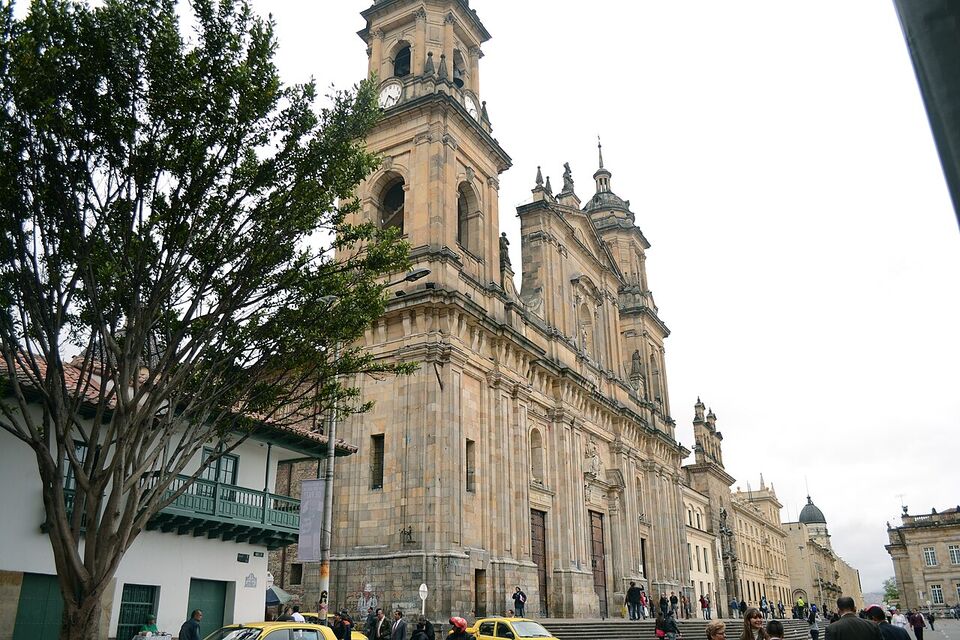
The old colonial core, with cobbled streets, the Gold Museum, the Botero Museum and Plaza de Bolívar all within walking distance. It is the best base for a short sightseeing stay, and many hostels and small guesthouses are here. Streets empty out after dark and some blocks feel uncomfortable, so plan evening meals and taxis rather than wandering. See things to do for the sights.
Chapinero
A large, busy locality north of the center with offices, cafés, galleries and shops, and Chapinero is Bogotá's biggest locality by economic output. Its sub-areas include Zona G and Zona T. It suits travelers who want a lively evening scene and easy access to transit.
Zona G
The "G" stands for gourmet, and the area is known for restaurants and food-focused shops around a few blocks in northern Chapinero. A good choice if you plan to eat out most nights and walk between dinners.
Zona T
A pedestrian-oriented stretch of bars, restaurants, hotels and malls, part of the wider "Zona Rosa" nightlife district. It is convenient and has many hotels, but its bars are busy late and it is a place where the drugging and phone-snatching warnings later in this page are most relevant.
Usaquén
Once a separate town, Usaquén keeps a small colonial plaza with a Spanish-style church (built 1665) and a weekly Sunday flea market. It is a residential and upscale area, quieter than Chapinero and good for a relaxed stay, but well north of the old center, so allow time for the ride.
Use the table below to compare. The hotel tiers show the usual price level of places in each area ($ under $120 a night for a double, $$ $120 to $300, $$$ over $300); prices vary a lot by season and by hotel, so check current rates.
| Area | Best for | Typical hotel tiers | At night | Trade-off |
|---|---|---|---|---|
| La Candelaria | First-timers focused on museums and history | $ $$ | Quiet; take a taxi or app ride after dinner | Few late restaurants; streets empty after dark |
| Chapinero | Central base with cafés and transit | $ $$ | Lively in its busy blocks; quieter on side streets | Busy and loud; far from the old center |
| Zona G | Food lovers | $$ | Restaurant crowds; calmer than Zona T | Pricier meals; few sights nearby |
| Zona T | Shopping and nightlife | $$ $$$ | Late and crowded; take extra care with drinks and phones | Noise; drink and phone risks late at night |
| Usaquén | Quiet stay, Sunday market, families | $$ $$$ | Calm, residential | Far from the museums and the old center |
If you only have two nights, stay in La Candelaria or Chapinero and take rides to the other area. If you have more, split your stay: two nights near the museums, then a calmer base in the north. Our where to stay page covers hotels across the country, and our family page notes what to check with children at altitude.
Getting from the airport
El Dorado Airport (BOG) is Colombia's busiest, in the west of the city. The airport's call center is +57 (601) 266 2000, and the airport's website is eldorado.aero. Allow roughly 45 minutes to an hour for the ride to La Candelaria or Chapinero, and more at rush hour (a rough guide, not an official time). We have not confirmed current fares, so ask your hotel for the price before you land and confirm it with the driver.
Your options:
- Official airport taxi desk. Use the licensed counter inside the terminal, where you are given a ticket or a registered cab. This is the simplest way to avoid disputes. Ask for the fare before you get in.
- Prebooked hotel transfer. Many hotels will send a driver. This costs more than a taxi but removes the arrival-hall decision, which is useful if you land late.
- Ride apps. Apps are widely used in Bogotá, but their legal status is unclear, so ask your hotel which one it trusts and where the pickup point is at the airport.
- Public transport. With luggage, altitude and unfamiliar routes, most visitors take a taxi or a booked car on arrival. If you want to try buses, check transmilenio.gov.co for current routes to the airport, which we have not confirmed.
Watch out
Do not accept rides from people who approach you in the arrivals hall or outside, and do not hail a cheap taxi off the street on your first night. Street taxis are where most of the problems with unofficial cabs begin. Ask your hotel to call a registered car or use the airport desk.
Flights from the US land at El Dorado (BOG). American flies from Dallas/Fort Worth and Miami, Delta from Atlanta, United from Houston, and Avianca and LATAM from several US cities; Frontier adds Orlando to Bogotá on December 14, 2026. Schedules change, so check with the airline. Our flights page has the list, and domestic flights covers onward travel to Cartagena, Medellín and beyond.
Getting around: TransMilenio, taxis and apps
TransMilenio and the city's buses
TransMilenio is Bogotá's bus rapid transit system. Articulated buses run in dedicated center lanes along main avenues, and you board from raised stations reached by a bridge or a crossing. The system has 143 stations and about 71 miles (114 km) of routes, and it carried about 2 million passengers on a typical weekday in 2025. It is fast when it works and very crowded at rush hours.
The 2026 fare for TransMilenio, the TransMiZonal feeder buses and TransMiCable gondolas is COP 3,550 (about $1.10) per trip since January 14, 2026. You need a rechargeable TuLlave card, which you load at station machines; free transfers within 125 minutes only apply with a personalized TuLlave Plus card. There is also a TransMiPass at COP 160,000 (about $48) for 65 trips, which is built for commuters. We have not confirmed the price of a card or how a visitor buys one, so ask at a station desk or your hotel, and check transmilenio.gov.co.
The city is also building its first metro line. Construction began in 2021, and Wikipedia lists the first line as expected to start service in 2028, so it is not part of your 2026 or 2027 trip.
Insider tip
Ride TransMilenio outside rush hours, keep your bag in front of you and your phone in a zipped pocket, and know your station name before boarding. Many first-time visitors use it for a single useful corridor (such as between Chapinero and the center) and take taxis or apps for the rest.
Taxis and ride apps
Taxis are everywhere, but the safest ones are those booked through your hotel, a restaurant or a taxi app, or taken from official stands at the airport and malls. Do not hail a cab on the street at night, and be wary of drivers who offer a low flat price. Meters exist, but ask the driver whether the fare is metered or agreed before you start.
Ride apps are widely used, but their legal status is unclear, so ask your hotel what it advises. Sit in the back, check that the plate and driver match the app, and share your trip with someone. Our getting around page covers intercity buses, flights and driving, and our money page explains cash, cards and tipping.
Driving in Bogotá is a poor idea for most visitors, with heavy traffic, altitude-related engine and brake differences and limits by license plate on certain days (pico y placa). Ask your rental company about the current plate rules if you do drive.
The Sunday ciclovía
On Sundays and public holidays, Bogotá closes main streets to cars for several hours so people can bike, run, skate and walk. The program is called the ciclovía (literally "bike way"), and it is one of the city's best-known traditions. Wikipedia describes the city as having an extensive network of cycling routes, and the weekly ciclovía is the clearest example. Rental bikes and guided bike tours are widely available.
The exact hours and routes, and which streets are closed, are set by the city and can change for events, so check the current schedule on bogota.gov.co or ask your hotel. Time your plans around altitude: even a gentle ride is harder at 8,660 ft (2,640 m), so take it slowly, drink water and wear sunscreen.
The ciclovía also affects your day. Cross-town drives and taxi trips can take longer on closed streets, and many museums, markets and restaurants are busier on Sundays. Combine it with the Usaquén market (see things to do) or a late lunch.
Food and café culture
Bogotá's best-known dish is ajiaco santafereño, a hearty chicken and potato soup served with cream, capers and avocado. It is a Bogotá specialty, and in 2024 the TasteAtlas food guide placed it among its top 10 stews in the world (as repeated on Colombia's official tourism site). A cold, damp afternoon is the best moment for it.
Other things to look for:
- Tinto: a small black coffee served everywhere, from street carts to cafés. It is not an espresso; it is closer to a mild filter coffee.
- Chocolate santafereño: hot chocolate, often served with a piece of cheese to drop into the cup. Many traditional cafés in La Candelaria serve it.
- Arepas (corn cakes), empanadas, tamales and fresh juices made with fruits you may not know, such as lulo and maracuyá (passion fruit).
- Specialty coffee shops, where you can try Colombian beans prepared with filter methods, and tasting flights are common in Chapinero, Zona G and La Candelaria. Our coffee page and food page explain the varieties and the dishes by region.
A "$" on a menu means pesos; see money for how prices are written. Many restaurants add a suggested tip (propina) of about 10% to the bill; it is voluntary, so check the receipt before you add more. Cards are common in the districts above, but carry some cash for small cafés, markets and taxis.
Lunch is the main meal, and many places offer a fixed-price set lunch (menú del día) at midday. Check opening hours for dinner, especially outside the main restaurant zones.
Save money
Have your main meal at midday, when set lunches are the best value, and a lighter dinner. Walk out of the tourist blocks of La Candelaria and Zona T by a few streets and menu prices usually fall.
Safety, especially after dark
Bogotá is a huge capital that many Americans visit every year. It also has street crime, and the US State Department advisory for the whole country is Level 3: Reconsider Travel (as of November 2026), "due to crime, terrorism, civil unrest, kidnapping, and natural disasters". The advisory was reissued on March 31, 2026, and it lists some areas as Level 4: Do Not Travel; check travel.state.gov for the current list. Those areas are not in the usual Bogotá visitor belt, but you should read the list before you plan side trips. More detail is on our safety page and in Is Colombia safe?
Common-sense habits matter more here than any rule:
- Phones. Do not walk with your phone out, especially near busy corners, bus stops and the edges of La Candelaria. Check directions in a shop or café, and put it away before you step back outside.
- Taxis. Use registered taxis, apps or your hotel's car at night. Do not flag a cheap cab on the street.
- Streets after dark. Avoid walking on empty or dimly lit streets after dark, including side streets in La Candelaria, the blocks around the downtown bus areas and the south and southwest of the city, which our source describes as the city's grittier working-class sides. Ask your hotel which streets to skip on your specific route, and take a ride between restaurants rather than walking long distances.
- Drinks and strangers. The advisory warns of drugging, extortion, kidnapping and armed break-ins. A US Embassy security alert dated January 10, 2024 reported eight suspicious deaths of US citizens in Medellín between November and December 31, 2023 and warned that criminals use dating apps to lure victims to public places to assault and rob them; the embassy said it had received similar reports from Cartagena and Bogotá. Never leave a drink unattended, never accept drinks or food from strangers, and meet app contacts only in busy public places with a friend who knows the plan.
- Drugs. Buying, carrying or using illegal drugs is against Colombian law, and the advisory's warning about drugging applies to nightlife. Do not accept offers from strangers; they can be a setup for robbery or worse.
- Protests. Demonstrations happen in the city, often around Plaza de Bolívar. Avoid them, and check local news if one is planned.
For emergencies, dial 123, Colombia's national emergency number. The US Embassy is at Carrera 45 No. 24B-27, Bogotá, phone (+57) (601) 275-2000, and US citizens can reach help 24 hours a day at +1-202-501-4444 from abroad. Enroll in the Smart Traveler Enrollment Program (STEP) before you go.
Watch out
The advisory and its list of areas can change. We cannot tell you the current list in this guide, so read it on travel.state.gov within a week of your departure and again before you add a side trip.
Common mistakes to avoid
- Overscheduling the first day. Landing at 8,660 ft after a long flight and then climbing Monserrate the same afternoon is a classic way to feel ill. Spend the first day on a short walk, a meal and an early night.
- Walking with a phone out. Phone snatching is a common risk. Keep the phone in a front pocket or bag, and take photos quickly.
- Taking cheap street taxis. Hail nothing from the curb after dark. A booked car costs a little more and avoids the most common problems.
- Dressing for "tropical" weather. Bogotá is close to the equator but feels like early spring most days. Bring a jacket and long pants.
- Arriving on a Monday. Major museums, including the Gold Museum, close on Mondays (see the sights page). Monday, November 16, 2026 is also a public holiday.
- Underestimating distances. The city is long and traffic is heavy. Pick one neighborhood per half day.
- Not carrying ID. Keep a photocopy or photo of your passport page and entry stamp, and leave the original in the hotel safe unless you need it. See our entry rules page for the Check-MIG form and the other documents.
Sample plan and onward trips
Three days is a comfortable first visit. Move any day around the museum closures on our sights page.
- Day 1
Arrive, rest, a short walk
Take the airport desk or a booked car to your hotel, eat a simple meal and walk a few flat blocks nearby. Go to bed early.
- Day 2
La Candelaria and the museums
Walk the old center in the morning, visit the Gold Museum (closed Mondays), have a bowl of ajiaco and finish with the Botero Museum or a short walk to Plaza de Bolívar. Take a registered ride home.
- Day 3
Monserrate, Usaquén or a Sunday ride
Go up Monserrate by cable car or funicular in the morning, or spend a Sunday on the ciclovía and at the Usaquén market.
Beyond the city, the usual add-ons are a day trip to the Zipaquirá salt cathedral, or a night or two in Villa de Leyva, a colonial town in Boyacá. From Bogotá you can also fly to Cartagena, Medellín or the coffee region; see Colombia's destinations for how to link them.
Before you go, confirm any official detail you rely on: the museum opening days on the museums' own sites, the TransMilenio fare on its official page, and the current Colombia advisory on travel.state.gov. Bogotá's tourism institute (idt.gov.co) and the district government (bogota.gov.co) publish visitor information in Spanish and some English.
Add it to a route in the trip builder, or ask us to plan the hotels, trains and guides for you.