Overview
Colombia is one of the world's best-known coffee countries, and visitors who like coffee will be able to drink well here. You can sip a tinto (a small black coffee) from a cart for little money, order a flat white in a specialty cafe in a big city, tour a working farm in the coffee region and buy beans to take home. Beyond coffee, the drinks list includes fruit juices, hot chocolate with cheese, sugarcane water, craft beer and the national anise spirit, aguardiente.
This page explains how Colombian coffee is grown and sold, how to order it, what to buy and how to avoid fake or overpriced packs, how to pick a farm tour, what the National Federation of Coffee Growers does, and the drinks you will meet beyond coffee. It also covers drinking safely: ice, water and the warnings about spiked drinks that the US government gives travelers. For food, see our Colombian food page, and for where the coffee grows, our coffee region guide.
How Colombian coffee is grown and sold
Colombia grows arabica coffee, the higher-grade species, and is among the largest producers in the world. By most counts it is the world's third-largest coffee producer, after Brazil and Vietnam, and the leading grower of arabica specifically; check the federation's site for current figures. Most of it is grown in the coffee growing axis (Eje Cafetero, also called the Zona Cafetera) in the departments of Caldas, Quindío and Risaralda and neighboring areas, with other quality regions such as the Sierra Nevada de Santa Marta. The European Union granted Colombian coffee protected designation of origin status in 2007, and UNESCO named the Coffee Cultural Landscape of Colombia a World Heritage Site in 2011.
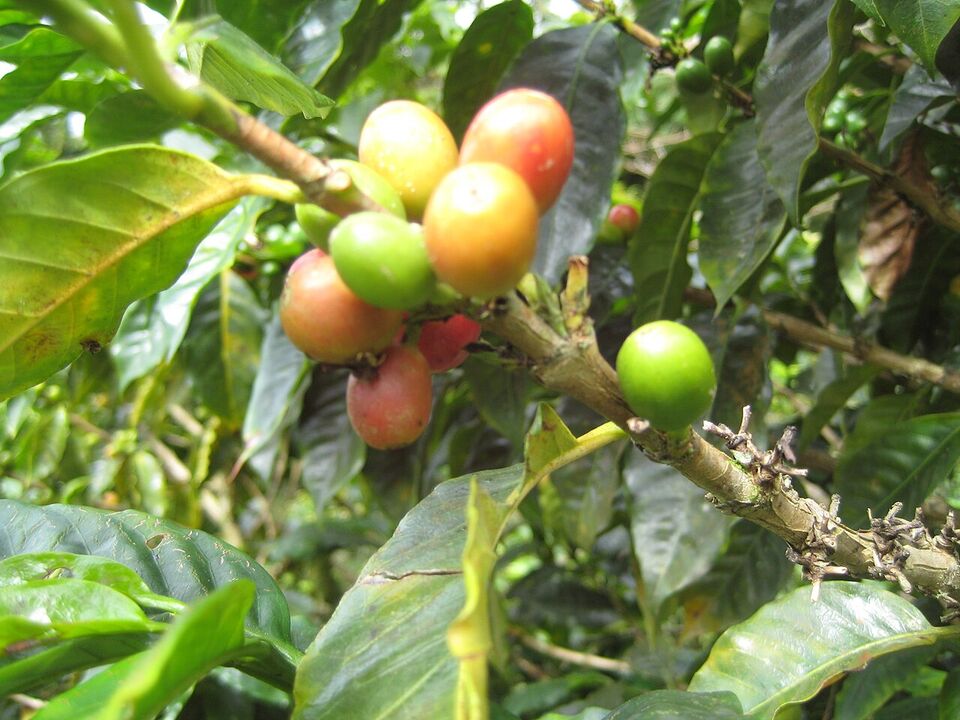
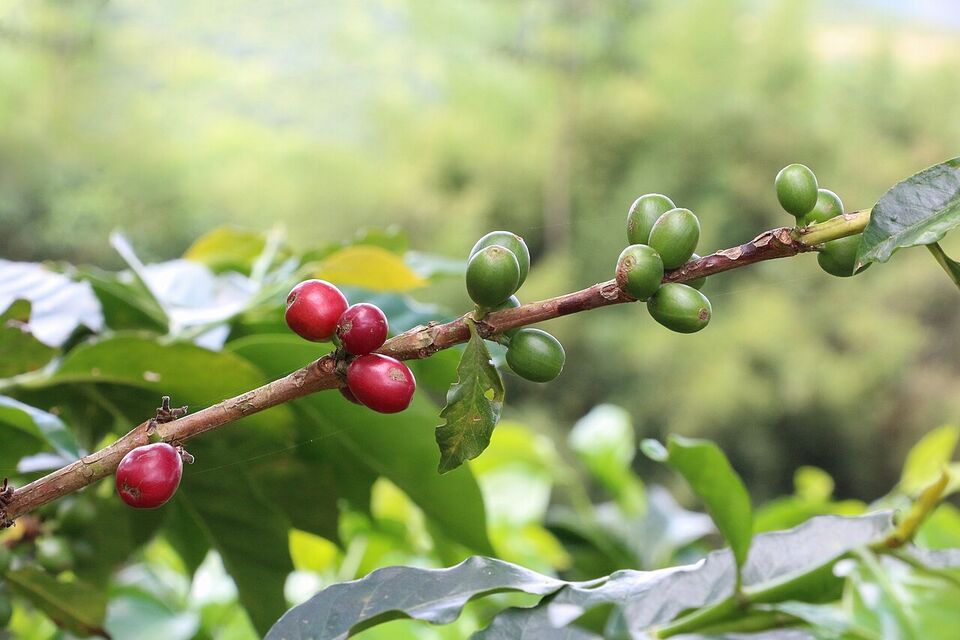
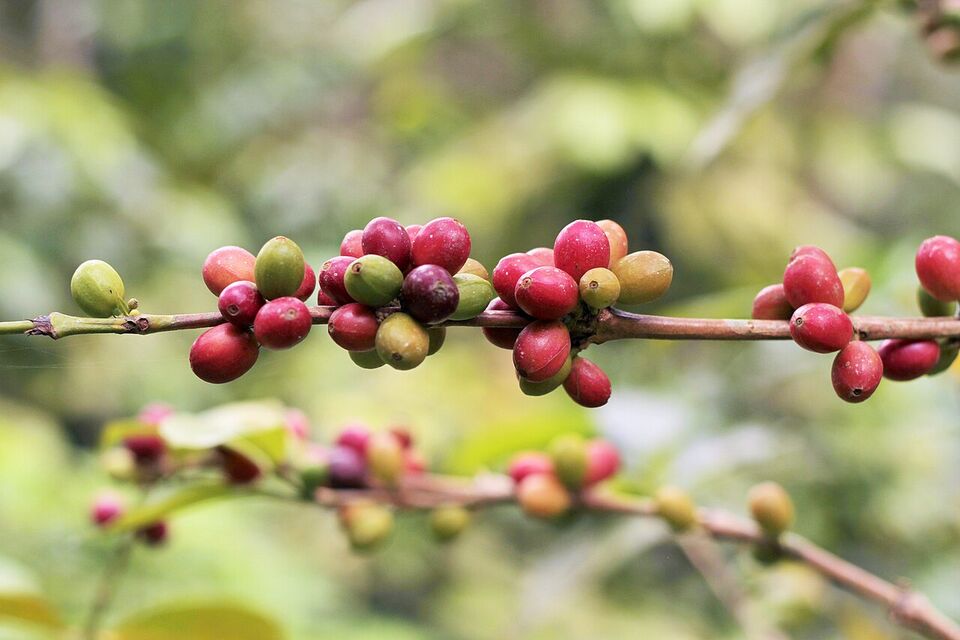
Two features set the country's coffee apart. First, it is grown mostly on small family farms on steep mountain slopes, often a few hectares each, not on large plantations. The National Federation of Coffee Growers describes more than 500,000 producers, most of them small family farms. Second, most Colombian coffee is "washed" (lavado): the ripe red cherries are picked by hand, the fruit is removed and the beans are fermented and rinsed in water before being dried. This is a general description of the usual method; individual farms also use other processes, and specialty farms often experiment. Washed coffee tends to taste clean and bright, which is why "mild, well-balanced" is how coffee writers usually describe Colombian beans.
The coffee is picked in more than one season, and the timing differs by region and altitude, so a farm's busy season depends on where it is. Ask the farm what is happening when you visit. The coffee region has its driest months in June to August and wetter months at the turn of the year; IDEAM expects a drier, warmer pattern into early 2027 because of El Niño, so plan for changes.
Different from home
The best Colombian coffee is exported. What many Colombians drink at home and in cheap cafes is a lower-grade, sweetened tinto. To try the high-quality local coffee, go to a specialty cafe or a farm, and ask for coffee from a named region or farm.
The National Federation of Coffee Growers
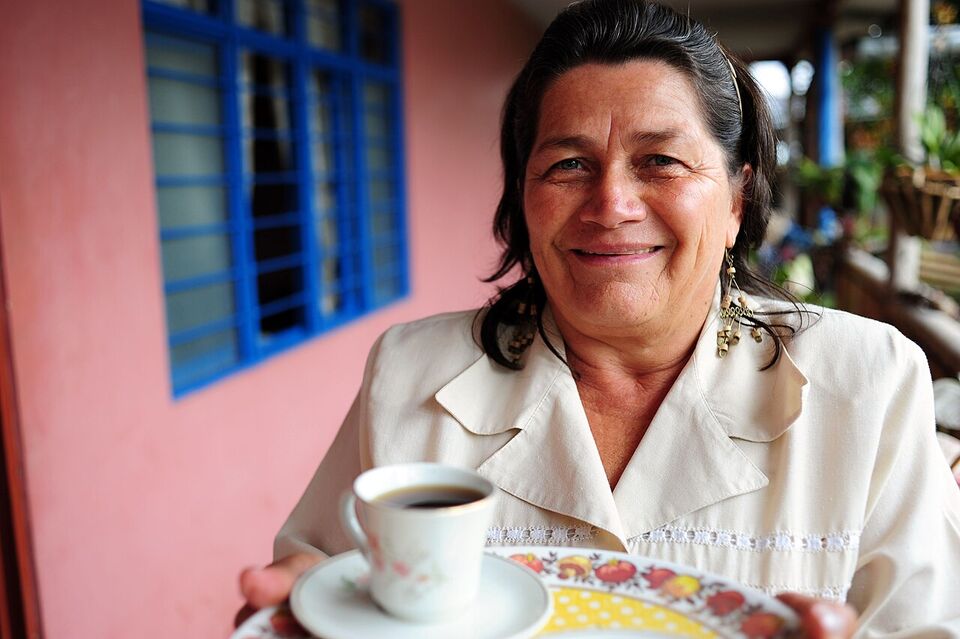
The National Federation of Coffee Growers of Colombia (Federación Nacional de Cafeteros, or FNC) is a non-profit association of coffee farmers, founded in 1927. It supports research, monitors export quality and runs the marketing of Colombian coffee abroad. You may know its mascot, Juan Valdez, a fictional farmer with a mule named Conchita who has appeared in the federation's advertising since 1958 and stands for 100% Colombian coffee, as opposed to blends. Cafes that carry the Juan Valdez name are a national chain tied to the federation. Its site is federaciondecafeteros.org, and it is the place to learn the official story of the industry.
In the coffee region, the federation and the regional coffee committees also support a theme park, the National Coffee Park (Parque del Café) in Quindío, about 7 miles (11 km) west of Armenia. It opened in 1995 and has a coffee museum, an ecological trail through coffee bushes and an amusement park linked by gondolas. It is more of a family attraction than a working farm; for a real farm visit, book a farm tour. Check the park's own site for current hours and prices, as we could not confirm them.
How to order coffee
Colombians drink coffee often and in small cups. In the table, you will find the usual names. Many cafes in the big cities also use the international names (americano, capuchino, latte), but a local place uses the local words.
| Name | What you get | Where and when |
|---|---|---|
| Tinto | A small cup of black coffee, usually pre-sweetened with panela or sugar, thin and mild. | Street carts, bakeries, offices, all day. Say sin azúcar for no sugar. |
| Pintado | A small tinto with a splash of milk. | Cafes and carts; a quick morning cup. |
| Perico | A small coffee with a bit of milk, a bit more than a pintado. | A local word you will hear in cafes, mostly in the Andes. |
| Café con leche | A larger cup of coffee made with more milk. | Typical at breakfast; often served with bread or an arepa. |
| Cortado | An espresso with a little milk, as in specialty cafes. | Specialty cafes in Bogotá, Medellín, Cartagena and the coffee region. |
| Americano, capuchino, latte | Espresso drinks like those at home. | Specialty cafes and chains; prices are higher in tourist areas. |
| Filter, pour over, cold brew | Single-origin coffee brewed by hand, with tasting notes on the menu. | Specialty cafes; ask what region and process the beans are. |
| Aromática | A hot herbal tea, often with fruit or herbs. Not coffee. | Everywhere, popular on cold evenings in the Andes. |
The names pintado and perico vary by region and by cafe, so do not be surprised if one cafe tells you something different from another. If you want a drink you know, ask for un café con leche or point to the menu. In a specialty cafe, the barista will often speak some English and will explain the beans.
Specialty cafe culture is strongest in Bogotá, Medellín and the coffee region, where small roasters serve single-origin coffee from named farms and regions. The usual pricing logic is simple: a tinto from a cart is the cheapest cup, a cafe is a few times more, and a coffee in a tourist area is more still. We do not give 2026 prices because they vary by cafe, so check the menu, where prices use a "$" sign and a point for thousands (see money in Colombia for how to read them).
Farm tours
A farm visit is the best way to see how coffee works. A good tour takes you through the plantation (picking, if the season allows), the wet mill where the fruit is removed, the drying area, the roasting and a cupping, which is a structured tasting. Most are in the coffee region near Salento, Armenia, Pereira, Manizales and Filandia, at about 4,760 ft (1,450 m), where the climate is cooler than on the coast. Jeeps run from Salento's town square up the valley, and the Cocora Valley is nearby. See our coffee region guide for the area.
How to book a good tour:
- Book with a licensed operator or a farm with its own website and clear contact details; ask whether the tour is a working farm or a show.
- Ask what is included: the length, the group size, the transport, the tasting and whether you see the whole process or only a demonstration.
- Ask about the season: picking happens at certain times of year, and a farm without a harvest can still show you the rest.
- Get the price in COP and ask whether it includes lunch, coffee to buy and any transfer. Prices for 2026 vary and we could not confirm them.
- Read recent reviews on the operator's own page and compare two or three before you pay. We do not rank operators.
- Confirm the language: many tours are offered in English, but ask.
Insider tip
Ask the farm at the end of the tour whether you can buy the beans you tasted, and ask for the roast date. A small farm shop with fresh beans will usually be better and cheaper than a gift shop at an airport. If you are going to Salento and Cocora for hiking as well, book the farm in the morning when it is cooler and the hike on a separate day.
What to buy and how to avoid fake or overpriced packs
Coffee makes a good souvenir. Colombia is known for its beans, and you can buy whole-bean coffee in supermarkets, specialty shops and farm stores. A few habits will protect you from a bad deal:
- Buy whole beans and grind at home; ground coffee goes stale faster, and pre-ground packs make it easier to pass off poor coffee as good.
- Look for a roast date and the farm or region. A bag that names a farm, a municipality, an altitude and a roast date is much more reliable than a bag that says only "Colombian coffee".
- Buy from the source: a farm shop, a cooperative or a named specialty roaster. Tour guides and tourist-street stalls that pressure you to buy are not your best choice.
- Compare the price per bag in a supermarket before you buy in a tourist shop. Gift packs aimed at tourists, with a sack or a tin, can cost much more than the coffee inside is worth.
- Avoid unlabeled bags sold on the street, bags with no roaster's name or no seal, and any pitch that says a product is "the only authentic" one.
- Do not buy coffee-flavored liquor or snacks at the airport until you have checked your bag allowance; liquids are limited in carry-on bags.
Returning to the United States, CBP says coffee, tea, honey, packaged spices, oils and vinegars are generally admissible, and that you must declare all food and plant items. Meat products, such as soup mixes and bouillon, are not admissible. Rules change, so check the CBP site shortly before you fly home. See our shopping and taking things home page for the full picture.
Drinks beyond coffee
Aguardiente
The most popular spirit in the Andean regions, made from sugarcane and flavored with anise. It is usually drunk neat, in small shots, not in cocktails. On the Caribbean coast, rum is more popular.
Aguapanela
Water sweetened with panela, unrefined sugarcane. Served hot with lime on a cold day, or cold as a refresher. Common at breakfast.
Fruit juices and lulada
Fresh juices in every flavor, and lulada, a drink of lulo fruit, lime, sugar and crushed ice, popular in Cali. See our food page for the fruit.
Hot chocolate with cheese
A cup of hot chocolate served with a piece of cheese that you drop in and eat with a spoon, or with bread on the side. It surprises many Americans and is a Bogotá specialty.
Beer and craft beer
Light lagers are everywhere; local slang for beer is pola. Bogotá and Medellín have craft breweries and taprooms, which are a good place to try local ales.
Avena, champús, jugo de caña
Avena is a cold oat drink, champús a fruity corn drink with lulo and spices (popular in the Valle del Cauca), and jugo de caña is fresh sugarcane juice.
Wine and spirits are sold in supermarkets and liquor stores. The legal drinking age is commonly cited as 18; carry your passport or a copy, as bars may ask. Alcohol is limited in some national parks: for example, Tayrona restricts alcohol, and the rules there are set by the park, so check before you pack.
Watch out
On the Caribbean coast, an illegal moonshine called cococho has caused blindness cases because of added methanol. Buy only sealed, labeled bottles from shops or bars you trust, and be careful with unlabeled drinks sold on the beach or the street.
Water, ice and everyday drink safety
Many travelers drink bottled or filtered water; ask locally, as we cannot rate any city's water. Hotels and good restaurants will tell you whether their water and ice are filtered. If you want to be careful, order drinks sin hielo (without ice) at street stalls, and use bottled water to brush your teeth if your hotel says to. Ask for the juice en agua or en leche and use your judgment about where the water comes from. Fruit juices from a busy stand with a blender are usually fine for many travelers, but a stomach that is not used to the local bacteria may react, so start slowly. The CDC advises safe food and water habits, including hand washing, and lists vaccines to consider. See our health page.
At altitude, drink more water than you think you need. In Bogotá at 8,660 ft (2,640 m), alcohol hits harder and dehydration is easy, so go slowly on your first night.
Drinking safely: spiked drinks and nightlife
This section is plain, not alarming. The US government warns travelers clearly about one specific risk in nightlife settings, and you should know it.
The US State Department's advisory for Colombia is Level 3: Reconsider Travel (as of November 2026; it was reissued on March 31, 2026). It cites crime, terrorism, civil unrest, kidnapping and natural disasters, and its warnings include drugging, extortion, kidnapping and armed break-ins. Check travel.state.gov for the current advisory and its list of areas, as it changes.
A news report says the US Embassy issued a security alert on January 10, 2024 that reported eight suspicious deaths of US citizens in Medellín between November and December 31, 2023, apparently from drugging or suspected homicide. It warned that criminals use online dating apps to lure victims to public places, where they are drugged and robbed, and said similar reports came from Cartagena and Bogotá. A reference source describes the drug scopolamine, often given in a drink or food, and notes drugging by scopolamine or benzodiazepines in nightlife areas such as Parque Lleras in Medellín. The harm from these drugs can be serious or fatal, especially when combined with alcohol.
Practical steps that follow from those warnings:
- Watch your drink being made and poured. Do not leave it unattended, even for a moment, and finish or abandon it if you did.
- Do not accept a drink, a cigarette, food or gum from a stranger or a new acquaintance.
- Do not go home with, or to a private place with, someone you met in a bar, on the street or on a dating app. If you meet an app contact, do so in a busy public place, tell a friend where you are, and keep your own transport.
- Go out with friends, keep an eye on each other and agree a way to get home. Use a registered taxi or a ride app the hotel recommends; our safety page has more.
- If you or a friend feels suddenly drowsy, confused or unwell, get to a safe place, call 123 (Colombia's national emergency number) and contact the US Embassy's 24/7 line for US citizens: +1-202-501-4444 from abroad.
- Do not buy or use illegal drugs. They are illegal in Colombia and the US government warns of the risks; our page on whether Colombia is safe explains the advisory.
Watch out
Travel insurance may not pay for a claim made after you have been drinking heavily or taking drugs. Know your policy, and keep a copy of your embassy and insurer numbers on your phone and on paper.
Putting it together
For a first trip, drink a tinto from a cart on day one, try a specialty coffee in Bogotá or Medellín, visit a farm in the coffee region, taste aguardiente once in company, try juices every day and a hot chocolate with cheese at least once, and buy beans from a farm or a roaster at the end of the trip. Pace the alcohol at altitude, keep your drink in sight and stay with your group. For where the beans are grown, see the coffee region, and for the food that goes with it, see Colombian food.
Add it to a route in the trip builder, or ask us to plan the hotels, trains and guides for you.