Overview
Guatapé is a small town on the shore of a large reservoir about 49 miles (79 km) east of Medellín, and El Peñón de Guatapé (the Rock of Guatapé, also called La Piedra) rises beside it. Most visitors come on a day trip, climb the 708 steps up the rock for a view over the water and islands, then wander the town's painted streets and finish with a boat ride or a meal. It is among the most popular day trips from Medellín, so plan around the crowds.
The trip works for most fit adults and for older children. It is less suitable if you struggle with stairs or heights, though the town and the lake are still worth the ride. You can do it in a long day with an early start, or you can stay a night and see it at a gentler pace. The tables and plans below help you choose.
Prices, fees and bus schedules change often, and we could not confirm the 2026 numbers, so this page tells you what to check and where. For the wider area, see the Medellín things to do page.
Getting there: bus, tour or driver
Medellín has two intercity bus terminals, a northern one and a southern one. Buses to Guatapé and the neighboring town of El Peñol leave from the northern terminal (Terminal del Norte), which a nearby metro station serves. We could not confirm which companies run the route or their current times and fares, so ask at the terminal's ticket counters or check the operators' own pages before you go. Several buses a day is typical, but that is not a promise.
| Option | Cost level | Best for | Trade-offs |
|---|---|---|---|
| Public bus from the northern terminal | Lowest | Flexible, independent travelers who speak a little Spanish | You must reach the terminal, buy a ticket, and sort out the last return bus; some buses stop on the highway or in town, so ask where |
| Organized day tour | Middle (check the price) | First-time visitors, groups, no-Spanish travelers | Fixed schedule and group size; check what is included (entrance fee, boat, lunch) and book a licensed company |
| Private driver or taxi for the day | Highest (agree the price in writing) | Families, mixed-ability groups, early starts | Pay for waiting time; use a licensed company or a driver your hotel knows |
If you go by bus, buy the return ticket early in the day and ask the last departure time. The drive is on a mountain road that can slow down on weekends and holidays. If you book a tour, confirm the pick-up point and the time you will be back; some tours return after dark.
Insider tip
If you want to climb the rock when it is quiet, take a private driver or an early bus and arrive in the first hours of the day. Day tours often reach the rock at the same time, which creates queues on the stairs.
El Peñón: the rock and its stairs
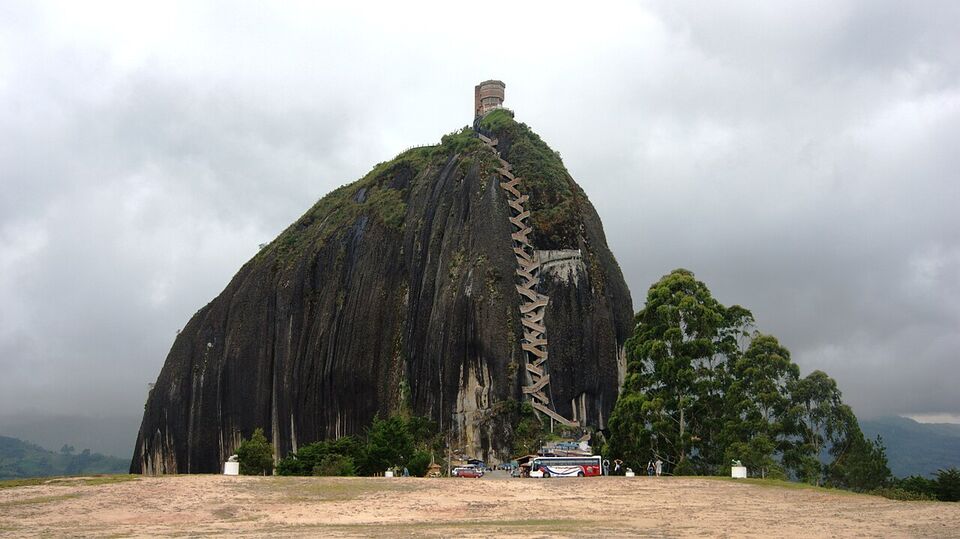
El Peñón de Guatapé is a granite dome that formed about 65 to 70 million years ago and stands in the reservoir landscape. It rises up to about 660 ft (200 m) above its base. A staircase of 708 steps is built into a crack on one side, with yellow numbers painted on the steps to count them off, and a shrine to the Virgin Mary about halfway up. At the top is a three-story viewpoint tower, a convenience store and a seating area, and a railing around the summit.
Allow roughly half an hour for the climb at a steady pace (our estimate), and more at weekends or if you rest often. Go slowly and stop at the landings, since the rock's top is about 7,005 ft (2,135 m) and you are climbing in thin air. The average temperature at the rock is about 64°F (18°C), but the sun is strong, and the stairs are open to it.
An entrance fee is due at the rock, and we did not find a 2026 price. Hours also change, so check the official information or ask your tour. Near the base are food and market stalls, and helicopter tours of the rock are sold outside the entrance; we do not recommend booking one on impulse without checking the operator's registration and insurance.
The town and its painted zócalos
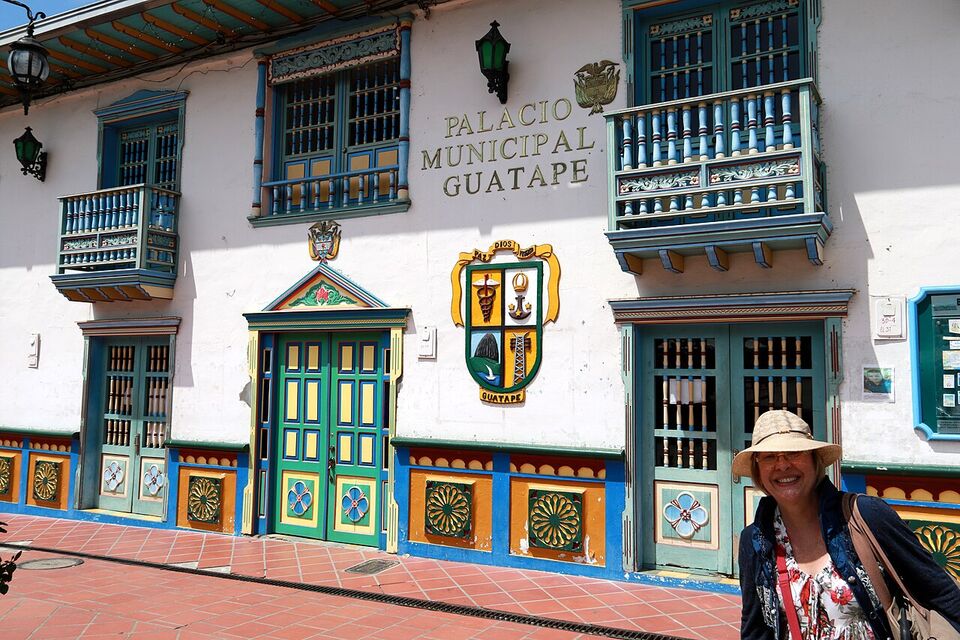
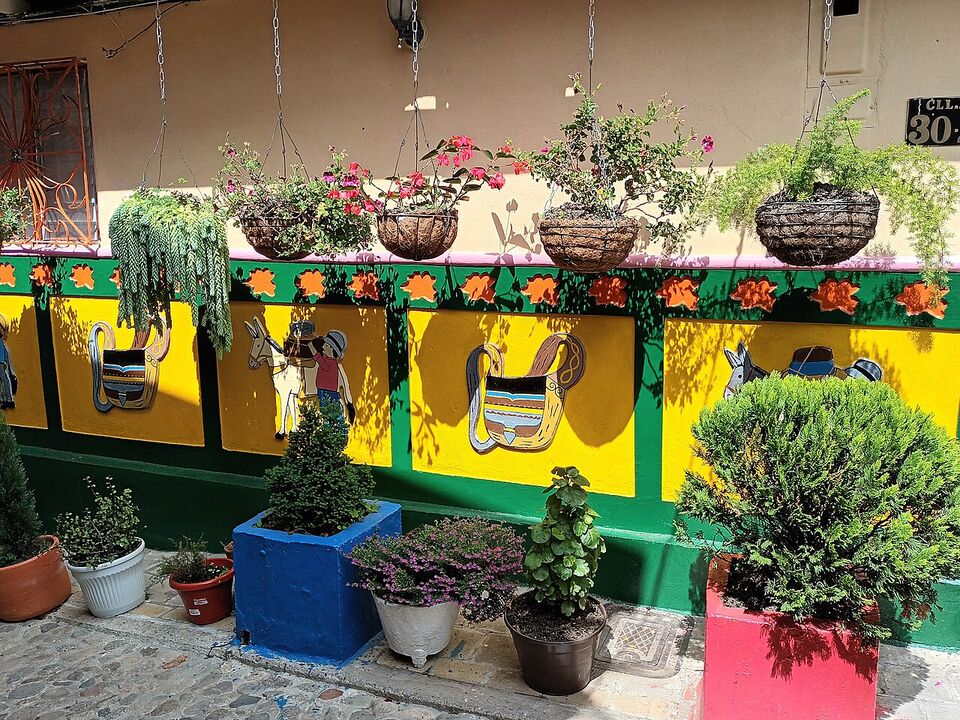
Guatapé's streets are known for zócalos, colorful relief panels that run along the lower walls of houses and shops. Many show a farm scene, a family trade or an image tied to what the building sells. They are a local tradition, and they make the town easy to photograph. Walk the center slowly, stop at the main square, and look for the Calle del Recuerdo ("Memory Lane"), the church of Nuestra Señora del Carmen and the community historical museum.
The town has about 6,500 residents (2015 figure), at an altitude of 6,200 ft (1,890 m). It is small, so you can see its center in an hour or two. Ask permission before photographing a person.
The lake, the boats and the drowned-town story
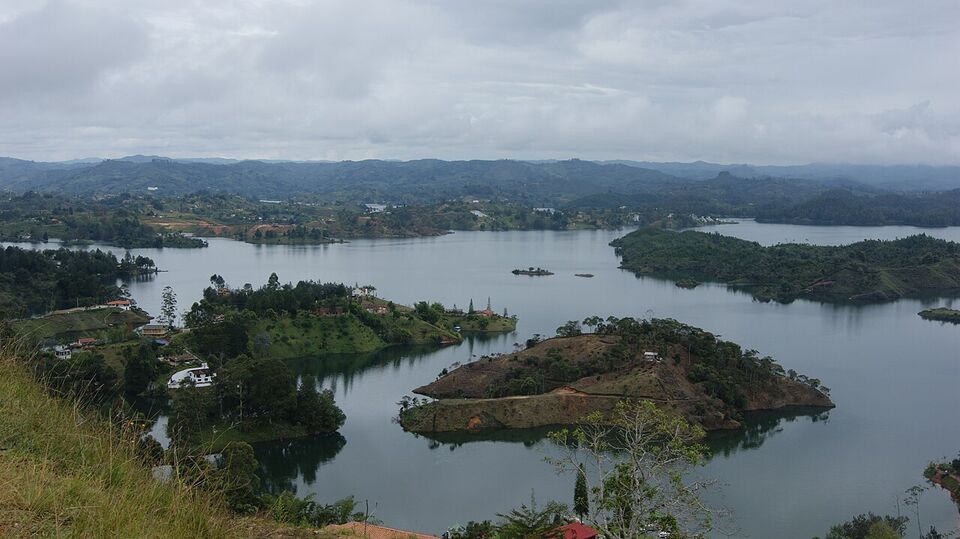
The reservoir around Guatapé was made in the 1970s, when the public utility Empresas Públicas de Medellín built a hydroelectric complex here. The dams flooded a valley, including the old town of El Peñol, and thousands of residents were forced to move. A new El Peñol was built a few miles west of the original, and the old town lies under water. This history is one reason the lake has deep local meaning, and it is worth keeping in mind when you take a photo of the water.
Boat trips run from the town's waterfront and from other docks. They typically circle islands and shoreline estates, and some stop for a meal or a swim. Because the water is a reservoir with changing weather, safety matters more than the price.
- Ask whether the operator is registered and licensed, and ask to see the registration number.
- Check that there are life jackets for every passenger and that you can wear one.
- Agree the route, length and price before you board, and what the price includes.
- Skip the boat if the weather looks stormy; reservoir winds can build in the afternoon.
Some tours also stop at a ruined estate on the reservoir linked to Pablo Escobar. We do not describe it here: the cartel's violence cost many lives, and the place is better understood as part of that history than as an attraction.
Watch out
Do not climb into a boat that is overloaded, has no life jackets, or is driven by someone who seems to have been drinking. Alcohol and open water do not mix, and the lake is large.
Which day to go, and how to avoid the crowds
The rock and town get the most visitors on weekends and on Colombian Monday holidays, when families from Medellín make the trip. We did not find official visitor counts, so treat this as general guidance. A weekday morning is calmer. The next Monday holidays are November 16, 2026 and January 11, 2027, with December 8, 2026 (a Tuesday) and December 25 also national holidays. Colombia Time is UTC-5 with no daylight saving, so plan your return by clock, not by sunset.
School holidays, the end of December and Holy Week are also busy. If you must go on a weekend, start as early as you can and expect queues on the stairs. In the Medellín area, October and November are the wettest months, so carry a light rain jacket and do not plan the climb for an afternoon storm; a wet staircase is slippery.
One day or an overnight stay
- One day
The rock first, then the town and the water
Leave Medellín early, around 7 a.m., and reach the rock when it opens. Climb the 708 steps, enjoy the view, and come down for a drink at the stalls. Move to Guatapé for the zócalos and lunch, then take a one-hour boat ride if the weather is good. Leave by mid-afternoon to be back before dark.
- One night
Rock and town without the rush
Travel on the first day, settle in, and walk the town before dusk. Climb the rock the next morning while the day-trippers are still on the road, then take a boat trip or walk the waterfront. An overnight stay suits travelers who dislike early starts, and it gives you an evening in a quiet place. Book ahead for weekends and holidays. Accommodation prices were not confirmed.
Where to eat
Food is simple and hearty. Near the rock, stalls sell fruit and drinks, and restaurants in town serve the regional platter, the bandeja paisa: beans, rice, ground meat, fried pork, egg, plantain, arepa and avocado. It is a big lunch, so share one if your appetite is small. Also look for arepas (corn cakes), fresh fruit juices and a tinto (small black coffee).
We did not confirm specific restaurants as open in 2026, so we do not name them. Choose a place that is busy with local diners, check the menu prices before you sit (a "$" on a menu means pesos). Many restaurants add a suggested tip of about 10 percent; it is voluntary, so check the bill. See Colombian food for more.
Heat, altitude and what to bring
Guatapé is cooler than the lowlands but not cold. The sun is strong at 6,200 ft (1,890 m), the stairs have no shade, and the reservoir reflects light. Bring sunscreen, a hat, a water bottle, and shoes with good grip. Many travelers drink bottled or filtered water, so buy it before you climb. Bring a light rain jacket, a little cash for stalls and small shops, and a photocopy of your passport. Cards are less likely to work at small stalls.
If you have heart or breathing problems, ask your doctor before climbing at about 7,000 ft (2,135 m). The CDC does not recommend yellow fever vaccination for trips limited to Medellín, but it issued a Level 2 notice on October 16, 2026 for yellow fever in Colombia, so see Health for the full advice. Read Safety for the general rules; for a day trip, the most useful are to keep valuables out of sight and to book transport you can trust. After Guatapé, the coffee region is the usual next stop.
Add it to a route in the trip builder, or ask us to plan the hotels, trains and guides for you.