Overview: how to plan your sightseeing
Most of Bogotá's best-known sights are close together in and around La Candelaria, the old center: the Gold Museum, the Botero Museum, the colonial streets and Plaza de Bolívar. Two days is enough for these and Monserrate, the mountain that overlooks the city. A third day opens up the north of the city (Usaquén, the Sunday market) or a trip out to the Zipaquirá salt cathedral.
Three things shape any plan. First, the museums have fixed closing days: the Gold Museum is closed every Monday, and some other museums close on Tuesdays, so build the days around that. Second, the altitude is about 8,660 ft (2,640 m), so a sensible schedule is two main stops a day with a long lunch in between. Third, the weather is cool and changeable, so keep a layer and a rain jacket with you. Our Bogotá guide covers neighborhoods, airport transfers and safety in detail.
All prices below are the latest we could find for 2026 and should be treated as guides: attractions change fees at the start of the year, and several of the sources are news reports rather than the operators' own pages. Check the official site before you go. For Bogotá's district tourism information, see idt.gov.co and bogota.gov.co.
Watch out
Monday, November 16, 2026 is a public holiday in Colombia (Independence of Cartagena, moved from November 11). The Gold Museum closes on Mondays, including holiday Mondays. Other Monday holidays ahead include January 11, 2027 and March 22, 2027 (computed from the national holiday rule; check the official calendar).
The sights at a glance
This table sorts the main sights by effort and time, so you can mix easy and demanding stops. "Effort" refers to walking, climbing and altitude, not to cost.
| Sight | Effort | Time | Cost | Check first |
|---|---|---|---|---|
| La Candelaria streets and Plaza de Bolívar | Easy; cobbled, slightly uphill | 2 to 3 hours | Free | Daytime only; protests sometimes use the plaza |
| Gold Museum | Easy; stairs and long exhibits | 1.5 to 2 hours | COP 21,000 (about $6) for foreigners; free Sundays | Closed Mondays |
| Botero Museum | Easy | 1 hour | Free when it opened in 2000; check now | Usually closed Tuesdays |
| Monserrate by cable car or funicular | Easy, but high (10,341 ft) | 2 to 3 hours | COP 35,000 (about $11) round trip Mon-Sat | Hours, weather, queues |
| Monserrate on foot | Hard; steep, high altitude | 50 minutes to 3 hours up | Path is free | Open status, safety, time of day |
| Usaquén Sunday market | Easy; flat | 2 to 3 hours | Free to browse | Sundays; far north |
| Street-art walk | Easy to moderate | 2 to 3 hours | Varies; confirm | Daytime and in a group |
| Zipaquirá salt cathedral | Moderate; a long day | Full day | Check the operator | Transport, tickets, opening |
| Food or coffee tour | Easy | 2 to 4 hours | Varies; confirm | Dietary needs; booking |
La Candelaria and Plaza de Bolívar
La Candelaria is Bogotá's historic center, a grid of narrow, sloping streets with colonial houses, churches, small museums, cafés and a lot of street art. It sits at the foot of the Eastern Hills, and the mountain of Monserrate rises behind it, which makes it easy to orient yourself on a clear day: the hills are east.
The central square is Plaza de Bolívar. The Primatial Cathedral, the National Capitol and the Palace of Justice front the square. Before the Spanish arrived the site was part of the Muisca world, and a source on Monserrate notes that at the June solstice the sun rises exactly behind Monserrate as seen from this square.
The plaza is also Colombia's political stage. Marches and demonstrations are held here, so check local news before you go and leave if a crowd starts to build. Visit in the morning, keep your phone out of sight and avoid the area after dark, when the streets around it empty out. See our safety page for the basic rules.
A good walking rhythm is: start at the plaza in the morning, walk to the Gold Museum (a short walk), eat lunch in the old center, then take the Botero Museum and a short wander on a different street. Taxis and apps are easiest from the main squares; take one back to your hotel rather than walking at dusk.
Where else to look in the old center
Wikipedia lists the National Museum among the landmarks of the city, and it is a good option on a rainy afternoon, but we have not confirmed its current hours or prices, so check the museum's own site. The Botero Museum shares its cultural complex with the Casa de Moneda (the old mint's museum), the Luis Ángel Arango Library and the Miguel Urrutia Art Museum, all run by the Banco de la República's cultural arm. If you plan to see several, ask each museum for its closing day.
Gold Museum (Museo del Oro)
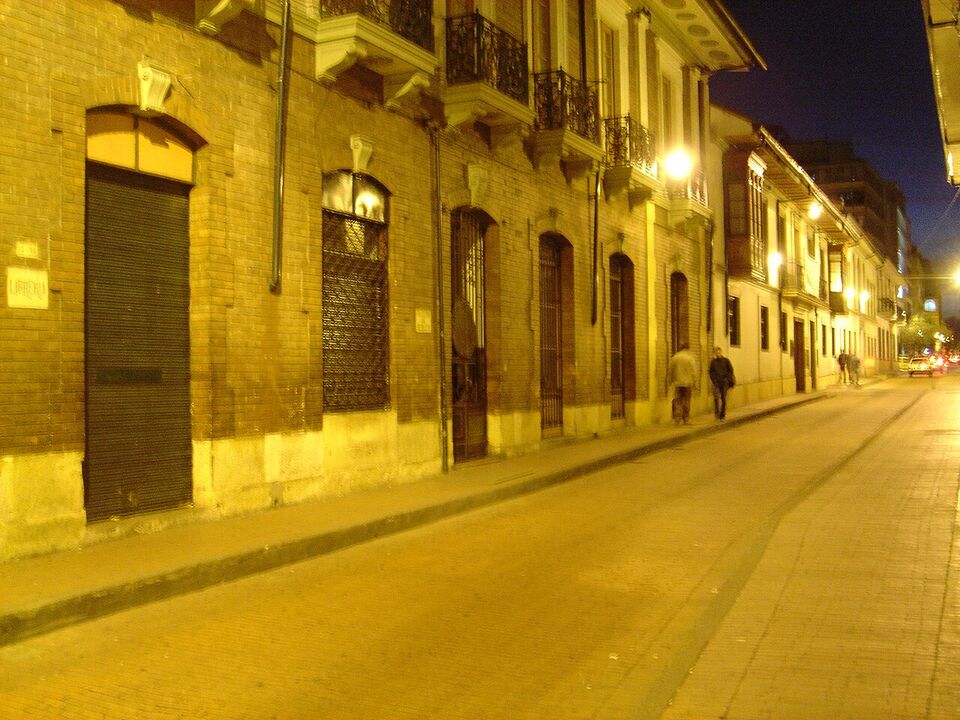
The Gold Museum is the one museum most visitors should not skip. It is an archaeology museum that shows pre-Columbian gold and other metal work from the cultures that lived in what is now Colombia before the Spanish conquest. It holds what Wikipedia describes as the largest collection of gold artifacts in the world, displayed on its second and third floors, and receives roughly half a million visitors a year. The piece many visitors seek out is the Muisca golden raft, which shows a ceremony for a new ruler and is the basis of the El Dorado legend.
It stands on Parque Santander, Carrera 6 No. 15-82, in the old center. Opening hours and prices on the operator's page, as read in November 2026 (the page lists closures through January 1, 2026, so treat as 2026 information and confirm):
| Item | Details (2026) |
|---|---|
| Opening hours | Tuesday to Saturday 9 a.m. to 6 p.m.; Sundays and holidays 10 a.m. to 4 p.m. |
| Closed | Every Monday, including holiday Mondays |
| Foreign visitor ticket | COP 21,000 (about $6) |
| Colombians and resident foreigners | COP 10,000 (about $3) |
| Students | COP 5,000 (about $1.50) |
| Free | Everyone on Sundays; children under 12; adults over 62 |
| Booking | Not required; you can buy at the ticket office |
Because Sunday is free for everyone, it is also crowded. If you want space to look, go on a weekday morning, and expect a line. Plan 90 minutes to two hours, and take the exhibits in order, since the layout builds from the daily lives of different cultures to the symbolic role of gold. The museum may also close on certain dates around holidays: a travel-agency blog lists December 24, December 25 and December 31, 2026 and January 1, 2027, so check before you plan around Christmas and New Year.
Insider tip
Visit the Gold Museum earlier in the day while you have the most energy and the lowest altitude fatigue. A sit-down lunch after the museum is easier than two museums back to back.
Botero Museum (Museo Botero)
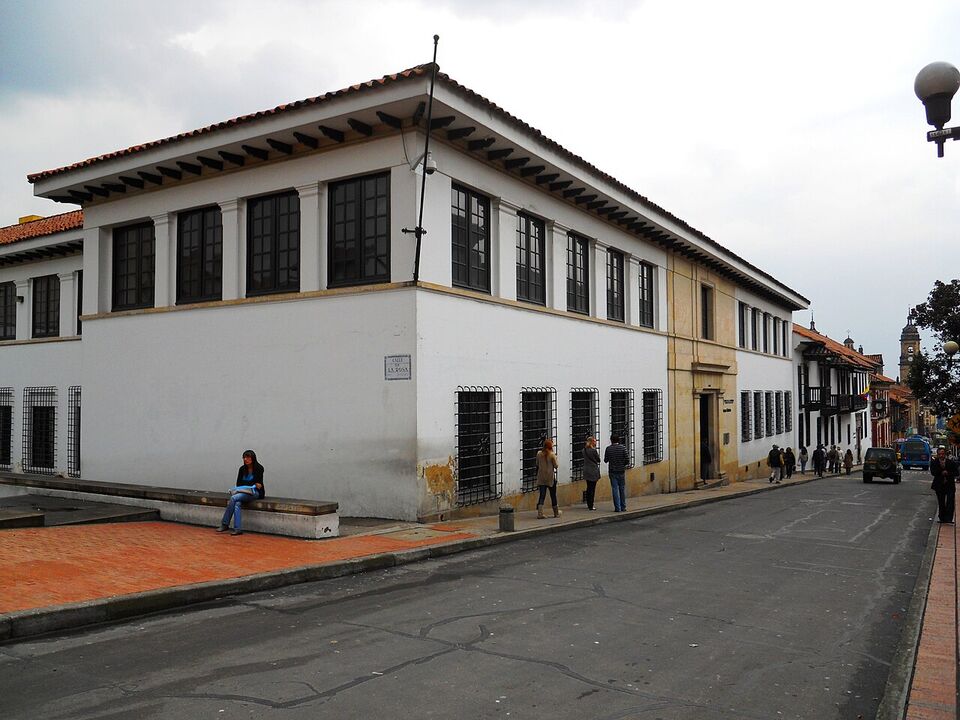
The Botero Museum is in a colonial mansion at Calle 11 No. 4-41 in La Candelaria. It houses 208 pieces that the Colombian artist Fernando Botero gave to the nation in 2000: 123 of his own works and 85 by other international artists from his private collection. His round, exaggerated figures are among Colombia's best-known art, and many visitors find the sculpture courtyard and the fruit still lifes easy to enjoy even without art background. The museum is run by the Banco de la República's cultural branch and draws over 500,000 visitors a year.
It opened free of charge in November 2000, and we have not confirmed the current admission policy, so check the Banrepcultural page for the Botero Museum before you go. A travel-agency blog says the Botero Museum and the Casa de Moneda close on Tuesdays rather than Mondays, which fits well with the Gold Museum's Monday closure: use a Tuesday for the Gold Museum and a Wednesday or Thursday for the Botero if you can. Treat the Tuesday closure as "usually" until you confirm it.
Allow about an hour. There is a Botero statue collection in a plaza in Medellín too, which you can read about on our Medellín sights page, so you can compare the two cities if both are on your route.
Monserrate: cable car, funicular or the trail
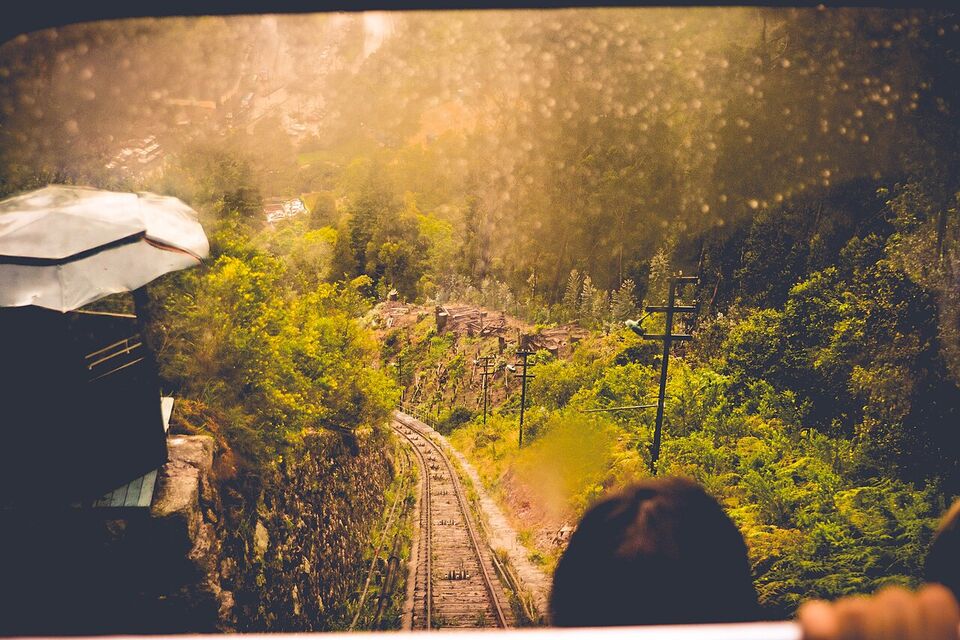
Monserrate is the mountain that overlooks central Bogotá. It rises to 10,341 ft (3,152 m), about 1,700 ft (510 m) above the city, and has a 17th-century church with a shrine to El Señor Caído (the Fallen Lord), restaurants, cafés and souvenir shops at the top. Pilgrims have long climbed it, and many tourists go for the view, which at sunset covers much of the city. The summit is far higher than the city, so it is both colder and harder to breathe up there: bring a jacket and move slowly.
Cable car and funicular
The easiest way up is by the teleférico (cable car) or the funicular, which both run to the top. Fares and hours reported for 2026 (from a news article about Holy Week 2026; ordinary-week hours and prices can differ, so check the operator's current notice before you go):
| Ticket | Price | Notes |
|---|---|---|
| Round trip, Monday to Saturday and holidays | COP 35,000 (about $11) | Cable car or funicular |
| One way, Monday to Saturday and holidays | COP 21,000 (about $6) | Useful if you walk up or down |
| Round trip, Sundays | COP 21,000 (about $6) | Cheaper, but the busiest day |
| Fast Pass | COP 96,500 (about $29) | Skips the queue |
| Hours, Monday to Saturday | 6:30 a.m. to 10 p.m. | Reported for 2026 |
| Hours, Sundays | 5:30 a.m. to 5 p.m. | Reported for 2026 |
| Hours, holidays | 6:30 a.m. to 5 p.m. | Reported for 2026 |
Weekends and clear afternoons bring lines. Go up on a weekday or early on a weekend, and watch the clouds: if the top is in cloud you will see nothing. Stay on the marked areas, keep your valuables out of sight, and come down before it is fully dark unless you are with a group or a tour, since the evening cold and the queue to descend add up.
The footpath
The walking path is free and about 1.5 miles (2.4 km), and the climb takes between 50 minutes and about three hours depending on fitness and altitude adjustment. It was closed after wildfires and landslides and reopened in 2017. The path is a pilgrimage route, and on Holy Week it is open from about 5 a.m. to 1 p.m.; we have not confirmed the regular hours or whether it is open on any particular day.
The climb is a bad idea on your first day at altitude. Do not hike Monserrate alone or late in the day: go in the morning, in a group, take water and a layer, and ask your hotel or the district tourism office whether the path is open and supervised that day. If you are not sure, take the cable car up and decide at the top whether to walk down.
Watch out
Monserrate is steep, high and exposed. The most common mistakes are starting late, going alone, carrying a phone or camera in plain view and underestimating the altitude. If you feel dizzy, short of breath or have a headache, stop and take the cable car down. Our health page lists the symptoms that need medical help.
Usaquén and the Sunday market
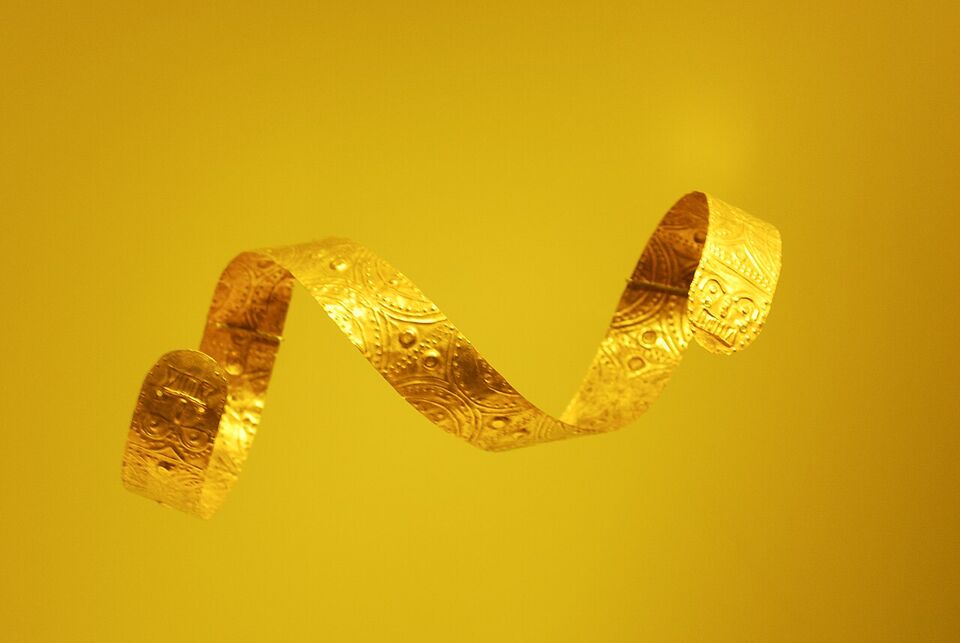
Usaquén is a district in the far north of the city, a former separate town annexed to Bogotá in 1954. It keeps a colonial square with the Santa Bárbara church (built in 1665 and modernized in the twentieth century), and it is mostly a residential and upscale area with many restaurants. It sits at about 8,690 ft (2,650 m).
The reason to visit is the weekly flea market on and around Plaza Usaquén on Sundays. It sells handicrafts, art and snacks, often with street entertainers and live music, and visitors commonly combine it with lunch in a restaurant on the square. Exact hours and stalls vary, so check the current Sunday schedule with your hotel. Take cash for small purchases, bargain politely and keep your bag closed in the crowd.
Usaquén is a long ride from La Candelaria, so treat it as its own half-day. A Sunday works well: ride the ciclovía (see the Bogotá page) in the morning, have lunch in Usaquén and head back by car or app.
Street art and graffiti tours
Bogotá is known for its large murals and street art, especially in and near La Candelaria, where whole walls and building sides are covered. A guided graffiti tour explains the artists, the political and social messages, and which pieces are commissioned. Several operators run these walks, and some work on tips instead of a fixed price. We have not confirmed any operator or price, so ask your hotel and read recent reviews.
Join a group rather than wandering the side streets alone, go in daylight and keep your phone away while moving between spots. A guide can also tell you which blocks to avoid that day.
Zipaquirá salt cathedral day trip
Zipaquirá is a town in Bogotá's metropolitan area, north of the city on the same high plateau, known for the salt cathedral built inside a salt mine. The area has long been tied to salt and to the Muisca people who lived on this plateau before the Spanish. The trip is usually done as a day trip by bus or on a guided tour; a tourist train has run on certain weekend days, but we have not confirmed that it operates now.
We could not confirm ticket prices, opening hours or the best way to book, so check the operator's own site and the district tourism information before planning. Allow a full day: the ride out and back, the mine itself and a meal in the town. Going on a weekday avoids the Sunday crowds, and a guided tour is simpler if you prefer not to arrange transport. If you pass through the area on the way to Villa de Leyva, ask whether a combined tour makes sense.
Wear layers, since the mine is cool, and wear comfortable shoes for sloping floors. If you have claustrophobia or mobility concerns, ask the operator about the route first.
Food tours and café stops
Food tours in Bogotá usually mix a market visit, a tasting of regional fruit and snacks, and a stop for a bowl of ajiaco (chicken and potato soup) and coffee. Large fresh-food markets, such as the Paloquemao market, are common stops; ask the tour how it handles the early start and what you will eat so you can plan around dietary needs. We have not confirmed any specific tour company or price, so compare current options and read recent reviews.
If you prefer to go alone, walk from the Gold Museum to a café for chocolate santafereño (hot chocolate often served with cheese) or a tinto (small black coffee). Our food page and coffee page explain what to order and how to read menus. Spanish helps outside tourist spots; see the Spanish phrases page.
A "$" on a menu means pesos; see money for how prices are written.
Opening patterns and what to confirm
The key habit in Bogotá is to confirm the closing day for each museum. The pattern we have is that the Gold Museum closes on Mondays and the Botero Museum and Casa de Moneda close on Tuesdays (a blog source, so "usually"), but hours change and some museums use different days. Also check holiday dates: Colombia has several Monday holidays and long weekends, which affect crowds and closures.
- Confirm each museum's closing day and hours on its own site the day before.
- Check the holiday list: November 16 and December 8, 2026 are public holidays, and the night of December 7 is the Día de las Velitas (Day of the Little Candles), when families light candles.
- Check Monserrate hours and weather, and read the current fares.
- Bring your passport copy or a photo of it, and your entry stamp, for any ticket that gives a foreigner price.
- Carry some cash and a card, since small sites may take only one.
- Keep a jacket, sunscreen and water with you every day.
Sample plans: one and two days
One day (Tuesday to Saturday)
- One day
The old center and Monserrate
Start at Plaza de Bolívar at about 9 a.m., walk the streets of La Candelaria, reach the Gold Museum when it is quieter and stay for about two hours. Have lunch nearby (try ajiaco). In the afternoon take a registered ride to the Monserrate cable car and go up for the view, coming down before dark. Keep your day to these two main stops if it is your first day at altitude.
Two days
- Day 1
Museums and the old streets
Morning at the Gold Museum, lunch in La Candelaria, an early-afternoon stroll to the Botero Museum (if it is open that day) and a graffiti walk with a guide. Return to your hotel by taxi or app before dusk.
- Day 2
Monserrate and the north
Go up Monserrate early by cable car, then ride north to Usaquén for lunch and the market if it is a Sunday. If it is not a Sunday, swap the market for a café or a food tour. Finish early with a rest, because altitude and the day's travel add up.
Add a third day
If you have a third day, choose one of: the Zipaquirá salt cathedral, a Sunday ciclovía ride and the Usaquén market, or an overnight trip to Villa de Leyva. For hotel areas, see the Bogotá page, and for what to pack, see our packing page.
Common mistakes to avoid
- Hiking Monserrate alone or late. Go in the morning, with others, and take the cable car down if in doubt.
- Going on a Monday. The Gold Museum is closed, and a holiday Monday does not change that. Plan Monday for the Zipaquirá trip, the ciclovía on a holiday, or a rest day.
- Ignoring altitude. A full first-day schedule leads to fatigue and headaches. Keep the first day light, and see the health page.
- Walking around with your phone out. Keep it in a front pocket. Take photos quickly and step away from busy corners before you check a map.
- Taking cheap street taxis at night. Book a car through your hotel or an app, and take a ride instead of walking between neighborhoods. See our getting around page.
- Assuming prices are fixed. Fees change, and some of the numbers above come from news reports. Confirm them on the official site.
For the current US advisory, the "do not travel" list and wider safety advice, see Is Colombia safe? The advisory for Colombia is Level 3: Reconsider Travel (as of November 2026), and travelers should check travel.state.gov for the current list of areas. For other cities and regions, see Colombia's destinations.
Add it to a route in the trip builder, or ask us to plan the hotels, trains and guides for you.