The short answer: pick the place first, then the month
There is no single best month for Colombia, because there is no single Colombia. Altitude sets the temperature more than the calendar does: you can be in 88°F (31°C) humidity on the Caribbean coast in the morning and in 50°F (10°C) drizzle in Bogotá at night the same day. The useful question is not "when should I go?" but "which regions do I want, and what are their wet and dry patterns?"
If you want the coast and the cities in one trip, December to February is the most reliable stretch: it is the dry season on the coast and the driest part of the year in Bogotá. It is also the most crowded and expensive stretch because of Christmas, New Year and the school holidays. For fewer people and lower prices, shoulder months such as late January to March (outside Holy Week) and June to August work for several regions, with trade-offs below.
The weather data on this page are long-term averages from IDEAM, Colombia's national weather institute (ideam.gov.co), as published in climate tables for the main cities. They describe a normal year, and 2026-27 is not a normal year: see the El Niño section. For the month you plan to travel, our guides to November, December, January, February and March go into detail. Our planning hub shows how to build a trip around the answer.
How altitude sets the temperature
Colombia lies close to the equator, so seasons are not defined by summer and winter. Temperature changes with height: the higher you go, the cooler it gets. Rain follows a different logic, driven by a belt of clouds that crosses the country (the Intertropical Convergence Zone) and gives many regions two wet seasons a year.
| Place | Height | Typical daytime high | Typical night low |
|---|---|---|---|
| Cartagena (coast) | Sea level | 88 to 90°F (31 to 32°C), all year | 75 to 79°F (24 to 26°C) |
| Santa Marta (coast) | Sea level | 90°F (32°C) or more | 73 to 78°F (23 to 26°C) |
| Cali | About 3,160 ft (964 m) | 85 to 88°F (29 to 31°C) | About 66°F (19°C) |
| Medellín | About 4,890 ft (1,490 m) | About 81 to 84°F (27 to 29°C) | About 63 to 64°F (17 to 18°C) |
| Armenia (coffee region) | About 4,760 ft (1,450 m) | 76 to 79°F (25 to 26°C) | About 61°F (16°C) |
| Bogotá | About 8,660 ft (2,640 m) | 65 to 68°F (18 to 20°C) | 43 to 50°F (6 to 10°C) |
| Leticia (Amazon) | About 275 ft (84 m) | 85 to 89°F (30 to 32°C) | 70 to 73°F (21 to 23°C) |
The Medellín row uses the valley station; the airport at Rionegro, at about 7,028 ft (2,142 m), is cooler. Armenia stands in for the coffee region, and Salento and the higher farms are cooler than Armenia. Bogotá's airport is at about 8,360 ft (2,548 m), and the mountain of Monserrate rises to 10,341 ft (3,152 m), where it is colder and windier still.
Different from home
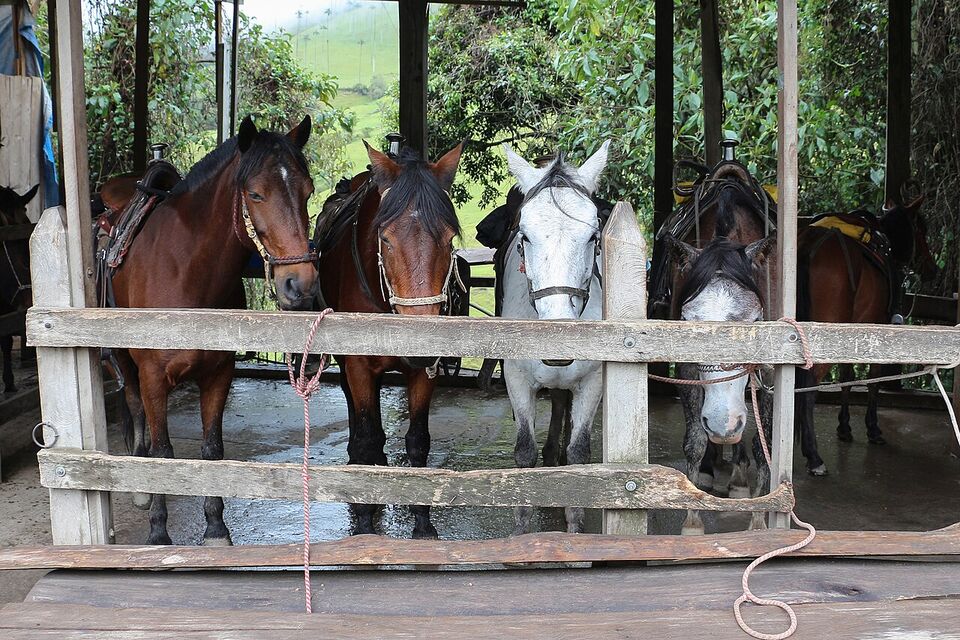
In Bogotá, "dry season" does not mean warm. Even in the driest weeks, mornings and evenings are chilly, and a rain jacket belongs in your daypack all year. The sun is strong at altitude, so sunscreen matters too.
Region by region
The Caribbean coast: Cartagena, Santa Marta and Tayrona
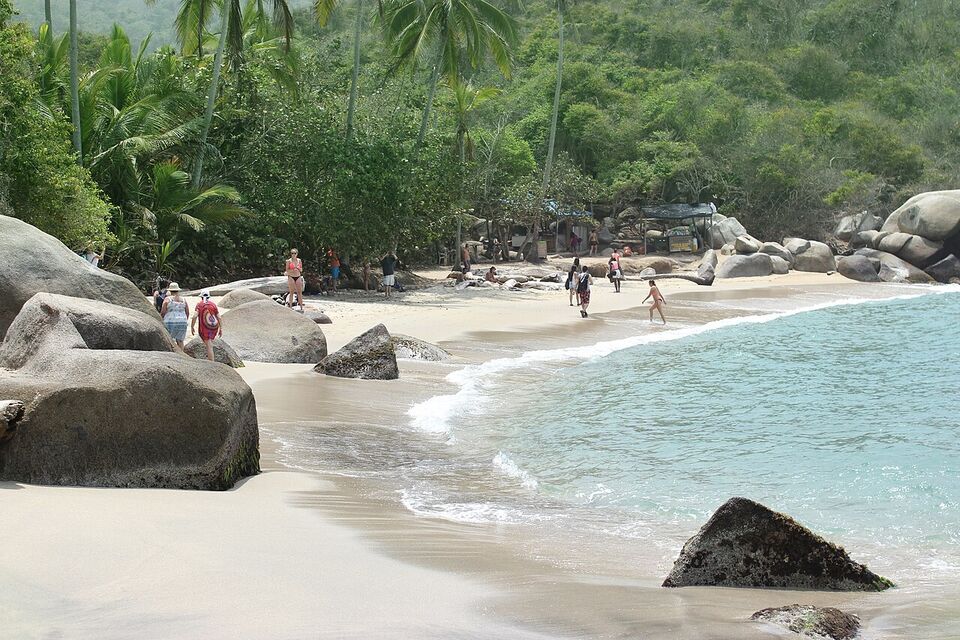
The coast is hot and humid in every month. Cartagena's driest period runs from about December to April: January and February average a tenth of a rain day each, while October is the wettest month (about 12 rain days and 237 mm, or 9 inches, of rain). Santa Marta follows the same pattern, with almost no rain in January to March. From May to November, expect heavy afternoon showers, higher humidity and, in some years, sea conditions that affect boat trips to islands. The Rosario Islands and Tayrona are best in the drier months, but check conditions with your operator. See Cartagena, the Rosario Islands and Santa Marta and Tayrona.
The Andean cities: Bogotá and Medellín
Bogotá has two rainy seasons, March to May and October to November, and is driest from December to February, with a smaller dip from June to August. Medellín is wettest in April-May and October-November, and driest in June to August and in January to February. In Medellín, rain often arrives as an afternoon downpour, so plan outdoor sights for the morning. Compare the two cities in the table in the next section, and see Bogotá and Medellín.
The coffee region
The coffee region is green because it is wet. Armenia's data show its driest stretch in June to August and its wettest in October to November (over 300 mm, or 12 inches, in November). Trails in Cocora Valley are muddy in the wet months, and mornings are usually clearer than afternoons. See the coffee region. We found no station table for Salento itself, so treat the numbers as a guide to the region, and expect Salento to be cooler than Armenia.
The Amazon: Leticia
Leticia has about 250 rain days a year and humidity of 85 to 88 percent. The least rain falls from June to September. River levels change with the rains, and that affects which creeks and lakes boats can reach, so ask your lodge. See the Amazon and Leticia, and note the health advice on yellow fever.
San Andrés and Providencia
San Andrés has a rainy season that runs from May to January, with trade winds from late October to mid-January. The islands lie in the western Caribbean, so the hurricane season matters more for them than for the mainland coast. See San Andrés and Providencia and the hurricane notes below.
What is good where, by season
| Region | Drier months | Wetter months | Good for |
|---|---|---|---|
| Cartagena, Santa Marta, Tayrona | December to April | May to November; October the wettest in Cartagena | Beaches, island trips and walks in the dry months; hot all year |
| Bogotá | December to February (and a smaller dip June to August) | March to May; October to November | Museums year round; Monserrate and day trips on dry days |
| Medellín | June to August; January to February | April to May; October to November | Comfortable weather all year; plan outdoors for the morning |
| Coffee region | June to August | March to May; October to November | Farm visits and Cocora Valley hikes, with mud in wet months |
| Leticia and the Amazon | June to September | The rest of the year, heaviest January to April | Jungle trips, with river levels changing the options |
| San Andrés and Providencia | February to April (see the note) | May to January; hurricane season June to November | Snorkeling and beaches; breezy late October to mid-January |
The island line is our inference from a source that gives the rainy season as May to January; check the forecast and your operator for the months you want. A strong week of sun can happen anywhere, and a heavy shower can happen in any dry month. Think of these months as odds, not guarantees.
Month by month: rainfall in five places
The table gives average monthly rainfall in millimeters (25 mm is about 1 inch) from IDEAM station data as published in climate tables. The periods are mostly 1991-2020, and 1981-2010 for Armenia and Leticia.
| Month | Bogotá (mm) | Medellín (mm) | Cartagena (mm) | Armenia (mm) | Leticia (mm) |
|---|---|---|---|---|---|
| January | 33 | 141 | 0.5 | 166 | 367 |
| February | 51 | 149 | 0.3 | 138 | 355 |
| March | 83 | 251 | 3 | 230 | 358 |
| April | 117 | 300 | 19 | 253 | 376 |
| May | 109 | 239 | 117 | 204 | 302 |
| June | 57 | 87 | 93 | 85 | 190 |
| July | 49 | 56 | 121 | 68 | 158 |
| August | 44 | 53 | 128 | 87 | 158 |
| September | 57 | 115 | 133 | 141 | 221 |
| October | 108 | 276 | 237 | 254 | 257 |
| November | 107 | 327 | 178 | 313 | 318 |
| December | 61 | 244 | 45 | 222 | 330 |
Reading it: a trip to Cartagena and Bogotá in January or February gets two very dry places, while a trip to the same cities in October or November meets the wettest part of the year for both. Medellín is a good all-year city, but it is drier from June to August. Our month guides have more detail: November, December, January, February and March.
2026-27: a strong El Niño
On November 12, 2026, IDEAM's home page said the El Niño phenomenon "will remain very strong until the first quarter of 2027" (our translation), and another IDEAM notice that day gave a 61 percent probability that it lasts until May 2027. IDEAM expects less rain and higher temperatures to continue, and the government asked people to save energy, water and gas. This is our inference from those notices: expect conditions drier and warmer than the averages in the tables above in the Andes and on the coast, with a higher risk of wildfires and low rivers.
For Bogotá, the mayor ruled out water rationing on September 17, 2026, with the Chingaza reservoir system at 95 percent, which was the position as of mid-September; we did not see a later update. Ask your hotel if there are local water cuts. For travel, a dry year helps beach and city plans but can reduce river and waterfall flows, and the Caño Cristales season depends on water levels.
Hurricane season and the islands
The Atlantic hurricane season runs from June 1 to November 30. Colombia's mainland Caribbean coast is rarely hit by a direct strike, but the western Caribbean islands, San Andrés and especially Providencia, are exposed: a hurricane struck Providencia in November 2020. If you plan the islands between June and November, buy travel insurance that covers weather cancellations, choose refundable bookings, and watch the forecast from the US National Hurricane Center and the Colombian weather service.
Late October to mid-January brings trade winds to San Andrés, which can make sea conditions rougher and cooler on exposed shores. Ask your operator about boat trips on windy days.
Holiday peaks and crowds
Christmas and New Year
From mid-December to early January, Colombians travel, hotels fill, and prices rise, especially on the coast and in the coffee region. The night of December 7, Día de las Velitas, starts the season, and December 8 (a Tuesday in 2026) and December 25 are national holidays. Medellín's Christmas lights usually start in late fall, and we did not find the 2026 switch-on date. The Feria de Cali is traditionally December 25-30, and we did not read a 2026 program. The Pasto Black and White Carnival is in early January; confirm the dates on carnavaldepasto.org. Some museums close on December 24, 25, 31 and January 1, according to one travel-agency list, so check each one.
Holy Week
In 2027, Easter is March 28, so Holy Thursday is March 25 and Good Friday March 26, both national holidays. Popayán's processions are UNESCO-recognized, and many Colombians take the week off for the coast and small colonial towns. Book early. See carnival and festivals.
The mid-year break and long weekends
Colombian schools have a mid-year break, usually around June and July, which brings family crowds to the coast and the coffee region; we did not confirm the dates for 2027. Many national holidays move to Monday to make a three-day weekend. The next are Monday, November 16, 2026 (Independence of Cartagena) and, expected for 2027 (computed from the holiday rule), January 11, March 22, May 10, May 31, June 7, July 5, July 12, August 16, October 18, November 1 and November 15. Check the official calendar before booking.
On these weekends, highways out of Bogotá and Medellín fill, bus terminals and airports are busy, and hotel prices rise. Most big cities also restrict driving by license plate on certain days (a system called pico y placa); if you rent a car, ask the rental company about the rules for the city and the date. Staying put through a Monday-holiday weekend, or traveling on Friday morning or after Monday, avoids the worst of the traffic.
Save money
Prices fall sharply outside the peak weeks. If you can choose, avoid Christmas to mid-January, Holy Week, July and the Monday-holiday weekends, and compare fares for the same route in the shoulder weeks on either side. Tayrona also charges more in high season: COP 96,500 (about $29) against COP 81,000 (about $25) in low season for foreign visitors in 2026, with the season dates not stated in the report we saw.
Festivals worth planning around
- Barranquilla Carnival, 2027: February 6-9, 2027 (Saturday to Tuesday, four days before Ash Wednesday on February 10). Barranquilla has two extra local holidays on the Monday and Tuesday. Check the organizers' official site for the program.
- Hay Festival Cartagena, 2027: January 28-31, 2027, per a report quoting the organizer; check hayfestival.com.
- Festival de la Leyenda Vallenata, Valledupar: 60th edition, April 28 to May 1, 2027.
- Flower Festival (Feria de las Flores), Medellín: held in August; we did not find the 2027 dates, so check the city's site.
- Feria de Cali: traditionally December 25-30.
Festival weeks fill hotels months ahead and prices rise, so decide whether the event is the reason for the trip or something to avoid. Our festivals page has the full list and booking advice.
Closures that affect some months
Parks and trails have rest periods, and a trip can fall on one.
- Tayrona: in 2026 the park closed for indigenous ceremonies on February 1-15, June 1-15 and October 19 to November 2, and it was also closed by government order in February 2026 before reopening with partial restrictions in March. The 2027 dates were not published as of November 2026, and the current status after November 2 was not verified. Check the park's notices (parquesnacionales.gov.co) before you book.
- Ciudad Perdida: a travel-agency blog said the trek is closed in October. We could not confirm this with an operator, so ask your operator which months it runs. See the Ciudad Perdida trek.
- Caño Cristales: the river's colors run from about the end of July through November. The same blog said the river closed from November 16 to December 31, 2026, and the park's official 2026 guide was not read, so check the dates.
- Museums: Bogotá's Gold Museum closes every Monday, including holiday Mondays; some other museums usually close on Tuesdays and on December 24, 25 and 31 and January 1.
Best months for each kind of trip
Beaches and islands
The driest, sunniest period on the Caribbean coast. Expect crowds and higher prices from mid-December to January. San Andrés has its own pattern.
City sightseeing
Bogotá is driest in the first window; Medellín is drier in both. Book hotels early for the first window.
Coffee region and hiking
The driest months for Armenia's area and a good fit for Cocora and farm walks. Mornings are better than afternoons all year.
Amazon
The least rain in Leticia. It is hot and humid in any month; ask lodges about river levels.
Festivals
Carnival (February 6-9, 2027), Holy Week (March 25-28, 2027) and the Christmas season are the biggest. Book months ahead.
Fewer crowds
Outside holiday weeks, with a dry coast in the first window (September is usually quieter but is wetter on the coast). Check the closures list for Tayrona before you book.
Watch out
Do not assume a closed period in 2026 repeats in 2027. Parks announce their dates late, and security closures can happen at short notice. Book refundable tours when you can, and read the official notice a week before you go.
How to check the weather before you go
For forecasts and warnings, use IDEAM at ideam.gov.co, which publishes national forecasts and alerts in Spanish, and your phone's weather app for the town you will be in, set to the town and not to "Colombia". Check Bogotá, Medellín and the coast separately, and look at the forecast again the day before any hike or boat trip. For tropical storms, add the US National Hurricane Center.
Time is the same all over mainland Colombia: Colombia Time, UTC-5 all year, with no daylight saving. That makes it the same as New York in winter and one hour behind New York during US summer time. Sunrise and sunset change little through the year, with the sun rising near 6 a.m. and setting near 6 p.m., so plan daylight hikes early. For packing by climate, see the packing list, and see planning your trip for how to put regions together.
Add it to a route in the trip builder, or ask us to plan the hotels, trains and guides for you.