Overview
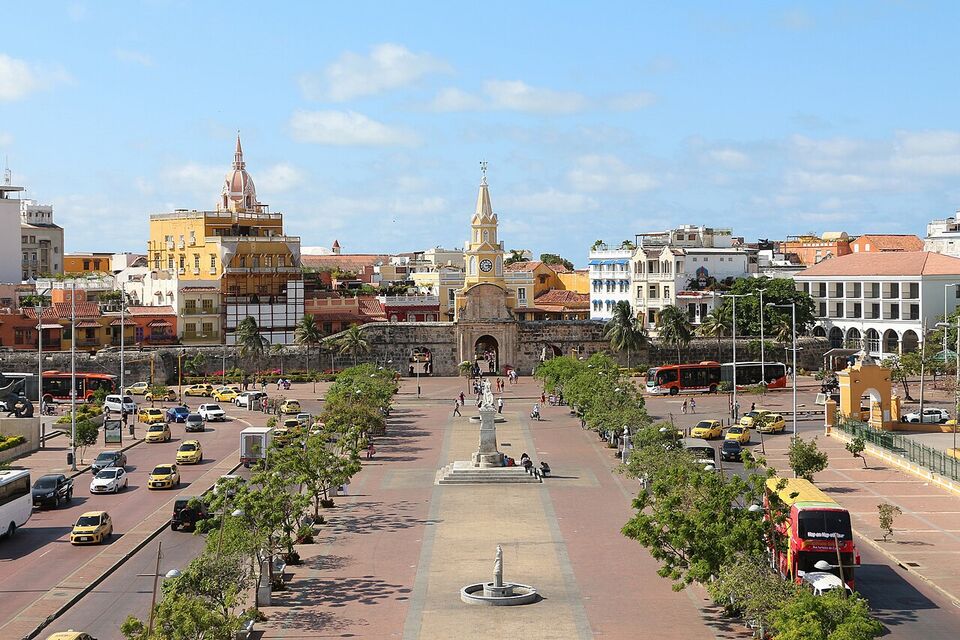
Cartagena de Indias, usually just Cartagena, is Colombia's best-known Caribbean city, and it is worth a visit for most travelers who can handle heat. The historic center is a maze of balconied colonial houses, plazas and churches inside 11 kilometers (about 7 miles) of defensive walls built between 1614 and 1796. UNESCO listed the port, fortresses and monuments as a World Heritage Site in 1984.
Most visitors need two full days for the city itself. That is enough to walk the Ciudad Amurallada (walled city), spend an evening in Getsemaní, and visit the great fortress. Add one more day if you want the Rosario Islands, which we cover on a separate page. For a ranked list of what to see and a ready-made schedule, see Cartagena Things to Do.
This page covers the practical side: which area to stay in, how to get in from the airport, how to cope with the heat, what to eat, how the horse carriages work, and how to deal with vendors, scams and the real risks around drugs and nightlife. It is written for first-time visitors from the United States. Cartagena is on Colombia Time (UTC-5, no daylight saving), the same as New York in winter and one hour behind New York during US summer time.
Prices in Colombia are written with a "$" sign for pesos. In our text we put the peso code before each amount and convert at about US$1 = COP 3,300 (rates move daily); see money for how prices are written.
Which area to stay in
Cartagena's hotels cluster in three areas, and the choice shapes your trip more than the hotel itself. The walled city and Getsemaní are the old town, and you can walk between them in a few minutes. Bocagrande is a separate peninsula of high-rise hotels, a short taxi ride away. We do not name hotels here, because prices and availability change by season; use the tiers below as a rough guide and check current rates.
| Area | Best for | Typical hotel tier | Trade-offs |
|---|---|---|---|
| Walled city (Centro, San Diego) | Atmosphere, short walks to sights and restaurants, boutique hotels in restored houses | $$ to $$$ | Highest prices; street noise and crowds in the evening; rooms can be small |
| Getsemaní | Budget travelers, nightlife, street art, hostels and small hotels, easy walk to the walled city | $ to $$ | Loud on weekend nights; some streets are quiet and poorly lit late at night |
| Bocagrande (with El Laguito and Castillogrande) | Beach hotels with pools, families, long stays, larger rooms | $ to $$$ | No colonial feel; the city beach has grayish volcanic sand; taxi needed for the old town |
The tiers are our own rough guide (under $120 a night for a double is $, $120 to $300 is $$, over $300 is $$$) and prices rise sharply in the high season and around holiday weekends. We have not confirmed current rates, so check before you book.
The walled city
Choose the walled city if you want to step out of your hotel into the streets you came to see. Many hotels occupy restored colonial mansions with courtyards and small pools. The trade-off is heat trapped in narrow streets and noise from bars and street music. Ask for a room away from the street, and for working air conditioning, which matters more here than anywhere else in this guide.
Getsemaní
Getsemaní lies just outside the old walls. It was once known for crime, and drug dealing took place in some of its plazas; today it is known for murals, small hotels, hostels and bars, and the neighborhood calls itself a "Ciudad Mural". It suits younger travelers and anyone on a budget. It also has more late-night noise and, in some blocks, more hustlers, so read the safety sections below.
Bocagrande
Bocagrande ("big mouth") is a peninsula of skyscrapers between Cartagena Bay and the Caribbean. It holds some of the city's most important tourist hotels, shops and restaurants, with long beaches. Its beaches have gray volcanic sand and breakwaters about every 180 meters (200 yards); locals and visitors use them, but they are not the beaches people photograph. Bocagrande suits families who want a pool and space; for real beach days, take a boat to the islands.
Insider tip
If you want both, split the stay: two or three nights in the walled city or Getsemaní for sightseeing, then a night or two in Bocagrande or on an island before your flight. See our where to stay guide for how we group hotel types across Colombia.
Getting to Cartagena and from the airport
Rafael Núñez International Airport (CTG) sits at just 7 feet (2 meters) above sea level and is the largest airport in Colombia's northern Caribbean region by passenger numbers. On the 2026 route lists we checked, nonstop US service includes Miami (American), Atlanta (Delta), Fort Lauderdale and New York-JFK (JetBlue), and seasonal Miami and JFK (Avianca). New routes are scheduled to start in December 2026: Frontier from Orlando on December 19, and United from Houston and Washington-Dulles on December 17. Schedules change, so check the airline sites. There are also domestic flights from Bogotá and other cities; see our flights guide and domestic flights guide.
The airport is on the north side of the city, and the walled city is a short taxi ride away. We could not confirm current fares or journey times, so we do not quote them. Use the official taxi desk or queue inside or just outside the terminal, ask the fare before you get in, and have your hotel's address written down. Many hotels arrange a fixed-price pickup, which removes the haggling after a flight. Decline drivers who offer rides at the arrivals door.
Ride apps are widely used in Colombian cities, but their legal status is unclear; ask your hotel what it recommends.
Before you fly, complete the Check-Mig online form at the official Migración Colombia site, between 72 hours and 1 hour before your trip. Use only the official site (apps.migracioncolombia.gov.co/pre-registro). Our entry guide explains the rules, and the 90-day stay for US citizens.
Walking the old city in the heat
Cartagena is hot every day of the year. Average highs run from about 88°F (31°C) in December to January to about 90°F (32°C) in the middle of the year, and the humidity averages around 80%. In November the average high is 88.7°F (31.5°C) with a low of 77.9°F (25.5°C). The sun is strongest at midday, and the narrow streets and stone walls hold heat.
Plan your day around it. Most travelers who enjoy Cartagena follow the same rhythm:
- Early morning (7 to 10:30 a.m.): the best time to walk the streets, take photographs and visit the fortress, which opens at 7 a.m. The light is soft and the plazas are quiet.
- Midday (11 a.m. to 3:30 p.m.): eat a long lunch in the shade, swim, or rest in your air-conditioned room. Indoor museums fit here too.
- Late afternoon (4 to 6 p.m.): walk the top of the city walls, which are lit by low sun. Sunset in November and December is around 5:30 p.m.
- Evening (from 7 p.m.): dinner, plazas, music. The old town is lively until late, and it is cooler.
Carry water, wear a hat and sunscreen, and choose light clothes and shoes with grip, because the stone is uneven and slippery after rain.
Watch out
The most common mistake is touring at noon. By 1 p.m. heat and humidity can leave you exhausted, which also makes you an easier target for hustlers. Our things to do page has a sample plan built around a midday break.
November is one of the wetter months (about 178 mm, or 7 inches, of rain on average, over roughly nine days), while December to April is the dry period. IDEAM, Colombia's weather institute, said on November 12, 2026 that a strong El Niño should continue into early 2027, with less rain and higher temperatures than usual, so expect a hot, dry start to the year. Our when to go page compares seasons across the country.
The best-known squares and streets
You do not need a map to find the main sights, because they sit within a few blocks of each other. This list follows a loose walking route. Opening hours and entry fees change, so check on site.
Torre del Reloj and Plaza de los Coches
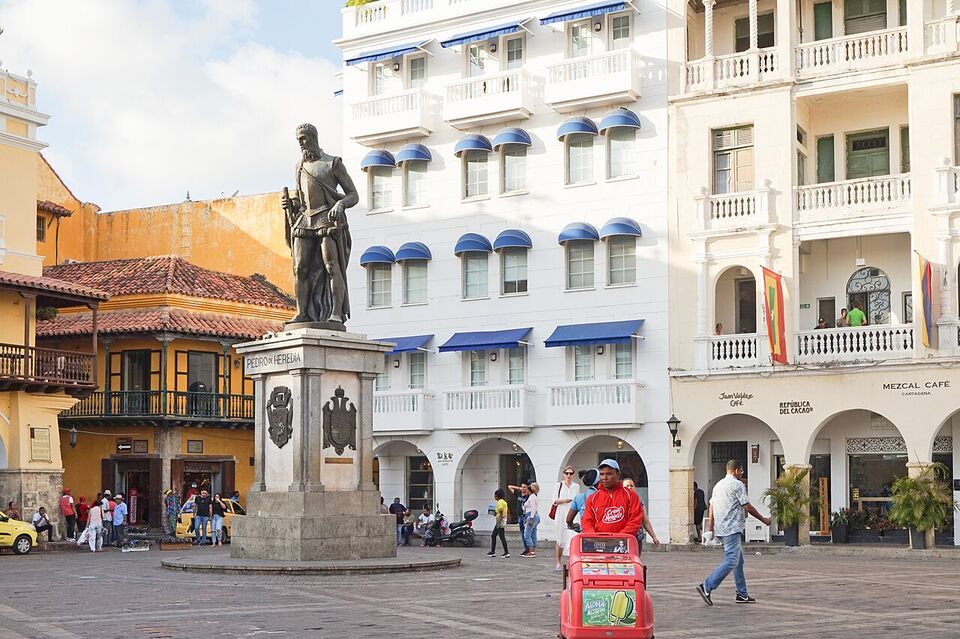
The Clock Tower gate, built between 1704 and 1738, was the main entrance to the old city. Just inside is the Plaza de los Coches (Square of the Carriages), once a slave market and today a busy plaza with portico arcades and sweet stalls. Horse carriages wait nearby.
Plaza de Bolívar
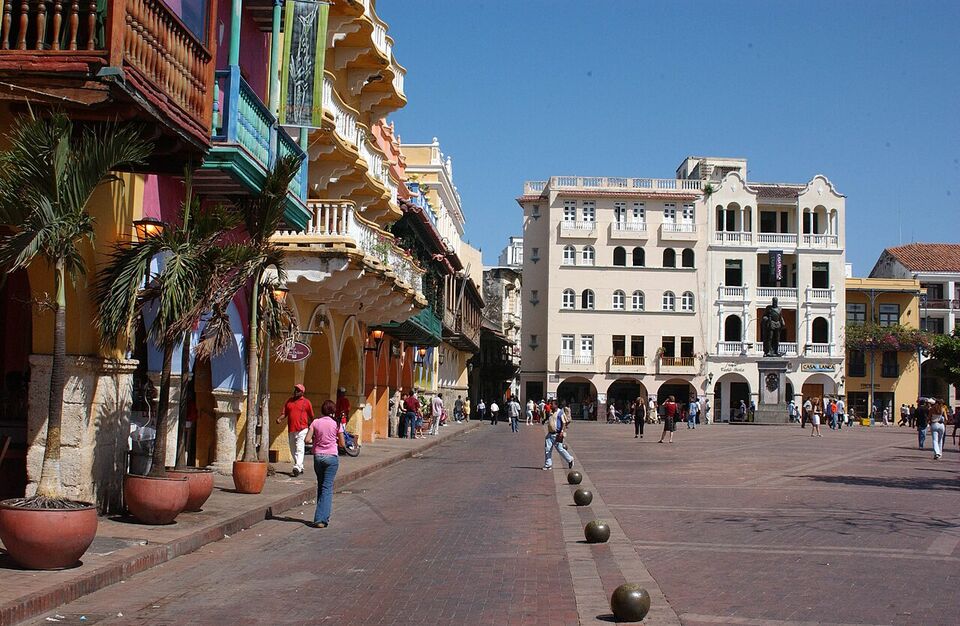
A small shaded park with a statue of Simón Bolívar, surrounded by balconied colonial buildings and café tables. It was once called the Plaza de la Inquisición. The cathedral and the Palace of the Inquisition are on its edges.
Plaza de Santo Domingo
Home to the Iglesia de Santo Domingo, whose convent dates from 1565 to 1630 and is the city's oldest church. In the square is a bronze reclining woman by Fernando Botero. Restaurants spill out onto the plaza in the evening.
Plaza de San Pedro Claver
A church and cloister built between 1580 and 1654, named for the Jesuit priest who ministered to enslaved Africans. Check the opening hours and ticket price before you go.
Plaza de la Trinidad
The social heart of Getsemaní: street food, buskers and neighbors on the church steps, with bars on the surrounding streets. It is at its liveliest on weekend evenings.
Calle del Arsenal and the murals
Murals and graffiti cover much of Getsemaní. A walk around the side streets in the morning is quieter and cooler than in the evening.
Las Bóvedas ("the vaults") are arched rooms built into the wall, with a sea view from the top, and the cathedral (built between 1577 and 1612) is a short walk away. We link them into a day in Cartagena Things to Do.
Food and drinks to try
Food on the Caribbean coast is built on seafood, coconut, plantain and corn. Representative dishes include arroz con coco (coconut rice, often with raisins), patacones (fried and flattened green plantain), carimañolas (yuca fritters stuffed with meat), and arepa de huevo, a corn cake split and fried with an egg inside, which is common as a coastal breakfast. Fish, shrimp, and lobster are widely served, often fried whole with rice and plantain, and spicy dishes are common on the coast. The cuisine of the coast also shows an Arab influence, so you may find kibbeh on menus.
For drinks, you will see juice stands everywhere. Order fresh jugos (juices) or limonada de coco (a coconut lemonade, widely sold in the old city). Ask for a drink sin hielo if you are unsure about the ice; many travelers drink only bottled water. Rum is the most popular spirit on the coast, whereas aguardiente (an anise-flavored spirit) is the classic drink inland. Be aware of cheap unbranded liquor: on the Caribbean coast there is a moonshine called "cococho" that has been linked to blindness cases, so drink only branded bottles from reputable places.
Many restaurants add a suggested tip (propina) of about 10% to the bill. It is voluntary, so check your bill and ask for it to be removed if you did not receive good service. We could not confirm this practice for every restaurant, so look at the receipt. See also our food guide.
Save money
Tourist restaurants in the walled city often cost far more than the same meal a few blocks away in Getsemaní or in neighborhood spots. Look at the menu board before you sit down, check whether tax or a service charge is added, and eat the main meal at lunch, when many places offer a set meal (menú del día) at a lower price.
Horse carriages: the rules and our advice
Horse-drawn carriages are a fixture of the walled city, and drivers wait around the Plaza de los Coches and other plazas, especially at night. Rides are sold by the half hour or hour, and you will be approached repeatedly. Carriages are a popular evening activity for couples, but they come with three questions.
- Price: agree the total, the length of the ride and the route before you climb in, and agree whether the price is per carriage or per person. Quotes to visitors can start high. A figure of "one price, one carriage, one hour" in writing (a phone screen is fine) avoids arguments.
- Heat and animal welfare: the horses work on hot pavement, and the city has been under public pressure over their treatment. We suggest travelers who are uncomfortable with this walk instead or choose one of the electric alternatives some operators offer. We could not confirm the current local rules, so ask the city tourism corporation (Corpoturismo) or your hotel what applies now.
- Licensing: ask your hotel which stands are the usual, official ones. Do not follow a driver who calls to you from a side street or asks you to move to another carriage.
Getting around: taxis and walking
You will walk in the old town. Everything in the walled city and Getsemaní is within about 15 to 25 minutes on foot, and cars are limited on many streets. For trips to the fortress, Bocagrande, the airport, the bus terminal or La Popa, you will use a taxi.
We could not confirm how Cartagena taxi fares are set or what the current official fares are, so we recommend three habits. First, ask your hotel for the usual fare to your destination before you leave. Second, agree the price before you get in, and confirm it is for the whole trip and not per person. Third, use taxis from hotel ranks or ones your hotel calls. Do not accept a ride from someone who approaches you on the street. Keep small bills (COP 10,000 (about $3) and COP 20,000 (about $6) notes), because drivers often have little change for big notes.
See our getting around guide for how city transport works across the country.
Street vendors, beach vendors and common scams
Cartagena has many sellers, and visitors are approached constantly in the walled city, on the walls, on the beaches and on island boats. Most vendors are working people trying to make a living, and a polite "no, gracias" with a smile and a hand over your heart is usually enough. Keep walking at the same pace, and do not feel obliged to stop. Here is what you will meet.
- Sellers of hats, sunglasses, souvenirs and cold water: prices are negotiable and start high. Decide if you want the item before you ask the price, and offer a lower sum with a smile.
- Palenqueras: women in bright dresses selling fruit from bowls on their heads. They are an icon of the city, but they often expect a payment if you photograph them. Agree the amount before you take the picture, or skip it.
- Beach vendors: massage, hair braiding, jewelry, fruit, oysters, drinks. Agree the price before accepting any service, and note that a "free" bracelet or a braid is rarely free.
- Street offers of tours: people near the Torre del Reloj and in plazas offer guided walks, island trips and "special" tickets. Tour operators should be registered (look for a Registro Nacional de Turismo, or RNT, number, and confirm it with your hotel); book through your hotel or an agency with a physical office. Unlicensed boat tours are a safety risk, as we explain on the Rosario Islands page.
- Taxi fare haggling: some drivers quote tourists several times the local price. A rule of thumb is to ask your hotel first, and walk away from a driver who will not state a price.
- Overpriced drinks and "menu" surprises: some bars and plazas serve drinks without a visible price list, or add a large service or entertainment charge. Ask for the written menu and the total before you order, and check the bill line by line.
- Friendly strangers: someone who offers to show you "a local bar", sell you a cheaper tour, or take you to a club may be working on commission, or may be steering you to a place where you will be overcharged or worse. A stranger who insists on buying you a drink is a reason to leave.
Different from home
In the US, a price on a menu is the price you pay. In Cartagena, the price of a taxi ride, a tour, a hat or a massage is often a starting point. That is normal, not rude. But for restaurant bills, check whether the 10% suggested tip is included and whether tax is added, and pay only what you agree.
Carry only the cash and one card you need for the day, leave your passport in the hotel safe (carry a photo of the page and entry stamp), and keep your phone in a front pocket or a bag worn across your body. Do not wear jewelry you would miss. Dial 123 (Colombia's national emergency number) in an emergency, or call the US Embassy in Bogotá at (+57) (601) 275-2000. US citizens abroad can also call +1-202-501-4444 for help around the clock.
Drugs, nightlife, sex tourism and the law
We say this plainly because it matters. Drugs and sex tourism are illegal or heavily regulated in Colombia, and the risks to foreign visitors are real. This section gives the law and the official warnings. We do not give any tips on how to find or do either.
The US advisory
The US State Department's advisory for Colombia is Level 3: Reconsider Travel (as of November 2026), reissued on March 31, 2026, "due to crime, terrorism, civil unrest, kidnapping, and natural disasters". It also warns about "drugging, extortion, kidnapping, and armed break-ins". The areas listed at Level 4, Do Not Travel, as reported in April 2026 are in the interior and border regions (Arauca, parts of Cauca and Valle del Cauca, Norte de Santander, and the Venezuelan border strip), not the Caribbean tourist cities, but you should read the full current list at travel.state.gov. You can read more in our safety guide and Is Colombia safe? page.
In a security alert dated January 10, 2024, the US Embassy reported eight suspicious deaths of US citizens in Medellín between November and December 2023, apparently from drugging or suspected homicide. It also warned that criminals use dating apps to lure victims to public places to assault and rob them, and said the embassy had received similar reports from Cartagena and Bogotá.
Drugs
Buying, selling or carrying illegal drugs is a crime in Colombia, and foreigners are prosecuted. Do not assume that a personal-dose rule or a friendly vendor protects you; police can still detain you, and a street offer is often a setup for a robbery, a fine or a bribe. Drugs sold on the street can be adulterated or replaced with sedatives. Scopolamine and benzodiazepines are used to drug victims in nightlife areas of Colombian cities, and the effect can be a blackout and a robbery or worse. If something goes wrong, a US citizen arrested abroad is subject to local law, and the embassy cannot get you released.
The practical precautions are simple. Do not leave a drink unattended and do not accept a drink or food from someone you do not know. Do not leave a bar or club with a stranger, and tell a friend or your hotel where you are going. Do not go to a private home or a remote spot with someone you met online or on the street, and meet dating-app contacts only in daytime public places, with someone told. If you feel unusually dizzy or confused, go to a trusted person, a hotel desk or a police officer.
Sex tourism and exploitation
Colombia treats sexual exploitation of anyone under 18 as a serious crime, and the country has run campaigns against it in tourist cities. US law also applies: the US can prosecute American citizens for sexual conduct with minors abroad. The sex trade in tourist areas is linked to trafficking, coercion, theft and drugging, and visitors are common targets. Adult sex work and the venues around it carry risks of robbery, blackmail and violence for foreigners. We do not give guidance on it.
Watch out
If you suspect a child is being exploited, or that someone is being trafficked, report it. Call 123 in Colombia, or contact the US Embassy at (+57) (601) 275-2000. Do not confront anyone yourself.
When to go, festivals and holidays
The dry season from December to April is the most comfortable time, though it is also the busiest and most expensive. The wettest months are around October and November. A few dates to know:
- Monday, November 16, 2026: a national holiday (Independence of Cartagena, moved from November 11). Expect crowds, closures and higher prices over the long weekend. The city's celebrations of November 11 run from November 11 to 15, according to Colombia's national tourism site.
- Cartagena Music Festival: listed for January 9 to 17, 2027 on the national tourism site; check the organizers' site for the program.
- Hay Festival Cartagena: January 28 to 31, 2027, according to a secondary report of the organizer's ticket page; check hayfestival.com.
- Holidays: hotels fill and prices jump over long weekends, Christmas and New Year, and Holy Week (Easter is March 28, 2027).
Book hotels early for those dates. For the full calendar see festivals.
Beyond the old city
If you have a few days, you can add the beaches and islands. The Rosario Islands, about 12 miles (20 km) from the city, are the most popular excursion, and Barú and Playa Blanca are reached by boat or road. See Rosario Islands and Barú for how to choose a boat and avoid problems. Other trips include a mud volcano and a village founded by escaped slaves; we describe them in Cartagena Things to Do. For a longer coast trip, Colombia's Caribbean coast continues toward Santa Marta and Parque Tayrona, covered in Santa Marta and Tayrona, and the islands of San Andrés and Providencia are a flight away. For beach ideas across the country, see beaches.
Add it to a route in the trip builder, or ask us to plan the hotels, trains and guides for you.