Overview
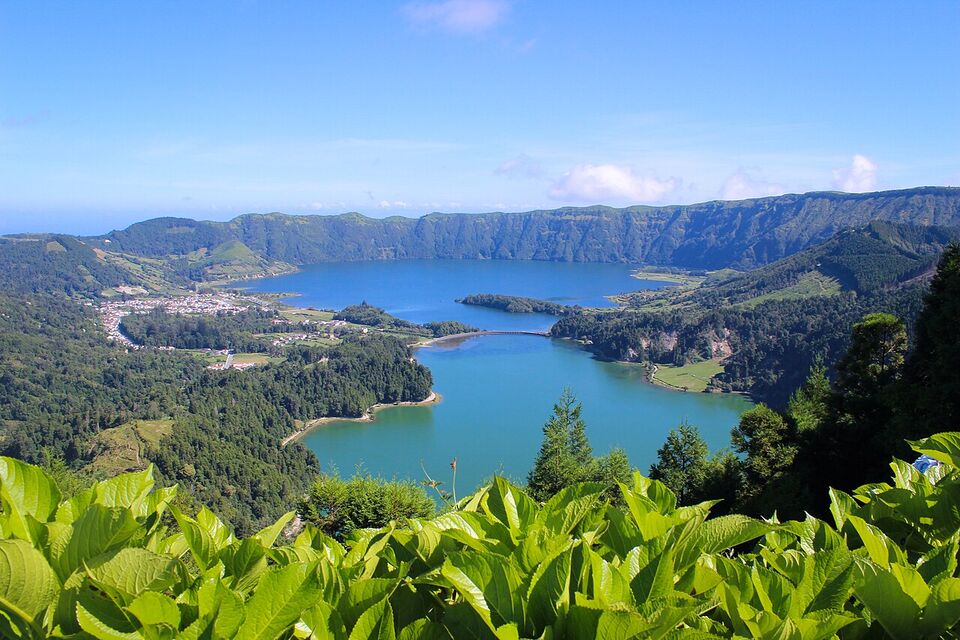
The Azores are nine volcanic islands in the middle of the North Atlantic, about 900 miles (1,450 km) west of Lisbon and roughly 2,500 miles (4,000 km) from Boston. They are green, wet, quiet and wild: crater lakes, hot springs, cliff-edged coastlines, dairy pasture, and whales just offshore. They are an autonomous region of Portugal, so the euro is used and Portuguese rules apply.
The Azores are one hour behind Lisbon. That makes them 4 hours ahead of New York for most of the year. The gap changes by an hour for about two weeks in March and again from late October to early November, because the US and Europe change their clocks on different dates. When you plan a connection through Lisbon, remember that your flight times are local and you gain an hour going east.
Most visitors choose one or two islands and spend a week or more. The Azores reward slow travel, flexible plans and a tolerance for cloud. They do not suit travelers who need guaranteed sun, a beach holiday or nightlife. For how the islands compare with the mainland and Madeira, see Portugal's destinations, and for the sunny, drier alternative read Madeira.
Why the islands differ and how to pick one or two
The islands lie in three groups. The eastern group has São Miguel and Santa Maria. The central group has Terceira, Graciosa, São Jorge, Pico and Faial. The western group has Flores and Corvo. Each island has a different character, and the distances between groups are real: from the eastern group to Flores is roughly 370 miles (600 km). Travel between groups is by air, while the central five are close enough for ferries.
| Island | Best for | Why go | Trade-offs |
|---|---|---|---|
| São Miguel | First visits, variety, one-island trips | Twin lakes at Sete Cidades, Lagoa do Fogo, the hot springs of Furnas, tea plantations, whale watching | Busiest island; popular viewpoints crowded in midsummer |
| Terceira | History, food, culture | Angra do Heroísmo, a UNESCO-listed old town, a lava tube, a lively festival calendar | Fewer big landscape set pieces than São Miguel |
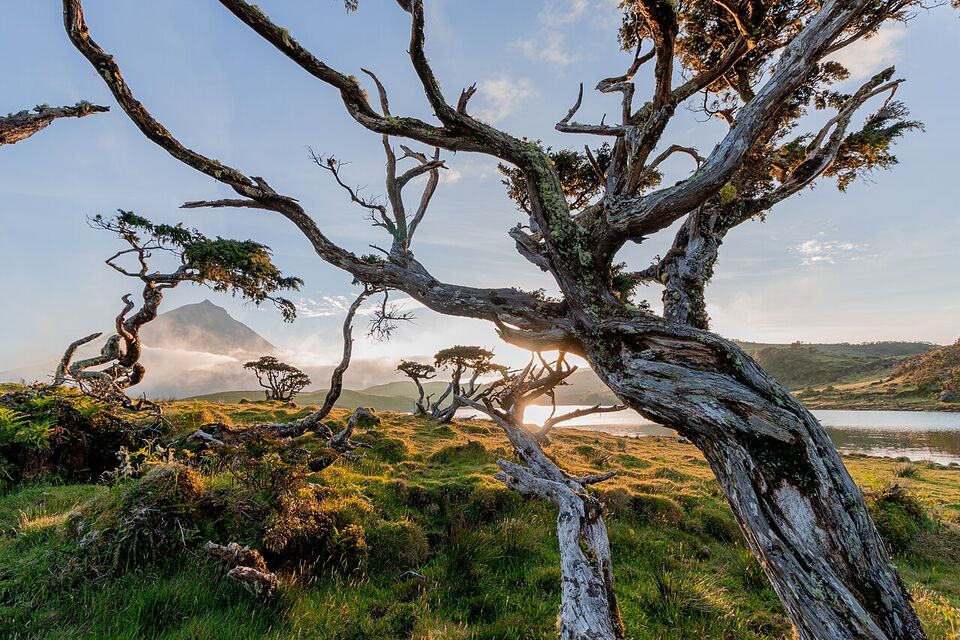
| Pico | Hiking, wine, whales | Mount Pico, at about 7,713 ft (2,351 m) the highest point in Portugal, plus vineyards in black lava walls | Climbing is regulated; cloud often hides the peak |
| Faial | Sailing, volcano views, easy access | Horta marina, the Capelinhos volcano that erupted in 1957-58, ferry hop to Pico | Small; short stay is enough |
| São Jorge | Walking and quiet | Narrow island with cliffs and fajãs (flat coastal platforms) | Limited services; road driving is slow |
| Flores and Corvo | Far-flung nature, waterfalls | Remote, flower-covered, tiny and quiet | Flights to the west are weather-dependent; limited accommodation |
| Santa Maria | Sun and beaches, relative dryness | Often described as the sunniest island, with red-earth landscape and the main beach | Sleepy; fewer sights |
| Graciosa | Quiet and spas | Round, flat and small, with a volcanic cave and thermal baths | Few services; short stay is enough |
How to choose: with five to seven nights, stay on São Miguel, or split between São Miguel and one other island. With eight to ten nights, consider São Miguel plus Terceira, or Faial plus Pico, which you can link by ferry. Avoid hopping between three or more islands unless you are comfortable with delays, because flights and ferries are cancelled for wind and sea more often than on the mainland.
Getting there: flights from the US
The main international gateway is João Paulo II Airport at Ponta Delgada on São Miguel. Azores Airlines serves Ponta Delgada from Boston and New York JFK, and its US fare pages also list San Francisco, Seattle and other origins, some of which will involve connections. United has been listed as running seasonal Newark flights to Ponta Delgada. Terceira's Lajes airport also has US service listed by Azores Airlines. Which of these are nonstop, how often they run and in which months varies, so verify routes and seasonality on airline sites before you book.
A nonstop from the northeastern US is a shorter flight than to the mainland, but check the schedule for the exact time. Otherwise, connect through Lisbon or Porto, which adds time but widens your choice of dates. Our flights guide has the mainland options. Remember that the arrival check at Ponta Delgada is an EES point, so expect fingerprints and a facial image at your first entry to the Schengen area; that first point may be Lisbon if you connect there.
The US Consulate in Ponta Delgada serves US citizens by appointment. Services run Monday to Friday, 9:00 a.m. to noon and 1:30 to 4:30 p.m., on weekdays that are not Portuguese or US holidays, and emergency hours are 8:30 a.m. to 12:30 p.m. and 1:30 to 5:30 p.m. The telephone number is +351 296 308 330. After hours, call the Embassy in Lisbon at +351 21 727 3300 and ask to be transferred to the officer on duty in the Azores. For emergencies for US citizens abroad, +1 202 501 4444 is available, and you can enroll in STEP before you travel.
Getting between islands
Inter-island flights are run by SATA Air Açores from Ponta Delgada to most of the other islands, using small turboprop planes. Schedules are thin, and weather can cancel or delay flights, especially to the west. Always allow a spare day around international flights when you hop islands, and book baggage allowances carefully, since limits on small planes can be strict.
Ferries run between the central islands (Faial, Pico and São Jorge) throughout much of the year, and some other links run only in summer. Faial to Pico is a short crossing and a popular day or overnight trip. Operators and timetables change, so check the current schedule with the regional ferry company before you plan. Seas can be rough; a ferry that runs in July may not in January.
Watch out
Do not schedule an inter-island flight on the same day as your flight home. Cloud and wind can ground small planes for a day or more. Keep a night in hand on the island with your international airport, and if you have a cruise or tight connection, build a larger buffer.
Weather that changes in minutes
The saying goes that the Azores have four seasons in a day, and it is true. A clear morning can turn to drizzle and fog by noon, then clear again. The ocean keeps temperatures mild all year. In Ponta Delgada, average highs run from about 63°F (17°C) in winter to about 79°F (26°C) in August, with lows between about 54°F (12°C) in winter and 68°F (20°C) in late summer. Typical rain days run from roughly 5 a month in July to 15 in December, and the total is about 120 rain days a year.
Sunshine is greatest in July and August, which are also the driest months, though "dry" is relative. Mountains and crater rims collect cloud, so a viewpoint that is spectacular one hour can be white the next. Locals check live webcams and the Portuguese weather service, IPMA, before they choose a viewpoint, and so should you. Pack waterproofs, layers and shoes with grip every month of the year. The when to go page covers the seasonal pattern for the whole country.
Insider tip
Plan flexible days. Keep one or two "weather days" free in your itinerary and make the viewpoint decision each morning, using webcams and the forecast. Book hot springs and museums for the afternoon of a poor day, not the day itself.
São Miguel: lakes, hot springs and the cozido
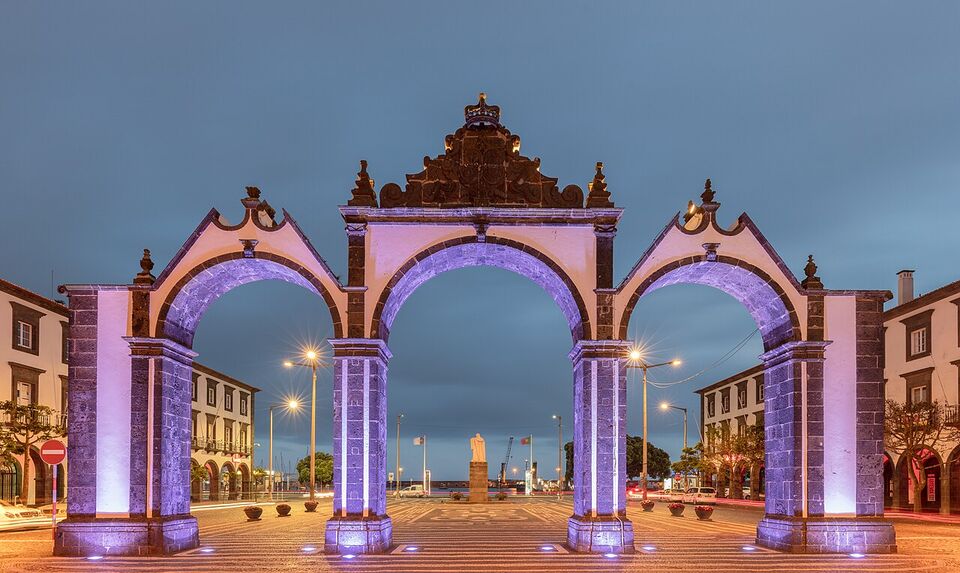
São Miguel is about 40 miles (65 km) long and gives the best sampler of the archipelago. Ponta Delgada, the largest town, has black-and-white pavements, a harbor front and a handful of churches and museums. Most visitors stay here or in a village near the sights.
Sete Cidades
A caldera holding a blue lake and a green lake side by side, with viewpoints on the rim and a village on the floor. Cloud often fills it, so come early and check the webcams.
Lagoa do Fogo
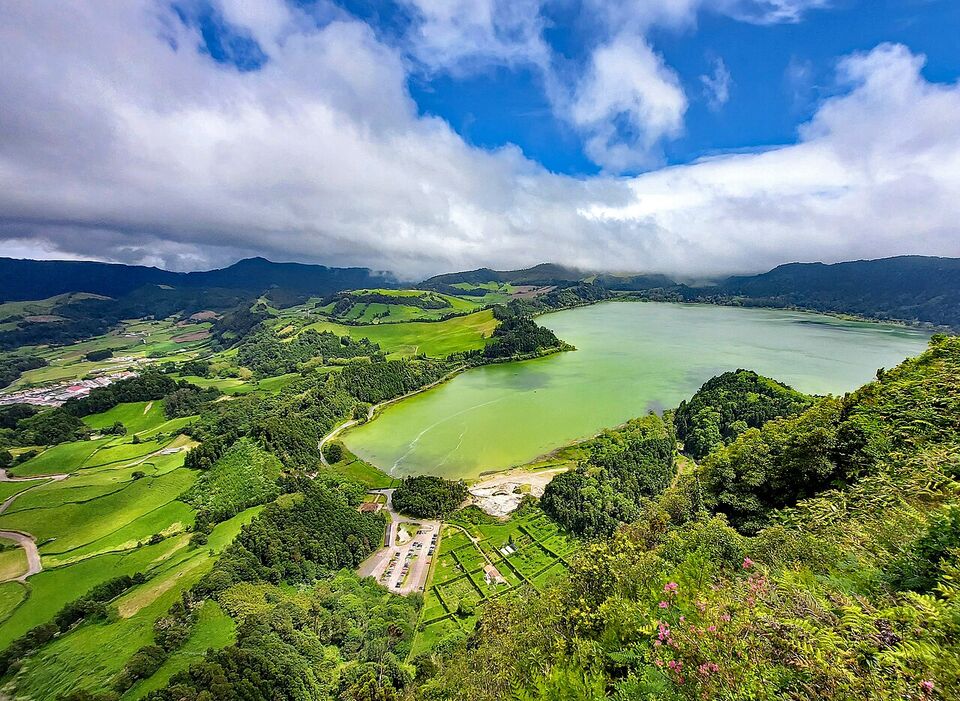
A lake in the island's central mountains, reached by a short road and a walk. Access can be limited at busy times, so check the current rules on the official Azores site.
Furnas valley
A volcanic valley with steaming vents, a lake and thermal pools. Two classic stops are the Terra Nostra Park with its iron-rich warm pool and the Poça da Dona Beija hot-spring pools. Entry fees and hours change, so check each site.
Cozido das Furnas
Cozido is a stew of meats and vegetables slow-cooked for hours in pots buried in volcanic ground near the fumaroles. Restaurants serve it at lunch; some need a booking, and the pots are typically lowered early in the day. Verify access to the cooking area and prices locally.
Tea and pineapple farms
São Miguel grows tea and pineapples under glass. Small visitor sites run tours. They are less famous than the lakes but make a calm break on a rainy day.
A good first day is Ponta Delgada and a short whale or dolphin trip; a second day is Sete Cidades; a third is Furnas with a late lunch of cozido and a soak in a thermal pool. The island's north coast has a quieter pace, and the east has dramatic green hills and the village of Nordeste. Dining on the island is hearty: beef, local cheese, limpets and fresh fish.
Different from home
Restaurants often put bread, butter, cheese and sometimes olives on the table before you order. This is the couvert. It is charged only if you eat it, and you can ask the server to take it back. Check the menu for the price. Cards are widely accepted in towns, but carry some cash for small cafes and village stops.
Whale watching rules and seasons
The Azores are one of the world's well-known whale-watching bases, because deep water lies close to shore. Dolphins are commonly seen on most trips, and sperm whales are present for much of the year. Larger baleen whales such as blue and fin whales pass through mainly in spring, typically from April to June, though sightings are never guaranteed. Operators vary the species they list by month, so verify with the company.
- Use a licensed operator. Boats must follow rules on approach distance and time with the animals.
- Do not swim with whales or approach in a private boat. Swimming with dolphins is regulated and often limited to licensed operators in specific places.
- Expect cancellations for sea conditions. Book the first half of your stay and keep a spare day.
- If you tend to feel seasick, take a remedy before boarding and sit near the rear and low in the boat.
- Choose a smaller boat for a closer feel or a larger one for a steadier ride.
Rules and licence systems can change, so check the regional government's tourism site at visitazores.com for the current guidance. Whale watching is available from several islands, with Pico, Faial and São Miguel the most developed.
Volcano hikes and trail rules
The Azores have an official network of marked trails (percursos pedestres) with numbered routes, road signs and trailheads. Some are short, family-friendly loops to viewpoints; others are long ridge walks. Trail conditions are poor after rain, and cloud can hide the path and the view.
- Register and book where required. Climbing Mount Pico, the highest point in Portugal at about 7,713 ft (2,351 m), needs advance registration and the numbers allowed each day are limited; check the official mountain site for fees, rules and any guide requirement.
- Carry layers, water, a light and a map or offline map. Phone signal is patchy on some islands.
- Stay on marked paths; the terrain is steep and fragile.
- Check trail status with the park service or tourism office on the day. Landslides after rain close paths for weeks.
- Take a guide if the weather is poor, or skip exposed routes.
On São Miguel, easy alternatives to the long hikes include the rim walks at Sete Cidades and the paths around the Furnas lake. If you want a serious climb, Pico is the island, but it is a full day of effort that needs good boots, a start before sunrise and a flexible day for weather.
Renting a car and getting around
On São Miguel, a rental car is the easiest way to see the viewpoints, lakes and villages, because public buses run mostly between towns and are less frequent outside Ponta Delgada. Book early in July and August, when cars sell out. Roads are generally good but winding, and fog can come down quickly. Parking at popular viewpoints can be limited. On smaller islands, taxis and tours are often enough, and a car may be harder to find.
- Book a small car; roads and village streets are narrow.
- Check the fuel level before long drives to the east or north, where stations are fewer.
- Bring your US licence; consider an International Driving Permit and check the rental company's terms. See our driving guide.
- Do not leave valuables visible in the car at viewpoints.
- Expect cows on country roads.
If you do not want to drive, join a full-day van tour for Sete Cidades and one for Furnas, and use taxis for the evenings. Prices for tours vary by season and group size; check current operators and cancellation terms.
When to go and a sample plan
May to October is the usual window for hiking, whale watching and ferries. July and August are the warmest and driest but also busiest. Spring brings green hills and baleen whales, and September has warm water and fewer visitors. Winter is mild but wet, windy and prone to cancelled flights, so only go if you are flexible. The holiday known as Azores Day is on Whit Monday, which falls on May 17, 2027.
- Day 1
Arrive in Ponta Delgada
Reset your body clock (an hour behind Lisbon). Walk the waterfront and old center.
- Day 2
Sete Cidades and the west
Go early to the rim viewpoints, then lunch in the caldera village and a coastal drive home.
- Day 3
Whales in the morning, Furnas later
A sea trip early, then the thermal pools and a dinner near Furnas.
- Day 4
Cozido and gardens
A cozido lunch at Furnas and the botanical park, then a walk by the lake.
- Day 5
North and east coasts
Tea, pineapples, and the green east. Keep this day open for rain.
- Spare day
Weather buffer
Keep it free for rescheduled whale trips, closed viewpoints or a missed flight.
For a bigger trip, combine São Miguel with a mainland base like Lisbon, or with a cruise port call as described in cruises. If you are planning the whole of Portugal, the planning guide helps you decide how many days to give the islands.
Add it to a route in the trip builder, or ask us to plan the hotels, trains and guides for you.