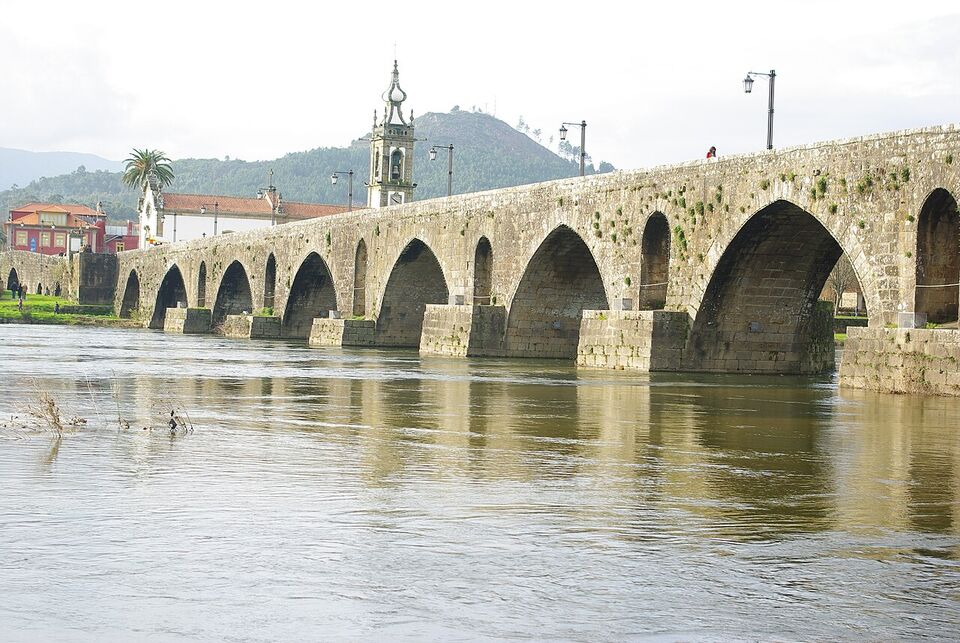
What the Camino Portugués is
The Camino Portugués (Caminho Português in Portuguese, the Portuguese Way in English) is the group of pilgrim routes that lead from Portugal to the tomb of Saint James in Santiago de Compostela in Galicia, Spain. It is one of the most popular Camino routes. The pilgrim office's 2025 figures, as quoted on Wikipedia, put the Portuguese Way in second place after the French Way, with about 19 percent of pilgrims, and the Coastal Way third at 17 percent. Americans were about 7 percent of pilgrims on the Portuguese Way and about 12 percent on the Coastal Way.
The Portuguese Way begins in Lisbon or Porto. From Porto it is about 162 miles (260 km), and from Lisbon it is about 380 miles (610 to 620 km; the sources give both numbers). Walkers cross five rivers on the way north from Porto: the Ave, Cávado, Neiva, Lima and Minho. You walk on forest tracks, village lanes, old Roman roads, boardwalks, farm paths and, honestly, a fair amount of paved road.
This page is for Americans planning to walk it. It covers the routes, how many stages and how long, when to walk, the pilgrim credential and stamps, hostels versus hotels, the Ponte de Lima and Valença stages, crossing into Spain, packing and blisters, luggage transfer, fitness and surfaces, and what you need for a Compostela. We keep it practical, and we flag every point we could not verify. For other walking, see Portugal by interest.
The routes compared
There are four common ways to walk it. From Lisbon there is one main route, which joins the Porto routes in the north. From Porto there are the Central and Coastal routes, and from Pontevedra in Spain there is a Spiritual variant.
| Route | Distance and time | Effort | Scenery | Services |
|---|---|---|---|---|
| Central from Lisbon | About 380 miles (610-620 km); about four to five weeks | Highest: long and repetitive; hot in summer | River plains, farmland, Coimbra and Porto on the way | Fewer hostels and shops; plan overnight stops ahead |
| Central from Porto | About 162 miles (260 km); roughly 10 to 14 days | Moderate; one real climb after Ponte de Lima | Villages, vineyards, forest, Ponte de Lima, Valença | Good, with more hostels and cafes; busiest route |
| Coastal from Porto | Similar length to the Central route; about 10 to 14 days (check a guide) | Moderate; flatter, but wind and sand and some road | Beaches, dunes, boardwalks, fishing towns, Vila do Conde, Viana do Castelo | Many towns; summer fills quickly |
| Spiritual variant | A short extension from Pontevedra; about two to three days (check a guide) | Moderate; includes a hilly first day | Hills, monasteries and a river approach | Fewer hostels; includes a boat leg that depends on operators |
We give day counts as ranges because pace changes everything. A fit walker doing 12 to 15 miles (20 to 25 km) a day finishes sooner than someone who prefers 9 to 12 miles (15 to 20 km) and rests when needed. Plan one or two buffer days for blisters, rain or a good town.
The Central route from Porto
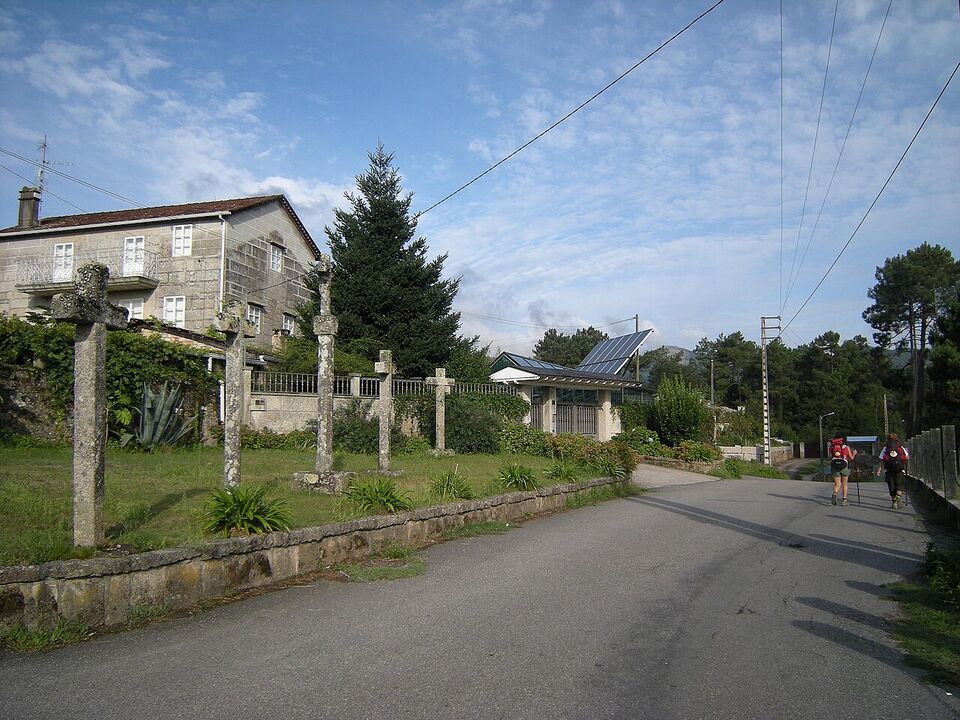
The Central Way is the traditional inland route and the one most people mean when they say "the Camino Portugués." From Porto Cathedral it passes through the countryside near Vila do Conde, the monastery of Rates (a key site on the way, with a long link to pilgrims), the medieval Dom Zameiro bridge, Barcelos, Ponte de Lima and Valença, then crosses into Spain at Tui.
A typical sequence of overnight towns, which you can vary, looks like this:
- Porto to the Vila do Conde or Rates area (the first day is mostly urban and suburban).
- To Barcelos, known for its rooster symbol.
- To Ponte de Lima, one of the most pleasant stops.
- Over the hills to Rubiães, the first long climb.
- To Valença, the fortress town on the Minho, and across the bridge to Tui in Spain.
- Then through Galicia: O Porriño, Redondela, Pontevedra, Caldas de Reis, Padrón and Santiago.
Treat the names as a guide, not a fixed program: many stage plans exist, and local hostel space decides where you end up. Pick a guidebook or app and check it for the current route markers and stage lengths.
The Coastal route
The Coastal Way (Caminho da Costa) leaves Porto near the sea and follows the Atlantic coast through Vila do Conde, Póvoa de Varzim, Esposende, Viana do Castelo and Caminha before it reaches the Spanish border. It gained importance in the 15th century with the growth of the coastal towns. A modern version uses beach boardwalks, which many walkers find more pleasant than the older road, and some boardwalks do not allow bicycles.
The Coastal route has more sea air, more beach cafes and more wind. It can be flatter than the Central route, but sand, boardwalks and road sections tire different muscles. The route near towns is more built-up than people expect, and in summer the coast is busy and hostels fill quickly. At the border, walkers cross the Minho by ferry or follow inland options to Tui. Ferry operation and schedules vary by season, so verify them before you plan your day.
In Spain the Coastal route continues toward Vigo and joins the Central Way near Redondela, and the two routes then share the way to Santiago. The pilgrim office says that of the people who started in Porto, 55 percent went via Tui and 45 percent via Vigo.
The Spiritual variant
The Spiritual Variant (Variante Espiritual) is a Spanish extension that leaves the Central route at Pontevedra and heads through the hills, past monasteries, to the estuary of Arousa. From there, a boat trip along the Ulla river is part of the tradition, and the route then walks to Padrón and Santiago. It is a popular add-on for people who want something more reflective and a break from the shared path.
We have not confirmed the current boat schedule or whether the boat leg runs every month, so treat it as unconfirmed and check with local sources or the Galician pilgrimage portal at caminodesantiago.gal. If you cannot take the boat, there are walking alternatives. Ask the Pilgrim Office whether walking the variant affects your Compostela, since the rules are theirs to set.
From Lisbon
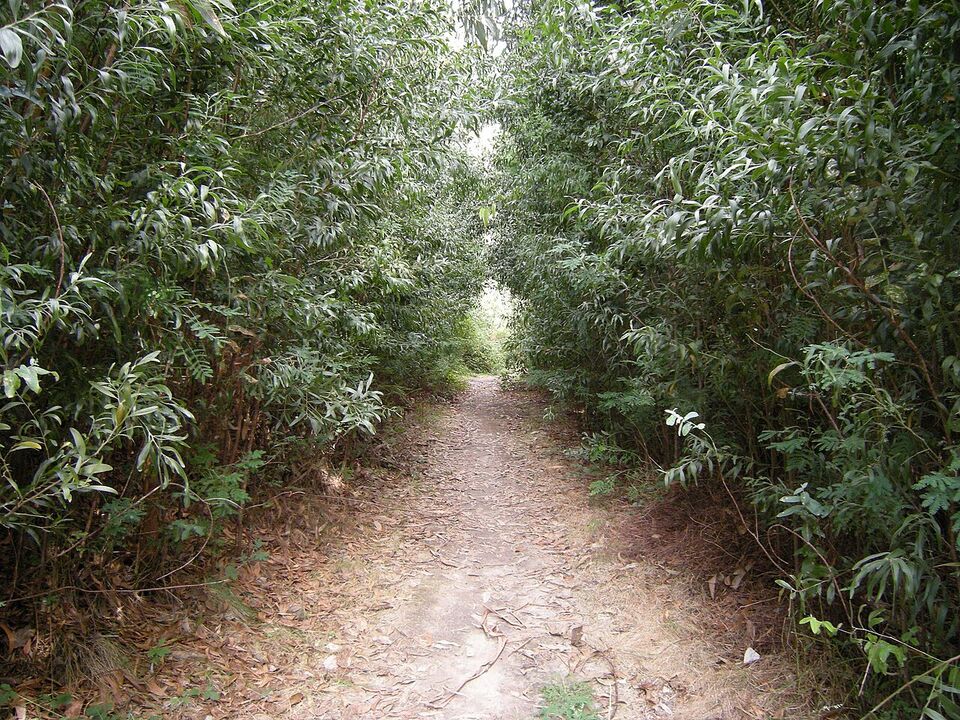
The route from Lisbon is the long one. It starts at Lisbon Cathedral (the Sé) and passes Caldas da Rainha, Alcobaça (whose monastery was an early pilgrim hostel), Coimbra and Porto before it joins the northern routes. The way follows much of the old Roman road, with long sections of farmland, villages and some busy roads. In practice it is a real expedition: about 380 miles (610 to 620 km), usually four to five weeks at a steady pace.
The Lisbon section is less crowded, has fewer hostels and cafes, and may mean more road walking. Services and hostel space are less certain, so plan overnight stops before you leave and ask hostels and hotels about availability. If time is short, many walkers take the train from Lisbon to Porto, then start at Porto Cathedral. The fast Alfa Pendular train takes about 2 hours 45 minutes; check cp.pt for the current timetable and book early. See our guide to trains and buses and Coimbra if you break the journey.
When to walk, and heat
The official walking season is generally given as March to October, and most pilgrims finish in the period from May to September. For comfort, we suggest April to June and September and October. The weather is more settled, the days are long and the heat is lower than at midsummer.
Summer is the problem. Lisbon's average highs are about 83°F to 84°F (28°C to 29°C) in July and August, and a day of walking is hotter than that on open ground. The Lisbon section has little shade. Start early, carry plenty of water, wear a hat and sunscreen, and plan to finish the day's walk by early afternoon. Heat illness is a real risk, and it is better to shorten a stage than to push through.
Winter is wet, with fewer open hostels and short days. Porto is cooler and rainier than Lisbon. Galicia is known for rain in any month, so pack for it. For weather by month, see when to go. Check IPMA (ipma.pt) for Portuguese forecasts and fire-danger notices on hot days.
Watch out
Heat and wildfire danger can close or alter forest sections in summer. Check local forecasts and notices daily, carry more water than you think you need, and do not start a long, shadeless stage in the afternoon.
Pilgrim credentials and stamps
A credencial do peregrino (pilgrim passport) is a folded card that records your journey. You get stamps (carimbos) at hostels, churches, town halls, cafes and some shops. The stamps prove where you walked, and they are what the Pilgrim Office in Santiago looks at.
You can usually get a credential from the cathedral at your start point (Lisbon or Porto), from pilgrim associations and from some hostels. We could not confirm current office hours or prices, so check ahead and bring a few euros in coins. Most cards cost a small amount. Fill in your name and starting point, and keep it dry in a plastic sleeve.
Get at least one stamp each day, and two a day in the last 100 km as a safe rule. Official rules for the Compostela are set by the Pilgrim Office, not by this guide: see below.
Albergues, hotels and guesthouses
You can sleep in three kinds of places. Albergues (pilgrim hostels) are cheap, shared and social. They may be run by municipalities, parishes, associations or private owners. Some require a credential, and rules vary on check-in time, curfew, kitchens and bed reservations. Guesthouses and small hotels are more private and often more comfortable, and they are common in towns like Ponte de Lima. Rural guesthouses and manor houses fill the gaps.
| Type | Good for | Watch for |
|---|---|---|
| Albergue (shared dormitory) | Budget, meeting other walkers, a simple routine | Snoring, early starts, limited beds in peak months; some close in winter |
| Private albergue or hostel | Bookable, with smaller rooms and often more comforts | Prices vary; read the cancellation terms |
| Guesthouse or small hotel | Privacy, laundry, a good night's sleep, couples and light sleepers | Book ahead in busy seasons and holiday weekends |
| Manor house or rural stay | Quiet stages, dinner included, drying space | Fewer choices, longer transfer from the route |
For hotel pricing in tiers, think of albergues as $, guesthouses as $ to $$ and nicer manor houses as $$ or above. We do not have confirmed per-night prices for 2026, so check the current rates on the hostel or hotel's own site.
In busy months, book at least the stages with the fewest beds in advance, especially Ponte de Lima, Valença and Tui, and the last few nights before Santiago. A mix works well: albergues on most nights, with a room of your own every few days when you need to recover. See where to stay in Portugal for lodging types and tourist taxes. Many towns charge a small nightly tax; check the council.
Ponte de Lima and Valença
Ponte de Lima
The town sits on the Lima river and takes its name from its long bridge, with Roman roots. It is a comfortable place to rest, with cafes and shops, and many walkers plan a longer break here. After Ponte de Lima, the route climbs into the hills toward Rubiães, which is the first demanding stage for many people, so start early and carry water.
Valença
Valença is a fortified town on the Minho river, facing Tui in Spain. Many walkers stay in Portugal or Tui and walk across the iron International Bridge the next morning. The old fortress town has shops, and some visitors buy linens and other goods, so see our shopping and taking things home guide for what to carry back.
Plan Ponte de Lima as a place to stay at least one night, and Valença (or Tui) as the border night. Because Valença was the starting point for about 18 percent of the Portuguese Way pilgrims who got a certificate in 2025, according to the pilgrim office figures quoted on Wikipedia, it is a busy spot for beds.
Crossing into Spain
Portugal and Spain are both in the Schengen area, so there is no routine passport control when you walk across the Minho bridge. Carry your passport anyway, because identity checks are possible and some lodging asks for it. Your days in Spain count toward the same 90-in-180-day Schengen limit as your days in Portugal, so add them together if you also plan a long trip. See entry rules and Spain and beyond.
The clock changes too. Mainland Spain is one hour ahead of mainland Portugal, so you lose an hour when you cross. Plan your first Spanish day with this in mind, and remember that Spanish meal times are later than Portuguese ones. In Galicia, the language is Galician and Spanish; keep your Portuguese words for Portugal. Euro payments carry over, since both countries use the euro; check that your carrier's international plan also covers Spain.
Not everything is the same on the other side. Albergue networks, credential stamps and signage differ, and some Galician public hostels have their own rules; check the Galician pilgrimage portal at caminodesantiago.gal. In September 2025 the Galician government said the Camino routes were open and passable, and reminded pilgrims that forest fires had damaged some signs. Check for notices when you plan.
Packing and blisters
Pack light. A common guide is about 10 percent of your body weight or less, and every item you can leave behind is an advantage. Our packing list covers the general trip, but here is the Camino-specific version.
- Shoes and socks: broken-in trail shoes or light hiking boots, plus two or three pairs of moisture-wicking socks. New shoes cause blisters.
- Foot care: blister plasters, antiseptic, tape, small scissors and a lubricating balm. Treat a hot spot the moment you feel it.
- Clothing layers: two sets of quick-drying clothes, a warm layer, a rain jacket and a hat. You can wash and dry as you go.
- Sun and water: sunscreen, sunglasses and a water bottle or bladder with at least 1.5 liters of capacity.
- Documents: passport, credential, travel insurance details and a copy of your hotel and flight bookings.
- Electronics: phone, charger and a European plug adapter. Check your device label for voltage. See phones, data and power.
- Sleeping gear: a light sleeping bag liner for albergues; ear plugs for snoring.
Blisters are the most common reason walkers stop. Dry feet and good socks matter more than expensive boots. Stop to air your feet at lunch, change socks if they get wet, and do not walk on a developing blister for days. If you have a medical condition or take medicine, bring enough for the whole trip and a copy of the prescription. See our health guide for pharmacies and insurance, and call 112 in an emergency. The SNS 24 health line is 808 24 24 24.
Luggage transfer services
Luggage transfer services carry your bag from one stage to the next, so you walk with a day pack. They are widely used on the Portuguese Camino, and they are offered by local companies and tour operators. You usually book each stage in advance, hand your bag to the hostel or hotel in the morning, and collect it at the next stop.
We do not have confirmed prices or current operators, so check reviews, ask about coverage for each stage, insurance, pick-up deadlines and what happens if your night changes. Some services only run in the main season. Agree on the delivery point before you leave: the transfer goes to the lodging, so you need a reservation for each night. Keep valuables, medicine and documents with you, never in the transferred bag.
Insider tip
If you are on the fence about a luggage service, use it on the hardest stages only, such as the climb after Ponte de Lima or the first day out of Porto. A lighter pack on a few days costs less and still lets you carry your own bag for most of the walk.
Several tour companies sell the Portuguese Camino as a package with hotels, luggage transfer and a support line. They cost more than going on your own, but they remove the logistics. Compare what is included, and check that the company is established and has clear cancellation terms.
Fitness and surfaces
You do not need to be an athlete, but you do need to train. Walk with a loaded pack for two or three months before you go, building to back-to-back days of 9 to 12 miles (15 to 20 km). Practice on cobbles and hills if you can. Strength in feet, calves and hips matters more than speed.
Expect mixed surfaces. There are dirt and forest tracks, gravel, sections of Roman road and many kilometers of Portuguese cobblestone (calçada), which is hard on feet and slippery when wet. Walkers also share paved roads with traffic in places, usually in towns and on the Lisbon stretch. On the Coastal route, boardwalks and sand add their own challenges. If you have mobility concerns, talk to your doctor and choose shorter stages.
Safety is mostly common sense: face traffic where there is no sidewalk, wear bright clothes, carry a charged phone, share your plan with someone, and be careful at road crossings. Some walkers meet dogs on rural stretches; keep calm and walk on. Our safety guide covers scams, theft and emergency numbers.
What a Compostela requires
The Compostela is the certificate of completion given by the Pilgrim Office (Oficina del Peregrino) in Santiago de Compostela. As we understand the rules, you need to walk the last 100 km (about 62 miles) of a recognized route, or cycle the last 200 km, with the purpose of a pilgrimage or a spiritual search, and show stamps on your credential. Many pilgrims also receive a distance certificate for the full journey.
Because this is an official process and the rules can change, verify the current requirements on the Pilgrim Office's official site before you go. We have not confirmed the stamp count per day, the cost of the certificate, or the office hours. The number of stamps and the exact description of the purpose are the main points to check.
The 100 km rule has an effect on planning. If you start in Porto, you walk well beyond 100 km in any case. If you start in Tui, the distance to Santiago is about 107 km (roughly 66 miles, per the Wikipedia stage table; check a guide), which leaves little margin. Starting at a point closer than 100 km to Santiago does not meet the rule, so check the distance from any start town you plan.
Getting there, getting home and a plan
Most Americans fly into Lisbon or Porto. Porto is the natural start for the shorter walk, and Lisbon for the long one. EES biometric registration applies at Lisbon, Porto, Faro, Funchal and Ponta Delgada airports. See flights to Portugal for routes. Returning from Santiago, check flights and trains, or take a bus or train back to Porto or Lisbon. We have not verified the current Santiago connections, so check before you book an open-jaw ticket.
A sample shape for the trip: arrive in Lisbon or Porto, spend two nights to recover from the flight (see Lisbon and Porto), walk 10 to 14 days to Santiago, and add a rest day in Santiago. Add a few days of sightseeing after you finish, before you fly home. Book beds for the busiest stages early, and leave the rest flexible.
Money is simple: cards work in most towns, but carry cash for small cafes, stamps, albergues and rural stops. For tipping and the couvert (bread, olives and butter charged only if you eat them), see money in Portugal. For the walking day, pilgrim menus and local dishes in the north, see Portuguese food.
Add it to a route in the trip builder, or ask us to plan the hotels, trains and guides for you.