Overview: two northern cities in one trip
Braga and Guimarães are two historic cities in the Minho region of northern Portugal, each about an hour from Porto. Braga is known for its religious heritage, its cathedral and the hilltop sanctuary of Bom Jesus do Monte. Guimarães, a smaller city with a UNESCO-listed center, is known for its medieval castle, its ducal palace and its role in the story of how Portugal began. Both are easy to reach, walkable once you arrive, and rewarding for travelers who want a Portugal that feels less touristed than Lisbon or Porto's riverfront.
Many visitors treat them as day trips from Porto, which works. You can see one city properly in a day, or both in a long one. This page explains what to see in each, how to reach them, how to combine them by train, bus or car, how long each deserves, and what is nearby, including the Minho villages, Vinho Verde country and the Peneda-Gerês National Park.
Both cities are on Western European Time, 5 hours ahead of New York for most of the year (4 hours for about two weeks in March and from late October to early November, when US and EU clock changes do not line up). For the city you will probably start from, see the Porto guide and Things to Do in Porto; for the wider region, see the regions overview.
Braga at a glance
Braga is one of the oldest cities in Portugal, founded by the Romans, and it is often described as the country's religious capital. Its old center is compact, with a cathedral, baroque churches, squares lined with cafés and a lively student population. The big draw is just outside the center: the sanctuary of Bom Jesus do Monte.
Bom Jesus do Monte
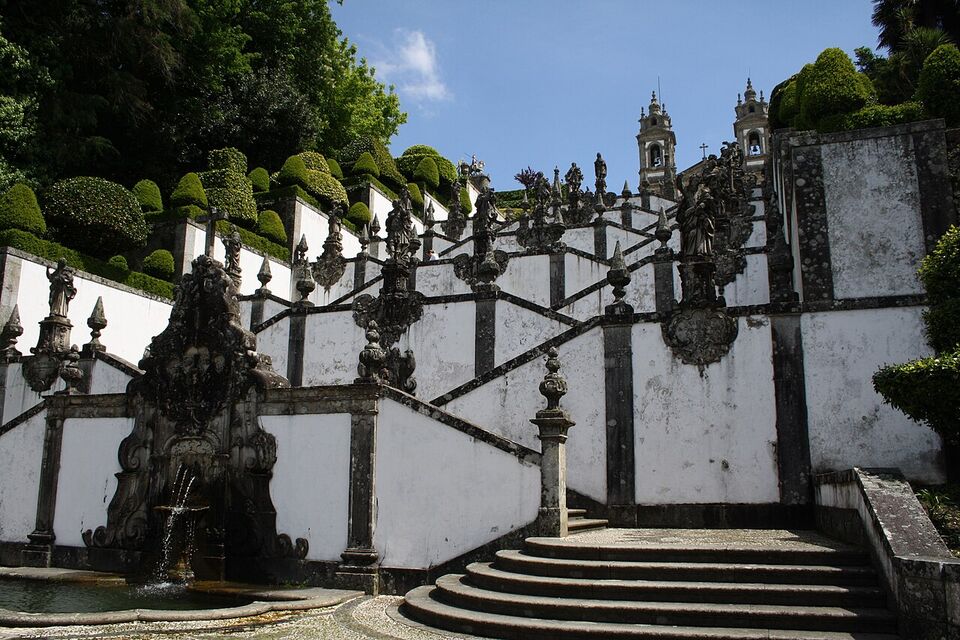
Bom Jesus is a pilgrimage sanctuary on a wooded hill east of the city, about 3 miles (5 km) from the center. Its centerpiece is a Baroque stairway that zigzags up the hillside, with landings, fountains and chapels, leading to a neoclassical church at the top. UNESCO added the sanctuary to its World Heritage list in 2019. The official site refers to the stairway, the basilica, an elevator, the park and gardens, and a hotel area.
The "elevator" is a historic funicular, driven by water ballast and dating from the late 19th century, which makes it one of the oldest of its kind. It saves the climb, and many visitors ride up and walk down to enjoy the stairway. A typical visit takes one to two hours. The sanctuary's website has a "Hours and Prices" page, but we could not read current figures, so check bomjesus.pt before you go for opening hours and the funicular fare.
Insider tip
Ride the funicular up and walk the stairway down. The steps are easier on the way down, and you pass every level. Wear shoes with good grip, because the stone is smooth and wet in rain.
The cathedral and old center
Braga Cathedral, the Sé, is among the oldest in Portugal, with origins in the 11th century and later additions in Gothic and Baroque styles. Visits normally include the nave and, with a ticket, the cloisters, chapels and treasury. Check the cathedral's own site for current hours and ticket prices, as we could not confirm them.
Walk the pedestrian streets around the cathedral, the Arco da Porta Nova gateway and the squares nearby. The Roman history of the city, once called Bracara Augusta, is explained in local museums. Keep expectations simple: this is a place for wandering, church visits and long lunches, not a checklist.
Religious calendar
Braga's religious life shapes its calendar. Holy Week (Semana Santa) is the most important time, with solemn processions through the old center. In 2027, Good Friday falls on March 26 and Easter Sunday on March 28. Hotels fill, and some streets close to traffic, so book well ahead if you want to be there. The Festa de São João, around June 23-24, is also celebrated in Braga, and June 24 is a local holiday. In the weeks before Christmas, Braga's Christmas market is scheduled from December 1, 2026 to January 6, 2027. These dates come from published lists and may change, so check the city's tourism office.
Churches are active places of worship. Dress modestly (covered shoulders and knees are the usual rule), be quiet in services, and ask before photographing people at prayer. For more on local customs, see the etiquette guide.
Food in Braga
The Minho kitchen is rich and rustic. Look for bacalhau (salt cod) in many forms, rojões à minhota (diced pork braised in wine and spices), papas de sarrabulho (a thick stew traditionally made with pork and spices) and, for dessert, pudim Abade de Priscos, a rich pudding associated with the Braga area. Pair a meal with a glass of Vinho Verde, the young, lightly sparkling wine of the Minho. Restaurants may bring a couvert, which is charged only if you eat it. See the food guide for more.
Guimarães at a glance
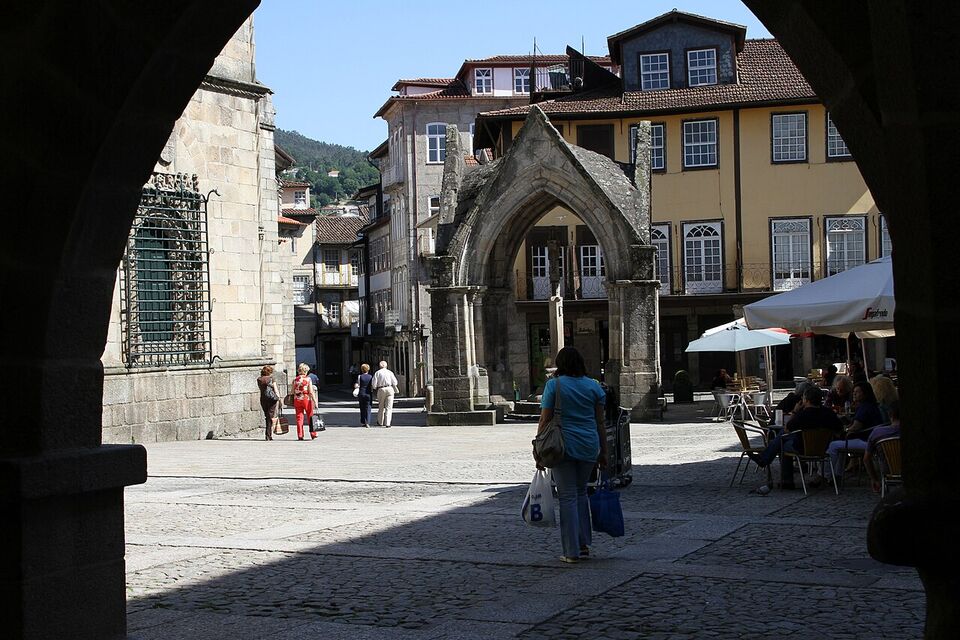
Guimarães is smaller than Braga and more compact, with a medieval center that UNESCO listed in 2001. The city has a calm, well-kept feel and is easy to cover on foot. It was a European Capital of Culture in 2012, and the center shows the effect: the squares are tidy, and the streets are well signed.
The castle and the cradle-of-the-nation idea
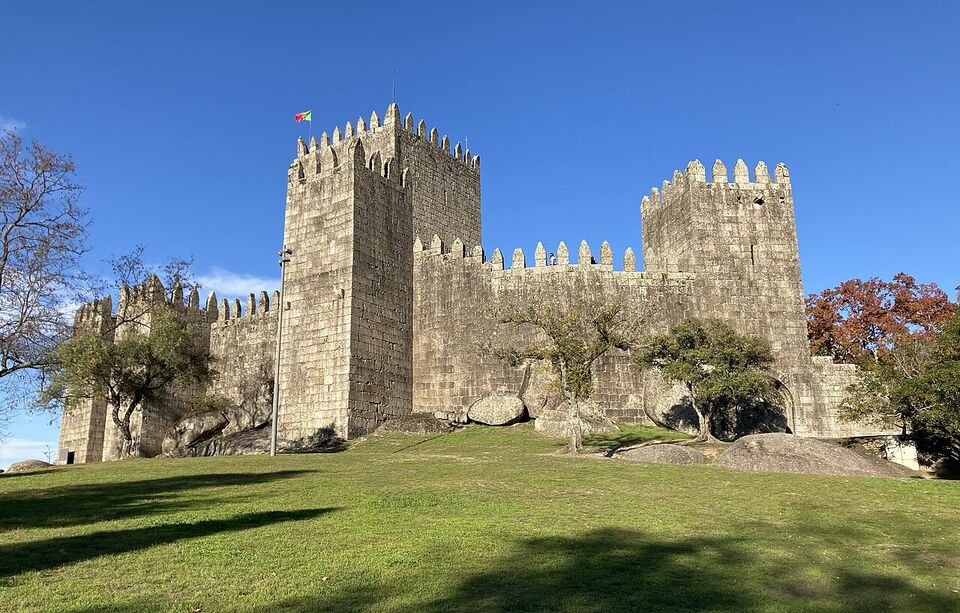
Guimarães Castle is a small, solid medieval fortress on a hill above the old town, with origins in the 10th century. It is strongly tied to Portugal's national story. According to tradition, Afonso Henriques, the first king of Portugal, was born in the area, and the nearby battle of São Mamede in 1128 is seen as the step toward independence. A slogan carved in the old town, Aqui nasceu Portugal ("Portugal was born here"), turns that idea into a motto. Portuguese visitors treat the castle as a place of national memory, not only as a monument, so it is worth reading the history on site.
The castle is small and takes under an hour, plus time for the ramparts and the views. Tickets and hours vary, and sometimes the castle and the palace have a shared ticket, so check the official sources listed by the Portuguese heritage system at museusemonumentos.pt or the local tourist office before you go. We could not confirm current prices.
The Palace of the Dukes of Bragança
Near the castle, the Paço dos Duques de Bragança is a 15th-century palace built for the first Duke of Bragança. It was restored in the 20th century, and it is now a museum with tapestries, furniture and large chimneys. Visits are normally by ticket; some days and hours differ, and museums in Portugal commonly close on Mondays. Check the day you plan to go.
The old town
The center is made of small squares, arcaded houses and narrow streets, with the Largo da Oliveira as the best-known square, surrounded by cafés. The old town can be seen in an hour or two, and it is pleasant for a slow lunch. Guimarães' Christmas market is scheduled from December 1, 2026 to January 3, 2027, and is reported to be closed on December 25 and January 1.
The cable car to Penha
A cable car runs from the city up to the Penha hill, a wooded height with walking paths, viewpoints and a sanctuary at the top. It is a short ride, and a fun add-on for families, especially on a clear day. It may not run in strong wind or bad weather, and operating hours and fares change, so check before you go. The summit is cooler than the town; bring a light layer.
Braga and Guimarães compared
| Braga | Guimarães | |
|---|---|---|
| Size and feel | Larger city, student and religious energy | Small, tidy, medieval center |
| Headline sights | Bom Jesus stairway and funicular, cathedral | Castle, ducal palace, old town |
| Time needed | Half a day to a full day with Bom Jesus | 3 to 5 hours |
| UNESCO status | Bom Jesus (listed 2019) | Historic center (listed 2001) |
| Hills | Bom Jesus is a steep climb; the center is mostly gentle | Castle hill and Penha cable car; center is compact |
| Best season | Holy Week for tradition; spring and autumn for walking | Spring to autumn for the hill and terraces |
| Ticketed sights | Funicular, cathedral areas | Castle, palace, cable car |
| Good for | Religious heritage, churches, food | History buffs, short visits, families |
Getting there from Porto
Both cities are easy to reach without a car. Journey times are approximate, and you should check the timetable for your date on cp.pt.
By train
CP runs trains from Porto to both cities, and each takes about an hour, though the Guimarães line is slower on some services (up to about 1 hour 10 minutes). Trains to Braga run on the Minho line from Porto's main stations, and some of the faster intercity services stop at Campanhã. Trains to Guimarães run on a separate line that serves the north-east. Departure stations vary by service, so check whether yours leaves from São Bento, Campanhã or another stop. Buy tickets at the station or on the CP website. Fares are modest compared with intercity trains elsewhere, but we cannot quote current prices.
By bus
Buses also run from Porto to Braga and Guimarães, and are an option when a train is slow or full. The GetBUS shuttle is reported to link Porto's airport to both cities in about 50 minutes, which is useful if you want to go straight from your flight. Check the operator's website for schedules and fares, since they may change.
From the airport
Porto's airport is on the north-west side of the city, so a direct transfer is sensible if you plan to start your trip in Braga or Guimarães. See the Porto guide for the airport Metro link, and the flights guide for routes.
Combining the two cities
There is no simple direct train between Braga and Guimarães, and trains between them usually require changes. The practical link is a bus, which takes roughly 30 to 45 minutes; check the operator's current schedule. This is the key to a combined day.
By train and bus
- Morning
Porto to Braga
Take an early train to Braga and go straight to Bom Jesus, before the heat and the crowds. Ride the funicular up and walk back down.
- Midday
Braga old center
Have a long lunch in the center, see the cathedral and then take the bus to Guimarães.
- Afternoon
Guimarães
Walk the old town and visit the castle and palace before closing, then return to Porto by train or bus.
This works, but it is tight. Last trains and buses back to Porto are the key constraint, so check them before you leave. If you want a slower trip, spend a night in one city, with Braga for a lively evening or Guimarães for a quiet one.
By car
A car gives you freedom to combine the two and add the nearby countryside. The A3 motorway from Porto to Braga and the road links between the cities are quick, but the motorway network has both tolled and toll-free stretches. Your rental car's Via Verde device handles tolls (see the driving guide). Parking in the old centers can be limited, so use public car parks on the edge. Car hire pickup and return in Porto are straightforward.
Save money
Skip the rental car if you only plan to see the two city centers. Trains and a bus cost far less than renting, fuel and parking, and you avoid the toll paperwork. Rent a car only if you want the countryside and mountains.
How long to allow
- Braga: Half a day covers Bom Jesus and the cathedral. A full day adds a long lunch, shops and the museums.
- Guimarães: Three to five hours covers the castle, palace and old town. Add an hour or two if you take the cable car to Penha.
- Both in one day: Possible with an early start, but you will rush. Choose the most important sights in each.
- Two days or a night: The best option if you like to eat well and walk slowly. A night in Guimarães means the old town is quiet after the day-trippers leave.
If you are staying in Porto, add the two cities to a longer northern loop that includes the Douro Valley. For a broader plan, see the trip planning guide.
Sights with tickets, timing or closed days
We could not confirm current prices, hours or closed days for the sights below. Check the official website for each before you go. Our rule: assume that museums and palaces may close one weekday, often Monday, and that Sundays and public holidays can change hours.
- Bom Jesus funicular: check the fare and hours at bomjesus.pt; it may pause in bad weather or for maintenance.
- Braga Cathedral: check hours, especially on Sundays and during services.
- Guimarães Castle and the Paço dos Duques: check the opening days and whether a combined ticket is offered.
- Penha cable car: check operating hours and weather closures.
- Christmas markets (scheduled December 1, 2026 to January 6, 2027 in Braga and to January 3 in Guimarães): check dates and daily hours.
- Holiday closures: December 25, January 1 and Easter Sunday affect many sights. June 24 is a municipal holiday in Porto and also marked in Braga.
Watch out
Do not assume everything is open on a Monday or on a holiday. Several cultural sights close one day a week, and processions in Braga at Easter can close streets. Look up the day you plan to go, and keep a Plan B in the other city.
Nearby: the Minho villages and Vinho Verde
The Minho, the green northwestern corner of Portugal, is a region of small farms, stone villages, granaries on stilts and rivers. If you have a car or extra days, these towns work as add-ons:
Ponte de Lima
A pretty town on the Lima river, known for its long bridge and riverside gardens. It is among the oldest towns in Portugal and suits a lunch stop.
Barcelos
Famous for the Barcelos rooster, a national symbol of luck and a popular craft item, and for a large weekly market. Check market days before you go.
Viana do Castelo
A seaside city at the mouth of the Lima, with a basilica on a hill and a lively waterfront.
Monção and Melgaço
Small towns near the Spanish border, known for Alvarinho, a white grape grown in the Vinho Verde region. A good fit for a wine-focused stay.
Vinho Verde, a wine from the Minho, can be white, red or rosé. "Verde" means "green" in the sense of young, not the color of the wine. Whites are usually light, fresh and a little spritzy, which suits the region's rich food. For the full story, see the wine guide.
Peneda-Gerês as an add-on
Peneda-Gerês National Park, in the far north near the Spanish border, is Portugal's only national park. It has granite mountains, forests, waterfalls, reservoirs and villages where cattle roam. Hiking, swimming in rivers and wildlife watching are the main activities. You need a car or a guided tour to enjoy it properly, as public transport is limited.
It is best as a separate trip of one to three days, not an extra stop on a Braga-Guimarães day. Plan at least an overnight stay. Some trails or access points in popular parks require registration or booking in high season, and fire restrictions apply in dry months, so check the park's rules and the weather before you go. IPMA publishes fire danger levels each day. Roads are narrow and winding. If you are walking, tell someone your route, carry water, and do not rely on mobile coverage.
If you are walking, the Portuguese Camino to Santiago de Compostela also passes through this part of the north; see the Camino guide.
Practical notes
Cards are accepted in most restaurants and shops, but small cafés and village markets may prefer cash. Tipping is optional: rounding up or leaving a few euros for good service is common. Wear comfortable shoes for stairs and cobbles. Strikes can disrupt trains and buses occasionally, so check CP before you go and look for notices on the day.
The US State Department's advisory for Portugal is Level 1, the lowest, as shown on the US Embassy site in November 2026. For general safety advice, see the safety guide. For rail and bus basics, see getting around Portugal.
Add it to a route in the trip builder, or ask us to plan the hotels, trains and guides for you.