The short answer: take the Metro, unless you have a lot of luggage
The easiest way from Lisbon's Humberto Delgado Airport (airport code LIS) to the city is the Metro. The Aeroporto station sits at the southern edge of the Terminal 1 arrivals area, and the red line takes about 20 minutes to Saldanha and about 10 minutes to Gare do Oriente, the main train station for the north and the south. Taxis wait outside arrivals around the clock and need about 15 minutes to the center when the road is clear. Ride-hail apps also work. The old Aerobus shuttle no longer runs.
The bigger variable is not the transfer: it is the passport line before it. Plan on extra time between touchdown and the curb. This page walks through the arrivals hall, the passport check, each way into town with the tickets and what to expect to pay, what to do with your bags, trains on to Porto, Sintra and the Algarve, late arrivals, a comparison table, and the departure side. For the flight side, see Flights to Portugal; for the city, Lisbon.
Arrivals: terminals and layout
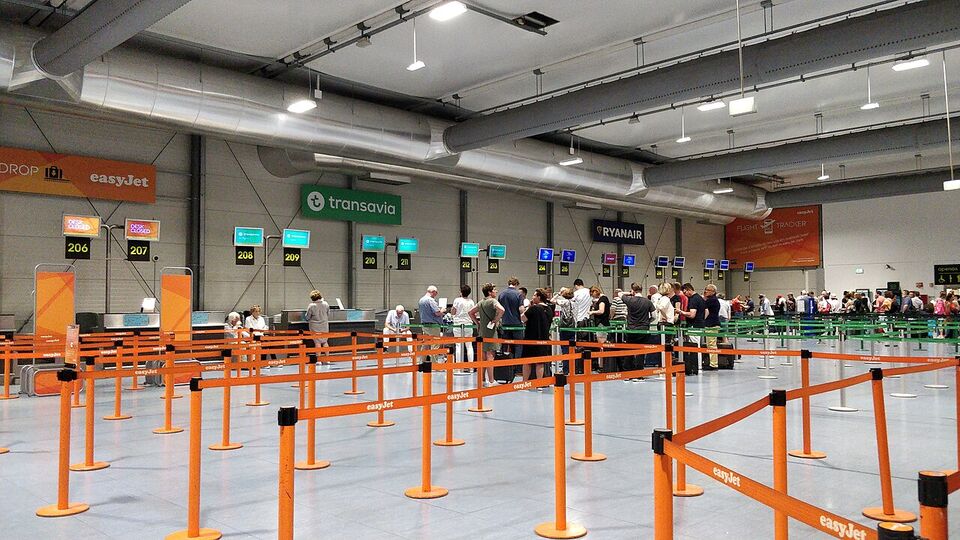
Lisbon airport has two terminals. Terminal 1 is the main building, used by TAP Air Portugal and by most airlines, including the US carriers. Terminal 2 is smaller, newer and used by low-cost airlines; a free airport shuttle connects it with Terminal 1. Check your ticket for the terminal on the way home, because a low-cost flight to another European city may leave from Terminal 2.
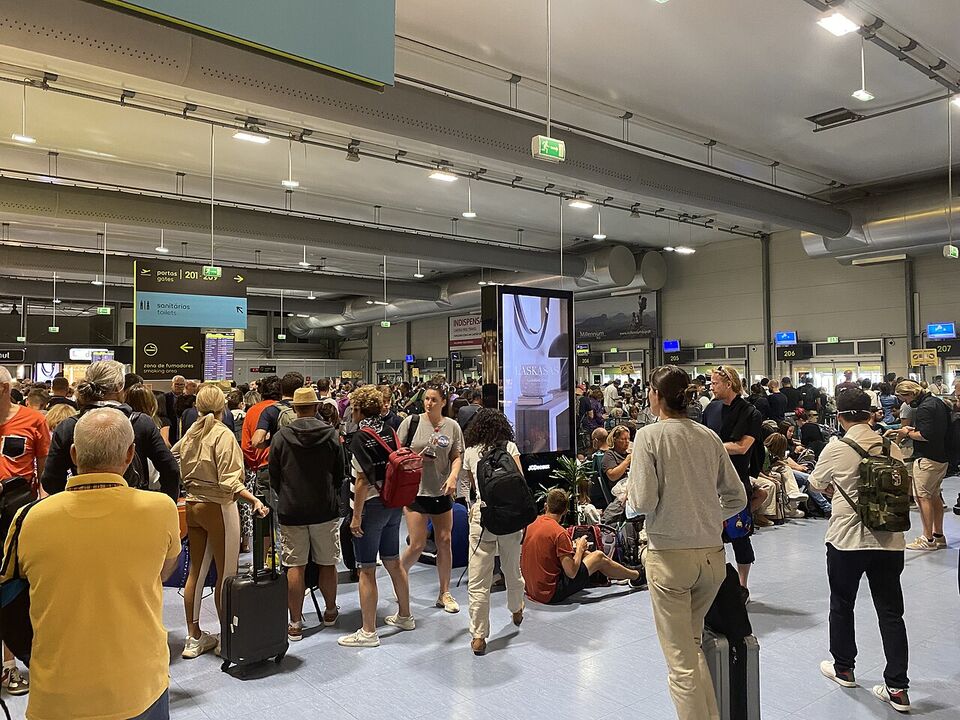
On a flight from the US, you arrive at Terminal 1. The sequence is the same as at most international airports: walk from the gate to passport control, collect your bags, go through customs and then out into the arrivals hall. The Metro station entrance is at the south end of the arrivals area, with the taxi rank, bus stops and the ride-hail pickup nearby. Signs are in Portuguese and English. If you get lost, ask any airport staff member, or follow the Metro "M" sign.
The airport is close to the city, so a ride into the center is short compared with many big cities. A new airport at Alcochete is planned to replace it, but not before the 2030s, so it will not affect your trip.
Passport control and the EES
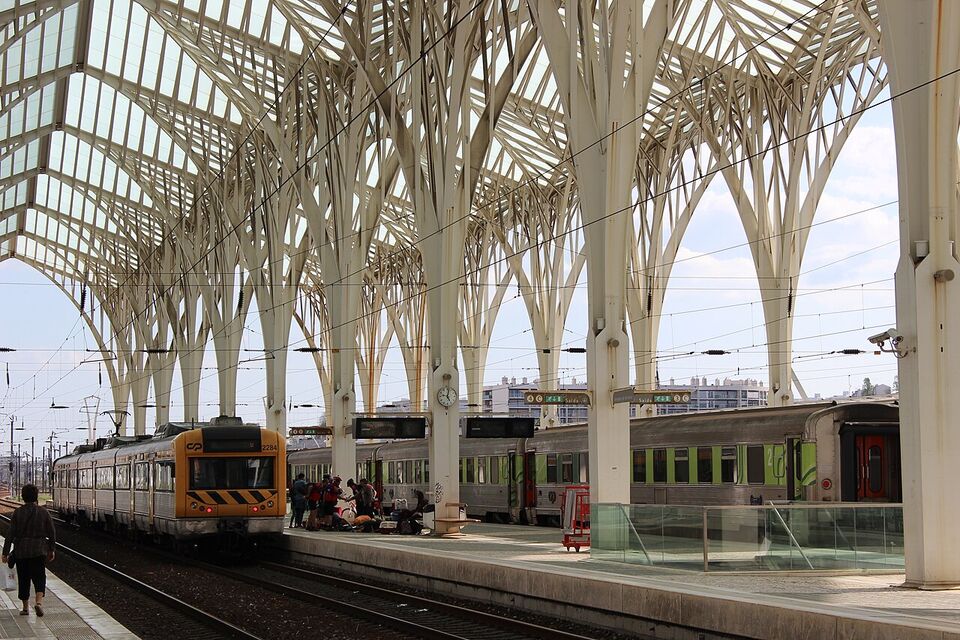
As an American, you use the non-EU lanes at passport control. Since April 10, 2026, the EU's Entry/Exit System (EES) has been fully operational, and it registers your name, passport data, fingerprints and a facial image at your first entry, instead of stamping your passport. Biometric registration applies at Lisbon, Porto, Faro, Funchal and Ponta Delgada airports. Expect a fingerprint scan and a photo, and be ready for a few questions from the officer.
How long will it take? We cannot give a wait time. Queues at Lisbon have been long at times, according to news reports in spring 2026, and the European Commission said EES was not the cause. Checks can also be applied unevenly. Never assume the system is suspended or optional. Some practical steps:
- Have your passport open to the photo page, and keep your hotel name and address ready on your phone in case an officer asks.
- Do not book a train, tour or transfer for the first hour after landing. Allow at least a couple of hours between the plane's arrival and any fixed commitment.
- If you are connecting through another Schengen country first, the passport check happens there, not in Lisbon.
- If you have a pre-booked driver, tell them the flight number so they can follow the arrival time.
For more on entry rules, ETIAS and what to carry, see Entry Rules for Americans (EES).
Option 1: Metro red line
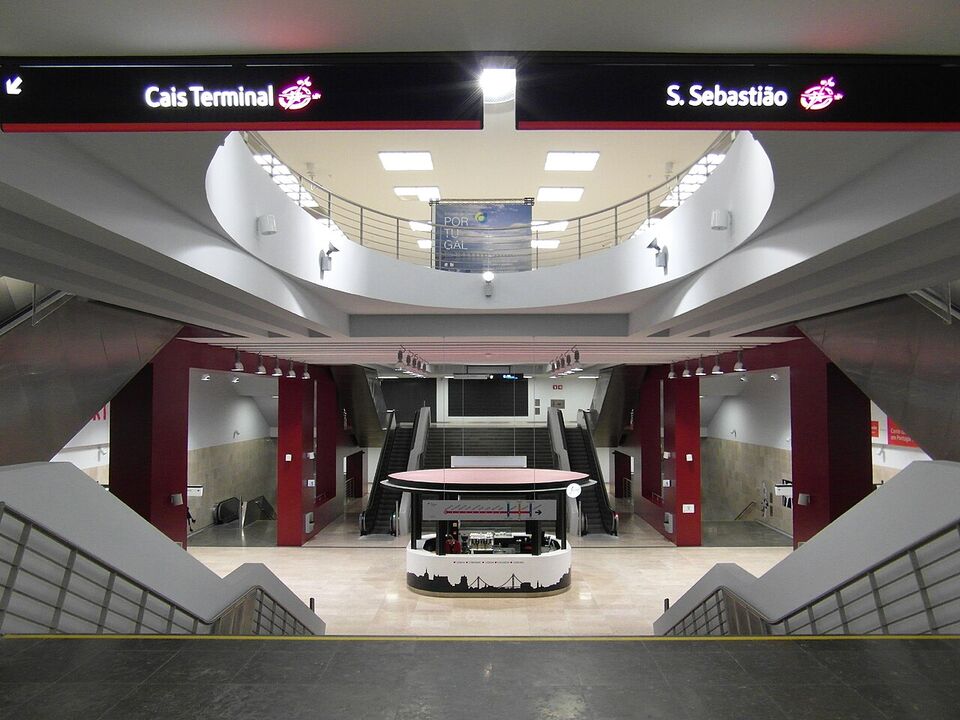
The Metro de Lisboa red line (Linha Vermelha) is the best-value route and avoids traffic. Aeroporto station is at the south edge of the Terminal 1 arrivals area, a short walk from the exit. The Metro runs every day from 6:30 a.m. to 1:00 a.m. (the last departure from the terminal stations), and it takes about 20 minutes to Saldanha and about 10 minutes to Gare do Oriente.
Tickets
- Contactless bank card. You can tap a contactless bank card or phone directly at the gate. The single fare is €1.72 (about $1.93). Contactless works on the Metro only, not on city buses or trams.
- Metro ticket. A single trip costs €1.92 (about $2.15), bought from a machine in the station on a reloadable card. The card itself costs €0.50 (about $0.56), valid for one year. Children up to age 3 ride the Metro free.
- 24-hour ticket. A Carris/Metro 24-hour ticket costs €7.25 (about $8) and covers the Metro, buses and trams. It pays off if you plan several rides the same day, but not if you only ride from the airport.
Those fares are for the year 2026 as published by Metro de Lisboa. Fares usually change every January; check metrolisboa.pt for 2027.
Which stop?
The red line connects with other lines, so you can reach most of central Lisbon with one change. At Alameda you can change to the green line for the Baixa area (Rossio and Baixa-Chiado) and Cais do Sodré. At Saldanha you change to the yellow line, and the red line also reaches São Sebastião, where the blue line goes toward Marquês de Pombal and Baixa. Allow time for the change if you have suitcases, since some stations have stairs or long corridors. Check the Metro site for the current extent of the red line, because the network has been growing.
Insider tip
The Metro is the best choice at rush hours (roughly 8 to 10 a.m. and 5 to 7 p.m.) when the roads to the center are slow. With one or two bags and a hotel near a Metro stop, it is hard to beat. With a family and four suitcases, a taxi may be easier.
Option 2: Buses
The Aerobus, the airport shuttle that once ran to the city center, was discontinued in 2023. What remains is the city bus operator, Carris, whose buses stop at the arrivals area. Day routes connect to Marquês de Pombal and Amoreiras, and night routes run to the Baixa, to Cais do Sodré and to the Gare do Oriente station. Routes and numbers change, so check carris.pt or ask at the airport information desk. Contactless bank cards do not work on buses: you need a reloadable card with credit or a ticket. Buses are a good choice late at night, but the Metro is better in the daytime.
Option 3: Taxis
Lisbon's city taxis are available around the clock outside the arrival and departure areas, and the trip to the city center takes about 15 minutes without traffic. This is the simplest option if you have heavy bags, a late arrival, or children asleep. Join the queue at the official rank and tell the driver your hotel address; showing the address on your phone avoids misunderstandings.
What is a fair price? We could not confirm a current fare, and a quoted price on a website could be out of date. What we suggest instead:
- Ask the driver to use the meter, or ask for the price before you start. Look for the taxi roof sign and the official rank rather than drivers who approach you in the hall.
- Check the airport operator's and the city's websites for current taxi guidance before you travel, and ask your hotel what a normal fare is. A hotel can often tell you the usual range.
- Ask whether any surcharge applies, for bags or for nighttime travel, and have the driver explain anything on the fare that you do not understand.
- Pay by card if the taxi has a reader, or have euros in small notes. See Money in Portugal for how to pay.
Option 4: Uber, Bolt and other ride-hail
Uber and Bolt both work in Lisbon. In Portugal, ride-hail drivers are licensed as TVDE operators. Pickup is usually at a designated spot rather than the arrivals curb itself, so follow the app's instructions and any airport signs for the ride-hail area, and check the license plate and driver name before you get in. The app shows a price before you confirm, which suits travelers who want to know the cost in advance.
Make sure you can use the app before landing: install it at home, add your card, and have data from your plan or an eSIM. Our guide to phones and data is on Phones, Data and Power.
Comparing the ways into the city
| Option | Time to the center | Cost | Best for | Watch for |
|---|---|---|---|---|
| Metro (red line) | About 20 minutes to Saldanha; about 10 minutes to Oriente | €1.72 (about $1.93) by contactless card; €1.92 (about $2.15) by ticket | One or two bags, solo or couples, rush hour | Stairs and changes; runs 6:30 a.m. to 1:00 a.m.; strikes |
| Carris bus | Longer than the Metro; varies by route | Needs a reloadable card or ticket; check carris.pt | Night arrivals; Pombal or Amoreiras | Routes change; no contactless on buses |
| Taxi | About 15 minutes | Metered; ask your hotel for a usual fare and agree the method first | Heavy bags, families, late night | Agree the price method; use the rank |
| Uber or Bolt | Similar to a taxi | Price shown in the app; varies with demand | Knowing the price in advance | Pickup spot set by the app; data needed |
| Metro plus train | About 10 minutes to Oriente, then the train | Metro fare plus the train ticket | Going straight to Porto, Sintra or the Algarve | Book long-distance trains in advance |
Luggage: what to do with your bags
If your hotel room will not be ready on a morning arrival, most hotels will keep your bags for free or for a small fee until check-in; ask when you book, or email a few days before. Airports and major train stations often have left-luggage services as well, though we have not confirmed what is available at Lisbon airport or the rates, so check the airport operator's site (ANA, Vinci Airports) before you travel. Do not accept offers from people in the hall who say they will carry or store bags for you.
When packing, remember the steep, cobbled hills in the Alfama and Bairro Alto: a bag that rolls well on smooth floors can be a struggle on the old streets, and taxis and ride-hail cars often cannot reach the door in the narrowest lanes. A backpack or a bag with large wheels helps; see Portugal Packing List. If your hotel is on a pedestrian street, ask how to reach it from the nearest drop-off point.
Trains onward: Oriente to Porto, Sintra and the Algarve
For long journeys, the Metro to Gare do Oriente, about 10 minutes from the airport, is the key link. Oriente is the Lisbon station for trains to the north and to the Algarve.
- Porto. The Alfa Pendular high-speed train takes about 2 hours 45 minutes between Lisbon and Porto. On the timetable in force since July 19, 2026, a train leaves Porto Campanhã at 5:40 a.m. and arrives at Oriente at 8:22 a.m., and another leaves at 2:40 p.m. and arrives at 5:22 p.m. Check the times for the direction you need. Book early on cp.pt; fares vary by date and class. See Porto.
- Sintra. CP's Sintra line leaves from Oriente, Rossio and Entrecampos. The ride takes about 40 minutes from Rossio; check cp.pt for the current time. Most visitors do Sintra as a day trip rather than going directly from the airport, because the palaces are busy and have timed tickets. See Sintra and Day Trips from Lisbon.
- The Algarve. Trains to Faro and Lagos run from Oriente and take roughly 3 hours to Faro. Check cp.pt for the current timetable and book early. See Algarve.
- Cascais and the coast. The Cascais line starts at Cais do Sodré, so from the airport you take the Metro and change. Allow about 35 to 40 minutes on the train; check cp.pt.
- The south bank. Ferries run from Cais do Sodré to Cacilhas, across the Tagus. We have not confirmed fares or hours, so check the operator's site.
Journey times other than the two trains named above come from general knowledge. Confirm on cp.pt on the day. If you plan to travel the country by train, see Trains and Buses in Portugal.
Late-night and early-morning arrivals
If you land after 1:00 a.m. or before 6:30 a.m., the Metro is closed. Your options are taxis, which are available all day and night outside the terminal, ride-hail apps, and Carris night bus routes to the Baixa, Cais do Sodré and Oriente. A hotel transfer arranged in advance is worth considering for a very late arrival: tell the hotel your flight number so they can track delays.
If you arrive at night, check that your hotel has a 24-hour reception, or tell them the time to expect you. And keep in mind that the first Metro of the day runs from 6:30 a.m.: if you land at 5 a.m., you will wait. Strikes can disrupt the Metro; it had partial strikes on October 28 and 30, 2026 and a 24-hour strike on October 14, 2026. Have a taxi as your backup plan.
Watch out
Be careful with strangers who offer rides or help in the arrivals hall. Use the taxi rank, a ride-hail app or a transfer you booked, and keep your phone and passport in a front pocket. Pickpockets work crowded transport and tourist areas, including the Metro at busy hours.
Departures: getting back to the airport
The Metro works for the return trip too, and the Aeroporto station is right beside Terminal 1. For an early flight, book a taxi or a ride the evening before, since the Metro does not start until 6:30 a.m.
- Timing. For a flight to the US, most airlines recommend arriving about three hours before departure; check your airline's advice. Allow extra time on busy days, and if you are returning a rental car, add time for that.
- Security. Liquids rules and electronics rules follow the usual international pattern; check the airline and airport site if you have special items, such as cheese, wine or olive oil.
- EES at exit. The system also records your exit, so leave time for the border checkpoint before security or the gate.
- Tax-free refunds. If you bought goods with a tax-free form, find the validation desk before you check your bags, because the goods may need to be shown. See Money in Portugal for how VAT refunds work and which steps to confirm.
- Food to bring home. US Customs and Border Protection allows bakery items and certain cheeses but not most meat products; cured ham and sausage are generally not allowed, so check cbp.gov. See Shopping and Taking Things Home.
- Terminal. Confirm whether your flight leaves from Terminal 1 or Terminal 2.
Add it to a route in the trip builder, or ask us to plan the hotels, trains and guides for you.