The short list
Porto's best sights are close together, and many of them cost little or nothing: a tiled railway hall, a riverfront, a bridge and a long list of churches. The ones that cost money mostly benefit from a booked slot. This page covers what to see, what each place costs to enter or how to find the price, which ones need tickets in advance, and how to dodge the worst crowds. For the city's layout, transport and practical tips, see the Porto guide.
Prices and hours change, and several of the official sites do not show current prices in the text we could read. Where we do not give a price, we say so and point you to the official website. Opening hours in the tables are as printed on the official sites in November 2026; check them again before you go.
| Sight | Typical visit | Ticket needed? | Book ahead? |
|---|---|---|---|
| São Bento station hall | 20 to 30 minutes | No, it is a working station | No |
| Livraria Lello | 30 to 45 minutes | Yes, ticket doubles as a book voucher | Yes, in busy periods |
| Clérigos Tower | 45 to 60 minutes | Yes (tower, museum, church combos) | Helpful in peak season |
| Porto Cathedral (Sé) | 30 to 45 minutes | Terrace may be free; cloister and museum ticketed | No |
| Palácio da Bolsa | About 30 to 45 minutes (guided) | Yes, guided visit | Yes |
| Dom Luís I bridge walk | 30 minutes | No | No |
| Gaia cable car | A short ride each way | Yes | No; check weather |
| Port cellar tour | 45 to 90 minutes | Yes | Yes, especially lunchtime and late afternoon |
| Serralves | Half a day | Yes (museum, villa, park) | Check for special exhibitions |
| Casa da Música | 1 hour (tour) or an evening (concert) | Yes for tours and concerts | Concerts, yes |
| Foz do Douro | 2 to 3 hours | No | No |
São Bento station
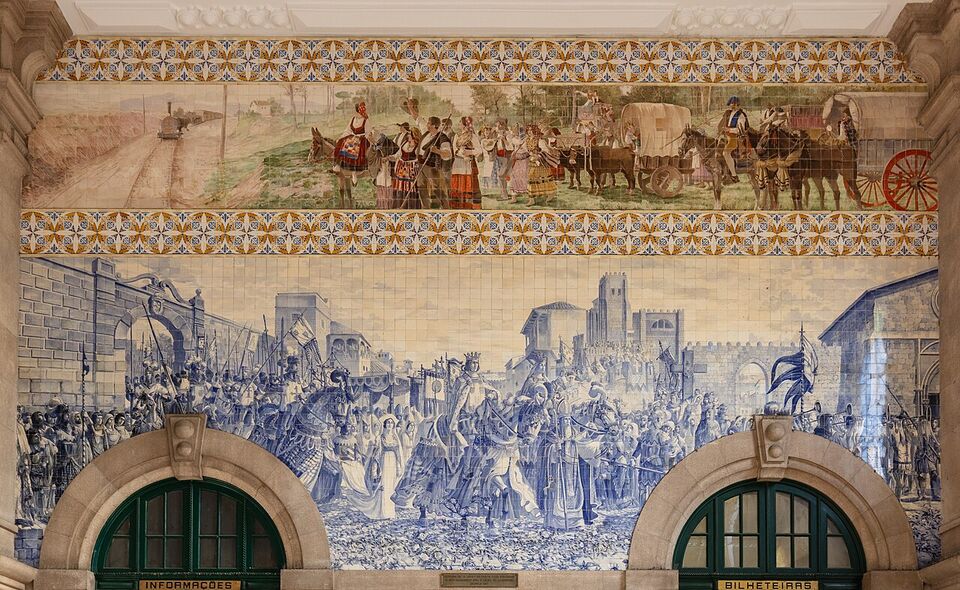
São Bento is a working railway station in the heart of the Baixa, and its main hall is covered in blue-and-white azulejo (glazed tile) panels showing battles, rural scenes and the history of transport. The panels are the work of the painter Jorge Colaço and are often said to contain roughly 20,000 tiles in total. Entry to the hall is free during the station's open hours, and there is no ticket. You can pass through on your way to a train or simply walk in and look up.
Go early or late. Tour groups collect here mid-morning, and the hall is small. Bring a phone with space for photos, but do not block ticket machines and passengers with luggage. The station is also a stop on Metro line D, and some local trains to Guimarães and the Douro have departed from here (check cp.pt for the station of your train), so you may see it twice (see the Douro Valley and Braga and Guimarães guides).
The cathedral, the Clérigos Tower and the Livraria Lello are all within a short walk. Tiles are not limited to the station. Look for tile-fronted churches, such as the Igreja do Carmo and the Capela das Almas, and for ordinary building facades covered in patterned ceramic. If you want a museum devoted to the subject, the Lisbon guide covers the national tile museum there.
Livraria Lello
The Livraria Lello is a neo-Gothic bookshop that opened in 1906, with a curved crimson staircase, carved wood shelves and a stained-glass ceiling. It is one of the most visited small buildings in Portugal, which is why the way you enter matters more than what you see once you are in.
Tickets and queues
According to the official site, the bookshop is open daily from 9 a.m. to 7:30 p.m., and each ticket is a voucher toward the price of a book: if you buy a book in the shop, the ticket amount is deducted. Tickets are sold on the official website (livrarialello.pt), and the site offers more than one kind of visit, including a standard visit and rooms or exhibitions with separate listings. We could not confirm the current price, so check the website for the amount and for whether your ticket is for a time slot.
Because the building is small, the shop controls how many people go in at once. Queues form outside at busy times, and those who have bought online usually have a faster line than those who arrive without a ticket. Our advice: buy an online ticket for the first slot of the day or the last slot before closing, and treat the voucher as a bookshop credit you will actually use. Ask staff how the voucher works at the till, because rules on combining it with other discounts can vary.
Insider tip
If the shop is sold out for your day, do not stand in a long queue on the street. Visit the Clérigos Tower and the nearby streets first and check back for a later slot. Many travelers find the bookshop crowded and small, so it helps to keep expectations modest.
Clérigos Tower and church
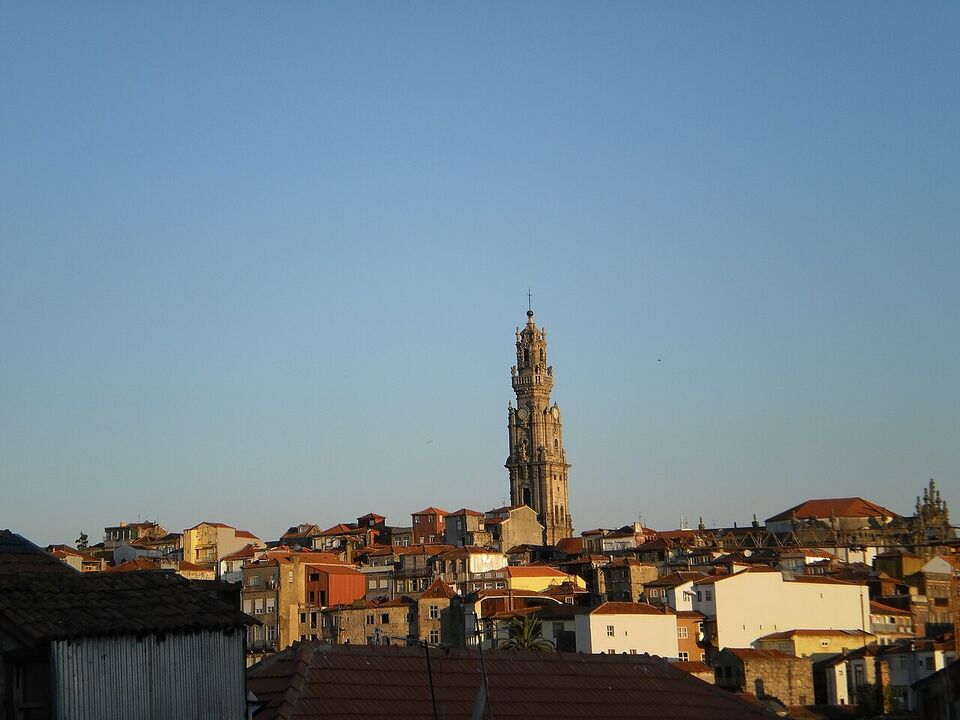
The Clérigos Tower is Porto's best-known landmark, a Baroque bell tower from the 1700s designed by the Italian architect Nicolau Nasoni. It rises to roughly 250 feet (75 m), and visitors climb a narrow stone staircase of well over 200 steps to a balcony with a 360-degree view over the tiled roofs and the river. You can see the tower from many parts of the city, which makes it useful for finding your bearings.
The official site sells separate tickets for the tower, the museum, the church, a combination visit and an evening "By Night" visit. The site lists daily hours of 9 a.m. to 7 p.m. and in November advertises daily pipe-organ concerts. We could not read a current price in the text we had, so check torredosclerigos.pt before you go. The narrow stair has two-way traffic on a tight spiral, so it can be slow at busy times and is not comfortable for anyone with a fear of heights or knee trouble.
The best time to climb is first thing in the morning or at sunset, but check the site for last-entry times. If the weather is overcast, the view is less rewarding, and it is worth moving the climb to a clear day. For a view without a climb, the Gaia side and Jardim do Morro offer a free alternative at sunset.
The cathedral and the old center
Porto Cathedral, the Sé, sits on a granite hill above the Ribeira. It is a fortress-like Romanesque church altered by later centuries, with a Gothic cloister covered in tile panels and a terrace with a broad view over the old town and the river. The church and terrace area are usually the easiest part to see; the cloister and museum are ticketed. Check the cathedral's official page for current hours, because religious services can limit visiting times, especially on Sundays and feast days.
From the cathedral, walk downhill through the lanes toward the river. Use the lanes for photos, not a quick shortcut: they are steep and wet cobbles are slippery. The funicular that links the Ribeira with the upper town is a tempting way back up, but we could not confirm its current operating status, so check the operator before you plan around it.
Nearby, the Mercado do Bolhão is the city's traditional market, with fruit and vegetables, flowers, fish and bakery stalls; it is a fine place for a quick snack and a look at local ingredients. Opening days and hours vary, so check them if you plan to visit.
Palácio da Bolsa
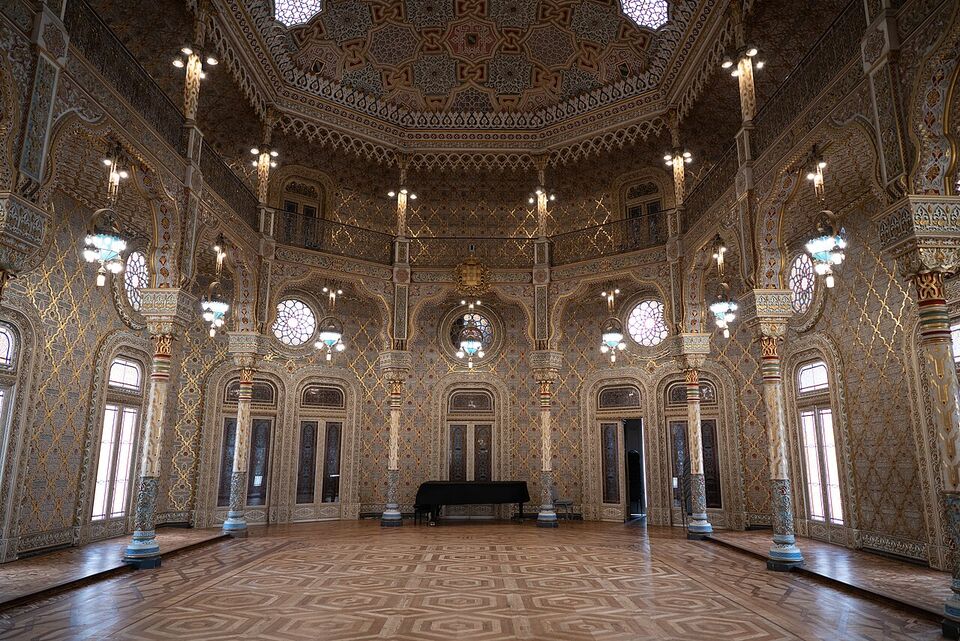
The Palácio da Bolsa, the former stock exchange, is a 19th-century neoclassical building with a grand staircase and a series of ornate rooms, including the Arab Room, decorated in a Moorish-inspired style. Visits are by guided tour, and the official site (palaciodabolsa.com) lists schedules with a note to confirm availability and a link to buy tickets. We could not read a current price.
The building is still the headquarters of the local commercial association, so rooms can close for events. For that reason, book a time slot for your preferred language in advance rather than turning up and hoping. Allow about 30 to 45 minutes for the tour, and arrive a few minutes early. The palace has accessibility features, including a side entrance with a ramp and an elevator, according to the official site.
The Dom Luís I bridge and the Gaia cable car
The Dom Luís I bridge is a two-level iron arch built in the 1880s that spans the Douro between the Ribeira and Vila Nova de Gaia. The upper deck carries the Metro and a pedestrian walkway, and the lower deck carries cars and pedestrians. Walking across is free, takes about 10 minutes each way, and puts the whole city skyline in front of you. The upper deck is high and exposed, so keep children close and be careful if you are sensitive to heights.
At the south end, the park at Jardim do Morro is the standard place to watch the sunset. It fills quickly on clear evenings. Arrive about an hour before sunset to claim a spot.
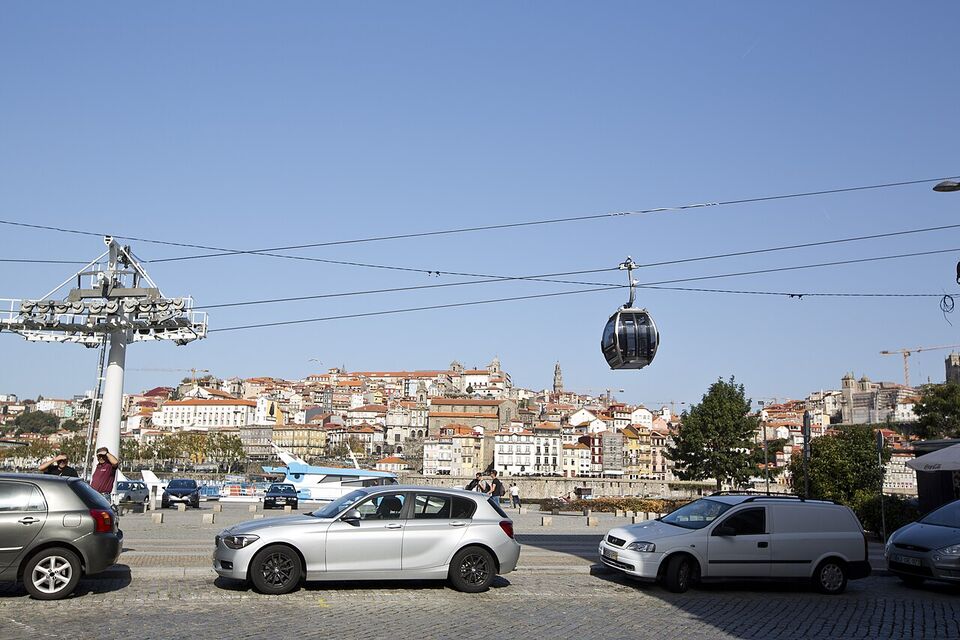
The Gaia cable car runs along the south bank, linking the upper deck level with the riverfront. It is a short ride with good views, and it can stop in strong wind or rain. Check the operator's website for the current fare and operating hours, since we could not confirm either. If you are walking anyway, you can skip it; its main use is to avoid the climb between the bridge and the quay.
Port cellars in Vila Nova de Gaia
Port is a fortified wine from the Douro Valley, and the lodges across the river are where it is blended and aged. Most large houses offer a tour of their cellars followed by a tasting. The tour explains grapes, fortification, barrel ageing and the difference between styles, and the tasting generally pours two to three ports. Premium tastings add older tawnies or vintage ports and cost more.
How the large houses compare
The big houses differ in history and tone more than in the basics. Many bear British family names, such as Sandeman, Graham's, Taylor's and Cockburn's, reflecting the British merchants who built the trade in the 17th and 18th centuries. Others, such as Calém and Ferreira, are Portuguese-founded. We have not confirmed 2026 hours, tour times or prices for any house, so check each website.
| Type of house | Examples | What to expect | Good for |
|---|---|---|---|
| Large British-founded house | Sandeman, Graham's, Taylor's, Cockburn's | Long-running tours, polished tasting rooms, often a terrace or a restaurant | A classic first tour; clear English commentary |
| Large Portuguese-founded house | Calém, Ferreira | Tours with a local viewpoint; often a museum feel | Hearing the Portuguese side of the story |
| Smaller lodges | Various family houses | Shorter tours, more conversation, fewer groups | Travelers who dislike crowds |
| Wine bars and tasting rooms | Along the Gaia quay | Flights by the glass without a cellar tour | A quick tasting on a short stay |
What a tasting includes
A standard tour is generally 45 to 90 minutes and finishes with a small tasting of two or three ports, often one white or ruby and one tawny. Mid-range and premium tastings add older aged tawnies and sometimes vintage styles. Check what the ticket includes (number of ports, any food pairing) before you buy. If you do not drink alcohol, ask whether the house offers a tour-only ticket; many do.
How to book
Book on the house's own website, not on a reseller, for the tour language and time you want. English tours are more likely to sell out at lunchtime and late afternoon in warm months. Tastings are small, and you will have more space in the morning or on weekdays. If you plan a late lunch, keep in mind that port is strong: a typical pour is small, but several can add up. For wine background, see our Portuguese wine guide. If you want to visit the vineyards themselves, the Douro Valley is the next step.
Watch out
The Gaia waterfront has touts offering "free tastings" or cheap boat trips. Ignore them, and go straight to a cellar's own entrance with your booking. If you do book a river cruise, choose a licensed operator and check the departure point and length.
Serralves and the Casa da Música
Serralves
Serralves is Porto's contemporary art foundation, in the west of the city. It combines a museum designed by the architect Álvaro Siza, a pink Art Deco villa, a landscaped park, and a cinema. It is one of the best uses of a rainy half-day in Porto, and one of the better family stops because of the park.
The official site shows several exhibitions running into 2027, including works by Lee Ufan at the Casa de Serralves from October 16, 2026 to March 2027, a Frank Gehry exhibition to January 10, 2027, Alice Neel to January 17, 2027, and Jenny Holzer to January 2027. Prices were not in the text we could read, so check serralves.pt for current ticket options for the museum, villa and park, and for opening days. A treetop walk in the park appears in the programme.
Reach Serralves by bus from the center, by taxi or by ride-hailing app; check STCP for current routes. Allow at least two hours, and longer if you want to see the park.
Casa da Música
The Casa da Música, an angular concert hall designed by Rem Koolhaas and opened in 2005, stands at the Rotunda da Boavista and has its own Metro station. It offers guided tours of the building and an extensive music programme from classical to jazz and electronic. Check the website for tour times and for concerts; if you want a seat, book ahead.
Foz do Douro and the beaches
Foz is where the Douro meets the Atlantic. The seafront promenade, the small beaches and the old fort give the city a different feel from the granite center, with wide skies, surf and joggers. The beaches here are on the open Atlantic, so the water is cold and there can be strong currents; swim only where lifeguards are on duty, and follow the flag signals on the sand. In winter, Foz is for walking and coffee, not for swimming.
You can reach Foz by bus from the center. A heritage tram line toward Foz exists, but check whether it is running before you plan around it. Many people walk the riverside path from the Ribeira to Foz in sections, using buses to skip the dull stretches. Fish restaurants in Foz and nearby Matosinhos serve grilled fish by weight, so ask the price before you order, and confirm what the couvert costs, since it is charged only if you eat it.
Which tickets to book ahead
- Livraria Lello: buy online for a specific day and, if offered, a time slot.
- Palácio da Bolsa: choose a guided visit time in your language on the official site.
- Port cellar tours: book directly with the house, particularly for English-language tours at peak times.
- Clérigos Tower: buy online in peak season to avoid queues at the ticket desk.
- Serralves: check for special exhibitions and ticket types before you go.
- Casa da Música: reserve tickets for concerts and, in high season, for guided tours.
Purchase only from the official site of each attraction, and be careful with resellers that add fees. If you plan to use the Porto Card, check the Visit Porto site first; we could not confirm its prices or benefits for this edition.
Avoiding the worst crowds
Porto is busiest in summer and at weekends, and the Ribeira, the bridge and the Livraria Lello are the pinch points. Several habits help:
- Arrive at opening time. The Clérigos Tower and the bookshop open at 9 a.m., and the first hour is quiet.
- Reverse the usual order. Most visitors go from the Baixa down to the Ribeira in the morning. Start at the river early, then work uphill after lunch.
- Go midweek. Tuesday to Thursday is calmer than Friday to Sunday.
- Time cellar visits for the start or end of the day, and avoid the middle of the afternoon on days when cruise ships are in town.
- Have a wet-weather plan. In rain, Serralves, the Casa da Música and the Palácio da Bolsa all fill quickly, so book a slot if you can.
- Walk away from the postcard streets. A block or two from the river, the city quickly becomes quieter.
Save money
The best views in Porto are free: the bridge, the cathedral terrace and Jardim do Morro. Spend your money on a cellar tour and one ticketed sight, such as the Clérigos Tower or the Bolsa, rather than every attraction.
Plans for two and three days
- Day 1
Station, tower and river
Begin at São Bento station when it opens, then go on to the cathedral and the Clérigos Tower. After lunch, walk down to the Ribeira, cross the bridge and take a cellar tour. Finish with sunset at Jardim do Morro.
- Day 2
Books, markets and music
Be at the Livraria Lello at opening, then walk to the Mercado do Bolhão. In the afternoon, take the Metro to the Casa da Música or visit the Palácio da Bolsa on a booked tour.
- Day 3
Serralves and the coast
Spend the morning at Serralves, then take a bus to Foz for lunch by the sea and a seafront walk.
If you have a spare day, take the train to the Douro Valley or head to Braga and Guimarães. If you plan a longer northern trip, our regions overview shows how Porto fits with Coimbra and the rest of the country.
Practical notes
Tourists in Porto pay a municipal tax of €3 (about $3.40) per person per night, collected by hotels; see the Porto guide for details. Most sights accept cards, but smaller places may prefer cash. Tipping at attractions is not expected.
Weather changes quickly. Even in good months a shower can pass in minutes, so carry a light rain jacket. Comfortable shoes matter more than anything else you pack; see the packing guide. Strikes can interrupt Metro and bus service, so check operator notices before heading to a sight that needs a timed entry.
Add it to a route in the trip builder, or ask us to plan the hotels, trains and guides for you.