The short answer: how long and where
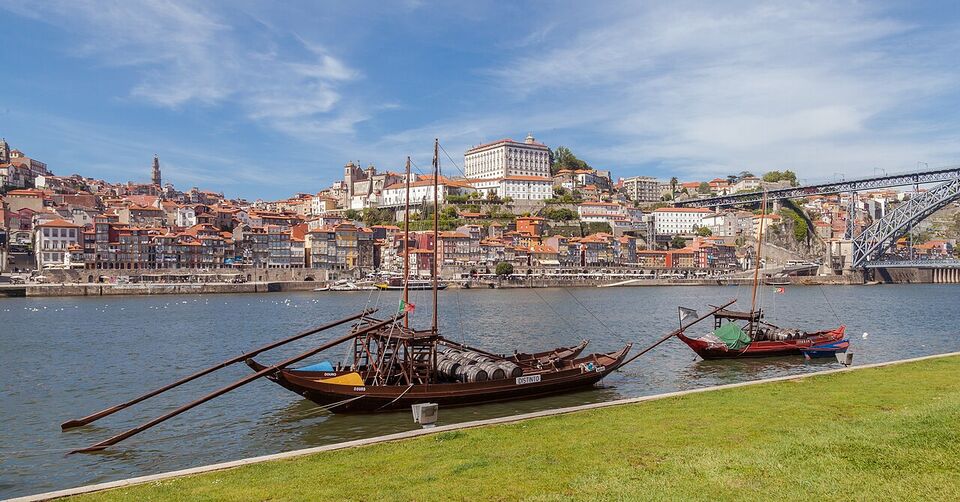
For a first trip, plan seven to ten days and use two bases: Lisbon (three or four nights, with a day trip to Sintra) and Porto (two or three nights), joined by a train of about 2 hours 45 minutes. That route gives you a capital on seven hills, a river city of tiled churches and wine cellars, a palace-and-forest day, and enough slack to stay out of a rush. Everything else in this guide is an add-on to that core.
Portugal is a small country, but it is narrow and long, and the distances between regions are real. Lisbon to Porto is about 200 miles (320 km) by road, and Lisbon to the Algarve coast is a similar distance. The islands are a flight away. Most planning mistakes come from treating those distances like a subway ride. The sections below explain how to split your time, where to sleep, how to move, and what to book before you leave.
Two things about the calendar and the clock. Mainland Portugal and Madeira are on Western European Time, 5 hours ahead of New York for most of the year. The US and the EU change clocks on different dates, so the gap is 4 hours for about two weeks in March (in 2027, from March 14 until the EU change on March 28) and again from late October to early November. The Azores are one hour behind Lisbon, so 4 hours ahead of New York when the two are on the same schedule. Jet lag is mild going east, but an overnight flight lands you in the morning with a full day ahead, so plan a light first afternoon.
How many days you need
Count nights in places, not days on the plane. Travel days eat half a day each. The table gives the shape of a trip by length; it is a starting point, not a rule.
| Trip length | What fits | What to leave out |
|---|---|---|
| 3 to 4 days | Lisbon only, with one day trip (Sintra or Cascais) | Porto, the Algarve, islands |
| 5 to 6 days | Lisbon (4 nights) plus a quick Porto visit by train, or Lisbon plus Sintra plus Óbidos | Rental car loops, the Algarve |
| 7 to 10 days | Lisbon, Sintra, Porto, and one more stop: Coimbra, the Douro valley or Évora | An island and the Algarve together |
| 10 to 14 days | The core route plus the Algarve for three or four nights, or Madeira or the Azores | Trying to do both islands |
| 2 weeks or more | Core route, Alentejo, Algarve and one island, with a night or two to spare | Nothing, if you move every three nights or so |
A useful test: if your plan changes hotels more than once every three nights, it is probably too fast. Each move costs a morning (checking out, the train or the car, finding the new place), and Portugal rewards slow afternoons and long dinners. The country also closes down in ways Americans do not expect: many museums and monuments are shut on Mondays, shops can close on Sundays in smaller towns, and the national holidays (December 1, December 8, December 25 and January 1 among them) cut service. Build one unscheduled half day per week.
Ways to split your time
Most itineraries are one of four shapes. Pick the one that matches your days, then adjust.
Lisbon plus Sintra and the coast
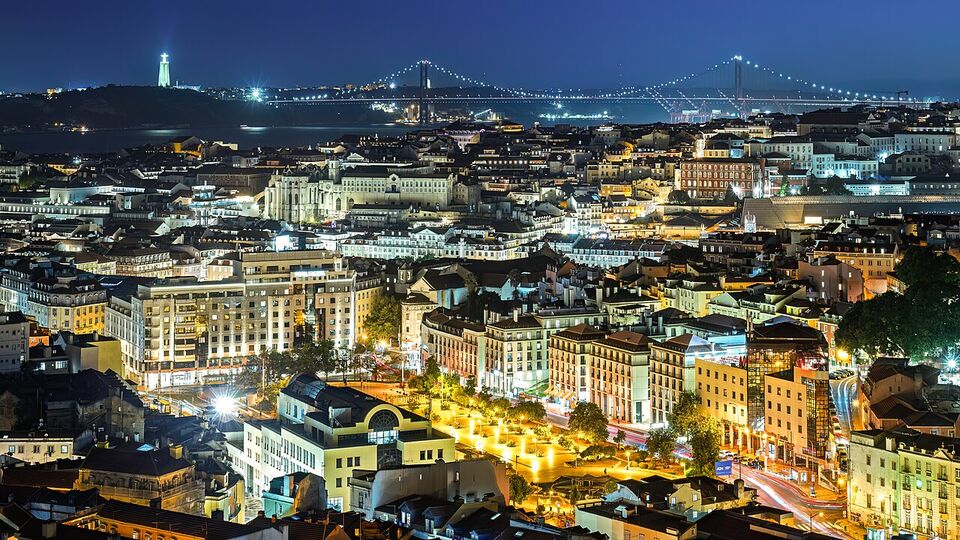
This is the best use of four to six days. Base in Lisbon and go out and back. Sintra is a short train ride from Lisbon on the CP Sintra Line (trains leave from Oriente, Rossio and Entrecampos stations). Cascais and the Estoril coast are reachable by train from Cais do Sodré, and Óbidos and Nazaré fit a longer day if you have a car or a tour. See day trips from Lisbon for how each works without a car. Two nights could be moved to Cascais or Sintra for a calmer start, but most first-timers are better placed in Lisbon, with its metro, frequent trains and restaurants.
Lisbon plus Porto by train
This is the classic first route for seven to ten days. The Alfa Pendular fast train runs between Lisboa Oriente and Porto Campanha, and the timetable in force since July 19, 2026 shows the fastest services taking about 2 hours 42 minutes (treat it as about 2 hours 45 minutes). Fares vary by date and class and are not fixed, so look on cp.pt a few weeks ahead rather than counting on a bargain. From Porto you can go on to the Douro valley, to Braga and Guimarães, or break the journey in Coimbra on the way south.
Adding the Algarve
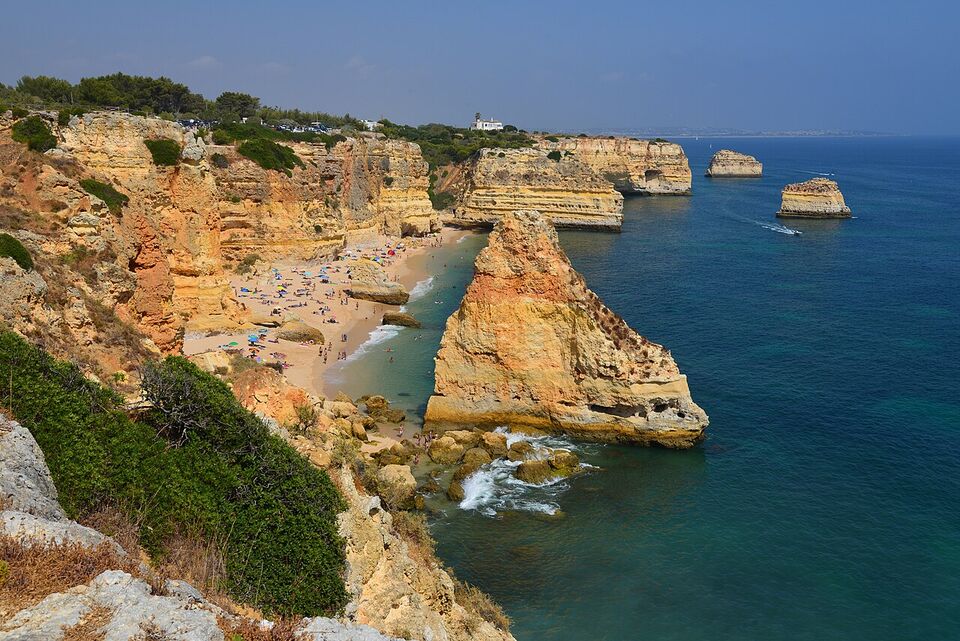
The Algarve is a beach region, not a city break, and it works best from May to October. It needs at least three nights to be worth the move, because getting there takes most of a day by train or road from Lisbon. The A22 motorway along the coast has been toll-free since January 1, 2025. Without a car, base in Lagos or Faro and use trains and buses along the coast; with a car you can reach the quieter western beaches (see Lagos and the West Algarve).
Adding an island
Madeira and the Azores are separate trips that happen to be in Portugal. Madeira is for hiking, gardens and ocean views; the Azores are for volcanic lakes, hot springs and green coastline, and weather there changes within a day. Allow at least four nights on either, and remember the Azores are on a different clock, one hour behind Lisbon. Neither island fits well into a one-week trip that also includes Porto. If you are short on days, choose one island and drop the mainland extras.
Choosing a base
You will spend more time getting in and out of your base than anywhere else, so choose with care. This table compares the usual choices for a first visit. Journey times are approximate; check cp.pt for trains.
| Base | Best for | Nights to allow | Without a car | Watch out |
|---|---|---|---|---|
| Lisbon (Baixa, Chiado, Príncipe Real) | First-timers, sights, food, day trips | 3 to 5 | Easy: metro, trains, buses, taxis | Hills and cobbles; luggage on stairs |
| Lisbon (Alfama) | Atmosphere, short walks to the castle | 2 to 4 | Walking only for much of it | Steep stairs; taxis cannot reach every door |
| Porto (Ribeira, Baixa, Cedofeita) | River views, port cellars, tiles | 2 to 3 | Easy: metro, trams, walking | Steep streets between the river and the upper town |
| Sintra | An early start on the palaces | 1 (optional) | Train and local bus | Busy 10 a.m. to 4 p.m.; few late-evening options |
| Coimbra | The old university and a calmer stop | 1 | Easy by train | Steep old town; check university opening days |
| Évora | Alentejo history and food | 1 to 2 | Bus or train from Lisbon, then walking | Hot in July and August |
| Lagos or Faro | Algarve beaches and cliffs | 3 to 5 | Trains and buses along the coast | Peak-season prices; Faro airport has no rail link |
| Funchal | Madeira hiking and gardens | 4 to 6 | Buses and taxis; a car helps for the island | Steep hills; trail booking is mandatory |
| Ponta Delgada | The main island of the Azores, São Miguel | 4 to 6 | Tours; a car works best | Rain can change plans; the Azores are 1 hour behind Lisbon |
If you have time for one extra overnight outside Lisbon and Porto, Coimbra or Évora tends to add more than a third big city would. For neighborhoods in detail, see Lisbon neighborhoods.
Trains, rental cars, buses and flights between regions
You need a car less than you think, but it makes sense in a few places. The table sets the options side by side.
| Route | Best option | Why |
|---|---|---|
| Lisbon and Porto | Alfa Pendular train, about 2 hours 45 minutes | Center to center, no parking, no tolls |
| Lisbon and Sintra, Cascais | Train | Frequent; stations close to the sights; no parking stress |
| Lisbon and the Algarve | Train to Faro or Lagos (about 3 hours to Faro; check cp.pt), or a car | A car helps once you arrive |
| Porto and the Douro valley | Train on the Douro Line, or a rental car, or a cruise | The valley rewards a slow pace |
| Évora and the Alentejo | Rental car | Villages and wineries are far apart |
| Mainland and the islands | Flight | No practical alternative; flights from Lisbon and Porto serve Funchal and Ponta Delgada |
Trains
CP (Comboios de Portugal) runs the national network. Intercity trains link Lisbon with Porto, Coimbra and Faro, and suburban lines cover Sintra and Cascais. Buy tickets on cp.pt or at the station and check the timetable on the day, since works and strikes change services. For details and tips see trains and buses in Portugal.
Rental cars
Driving is on the right, as at home. Rental cars must carry the Via Verde electronic toll device under a 2022 law; the rental company pays the tolls and bills you afterward. As an example, Hertz lists a service fee of €2.21 a day (about $2.48), capped at €22.14 (about $25) per rental, plus the tolls you use; other companies differ, so read the contract. Several motorways became toll-free on January 1, 2025, including the A22 along the Algarve, the A25 and the A23, but many others still charge. Fuel is expensive by American standards: on November 9, 2026, the mainland average was about €1.92 a liter for gasoline (about $8.15 a gallon) and about €2.14 for diesel (about $9.05 a gallon). Details are in driving and tolls.
Watch out
Do not drive in the centers of Lisbon, Porto or Sintra. Streets are narrow, parking is scarce and private cars are not permitted to Pena Palace. Pick up your rental on the day you leave the city, and return it before you arrive in the next one.
Buses and flights
Express buses cover places the train misses, such as Óbidos, Nazaré and Évora; check Rede Expressos and FlixBus for schedules and fares, which we could not confirm. Flights are the only practical way to the islands. TAP, Azores Airlines and low-cost carriers connect Lisbon and Porto to Funchal and Ponta Delgada; there are limited seasonal nonstops from the US to those islands, but most visitors connect through Lisbon or Porto. Faro airport has no train; airport buses 14 and 16 run daily to Faro bus station. See flights to Portugal.
Hotel, apartment or guesthouse
All three work, and the choice depends on your party and your tolerance for stairs. Hotel prices as tiers: $ under $120 a night for a double, $$ $120 to $300 and $$$ over $300. For scale, the national average revenue per occupied hotel room was about €130 (about $146) in the second quarter of 2026, according to national statistics; Lisbon and the Algarve in summer are above that average, and winter and smaller towns below.
- Hotels suit short stays, one-night stops and anyone arriving tired. Staff hold luggage, breakfast is often included, and an elevator is a real advantage on a hill. Ask whether it goes all the way to the room.
- Apartments suit families and stays of four nights or more, with a kitchen and extra space. Check the access: some buildings in Alfama and Bairro Alto have no elevator and several flights of stairs. Confirm the check-in method and a local contact before you pay.
- Guesthouses (alojamento local or pensões) give you a host who knows the neighborhood, usually at moderate prices. Read recent reviews for noise, especially in Bairro Alto, where bars stay open late.
Cities add a tourist tax per person per night on top of the room price: Lisbon charges €4 (about $4.50) up to seven nights for visitors aged 13 and over, and Porto charges €3 (about $3.40), also up to about seven nights. Many other towns charge €1 to €4. These figures come from secondary reports; check the council website for current rates. More on this in where to stay in Portugal.
How to avoid rushing
Portugal's best moments tend to be slow ones: a long lunch, a viewpoint at sunset, a river walk. A few rules keep a trip humane.
- Move less. One night in a place is rarely worth the packing. Prefer two, or a day trip from a base.
- Protect the arrival day. Flights from the US East Coast take roughly 6 to 8 hours. Book nothing that cannot be moved on day one, and do not plan a train for the same afternoon.
- Do one major sight a half day. Jerónimos Monastery and Belém Tower together take a morning. Add a pastry stop, not a third attraction.
- Book fixed items first. Timed tickets, trains and the first and last hotel nights; leave the middle loose.
- Plan the meals. Lunch is long, and kitchens in smaller towns close in mid-afternoon. Dinner typically starts around 7:30 p.m. or later.
- Leave a buffer before your flight home. Border queues, especially at Lisbon, have been long at times; see the entry rules and EES page.
Sample itineraries
These are skeletons to adapt. Day trips from a base are marked as such, and none requires a car. For a version you can edit, use the trip builder.
Four days: Lisbon and Sintra
- Day 1: Arrive, check in, and walk Baixa and Chiado. Keep it light and eat early. Sleep before you plan anything.
- Day 2: Belém in the morning (Jerónimos Monastery and the tower, both closed Mondays), then lunch and the riverfront. Alfama and the castle in the late afternoon.
- Day 3: Sintra by train. Book a timed Pena Palace ticket for the morning and add one more site, such as the National Palace in town. Return by evening.
- Day 4: A flexible half day in the city, or Cascais by train, before your departure.
Seven to eight days: Lisbon and Porto
- Days 1 to 3: Lisbon, as above, with Sintra in the middle.
- Day 4: Morning in Lisbon, then Alfa Pendular to Porto (about 2 hours 45 minutes). Walk to the river after dinner.
- Days 5 to 6: Porto: the tiled São Bento station, the Ribeira, a port cellar in Vila Nova de Gaia on the other bank, and the Foz seafront by tram or bus.
- Day 7: A day trip to Guimarães and Braga by train, or a Douro valley outing.
- Day 8: Return by train or fly home from Porto, where several US routes land.
Ten to fourteen days: add the Algarve or an island
- Days 1 to 7: As above, with Coimbra as a night between Lisbon and Porto if you want one more place.
- Day 8: Return from Porto to Lisbon by train, then continue to your add-on by train, car or plane. The ride from Porto straight to the Algarve is a long day, so break it in Lisbon.
- Days 9 to 12: The Algarve (Lagos or Faro), or Madeira (Funchal) or São Miguel (Ponta Delgada) if you prefer an island.
- Days 13 to 14: Return to Lisbon for the flight home. Leave a night in hand in case of weather or delays.
First-timer mistakes
These come up again and again in how Americans describe their first week in Portugal.
Too many places
Four cities in seven days means half your time in transit. Choose two bases, add day trips, and let the rest be.
Steep hills with luggage
Cobbles and stairs defeat large rolling bags. Pack light, ask for an elevator, and take a taxi from the station to the door. The old funiculars that used to help are not running (see below).
Sintra in a half day
Pena needs a booked slot and time to climb. With the train and bus, one palace plus a stroll is a half day; two palaces are a day.
Counting on a car in town
Narrow lanes and few spaces. Park outside, or rent only for the countryside leg.
Skipping the booking
Pena timed entry, Alfa Pendular fares and Madeira trails all reward early booking. Do the three first.
Assuming Spanish will do
Portuguese is a different language. A few words (obrigado if you are a man, obrigada if you are a woman, por favor) go a long way. See Portuguese phrases.
Different from home
Restaurants may put bread, olives, butter and cheese on the table before you order. This is the couvert: it is charged only if you eat it, and you can send it back. Check the price on the menu. Tipping is optional, and rounding up or leaving a few euros for good service is common, nothing like the norms at home.
The hills problem: what is and is not running in Lisbon
Lisbon's hills are the main physical challenge, and the historic lifts that used to ease them have changed. The Glória, Bica and Lavra funiculars and the Santa Justa Lift have carried no passengers since the Glória accident in September 2025. Carris has said a new Glória is a target for the first half of 2029, and there is no date for the others. The Graça funicular reopened on April 30, 2026 and has run daily from 7 a.m. to 9 p.m. since mid-May, but it was listed with a temporary closure on November 11, so check same-day status on carris.pt. Tram 28 is running its normal route after a spring interruption; check Carris for the current fare.
Insider tip
Plan your route so you walk downhill. Take a taxi or the metro to the top of a district such as Alfama or Graça, then wander down toward Baixa. The Lisbon Metro takes contactless bank cards at the gates (about €1.72, or about $1.93, a trip; €1.92 with a paper card), which saves buying a card for a short stay.
What to book, and when
Most of Portugal does not need a reservation weeks ahead, but a few things do. This list is arranged roughly in order of how soon you should act.
- Flights and the first and last hotel nights: as early as your dates are certain, especially for May to September.
- Madeira trail bookings: since January 1, 2026, the classified PR trails need an online reservation with a 30-minute entry slot; fees start at €4.50 per trail (about $5).
- Alfa Pendular train to Porto: a few weeks ahead for lower fares, on cp.pt.
- Pena Palace: a timed ticket for a specific date and time. The Essential Visit is €20 (about $22) and the park-only ticket €12 (about $13); the Complete Visit is €45 (about $50). Book on the Parques de Sintra site.
- Quinta da Regaleira: capped numbers and a timed slot; buy only on the official site.
- Fado, dinner at a popular restaurant, a Douro cruise: a few days ahead in high season.
- Entry paperwork: there is no visa for stays up to 90 days, and ETIAS is not required yet. See entry rules for Americans.
Save money
Shoulder months (April to early June, September and October) have comfortable weather and lower prices than July and August. Eat the fixed-price lunch menu and make dinner lighter. The when to go page shows each month in detail.
A realistic budget
We do not have a reliable national average for meals or taxis, so we give you the pieces and leave the arithmetic to you. Use the budget calculator for a full total.
- Lodging: about €130 (about $146) a night is the national hotel average. Multiply by your nights and add the tourist tax.
- Sights: Jerónimos Monastery is about €18 (about $20) and Belém Tower about €15 (about $17), so about €33 (about $37) for both; Pena Palace with the Essential Visit is €20 (about $22). Check current prices before you go.
- Getting around: a Lisbon Metro trip is €1.72 (about $1.93) with a contactless card, and the 24-hour Carris and Metro ticket is €7.25 (about $8).
- Flights: prices change by date; see flights.
- Cash and cards: cards work almost everywhere, but carry a little cash for small cafes, markets and some taxis. See money.
Decide on a daily ceiling before you book. For most travelers, the biggest savings come from timing (shoulder months rather than July and August) and from fewer hotel changes, not from skipping sights.
Official places to start
Visit Portugal (visitportugal.com) is the national tourism site and the best starting point for regional information. The city sites visitlisboa.com and visitporto.travel list events, passes and current notices. For the islands, use visitmadeira.com and visitazores.com. Transport details and strikes are on cp.pt, metrolisboa.pt and carris.pt. Before you commit to dates, check the weather by month and any storm notices on ipma.pt. Last, check the US State Department: it lists Portugal at Level 1, "Exercise normal precaution," as shown on the US Embassy page in November 2026. See safety in Portugal and the overview of Portugal's destinations.
Add it to a route in the trip builder, or ask us to plan the hotels, trains and guides for you.