What to buy and what to skip
Portugal is a good place to shop for things that are made well and are not expensive to carry: hand-painted tiles, cork, canned fish, ceramics, olive oil, port and other wines, embroidered linens, filigree jewelry and leather shoes. Most of these come with a story of a local craft, and most are easy to find outside the busiest sightseeing streets. The harder part is telling a good version from a cheap import, and knowing what you can legally bring back to the US.
This page covers what to buy, how to spot a poor-quality copy, markets and opening hours, tax-free shopping for non-EU visitors, shipping, the souvenir traps near major sights, and what US Customs and Border Protection (CBP) will let you bring home. Wine and port have their own guide: see Port and Portuguese wine. For paying and prices in general, see money in Portugal.
Prices on this page are examples of how to think about value, not quotes, because they vary by shop and season. When we cannot confirm a figure, we say so and tell you where to check.
Azulejo tiles: hand-painted or factory-made
The azulejo (painted, glazed tile) is the most Portuguese souvenir there is, and it is also the easiest to get wrong. You will see tiles on churches and station walls, and in almost every gift shop. In a shop, you will meet three broad kinds: hand-painted tiles made by an artisan, factory-made tiles printed or machine-decorated in Portugal, and cheap imports sold as Portuguese.
| Type | How to recognize it | What to expect |
|---|---|---|
| Hand-painted | Slightly uneven brush strokes; tiny differences from tile to tile; a maker's mark or signature on the back | Highest price; made in small batches; shops often state the workshop |
| Reproduction (traditional patterns, factory-made) | Very regular pattern; flat printed look; consistent edges | Mid-priced; fine as a decorative gift if sold honestly |
| Cheap import | Thin, light tile; blurry or flat print; no maker's mark; no clear origin | Lowest price; often sold in souvenir stands near major sights |
A few simple checks help. Turn the tile over: a real ceramic tile has a thick, slightly rough back, often with a stamp or a name, while a thin or lightweight one may be a different material. Ask where it was made and by whom. A shop that makes or sources its own tiles will usually tell you in a sentence. Look at the glaze under a bright light. Hand-painted lines have depth, and printed ones look flat. Finally, buy from a shop that offers to pack them: good tiles are heavy and break easily, and packing is part of the price.
If tiles interest you, the Museu Nacional do Azulejo in Lisbon is the national tile museum, and our Lisbon sights guide and Porto sights guide mention tiled churches and stations. We could not confirm the museum's current hours or prices for 2026, so check its page on museusemonumentos.pt.
Cork, canned fish, ceramics and other craft buys
Cork products
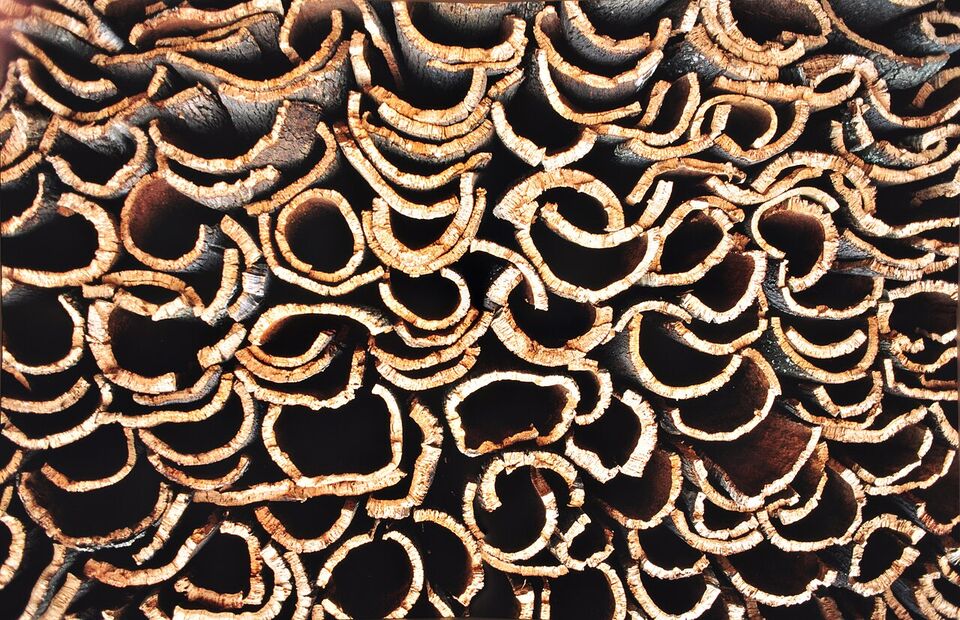
Portugal is one of the world's main cork producers, and cork is a light, water-resistant, plant-based material. Good buys are small and flat: wallets, card holders and coasters. Look for firm stitching and a smooth finish. Cork fabric bags range from well made to flimsy, so squeeze the seams before you pay. See Évora and the Alentejo for cork country.
Canned fish (conservas)
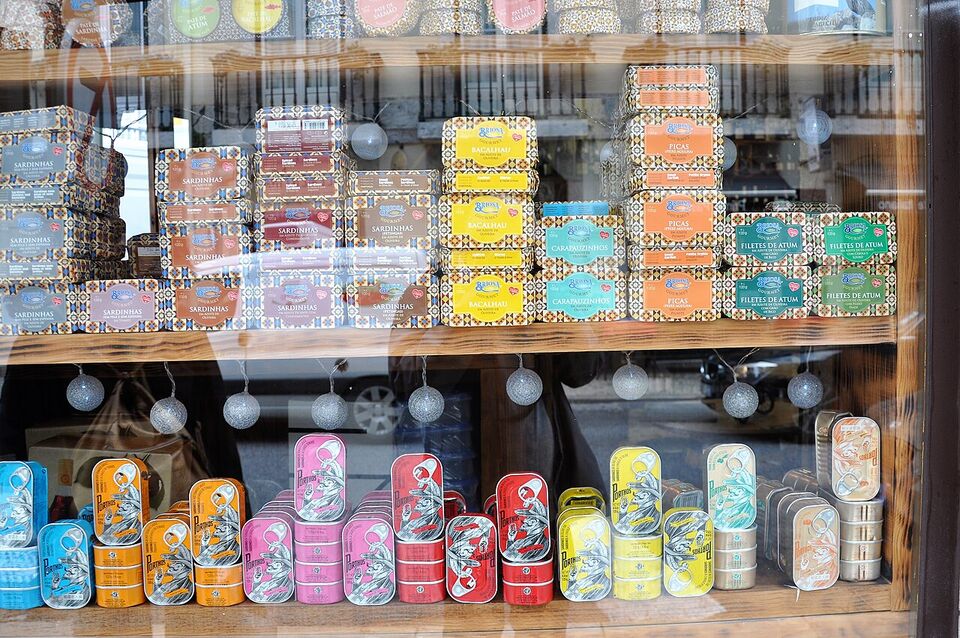
Tinned fish is a Portuguese specialty, and the packaging is part of the appeal. Shops in Lisbon and Porto sell tins by brand and year. They travel well in a suitcase. Check CBP's list of restricted food: fish in a sealed tin is different from meat, but confirm with CBP and APHIS if you are unsure.
Ceramics
Portuguese pottery ranges from everyday plates to decorative pieces. Look for maker's marks on the base and for a clear glaze. Heavy pieces cost a lot to ship, so choose what you can carry and wrap well.
Olive oil
A bottle of good olive oil is an easy gift. Look for a harvest date and a producer's name on the label. Pack it in a sealed bag in checked luggage, and check CBP and USDA APHIS if you bring a lot.
Embroidered linens
Embroidery is a regional craft, with the north and Madeira well known for it. Handwork has a neat reverse side and consistent stitches. Machine-made pieces are cheaper and can look similar from a distance.
Barcelos pieces
The Barcelos rooster (Galo de Barcelos) is the best-known Portuguese craft symbol. You can buy hand-painted pottery roosters of all sizes. A rooster from a market stall in Barcelos is more likely to be local than one in a big-city souvenir stand.
Filigree, leather and other small luxuries
Portuguese filigree jewelry, fine twisted wire worked into delicate patterns, is a traditional craft, with the north, especially around Gondomar, and other areas known for it. It is light and easy to carry. Ask whether a piece is silver or gold, look for hallmarks, and buy from a jeweler who can tell you where it was made.
Portugal also has a long shoe-making tradition, and its leather shoes are sold widely in Europe. Shoes for men and women in Portuguese cities are often good value compared with the US, but try them on in the shop, bring the right socks, and check the return policy. If you plan to walk on hills and cobbles (see our packing list), buy shoes before the trip, not on day one.
Insider tip
Ask a shop where an item was made before you ask the price. A shop that sells real crafts can usually tell you the town and workshop. A shop that cannot, or gives a vague answer, is probably selling imports.
Port, wine, cheese and customs
Port and wine are among the best buys in Portugal, and they are also the most regulated to bring home. The rules below come from CBP's customs pages. For limits on the Portuguese and EU side, check the Portuguese customs pages on the tax authority's site, because we could not confirm them.
- The $800 exemption. A returning US resident can bring in up to $800 of goods duty-free, usable once every 31 days, after at least 48 hours abroad. Declare everything you bought, including gifts.
- Alcohol. One US liter (33.8 fl oz) of alcohol can be included in the exemption if you are at least 21 and it is for your own use. More than that is subject to duty and tax even if you have not used up the $800. The state where you land also has its own rules. For example, three liters of wine and nothing else would leave two liters dutiable. A standard wine bottle is 750 ml, so one liter is a little more than one bottle.
- Cigarettes and cigars. The exemption includes no more than 200 cigarettes and 100 cigars.
- Cheese and bakery items. CBP says you may bring bakery items and certain cheeses. Check the details for the cheese you buy, and keep it in its original packaging if you can.
- Meat. CBP says you may not import fresh, dried or canned meat or meat products from most countries, and foods prepared with meat are not admissible. Cured ham (presunto) and sausage (chouriço) are generally not allowed. Check cbp.gov and aphis.usda.gov before buying any.
Watch out
Do not assume a shop can ship wine to you in the US. CBP notes that federal law prohibits business-to-private-consumer shipping of alcoholic beverages by mail within the United States, and carriers have their own rules, so shipping bottles from abroad is not simple. If a shop offers to ship bottles, ask how, and confirm it will arrive legally before you pay.
Practical packing is simple: wrap each bottle in clothes, put it in a sealed bag, and place it in the middle of a checked suitcase. Carry-on liquid limits apply to anything you carry through security, even if you bought it in an airport shop, so ask about sealed duty-free bags and your connecting airports. CBP also notes that articles bought in a duty-free shop are subject to US duty if they exceed your exemption.
For wine regions and what to taste, see Port and Portuguese wine and the Douro Valley guide. For entry and re-entry rules in general, see entry rules for Americans.
Markets and shopping streets
Markets are where you see local goods at local prices, but the best ones are also tourist stops. A few worth knowing:
- Feira da Ladra (Lisbon). The "Thieves' Market" is a long-running flea market near the Alfama and National Pantheon. It is traditionally held on Tuesdays and Saturdays, but days and hours can change, so check the city's site (lisboa.pt) before you go. Expect used goods, antiques, books, old tiles and a lot of ordinary secondhand items. Haggle politely, watch your pockets, and treat anything described as "antique" with caution.
- Mercado do Bolhão (Porto). Porto's central market is a covered market for produce, fish, flowers and food stalls. It has been renovated in recent years, and its hours and stall mix change. Check the city's information before you go. Fresh produce and meat are not for taking home, but the market is a good place for a snack and for olives, bread and pastries.
- Local markets in smaller towns. Weekly and monthly markets sell cheese, fruit, honey, cured goods, pottery and clothing. They are cash-friendly places, so bring small notes and coins.
- Shopping streets. In Lisbon, the Baixa, Chiado and the Avenida da Liberdade have the mix of local and international shops. In Porto, Rua de Santa Catarina and the streets around the São Bento station do the same. Smaller streets in the Bairro Alto and Príncipe Real have independent shops.
Different from home
Bargaining is normal only at flea markets and with antique dealers. In a regular shop, the price on the tag is the price. If a tourist-area shop quotes a high price on an unmarked item, walk away and compare.
If you are planning around a market day or a weekend, our guides to Lisbon and Porto have the neighborhood details.
Opening hours
Opening hours differ by type of shop and region, and we cannot give one set of times that holds everywhere. As a rule of thumb for planning, shopping centers and tourist-area shops are often open every day, including Sundays and many holidays, while independent shops in town centers often close on Sunday and, in some towns, on Monday. Some small shops close for lunch in smaller towns. Museums and monuments often close on Mondays, as the Jéronimos Monastery and the Belém Tower do.
National holidays are on fixed dates: December 1 and 8, December 25, January 1, April 25, May 1, June 10, August 15, October 5 and November 1. Many shops close on these days, and the days around Christmas and New Year have reduced hours in some places. Check the shop's own site or door, and plan purchases that need an open shop before the holiday. See festivals and holidays for more.
Cards are accepted in most shops, but cash is still useful at markets, small cafes and some craft stalls. If a shop asks whether you want to pay in dollars or euros on the card machine, choose euros: paying in your own currency usually costs you a worse rate.
Tax-free shopping for non-EU visitors
Portugal charges value-added tax (VAT, called IVA) on most goods, and the price on the tag already includes it. As a visitor who lives outside the EU, you can often claim a refund of that VAT on qualifying purchases taken home in your luggage. Visit Lisboa's site advertises a "Tax Free Portugal" scheme, which confirms the arrangement exists.
We cannot give the rules as fact, because the minimum purchase, the form, the list of participating shops and the way the refund is paid are set by the Portuguese tax authority (Autoridade Tributária e Aduaneira) and by the refund companies, and they change. Verify the current process on the tax authority's official pages (portaldasfinancas.gov.pt) before you buy. In general, the process works like this:
- Ask first. Before you pay, ask the shop whether it takes part in tax-free shopping and what the minimum is.
- Keep the paperwork. The shop completes a tax-free form with your passport details. Carry your passport when you shop.
- Keep the goods unused and in your luggage. You may need to show the items at the airport.
- Validate at the airport. Before you check your bags, have the form stamped or validated at the customs point or kiosk at your departure airport. Allow extra time; queues at the airport can be long.
- Collect the refund. The refund is paid to a card or in cash, depending on the company, and usually less a handling fee.
Save money
A tax refund is worth chasing for a large purchase, such as jewelry or a high-end item. For a few small gifts, the paperwork, the airport queue and the fee can cost you more time than the refund is worth. Do the sum before you decide.
If you leave the EU from another country on the same trip, such as Spain, the refund may be claimed at your last EU airport, not necessarily in Portugal. Ask the shop. Also see Spain and beyond if you combine the two countries.
Shipping things home
If you buy something big or fragile, such as a stack of tiles, a large ceramic piece or a bundle of linens, shipping may be easier than carrying it. Many tile shops and larger craft stores will pack and ship items abroad. Ask them for a written quote that includes packing, insurance and tracking, and ask who is responsible if the package is damaged.
Check what the shop will charge for shipping before you buy. Sometimes it costs more than the item. Ask whether the price includes any duty or tax at the US end. CBP notes that unaccompanied personal shipments, meaning packages that are mailed or shipped, may be subject to limits, and the rules for goods that arrive separately from you differ from those for goods in your suitcase. As noted above, shipping alcohol is complicated, so carry bottles with you.
For small gifts, a postal service package or courier is possible, but you pay for weight, and the delivery time can be long. If you are traveling on to other countries, consider carrying small items instead. A smaller, flatter purchase, such as tile coasters, cork goods or tinned fish, is easier than a heavy or oddly shaped one.
Souvenir traps near major sights
The stalls and shops nearest to major sights such as the Jéronimos Monastery, the Belém Tower, the Pena Palace in Sintra and Lisbon's Alfama are convenient and often marked up. The most common problems are not scams in the criminal sense, but poor value for tourists in a hurry.
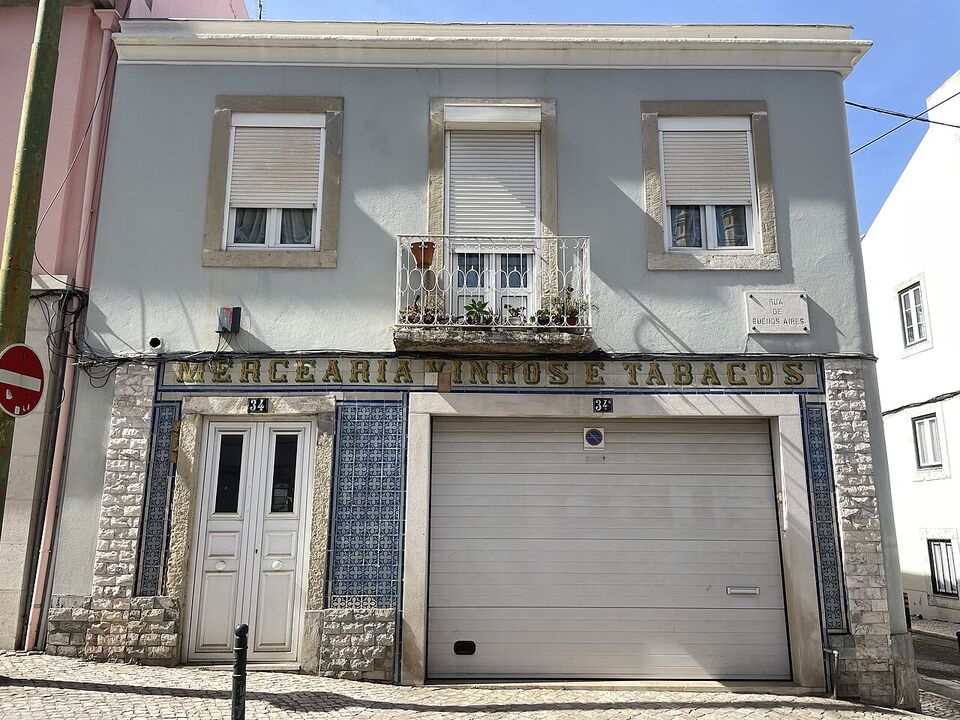
- Cheap tile imports. Thin or printed tiles sold as "traditional". Use the checks above.
- Mass-produced "cork" goods. Thin synthetic or low-grade cork items sold at inflated prices. Ask what the material is.
- Roosters and sardine kitsch. Fun and cheap, but the quality varies. Buy a single piece and examine it.
- Pre-packed food gift sets. Often more expensive than buying items separately in a supermarket or a specialty shop. Many supermarkets sell tinned fish, olive oil and sweets at lower prices.
- Street sellers offering "free" gifts. A bracelet or flower pressed into your hand can lead to a demand for money. Say não, obrigado (no, thank you) if you are a man, não, obrigada if you are a woman, and keep walking. See our safety guide for pickpockets and scams in crowded places.
A good rule is to walk two or three streets away from the main sight before you buy. Prices often drop, and the shops are more likely to be run by makers or longtime retailers. In Sintra and the Alfama, look for shops that name their makers and offer to wrap.
A short buying plan
- Decide on a budget for gifts before you go, and leave room in your bag.
- Buy tiles, cork and ceramics from shops that name their makers.
- Buy canned fish, olive oil and sweets in specialty shops or supermarkets, where prices are lower and the choice is wider.
- Buy port and wine near the end of your trip, and plan to carry no more than one liter per adult for duty-free treatment.
- Do not buy cured ham, sausage or other meat products to take home.
- Keep receipts for expensive items, and declare everything when you land in the US.
- If you want a VAT refund, ask before you pay, carry your passport, and allow extra time at the airport.
Add it to a route in the trip builder, or ask us to plan the hotels, trains and guides for you.