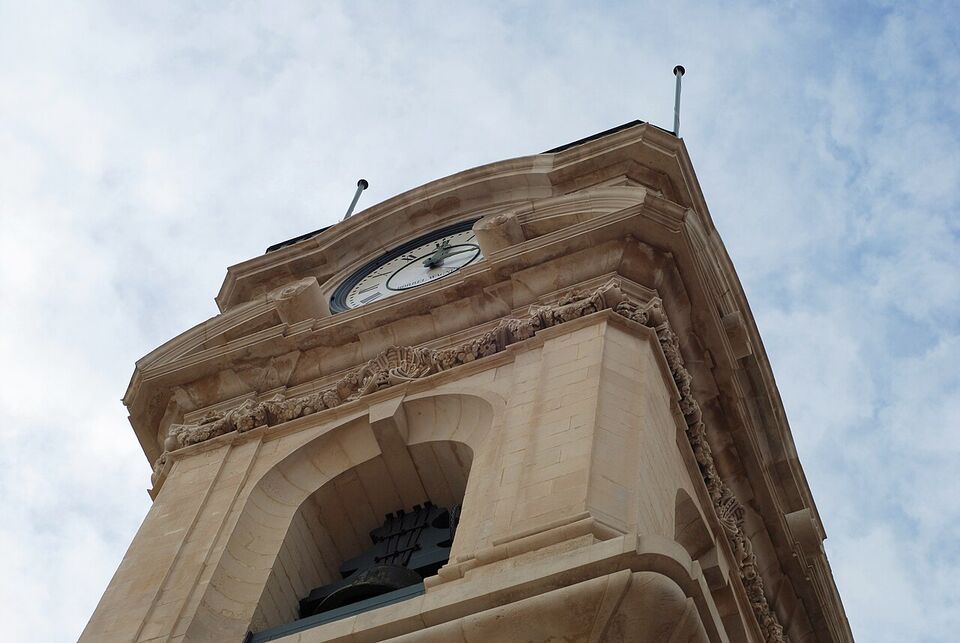
Overview: a university on a hill
Coimbra is a city of roughly 140,000 people that sits about halfway between Lisbon and Porto, on a hill above the Mondego River. It is the home of one of the oldest universities in Europe, and the campus, with its tower, library and chapel, is why most visitors come. The old town below, the river, a royal monastery and its own fado tradition fill out a visit that is more varied than the usual Lisbon-to-Porto stop.
Our advice: go if you like places where a living institution shapes the town, and be ready for hills. The old town and the university are compact, but the climbs are steep, the stairs are many, and the cobbles are slippery when wet. Coimbra makes a long day trip from Lisbon, but it is better with a night, which lets you see the town after the day trips leave. This page covers the stations (including a mistake that catches many first-timers), the university and its tickets, the old town and sights, fado and student traditions, food, closing days, and plans.
For the wider picture of the country, see our regions guide, and for the outings from the capital see day trips from Lisbon.
Getting there, and the A and B stations
Coimbra is on Portugal's main north-south railway, which makes it easy by train from both Lisbon and Porto. The fast Alfa Pendular and Intercidades trains run between Lisbon (Santa Apolónia and Oriente) and Porto (Campanhã), and they stop at Coimbra. Typical times are about 1 hour 40 minutes to 2 hours from Lisbon, and roughly 1 hour to 1.5 hours from Porto. These are estimates, and we could not confirm current timetables, so check cp.pt. Book early for fast trains, since fares vary by date and class.
The real mistake: Coimbra-B and Coimbra-A
Coimbra has two main stations, and many visitors are caught out. Coimbra-B (Coimbra B) is on the main line and is where the fast trains stop. It is on the edge of the city, not in the old town. Coimbra (also called Coimbra-A) is the older station in the lower town, near the river and the Baixa, a short walk from the old center.
The two are linked by a short connecting train of just a few minutes, which usually runs in step with the long-distance trains. The most common mistakes are these:
- Getting off at Coimbra-B and assuming you are in the center. You are not; you need a connecting train, a bus or a taxi.
- Staying on the fast train hoping it will continue to Coimbra-A. Most long-distance trains do not.
- Booking a hotel near Coimbra-A but arriving at B with luggage and no plan. Know the onward step before you land.
- Buying the wrong ticket. Check whether your ticket names Coimbra-B and whether it includes the onward leg. Ask at the station or check cp.pt if you are unsure.
The practical fix is simple. When you buy your ticket, read the destination name carefully. On arrival, follow signs to the connecting train for Coimbra-A, or take a taxi if you have heavy bags. On the way out, check which station your onward train leaves from, as the departure board may show Coimbra-B only. CP also runs a local suburban network around Coimbra.
Watch out
If your onward train is a fast service, you will probably leave from Coimbra-B. Check the departure board and allow extra time for the short hop between the two stations.
Coimbra is about 125 miles (200 km) from Lisbon and about 75 miles (120 km) from Porto by road. For train basics and tickets, see our getting around guide. If you are coming from Porto, our Porto guide shows how Coimbra fits with the north.
The university
The University of Coimbra was founded in the 13th century and settled in Coimbra for good in the 16th. Its historic core, on the high ground known as the Alta, is part of a UNESCO World Heritage listing. It is still a working university, so you share the lanes with students.
What you can visit
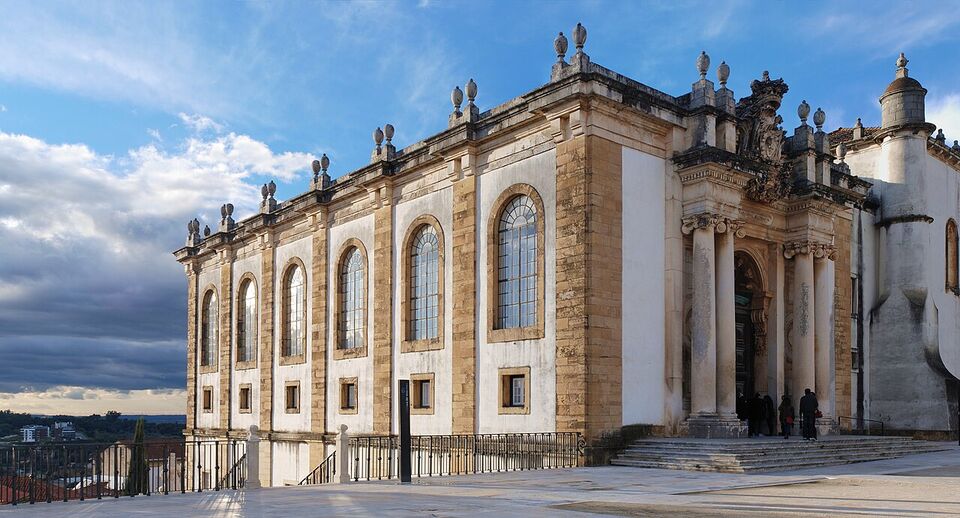
The visitor site, visit.uc.pt, lists the main spaces and sells tickets for them. These include the Palace of Schools (the main historic building, home to the Joanina Library and Saint Michael's Chapel), the Private Examination Room, the Science Museum, the Botanical Garden and other collections such as the Cabinet of Curiosities and the Academic Museum. The site also lists guided visits to the University Palace, recitals in the chapel, a "UC by Night" visit and combined tickets such as UC Exploratório with the Science Museum.
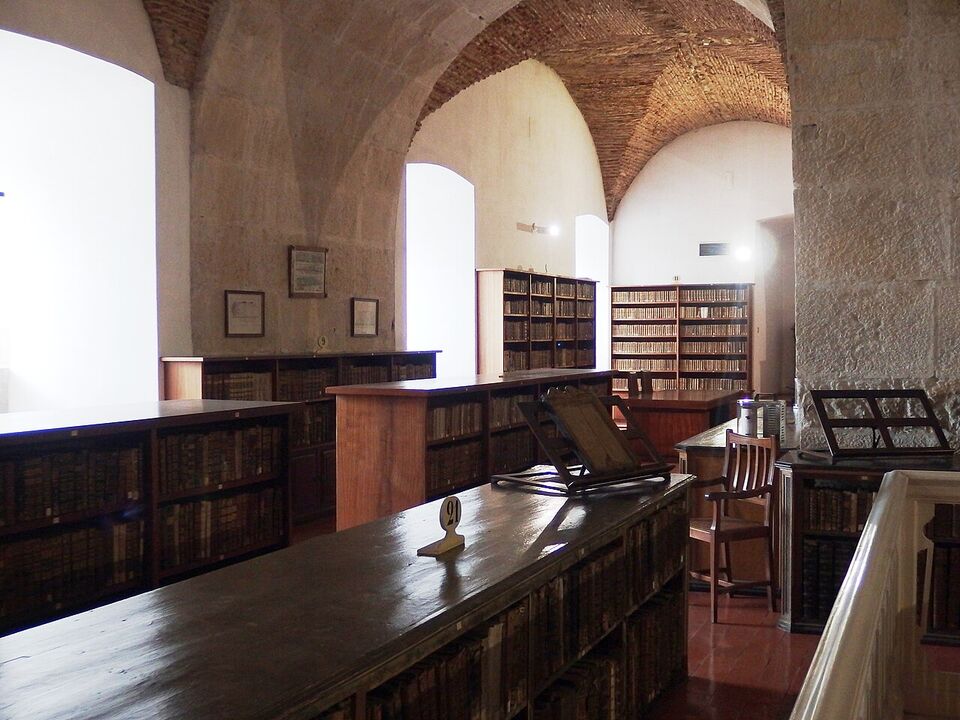
The Joanina Library is the main draw: a baroque 18th-century library with gilded shelves and painted ceilings, containing very old books. It is a protected space, and visits are limited and timed to protect the books. The library is traditionally said to keep a colony of bats that protect the books from insects, a detail you will hear often; do not count on seeing them.
Tickets and timed entry
We could not confirm current prices or the exact entry rules, and these change by season and by day, so use the university's own site. As of November 2026, the visitor site lists tickets, programmes and a "Prepare your visit" section with opening hours and visiting guidelines. In general, expect these rules:
- Entry to the library and some other spaces is usually timed, and numbers are limited.
- Book a slot online in advance in busy periods, especially in spring and from June to September and in the weeks around graduation and the student festivals.
- Check each space's opening days. Some are closed on certain days of the week or for events, and the library may close for conservation or for university use.
- There may be rules on bags, photography and behavior inside the library. Read the visiting guidelines before you arrive.
- Plan to arrive at the entrance early, because the walk up is long.
Insider tip
Book your library slot first, then plan the rest of the day around it. If you cannot get a slot online, go to the ticket office early in the day, as same-day tickets may sell out later. Check the visitor site for the current process.
Getting up the hill
The university is at the top of a steep climb from the lower town. You can climb through the old town by stairs and lanes, which is rewarding but steep, or take a taxi or a local bus to the top and walk down. The walk down is gentler than the climb up, and a one-way taxi saves your legs for the stairs inside the buildings. Visitors with limited mobility should read the Accessibility section on the university visitor site.
The old town and the river
Below the university, the Baixa and the old town spread toward the Mondego River. The pedestrian streets around Rua Ferreira Borges and Rua Visconde da Luz are shopping streets, and the lanes climbing from them lead up toward the Alta.
Old Cathedral (Sé Velha)
A fortress-like Romanesque cathedral from the 12th century, one of the best-preserved in the country. The steps in front are associated with student serenades. Check opening times and whether there is an entry fee.
Santa Cruz Monastery
A 12th-century monastery that holds the tombs of the first two kings of Portugal, Afonso Henriques and Sancho I. It sits on the main square at the foot of the old town. A well-known cafe occupies part of the building. Check the hours and entry price on the day.
Quebra-Costas and the stairs
The name means roughly "back-breaker", and the steep stairs and lanes from the lower town up toward the Old Cathedral and the university earn it. Go up slowly and wear shoes with grip.
Botanical Garden
A large garden with terraces and old trees, listed by the university as one of its sites. It is a calmer place for tired legs. Check the hours and entry on the university site.
Mondego River and the far bank
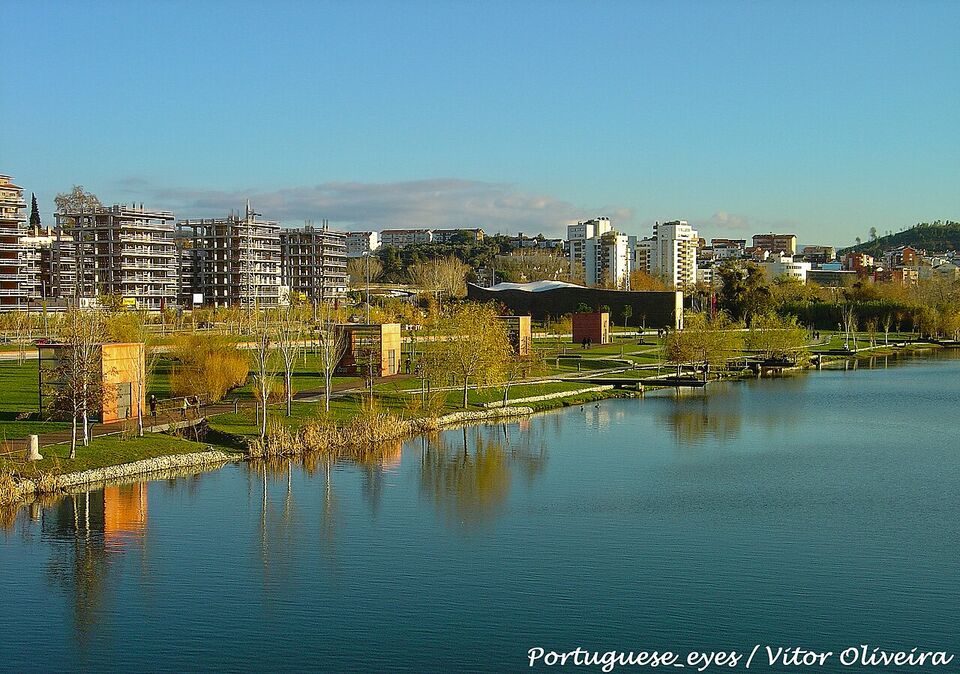
A riverside park and promenade on the Mondego, with a pedestrian bridge to the Santa Clara side. The view back to the town on the hill is the best photo of Coimbra. The Santa Clara side also has monasteries and a long hill climb.
Portugal dos Pequenitos
A miniature-buildings park, with scale models of Portuguese monuments and regional houses, built for children. It is a good stop for families with younger children, and a fun contrast to the university. Check the opening hours, closing days and price on its official site before you go. Our traveling with kids guide has more.
All together, the university, the old town and Santa Cruz make a full day. If you have a family or only one day, choose the university, a walk down through the old town and a late lunch, and leave Portugal dos Pequenitos and the Botanical Garden for a second visit.
Fado of Coimbra and fado of Lisbon
Fado is a Portuguese song tradition of longing and fate, inscribed by UNESCO as intangible cultural heritage. There are two main varieties, tied to two cities: Lisbon and Coimbra. Lisbon fado is the better known, associated with taverns and singers such as Amália Rodrigues. Coimbra fado is linked to the university and to serenades.
Traditionally, Coimbra fado is sung by men in the academic dress of dark robe and cape, often outdoors at night in a serenade, with a singer accompanied by Portuguese guitar and classical guitar. Its themes often lean toward student life, romance and the city itself, and many people find it more restrained and lyrical than the Lisbon style. Sung indoors, it is more intimate. Women now also sing in Coimbra, and the style is changing, but you will often hear the older customs described.
A custom often described for Coimbra fado is that listeners show appreciation with a cough or a small gesture rather than applause. Whether or not a performance follows it, the lesson is to be quiet and attentive: fado is a performance, not background music. Our fado guide explains the traditions more fully and how to choose a venue. Check venues and show times locally, since schedules vary and we did not confirm any in 2026.
Different from home
Fado venues usually ask for silence while the singer performs. Do not talk, take calls or move around. In a restaurant with fado, the music may start at a set time and last a set period.
Student traditions and the black capes
Coimbra students wear a traditional black academic dress, a traje académico of a dark suit and a black cape (capa). The tradition is still alive: you will see students in capes around the university at ceremonies and on festival days. Their customs, known as praxe, include welcome rituals for new students and rules for how senior and junior students behave. Visitors do not need to take part.
The big student festival is the Queima das Fitas ("burning of the ribbons"), traditionally in May, when graduating students celebrate with parades and concerts. The city is full, hotels are expensive, and the center is loud. We did not confirm the 2027 dates, so check the city and university sites. The beginning of the academic year in autumn also has its own rituals.
A few etiquette points. Ask before you take photos of students in capes. Do not touch or pull at a cape. If you see a ritual, watch from a distance. Our etiquette guide has the basics.
What to eat
Coimbra is on the edge of the Bairrada region, known for its wine and its roast pork, and the dishes you will see on menus reflect that.
- Chanfana: goat (or sometimes lamb) slowly stewed in red wine in a clay pot, a dish associated with the Coimbra area. It is rich and strongly flavored.
- Leitão: roast suckling pig with crisp skin, a Bairrada specialty. Many of the well-known restaurants for it are in the town of Mealhada, a short drive north of Coimbra.
- Sweets: convent-style egg-and-almond pastries and small cakes are common in local pastry shops.
- Wine: Bairrada reds and sparkling wines; see our wine guide.
Restaurants may place a couvert (bread, olives, butter and cheese) on the table. You pay only for what you eat, and you can send it back, so check the menu price. Many restaurants close one day a week and for part of the afternoon, so check before you walk up the hill. Our food guide has more on ordering. We did not confirm any restaurants for 2026, so choose by looking at the menu and the crowd.
Closing days, hours and what to verify
We could not confirm hours for most Coimbra sights, so this is a checklist of what to verify. Opening days differ by site and season.
- University spaces: check opening days and hours for the library, the Palace of Schools, the chapel and the museums on visit.uc.pt. Timed tickets are the norm.
- State monuments and museums: many close one day a week, commonly Monday, and on certain holidays. Verify each.
- Holidays: Portugal's fixed national holidays include December 1 and 8, December 25 and January 1, and many sites close or shorten hours then. See our December guide if you are visiting at that time.
- Churches and cathedrals: times can shift for services.
- Family parks and gardens: check seasonal hours.
If a day trip is your only chance, check the university's calendar for closures and events first. Graduation weeks and festivals change access.
Nearby: Conímbriga
About 10 miles (16 km) southwest of Coimbra, near the town of Condeixa-a-Nova, Conímbriga is one of the best-known Roman sites in Portugal, with mosaics, a bath complex and a museum. It is a half-day trip from Coimbra and easiest by car or taxi, though there are local buses to Condeixa that need a further link. Check access and hours before you go. If you do not have time, the university and old town are more than enough for a first visit.
How long to stay, and sample plans
- Day trip
From Lisbon or Porto
Take an early fast train, taking the connecting train to Coimbra-A. Book a university slot for late morning, walk down through the old town to Santa Cruz and a late lunch, then see the river before an evening train. It is a long day with hills, so skip anything you cannot reach comfortably.
- One night
The comfortable way
Arrive in the morning, visit the university, rest, then explore the old town and have dinner. Look for a fado performance in the evening, and see the river at sunset. Next morning, Santa Cruz or Portugal dos Pequenitos before an afternoon train.
- Two nights
With Conímbriga
Add a half-day at Conímbriga and a slower look at the river and the Botanical Garden. This suits travelers who like Roman sites or traveling slowly.
Where to sleep: the Baixa is close to the Coimbra-A station and the river but you walk uphill to the university; the Alta is near the university but very steep with luggage. Our where to stay guide covers choosing a base. Hotel prices rise in graduation and festival periods.
Practical tips and climbs
- Shoes: bring shoes with grip; the cobbles are slippery when wet.
- Luggage: use a taxi for heavy bags between the stations and a hilltop hotel.
- Mobility: the old town and Alta have many stairs; check accessibility information on the university site before you rely on a route.
- Heat: summer afternoons are hot, and the climb is exposed; carry water.
- Cash and cards: cards are widely used, but small cafes may prefer cash.
- Safety: normal city precautions apply; see our safety guide.
- Book a university slot on visit.uc.pt and check the opening days.
- Check your train, and know which station you arrive at and leave from.
- Check the closing days of the sights you plan.
- Decide whether to stay a night.
- Pack shoes with grip and water.
Add it to a route in the trip builder, or ask us to plan the hotels, trains and guides for you.