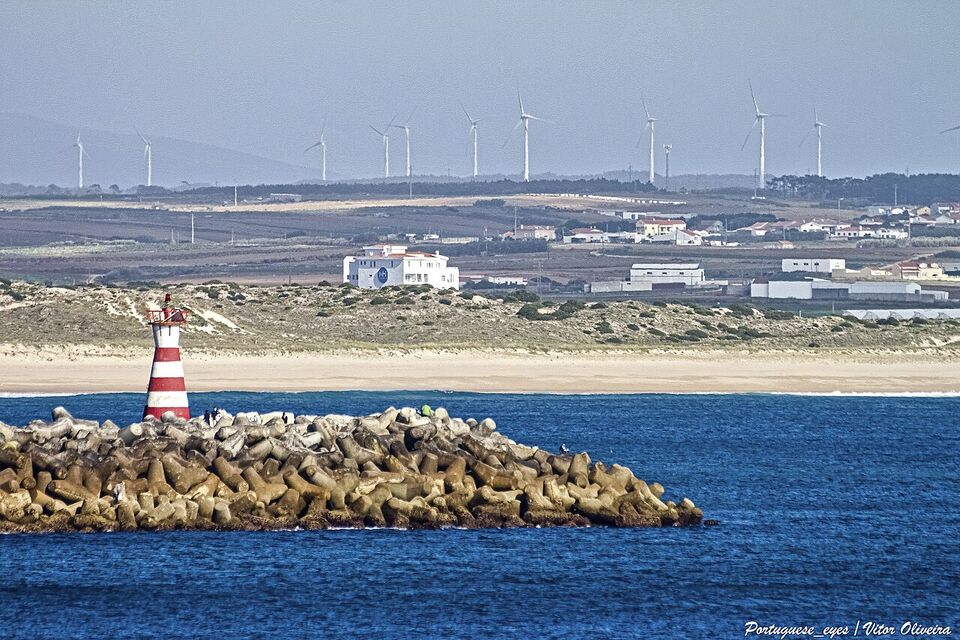
Overview
Portugal faces the open Atlantic along almost its whole length, so it has surf for every level, from soft white-water waves on sandy beaches to some of the largest waves ridden anywhere. You can surf all year, but the best choice of place and time depends on your experience. Beginners are usually happiest from June to September; experienced surfers tend to look to the autumn, winter and spring swells.
This page covers the main surf areas: Ericeira, Peniche, Nazaré, Cascais and Guincho, the west coast of the Algarve, Sagres and Madeira. It also explains what the swell and wind do through the year, how lessons and rentals work, how to dress for the water, how to read rip currents, and what non-surfers in your group can do. For general beach advice, see our guide to Portugal's beaches.
One honest caution up front: surf conditions are local, they change by the hour, and we cannot predict them. Use this page to choose a region, then use a current forecast and the advice of a local school to choose a beach on the day.
Surf regions at a glance
Most surfers base themselves in one of four areas, each with a different character. Distances below are rough road distances; allow more time in summer traffic.
Ericeira
A small white-washed town with a cluster of breaks along a rocky coast. Ericeira is a World Surfing Reserve, a conservation recognition for its stretch of coast. Several breaks are for experienced surfers, but a few beaches suit beginners on small days.
Peniche and Baleal
Peniche sits on a peninsula, so there is almost always a beach facing the right way for the wind. Baleal and nearby beaches are popular for lessons; the heavy, hollow wave known as Supertubos is for experienced surfers.
Nazaré
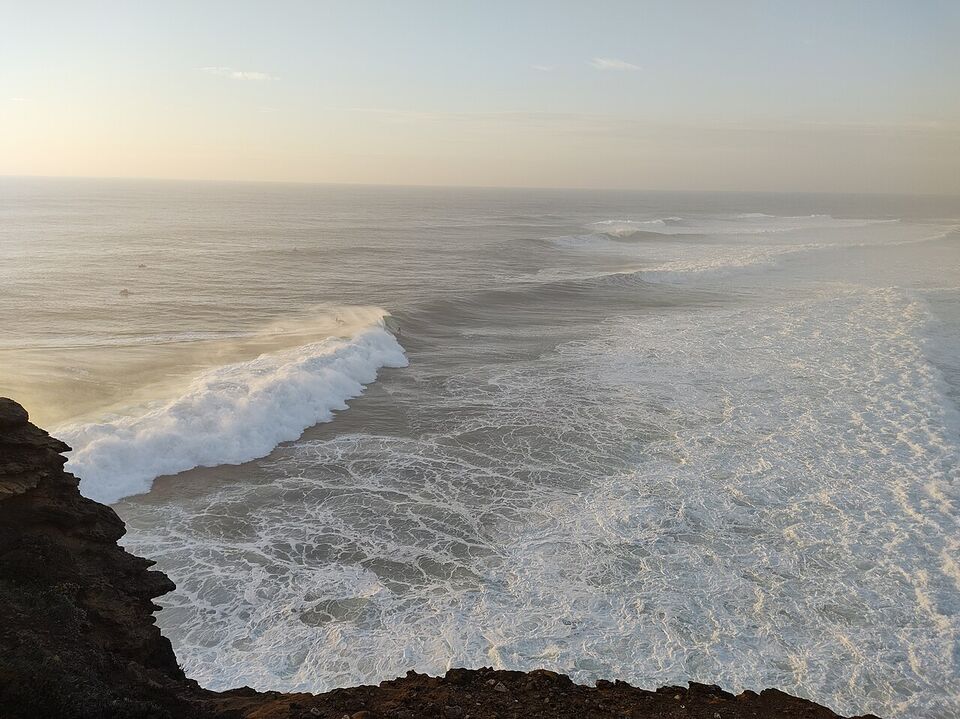
Nazaré is best known for giant winter waves at Praia do Norte, watched from the fort on the headland. The town beach itself is used for ordinary swimming and some lessons. See below for the safety rules for spectators.
Cascais, Carcavelos and Guincho
Carcavelos and Costa da Caparica are the easy surf-day options from Lisbon. Guincho, just beyond Cascais, is open, windy and powerful, better known for wind and kite sports than for lessons.
West Algarve and Sagres
The Algarve's west coast faces the Atlantic and gets a mix of beginner-friendly beaches and powerful ones. Sagres has several beaches facing different directions, so a school can usually find somewhere workable.
Madeira
Madeira's best-known surf is on its southwest and north coasts, mainly in winter, and is mostly for experienced surfers. Beaches are often pebbly and the volcanic coast is steep. Madeira is on Western European Time, the same as Lisbon.
The Azores also have surf, especially on São Miguel. The Azores are one hour behind Lisbon (so about 4 hours ahead of New York most of the year). Because that archipelago is a different trip, we cover it in our Azores guide.
Break types: what suits beginners and what does not
The kind of seabed and shape of a wave matter as much as its size. If you are new to surfing, ask a school which kind of break you are heading to. The table below is a simple guide; actual conditions on the day come first.
| Break type | What it is | Beginners | Experienced |
|---|---|---|---|
| Sandy beach break | Waves break over shifting sand; the bottom is soft | Best choice, especially in small surf and with lifeguards | Good fun, can be crowded or closed out when big |
| Reef break | Waves break over rock or reef | Not advised; rocks are shallow and sharp | Often the best shape, needs local knowledge |
| Point break | Waves peel along a headland or rocky point | Not advised unless the wave is small and a coach is with you | Long rides; lineup etiquette matters most here |
| River mouth or sheltered bay | Protected from open swell, gentler waves | Useful for first lessons on rough days | Limited unless a swell is large |
| Big-wave spot | Giant waves on a deep canyon or outer reef | Never; watch from land | Specialists with safety teams only |
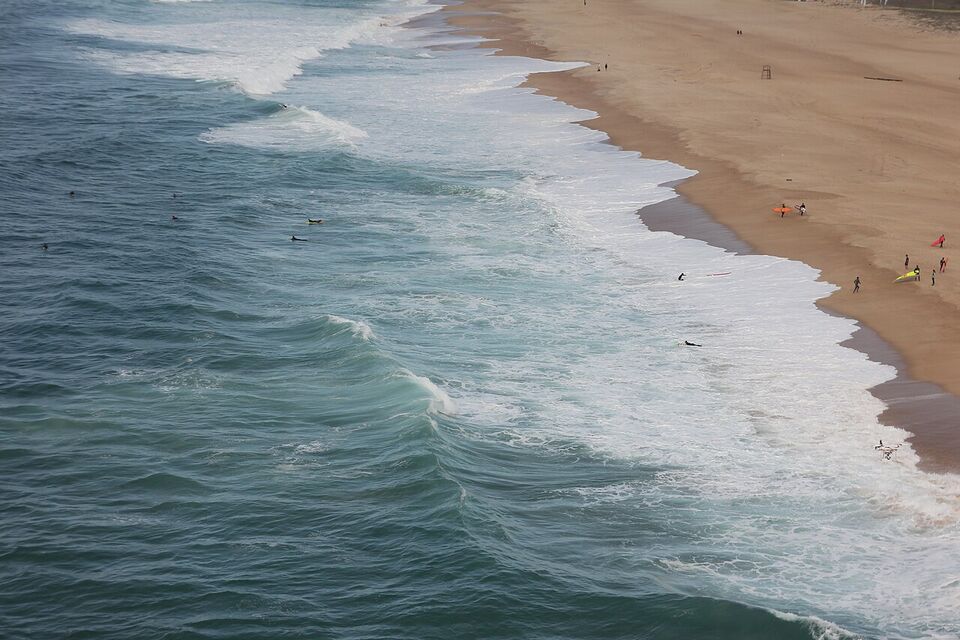
A rule that works for most beginners: pick a wide sandy beach with a lifeguard tower, avoid days when the waves are shoulder-high or bigger, and do not paddle out alone. If a wave looks scary from the shore, it will feel worse from the water.
Seasons, swell and wind
The Atlantic delivers most of its large swell in the cooler months. As a general rule, the west-facing coast is best for experienced surfers from about October to March, with smaller, easier days more common from June to September. Spring and autumn often give a good mix of size and weather. These are typical patterns, not a guarantee; each year is different.
| Season | Typical waves | Air and sea | Who it suits |
|---|---|---|---|
| Winter (December-February) | Large, powerful swells; fewer flat days | Cool, wet spells; Lisbon sea about 61°F (16°C) | Experienced surfers; big-wave watchers |
| Spring (March-May) | Mixed; good size on many days | Mild; water still cool | Intermediates and confident beginners with lessons |
| Summer (June-September) | Smaller and gentler; afternoon wind | Warm air; Lisbon sea about 68°F (20°C) in August | Beginners and families |
| Autumn (October-November) | First big swells; often clean conditions | Mild; sea still relatively warm | Intermediates and experienced surfers |
Wind is the other half of the picture. On the west coast, a northerly summer wind (the nortada) often builds through the afternoon and makes the sea choppy. Mornings are usually calmer, which is why many lessons start early. Wind that blows from land to sea (offshore) tends to groom the waves; wind blowing onshore makes them messy. Peninsulas such as Peniche and Sagres help here, because you can usually find a beach on the sheltered side.
The national weather service, IPMA, publishes weather and warnings in English, and local forecast sites cover swell. Check wave height, period and wind on the morning you plan to go, and ask the school what they think.
Different from home
The Atlantic coast of Portugal is a much more powerful ocean than most Gulf or mid-Atlantic beaches Americans know. Currents are strong, the water is colder than the air suggests, and there can be few lifeguards outside the summer season. Treat even a quiet-looking day with respect.
Surf schools and rentals
Surf schools are common in Ericeira, Peniche and Baleal, Carcavelos, Costa da Caparica, Lagos, Sagres, Arrifana and Madeira. Lessons are usually a group session of about two hours that covers safety, paddling and standing up, with a board and wetsuit included. Private lessons are also available. We do not publish prices because they vary by season and school; check the school's own site and ask what is included.
How to choose a school
- Look for a school that is licensed and has qualified instructors, and ask about insurance and first aid.
- Ask the group size. Smaller groups give each beginner more attention.
- Check that lessons run in a supervised area and that the school adjusts for conditions rather than going out regardless.
- Read the cancellation policy; lessons can be cancelled for unsafe conditions.
- Make sure the wetsuit and board are included, and whether there is a charge for a locker or showers.
Renting gear
If you already surf, most surf towns have shops that rent boards and wetsuits by the day or week. Soft-top boards are the usual rental for beginners; ask for a leash and, in cooler months, boots and a hood. Taking your own board is possible, but airlines charge for and sometimes limit oversized sports equipment, so check your airline's rules before you book, and pack boards in a padded bag.
Save money
A package of several lessons, or lessons plus a few days of board rental, is often cheaper per session than single lessons. Ask the school. Book lessons directly with the school, and do not buy a package that locks in dates you cannot change.
Wetsuits by season
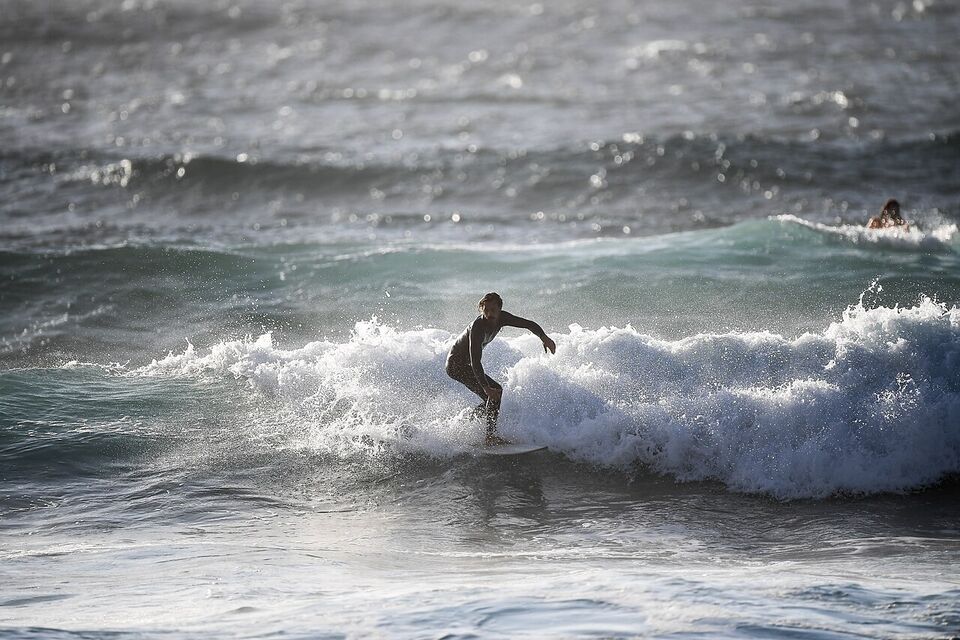
Even in summer, Atlantic water on the west coast stays cooler than Americans expect, partly because cold water rises from below in summer (upwelling). Water near Lisbon is about 61°F (16°C) in winter and about 68°F (20°C) in August. Other coasts and the north are often cooler. The thickness below is typical advice, not a rule; ask your school.
| Season | Typical wetsuit | Extras |
|---|---|---|
| Summer (June-September) | 3/2 mm full suit, or a shorty on the warmest days | A rash vest and sunscreen |
| Spring and autumn | 3/2 mm to 4/3 mm full suit | Boots may be welcome on colder mornings |
| Winter | 4/3 mm to 5/4 mm full suit | Boots, and for longer sessions gloves and a hood |
Madeira's sea is warmer than the mainland's, with roughly 64°F (18°C) in late winter and about 75°F (24°C) in late summer, so a thinner suit goes further there.
Ocean safety and rip currents
Most ocean rescues begin with a rip current: a narrow channel of water pulling away from shore. They are strongest when waves are bigger and often look like a calm, darker, choppier gap between breaking waves. Do not swim or surf in a rip you do not understand.
If you are caught in a rip
- Stay calm and keep your board or float if you have one.
- Do not swim straight against the current; you will tire.
- Swim or paddle parallel to the beach until the pull weakens, then angle back to shore.
- If you cannot get out, float, raise an arm and shout for help. Call 112 from a phone as soon as someone is on shore.
Flags and lifeguards
Portuguese beaches use colored flags to show swimming conditions. In general terms, green means calm and swimming is allowed, yellow means caution, and red means do not swim. A checkered flag usually means no lifeguard is on duty at that moment. Check the flag meanings on the sign at the beach, as they can be different at some places.
Lifeguards are usually present on many beaches during the summer bathing season, often from about June to September, and some beaches extend this. We could not confirm the 2026-27 dates for every beach, so look for the posted schedule at the beach or ask the local council. Outside that season, many beaches have no lifeguard at all. See our safety guide for emergency information and our health guide for pharmacies and clinics.
Watch out
Never turn your back on the water on rocky shores, and do not go out onto rocks or jetties to take photos. Large waves can arrive unexpectedly and sweep people off. Obey signs and barriers, especially in winter.
Nazaré: watching the giant waves
Nazaré became famous because an undersea canyon focuses winter swells onto a beach called Praia do Norte, producing some of the largest waves surfed anywhere. Most of the big days fall roughly between October and March, and the biggest usually come with strong storms in the North Atlantic. Competitions and tow-in sessions are held in winter. We could not confirm the dates of the 2026-27 competition window, so check the organizers' official site if that is your reason for going.
How to watch
The usual viewing place is the fort at the end of the headland, the Forte de São Miguel Arcanjo, which also has a lighthouse and a lookout over Praia do Norte. Access to the lookout area and parking near it has been restricted in the past on big days, and rules can be changed by the authorities at short notice. We could not confirm the current rules, so follow the barriers and signs, and check with the Nazaré tourist office before you go.
- Stay behind barriers; do not go down to the rocks or the beach on big days.
- Do not climb on the fort walls, and keep children close.
- Expect crowds and traffic on forecast big days, and arrive early.
- Bring a windproof jacket. The headland is exposed, and rain or spray is common in winter.
- Bring binoculars or a long lens; the waves are far below and across the bay.
Most days at Praia do Norte are not giant, and a visit on a flat day is still a pleasant trip to the fort and the clifftop. Nazaré is also a good stop on a longer route north of Lisbon; see our guide to Óbidos and Nazaré.
Etiquette in the lineup
Surfing has unwritten rules that matter more than anywhere when the lineup is crowded, as it often is in Ericeira and Peniche in summer. Follow these, and most surfers will treat you well.
- Right of way: the surfer closest to the peak, the part of the wave that breaks first, has priority. Do not "drop in" by taking off in front of someone who is already up.
- Paddle wide: paddle around the breaking wave, not through the lineup.
- No snaking: do not paddle around someone to steal their place in line.
- Control your board: never let go of your board when a wave is about to hit; it can hurt someone. Use a leash.
- Beginners stay in their zone: stay in the white water, away from the peaks where experienced surfers wait.
- Be friendly: say hello, apologize if you make a mistake, and respect local surfers. A smile and a quick desculpe (sorry) go a long way.
Where to base yourself
Ericeira, Peniche, Lagos and Sagres each have hostels, guesthouses and apartments aimed at surfers, often with board storage, lessons and breakfast. Lisbon is a good base for casual surfers: Carcavelos and Costa da Caparica are within an hour's travel, and you can combine surf days with sightseeing. Book early for July and August and for holiday weekends. See where to stay for hotel advice and our Algarve guide for the south coast.
A rental car is useful if you want to move between beaches or to carry boards. If you plan to drive, see our driving guide. Public buses connect Lisbon with Ericeira, Peniche and Nazaré, but schedules vary, so check the operator before you travel.
Non-surfers: things to do while your partner surfs
A surf town is easy for a partner who does not surf. Beaches, cafes and short walks fill the day; some options go further.
- Ericeira: walk the old town and cliffs, or take a short trip to Mafra National Palace and its library.
- Peniche: walk to the Cabo Carvoeiro headland and the fortress; boat trips to the Berlengas islands run in season, but landing numbers are limited, so book ahead and check the schedule.
- Nazaré: ride the funicular between the beach and the headland if it is running, or walk the fish market and the old quarter. Visit the fort on a stormy day.
- Cascais: cycle the coast path to Guincho or visit the old town and museums. Cascais is on the train line from Lisbon.
- Sagres and Lagos: walk to Cape St. Vincent, the fortress, or the cliffs near Lagos. See our Lagos guide.
- Madeira: levada walks and the natural pools at Porto Moniz; see our Madeira guide.
If you are traveling with children, many surf schools offer kids' lessons from about age 6 or 7, but ask for the minimum age; see Portugal with kids.
Ericeira's surf reserve and rules
Ericeira is part of the World Surfing Reserve network, which protects a stretch of coast for its waves and environment. A reserve of this kind is a recognition and a conservation framework. We could not confirm any specific rules that visitors must follow beyond normal coastal and beach regulations, so check with the Ericeira tourist office or the municipality of Mafra if you plan to surf there. In practice, treat the area like any protected coast: take out your trash, keep off dunes and cliff edges, and park only in marked areas.
Insider tip
Check the forecast the night before and again in the morning, then decide between two or three beaches rather than committing to one. Wind and tide change what works, and the best beach for your level one day may be the worst the next.
Practical checklist
- Choose your region by season and level; beginners in summer, experienced surfers in autumn to spring.
- Book lessons directly with a licensed school and check group size and cancellation rules.
- Pack or rent the right wetsuit, and bring reef-safe sunscreen and a rash vest.
- Learn how to spot and escape a rip current before you go in.
- Surf where a lifeguard is on duty; confirm the lifeguard dates for the beach.
- Check your airline's rules if you bring a board, and your travel insurance covers surfing.
- Have 112 saved and know the name of the beach you are on.
Add it to a route in the trip builder, or ask us to plan the hotels, trains and guides for you.