Overview: why go to Évora and the Alentejo
Évora is the easiest way to see the Alentejo, the broad, quiet region that fills the south-center of Portugal. It is a walled hilltop city about 85 miles (135 km) east of Lisbon, with a first-century Roman temple, a medieval cathedral, a university founded in 1559 and a chapel lined with human bones. The old center is on the UNESCO World Heritage list (Évora's own city website lists it under its heritage menu), and it is compact enough to cover on foot in a day.
Most visitors treat Évora as a day trip from Lisbon. We think one night is better, because the squares empty out in the evening and the stone streets feel different. If you have more time, the wider Alentejo rewards slow travel: hilltop villages, marble towns, cork oaks, olive groves, megaliths older than Stonehenge, a huge reservoir with a dark-sky reputation, and an almost empty Atlantic coast.
The Alentejo is not a place for a checklist. Distances are longer than they look, restaurants close between lunch and dinner, and the best moments (a sunset over the reservoir, a long lunch of pork and wine) come from not hurrying. This page covers how to reach Évora, what to see inside the walls, how to extend the trip, why a car helps, and what to confirm before you go.
Different from home
The Alentejo has far fewer people per square mile than the Lisbon area or the Algarve. Villages can feel closed on a Monday or in the afternoon, and small shops and cafes may prefer cash. Carry some cash, and ask about opening times at your lodging.
Getting to Évora from Lisbon
By train
Trains from Lisbon to Évora are run by CP (Comboios de Portugal, the national railway). We did not find a current timetable we could confirm, so treat the following as a planning guide: the trip takes roughly 1.5 to 2 hours, and the service is not as frequent as the Sintra or Cascais lines. Check the exact departures and fares on cp.pt, and buy tickets online or at the station. The station sits outside the walls; check a map app for the walk to the old center.
By bus
Express buses connect Lisbon with Évora and are often similar in time to the train, with more departures during the day. Rede Expressos (rede-expressos.pt) is the main national operator, and FlixBus also runs some routes. We have no confirmed fares, so check the operators. Book ahead for Friday and Sunday afternoons, when Portuguese families travel.
By car
Driving from Lisbon takes about 1.5 hours in normal traffic, much of it on motorway. Your rental car will carry a Via Verde electronic toll device, and the rental company bills the tolls afterward. As one example, Hertz charges a service fee of €2.21 a day (about $2.48) up to a maximum of €22.14 per rental (about $25), plus the tolls themselves. Other companies differ, so ask at the counter. Our driving guide explains tolls, fuel and parking in more detail.
Inside Évora, leave the car outside the walls. The old streets are narrow, many are restricted, and paid parking zones apply. Your hotel can tell you where to park.
On a tour
Guided day trips from Lisbon usually combine Évora with a winery or with Monsaraz. They save you the driving, but you give up the quiet evening hours. Read what is included, and check that the tour allows enough time at the Chapel of Bones.
What to see inside the walls
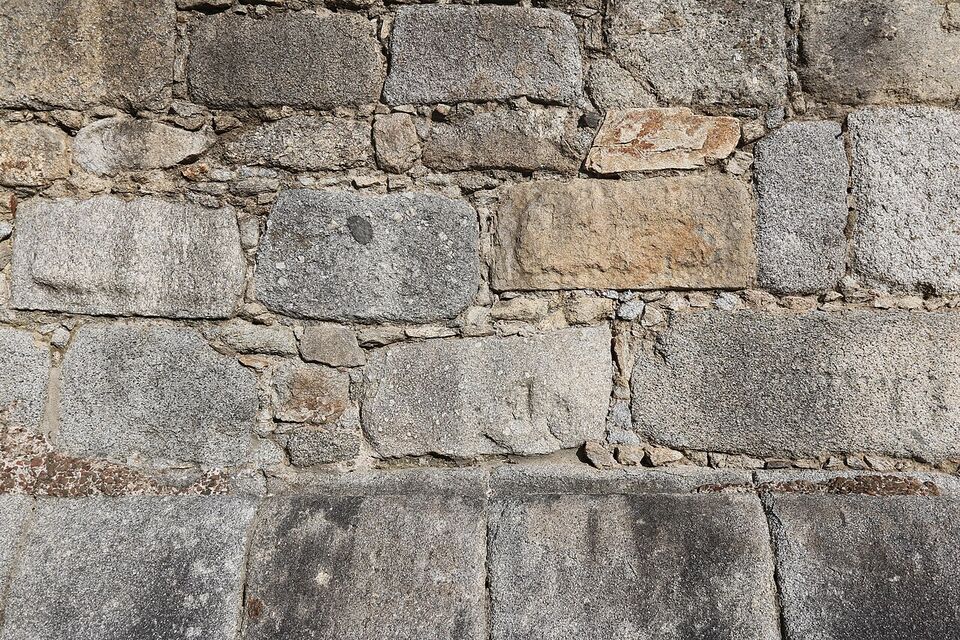
Évora's main sights sit within about 10 minutes' walk of one another around the Praça do Giraldo, the main square. Start there, then fan out. Opening hours and ticket prices change, and we could not confirm current figures, so the cards below give no prices. Check the official pages named at the end before you go.
Roman temple
Granite columns with marble capitals stand on a stone base in the middle of the old town. The temple dates from the first century and is popularly called the Temple of Diana, although the name is a later tradition. You can walk around it for free at any hour; it looks best late in the day.
Cathedral (Sé)
A large granite church begun in the 12th century, mixing Romanesque and Gothic styles. A ticket usually covers the cloister, and often the museum and the upper terraces, which give a view over the rooftops. Hours and combined tickets vary, so confirm them locally.
Chapel of Bones (Capela dos Ossos)
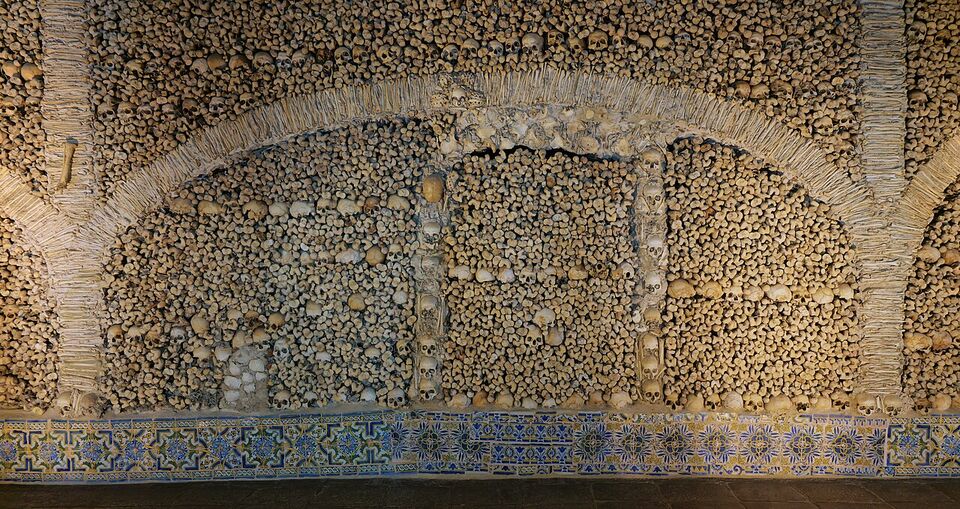
Built by Franciscan monks in the 16th century, the chapel has walls and columns covered with human skulls and bones. A line in Portuguese above the entrance is usually read as a reminder that the dead are waiting for you. It is solemn rather than gory, but small children may find it upsetting. Check hours and ticket rules, and avoid the midday rush.
University of Évora
Founded in 1559 by Jesuits, the university was closed in the 18th century and reopened in 1973. The cloister and classrooms are known for blue-and-white azulejos (painted tiles). It is a working campus, so access depends on the day and on teaching schedules.
Old town walls and the Água de Prata aqueduct
Évora is ringed by walls of different periods, from Roman and medieval stretches to later fortifications. The Água de Prata aqueduct, built in the 16th century, strides across the northern side and in places has houses tucked beneath its arches. Walking part of the circuit is a good way to see the town without a ticket.
Praça do Giraldo and the lanes
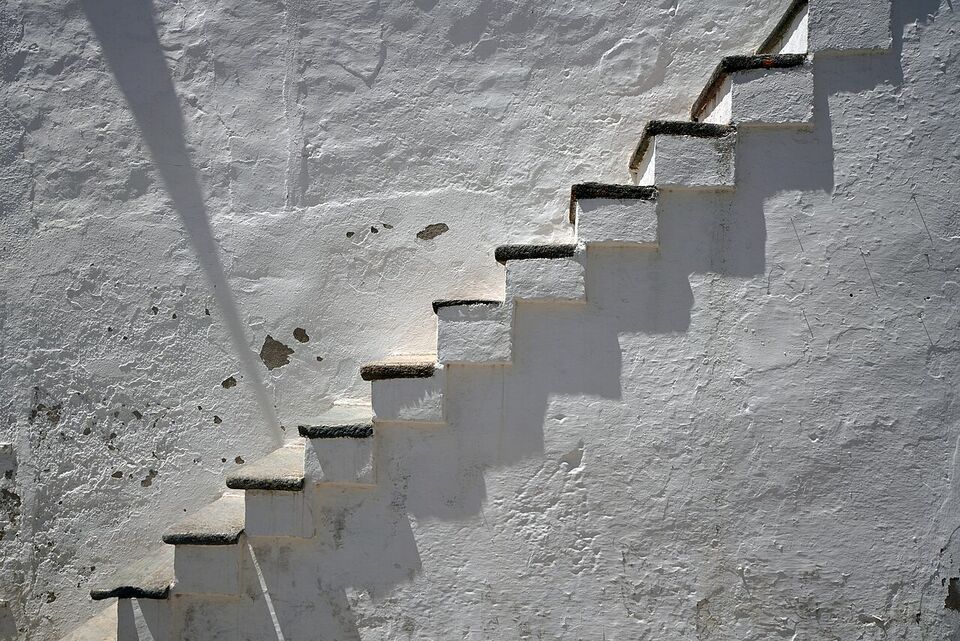
The arcaded square is the social center, with cafes and shops. Behind it, whitewashed streets lead to small craft and food shops. Look for cork products and local cheese, both of which make good gifts.
Watch out
Check the Chapel of Bones hours before you plan the day. Some attractions in Portuguese towns close for lunch, on one weekday, or on holidays such as December 25 and January 1. If the schedule is tight, buy tickets online where an official site allows it.
How long to stay
A day trip works if you accept the trade-off: the train or bus eats about three to four hours of your day, and you see the town at its busiest. One night lets you see the Roman temple under lights, eat a slow dinner and start the next morning with the town to yourself. Two or three nights make sense if you add a car and the villages.
- One day
The essential Évora
Take an early train or bus. Walk to the Roman temple, then the cathedral, then the Chapel of Bones before the midday crowds. Lunch on the Praça do Giraldo side streets, walk the walls in the afternoon, and take a late train or bus back. Check the last departure first.
- One night
Add the evening and the university
Arrive by noon, see the main sights at an easy pace, and stay for sunset around the temple. Have dinner at a restaurant serving Alentejo dishes, and in the morning visit the university before you leave.
- Three nights
Évora plus a car loop
Base yourself in Évora, and use a rental car for a day to the stone circles and Monsaraz, and a second day to Estremoz and Vila Viçosa. Keep an evening free for a dark-sky session if your dates allow.
The wider Alentejo
The region covers about a third of mainland Portugal, so it is best to pick two or three places rather than try to see everything. The landscape is rolling plain, cork oak woodland, wheat fields, olive groves and vineyards, with hill villages rising from it. It is also much less crowded than the coast.
Monsaraz and the Alqueva reservoir
Monsaraz is a small walled village on a hilltop, with a castle, cobbled lanes and a view over the Alqueva reservoir. The reservoir, filled after a dam was completed in the early 2000s, is often described as the largest artificial lake in Western Europe. Monsaraz is about 35 miles (55 km) from Évora, or roughly 45 minutes to an hour by car. There is no practical train link, so a car or a tour is the sensible choice. Visit early or late to avoid the tour groups.
Estremoz, Vila Viçosa and the marble towns
This part of the Alentejo is one of the world's major sources of marble, and the stone shows up in doorsteps, fountains and pavements. Estremoz has an upper castle town and a lower market square; the long-running Saturday market is worth planning around, but confirm it locally. Vila Viçosa has a large ducal palace connected to the House of Braganza, the royal family that ruled Portugal until 1910. Both are about 28 to 35 miles (45 to 55 km) from Évora. Nearby Borba is also known for its wine cooperative.
Elvas and Marvão
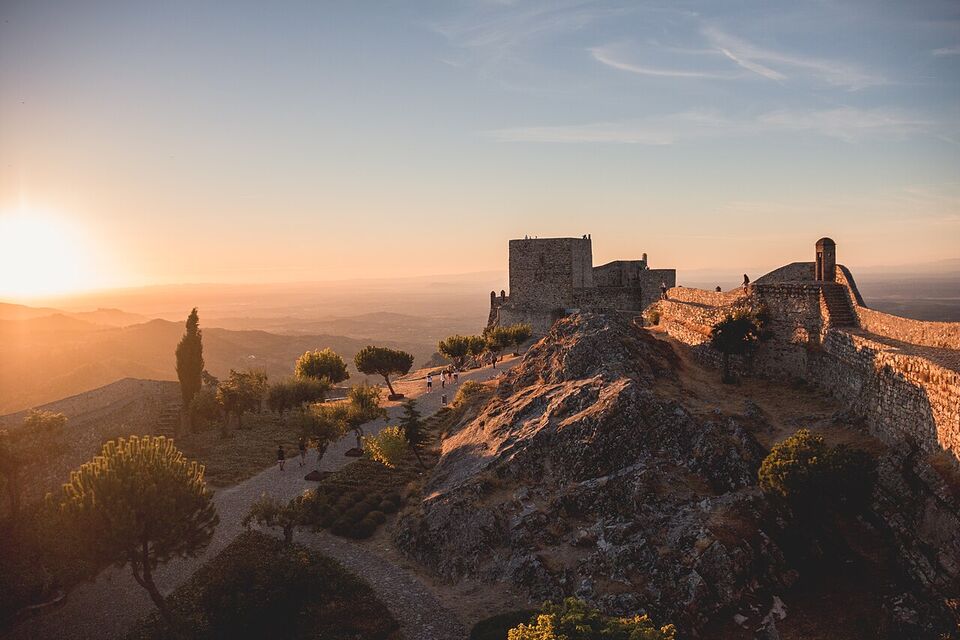
Elvas, near the Spanish border, is a fortified town with star-shaped defenses that are also on the UNESCO list. Marvão, further north in the Serra de São Mamede, sits on a granite ridge at roughly 2,800 ft (860 m), with a castle and long views into Spain. Marvão is a long drive from Évora (about 95 miles or 150 km), so it fits better as a stop on a route toward Spain or the Beiras than as a day trip.
Cork oaks and olive groves
Portugal is the world's leading producer of cork, and the Alentejo is where you see it. The cork oak (sobreiro) is stripped of bark by hand, roughly every nine years, and the harvested trees carry a painted number showing the year. The open woodland, known as montado, is also where black Iberian pigs forage on acorns. Olive groves cover large areas, and many estates offer tours and tastings of olive oil. These are best booked ahead.
Megaliths
The Alentejo has some of the oldest monuments in Western Europe. The Almendres Cromlech, west of Évora, is a group of upright stones in a field of cork oaks, set up in the Neolithic period, thousands of years before the Roman temple. The access road is partly unpaved, and signposting is basic, so use a map and a car. Go in the morning or late afternoon for the best light. Other dolmens (antas) are scattered through the countryside; the Évora tourist office can point you to them.
Stargazing at Alqueva
The Alqueva region has very little light pollution, and it has been promoted as a dark-sky destination for years. Operators run guided evening sessions with telescopes and explanations of the constellations. We could not verify current tour dates, prices or the official status of the dark-sky designation for 2026-27, so check with the operator and the regional tourism board before you plan around it.
Insider tip
Pick your dates around the moon. A new moon gives the darkest sky, and a full moon washes out the stars. Bring warm layers, because nights on open ground can feel cold even after a hot day. Cloud can cancel a session, so build in a spare evening.
The Alentejo coast and the Vicentine Coast
The Atlantic side of the Alentejo is a long stretch of cliffs, dunes and wide beaches with few big resorts. Towns such as Vila Nova de Milfontes, Porto Covo and Zambujeira do Mar are small seaside villages with fish restaurants, and the coast is part of the Vicentine Coast Natural Park. Hiking trails run along the cliffs, and the Rota Vicentina network is the best known. See our Lagos and West Algarve page for the southern end of the trails, and our beaches page for sea conditions and safety.
The water here is Atlantic and cold, with strong swell and rip currents, so it suits walkers and surfers more than casual swimmers. Distances from Évora are about 85 to 90 miles (135 to 145 km), which is one to two hours of driving. A day trip is possible, but a night on the coast is more relaxing. Buses to the coastal villages run less often than in the Algarve, so a car again helps.
Why a car helps, and driving distances
Évora can be done without a car. The rest of the Alentejo cannot, unless you join tours. Public buses to villages are limited, and taxis are expensive over distance. A rental car lets you set your own pace, stop at a winery or a roadside cafe, and reach the stone circles. It is also easy driving by Portuguese standards: wide, quiet roads and few traffic jams.
Fuel prices were high in November 2026. Mainland averages on November 9 were about €1.92 a liter for gasoline (about $8.15 a US gallon) and about €2.14 a liter for diesel (about $9.05 a gallon), so diesel cost more than gasoline then. Check prices at the pump. Speed limits for cars are 50 km/h (31 mph) in towns, 90 km/h (56 mph) on other roads, 100 km/h (62 mph) on expressways and 120 km/h (75 mph) on motorways.
| Destination | Distance | Typical drive |
|---|---|---|
| Lisbon | About 85 miles (135 km) | About 1.5 hours |
| Estremoz | About 28 miles (45 km) | About 40 minutes |
| Monsaraz | About 35 miles (55 km) | 45 to 60 minutes |
| Elvas | About 60 miles (95 km) | About 1 hour |
| Marvão | About 95 miles (150 km) | About 1.75 hours |
| Vila Nova de Milfontes (coast) | About 85 to 90 miles (135 to 145 km) | 1.5 to 2 hours |
Save money
Rent the car only for the days you leave Évora, and pick it up on the way out of Lisbon if you are arriving by train from the airport. Many drivers also save by choosing a small gasoline model, since diesel cost more than gasoline in November 2026. Ask about the daily toll-device fee before you book.
Summer heat and the best seasons
The Alentejo has hot, dry summers. We did not have a local climate table for Évora, but for comparison Lisbon's average July high is 83°F (28°C), and inland towns run hotter than that. Afternoons above 95°F (35°C) are common in July and August, and shade is scarce in the countryside. Sightseeing is best in the morning and the evening, with a long lunch in between.
Spring (March to May) brings green fields and wildflowers, and autumn (October and November) is comfortable, with the grape harvest and the first rains. Winter is mild by American standards, but it can be wet and chilly, and some rural places close. Storm Charles disrupted parts of Portugal around November 11, 2026, so check the IPMA weather warnings (ipma.pt) before driving. In dry months, the risk of wildfire is real: follow local rules about fires and cigarettes, and check IPMA's daily fire-danger map.
For a month-by-month view of weather across the country, see When to Go to Portugal.
Wine and food
Wine
The Alentejo is one of Portugal's largest wine regions, and its eight sub-regions (including Borba, Évora, Portalegre, Redondo, Reguengos and Vidigueira) share a warm climate that produces ripe, soft reds and fuller whites. Look for local grapes such as Aragonez and Trincadeira on labels. In some villages, wines are still made in clay amphorae (talha), a tradition that goes back to Roman times. See our wine guide for more.
Many wineries take visitors by appointment only. Book ahead and ask whether a tasting includes a meal. Arrange a driver or a guide if you plan to taste at several estates, since police do check drivers.
Food
Alentejo cooking is hearty and simple. Typical dishes include açorda (a bread soup with garlic, coriander and a poached egg), migas (fried bread and pork), lamb stews and carne de porco à alentejana, pork with clams. The pork often comes from the black Iberian pig. Sheep's milk cheeses, olive oil and bread are staples, and sweets use eggs and almonds. Elvas is known for preserved plums.
At the table, you will probably find bread, olives, butter and cheese before you order. This is the couvert. It is charged only if you eat it, and you can send it back or ask the price. See our food guide for more on how to order and what to try.
Different from home
Lunch is the main meal and usually runs from noon to about 2 p.m., often longer. Dinner starts later than in the US, often after 7:30 p.m. In small towns, kitchens may close between meals, so plan a late lunch rather than a snack at 4 p.m.
Towns at a glance
| Town | Effort from Évora | Best for |
|---|---|---|
| Évora | Base; walkable | Roman temple, cathedral, Chapel of Bones, university |
| Arraiolos | Easy by car (about 20 miles or 30 km) | Hand-stitched carpets, a quiet village |
| Estremoz | Easy by car, bus possible | Marble, the market, the upper castle |
| Vila Viçosa | Moderate by car | The ducal palace and marble quarries |
| Monsaraz | Moderate; car or tour | Walled village, lake views, stargazing |
| Elvas | Moderate by car | Fortifications, aqueduct, plums |
| Marvão | Long drive | Hilltop castle, mountain views, hiking |
| Vila Nova de Milfontes | Long drive | Atlantic beaches, fish, coastal trails |
Where to stay and what it costs
Évora has hotels inside the walls, guesthouses in restored houses and farm stays (turismo rural) in the countryside. We have no regional price data for 2026, so use tiers: a double in a simple guesthouse is typically $, a well-located town hotel $$, and a luxury estate or converted palace $$$. Rates rise on holiday weekends and during festivals, so book early for spring.
Évora's municipal website lists a municipal tourist tax, but we did not find the rate. Ask your lodging, since many towns charge a small amount per person per night. See our where to stay page for how to choose.
What to confirm before you go
- Chapel of Bones opening hours, last entry and ticket price on the official page for the Church of São Francisco.
- Cathedral and cloister ticket options, and whether the roof terrace is open.
- Train and bus times on cp.pt and the bus operators, including the last return departure.
- Dark-sky tour dates, price and cancellation policy with the operator.
- Winery and olive-oil tasting reservations, since many require an appointment.
- Weather and fire-danger warnings on ipma.pt before driving or hiking.
- Whether your travel dates overlap a holiday: December 25, January 1 and other public holidays reduce opening hours.
For help combining Évora with other regions, see our regions overview and the trip-planning guide. If you are heading south next, our Algarve guide covers the coast.
Add it to a route in the trip builder, or ask us to plan the hotels, trains and guides for you.