Overview: how to see Greece's ancient sites without wasting a day
Greece has hundreds of archaeological sites and museums run by the Ministry of Culture, and a first-time visitor can see the big names in about a week. The Acropolis, Delphi, Olympia, Mycenae, Epidaurus and Knossos each deserve half a day or more, and most of them are easier in the first hours after opening, before the heat and the tour buses arrive.
Prices rose in April 2025 and the system changed. Each site now sits in a price tier set by visitor numbers, the Acropolis is the single most expensive at €30 (about $34), and the old combined ticket for Athens was abolished. That means a week of sightseeing costs more than older blogs suggest, so budget for each site separately. Our budget guide has the larger picture.
This page covers the major sites, their tickets and hours, the free days, how to buy tickets safely, guides, heat, accessibility and a seven-day route. For Athens in detail, see Athens Sights and Acropolis Tickets; for the mainland sites in more depth, see The Peloponnese and Delphi and Meteora.
Major sites at a glance: tickets and hours
The table lists the sites most visitors plan around. Prices are full adult tickets as of November 2026 and are shown in euros with a dollar figure at €1 = US$1.12. Hours change with the season and with ministry circulars, so treat them as a guide and confirm on hh.gr (the official site pages) before you go. The general pattern is a winter schedule from November 1 to March 31, with open-air sites closing early in the afternoon, and a long summer day from April.
| Site | Ticket | Winter hours | Summer hours | Notes |
|---|---|---|---|---|
| Acropolis, Athens | €30 (about $34) | 8 a.m. to 5 p.m. | 8 a.m. to 8 p.m., earlier closing in September and October | Timed one-hour slots. Closed Jan 1, Mar 25, May 1, Orthodox Easter Sunday, Dec 25-26 |
| Ancient Agora, Athens | €20 (about $22) | 8 a.m. to 5 p.m. | 8 a.m. to 8 p.m. | Includes the museum in the Stoa of Attalos (opens at 10 a.m. on Tuesdays). Shade from trees |
| Delphi (site and museum) | €20 (about $22) | 8:30 a.m. to 3:30 p.m. | 8 a.m. to 8 p.m. April to August, earlier closing in September and October | Last entry 20 minutes before closing. One ticket covers both; the museum page lists shorter Tuesday hours in summer |
| Olympia | €20 (about $22) | 8:30 a.m. to 3:30 p.m. | 8 a.m. to 8 p.m. April to August, earlier closing in September and October | One ticket covers the site and both museums (archaeological and Olympic Games); allow 3 hours |
| Mycenae | €20 (about $22) | 8:30 a.m. to 3:30 p.m. | 8 a.m. to 7 p.m. in April, 8 a.m. to 8 p.m. May to August, earlier closing in September and October | Ticket also covers the museum and the Tomb of Atreus; buy online in busy months |
| Epidaurus | €20 (about $22) | 8 a.m. to 5 p.m. (November to February), 8 a.m. to 6 p.m. in March | 8 a.m. to 7 p.m. in April, 8 a.m. to 8 p.m. May to August, earlier closing in September and October | The theater is the highlight; festival evenings run separately |
| Knossos, Crete | €20 (about $22) | 8 a.m. to 5 p.m. | 8 a.m. to 8 p.m. April to August, earlier closing in September and October | Heavily visited; arrive at opening |
| Delos | €20 (about $22) | 8 a.m. to 4 p.m. in November; closed December 1 to March 31 | 8 a.m. to 8 p.m. April to August, earlier closing in September and October | Boat from Mykonos is a separate ticket; wind can cancel sailings |
| Akrotiri, Santorini | €20 (about $22) | 8:30 a.m. to 3:30 p.m., closed Tuesdays | 8 a.m. to 8 p.m. April to August (8:30 a.m. to 3:30 p.m. on Mondays and Thursdays), earlier closing in September and October | Covered site, so useful in sun and rain |
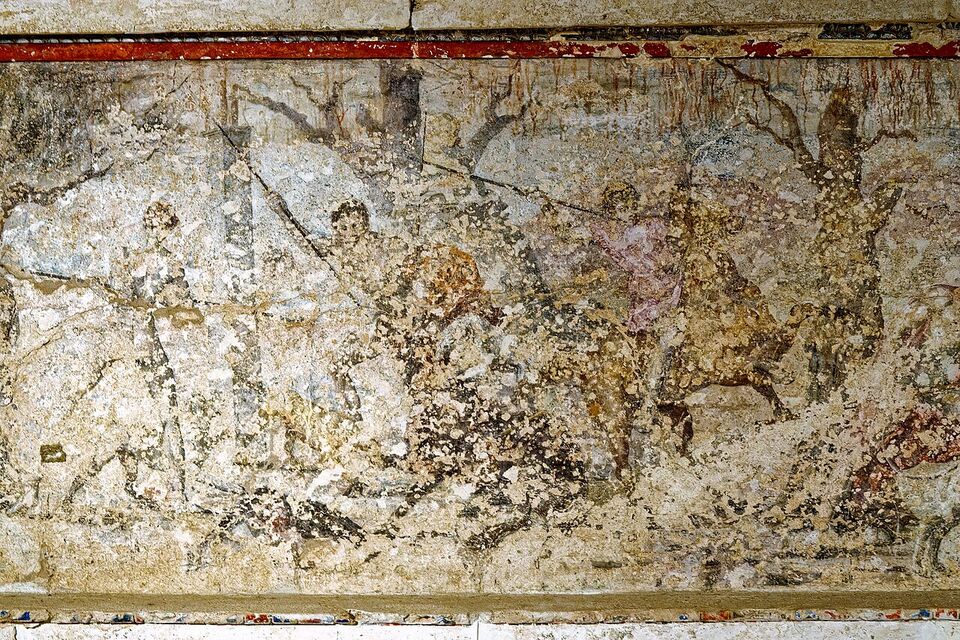
| Vergina (Aigai) | €20 (about $22) | 9 a.m. to 5 p.m., closed Tuesdays | 8 a.m. to 8 p.m. April to August (Tuesdays from noon), earlier closing in September and October | Royal tombs sit inside a museum under a mound |
| Lindos Acropolis, Rhodes | €20 (about $22) | 8:30 a.m. to 3:30 p.m., closed Tuesdays | 8 a.m. to 8 p.m. April to August, earlier closing in September and October | A steep climb; very hot in summer afternoons |
| Mystras | €20 (about $22) | 8:30 a.m. to 3:30 p.m. | 8 a.m. to 8 p.m. April to August, earlier closing in September and October | Hillside Byzantine town; two entrances, many steps; the Palace opens at 11 a.m. on Tuesdays in summer |
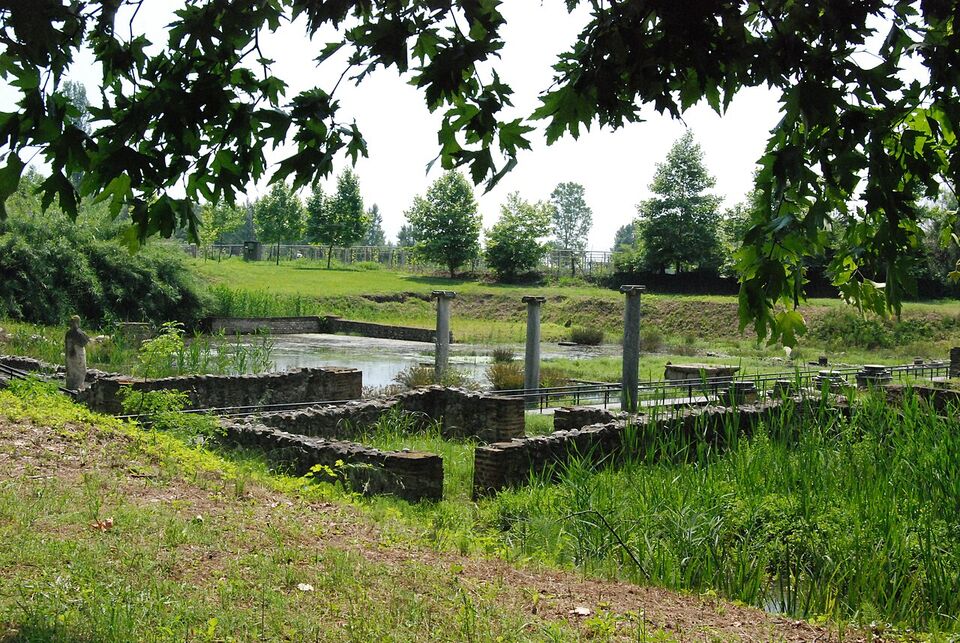
| Dion | €10 (about $11) | 8:30 a.m. to 3:30 p.m., closed Tuesdays and Wednesdays | 8 a.m. to 8 p.m. April to August (Tuesdays 8:30 a.m. to 3:30 p.m.), earlier closing in September and October | Near Mount Olympus; flat, with a small museum |
The Acropolis Museum in Athens has its own pricing as a separate institution: about €20 (about $22), with reduced tickets around half that, so check the museum site. The National Archaeological Museum is €20 (about $22) as of 2026 (winter hours 8:30 a.m. to 3:30 p.m., Tuesdays 1 p.m. to 8 p.m.). Kerameikos in Athens is €10 (about $11), with winter hours of 8 a.m. to 3 p.m. Other Athens sites, such as the Temple of Olympian Zeus (€20) and the Roman Agora (€10), also close at 3 p.m. in winter.
Watch out
Hours posted by the Ministry can change for strikes, repairs and local holidays, and last entry is usually 20 minutes before closing. If you are driving a long way to Mycenae, Olympia or Epidaurus, check that morning's hours first on the official page, and do not plan to arrive in the last hour of the day.
Buying tickets: tickets.hh.gr and why to avoid resellers
The official ticket store is Hellenic Heritage's ticket site, tickets.hh.gr, run for the Ministry of Culture; site details (prices, hours, access) are on hh.gr. You choose the site, the date and, at the Acropolis, a one-hour entry slot, then pay by card and receive a QR code on your phone. For the most popular sites it is the only way to be sure of a time.
- Type tickets.hh.gr yourself rather than clicking an ad; search results often show resellers first.
- Resellers and tour sites sell the same ticket at a mark-up, sometimes bundled with a guide, so compare against the €30 (about $34) face price at the Acropolis before paying.
- Acropolis tickets are non-refundable, though you can change the slot online a limited number of times, so book only when your dates are firm.
- Screenshot the QR code; mobile signal on a hill is not guaranteed.
- Photo ID matters for reduced and free categories. Under-18 visitors of all nationalities enter the Acropolis free; EU citizens under 25 also enter free.
Outside Athens, you can still buy at the gate for most sites. The advantage of buying online is skipping the ticket queue, which can be long at Knossos and Mycenae on summer mornings and cruise days. Slots for summer 2027 had not yet been released in November 2026, so look again in the spring.
Different from home
In the US, a national park pass covers a whole park for a week. Greek sites are the opposite: each site is a separate ticket, and in Athens the old combined ticket is gone. Add up your list before you arrive.
Free days and discounts
State sites and museums run by the Ministry are free on a handful of days a year: March 6, April 18, May 18, the last weekend of September, October 28 (Ochi Day), and the first and third Sunday of each month from November through March. The upcoming free Sundays are November 15, December 6 and December 20, 2026, and January 3 and 17, February 7 and 21, and March 7 and 21, 2027. The White Tower in Thessaloniki is an exception: its page lists the yearly free days but not the winter Sundays.
The Acropolis Museum is not covered by these rules; it has its own free days, so check its website. The Acropolis is extremely crowded on free days because everyone has the same idea, and you cannot reserve a slot in the usual way, so we suggest paying on a normal day and going at opening time.
Reduced tickets of about half price apply to some groups, such as EU citizens over 65 (seasonally at the Acropolis), and students from EU countries. Americans over 65 generally do not qualify, so assume full price. Under-18 visitors of every nationality enter free at the Acropolis, which is a real saving for families.
Beating the heat
July and August are the hardest months to see open-air ruins. Athens averages around 94°F (34°C) in July and August highs, and heat waves push it to 104°F (40°C) or more. The ground reflects the sun, there is almost no shade at the Acropolis, Olympia or Mycenae, and many people feel unwell by late morning.
- Go early. Book the first Acropolis slot (8 a.m.) or arrive when Olympia or Delphi opens.
- Plan museums for midday. The Acropolis Museum, the National Archaeological Museum and the Delphi museum are air-conditioned.
- Carry water. At least one liter per person for a short visit; do not count on finding refills on the rock.
- Cover up. A hat, sunscreen and sunglasses matter more than fashion. Flat shoes with grip are essential, because marble is slippery when polished.
- Expect closures. During extreme heat the Ministry closes outdoor archaeological sites in the middle of the day, typically from noon to 5 p.m., so a booked slot can be affected. Watch hotel and ministry notices.
Spring (April to early June) and autumn (late September to October) are the most comfortable seasons for a history trip. Winter is quiet and cheap but has short days and a real chance of rain at Delphi and Olympia. See When to Go to Greece for the month-by-month picture and Health and Medical Care for heat illness basics.
Insider tip
Late afternoon works too in summer. Many sites close at 8 p.m., the light is better for photos and the tour groups have gone, but only if you start after the worst heat, around 5 p.m., and the site is open that late.
Guides, audio tours and learning on site
Greek law restricts who can lead groups inside archaeological sites: only licensed guides are allowed to give guided tours within the sites. Touts offering "official guides" at the gate are common at the Acropolis and Knossos, and the safest approach is to book a guide in advance through a licensed agency, or skip a guide.
A private guide for a half day at the Acropolis and its museum typically costs a few hundred euros, split among the group, so it can be good value for families. Small-group tours are cheaper per person but fix your schedule. Check what the price covers, because entry tickets are often extra.
Do-it-yourself options are good in Greece. Site signs are in Greek and English, museum labels are detailed, and audio guides or phone apps are available at many sites. If you plan to read before you go, a short book on Greek mythology and one on the Peloponnesian War will make a Mycenae or Athens visit far more meaningful.
Respect the rules at the sites: do not climb on monuments, do not take a stone, shard or any piece of marble from a site or a protected beach, and follow whistles from guards. Removing antiquities is a criminal offense, and fines can be large. See Greek Etiquette for more on conduct.
Accessibility at ancient sites
Ancient sites are rough, steep and uneven by nature, but access has improved. The Acropolis has a lift on the north side for visitors with mobility needs, wheelchair-accessible north and south slope routes (with an attendant's help) and a separate accessible entrance; ask the staff at the gate or contact the site in advance, and bring a companion because the final stretch on the rock is still rough. The Acropolis Museum is fully accessible and a good alternative for anyone who cannot climb.
Other sites vary: Delphi has a steep path to the stadium, Mycenae involves a climb to the citadel, Lindos has a long staircase and Mystras is a hillside with many steps. Flat sites such as Dion, Olympia's lower grounds and much of the Ancient Agora are easier, though paving is uneven. Most museums have step-free entrances and lifts.
If you use a wheelchair, call or email the site before you go to ask about the day's arrangements, and consider a car with a driver for the mainland route. For wider guidance, see Greece by Interest.
A seven-day history route
This route links Athens with the main mainland sites by rental car, and you can do it by bus with more time. It adds up to roughly 450 miles (720 km) of driving in total, mostly on good motorways, with a long day on the road between Olympia and Delphi. For driving rules, see Driving in Greece.
- Day 1
Acropolis and Acropolis Museum
Book the 8 a.m. Acropolis slot, then walk down to the Acropolis Museum for lunch and the galleries. Spend the evening in the Plaka. See Acropolis Tickets.
- Day 2
Ancient Agora and the National Archaeological Museum
The Agora in the morning (including the Temple of Hephaestus and the reconstructed stoa), then the National Archaeological Museum, which holds the gold from Mycenae and the Antikythera mechanism.
- Day 3
Mycenae, Epidaurus and Nafplio
Drive or take a bus to the Peloponnese. See Mycenae's Lion Gate and royal graves first, then the theater at Epidaurus, and end in Nafplio for the night.
- Day 4
Nafplio to Olympia
A drive of several hours west across the Peloponnese. Arrive in time to see the museum, which closes early in winter.
- Day 5
Olympia in the morning, then to Delphi
Walk the stadium and temple of Zeus at opening, then drive north and cross the Rio-Antirrio bridge. This is a long day, so you can also sleep near Patras.
- Day 6
Delphi
Climb the Sacred Way to the temple of Apollo, then the theater and the stadium, and finish in the museum with the bronze Charioteer. See Delphi and Meteora.
- Day 7
Back to Athens or onward
Drive back to Athens (about 2.5 to 3 hours), or fly to Crete for Knossos on the next day. If you have a spare day, Cape Sounion's Temple of Poseidon is a half-day trip; see Day Trips from Athens.
Add Crete and Knossos for the Minoans, or Delos from Mykonos, if you have more time. The northern sites of Vergina and Dion fit into a separate route from Thessaloniki; see Thessaloniki and Northern Greece.
Mythology for kids
Children often enjoy ancient sites more when they know the stories. A few that connect to places you will actually stand in:
Athena and Poseidon
The two gods competed to be the city's patron. Poseidon struck the rock and made a spring; Athena gave an olive tree and won. The Erechtheion on the Acropolis is tied to this tale, and an olive tree grows near it today.
The Minotaur
King Minos kept a half-bull monster in a labyrinth, until the hero Theseus found his way in with a thread from Ariadne. The sprawling palace at Knossos may have inspired the labyrinth myth.
The first Olympic Games
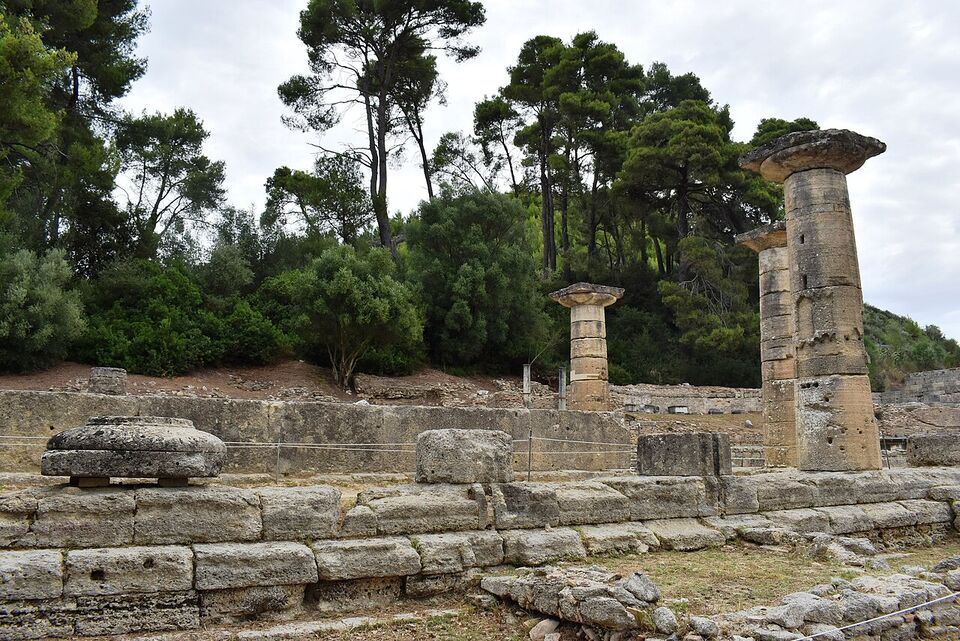
Athletes competed here in honor of Zeus from 776 BC. Kids can run the length of the ancient stadium, about 630 feet (192 m), which is a reliable favorite.
The Oracle of Delphi
People traveled here to ask Apollo's priestess about the future. Her answers were famously vague, which makes a good conversation starter for older kids.
Agamemnon's gold
Agamemnon led the Greeks to Troy, and the gold masks found in the royal graves at Mycenae are in the National Archaeological Museum. The Lion Gate is among the oldest monumental sculptures in Europe.
Apollo and Artemis
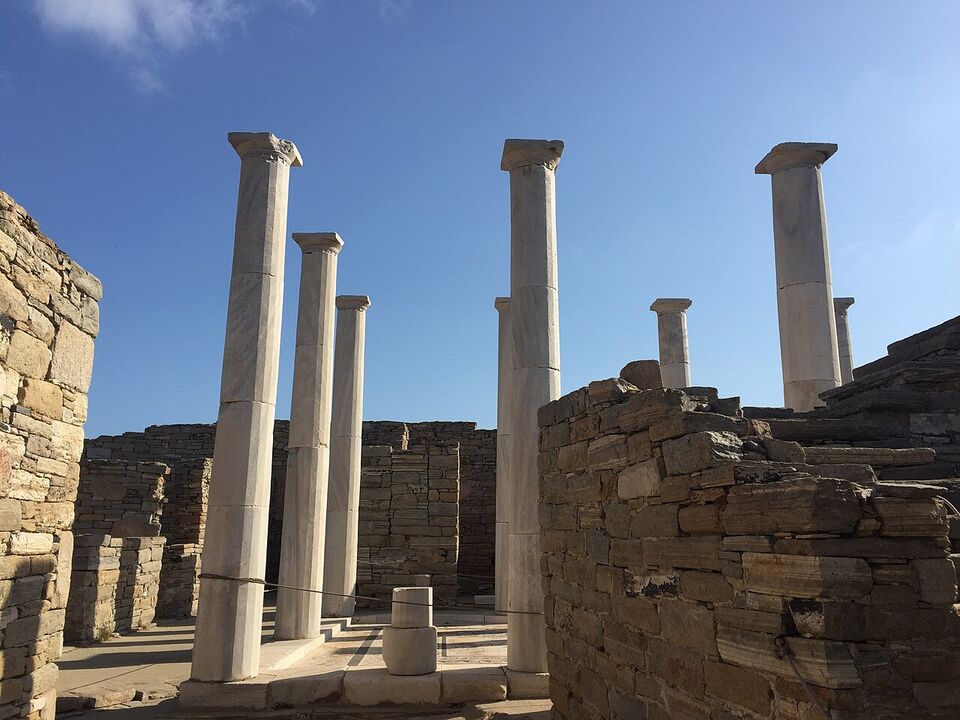
The twin gods were said to be born on this tiny island. Today it is an open-air ruin of mosaics and marble lions, reached by boat from Mykonos.
A picture book of Greek myths for the plane and a scavenger hunt (find an owl, a lion, a column) keep younger children moving. For more on trips with children, see Greece by Interest.
Museums: when to go and what to expect
Museums are the best use of the hottest hours, and several are worth a visit even if you skip the sites. The Acropolis Museum shows the sculptures of the Parthenon and is built over an excavated ancient neighborhood you can see through glass floors. The National Archaeological Museum has the largest collection in Greece. The Heraklion Archaeological Museum on Crete holds the finds from Knossos and is best seen before the palace, since it explains what the ruins were; in winter (November 1 to March 31) it is open 8:30 a.m. to 3:30 p.m., except Wednesdays, when it opens 10 a.m. to 5 p.m.; the adult ticket is €20 and the reduced ticket €12.
Many museums close one day a week, and winter hours run to mid-afternoon. Allow two to three hours for the big ones, and book Acropolis Museum tickets online if you want a fixed time. Photography without flash is generally allowed, but tripods and drones are not.
Save money
If your trip includes several sites, cluster them on free Sundays between November and March, or travel off-season when prices are the same but crowds are far smaller. Under-18s are free at the Acropolis, so families should check each site's rules for children before buying.
Add it to a route in the trip builder, or ask us to plan the hotels, trains and guides for you.