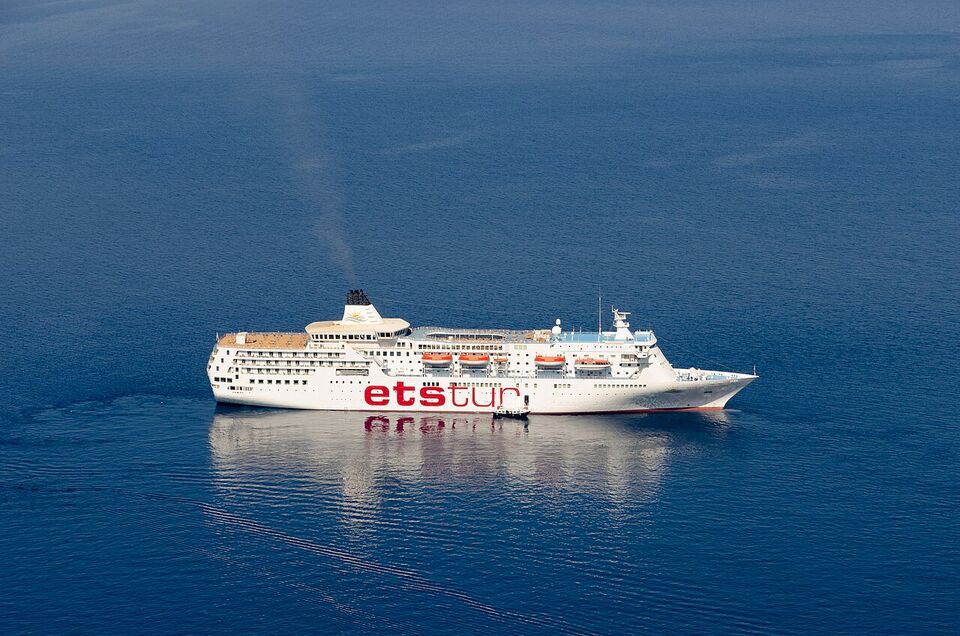
Overview: what a Greek island cruise is like
A cruise gives you a quick taste of several islands with one hotel room that moves. Typical seven-night Greek itineraries start and end at Piraeus (Athens), the main cruise port, and call at four to six places, such as Mykonos, Santorini, Rhodes, Crete and Corfu. At each port you often have six to ten hours ashore, which is enough for a walk through a town or one major site, but not enough for a beach day plus sightseeing.
The trade-off is simple: cruises solve ferry logistics and hotel changes, but they bring you to the most popular places at the busiest times, with thousands of other passengers. If you want depth, an independent trip with ferries gives more time on each island. See Greek Ferries and Island Hopping and Plan Your Trip to Greece for the alternative.
Big ships, small ships and yachts
| Type | Typical size | Good for | Trade-offs |
|---|---|---|---|
| Big ships | Thousands of passengers | Families, entertainment, lowest price per day | Tenders at Santorini, crowded ports, short time ashore |
| Small ships | Up to a few hundred passengers | Smaller ports, more relaxed pace, longer calls | Higher price, fewer facilities |
| Sailing yachts and gulets | Roughly 8 to 50 guests, with crew | Swimming stops, small harbors, private groups | No stabilizers, basic cabins, wind can change plans |
Big ships suit travelers who want ship amenities and a single price. Small ships can enter ports that large ships cannot, and some stay late or overnight in a port, which makes an evening in town possible. Yachts and gulets (traditional wooden boats, more common in Turkey but chartered in Greece too) are rented by the cabin or the whole boat, usually from May to October, with swimming and meals on board.
Ask exactly what is included on any ship: drinks, port fees, tips and excursions are often extra. For sailing as a skill rather than a vacation, see Hiking, Sailing and the Outdoors.
The cruise passenger fee
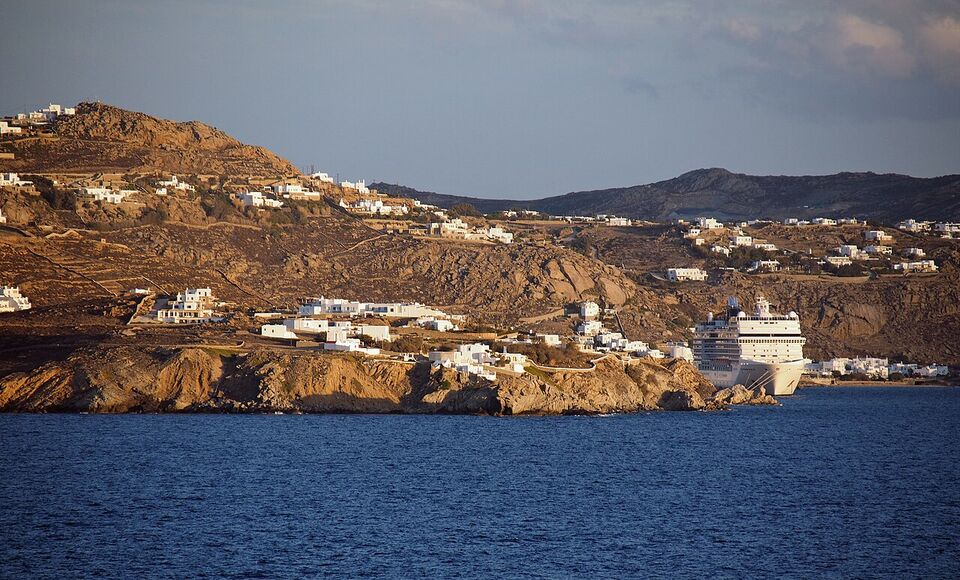
Since July 2025 Greece charges a fee per passenger for each port where you go ashore. It is added to your onboard account by the cruise line, so look for it on your bill. Santorini and Mykonos have higher rates than other ports, and rates change by season.
| Period | Santorini and Mykonos | All other Greek ports |
|---|---|---|
| June to September | €20 (about $22) | €5 (about $6) |
| April, May and October | €12 (about $13) | €3 (about $3.40) |
| November to March | €4 (about $4.50) | €1 (about $1.12) |
For a seven-night summer cruise with two calls at the top-tier islands and three at other ports, the fee adds up to about €55 (about $62) per person. Some lines include the fee in the fare and others bill it separately, so check your booking terms. Your cruise line's fee page has the final word on its billing.
Watch out
The fee applies each time you disembark in a port. If you stay on the ship you avoid the charge. Ask your cruise line how it handles passengers who skip a port, and read your final bill before you leave the ship.
Port by port: what to do in a day
Piraeus (Athens)
Most cruises begin or end here. For the Acropolis, take the metro or a taxi toward the center; book a timed Acropolis slot online first (€30, about $34). If you arrive early, store luggage on the ship and plan for traffic on the way back. See Athens.
Santorini
Passengers go ashore by small boat. Oia has the famous views; Fira is closer to the landing. A stop here is best used on a morning walk and lunch, not a beach day. See Santorini.
Mykonos
The white town, the windmills and Little Venice are within walking distance of the harbor area. Beach clubs are a taxi ride away. Delos needs a separate boat trip and does not fit most port calls. See Mykonos.
Rhodes
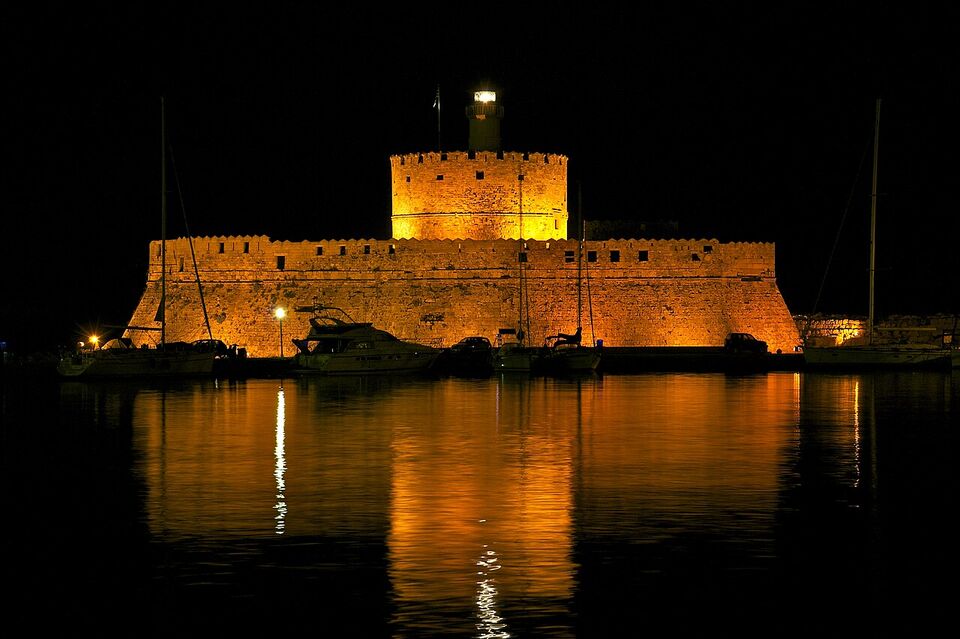
The medieval Old Town and the Palace of the Grand Master are close to the harbor. Lindos, with its hilltop acropolis, is a half-day trip by excursion or taxi. See Rhodes and the Dodecanese.
Corfu
The Venetian old town and fortresses are a short walk from the port. It rains more than most Greek islands, so bring a light jacket in spring and autumn. See Corfu and the Ionian Islands.
Katakolo
This small port is the usual stop for Ancient Olympia, roughly an hour away by road. An excursion or a pre-booked taxi is the practical choice; check the return time against the ship's departure. Olympia costs €20 (about $22).
Heraklion
Knossos is a short drive from the port, about 3 miles (5 km), and costs €20 (about $22). The archaeological museum in town complements it. Arrive at opening to avoid crowds.
Nafplio
A compact seaside old town with a fortress above. Small ships call here, and from the port Mycenae and Epidaurus are possible excursions. See The Peloponnese.
Santorini: tenders, the cable car and the queues
Santorini is the port that most surprises cruise passengers. Ships do not dock; they anchor in the caldera and passengers go ashore by tender. In mid-2026 the Municipal Port Fund of Thira cut the share of passengers allowed to land at the ferry port of Athinios from 40 to 30 percent, so most passengers now land at the old port below Fira. From there you reach town by the cable car, by walking up about 600 steps, or by donkey.
The cable car fare was €10 (about $11) one way for adults in 2025; confirm the current fare. Queues can last an hour or more when several ships are in, usually between mid-morning and early afternoon. Walking up is hot and steep, and the steps are shared with donkeys.
The island limits cruise arrivals to 8,000 passengers a day in 2026, with each ship counted by its full berth capacity. That helps on peak days, but it still means thousands of people. Your ship's tender schedule decides your time ashore; if you want Oia at sunset, a cruise day will not give it to you. See Santorini for the island overnight.
Insider tip
Take the first tender of the day if the ship allows it, or go late in the afternoon when many passengers are returning. Buy the cable car ticket on the spot and keep a small amount of cash. Check the schedule of other ships calling that day; some cruise tracking sites list them.
Shore excursions or doing it yourself
Shore excursions from the ship cost more, often several times the price of a taxi share, but the ship will wait for a late excursion bus. That peace of mind matters at distant sites such as Olympia from Katakolo, Knossos from Heraklion or Mycenae from Nafplio. In walkable ports like Rhodes, Corfu, Mykonos and Nafplio, independent exploring is easy and cheaper.
- Return to the ship at least an hour before departure, and ideally earlier at tender ports.
- Carry your ship card, a copy of your passport and some cash for cafes and small shops.
- Book private tours with a licensed guide and a clear time limit; the ship will not wait for private tours.
- Pre-book your Acropolis ticket on tickets.hh.gr if you arrive in Athens, and keep the QR code on your phone.
- Remember the Entry/Exit System at the first Schengen port of entry. See Entry Requirements for Americans.
Best months and crowd days
The cruise season runs from about April to October. May, June, September and October give the best balance of warm weather and manageable crowds. July and August are hottest, with peak fees at Santorini and Mykonos, and August has the busiest ports. Winter cruises are rare, and many shops and restaurants close from November, though the lower fees apply.
Crowd days depend on how many ships call. Ports can be nearly empty on one day and overwhelmed on the next. Look at published port calendars for your date, and choose an itinerary with fewer simultaneous calls if you can. For seasonal weather see When to Go to Greece.
Choosing an itinerary and booking
Itineraries look similar on paper, so compare the details that change your day. Count the number of ports against sea days, because a cruise with six ports in seven nights leaves little time to rest. Look at the hours in each port: a ship that arrives at 7 a.m. and leaves at 5 p.m. gives far more time than one that arrives at noon. Overnight calls, offered by some small-ship lines, let you eat dinner ashore and see the towns after the day-trippers leave.
Check whether the cruise starts or ends in Athens. Many American travelers add two or three nights in Athens before the ship, which takes care of jet lag and lets you see the Acropolis without a time limit. Flights from the US are covered on Flights to Greece, and the passport and entry rules are on Entry Requirements for Americans. Remember that Greece uses the euro and that cards are widely accepted, though a little cash helps at small kiosks.
Travel insurance that covers missed ship departures and medical evacuation is worth considering. The State Department strongly recommends medical evacuation cover for Greece, and island clinics are limited. See Health and Medical Care.
Add it to a route in the trip builder, or ask us to plan the hotels, trains and guides for you.