Athens beyond the Acropolis
The Acropolis is the reason most people come to Athens, but it takes only a morning. The rest of the city is a layered set of sights: a classical marketplace, Roman ruins, the best collection of Greek antiquities in the world, a museum built over an excavation, and two hills with views over the whole basin. Most of them cluster in a walkable area south and west of the Acropolis, so you can see a lot without a car.
This page covers the main sights with prices and opening notes as of November 2026, then ends with a 3-day plan. For the Acropolis itself, including how to book, see Acropolis Tickets. For where to sleep and how to ride the metro, see Athens. If you are weighing ancient sites across all of Greece, Ancient Sites and Museums compares them.
Prices and hours at a glance
Since April 1, 2025, the old combined ticket that covered several Athens sites has been abolished. Each site now has its own ticket, priced by visitor numbers. State sites follow Ministry of Culture hours, which are shorter in winter, and museums with their own management set their own prices. Prices and hours change, so confirm on the day you plan to go.
| Sight | Adult price | US$ (about) | Notes |
|---|---|---|---|
| Acropolis | €30 | $34 | Timed ticket; one price all year. See Acropolis Tickets |
| Acropolis Museum | €20 (check the museum site) | $22 | Own hours and free days; check the museum site |
| Ancient Agora | €20 (2026 price) | $22 | Winter hours 8 a.m. to 5 p.m.; summer to 8 p.m. |
| Temple of Olympian Zeus | €20 (2026 price) | $22 | Up from €8 before April 2025; winter hours 8 a.m. to 3 p.m. |
| Roman Agora | €10 (2026 price) | $11 | Winter hours 8 a.m. to 3 p.m.; includes the Tower of the Winds |
| Hadrian's Library | About €10 (check tickets.hh.gr) | About $11 | No official page found; winter hours reported as about 8:30 a.m. to 3 p.m. |
| Kerameikos | €10 (2026 price) | $11 | Winter hours 8 a.m. to 3 p.m.; includes the museum |
| National Archaeological Museum | €20 (2026 price) | $22 | Winter 8:30 a.m. to 3:30 p.m.; Tuesdays 1 p.m. to 8 p.m. |
| Panathenaic Stadium | About €12 | $13 | Run by the Hellenic Olympic Committee; reduced about €6 |
| Lycabettus funicular | About €13 return | $15 | Reported €10 one way; check on the day |
| Benaki Museum | About €9 | $10 | Permanent collection; temporary shows extra |
| Philopappos Hill, Anafiotika, changing of the guard | Free | Free | Open to walk any time |
The hours above are the pattern, not a promise. Summer opening (April to August) runs to about 8 p.m. at the main state sites, with earlier closing through September and October, and winter (November 1 to March 31) hours are shorter: 8 a.m. to 5 p.m. at the Acropolis and Ancient Agora, 8 a.m. to 3 p.m. at the Roman Agora, Olympian Zeus and Kerameikos. Last admission is 20 minutes before closing. Sites are closed on January 1, March 25, May 1, Orthodox Easter Sunday and December 25 and 26. In severe heat the Ministry closes outdoor sites in the middle of the day, typically 12:00 to 17:00.
Save money
State sites are free on a few days a year (March 6, April 18, May 18, the last weekend of September and October 28) and on the first and third Sunday of each month from November through March. The upcoming free Sundays are November 15, December 6 and December 20, 2026, and January 3 and 17, February 7 and 21, and March 7 and 21, 2027. Expect crowds on free days, and note that the Acropolis Museum has its own, shorter list of free days.
The Acropolis Museum
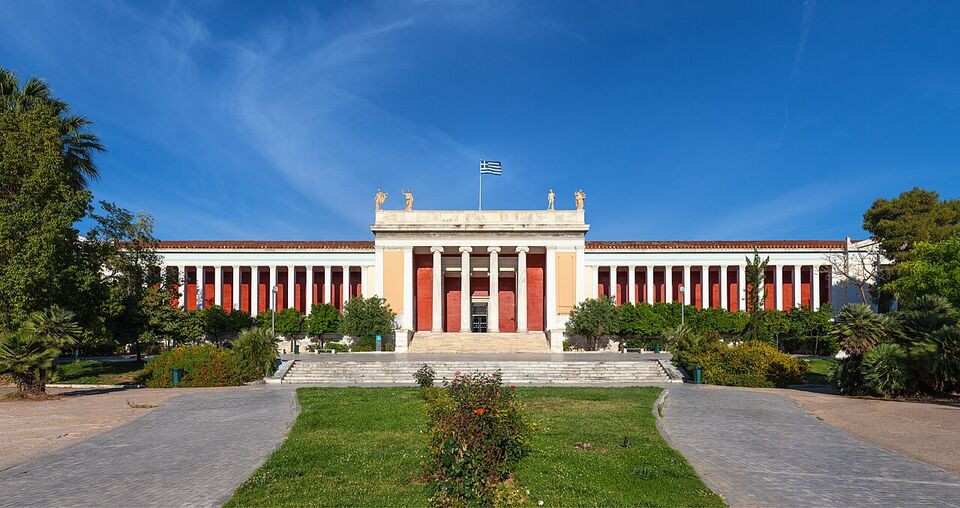
The Acropolis Museum is the best single stop after the rock itself. It sits at the foot of the hill, about a five-minute walk from the south entrance, and holds the sculptures, friezes and temple pieces that were found on the Acropolis. The top floor is arranged to match the Parthenon, so you see the frieze at the same level and angle as on the temple, with the actual building visible through the windows. Casts and gaps mark the pieces that are in the British Museum.
Plan on 1.5 to 2 hours. The ground floor has a glass floor over an excavated ancient neighborhood, and the Archaic Gallery has the Caryatids and the Korai figures. A cafe terrace overlooks the Parthenon. The adult ticket is €20 (about $22; check the museum site), with a reduced ticket of €10 (about $11) sold at the box office with ID. The museum has long stayed open late on Fridays, and hours differ by day and season, so check the museum website before you go.
A good rhythm in summer is the Acropolis in the first morning slot, then the museum at midday when the sun is brutal and the air conditioning is welcome. In winter, either order works.
The Ancient Agora and the Temple of Hephaestus
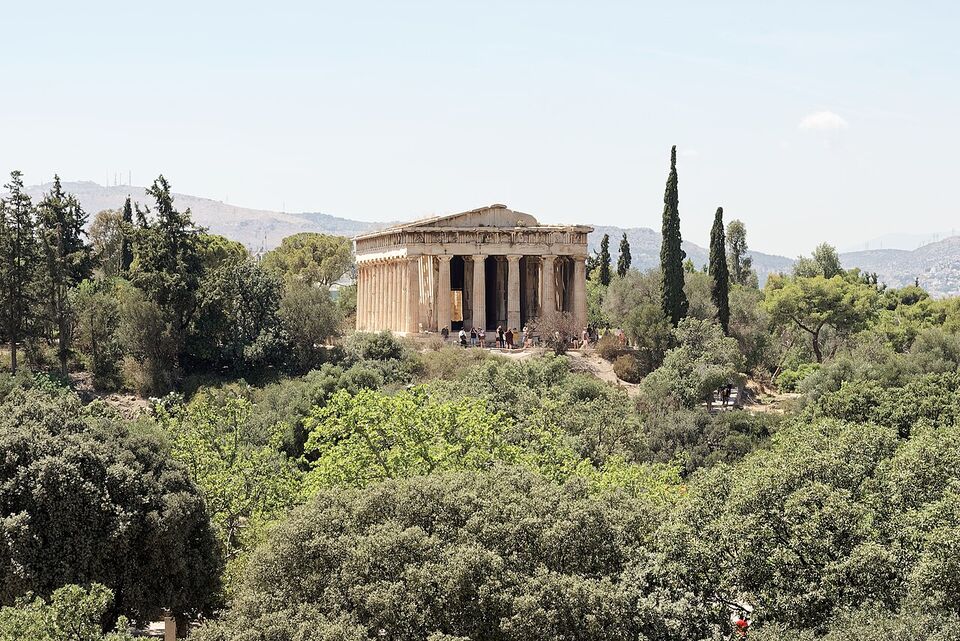
The Agora was the political and commercial center of ancient Athens, the place where citizens argued, traded and voted. Today it is a shady park of ruins with olive trees, and it is far less crowded than the Acropolis. The ticket is €20 (about $22) as of 2026.
Two sights make it worth the money. The first is the Temple of Hephaestus on the western hill, one of the best-preserved Greek temples anywhere, with its roof and walls still largely intact. The second is the Stoa of Attalos, a long colonnaded building reconstructed in the 20th century, which now houses a small museum of everyday finds. Allow 1.5 to 2 hours.
A large upgrade project has been reported at the Agora, with some entrances closed; if the Adrianou Street gate is shut, enter from the Apostolou Pavlou side. The site is open daily with shorter hours in winter. Shade is limited, so come early or late in summer. The Agora entrance is also a good place to start a walk to Thissio, Monastiraki and Plaka.
The Roman Agora and Hadrian's Library
These two Roman-era sites sit side by side near Monastiraki. The Roman Agora is a rectangular marketplace built under Julius Caesar and Augustus, best known for the Tower of the Winds, an octagonal marble clock tower from the 1st century BC with carved wind gods on each face. The ticket is €10 (about $11).
Hadrian's Library, built around AD 132, is a ruined wall and set of columns across the street from Monastiraki Square. The ticket is also €10 (about $11). Both sites are small, and 30 to 45 minutes each is plenty. If you are tight on time or money, you can see much of both from the street and spend your ticket budget on the Agora and Olympian Zeus instead.
The Temple of Olympian Zeus
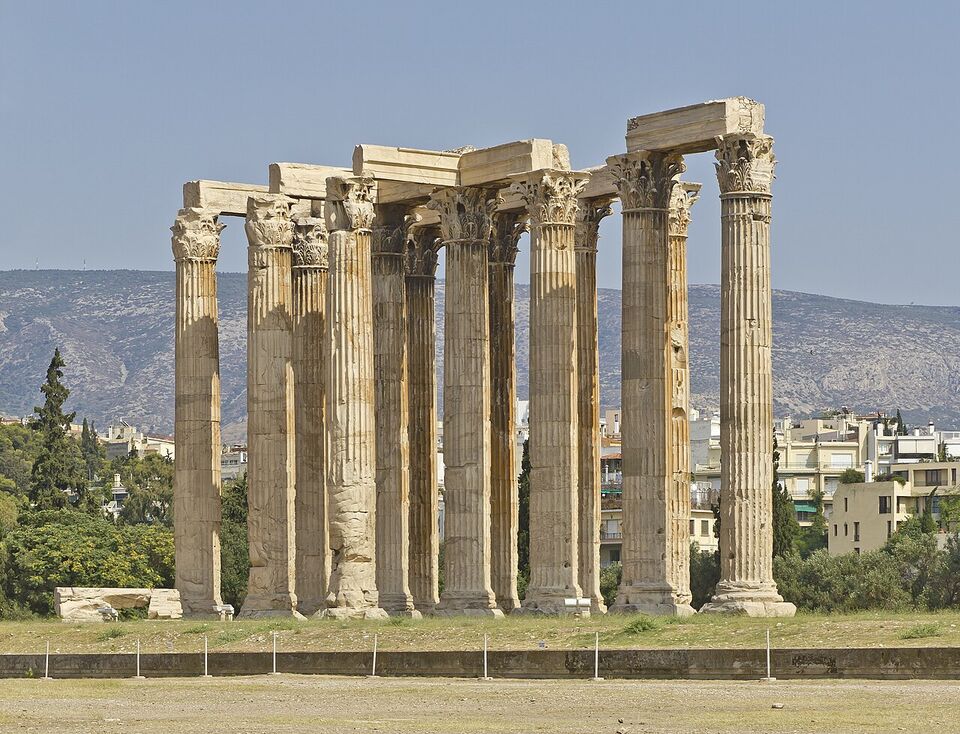
The Temple of Olympian Zeus was the largest temple in Greece, begun in the 6th century BC and finally completed under the Roman emperor Hadrian in the 2nd century AD. Fifteen of its original columns still stand, each over 55 feet (17 m) tall, and one column lies where it fell in a storm in the 19th century. The ticket is €20 (about $22), up from €8 before April 2025. It is open daily, with shorter winter hours (8 a.m. to 3 p.m. from November 1 to March 31) and a summer closing time of 8 p.m.
You need about 45 minutes. The site is close to Hadrian's Arch, the Plaka, the National Garden and the Panathenaic Stadium, so it fits well into a walk between these. If you do not want to pay, you can see the columns from the fence along Vasilissis Olgas Avenue.
Kerameikos
Kerameikos was Athens' main ancient cemetery, a quiet and often overlooked site west of the center, with grave monuments along the Sacred Way and a small museum. Renovation work was reported there from May 2025, but the official Hellenic Heritage page now lists regular hours, so we treat it as open; check tickets.hh.gr before you go in case parts are fenced off. The ticket is €10 (about $11) as of 2026 (winter hours 8 a.m. to 3 p.m.), and you need about an hour.
The National Archaeological Museum
The National Archaeological Museum is Greece's top museum of antiquities and the one to choose if you have a day on a rainy forecast. Its highlights include the gold death mask known as the Mask of Agamemnon from Mycenae, the bronze statue of Poseidon (or Zeus) found in the sea off Cape Artemision, the Antikythera Mechanism (an ancient astronomical device) and a large Cycladic collection. It is on Patission Street, a short walk from Victoria metro station on Line 1.
The adult ticket is €20 (about $22) as of 2026, with a reduced ticket of €10. In winter (November 1 to March 31) it is open 8:30 a.m. to 3:30 p.m., except Tuesdays, when it opens at 1 p.m. and closes at 8 p.m.; last entry is 30 minutes before closing. Give it two to three hours; it is large. It is free on the first and third Sunday of each month from November through March, and on the usual free days. The area around the museum (Exarchia and Patission) is busy and slightly gritty, so keep an eye on your bag.
The Benaki and Cycladic Art museums
If you have the time for a smaller museum, two are worth a look. The Benaki Museum of Greek Culture, near Syntagma, walks you through Greek history from antiquity through the modern era in a mansion, with costumes, icons, jewelry and an excellent rooftop cafe. The permanent collection was reported at about €9 (about $10) in 2025, and it has been free on Thursday evenings and on the free days; confirm current terms on the museum site.
The Museum of Cycladic Art, a short walk from the Benaki and the Byzantine Museum, shows the minimalist marble figurines from the islands that fascinated modern artists. Prices and closing day are not something we could confirm, so check the museum site. Both museums are good for an afternoon in Kolonaki and a coffee afterward. See Naxos, Paros and the Cyclades if the Cycladic figures make you want to see the islands.
The Panathenaic Stadium
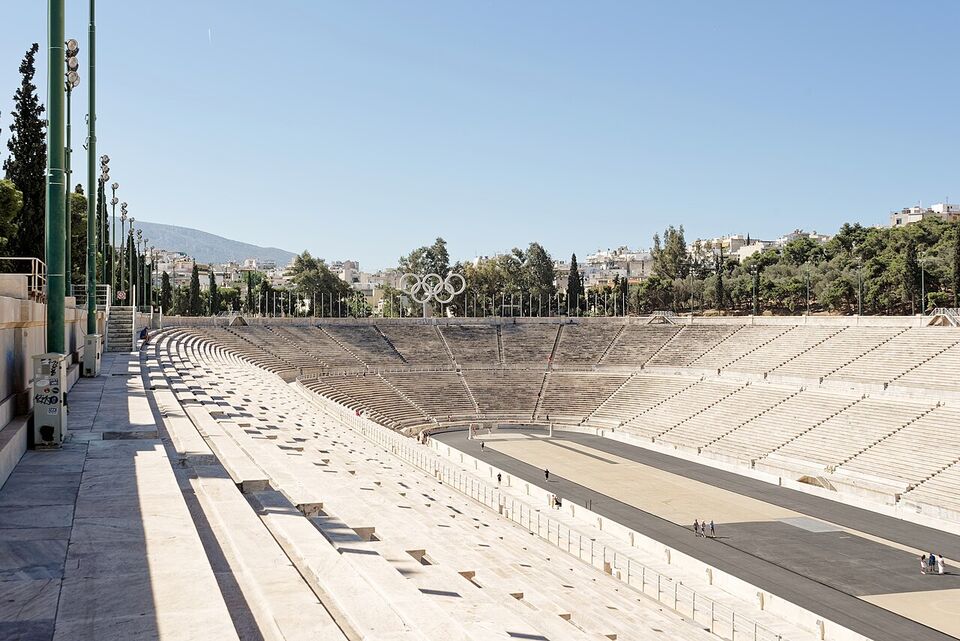
The Panathenaic Stadium is a horseshoe-shaped stadium made entirely of white marble, rebuilt for the first modern Olympics in 1896 on the site of an ancient one. It is also the finish line of the Athens Marathon (the 2026 race was November 8). The audio guide takes you up to the stands and down into the tunnel, and you can stand on the podium for a photo.
The ticket was set at about €12 (about $13) from October 2025, with a reduced ticket of about €6, and a small fee for the restroom. The stadium is run by the Hellenic Olympic Committee, not the Ministry, so state-site free days may not apply. Allow 45 minutes. It is a pleasant stop between the Temple of Olympian Zeus and Pangrati, and it is also a popular place for early morning joggers.
Lycabettus Hill
Lycabettus is the tall limestone hill that rises above Kolonaki, about 909 feet (277 m) high, with a small white chapel and a cafe on top. On a clear day you can see the Acropolis, the whole city, the Saronic Gulf and Piraeus. It is the best place for a sunset panorama, and the floodlit Acropolis is a fine sight after dark.
There are two ways up. The funicular runs from Aristippou Street in Kolonaki through a tunnel in the rock; one report shows about €10 one way or €13 return, with cars every 10 to 30 minutes from 9 a.m. to 2:30 a.m., but check the current fare because older sources list lower prices. You can also walk up the footpath, which takes about 20 to 40 minutes and is steep in places.
Watch out
In extreme heat the authorities can close Lycabettus and other hills because of fire risk. Check before you go on a very hot day, and bring a light layer for the wind at sunset. The funicular may stop earlier than posted in winter.
Philopappos Hill
Philopappos Hill, southwest of the Acropolis, is a free alternative with a better view of the Acropolis than Lycabettus has, because you are looking at it rather than away from it. It rises about 480 feet (147 m), has a Roman monument to Philopappos at the top and several shaded paths. The path begins near Dionysiou Areopagitou, the pedestrian street, and takes 15 to 25 minutes.
It is a popular place to watch the sun set over the Acropolis, with the Saronic Gulf glowing on the horizon. It has no lights, so take a phone flashlight or leave while there is still light. In the late afternoon in summer the hill is shaded and a good place to be when the sites are baking.
The changing of the guard at Syntagma
In front of Parliament, the presidential guards known as Evzones stand watch at the Tomb of the Unknown Soldier, in their pleated kilts and pom-pom shoes. The guard changes every hour on the hour with a short, slow, high-stepping ritual. On Sunday at 11 a.m., a full ceremony takes place with a larger unit in the dress uniform, including a band, and it draws a crowd. Get there 20 minutes early for a good spot.
The ceremony is free and takes 5 to 15 minutes. It is a photo stop rather than a full activity, so pair it with a walk through the National Garden or a coffee. The hourly ritual is easy to see on your way through Syntagma Square, so you do not need to arrange a visit around it.
Anafiotika
Anafiotika is a tiny cluster of whitewashed houses on the north slope of the Acropolis above Plaka, built in the 19th century by workers from the island of Anafi who recreated an island village in the shadow of the rock. The lanes are narrow, with bougainvillea over stairs, small gardens and cats. People live here, so keep your voice down and stay on the paths.
It is free and takes 20 to 30 minutes, and it is a pleasant alternative to the crowded streets below. Find it by walking up from the Plaka side, following signs for the stairs on Stratonos or Prytaniou streets. The upper lanes are quiet; the lower ones near Plaka are busier. It is also a good place to pause between the Agora and the Acropolis Museum on foot.
A 3-day plan
This plan puts the outdoor sights in the morning and the indoor ones in the hot afternoon, groups sights by location to save walking, and leaves room for meals. Swap days if the weather changes, and book your Acropolis ticket first.
- Day 1
The Acropolis and the south side
Take the first Acropolis slot (about 8 a.m.), then walk down to the Acropolis Museum for a late-morning visit, or reverse the two in winter. Lunch in Makrygianni or Koukaki. In the afternoon, walk to the Temple of Olympian Zeus and Hadrian's Arch, then the Plaka for dinner. Cost: about €70 (about $78) for the Acropolis, Museum and Olympian Zeus.
- Day 2
The Agora, markets and the old town
Start at the Ancient Agora and the Temple of Hephaestus when it opens, then walk through Monastiraki to the Roman Agora and Hadrian's Library if you want them. Have lunch at a souvlaki shop (see Food and Drink in Athens) and spend the afternoon in Anafiotika and Plaka. Watch the sunset from Philopappos Hill, or take a rooftop table at dusk.
- Day 3
Museums, the stadium and Lycabettus
Spend the morning at the National Archaeological Museum (on Tuesdays it opens only at 1 p.m., so swap days), then take the metro to Syntagma for the changing of the guard (on Sunday, the 11 a.m. ceremony). Walk through the National Garden to the Panathenaic Stadium, have coffee in Pangrati or Kolonaki, and finish with the Benaki or the Cycladic Museum. End at Lycabettus for the sunset and the night view of the Acropolis.
If you have a fourth day, a day trip is the best addition. See Day Trips from Athens for Delphi, Nafplio, Cape Sounion and the Saronic islands, and Useful Greek Phrases for the words you will see on signs.
Insider tip
Buy tickets at the official ticket store (tickets.hh.gr) rather than from resellers whenever possible. If you are visiting in summer, do the open-air sites first thing and keep the museums for the afternoon.
Add it to a route in the trip builder, or ask us to plan the hotels, trains and guides for you.