Eating in Athens
Athens is a cheap and easy place to eat well. The basics are grilled meat, vegetables, olive oil, cheese and bread, served in huge variety and shared across the table. A few habits are different from home: dinner is late, bread and water often appear on the bill, plates arrive when they are ready, and nobody rushes you. Once you know those, the city is easy to enjoy.
This page covers street food, tavernas, the central market, bakeries, coffee, rooftop bars, and how ordering, paying and tipping work. For regional dishes across the country, see Greek Food, and for wine, ouzo and coffee in depth, see Greek Wine, Ouzo and Coffee. For where to base yourself near good food, read Athens.
Prices below are our estimates for late 2026 and are labeled as such. Menu prices rose in 2025 and 2026, so look at the menu outside before you sit down, and use the numbers as a guide.
Souvlaki and gyros
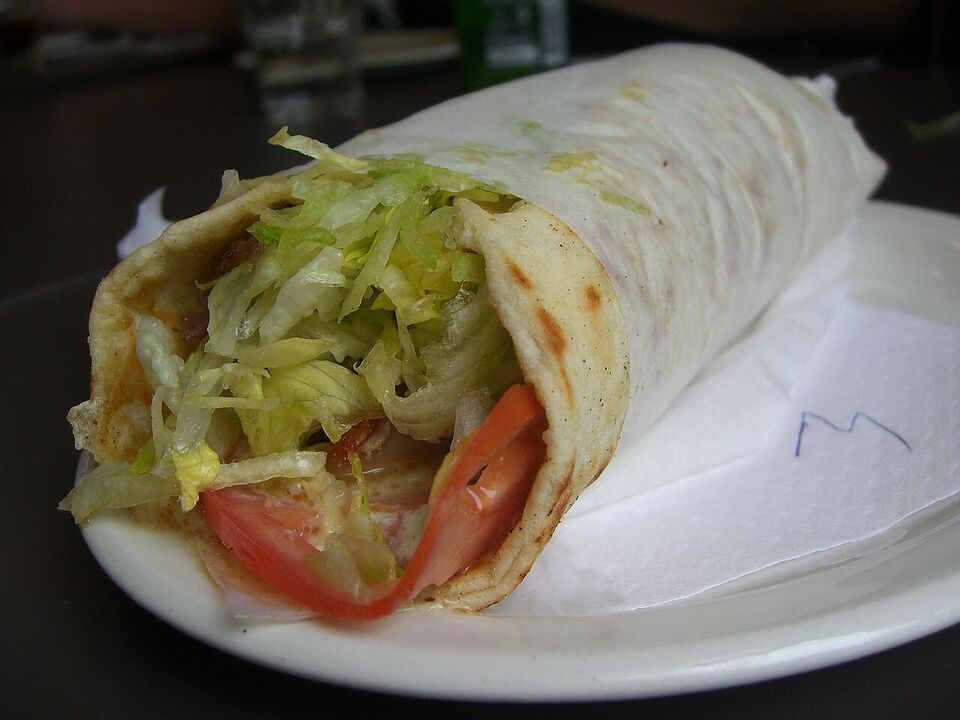
Souvlaki and gyros are the street food of Greece, and the cheapest good meal in the city. Souvlaki is small pieces of grilled pork or chicken on a skewer; gyros is meat shaved from a vertical rotisserie. Either one comes in a pita, a soft, thick flatbread, with tomato, onion, tzatziki and often french fries tucked inside, wrapped in paper so you can eat it standing.
In Athens, the default souvlaki is pork, and chicken is also common. If you want chicken, say so. You can also order kalamaki (a single skewer, often sold by the piece) or a plate with the meat, pita, salad and fries. A pita wrap is roughly €4 to €6 (about $4.50 to $7) in central shops, our estimate, and sit-down plates cost more. Shops around Monastiraki and the Acropolis tend to be priciest; neighborhood shops in Koukaki, Psyrri and Pangrati are cheaper and often better.
Insider tip
To order, point and say "ena souvlaki me pita" (one souvlaki in pita) and choose what you want left out, such as onions or fries. If you want it "horis" (without) something, say so. Paying by card is common, but keep a few euros for the smaller shops.
Tavernas and mezedes
A taverna is the Greek family restaurant: a short menu of grilled meat, stews, salads and vegetable dishes, usually with house wine served in a small metal or glass carafe. A mezedopoleio or ouzeri specializes in mezedes (small plates meant for sharing), usually paired with ouzo or tsipouro.
The best way to eat in a taverna is to order several plates and share them, rather than each person getting a main course. A good meal for two might include:
- Greek salad (horiatiki): tomatoes, cucumber, onion, olives and a slab of feta with olive oil and oregano. There is no lettuce.
- Spreads and dips: tzatziki (yogurt, cucumber, garlic), melitzanosalata (eggplant), fava (yellow split pea puree) and taramosalata (fish roe).
- Cooked dishes: moussaka (eggplant and meat with a bechamel crust), pastitsio (baked pasta), gemista (stuffed tomatoes and peppers), giouvetsi (baked meat and orzo) and kleftiko (slow-baked lamb).
- Fried and grilled: saganaki (fried cheese), keftedes (meatballs), grilled octopus, fried zucchini, sausages and lamb chops.
- Fish: usually sold by weight, with the price per kilo on the menu or on the ice display. Ask the weight and total before the waiter cooks it.
A taverna dinner for two with a few shared plates, bread and a carafe of wine often runs €35 to €65 (about $39 to $73) in a neighborhood place, our estimate, and more in tourist-heavy streets. Some places bring a free dessert or fruit at the end as a gesture of hospitality.
Where to eat
Plaka's main lanes are the prettiest but the least reliable: waiters who stand outside and invite you in are a clue that the place lives on passing trade. Walk a few blocks for better value. Psyrri has a dense scene of mezedes places and bars, busy at night. Koukaki and Pangrati have the neighborhood tavernas where Athenians eat on weeknights, and the streets around the central market have old-style grill rooms. Rather than pick a name from a list, look for places where the menu is short, there are Greek families at the tables, and the language on the menu is not in five languages.
Watch out
Tourist menus with photos and a list of "specials" in six languages are often more expensive and less good. Check the price of fish and drinks before you order, and always ask for the bill itemized if it looks off. In Greece, businesses must give you a receipt; keep it.
The central market
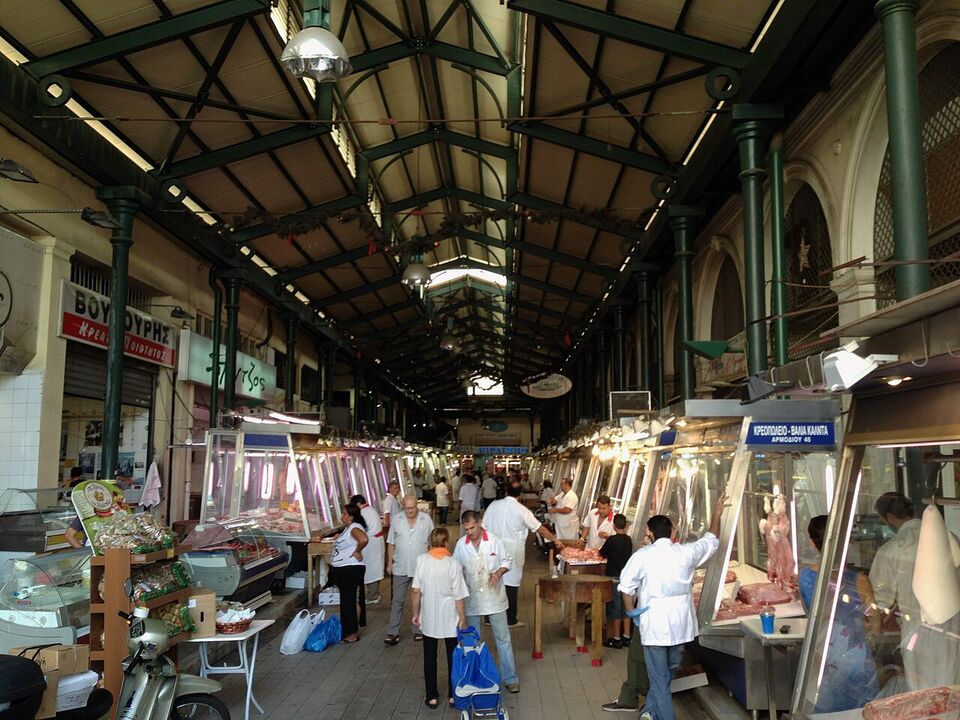
The Varvakios Agora, the central meat and fish market, fills a covered hall on Athinas Street between Omonia and Monastiraki. It is loud, cold and not for the squeamish: whole carcasses, heaps of fish and butchers shouting prices. It is also real Athens, and worth a visit for the atmosphere. Come in the morning (it is a morning market, and closes by mid-afternoon); it is closed on Sundays, and the hours are not something we could confirm, so go before noon.
The streets around it are lined with food shops. Evripidou Street, running toward Psyrri, has spice, herb, olive, nut and cheese stores where you can buy gifts. Cheap grill rooms nearby serve lunch to market workers; look for the places where men in aprons are eating, and expect a simple meal of grilled meat and bread. Watch your wallet here: the area is crowded and the metro stop at Omonia is a known pickpocket location.
Bakeries and breakfast
Breakfast in Athens is often a bakery stop rather than a sit-down meal. Look for the word fournos (bakery), then try:
- Koulouri: a ring of bread covered in sesame seeds, sold from street carts and bakeries for about €1 (our estimate). It is the standard Athenian breakfast.
- Spanakopita and tiropita: flaky phyllo pies filled with spinach and feta or with cheese, sold by the piece.
- Bougatsa: a pastry of phyllo filled with sweet custard (dusted with sugar and cinnamon) or with cheese. Eat it hot.
- Sesame bars, pasteli and honey cakes: good for the road.
Most bakeries open early and sell out of the best pies by mid-morning. Hotel breakfasts in Athens are usually buffets with Greek yogurt, honey, fruit, cheese and pastries, so you can eat the local way without leaving the hotel.
Coffee culture
Coffee is a social activity in Athens, and a table at a cafe is a place to sit for an hour or more, so no one will hurry you. The two drinks to know are:
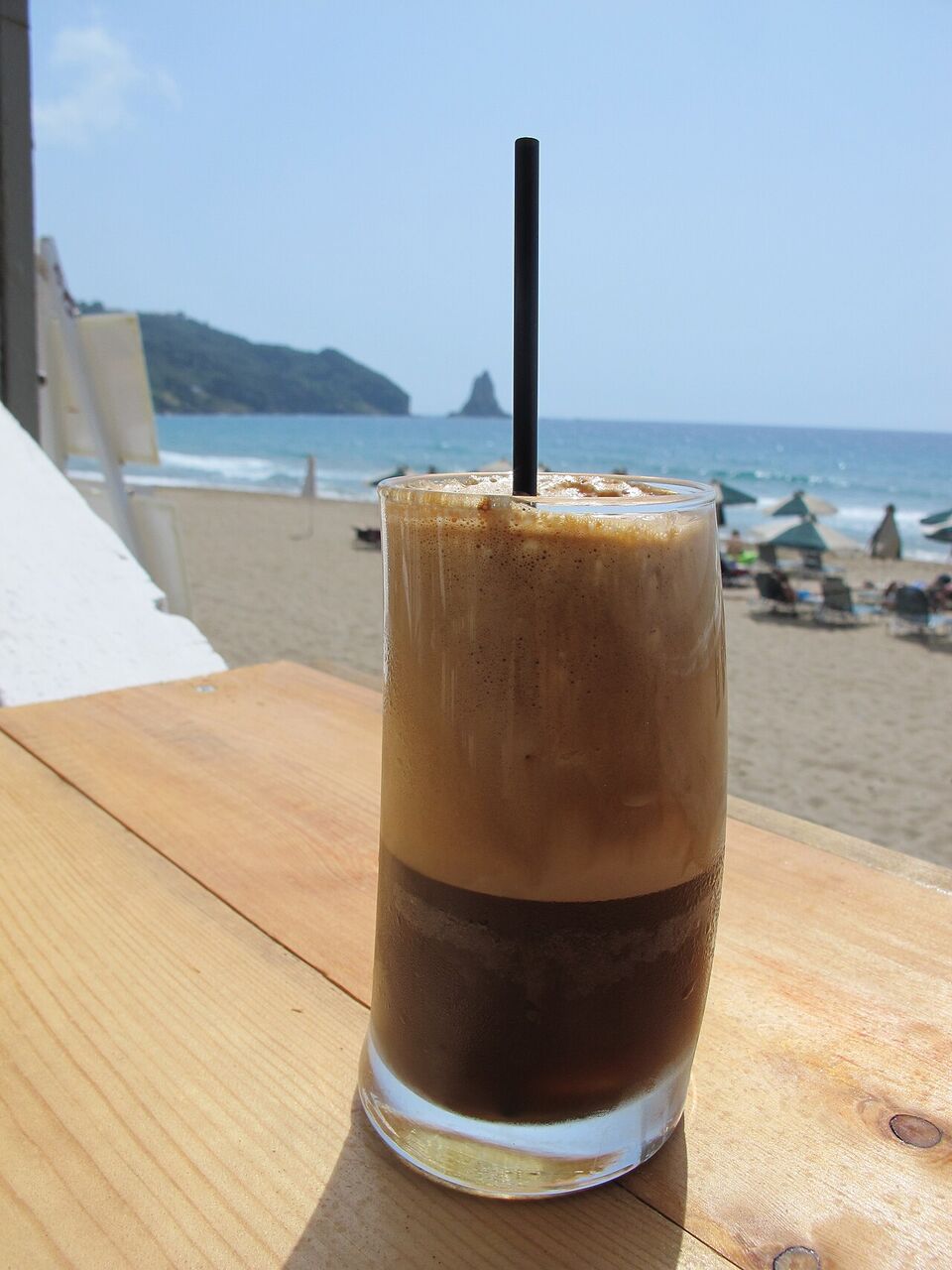
- Freddo espresso and freddo cappuccino: a double espresso shaken with ice to make a cold, strong drink. The cappuccino version is topped with cold milk foam. They are the default summer coffee and are drunk year-round. Expect roughly €3.50 to €5 (about $4 to $5.60), our estimate.
- Greek coffee (ellinikos): fine coffee simmered in a small pot (briki) and served in a small cup, with the grounds left in the bottom. Do not drink the last sip. Order it by sweetness: sketos (no sugar), metrios (medium) or glykos (sweet).
You will also see the frappe, an instant coffee shaken with water and ice that was a Greek invention and remains popular, and plain filter coffee or espresso in modern cafes. If you want milk, say so; the drinks above are usually served black. A cafe table also costs time: the price of the coffee covers your seat.
Rooftop bars with Acropolis views
Many hotels and some bars around Monastiraki, Plaka, Psyrri and Syntagma have rooftop terraces with views of the floodlit Acropolis. These are a good way to spend one evening, but they are priced for the view. Cocktails commonly cost around €14 to €20 (about $16 to $22), our estimate, and some places have a minimum spend or ask you to order food.
- Reserve a table for sunset, especially from April to October and on weekends. A window seat or front row is often held for those who book.
- Dress casually but not in beachwear.
- If the terrace is full, ask about the bar inside, or go for a drink early before the crowd arrives.
- For a cheaper view, buy a drink in a cafe on Dionysiou Areopagitou, or watch the sunset from Philopappos Hill with a bottle of wine from a shop. See Athens Sights.
How ordering and paying work
Bread, water and the cover charge
In many tavernas a basket of bread arrives without being ordered, and a charge appears on the bill, called a cover or kouvert. It is normally about €0.50 to €2 a person (our estimate), and it is usually printed on the menu. Bottled water is also charged, and a large bottle usually costs €1 to €3. Many places will bring tap water if you ask; Athens tap water is generally considered safe, but some residents prefer bottled, so ask the waiter.
Sharing and pacing
Food arrives when it is ready, not in courses. Cold dishes and salads tend to come first, hot dishes later, and the meal can last two hours. Do not ask for the bill until you are ready to leave, because the waiter will not bring it unprompted. You ask by saying "to logariasmo, parakalo" or making a writing gesture in the air.
Meal times
Lunch is often late, from about 2 p.m., and dinner is later still. Many tavernas open for dinner at 7 or 8 p.m., but they fill up from about 9 p.m., and Greek families may eat at 10 p.m. or after. If you want an earlier dinner, you will find open tables, but the best atmosphere comes later. Between lunch and dinner, many smaller places close.
Different from home
In the US, the check comes with the meal and tables are turned quickly. In Greece, you must ask for the bill, and you can sit as long as you like. Service is not rushed, and an empty glass is not a sign you should leave. Also note that in many places, the server will bring a small free dessert or fruit with the bill.
Tipping and paying
Tipping is customary, but not obligatory, and it is lower than in the US. In a sit-down restaurant, a good habit is to round up the bill or leave about 5 to 10 percent in cash on the table if service was good. For a coffee or a souvlaki, leave small change or nothing. Taxi drivers appreciate a round-up. Hotel porters typically get €1 to €2.
Cards are widely accepted. Greek law requires many businesses to take cards, though a few small kiosks and tavernas may prefer cash. Leaving a tip on the card is possible in some places, but it does not always reach the staff, so cash is better. For more on payments, see Money in Greece.
Vegetarian and special diets
Athens is one of the easier places in Europe for vegetarians. Many classic dishes are made without meat: fava, gigantes (baked giant beans), gemista with rice, spanakopita, horta (boiled greens with lemon), briam (roasted vegetables), tomato fritters and salads. Orthodox fasting traditions produce nistisimo dishes that are fully vegan, so look for the word on menus during fasting periods such as Lent.
The caveats are that many vegetable dishes are cooked with meat stock, and that cheese and eggs are common. Say "eimai hortofagos" (I am vegetarian) and ask whether a dish is cooked with meat or stock. Vegan travelers can eat well, though dairy is everywhere. For allergies, write down the ingredient in Greek or show it on your phone, and ask in a clear, simple way; our Useful Greek Phrases page has more words, and Health and Medical Care covers pharmacies and emergencies.
What things cost: a rough guide
| Item | Estimated price | US$ (about) |
|---|---|---|
| Koulouri | About €1 | $1.10 |
| Spanakopita or bougatsa | €2.50 to €4 | $3 to $4.50 |
| Souvlaki or gyros in pita | €4 to €6 | $4.50 to $7 |
| Freddo espresso or cappuccino | €3.50 to €5 | $4 to $5.60 |
| Beer or glass of house wine | €4 to €7 | $4.50 to $8 |
| Taverna dinner per person, with wine | €20 to €35 | $22 to $39 |
| Rooftop cocktail | €14 to €20 | $16 to $22 |
These are our estimates, not published prices, and they can vary widely by neighborhood. A tourist-area restaurant near the Acropolis can cost well above these figures. With a few bakery breakfasts, a souvlaki lunch and a taverna dinner, many travelers spend roughly €40 to €60 (about $45 to $67) a day on food, but this depends on your habits.
Save money
Lunch is the cheapest time to eat well: many tavernas serve the same dishes at lunch for less, and souvlaki shops and bakeries are cheap at any time. Order the house wine by the carafe, share plates, and skip bottled water if tap is offered.
Sweets and snacks between meals
Athens has a sweet tooth, and snacking is part of the day. Loukoumades are small fried dough balls served warm with honey and cinnamon, often sold at dedicated shops in the center. Spoon sweets (glyka tou koutaliou) are fruit preserved in syrup and served on a spoon with a glass of water. Greek yogurt with honey and walnuts is on almost every menu and is a good light dinner or dessert.
Traditional pastry shops sell baklava, galaktoboureko (custard in phyllo) and butter cookies, usually by weight. Fruit stalls and roasted chestnut or corn carts appear in cooler months. If you want something small and local, buy a sesame pasteli bar or a bag of roasted nuts at the market and carry it with you on the sights.
A food day in Athens
A simple outline puts the main experiences into one day. Start with a koulouri and a freddo from a bakery, walk to Varvakios market and the spice shops on Evripidou Street, and have a souvlaki lunch in Monastiraki or Psyrri. In the afternoon, rest or visit a museum (see Athens Sights). Have a coffee around 5 p.m., a drink at a rooftop at sunset, and a long taverna dinner from 9 p.m. in Koukaki or Pangrati. End with Greek coffee or a glass of tsipouro.
Add it to a route in the trip builder, or ask us to plan the hotels, trains and guides for you.