Overview
Mykonos is the Cyclades island known for its beaches, its dazzling white old town and its nightlife. It is small, about 10 miles (16 km) across at its longest, dry and windy, with a handful of beach clubs, hundreds of rooms and a very short season. We suggest it for travelers who want sun, sand and a lively evening, and who will accept high prices; people who want a quiet traditional island are usually happier on Naxos, Paros or Sifnos (see which island suits you).
Almost everything is within a 20-minute ride of Mykonos Town, called Chora (the main town). Most travelers base themselves in or near Chora or on a south-coast beach, spend one day on Delos, and rotate between two or three beaches. If you are weighing it against Santorini, see Santorini vs Mykonos; for the wider island group see the Cyclades guide.
Different from home
Beach clubs here are paid venues. You usually rent a sunbed pair (sometimes with a minimum spend for food and drink) rather than spread a towel, and prices reflect that. Public stretches of beach, with towels only, exist at the margins and on the less developed beaches, and Greek law requires part of each beach to remain free for the public (see the beaches section below).
When to go and the season
Mykonos has one of the shortest seasons in Greece. Most hotels and restaurants open in May, the island is full from late June to early September, and it winds down through late September and October. Beach clubs close from late September to mid-October, and in the winter months (November to March) most businesses are closed (one end-of-season report put it at roughly 80 to 90 percent) and flights between islands largely stop. If you are reading this in November, plan your trip for the next season.
Late May, June and September are the best balance of weather and prices. July and August are hot and windy: the meltemi, a dry north wind, can blow hard and can delay ferries and cancel boats to Delos. Sea temperatures reach swimming levels in June. See when to go for the monthly picture and festivals for events.
Mykonos Town (Chora)
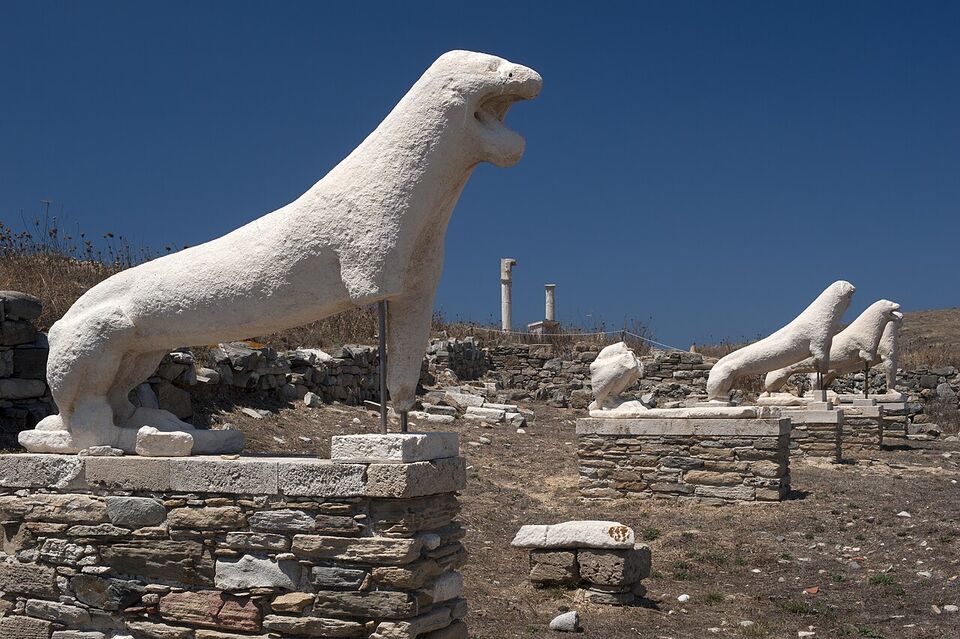
Chora is a maze of whitewashed lanes, bougainvillea, small churches and shops, laid out to confuse pirates and now confusing visitors. Streets are narrow, paved with stone and closed to most cars, so expect to walk. You will get lost, and that is part of the town. Stick to the main lines (Matoyianni Street is the main shopping and eating street) and use the water as your compass.
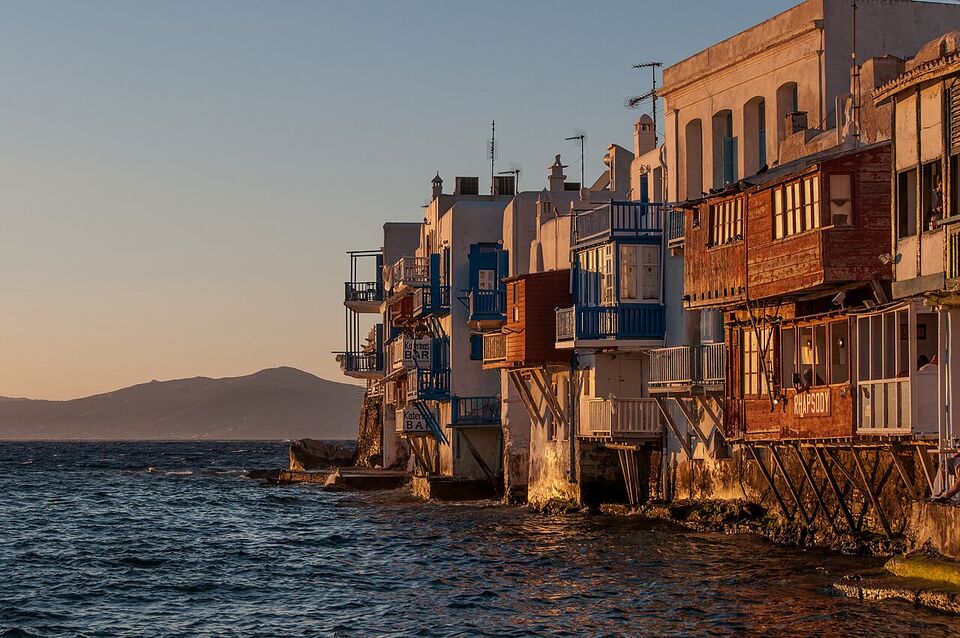
Little Venice
Old sea captains' houses with balconies built over the water. It is the town's sunset spot, which means bar tables fill early on summer evenings. Waves can splash the terraces in strong wind.
The windmills
A row of white windmills on a ridge, once used to grind grain. They are best at sunset or early morning, when the crowd is thin and the light is soft.
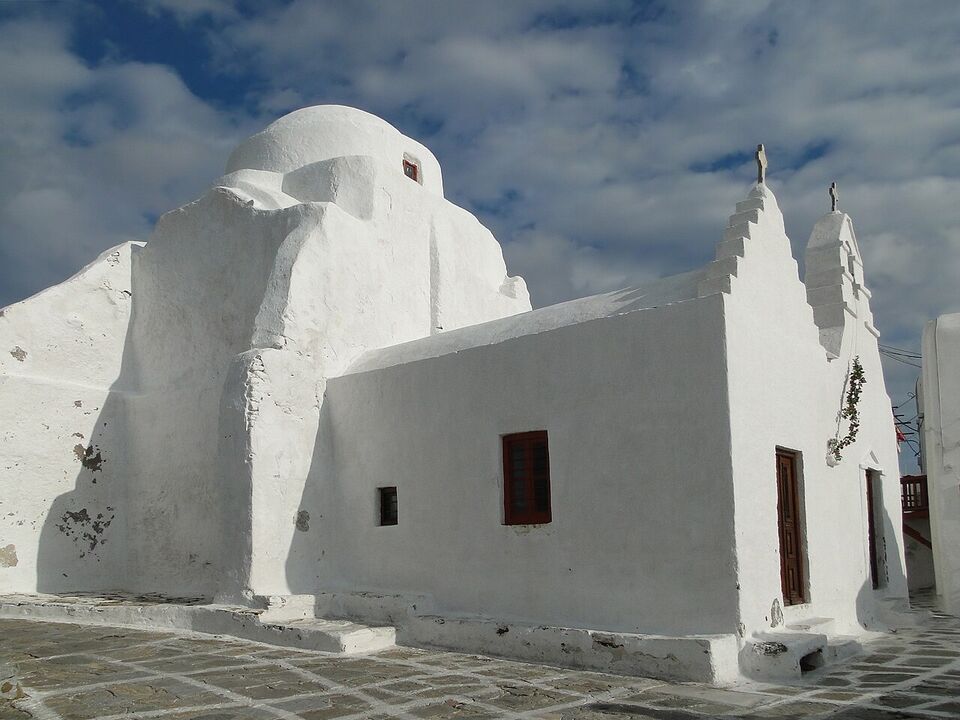
Paraportiani church
A cluster of small white chapels fused into one building, near the sea. It is one of the most photographed churches in the Cyclades, and the shape is easiest to see from the rocks below at golden hour.
Old Port and the pelican
The old port, where Delos boats leave, has fish tavernas and a resident pelican mascot that wanders the quay. Small boats and sea taxis leave from here.
Archaeological Museum
A small museum with finds from Delos and Rheneia. It is quieter than the beaches and useful if you will visit Delos, but check current hours before going.
Time your wander for early morning or late evening. Between about 11 a.m. and 4 p.m. in summer the lanes are hot and busy, and cruise passengers add to the numbers (see the cruise section below).
Beaches
Most of Mykonos's beaches are on the south coast, which is sheltered from the meltemi, and the best sand is on the south and east. The north coast is wilder and windier. Each beach has its own character, and the main difference is how organized it is. Remember that under Greek rules a beach concession must leave part of the beach and a strip by the waterline free for the public, and you can look up licensed concessions and report violations on the government's MyCoast app (see beaches).
Psarou
A small, sheltered bay known for its most exclusive beach clubs. Go for people-watching and a drink, but expect high minimum spends for sunbeds.
Platis Gialos
A long sandy beach with many tavernas and rooms, and the main departure point for sea taxis to Paradise and Super Paradise. A good base for travelers who want everything near the sand.
Paradise
A lively, noisy beach with clubs and a campsite, popular with a young crowd and open late. Go if you want music and people; skip it if you want quiet.
Super Paradise
A short walk or boat ride from Paradise, with more clubs and daytime parties. It is one of the best-known gay-friendly beaches in Greece, and a mixed, relaxed crowd comes for the music.
Agrari
A quieter beach reached from Paradise by a path or by sea taxi, with a mix of organized and open sand. A good halfway option.
Fokos
A pebble and sand beach in the north with few buildings and a small taverna. The road is rough and wind is strong in July and August, but it is much quieter than the south.
On the south coast, Ornos and Elia are also popular, and Kalo Livadi and Kalafatis are on the east coast, where windsurfing is common. If the wind is strong, switch to a south-facing beach. If it blows from the south, which is rare, switch to the north.
Beach clubs and what they cost
The beach-club scene is part of the Mykonos identity, and it is also where costs climb. Prices vary by beach, day of the week and season, and no club publishes a single price list that is stable, so the figures below are labeled estimates for peak season, not quotes.
| Item (peak season, estimate) | Typical range | Notes |
|---|---|---|
| Sunbed pair on an organized beach | €40 to €100 (about $45 to $112) | Cheaper at the edges, more at central beaches |
| Front-row or VIP sunbed at a top club | €100 to several hundred (about $112 and up) | May need a minimum spend for food and drink |
| Cocktail at a beach club | €15 to €25 (about $17 to $28) | More at the most exclusive venues |
| Beach-club lunch for two | €80 to €200+ (about $90 to $225+) | Plan on service and extras |
Save money
Go to the less-organized stretches of sand, bring your own towel, and buy water and snacks in town. You can also visit a beach club for lunch outside peak hours, when minimum spends can be lower. Ask the price before you sit down: it is normal in Greece to ask, and card payment is standard.
Delos
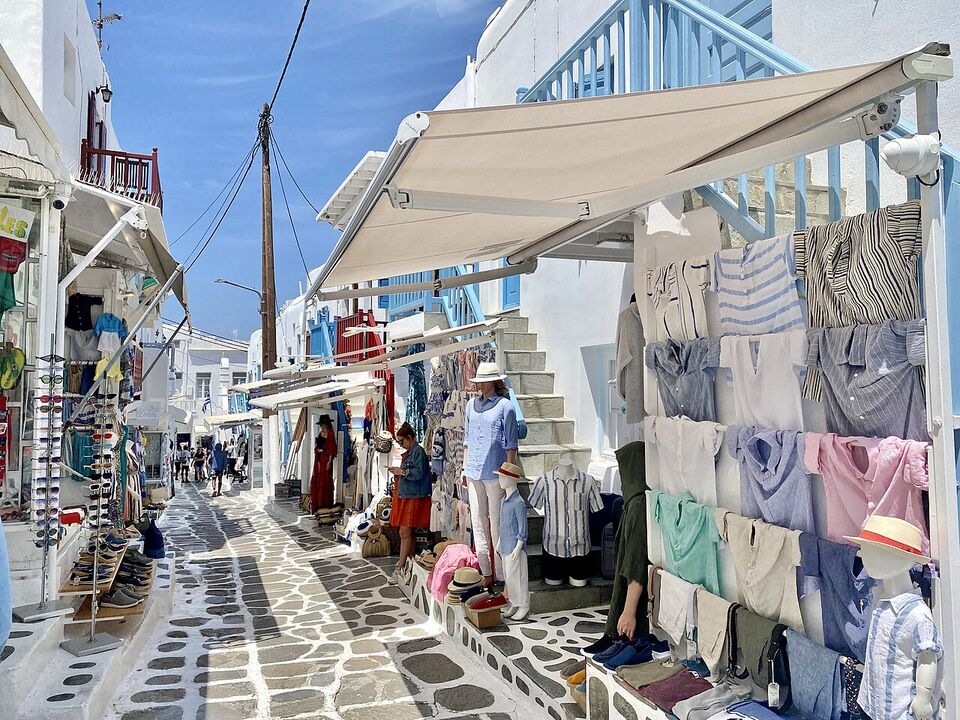
Delos is a small island a short boat ride from Mykonos (roughly 30 minutes to an hour) and one of the most important archaeological sites in Greece. In myth it was the birthplace of Apollo and Artemis, and in antiquity it was a sacred sanctuary and a large trading port. The ruins include house mosaics, a theater, the Terrace of the Lions and the sanctuary of Apollo. Nobody lives on the island, and you cannot stay overnight.
- Getting there: boats leave from the small port beside the church of Agios Nikolaos in Mykonos Town. The municipality lists departures at 9:00, 10:00, 11:30 and 17:00 Tuesday to Sunday, returning at 12:00, 13:30, 15:00 and 19:30, and only 10:00 and 17:00 on Mondays (returning 13:30 and 19:30); times can change with the season and weather. Buy tickets at the office by the boats up to 15 minutes before departure. A return ticket was about €22 (about $25) for adults on a reseller listing; confirm the current price and times at the ticket offices in town.
- Site ticket: the boat ticket does not include entry. The 2026 price is €20 (about $22), or €10 (about $11) reduced, and it also covers the Archaeological Museum of Delos. Buy it on tickets.hh.gr (site details are on hh.gr).
- Closed days: the site is closed on January 1, March 25, May 1, Orthodox Easter Sunday, and December 25 and 26, and it is closed for the whole winter from December 1 to March 31. Hours are 8 a.m. to 8 p.m. from April to August, ending earlier in September and October (6 p.m. by late October), and 8 a.m. to 4 p.m. in November. Last admission is 20 minutes before closing. Admission is free on the first and third Sunday of each month from November through March, but the site is shut for most of that period.
- Wind: boats can be canceled when the meltemi blows. Do not leave Delos for your last day.
- Time: allow about 2 to 3 hours on the island. Bring a hat, water and sun protection; there is almost no shade and only a small cafe.
Insider tip
Take the first boat of the day. Heat on Delos builds quickly, and the early hours are calmer. Visit the small museum first to see the original lion statues, then walk the site.
For a wider look at Greek archaeology, see ancient sites.
Where to stay
Where you sleep shapes the trip more than the room. Mykonos Town is the most convenient: walkable, busy and loud at night. Beaches are 10 to 25 minutes away by bus or boat. For booking tips and what the tiers mean see where to stay in Greece.
Mykonos Town (Chora)
Best for first-timers who want restaurants, shops and bars at the door and don't want a car. Ask for a room away from the main bar streets if you want to sleep.
Ornos
A sheltered bay about 5 minutes from town by bus, with a calm beach and restaurants. A good choice for families and anyone who wants a beach and an easy ride to Chora.
Platis Gialos and Psarou
Beachfront and luxury hotels, with sea-taxi access to other beaches. Pricey and busy, but near the sand.
Agios Stefanos and Kalo Livadi
Sandy beaches with fewer people, and a short bus or car ride to Chora. A car or taxi helps for dinner in town.
Ano Mera
The island's second village, with a square and a monastery. Rooms cost less, but it is about 15 minutes by car from Chora and has little nightlife.
Remember the climate resilience fee, charged per room per night at check-out: in April to October, €5 (about $6) for a 3-star hotel, €10 (about $11) for a 4-star hotel and €15 (about $17) for a 5-star (2026 rates; see money).
Getting around
Buses
KTEL Mykonos buses link the main towns and beaches and are the cheapest option, costing a few euros per ride. There are two main bus stations: one in the south of town (Fabrika) for the south coast and the airport, and one by the old port for the north and east. Check the timetable and which station serves your route, as services are less frequent in the morning and late at night.
Taxis
Taxis are few and expensive. In July and August there can be a queue for a ride, and a trip across the island can cost tens of euros. Taxi companies are required to take cards, but confirm the price, ask about the fare before you start, and arrange a pickup in advance for airport or ferry rides.
Sea taxis
Small boats run in summer between Platis Gialos and the beaches to the east (Paradise, Super Paradise, Agrari and Elia), and in good weather between the old port and the south coast. Check the day's schedule and wind.
Rental cars, scooters and ATVs
Roads are narrow with sharp curves, and parking in Chora is limited. If you rent, an International Driving Permit is advised (see driving in Greece). Scooter and ATV accidents are a common cause of tourist injuries and can be excluded from travel insurance. For general guidance see getting around Greece.
Nightlife
Mykonos's reputation for nightlife is earned. In Chora, bars in Little Venice and along the lanes open in the late afternoon, dinner starts late (9 or 10 p.m.), and clubs begin filling after midnight and go on until morning. Beach clubs run daytime parties, and Paradise and Super Paradise stay lively into the evening. The scene is inclusive and has long been welcoming to LGBTQ+ travelers.
The main practical points: reservations matter for popular restaurants in summer, drinks cost more than on other islands, and you should keep an eye on your bag in crowded bars. Walking back through the lanes at 4 a.m. is easy, but taxis are very hard to find then, so stay close to where you plan to be.
Prices, honestly
Mykonos is one of the most expensive islands in Greece. Costs are highest in July and August and fall by a third or more in May, June and late September. Hotels, beach clubs and dinners in Chora can all cost several times what the same thing costs on a smaller island. The numbers below are rough estimates for peak summer, not quotes.
| Item (estimate) | Typical range |
|---|---|
| Double room, mid-range hotel, summer | €200 to €450 a night (about $225 to $505) |
| Dinner in Chora, per person | €40 to €100 (about $45 to $112) |
| Souvlaki or gyros at a casual shop | €5 to €8 (about $6 to $9) |
| Cocktail in Little Venice | €14 to €22 (about $16 to $25) |
| Bus ride | A few euros |
If the cost worries you, visit in late May or September, stay in Ornos or Ano Mera rather than Chora, and eat at casual places away from the waterfront. See budget for a daily cost framework.
Getting there
Ferries from Piraeus take about 2 hr 40 min by high-speed boat to about 5 hours by conventional ferry, and from Rafina about 4.5 hours. Deck fares start from about €40 (about $45) one way. Mykonos also connects by sea with Syros, Tinos, Paros, Naxos and Santorini. In winter, sailings drop to a few a week. See the ferries guide.
Flights from Athens take under an hour (Aegean/Olympic and Sky Express), and the airport is about 2 miles (3 km) from town. In summer there are also seasonal flights from some European cities; for flights from the US to Athens see flights.
Cruise ships also call at Mykonos in large numbers. The cruise passenger fee for Santorini and Mykonos is €20 (about $22) from June to September, €12 (about $13) in April, May and October, and €4 (about $4.50) from November to March, added to the onboard account (see cruises). On ship days the old port and Chora are crowded between about 10 a.m. and 5 p.m.; the beaches are less affected.
Watch out
Many travelers lose a day to the wind. If you have a ferry or a flight, build in a buffer, and avoid tight same-day connections between Mykonos and an international flight out of Athens.
A simple plan for three nights
- Day 1
Chora and Little Venice
Walk the old town in the afternoon, see the Paraportiani church, then watch the sunset at the windmills or in Little Venice.
- Day 2
Delos in the morning, beach in the afternoon
Take an early boat to Delos, return by early afternoon, and swim at Platis Gialos or Agrari.
- Day 3
A quieter beach and a night out
Spend the day at Fokos or Kalo Livadi, then dinner and bars in town.
Add it to a route in the trip builder, or ask us to plan the hotels, trains and guides for you.