Overview
Greek food is built around shared plates, olive oil, vegetables, grilled meat and fish, and a long, slow table. You order several dishes for the group, let them arrive when they are ready, and keep eating for two hours. If you only remember one rule, it is this: order less than you think, then add more. Portions are generous and nobody minds a second round.
This page covers how Greek restaurants work, the dishes you will see on almost every menu, regional food from Crete to the north, how seafood is priced (the most common source of surprise bills), vegetarian and fasting food, sweets and bakeries, and the customs around bread, water, tipping and late dinners. For wine, ouzo and coffee, see Greek Wine, Ouzo and Coffee. For one city in detail, see Food and Drink in Athens.
Prices in this guide labeled "estimate" are typical ranges for 2026, not quotes. Menus change by island and season, and a harborfront table on Santorini or Mykonos costs well above a back-street place in Athens or Thessaloniki.
Where to eat: taverna, ouzeri, psarotaverna and more
The word on the sign tells you what to expect. The differences are blurry now, but they still help.
Taverna
The classic. A taverna serves mezedes, grilled meat, stews and baked dishes, usually with house wine by the carafe. It is the default choice for dinner and the best value in most towns.
Ouzeri and mezedopoleio
An ouzeri or mezedopoleio is built around small plates eaten with ouzo or tsipouro. In some northern towns, ordering a carafe of tsipouro brings a plate of small dishes with it. See Greek Wine, Ouzo and Coffee for the customs.
Psarotaverna
A psarotaverna is a fish taverna. Look for a display of whole fish on ice and ask how the price works before you choose (see the seafood section below).
Estiatorio
An estiatorio is a more formal restaurant. Expect a longer menu, ready-cooked dishes such as stews and casseroles, and fewer grilled orders. The pace is slower and the check is higher.
Psistaria
A psistaria is a grill room. Order by weight or by portion: chops, sausages, lamb, chicken. Often open late.
Souvlatzidiko
A takeout counter for gyros and souvlaki in pita. Cheap, fast and a good lunch. See the dishes table for the difference between the two.
Beyond these, a kafeneio is a traditional coffeehouse, and a zacharoplasteio is a pastry shop. A fournos is a bakery. For coffee culture, see Greek Wine, Ouzo and Coffee.
How a Greek meal works
Start with a few cold or fried mezedes and a salad, such as tzatziki, a plate of fava, fried zucchini, grilled cheese or a bowl of horiatiki. Then add mains to share: grilled chops, a baked dish, a stew, or fish. The waiter may not bring everything at once, and may not ask whether you want a second dish. If you want a certain order, say so.
A table for four can often be fed well by four mezedes, a salad, two mains and a carafe of wine or two. Ask the waiter how much each dish serves; most are honest about it. Water usually arrives without being asked, and many places bring a free dessert (fruit, a spoon sweet, a slice of cake or halva) or a small bottle of raki or a liqueur after the meal.
Different from home
The check does not come until you ask for it, and nobody will rush you. Say "to logariasmo, parakalo" (the check, please) or make the writing-in-the-air gesture. Servers read a quick check as rude. Dinner starts late: most locals sit down after 8:30 or 9 p.m., and on islands in summer later still. Kitchens often open at 7 p.m. and restaurants fill after 9. See Greek Etiquette for more on table manners.
The dishes to know
Menus in tourist areas have English translations, but some are misleading. This table covers what you are likely to order.
| Dish | What it is | Notes |
|---|---|---|
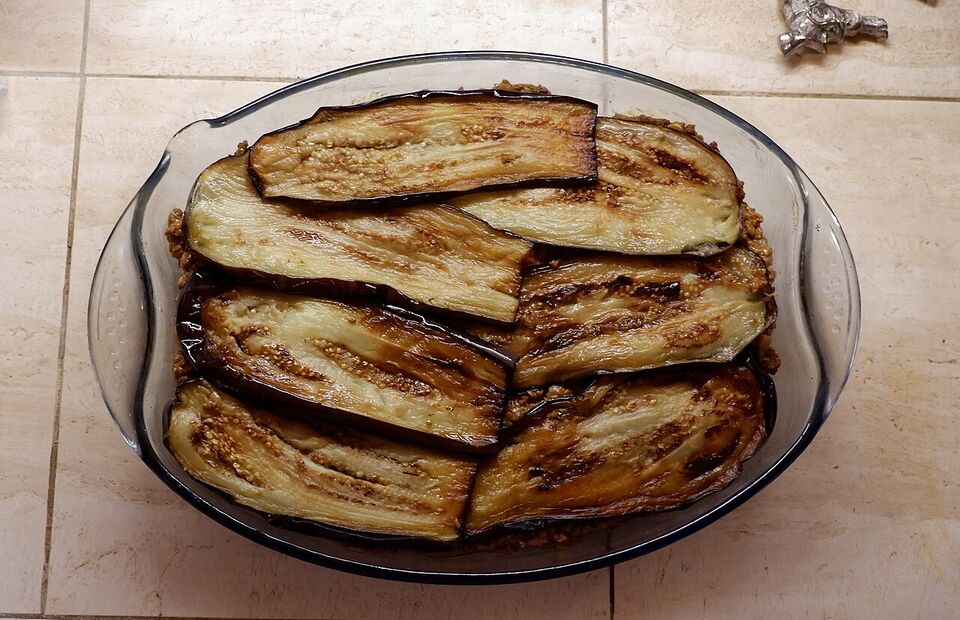
| Moussaka | Layers of eggplant and potato, minced meat and béchamel, baked | Served warm, not hot. Often a main. Also found with zucchini |
| Pastitsio | Baked pasta tubes with meat sauce and béchamel | Greek comfort food; common in homes and tavernas |
| Souvlaki | Grilled skewers of pork or chicken | Served on the skewer with bread or chips, or wrapped in pita (the wrapped version is also called souvlaki in Athens) |
| Gyros | Meat cut from a vertical spit, in pita with tomato, onion, tzatziki and fries | The cheapest filling meal; pork is the default, chicken is available |
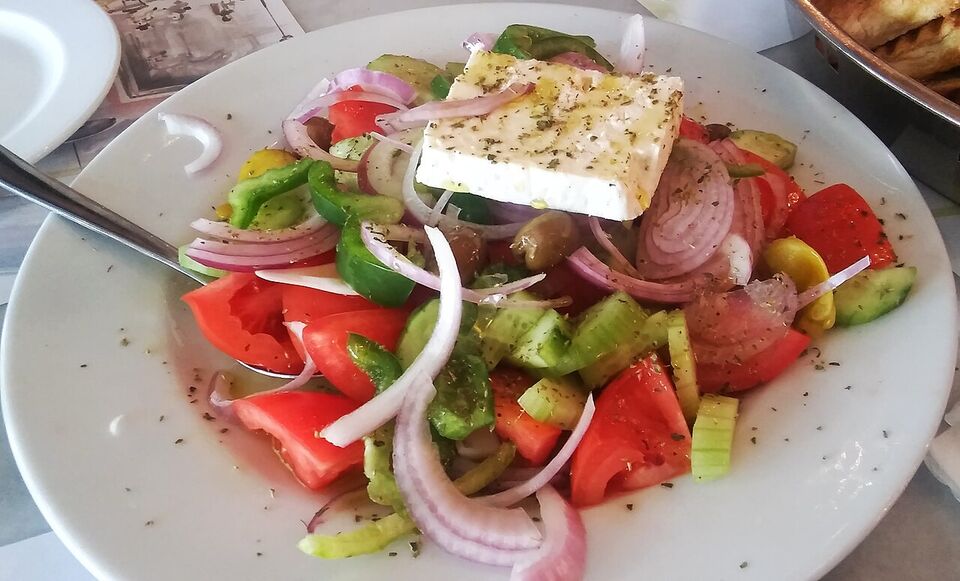
| Horiatiki | Village salad: tomato, cucumber, onion, olives, feta, oregano and olive oil | No lettuce. The feta sits on top in a slab. Each portion is large enough for two with other dishes |
| Gemista | Tomatoes and peppers stuffed with rice and herbs, baked | Often vegetarian; ask if there is meat. Best in summer |
| Fava | Yellow split-pea puree with olive oil, onion and capers | A Santorini specialty, but found everywhere; vegan |
| Dakos | Barley rusk topped with chopped tomato and soft cheese | Crete's signature starter; a light meal |
| Kleftiko | Lamb or goat slow-baked with potatoes, usually in paper or a clay oven | Name means "stolen meat", from the story of mountain bandits cooking in pits |
| Stifado | Beef or rabbit stewed with small onions, wine and spices | A winter dish; cinnamon and clove in the sauce |
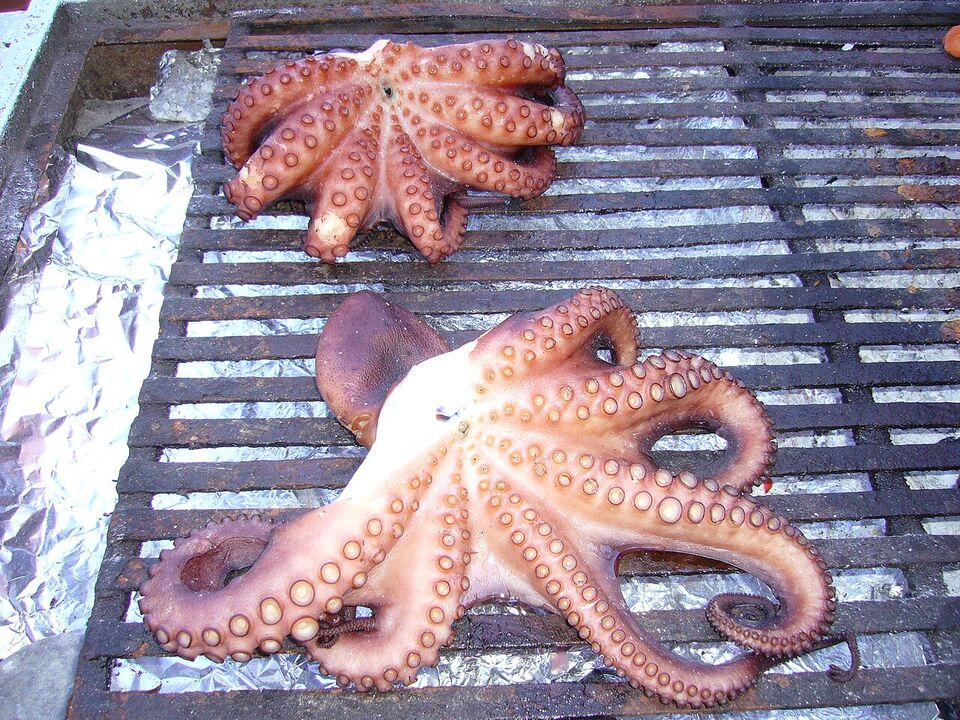
| Octopus | Grilled or stewed in wine; often dried on lines in the sun | Priced by the portion or the kilo. Order a small plate first |
| Saganaki | Fried cheese, or any dish cooked in the small two-handled pan | Fried cheese is the usual meaning; shrimp saganaki is also common |
| Tzatziki | Strained yogurt with cucumber, garlic and olive oil | Garlic is strong: everyone at the table should have it, or no one |
| Spanakopita | Phyllo pie with spinach and feta | The bakery staple. Also tiropita (cheese pie) |
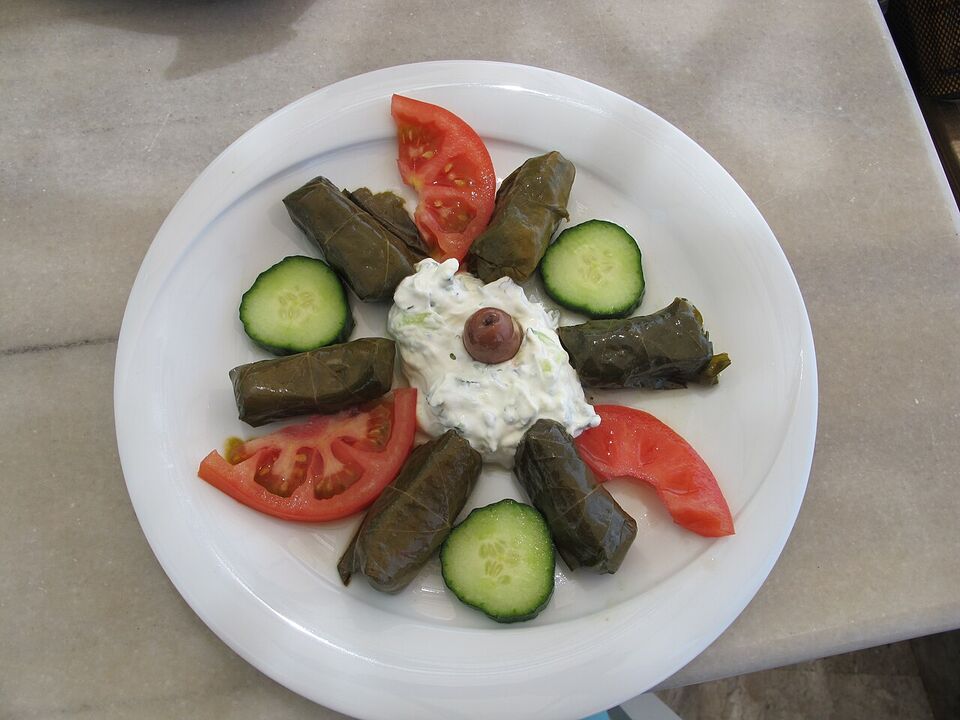
Other dishes worth learning: keftedes (herby meatballs), dolmades (stuffed grape leaves), briam (baked vegetables), giouvetsi (baked lamb or beef with orzo), bifteki (a seasoned patty, sometimes stuffed with cheese), loukaniko (sausage) and horta (boiled wild greens with lemon, a staple side).
Regional food
Crete
Cretan cooking is the island's own cuisine: dakos, snails cooked with rosemary, kalitsounia (small cheese or herb pastries), staka (a rich cream) and lamb with wild greens. Much of the food relies on wild herbs and local olive oil. Raki (tsikoudia) is served with the meal, and many places pour a free round. See Crete for the island itself.
Santorini
Santorini's volcanic soil grows small, sweet tomatoes, white eggplant and the yellow split peas used for fava. Tomato fritters (tomatokeftedes) are the local snack; you will see them at almost every taverna. The island's wine culture is covered on Greek Wine, Ouzo and Coffee and the island on Santorini. Caldera-view restaurants charge a premium for the view; village tavernas inland cost less.
The Ionian: Corfu and neighbors
The Ionian Islands share food ties with Italy and Venice. On Corfu, look for sofrito (veal in a white wine, garlic and parsley sauce) and pastitsada (rooster or beef in a spiced tomato sauce with thick pasta). You will also see bourdeto, a peppery fish stew. Ginger beer (tsitsibira) and kumquat liqueur are local drinks. See Corfu and the Ionian Islands.
Thessaloniki and the north
Thessaloniki is known for its bakeries and its meze culture. Bougatsa, a phyllo pastry filled with custard (sweet) or cheese or minced meat (savory), is a morning staple. The city also has a strong tradition of tsipouro tavernas and Balkan, Anatolian and Jewish influences in its food. See Thessaloniki and Northern Greece.
Athens
Athens has everything, from souvlaki counters to modern kitchens. We cover neighborhoods and food markets on Food and Drink in Athens.
Seafood and how to avoid price surprises
Fresh whole fish and shellfish are sold by the kilo, not by the plate. The price on the menu or the ice display is for 1 kg (about 2.2 lb) of raw weight, and it can be steep. Fish such as sea bream, sea bass, red mullet, grouper and lobster cost much more than sardines, anchovies, calamari or octopus.
A typical whole fish weighs 400 to 800 g, so a single portion could cost €20 to €40 at a mid-priced place (estimate) and much more for lobster or large grouper. The tab can climb quickly if the fish is large.
Watch out
Before the kitchen cooks anything priced "per kilo", ask three questions: What is the price per kilo? Can you weigh it for me now? What is the total? The waiter should weigh it at the table or on the scale and tell you the cost. Check the price on the bill against the weight. Do not accept "I'll bring you a nice one" without a number. Menus must show prices, but you protect yourself best by asking. If a bill looks wrong, ask politely for the itemized receipt; if still unresolved, call the tourist police on 171 (see Is Greece Safe?).
To keep seafood affordable, order small fried fish (marides, gavros), grilled calamari, octopus or a fish soup (kakavia), and share a single whole fish for the table. Ask what is local and in season: the waiter will usually tell you what came in that morning.
Vegetarian and fasting food
Greece is easier for vegetarians than many European countries because of the Orthodox fasting tradition. Many dishes are made with olive oil and vegetables only: fasolada (white bean soup), gigantes (baked giant beans), horta, briam, fava, stuffed vegetables and lentils. Salads and cheese pies are everywhere.
Fasting is called nistisima (fasting food). Observant Orthodox Greeks avoid meat, dairy and often fish during Lent (the seven weeks before Easter, starting on Clean Monday), the weeks before Christmas and August 1 to 14 before the Dormition. Many tavernas and bakeries offer a "nistisimo" menu or label items as such, which is good news for vegans. Shellfish, octopus and calamari are traditionally allowed during Lent, and many bakeries sell lagana bread on Clean Monday. See Easter in Greece for the Easter calendar and Festivals in Greece for the other dates.
- Ask "Ehete nistisima?" (do you have fasting dishes?) for vegan-friendly options.
- Check whether beans, greens and rice dishes were cooked with meat stock or pork fat; ask "horis kreas?" (without meat).
- Vegan options are easy in Athens and the big islands, but very limited in small villages in winter.
- If you have a serious allergy, learn the key words from Useful Greek Phrases and show the waiter a written note.
Sweets, bakeries and breakfast
A Greek breakfast is often a pastry and coffee, not a cooked meal. Look for koulouri (a sesame bread ring sold from street carts for about €1, estimate), cheese pies, bougatsa and yogurt with honey and walnuts. Hotels serve fuller buffets.
- Loukoumades: small fried dough balls with honey and cinnamon, served hot.
- Baklava: layered phyllo, nuts and syrup. Often sold by weight.
- Galaktoboureko: custard baked in phyllo and soaked in syrup. Best warm.
- Ekmek kataifi, rizogalo, portokalopita: other syrupy and creamy dessert staples.
- Spoon sweets: preserved fruit in syrup, offered to guests with a glass of water and often with coffee.
Bakeries sell cheese pies, spinach pies, sesame rings and bread by the piece or by weight, at prices much lower than cafes. A cheese pie from a bakery usually costs €2 to €3.50 (estimate), which makes it a cheap, filling breakfast or snack. For a pastry shop, a zacharoplasteio sells cakes, chocolates and syrup sweets.
Customs at the table
Bread, water and cover charges
Bread arrives automatically with the meal and is charged as a cover (kouver), usually €0.50 to €2 a person (estimate). Water usually arrives at the table, and in many places it is bottled and added to the bill (often €1 to €3 a bottle, estimate). Ask for "nero" (water) and say whether you want tap (vrysi) or bottled. On many islands tap water is safe but tastes of minerals or comes from desalination, so most visitors drink bottled. See Health and Medical Care for more.
Sharing
Sharing is the norm. Plates go in the middle; use your own fork to take portions. In some places the waiter will bring extra small plates for each person.
Free dessert, raki and the end of the meal
A free dessert or a small drink at the end is called kerasma (a treat). It is a courtesy, not a sign you are being rushed out. Accept it, and linger. If the staff bring a bottle of raki or a plate of fruit, a "efharisto" is enough.
Paying and splitting
Greek servers often do not bring separate checks. Split the total yourselves, or tell the waiter at the start. Cards are widely accepted (see Money in Greece), but small places still prefer cash, and some island tavernas have signal problems. Keep some euros in your pocket.
Insider tip
Ask the waiter what is cooked today. Many tavernas keep a few ready dishes in a counter (magirefta, "cooked food"), and these are often better and cheaper than grilled orders. Point at the pot, taste if offered, and order by the portion.
Tipping
Service is included in menu prices, so tipping is a thank-you, not an obligation. A common habit is to round up the bill or leave 5 to 10 percent in cash for good service. Leave it on the table or hand it over; a card terminal often has no tip option, and tips added on a card do not always reach the staff. In a casual place, a few euros is enough. For taxis, hotels and tour guides, see Money in Greece.
What meals cost
These are estimates for 2026 in everyday places, not tourist-trap restaurants. Island harbor and caldera-view restaurants run higher.
| Item | Typical price (estimate) | US$ |
|---|---|---|
| Gyros or souvlaki in pita | €4-€6.50 | about $4.50-$7.30 |
| Cheese pie or spinach pie from a bakery | €2-€3.50 | about $2.25-$4 |
| Horiatiki (village salad) | €8-€14 | about $9-$16 |
| Tzatziki or fava starter | €5-€8 | about $5.60-$9 |
| Grilled main (chops, souvlaki plate) | €10-€18 | about $11-$20 |
| Moussaka or pastitsio | €10-€16 | about $11-$18 |
| Whole fish, per kilo | €60-€110 and up | about $67-$123+ |
| Carafe of house wine (500 ml) | €7-€12 | about $8-$13 |
| Dinner for two, shared plates and wine | €40-€70 | about $45-$80 |
Athens and the larger towns tend to be cheaper than Santorini, Mykonos and other popular islands, where the same dish can cost 30 to 50 percent more near the harbor. For a daily budget, see Greece Trip Budget Calculator.
Save money
Eat your main meal at lunch, when many tavernas run cheaper plates of the day. Walk two or three streets from the harbor or main square. Choose house wine by the carafe over bottles, and fish by the portion, not the kilo.
Bringing food home
US Customs and Border Protection allows many commercial, sealed foods, but you must declare all food on your customs form. Olive oil, honey, dried herbs and sealed sweets such as baklava and spoon sweets are generally fine. Meat products are banned. Cheese rules depend on type and packaging, so declare it and ask the officer. Fresh fruit, vegetables, plants and seeds are often restricted. For liquids on the plane and alcohol allowances, see Shopping and Shipping Home.
The rules change, so check the CBP website before you pack food.
Add it to a route in the trip builder, or ask us to plan the hotels, trains and guides for you.