Overview
The Peloponnese is the large peninsula south of the Corinth Canal, and it holds the Greece of the history books: Mycenae, Epidaurus, Olympia, Sparta, Mystras. It also has some of the country's best driving, with mountain roads, castle towns and quiet beaches. Most visitors do Nafplio, Mycenae and Epidaurus in two or three days. A fuller loop adds Monemvasia, the Mani and the Messinian coast in a week or more.
Unlike the islands, the Peloponnese is a place you drive. Distances are modest on a map but the roads in the south are slow, so plan on 2 to 3 hours of driving most travel days. It also works in the off season, since the sites and towns are open all year, which makes it a good choice in autumn, spring or even winter. If you only have time for one thing, choose Nafplio with a day at Mycenae and Epidaurus.
Prices below are 2026 prices from the Ministry of Culture's ticket pages. Euro amounts are converted at €1 = US$1.12.
Nafplio
Nafplio was Greece's first capital after independence (from 1823 to 1834), and it still feels like a capital: neoclassical houses, Venetian walls, a harbor promenade and three fortresses. It is about 93 miles (150 km) from Athens and takes roughly 2 hours by car or by KTEL Argolidas bus (about 2 hr 10 min from Athens' Kifissos terminal). It is the best base for the area because Mycenae, Epidaurus and several beaches are within 40 minutes.
The old town and the harbor
The old town is a grid of stepped lanes and flower-hung balconies below the fortress, centered on Syntagma Square. It is compact, flat in the center and easy on foot. The seaside promenade (Arvanitia), which runs along the base of the rock, is pleasant at sunset. Nafplio is popular with Athenians on weekends, so book hotels ahead for Friday and Saturday nights and expect higher prices.
Palamidi Fortress
Palamidi, the Venetian fortress on the hill above the town (completed in 1714), is the sight everyone climbs. The traditional route is the stairway of 999 steps (the number locals give; some counts differ), which takes about 30 to 45 minutes up for most people. You can also go by car or taxi to a top parking area. The ticket is €20 (about $22), reduced €10 (about $11). Hours are 8 a.m. to 7 p.m. from April 1 to May 1, 8 a.m. to 8 p.m. from May 2 to August 31, closing earlier through September and October, and 8:30 a.m. to 3:30 p.m. from November to March. It is closed on January 1, March 25, May 1, Orthodox Easter Sunday, and December 25 and 26. Some blogs quote a much lower price; the €20 figure is on the Ministry's own page, so check tickets.hh.gr before you go.
Go early in summer (it is exposed and hot) or in late afternoon for the light. Bring water. Wear shoes with grip, as the steps are worn.
Bourtzi and the Akronafplia
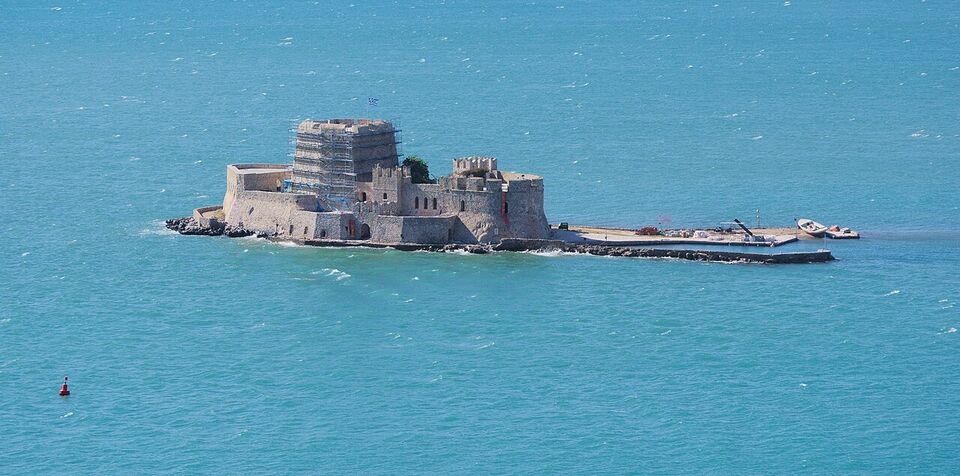
The Bourtzi is a small Venetian fortress on an islet in the harbor. Small boats cross from the harbor in about five minutes, and the return trip was €7 (about $8) on the local tourism site, and the fortress itself charged a separate €7 (about $8) admission when it reopened in 2023, so confirm both prices on the quay. Boats run about every 30 minutes in summer and until about 4 p.m. in winter. It is more a photograph than a visit. The Akronafplia, the older fortress above the old town, has walking paths and a hotel at the top. Our suggested visit is Palamidi in the morning, lunch in the old town and a walk along the promenade in the afternoon.
Insider tip
Nafplio is the best base on the whole peninsula for travelers without a car, because the KTEL bus gets you in and local taxis can take you to Mycenae and Epidaurus for a fixed price. Ask your hotel to arrange it the day before.
Mycenae
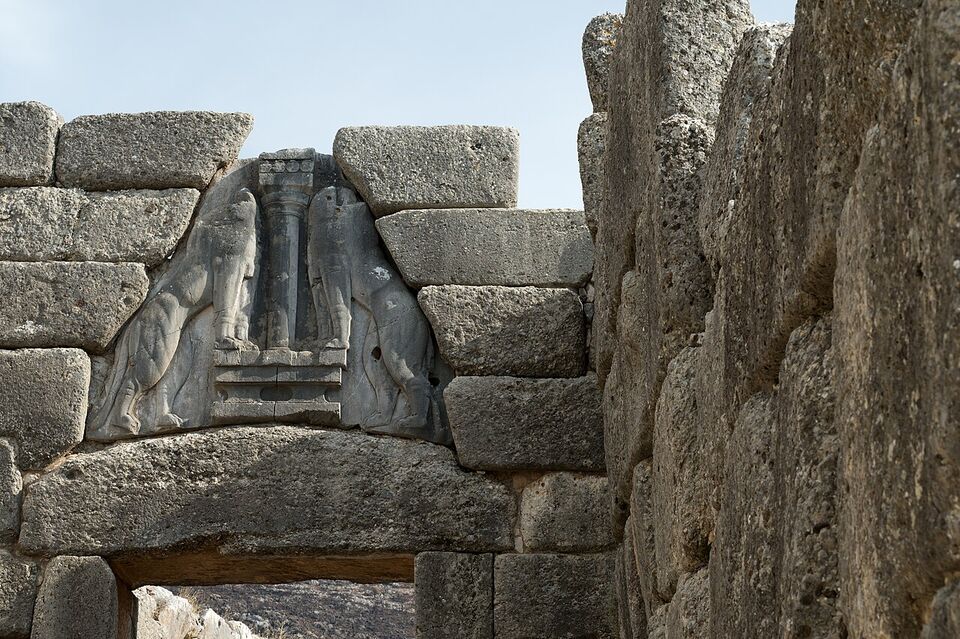
Mycenae is a Bronze Age citadel, the center of a civilization that flourished about 3,500 years ago and is tied to the legend of King Agamemnon. The Lion Gate, the grave circle and the great beehive-shaped Treasury of Atreus (a vaulted tomb just outside the citadel) are the main sights. The site is about 14 miles (22 km) north of Nafplio.
The ticket covers the citadel, the Treasury of Atreus and the museum: €20 (about $22), reduced €10 (about $11). Hours are 8 a.m. to 7 p.m. in April, 8 a.m. to 8 p.m. from May to August, with earlier closing in September and October (6:30 p.m. in the first half of October, 6 p.m. from October 16), and 8:30 a.m. to 3:30 p.m. from November through March. Last admission is 20 minutes before closing. It is closed on January 1, March 25, May 1, Orthodox Easter Sunday, and December 25 and 26. Do the museum first, as it makes the ruins readable. State sites, including Mycenae, Epidaurus, Olympia and Mystras, are free on the first and third Sunday of each month from November through March (next: November 15 and December 6 and 20, 2026), and on a few set days such as March 6, April 18, May 18, October 28 and the last weekend of September.
Plan about 2 to 2.5 hours. The site is open to sun and wind, with little shade, so go in the morning. Our ancient sites guide compares it with the other big archaeological sites.
Epidaurus
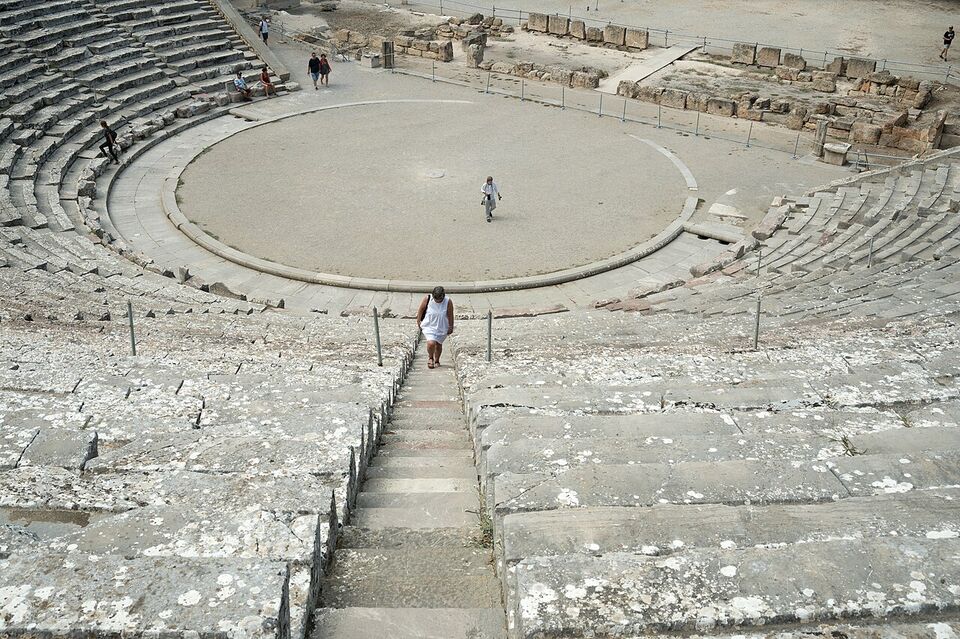
Epidaurus has two draws. The first is the ancient theater, built in the 4th century BC and famous for its acoustics: a person speaking in the middle can be heard in the top rows, and guides will demonstrate by dropping a coin. The second is the sanctuary of Asklepios, the god of healing, which was a medical and pilgrimage center in the ancient world. The site is about 20 miles (32 km) east of Nafplio.
The ticket is €20 (about $22), reduced €10 (about $11), and covers the site and the museum. Hours are 8 a.m. to 7 p.m. in April, 8 a.m. to 8 p.m. from May to August, earlier closing in September and October, 8 a.m. to 5 p.m. from November to February and 8 a.m. to 6 p.m. in March. Closed days are the same as Mycenae. Allow 1.5 to 2 hours.
The summer festival
The Athens Epidaurus Festival stages ancient drama and other performances in the ancient theater through the summer, traditionally from about June to August. Performances are mostly in Greek, and you should check whether surtitles in English are offered. The 2027 program was not yet published as of November 2026, and tickets typically go on sale in spring, so watch aefestival.gr. Seats are stone, so bring a cushion (some are rented there). Shows start in the evening and end late; plan a night in Nafplio so you are not driving back to Athens at midnight. Our festivals guide has more on summer events.
Ancient Olympia
Olympia, in the west of the peninsula, is where the ancient Olympic Games were held from 776 BC. You walk among the ruins of the Temple of Zeus, the stadium and the workshops. The museum has the sculptures from the Temple of Zeus and the marble Hermes attributed to Praxiteles. It is the most atmospheric of the big sites in autumn and winter, when there are few visitors.
One ticket covers the ancient site, the Museum of Olympia and the Museum of the History of the Olympic Games: €20 (about $22), reduced €10 (about $11). Hours are 8 a.m. to 8 p.m. from April to August, closing earlier in September and October (6 p.m. from October 16), and 8:30 a.m. to 3:30 p.m. from November through March. Closed days match the other state sites. Allow half a day. The modern village is small, with plenty of rooms and tavernas.
Olympia is about 200 miles (320 km) from Athens, roughly 4 hours by car, so most people stop here as part of a loop, not as a day trip. For the wider picture, see our ancient sites and museums guide.
Mystras and Sparta
Mystras is a Byzantine hill town of ruined palaces and painted churches on the slope above modern Sparta. It was the last great center of the Byzantine empire's culture before the Ottoman conquest in 1460. Ancient Sparta, by contrast, has little to see apart from a small museum and some ruins; most visitors skip it.
The ticket is €20 (about $22), reduced €10 (about $11), and covers the site and museum. Hours are 8 a.m. to 8 p.m. from April to August, closing earlier in autumn, and 8:30 a.m. to 3:30 p.m. from November through March. On Tuesdays the Palace section opens at 11 a.m. The site is steep: enter by the upper gate and walk down if you can, so that the walk is mostly downhill. Allow 2 to 3 hours. Wear shoes with grip.
Monemvasia
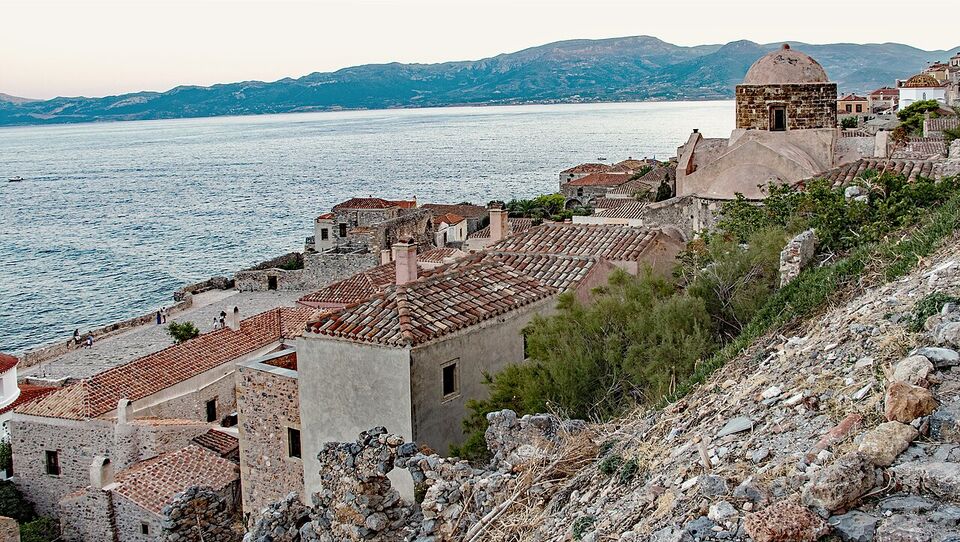
Monemvasia is a medieval walled town built on the side of a huge rock off the southeast coast, connected to the mainland by a causeway. It is one of the most distinctive places in Greece: stone lanes, small churches and a ruined upper town on the plateau. The name means "single entrance", and cars cannot enter the walled town. You park outside and walk in, and luggage is carried to your hotel.
The town's lanes are free to walk, and the climb to the upper town and the church of Agia Sofia (on the cliff edge) is worth the time. Check locally for the opening hours of the upper town. Monemvasia has been a resort for Greeks for a long time, so rooms in the walled town fill on summer weekends and in August; book ahead. Monemvasia is about 3 hours by road from Nafplio and a little under 4 hours from Athens (about 200 miles, 320 km).
Watch out
Luggage is hard in the old town: it is cobbled, steep and car-free. Pack light, ask your hotel if it can send a porter, and do not arrive in the dark if you can avoid it.
The Mani
The Mani is the rugged middle finger of the southern Peloponnese, and the most dramatic landscape on the peninsula. It is known for its stone tower houses (built as fortified homes during old family feuds), its austere villages and its sea caves. Allow two days; roads are narrow and winding, and distances take longer than they look.
Areopoli, Limeni and Vathia
Areopoli is the main town, with stone houses and a central square, and a good base. Limeni, a tiny harbor on a bay a few minutes away, is a place to swim and eat fish. Vathia, farther south, is a village of tall tower houses on a hill and the place to see the architecture. The area is bare, hot and windswept, with few services in the south, so top up your fuel and water.
Caves of Diros
The Caves of Diros (Pyrgos Dirou), near Areopoli, are a system of caves with an underground lake. Visitors travel through part of it by boat guided by a boatman. The 2026 ticket price and hours were not published where we looked: a reseller listed a land-section ticket from about $10, but the cave operator publishes the current schedule and prices, so check diros-caves.gr or call +30 27330 52222. The caves may close in heavy rain. Allow about 1 to 1.5 hours.
Kalamata and Messinia
Kalamata is a working city on a bay in the southwest, known for its olives, olive oil and an international airport with seasonal flights. It makes a good end of the loop or a base for the Messinian coast. Messinia is greener and gentler than the Mani, with beach towns and old castles at Methoni and Koroni.
The coast road south and west of Kalamata reaches Pylos and Navarino Bay, where a famous naval battle took place in 1827, and the beach at Voidokilia, a perfect horseshoe of sand. Messinia has some of Greece's best olive groves; visits to olive presses and farms can be arranged locally. Our Greek food guide explains the difference between regional oils.
Driving routes and how many days
You can drive in from Athens on a motorway: the Athens-Corinth-Tripoli road reaches Nafplio and the Olympia road (Olympia Odos) leads west. Tolls are charged at booths on the motorways, typically €1 to €3 each, and in total a long run can add up to about €25 (about $28); exact amounts vary by plaza, so carry cash or a card. Fuel was around €2.10 a liter in November 2026 (about $9 a gallon). Read our driving in Greece guide for the license, insurance and parking rules, and carry an International Driving Permit.
| Leg | Distance | Driving time |
|---|---|---|
| Athens to Nafplio | About 93 miles (150 km) | About 2 hr |
| Nafplio to Mycenae | About 14 miles (22 km) | About 30 min |
| Nafplio to Epidaurus | About 20 miles (32 km) | About 40 min |
| Nafplio to Monemvasia | About 3 hr by road | About 3 hr |
| Monemvasia to Areopoli (Mani) | Mountain and coast roads | About 2.5 to 3 hr |
| Areopoli to Kalamata | Mountain roads | About 1.5 hr |
| Kalamata to Olympia | Inland roads | About 2 to 2.5 hr |
| Olympia to Athens | About 200 miles (320 km) | About 4 hr |
The times above are rough estimates for planning; check a map app on the day. Some mountain roads, such as the Taygetus crossing between Kalamata and Sparta, can be icy or closed after snow in winter. Wandering goats and sheep are normal; watch for sharp bends and slow trucks. Mapping apps may route you down very narrow village lanes, so stay on the main road when in doubt.
Suggested routes
- Day 1
Athens to Nafplio
Stop at the Corinth Canal, then settle in Nafplio and walk the old town.
- Day 2
Mycenae and Epidaurus
Mycenae in the morning, Epidaurus in the afternoon, dinner in Nafplio.
- Day 3
Palamidi, then Monemvasia
Climb Palamidi early, then drive to Monemvasia for the night.
- Day 4
Mystras and the Mani
Cut inland to Mystras, then south to Areopoli for two nights in the Mani.
- Day 5
The Mani
Diros caves in the morning, Vathia and Limeni in the afternoon.
- Day 6
Kalamata and Messinia
Drive to Kalamata and spend the night, or push on to Pylos for Voidokilia beach.
- Day 7
Olympia
See the site and museum, then drive to Athens (about 4 hours) or overnight near Olympia.
For a short trip, do days 1 and 2 only. For a long weekend, add Monemvasia. Drop-off fees for a rental car in a different city apply, so a loop that returns to the start may be cheaper. A seven-day plan has long driving days; nine to ten days lets you slow down.
Where to stay
Choose a base by how you will travel. In Nafplio, stay in or near the old town: $$ boutique hotels and $ guesthouses are common, and prices rise on weekends. In the Mani, Areopoli and Limeni offer stone guesthouses, usually $ to $$. Monemvasia's walled town has atmospheric rooms at $$ and up; the new town across the causeway is cheaper but less interesting. Near Olympia, the village has many $ rooms. Kalamata and Pylos have hotels at all levels.
Many beach hotels close from late October to April, and some Mani guesthouses close in winter. Hotels charge a climate resilience fee at checkout (2026 rates: from €0.50 to €15 per room per night depending on stars and season), which is separate from the room price. See our where to stay guide for the details and for how to pick between a hotel and a rental.
When to go
April to June and September to October are best: warm, with the countryside green in spring and the sea warm in autumn. July and August are very hot at the archaeological sites (the Ministry can close outdoor sites in the middle of the day in heat waves). Winter is mild on the coast and quiet, but short site hours (most close at 3:30 p.m.) and fewer open hotels make the trip tighter. Our when to go guide compares the seasons. If you are combining the Peloponnese with Athens, our Athens guide and day trips guide help with the first stop.
Add it to a route in the trip builder, or ask us to plan the hotels, trains and guides for you.