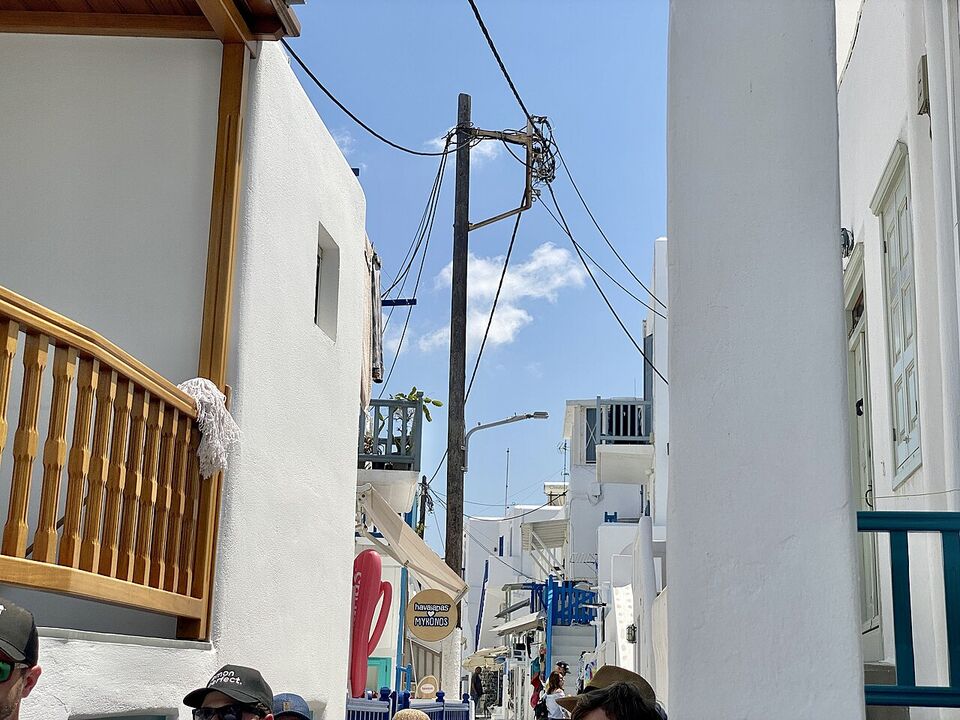
Overview: what you can stay in
Greek accommodation ranges from big resorts and city hotels to simple rooms above a family's taverna. The best choice depends on the place and the season. On Santorini and Mykonos, location sets the price; in Athens and on most islands, a clean, modest room costs far less than at home. This page covers the types, estimated prices, the added fee, what to expect in the room, check-in, and the best areas to stay in Athens, Santorini, Mykonos and Crete.
For the places themselves, see Athens, Santorini, Mykonos and Crete. For overall budgets, see Money in Greece.
Types of accommodation
Hotels
Official star ratings run from one to five. City hotels in Athens and resort hotels on the islands usually have a reception, a breakfast room and daily cleaning. Star ratings reflect facilities such as a pool or lift, not always the quality of the room.
Family-run rooms and studios
Greek domatia (rooms to let) and studios (small units with a kitchenette) are a core of island travel. Expect a simple room, a balcony or terrace, a fridge and often a host who gives local advice. Studios suit stays of three nights or more.
Cave and caldera hotels
Many Santorini hotels are carved into the volcanic cliff in former cave dwellings (yposkafa), with whitewashed vaults, plunge pools and views over the caldera. They are among the most expensive rooms in Greece, and stairs can be steep, so ask about luggage and mobility.
Villas
A villa with a pool suits families and groups, mostly on Crete, Mykonos, Corfu and Paros. Check the distance to shops, whether you need a car, and who pays for cleaning and the pool.
Agrotourism
Small guesthouses on working farms and in mountain villages, mainly in Crete, the Peloponnese and Epirus. They serve local food, are quiet and are often reached by car only. See Epirus and the Zagori villages.
Hostels and campsites
Hostels exist in Athens and on busy islands, and campsites are open mostly in summer. Both are exempt from the climate resilience fee.
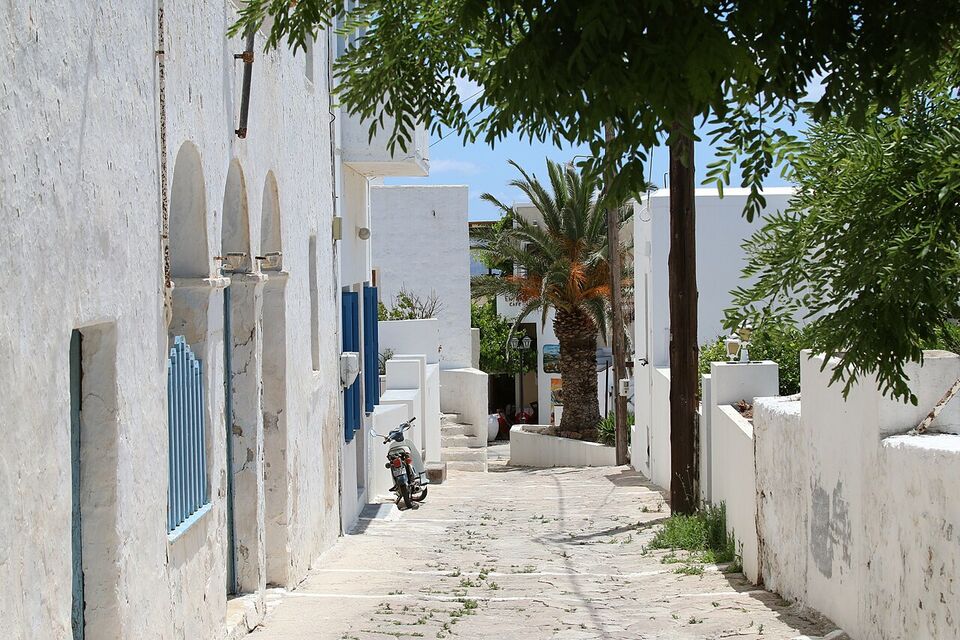
Prices by place: tiers and estimates
Hotel prices swing widely. The table below gives our estimates for a double room per night in peak and low season, based on typical listings and not on quotes. Real prices depend on the date, the view, the exact hotel and how early you book. Treat the numbers as a way to compare places, and check live prices for your dates. Our tier symbols: $ is under $120 a night for a double, $$ is $120 to $300, and $$$ is over $300.
| Place | Peak (Jul-Aug) estimate | Low season estimate | Tier in peak |
|---|---|---|---|
| Athens, central | About €120-€250 (about $135-$280) | About €60-€140 (about $67-$157) | $ to $$ |
| Santorini, Fira and Oia caldera | About €300-€800+ (about $335-$900+) | About €120-€350 (about $135-$390) | $$$ |
| Santorini, Kamari and Perissa | About €100-€220 (about $112-$246) | Many hotels closed | $ to $$ |
| Mykonos Town and beaches | About €200-€600+ (about $224-$670+) | Most hotels closed | $$ to $$$ |
| Naxos, Paros | About €100-€250 (about $112-$280) | About €50-€110 (about $56-$123) | $ to $$ |
| Crete, Chania and Rethymno | About €90-€220 (about $101-$246) | About €50-€110 (about $56-$123) | $ to $$ |
| Mainland towns (Nafplio, Delphi, Kalambaka) | About €60-€150 (about $67-$168) | About €45-€100 (about $50-$112) | $ |
Shoulder months of May, June, September and October fall between these figures. The first half of October can still be warm, but beach hotels start closing at the end of the month. See When to Go to Greece for the calendar.
Save money
The same room can cost half as much in late May or late September as in August. Staying one street back from the caldera edge or the harbor on Santorini and Mykonos can also cut the price a lot without losing much, and the walk is short.
The climate resilience fee
Since 2025, Greece charges a climate resilience fee on accommodation. It replaces the older stay tax and is charged per room (or unit) per night, paid by the guest at the hotel at check-out. It is separate from the room price on many bills, so it can surprise you. Buildings listed as architectural heritage are exempt, as are youth hostels and campsites. The 2026 rates below come from the text of the law (Law 5177/2025, article 44), which sets April to October and November to March rates; confirm the amount with your hotel.
| Type of lodging | April-October | November-March |
|---|---|---|
| 1-2 star hotels and rented rooms | €2 (about $2.24) | €0.50 (about $0.56) |
| 3 star hotels | €5 (about $5.60) | €1.50 (about $1.68) |
| 4 star hotels | €10 (about $11.20) | €3 (about $3.36) |
| 5 star hotels | €15 (about $16.80) | €4 (about $4.48) |
| Short-term rentals (apartments) | €8 (about $8.96) | €2 (about $2.24) |
| Detached houses over 80 m2 and villas | €15 (about $16.80) | €4 (about $4.48) |
A week in a 4-star hotel in July adds €70 (about $78), and a week in a villa adds €105 (about $118). It is a modest sum next to the room price, but many travelers forget it in their budget. See our money guide for the other taxes.
Breakfast, air conditioning and bathrooms
Breakfast
Many hotels include breakfast, and Greek breakfast is usually a buffet or plated spread of eggs, cheese, ham, yogurt with honey, pastries, fruit and coffee. In family-run places the host may bring a plate to your terrace. Studios and rentals often have no breakfast. Cafes serve coffee and pastries such as koulouri (a sesame bread ring) and tiropita (cheese pie) for a few euros.
Air conditioning
Air conditioning is standard in most hotels and many rooms, but it matters in summer, especially in Athens, where nights stay hot during heat waves. Ask whether the room has it, whether it is included, and whether it works from a remote or only when you present a key card. Some small places charge a fee per day or limit the hours. In winter, check that there is heating, because stone houses and older buildings can be cold and damp, and not all rooms have it.
Small bathrooms and the paper-in-the-bin rule
Bathrooms are often small, with a handheld shower and no curtain or tub. Water can run cold if many guests shower at once on a solar-heated system, and hot water may need a switch on the wall. The pipes in many buildings are narrow, so the usual rule is to put used toilet paper in the small bin next to the toilet instead of flushing it. A sign in the bathroom will say so. Newer hotels often allow flushing, but if there is a bin and a sign, follow it. This is a common plumbing rule that surprises first-time visitors.
Different from home
Rooms are smaller than in the US, with twin beds common and a double sometimes made of two singles. Ask for a double bed if you want one. Elevators are small, and many older buildings in historic centers have steps and no lift.
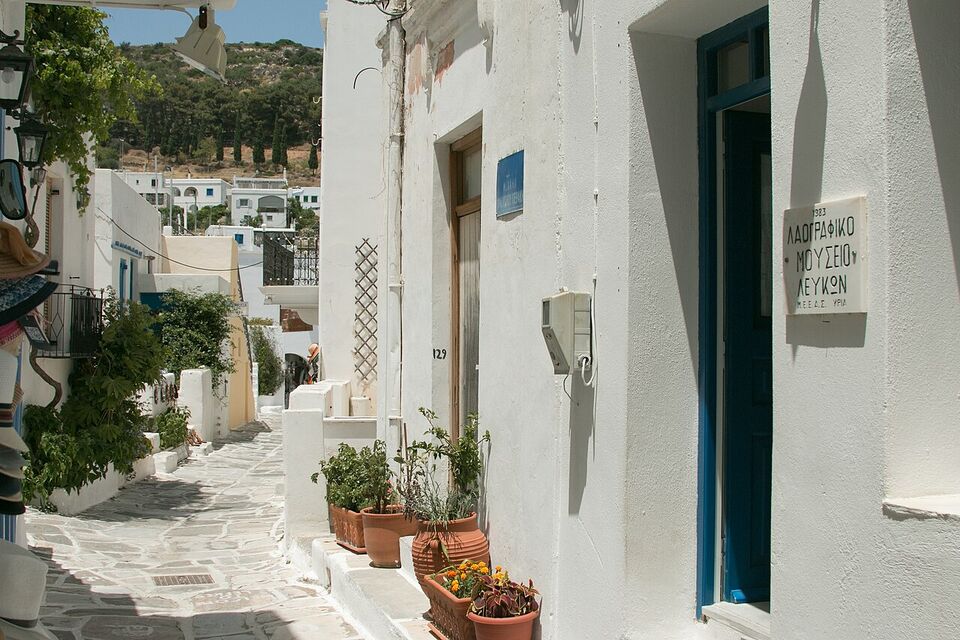
Check-in, check-out and registration
Check-in is usually from about 2 or 3 p.m. and check-out between 11 a.m. and noon. If you arrive early after a ferry or overnight flight, ask whether you can leave bags. Many small places send you the check-in time and a message the day before. If you arrive late, tell the host in advance; some places have no night reception.
Hotels and rentals must register guests, so you hand over your passport at check-in, and they photocopy or scan it. Expect this and carry your passport. A deposit or a card hold may be taken. Pay the climate resilience fee at check-out. Tipping at hotels is not expected, but a euro or two for a porter or leaving small change for housekeeping is welcome.
Many islands have rooms without a front desk. The host meets you at the port or gives you a code. Confirm how you will meet and whether the place is up a long flight of steps. See Getting Around Greece for how to reach islands and our ferries guide for arrival times.
Best areas in Athens
- Plaka and Monastiraki: the old town below the Acropolis. Walkable to the main sights and the metro. Busy and a little touristy at night.
- Koukaki: south of the Acropolis, near the Acropolis Museum and Acropolis metro stop. Residential, with cafes and local restaurants.
- Syntagma and Kolonaki: central, with parliament, shops and quieter streets in Kolonaki. Syntagma has demonstrations from time to time.
- Psyrri and Gazi: nightlife areas. Good if you want bars and late dinners, less so for early sleep.
- Near the airport or Piraeus: useful for a very early flight or a ferry, but not for sightseeing.
Pickpockets work the metro and busy streets, so keep valuables secure; see Is Greece Safe?. More on neighborhoods is in our Athens guide.
Best areas on Santorini, Mykonos and Crete
Santorini
The caldera side, from Fira north through Firostefani and Imerovigli to Oia, has the famous views and the highest prices. Fira is the central town and bus hub, Imerovigli is quieter, and Oia is the most crowded at sunset. Kamari and Perissa on the east coast are beach areas with lower prices, but many hotels close at the end of October. Pyrgos and villages inland offer quiet and lower prices, with a need for a car or bus. If you stay on the caldera, expect many steps; ask about luggage transfer. More in our Santorini guide.
Mykonos
Mykonos Town (Chora) is walkable, with narrow streets and nightlife. Ornos and Platis Gialos are sandy beach areas with buses and taxis to town; Agios Stefanos is quieter. Hotels near the busiest beach clubs are loud at night. See Mykonos.
Crete
Chania's old town and Venetian harbor are the most atmospheric base on the island; Rethymno is smaller and quieter; Heraklion is a practical base for Knossos and the museum, less so for a beach holiday. Beach resorts line the north coast. A car is useful for most stays. See Crete.
When to book
| Destination and time | Book ahead by |
|---|---|
| Santorini and Mykonos, July-August | 6 to 9 months for the best choice |
| Santorini and Mykonos, May-June and September-October | 3 to 5 months |
| Other islands, July-August | 3 to 6 months |
| Athens | 2 to 3 months in spring and fall; sooner for Easter |
| Orthodox Easter (May 2, 2027) | As early as you can; see Easter in Greece |
| Winter | A few weeks, but check which hotels are open |
These are our planning suggestions, not official rules. Look for free cancellation if your plans may change, particularly if you depend on a ferry. Book your Athens first night close to the airport or the port if you arrive late. Many beach hotels close from late October, and many islands thin out from November, so check opening dates before you book. See Greece in November.
Questions to ask before you book
Listings often leave out the details that matter most in Greece. Before you pay, check the following, either on the listing or by message to the host:
- How many steps are there from the street or the bus stop to the room, and can bags be carried?
- Is air conditioning included, and is there heating in winter?
- Is the place open on your dates? Many island hotels close from late October to April.
- How far is it from the port or the bus, and is there a taxi or a host pickup?
- Is the climate resilience fee included in the price or added at check-out?
- What is the cancellation rule if a ferry is cancelled by wind?
- Is there noise from a beach club, a bar street or a church bell? Mykonos Town and parts of Athens are loud late at night.
The photos in a listing show the best angle. Check the exact location on the map, and read the room's size and the floor. A "sea view" can mean a slice of sea between two buildings. A "caldera view" is worth asking about by room type, since views vary widely within one hotel.
Stairs, access and families
Many Greek hotels and houses are in hill towns and old centers with steps, narrow lanes and few lifts. This is the case in Santorini's cliff-top villages, Hydra's town, and the old towns of Rhodes, Chania and Nafplio. Wheeled cases do not roll well on cobbles. If you or a family member has trouble with stairs, say so when you book and ask for ground-floor rooms or places near a road.
Families usually do best in a hotel with a pool or a beach nearby, or a studio with a kitchen. Cribs and extra beds are often available for a fee, but you need to ask. Triple and quad rooms exist but are fewer than doubles, and a child over a certain age may count as an adult, so confirm the rule when you book. Safety around pools and balconies varies, so look at them with your own eyes on arrival.
Payment, deposits and receipts
Most hotels take Visa and Mastercard, but small guesthouses may ask for cash, particularly outside cities. Greek law requires businesses to give a receipt, and the law pushes card acceptance, but smaller family places may still prefer cash, so keep some on hand. Booking platforms may take payment up front, at booking or at the hotel. Read when you pay and when you can cancel for free. For cash and cards in general, see Money in Greece.
Short-term rentals
Apartments and houses rented through online platforms are common, but rules are tightening. Greece has a registration system for short-term rentals, and legal listings carry a registration number. Greece has banned new short-term rental registrations in the first, second and third municipal districts of central Athens, and in January 2026 extended the ban to December 31, 2026. Properties already registered can keep operating, so you may still find legal rentals there; check that the listing shows a registration number. Golden Visa properties cannot be used for short-term letting.
Rentals have the climate resilience fee at the short-term rental rate, listed above. Ask about check-in arrangements, cleaning fees and the host's response time. A hotel gives you a front desk; a rental gives you space and a kitchen. For longer stays, see Long Stays in Greece.
Add it to a route in the trip builder, or ask us to plan the hotels, trains and guides for you.