Overview
Greece uses the euro. Cards work in most places that matter to a visitor, but cash still makes small purchases easier, and a handful of habits (declining dollar conversion, avoiding one brand of ATM, tipping in cash) save real money. This page covers the currency, when to use a card or cash, ATMs, tipping, the hotel fee on your bill, the cruise fee, the VAT refund and what a typical day costs.
We convert at €1 = US$1.12, the approximate rate in early November 2026. The rate moves daily, so treat dollar figures as guides. Euro amounts use the American format, so €1,250 means one thousand two hundred fifty euros. For the bigger planning picture, see the budget page and the converters page.
Cards or cash in 2026
Since 2024, Greek law has required a long list of businesses to accept card payments, including taxis, travel agents, transport operators, museums and historic sites, markets and many professionals, with fines for those that cannot take them. Instant bank payments (IRIS) are also offered by businesses, and there are limits on large cash sales (check AADE for the current figures). Together, these rules mean cards are much more common than a few years ago.
Visa and Mastercard are accepted nearly everywhere. American Express is less common, and Discover is rare. Contactless payment with a phone or card is normal, and you can usually pay without a PIN for small amounts.
| Where | Cards? | What we suggest |
|---|---|---|
| Hotels, larger restaurants, supermarkets, pharmacies | Yes | Card is fine |
| Tavernas in Athens and big islands | Mostly | Card for the bill; cash for the tip |
| Small village tavernas, bakeries | Sometimes | Ask before you order; keep cash |
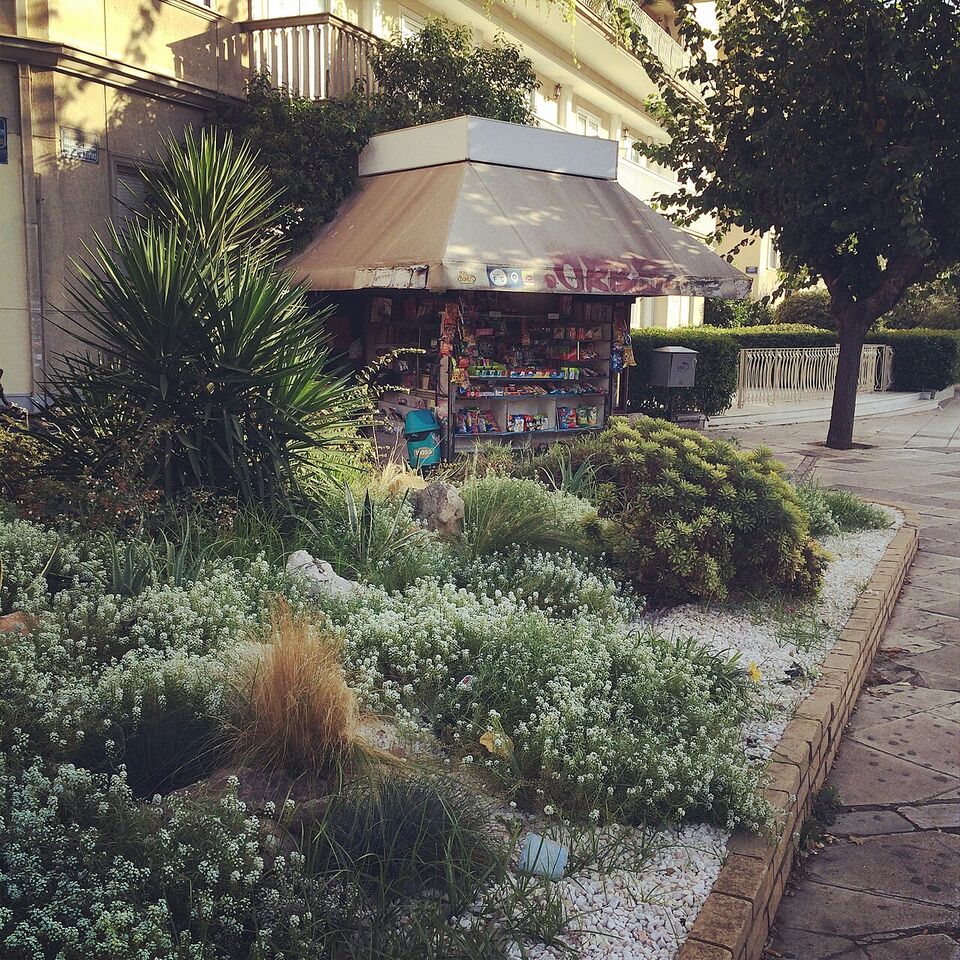
| Kiosks (periptera) | Often, but with a minimum | Cash for water, gum, tickets, SIM top-ups |
| Beach bars and sunbed rental | Usually | Cash is easier when the signal is poor |
| Island taxis | Required by law, but not always working | Ask before you get in; carry cash |
| Ferries | Yes online and at ticket offices | Buy tickets ahead; cash for café and snacks on board |
| Local buses, KTEL buses | Varies | Cash for small routes |
| Athens metro, buses | Contactless Visa or Mastercard | See Athens and getting around |
| Monasteries, small museums | Often not | Cash (Meteora monasteries charge about €5 each, cash) |
In practice: on a typical day you will use your card for most things and your cash for a coffee at a kiosk, a tip, a bus, a beach bar on a remote island or a small village taverna that has no working terminal. Many islands have patchy mobile signal in some spots, and card terminals fail when the signal does.
Insider tip
Tell your bank you are traveling, and carry two different cards from two different networks if you can (for example, one Visa and one Mastercard). If a terminal rejects one card, the other often works. Keep one card in the hotel safe.
Use a card without foreign fees
A card with no foreign transaction fee saves about 3% on every purchase. Check your card's terms before you go. Also, when a terminal asks whether to pay in euros or dollars, always choose euros (see the next section).
ATMs and dynamic currency conversion
An ATM is the usual way to get cash. Withdraw larger amounts less often, because many US banks charge a flat fee for each foreign withdrawal, and the ATM owner may add its own. Bank-branch ATMs belong to Greek banks such as Alpha Bank, Eurobank, National Bank of Greece and Piraeus Bank. They are the safest choice, especially if one is inside the branch lobby.
We suggest avoiding the standalone Euronet machines that sit on tourist streets and at ports. Euronet ATMs are known for high fees and poor exchange rates, so they are the most likely place to lose money. If an ATM shows a fee before you confirm, read it.
Decline the conversion to dollars
Some ATMs and card terminals offer to charge you in US dollars ("dynamic currency conversion"). It looks convenient, but the exchange rate they use is worse than your bank's rate, usually by several percent. The correct answer is always "no" or "continue in euros" (the local currency). The same applies in shops and restaurants: if the receipt shows US dollars, ask for it to be redone in euros.
Watch out
When a screen offers "Pay in USD" or "Guaranteed exchange rate", press the euro option. Pressing the dollar option is the single most common way tourists overpay.
Do not exchange money at airport counters or in tourist shops, which have poor rates and high fees. Dollars are not accepted in shops. You do not need to order euros before you go, but about €100 (about $112) on arrival can be helpful for the first taxi, the bus and a snack.
Tipping the Greek way
Tipping is customary in Greece but not obligatory, and a service charge is not usually added to the bill. Here are the usual amounts.
| Situation | What to leave |
|---|---|
| Taverna or restaurant, good service | 5-10% of the bill, or round up |
| Café or bar | Round up, or leave €1-€2 (about $1.12-$2.24) |
| Taxi | Round up to the next euro |
| Hotel porter | €1-€2 (about $1.12-$2.24) a bag |
| Housekeeping | €1-€2 (about $1.12-$2.24) a night, left in the room |
| Tour guide | €5-€10 (about $5.60-$11.20) per person for a half-day tour, more for private guides |
Leave the tip in cash on the table or hand it to the server. A tip added to a card payment may not reach the staff, and many small places cannot add one to the card at all. At a taverna, you often get a free dessert, fruit or a small bottle of raki or tsipouro at the end of the meal (kerasma, a treat from the house). It does not replace the tip.
Different from home
In the US, 18-20% is standard. In Greece that would be generous. Servers earn a wage, and the tip is a thank-you, not part of their pay. Also, the bill (logariasmos) will not arrive until you ask for it: say "to logariasmo, parakalo".
The climate resilience fee on your hotel bill
Since 2025, Greek accommodation has had a per-night charge called the climate resilience fee (telos anthektikotitas stin klimatiki krisi). It replaced the older stay tax. You pay it at the hotel, usually at check-out, per room per night, and it is separate from the room rate, so booking sites often do not include it in the total. Here are the 2026 rates.
| Type of accommodation | April-October | US$ | November-March | US$ |
|---|---|---|---|---|
| 1-2 star hotels, rented rooms | €2 | about $2.24 | €0.50 | about $0.56 |
| 3 star hotels | €5 | about $5.60 | €1.50 | about $1.68 |
| 4 star hotels | €10 | about $11.20 | €3 | about $3.36 |
| 5 star hotels | €15 | about $16.80 | €4 | about $4.48 |
| Short-term rentals (Airbnb-type) | €8 | about $8.96 | €2 | about $2.24 |
| Detached houses over 80 m2 and villas | €15 | about $16.80 | €4 | about $4.48 |
Campsites and youth hostels are exempt. For a week in a 4-star hotel in July, the fee is 7 x €10 = €70 (about $78). For a week in a villa in August it is 7 x €15 = €105 (about $118). It is not large, but it surprises people at check-out. The law (Law 5177/2025, article 44) sets the higher rate for April to October and the lower rate for November to March. The figures above match that law and the tax authority's February 2026 guidance. Rates for 2027 may differ; the tax authority (AADE) publishes the rules.
Ask whether the fee is included in your price when you book. For more on choosing where to stay, see where to stay.
The cruise passenger fee
Cruise passengers pay a separate fee, per passenger, each time they go ashore at a Greek port. The cruise line adds it to your onboard account. Staying aboard avoids it. In 2026:
| Port | June-September | April, May, October | November-March |
|---|---|---|---|
| Santorini and Mykonos | €20 (about $22) | €12 (about $13) | €4 (about $4.48) |
| All other Greek ports | €5 (about $5.60) | €3 (about $3.36) | €1 (about $1.12) |
Santorini also limits cruise arrivals to 8,000 passengers a day in 2026. See the cruises page for ports, tender boats and how to plan a port day.
VAT and the tax refund
Greek VAT (FPA) is 24% on most goods, with reduced rates of 13% and 6% on some items such as books and medicines. The price on the tag already includes VAT. Some eligible islands have a lower rate, but the major Cyclades such as Santorini and Mykonos are not among them.
Visitors from outside the EU can get the VAT back on goods they take home, if they spend at least €50 (about $56) on one receipt in a shop that takes part in the tax-free scheme. In short:
- Ask for the tax-free form in the shop and show your passport.
- Do not use or wear the goods in Greece in a way that breaks the rules of the scheme; keep them in their packaging if you can.
- At your last point of exit from the EU, have the form stamped by customs before you check your bags.
- Claim the refund from the refund company (a booth at the airport, or by post or card).
Refunds are less than the full 24% after the operator's fee. The step-by-step version, including what to do if you leave from another EU country, is on the shopping and bringing things home page. The tax authority's own page was not available when we checked, so confirm the threshold at the shop.
What things cost: a daily budget
These ranges are per person per day for two people sharing a room: they include your half of the room, food, local transport and sights, but not international flights. They are approximate planning figures, not quotes. Prices in 2025 and 2026 rose faster than before, and Santorini, Mykonos and the Athens center cost more than other places.
| Style | Per person per day (€) | US$ | What it covers |
|---|---|---|---|
| Budget | €90-€130 | about $100-$146 | Hostel dorm or simple room share, bakery breakfast, souvlaki or a taverna dinner, buses, one site |
| Mid-range | €150-€250 | about $168-$280 | Share of a 3-4 star hotel room, taverna lunch and dinner, ferry or taxi, one or two tickets |
| Comfortable | €300-€500+ | about $336-$560+ | 4-5 star hotel share, restaurant dinners, private transfers, a tour or boat day |
Typical single items, to give you a feel (Athens and larger towns; islands cost more in summer):
- Coffee (freddo espresso or cappuccino): €3-€5 (about $3.36-$5.60)
- Pork souvlaki pita from a stand: €3.50-€5 (about $3.92-$5.60)
- Greek salad at a taverna: €9-€14 (about $10-$16)
- Taverna dinner for two with wine: €45-€80 (about $50-$90)
- Local beer: €4-€6 (about $4.48-$6.72)
- Athens metro ride: €1.20 (about $1.34), daily cap €4.10 (about $4.59)
- Acropolis ticket: €30 (about $34); other major sites €20 (about $22)
- Ferry from Piraeus to the Cyclades: from about €40 (about $45) one way for deck class
For hotel prices by tier and for ferry fares, see where to stay and ferries.
Save money
The cheapest way to eat well is to order several shared plates (mezedes) at a taverna instead of separate main courses, drink the house wine from a small carafe (karafaki), and look for a fixed lunch special where the daily dishes are listed. A bottle of water and bread are often charged as a cover (kouver) of about €1-€2 (about $1.12-$2.24) per person, which is legal and normal.
Paying day to day: some real situations
At a taverna
The server will not bring the bill until you ask. When you do, check that the items match what you ordered, and that the cover charge (kouver) is listed as a small amount per person and not a large fixed fee. Pay by card if you wish, and leave the tip in cash on the table. If you are splitting a bill, tell the server before you pay, since not every place will split it on a card.
At a kiosk or bakery
A periptero sells water, snacks, transit tickets, phone top-ups and tobacco, and is open long hours. Many will take a card for a larger purchase, but a few ask for a minimum. Bakeries and pastry shops in villages are often cash only. Carry coins: small change is useful for kiosks, public toilets at some beaches and sites, and church donations.
On an island with a taxi
Taxis on islands are in short supply in summer, and some drivers set a price before you start rather than using the meter. Ask the price first and agree it. Even though taxis are required to take cards, some terminals do not work, so carry enough cash to cover the ride. For more transport details, see getting around.
On a ferry
Book tickets online with a card on the operator's site or an agent's, then show the e-ticket at boarding. Ticket offices at ports accept cards, but the line on departure day can be long. On board, the cafe and snack bar accept cards on many boats, but not all, so bring a few euros. See ferries.
Before you leave home
- Tell your bank and card issuer the dates of your trip.
- Check each card's foreign transaction fee and ATM fee.
- Know your PIN, because some unattended machines (ticket machines, fuel pumps) require it.
- Take two cards on different networks, and keep one separate from the other.
- Keep a note of the card issuer's international phone number for lost cards.
Mistakes Americans make with money
- Saying yes to dollars. Always pay in euros.
- Using Euronet ATMs. Use a bank's.
- Not carrying small bills. A €50 note is hard to break for a €2 coffee or a €5 bus ticket, especially on islands. Break big notes at the supermarket.
- Tipping 20% by habit. It is not wrong, but it is more than needed.
- Forgetting the hotel fee. Budget a few euros per night.
- Paying a cash-only taxi too much. Ask the price or insist on the meter. In Athens, a ride app shows the price first; see phones, data and apps.
If you are planning the finances of a whole trip, the budget page turns these numbers into trip totals.
Add it to a route in the trip builder, or ask us to plan the hotels, trains and guides for you.