Overview: how Greek ferries work
Ferries are how most visitors get from the mainland to the islands and from island to island. The network is large, but it is not a single system: each company sets its own routes, prices and schedules, and the schedule changes with the season. In July and August there are many sailings a day on the busiest routes from Athens; in January, some routes run a few times a week.
The key choices are which port to use, whether to take a conventional or a high-speed boat, and how far ahead to book. This page walks through each. For the wider picture of buses, flights and trains, see Getting Around Greece. For a first itinerary, see Plan Your Trip to Greece.
The companies
Several companies run ferries from Athens and between islands. They differ in boat type and routes more than in quality, and we do not rank them. The main names you will see are:
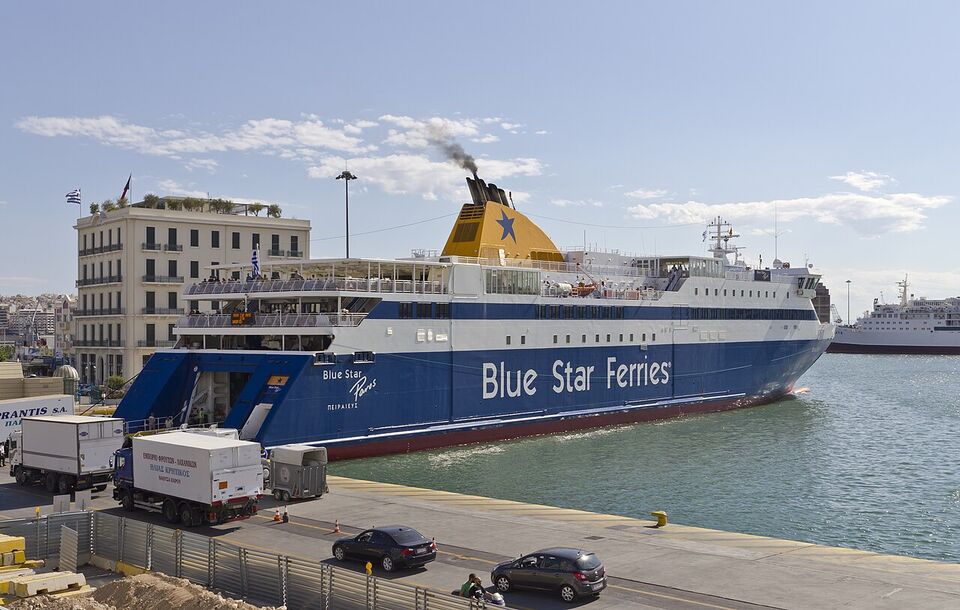
- Blue Star Ferries: large conventional ships, widely used on the Piraeus routes to the Cyclades, Dodecanese and Crete.
- Seajets: mostly high-speed catamarans on Cyclades routes, plus some links to Crete.
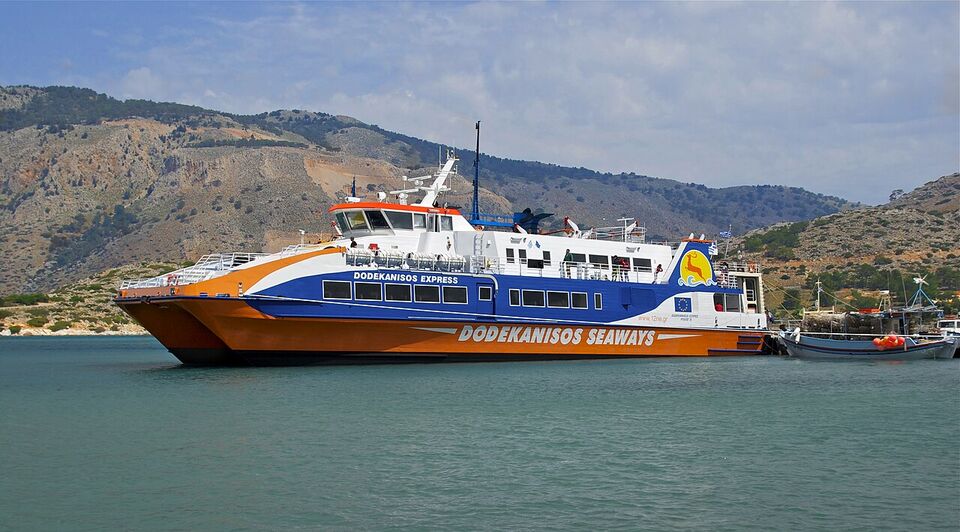
- Hellenic Seaways: a mix of high-speed and conventional ships, including routes to the Saronic islands and the Cyclades.
- Golden Star Ferries: sailings from Rafina and Piraeus to Andros, Tinos, Mykonos and nearby islands.
- Minoan Lines and ANEK: overnight ships from Piraeus to Crete, with cabins.
- Fast Ferries: high-speed boats from Rafina, among other routes.
- Kerkyra Lines and others: short crossings from Igoumenitsa on the mainland to Corfu.
Operators change routes and boats from year to year, and some sailings are run under shared schedules. Always check the operator's own timetable for your travel date. On the booking page, look at the boat type, the number of stops and the arrival time, not just the price.
Conventional versus high-speed
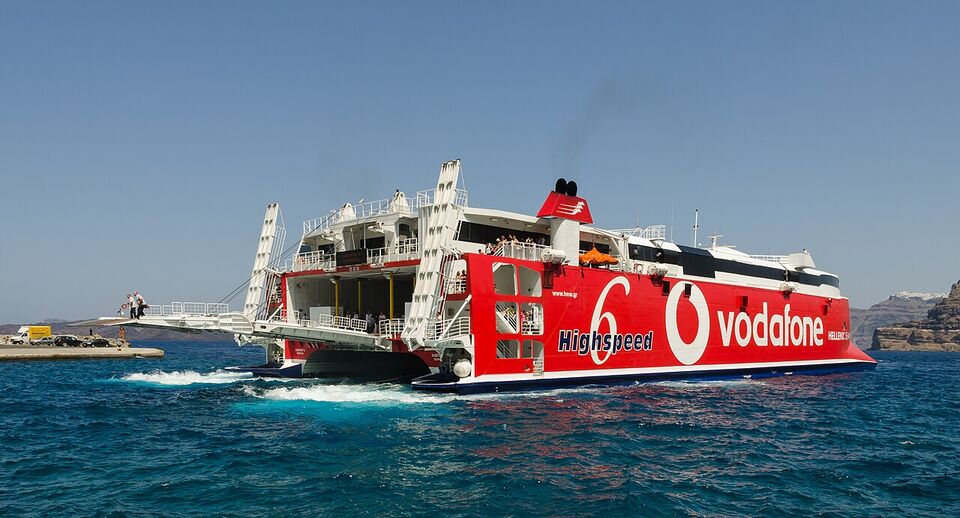
This is the biggest choice for comfort and cost. A conventional ferry is a large ship with indoor seating, a cafe, open decks, and often cabins on longer routes. It carries cars and trucks. A high-speed boat is a catamaran with airline-style seats, mostly enclosed, and takes passengers and sometimes cars.
| Feature | Conventional | High-speed |
|---|---|---|
| Speed | Slower: Piraeus to Naxos about 5 to 5.5 hr | Faster: about 3 hr 15 min |
| Cost | Cheaper: deck fares from about €40 | Higher: often €60 to €100+ |
| Motion | Steadier in most seas | Can be rough in wind; seats are fixed |
| Outdoor deck | Yes, usually | Usually none or a small one |
| Cars | Yes | Limited or no |
| Weather risk | Mostly sail in wind | First to be cancelled |
The fare ranges here are typical, not exact. We suggest high-speed when time is short and the forecast is calm, and conventional when you get seasick, are traveling with a car, or want to sit outside. Both are comfortable enough for most people.
Piraeus, Rafina or Lavrio
Greece's biggest port, Piraeus, handles most ferries to the Cyclades, Crete, the Dodecanese and the Saronic islands. It is about 7 miles (11 km) from central Athens. From central Athens, Metro Line 1 (green) runs to the Piraeus terminus and takes roughly 30 minutes from Monastiraki. From the airport, the X96 express bus goes directly to Piraeus (€5.50, about $6.16, about 90 minutes), and the metro or suburban rail also takes you there with a change. A taxi from the center is a reasonable choice with luggage.
Piraeus is a huge port with a series of gates, labeled E1 to E10 and so on, spread over several miles. Your ticket usually shows the gate number. Different companies and routes tend to use different parts of the port, and gates can change, so check your ticket or the company's booking confirmation and ask the staff or the port police at the entrance if unsure. Do not assume the gate you used last time. From the metro station there can be a long walk to the farther gates, so allow time or take a taxi or the port shuttle bus when it runs.
Rafina is a smaller port on the east coast, about 20 miles (32 km) from central Athens and not far from the airport. It has ferries to Andros, Tinos, Mykonos and some other Cyclades, and the trip to Mykonos takes about 4.5 hours with Golden Star and other operators. It can be easier if you are staying near the airport or arriving early. KTEL buses run from Athens to Rafina; the trip is roughly an hour or a little more, depending on traffic.
Lavrio is on the southeast coast near Cape Sounion. It handles a small number of sailings, including some to Kea, Kythnos and a few other nearby islands. Unless your route specifically uses it, Piraeus or Rafina will be your port.
Watch out
Booking sites list "Athens" as the departure point on some listings. Check whether the sailing leaves from Piraeus, Rafina or Lavrio before you plan the trip to the port. They are in different directions and 45 to 90 minutes apart.
How and when to book
The simplest way is to book on the operator's own website. Each company issues e-tickets: a PDF or QR code you can show on your phone. Resellers also sell ferry tickets for many companies in one search, which makes comparing easier, but they typically add a booking fee. Compare the final price before you pay.
- July and August: book popular sailings weeks ahead, and cabins for overnight boats even earlier.
- May, June, September, October: a few days ahead is usually enough, but weekends and holidays fill up.
- November to March: fewer boats and some days with none, so book once your dates are fixed.
- Timetables: summer timetables are published in spring and winter timetables appear gradually from the autumn. If your date is not on sale yet, the schedule has not been released.
At boarding you need photo ID. The ticket carries your name, and the crew can ask to see your passport. Arrive at the port at least 45 minutes before a conventional departure, and about 30 to 45 minutes before a high-speed one. Boarding closes early, and a missed boat is your problem. Passengers with cars must arrive earlier, as the operator states.
If you buy a fare with an open date or a flexible option, check the change rules. Standard tickets are cheaper, with fewer changes allowed. Travel insurance may cover a missed connection, but only if the cause is in the policy.
Fares and times on main routes
The figures below are typical ranges drawn from booking sites for foot passengers. They vary with the boat, the date and how early you book. Use them for planning only.
| Route | Time | Fare (one way) | Notes |
|---|---|---|---|
| Piraeus to Mykonos | 2 hr 40 min (high-speed) to about 5 hr | From about €44 (about $49) | High-speed and peak dates run higher |
| Piraeus to Naxos | About 3 hr 15 min to 5 hr 30 min | From about €50 (about $56) | Many sailings in summer |
| Piraeus to Paros | 3 to 4.5 hr | From about €41 (about $46) | Often a stop on the way to Naxos |
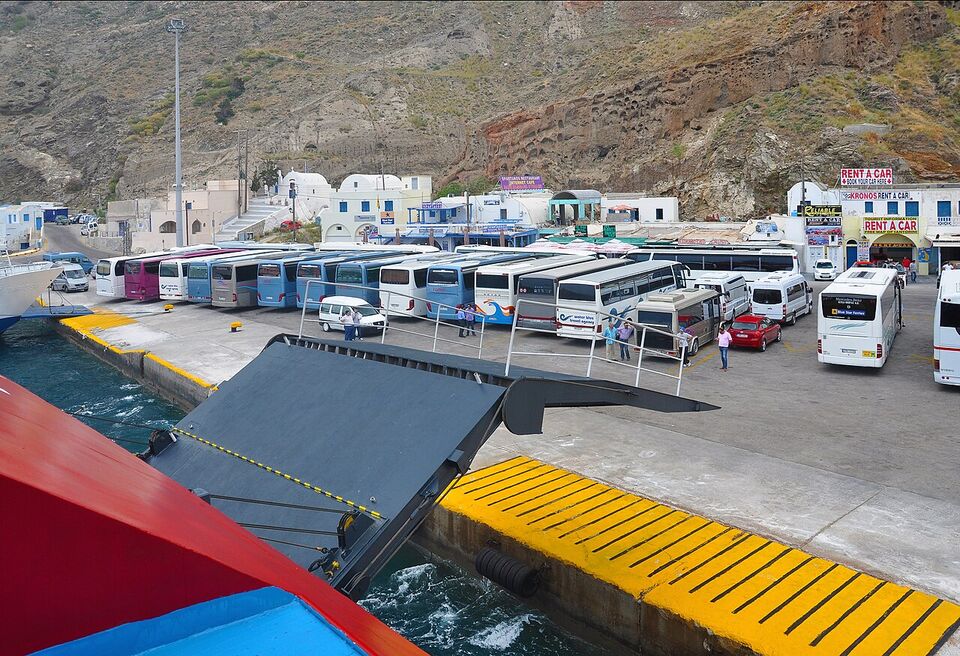
| Piraeus to Santorini | 5 to 8 hr (up to 9.5 with stops) | From about €41 (about $46) | Arrives at Athinios port |
| Piraeus to Heraklion | About 9 to 10 hr overnight | Check operators | Cabins sold separately or included in class |
| Piraeus to Rhodes | 13 hr or more | Check operators | Few sailings a week; flights are easier |
| Rafina to Mykonos | About 4.5 hr | Roughly €36 to €60 (about $40 to $67) | Golden Star and other operators |
| Igoumenitsa to Corfu | About 1.5 hr | About €7 (about $7.84) on foot | Many sailings daily; cars about €33 |
High-speed sailings may cost more than the lowest fare shown. Prices rise toward the departure date, and we could not confirm current 2026-27 fares for Heraklion and Rhodes, so check the operators. Booking sites list the real price for each sailing.
Luggage, cabins and deck
On conventional ferries, large bags are usually kept in racks near the entrance on the car deck level or in a luggage room, and you carry a small bag with valuables upstairs. Theft from these racks is not common, but take your passport, phone, medicines and cash with you. On high-speed boats there is a luggage area, and the crew may load larger bags for you. Mark your bag with a tag.
On overnight ships to Crete, you can choose a cabin, a reclining seat or a deck ticket. A cabin is more expensive but gives you a bed and a private door; for a night crossing it is usually worth it. Cabins have two to four berths, and a private bathroom costs more. If you travel on a deck fare, you can sit in indoor seating areas and the cafe, but sleeping rooms are limited. Bring a light jacket and a pillow, because air-conditioned lounges are cold.
Insider tip
Download your e-ticket before you board. Wi-Fi on ferries is unreliable and cellular coverage can drop out at sea. A screenshot of the QR code is a good backup.
Seasickness and the meltemi
The meltemi is a strong north wind that blows across the Aegean from roughly June to September, with the strongest winds in July and August. It is dry, bright and cooling on land, but it makes the sea rough. Large conventional ferries mostly sail through it, though delays of several hours at smaller ports are common and a cancellation is possible when winds are very high. High-speed craft are hit first.
If you tend to get motion sick, choose a conventional ship, sit near the center of the boat on a low level, look at the horizon and take medication before you board, not after. Pharmacies in Greece sell motion sickness remedies; see Health and Medical Care. Eat lightly. Avoid the sealed rear decks on rough days, since they sway more.
The rule of thumb for planning: do not make the last leg before a flight home depend on a small boat on a windy day. Leave a night's buffer. If a ferry is cancelled, the operator will rebook you or refund your ticket; ask at the port ticket office or on the company's site. Your hotel or host may know about the cancellation before you do.
Winter schedules
From October, ferry frequency drops, and from November the routes thin more. High-speed boats mostly stop, so what runs are conventional ships on a reduced timetable. Some islands have a ferry only a few times a week. Paros to Naxos goes from many daily sailings in summer to only a few in winter. Check Greece in November and Greece in January to see what is open.
Winter weather causes more cancellations than most visitors expect. Storms can pause ferries for a day or two on the exposed Cyclades routes. If you travel in winter, fewer islands and more flexibility make a better trip. Flying may be the more reliable option to some islands.
Island-hopping routes that work
The Cyclades loop
The classic route runs from Athens to Mykonos, then Paros or Naxos, then Santorini, and back to Athens by plane or boat. Piraeus to Mykonos is a high-speed morning ride; Mykonos to Paros or Naxos is a short hop; Naxos to Santorini takes roughly one and a half to two hours by high-speed boat. From Santorini, a flight to Athens takes under an hour, which avoids the long return ferry. See Naxos, Paros and the Cyclades and Santorini vs Mykonos.
Santorini to Crete
Santorini to Heraklion is a high-speed hop of roughly 1.5 hours in season, with a conventional alternative that takes longer. The route is seasonal, with fewer sailings in winter and the busiest service in July and August. This links the Cyclades and Crete without going back to Athens.
Other routes
The Saronic islands (Hydra, Aegina, Poros, Spetses) are close to Piraeus; see our Saronic guide. Corfu is reached from Igoumenitsa by a short crossing, or by plane. Rhodes and the Dodecanese are a long way from Athens, so a flight is usually the better choice.
A step-by-step booking routine
- Fix your dates, then check which islands are reachable that day and from which port. Not every island has a boat every day, especially outside summer.
- Search the operator's timetable for the sailing you want. Note the boat name, the departure port and time, any stops, and the arrival time. A boat that stops at three islands first is slower than the headline time.
- Choose your class: deck or economy seat, airline-style seat, or cabin. On a night boat to Crete, think about a cabin.
- Enter names exactly as on your passport. Names on tickets must match your ID.
- Save the e-ticket to your phone and email it to a travel companion. Keep a screenshot offline.
- The day before, check the operator's site for delays or schedule changes. Winds are forecast a few days out on the Greek weather services and apps.
Booking a few separate legs is cheaper and more flexible than a pass. Greece has no widely used ferry pass for tourists, so do not plan around one.
Families, bikes and pets
Children usually get a reduced fare, and infants travel free or at a very low fare, but the age cutoffs differ by company, so check on the booking page. Strollers are fine on conventional ships; on high-speed boats stairs can be steep, so travel light. Bicycles travel on conventional ferries for a small fee on many routes; ask the operator. Dogs and cats are allowed on many ferries under company rules, often in cabins, kennels or on the open deck. Pet rules for the whole trip are in Traveling to Greece with a Pet.
Travelers with limited mobility should know that boarding ramps can be steep and that some older ships lack lifts. Contact the operator before booking if you need assistance.
What to do if a ferry is cancelled or you miss it
If the operator cancels, you normally get a refund or a rebooking on the next sailing. Ask at the port office or phone the number on your ticket. If you miss a boat that did sail, the ticket is generally lost, though some operators allow a change for a fee if you act quickly. Because Greek ferries often depart on time and boarding closes early, arriving late is not worth the risk.
For the most flexible plan, keep your last night before a flight in the departure city. A hotel near the airport or in Athens costs far less than a replacement flight. If you are stuck on an island by wind, ask your accommodation whether other days are open; many hosts will extend a booking for a stranded guest. A cancelled ferry in a heat or wind event is not unusual, and a calm attitude helps.
Taking a car on a ferry
Conventional ferries carry cars, and the fare depends on the length of the car, often several times the passenger fare. Book the vehicle space at the same time as your ticket; space can sell out. Arrive early, as the operator says. A rental car often needs written permission from the rental company to travel on a ferry, and some forbid it, so read your contract. It is usually easier to rent a new car on each island. See Driving in Greece.
Add it to a route in the trip builder, or ask us to plan the hotels, trains and guides for you.