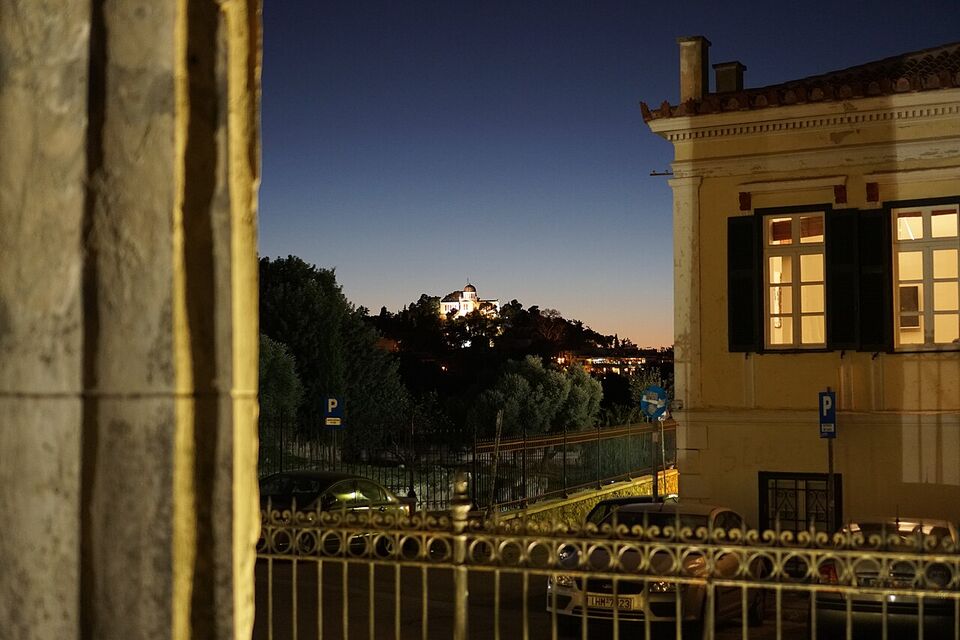
Is November a good time to go to Greece?
The short verdict: November is a good month for Athens, the mainland and the big island towns, and a poor month for a beach holiday. You get mild daytime weather, empty ruins, hotel rates well below summer and a city that is fully open. You lose swimming for most people, the Cyclades, and a reliable ferry schedule.
We suggest November for travelers who want culture, food and walking more than sun. If you want the islands, move the trip to May, June or September; our guide to when to go to Greece compares the months. If you are set on November, the plan below works well.
As of mid-November 2026, some of the month's events have already happened. We note what has passed and what is still ahead.
Weather in November
Temperatures are averages, with °F first and °C in parentheses. November is a transition month: some days feel like early autumn, and others bring heavy rain and wind. The mild sea keeps the coasts and the southern islands warmer than the mainland.
| Place | High/low | Rain | Sea |
|---|---|---|---|
| Athens | 66/54 (19/12) | about 11 rainy days | about 66 (19) |
| Thessaloniki | 60/47 (16/8) | about 12 days | about 63 (17) |
| Santorini | 67/59 (19/15) | about 1.3 in (34 mm) | about 68 (20) |
| Heraklion (Crete) | 69/61 (21/16) | about 6 days | 69 (21) |
| Rhodes | 71/64 (22/18) | no day count | 70 (21) |
| Corfu | 66/50 (19/10) | about 15 days | about 66 (19) |
The rain measures differ by station (rainy days for some places, millimeters for Santorini), so compare them loosely. Sea temperatures in °F (°C) for Athens, Thessaloniki, Santorini and Corfu are approximate long-term monthly averages (Santorini's figure is for the Cyclades). Corfu is the wettest of these places and Crete the driest. Santorini's figures come from a station at 600 ft (183 m) above the sea, so the coast is a little warmer. These are long-term averages and a given week can differ.
Day length is already shorter, with the sun setting at around 5 p.m. by the end of the month, so plan sightseeing for the morning. Greece changed its clocks on October 25, 2026 (the US changed on November 1), so the time difference with New York is 7 hours from November 1.
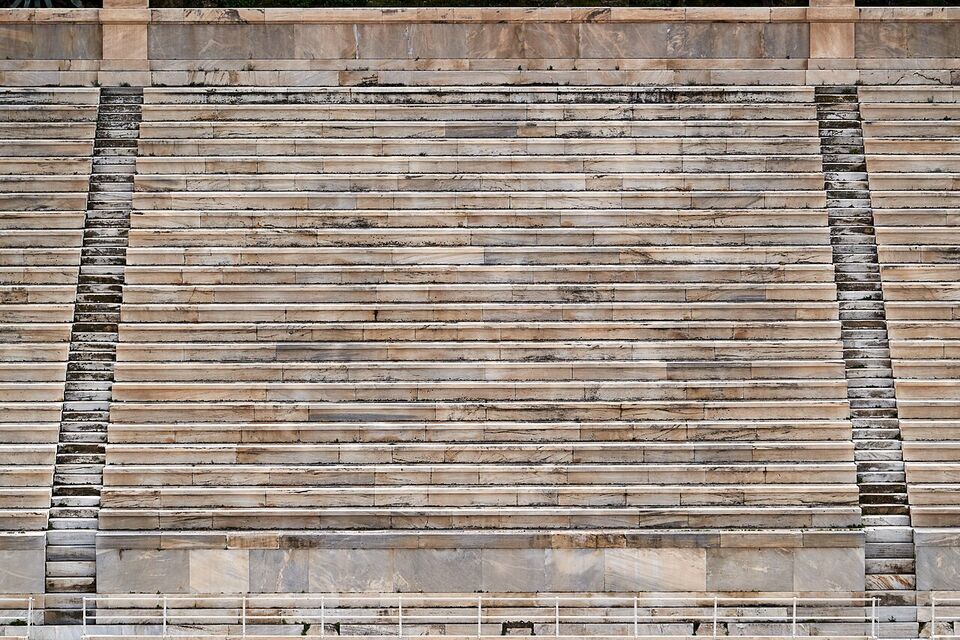
Sightseeing in winter hours
On November 1 the archaeological sites switched to winter hours, which run until March 31. The Acropolis is open from 8 a.m. to 5 p.m., with last entry at 4:40 p.m. The ticket is €30 (about $34), one price all year, with timed one-hour entry slots. Buy it on the official Hellenic Heritage ticket store at tickets.hh.gr (site details are on hh.gr), and avoid resellers who mark it up.
Other state sites run shorter hours, so go early. Delphi (€20, or about $22, 2026 price) is open 8:30 a.m. to 3:30 p.m. daily from November 1 to March 31. The Ancient Agora (€20, 2026 price) is open 8 a.m. to 5 p.m., the Temple of Olympian Zeus (€20, 2026 price) 8 a.m. to 3 p.m., and the Kerameikos (€10, about $11, 2026 price) 8 a.m. to 3 p.m. Last admission is 20 minutes before closing. Check each site's page on hh.gr before you go.
Sites are closed on December 25 and 26, January 1 and March 25, which are outside the November window. See the Acropolis guide and ancient sites.
Free Sundays
State archaeological sites are free on the first and third Sunday of each month from November through March. The upcoming free Sundays are November 15, December 6 and 20, 2026, then January 3 and 17, February 7 and 21 and March 7 and 21, 2027. The Acropolis Museum has its own rules and was not free on those Sundays. Free days are very crowded, especially at the Acropolis, and we suggest paying for a timed ticket on a weekday instead.
Insider tip
In November the Acropolis is quiet on weekday mornings. Book the 8 a.m. slot, then go to the Acropolis Museum (€20, check the museum site) while the sun is still low. The museum is a good indoor choice for a rainy day.
What is open on the islands
The official tourist season ended on October 31. Closure is decided property by property, so each island is a different story. Our rule is that you should not plan a first trip to Santorini or Mykonos in November.
Santorini
Beach-area hotels in Kamari, Perissa and Perivolos close at the end of October, and only about a fifth of Fira's restaurants stay open. The airport bus drops to a few weekday runs. Ferries still run, but at reduced frequency.
Mykonos
Most businesses stop between November and March, beach clubs closed earlier, and inter-island flights largely stop.
Naxos
Naxos town keeps its restaurants and shops, but many hotels closed in the third week of October. Paros-Naxos ferries drop to two or three a day.
Crete
Chania, Rethymno, Heraklion and Agios Nikolaos are open, but most large resort hotels close from early November to late March. Samaria Gorge closed on November 1. See Crete.
Rhodes
Rhodes old town stays lively, and the beach resorts (Lindos, Faliraki) mostly close. See Rhodes and the Dodecanese.
Syros
Ermoupoli is the Cyclades' administrative center and stays active in winter.
If you want an island in November, choose Crete or Rhodes, which have the warmest weather and the most open businesses, or Syros or Naxos town for a quiet visit. Book a hotel that you have confirmed is open, and expect fewer restaurants. Read our Cyclades guide for details.
Watch out
Do not rely on online listings to show which hotels are open. Many properties still appear in booking sites after they close. Confirm your reservation by email, and check the ferry timetable for your exact date, because winter sailings are fewer and high-speed boats mostly stop.
Ferries and flights in November
Ferry timetables thin out from October, and winter 2026-27 timetables are published gradually from November through spring. The Cyclades routes lose the most: Paros-Naxos drops from about 10 daily rotations in summer to two or three, and Piraeus-Mykonos runs only a few times a week. The Piraeus-Santorini route still runs daily, with fewer sailings than in summer (booking sites suggest roughly 13 a week). High-speed boats are the first to be cut. See the ferry guide.
Weather matters more in winter: strong winds can cancel conventional ferries, too. Keep a spare day before your flight home. Flights are a more dependable way to reach an island; Athens to most islands takes under an hour, with Aegean and Sky Express. Ryanair has said it is suspending its winter bases at Chania and Heraklion for 2026-27, so check flight schedules rather than assuming the summer routes continue.
For the Corfu-Igoumenitsa and Kefalonia ferries, daily sailings run all year. Charter flights to Corfu end in late October.
Events in November
- Athens Marathon: the 2026 race weekend was November 7-8 (marathon on Sunday, November 8). It is usually held on the second Sunday of November, so the 2027 race is likely around November 13-14. Roads close on race days; hotels in Athens fill for that weekend.
- Thessaloniki International Film Festival: the 67th edition runs November 5-15, 2026. See Thessaloniki and the north.
- November 17: the Athens Polytechnic uprising anniversary, a commemoration with a march through Athens and heavy security around the US Embassy. Transport and roads in the center can be disrupted, and we suggest avoiding the area. Check local news for this year's plans.
- Christmas lights: Athens traditionally lights the Syntagma Square tree in late November; the date changes each year, but late November is typical. See Greece in December.
- Olive harvest: in many regions, the harvest runs from late autumn into winter (general knowledge; ask locally).
Prices and crowds
November is one of the cheapest months for Athens hotels. You can often find a $$ hotel near the Acropolis for the price of a $ in July, although prices rise around the marathon weekend. Airfares from the US are usually lower than in summer. The climate resilience fee is also lower: for a hotel the winter rates (November to March) are €0.50 for 1-2 stars, €1.50 for 3 stars, €3 for 4 stars and €4 for 5 stars per room per night, and short-term rentals pay €2 (€4 for detached houses over 80 square meters and villas). See where to stay and the budget guide.
Save money
Book Athens rooms for weekdays and avoid the marathon weekend, when hotel prices rise. Free Sundays at state sites (the first and third of the month) are crowded; a weekday morning slot costs €30 and is quiet.
US nonstop flights are fewer in winter than in summer. One source suggests Emirates (Newark) is the only year-round nonstop and Delta (JFK) runs into early January, but check airline sites for 2026-27 schedules. See flights to Greece.
A sample plan for 5 to 7 days
- Days 1-3
Athens
Morning at the Acropolis and Acropolis Museum, afternoon in Plaka and Monastiraki. Day 2: Ancient Agora, National Archaeological Museum and the markets. Day 3: a food walk and the evening in Koukaki or Psyri. See Athens.
- Day 4
Delphi or Nafplio
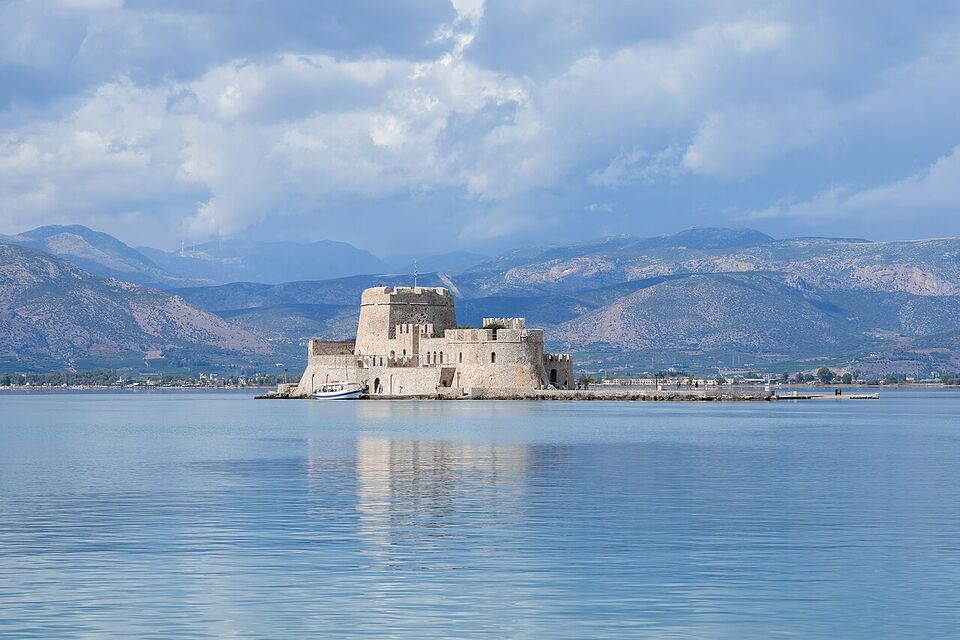
Delphi is about 3 hours by KTEL bus and Nafplio about 2 hours 10 minutes. Leave early because sites close in mid-afternoon. See the Peloponnese and day trips.
- Days 5-7
Crete or Meteora
Fly to Chania or Heraklion for old-town walks, food and Knossos (€20, 2026 price; open 8 a.m. to 5 p.m. in winter). Or take the bus to Meteora, where winter monastery closures are more frequent. See Delphi and Meteora.
What to pack
Layers, a waterproof jacket, and comfortable shoes with grip: marble and stone at ancient sites become slippery in the rain. Bring a warm layer for mountain sites such as Delphi and Meteora, where it is colder than in Athens. A swimsuit is only useful in Crete or Rhodes. See what to pack.
Plugs are types C and F at 230 V. Remember that Greece uses a different daylight saving schedule from the US. Our entry guide covers the EU entry-exit system, which collects fingerprints and a photo at first entry, and notes that ETIAS is not required yet.
Add it to a route in the trip builder, or ask us to plan the hotels, trains and guides for you.