Athens in brief
Athens is a big, dense, noisy city with a 2,500-year-old hill in the middle of it, and most first-time visitors need about three days. That is enough for the Acropolis, the Acropolis Museum, the old town and one slow evening on a rooftop. If you plan to use Athens as a base for Delphi, Nafplio or a ferry to the islands, add a day or two.
The city is easier than it looks. The sights cluster in a walkable area around the Acropolis, the metro is cheap and clean, and almost everyone who works in tourism speaks English. What takes some getting used to is the heat in summer, the pace of dinner (late), and the fact that modern Athens is a working city of concrete apartment blocks, not a museum piece. Give it a morning or two and it starts to make sense.
This page covers where to stay, how to get in from the airport, how the metro and tickets work, and what to know about safety and heat. For what to see, go to Athens Sights and the Acropolis tickets guide; for meals, see Food and Drink in Athens. If you are still deciding how long to give Greece as a whole, start with Plan Your Trip to Greece.
Which neighborhood to stay in
Athens is not one center but a cluster of neighborhoods, and the right one depends on how you travel. The historic core is small enough that you can walk between most of the headline sights, so being within 15 minutes of the Acropolis saves a lot of heat and fatigue. Below are the areas most visitors choose, with an honest note on each.
Plaka
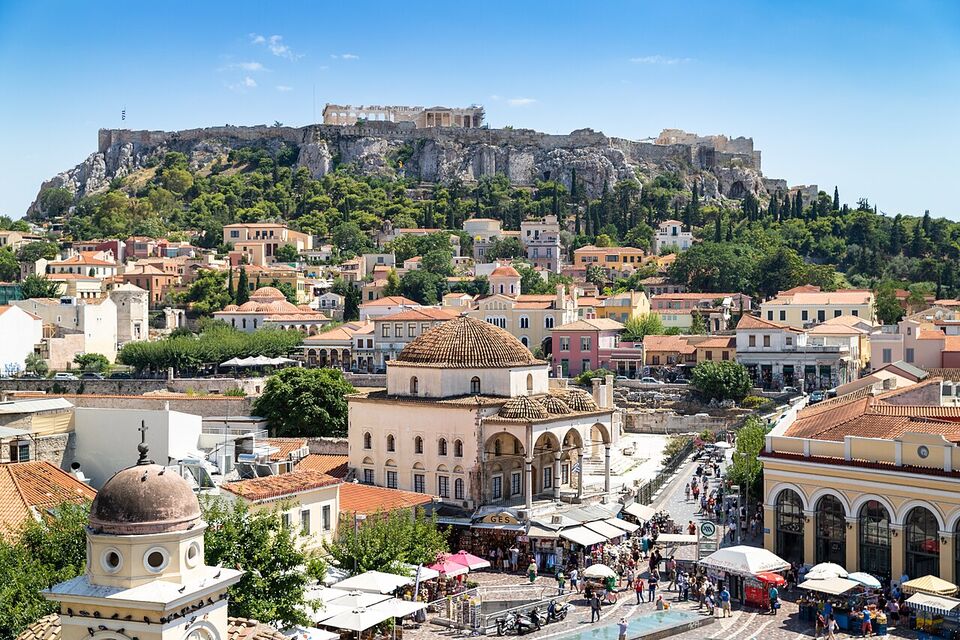
The old neighborhood of narrow lanes and neoclassical houses right below the rock. It is the most atmospheric base and within walking distance of nearly everything, but the main streets are lined with souvenir shops and restaurants that hawk for customers at the door. Walk two blocks off the main lanes for quieter streets and better value.
Makrygianni
The area around the Acropolis Museum, between the Acropolis and Hadrian's Arch. It is calm in the evening, has an Acropolis metro station, and puts you a few minutes from both the museum and the south slope entrance. Good for a first visit if you want convenience without the hawkers of Plaka.
Monastiraki and Psyrri
Monastiraki is the flea-market square with a metro hub; Psyrri, just north, is the small-plates and bar district. It is lively until late, so ask about street noise when you book. The metro here is a pickpocket hot spot, so keep your bag zipped. Good for people who want to be in the middle of things at night.
Syntagma
The central square with Parliament, the changing of the guard and a major metro interchange (Lines 2 and 3). Convenient for the airport train and the tram to the coast, and you can walk to Plaka in 10 minutes. Demonstrations often gather here, which can mean noise and police presence but is rarely a safety issue for visitors.
Kolonaki
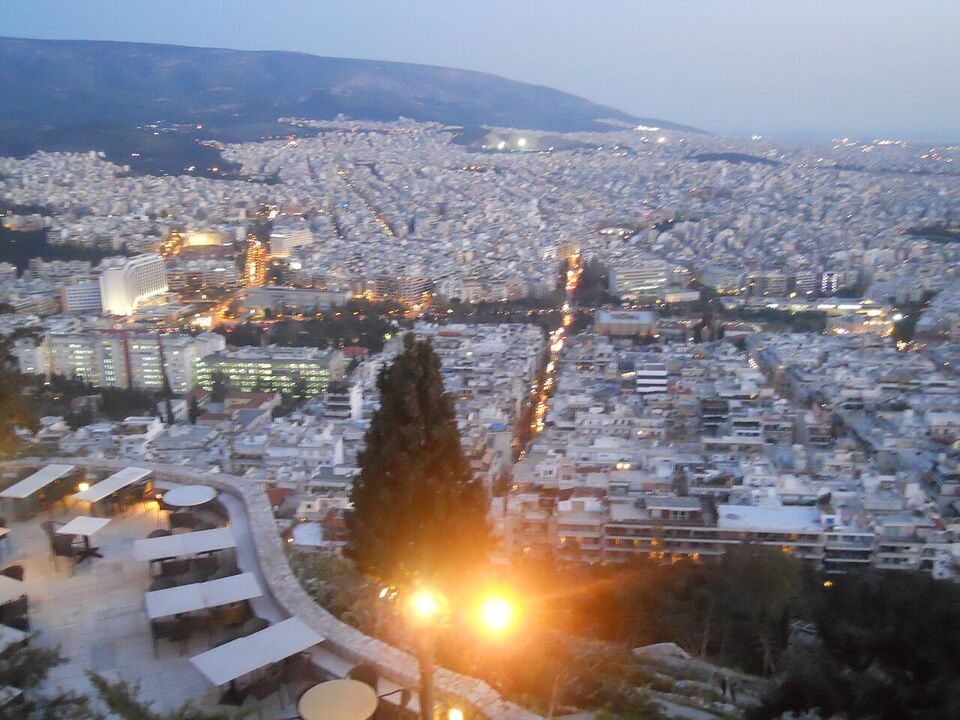
The polished, slightly pricier neighborhood at the foot of Lycabettus Hill, with boutiques, cafes and several museums. It suits couples and repeat visitors. You are about a 15 to 20 minute walk from Syntagma, so it is less convenient for a rushed first trip.
Koukaki
A real residential neighborhood just south of the Acropolis Museum, with local cafes, bakeries and small restaurants and a lot of apartment rentals. It is a strong choice for families and for anyone staying four nights or more, because it feels like living in Athens. The metro stations Acropoli and Syngrou-Fix are close.
Pangrati
A neighborhood of tree-lined streets, tavernas and neighborhood cafes, mostly visited by Athenians. It is further from the Acropolis (a 20 to 25 minute walk, or a short trolley or bus ride), so it works best for second visits or if you prefer to eat where locals eat.
Exarchia
A hillside neighborhood near the National Archaeological Museum with bookshops, cheap cafes and an anarchist and student identity. By day it is lively and mostly fine for a walk; at night it can be rough at the edges, and demonstrations (especially around November 17) can turn tense. Most visitors are better off staying elsewhere and visiting for lunch.
Piraeus
The main ferry port, about 7 miles (11 km) southwest of the center, and the Line 1 terminus. It makes sense for one night before an early ferry, because it saves you a rush across the city. For any other purpose, stay in central Athens.
All hotel prices on our site are shown as tiers: $ is under $120 a night for a double, $$ is $120 to $300 and $$$ is over $300. Central Athens has plenty of all three. A simple hotel or apartment near the Acropolis is often $$ in spring and fall, and the very best rooftop-view suites climb into $$$ in summer. Our Where to Stay in Greece guide covers how to book, breakfast, air conditioning and the climate resilience fee on your bill.
Where to stay by type of trip
- First visit, three or four days: Plaka, Makrygianni or Koukaki. You can walk to the Acropolis, the Acropolis Museum and the Agora, and you will spend less on taxis.
- Families: Koukaki or Makrygianni, in an apartment with a kitchenette and a washing machine. Cheap bakeries and supermarkets are around the corner, and the area is quiet at night.
- Couples: Plaka for atmosphere, or Kolonaki for a polished, café-and-boutique feel. Ask for a room or a terrace with an Acropolis view; it adds to the price but you will use it every evening.
- Nightlife: Psyrri and Monastiraki, or the Gazi area west of the center. Choose a room facing the courtyard, not the street.
- Budget: Koukaki, Pangrati and the streets around Monastiraki have $ rooms and hostels. Avoid the blocks around Omonia Square for a first trip: they are cheap but gritty after dark.
- Early ferry or late flight: Piraeus for one night, or a hotel at Syntagma if you plan to take the airport train.
- Long stays: Pangrati, Koukaki or Kolonaki, where apartments are plentiful and you live like a resident.
Different from home
Most Athens hotels and apartments will add a small climate resilience fee per room per night at check-out, separate from your room rate. For 2026 it ranges from €0.50 to €15 a night depending on the season and the hotel's star rating. See Money in Greece for the full table.
Short-term rentals in central Athens
If you plan to rent an apartment, be aware of recent rules. Athens has restricted new short-term rental registrations in the central districts: a ban on adding new properties to the short-term rental registry covers the first, second and third municipal districts of the city (the historic center and surrounding neighborhoods, including the Acropolis area) from January 1, 2025 through December 31, 2026. Properties that were already registered may keep operating.
For you as a guest, this means two things. First, there are fewer apartments in the middle of the old town than before, so book early for spring and fall. Second, check that the host has a valid registration number and consider a licensed hotel or aparthotel in the central districts if you want certainty. We could not confirm whether the ban will be extended into 2027, so check the latest news if you are booking beyond December 2026. Short-term rentals are also charged a higher climate resilience fee than hotels (€8 a night from April to October, or €15 for detached houses over 80 m2 and villas).
Getting from the airport to the city
Athens International Airport (Eleftherios Venizelos, code ATH) is about 20 miles (33 km) east of the center. You have four sensible options, and most travelers choose the metro or a taxi.
| Option | Cost | Time | Best for |
|---|---|---|---|
| Metro Line 3 (blue) to Syntagma or Monastiraki | €9 (about $10) one way; €16 (about $18) return, valid 30 days | About 40 minutes to Syntagma | Most travelers; reliable and predictable |
| Suburban rail (Proastiakos) to Larissis Station or Piraeus | €9 (about $10) one way | About 45 minutes to Larissis, about an hour to Piraeus | Going to Piraeus or onward by rail |
| X95 express bus to Syntagma | €5.50 (about $6) | About an hour, longer in traffic | Budget travelers; buses also go to Piraeus (X96), Elliniko (X97) and Kifissos (X93) |
| Taxi, flat fare to the city center | €40 (about $45) by day (5 a.m. to midnight); €55 (about $62) at night, all included | About 40 minutes, more in traffic | Late arrivals, heavy bags, groups of three or four |
Airport trains run roughly every 30 minutes through the day and into the late evening. We could not confirm the current first and last departures, so check the Athens metro operator (stasy.gr) or the airport site (aia.gr) before a very early or late flight. Standard city tickets are not valid on the airport section; you need the airport ticket, which you can buy at the machines or the booth in the arrivals hall.
For a taxi, follow the signs to the official taxi line (Exit 3 of Arrivals) and confirm the flat fare with the driver before you get in. The rate is set by the time you arrive at your destination. Do not accept an offer from anyone who approaches you inside the terminal.
Save money
If you land on your first day and plan to ride the metro for three days, the 3-day tourist ticket (€20, about $22) includes one airport round trip. Buying a 24-hour pass each day plus two airport rides at €9 would cost about €30. Check that you will use it for the full three days.
The metro, buses and tickets
The Athens metro has three lines: Line 1 (green), Line 2 (red) and Line 3 (blue). They are clean, air-conditioned and signed in English. Line 1 runs from Piraeus through Monastiraki and Omonia to Kifissia; Line 2 covers the center, running past the Acropoli and Syntagma stations; and Line 3 connects the center to the airport. Trams link Syntagma with the coast at Glyfada, and buses and trolleys fill the gaps. A fourth line is under construction, but it is not open, so you can ignore it for now.
Tickets in 2026 (OASA):
| Ticket | Price | Notes |
|---|---|---|
| Single, 90 minutes | €1.20 (about $1.35) | Metro, tram, bus and trolley; not valid on airport services |
| 24-hour | €4.10 (about $4.60) | Valid 24 hours from validation; excludes airport services |
| 5-day | €8.20 (about $9) | Excludes airport services (OASA price list) |
| 3-day tourist ticket | €20 (about $22) | Includes one airport round trip |
| Airport metro ticket | €9 (about $10) one way | Separate from the city fares |
The 5-day ticket is the best value for a longer stay. It costs about the price of two 24-hour tickets and covers five days, so use it if you plan to ride daily.
Paying by contactless
You do not have to buy anything in advance. Visa and Mastercard (physical cards, Apple Pay and Google Pay) can be tapped at the metro gates and bus validators. Each ride is €1.20 and the daily total is capped at €4.10. Always tap the same card or phone each time and keep it away from other cards in your wallet. American Express, Maestro, Discover and JCB are not accepted. Airport fares (€9 metro, €5.50 buses) also work by contactless.
Watch out
Validate paper tickets at the machine before you enter the metro platform or when you board a bus. Inspectors check, and fines are real even for tourists who simply forgot. Strikes occasionally halt the metro for a day, so build a margin around flights and check the news if there is a strike notice.
How many days in Athens
Athens does not need a week, but it deserves more than a single stopover day. Here is how we would size the stay.
- One day: Acropolis at opening time, lunch in Plaka or Monastiraki, the Acropolis Museum in the afternoon. It is a rushed day, but it works as a layover.
- Two days: Add the Ancient Agora, the National Archaeological Museum and a rooftop sunset.
- Three days: The sweet spot. Add Lycabettus Hill, the Panathenaic Stadium and a slow morning at the central market. See the 3-day plan on Athens Sights.
- Four or five days: Add a day trip. Delphi, Nafplio with Mycenae and Epidaurus, Cape Sounion, or a ferry to Hydra or Aegina all work. See Day Trips from Athens and Hydra, Aegina and the Saronic Islands.
Most Americans arrive on a long overnight flight, so put the Acropolis on day two or three, not the afternoon you land. For the broader trip structure, see Plan Your Trip to Greece, and for flight options and time-zone effects see Flights to Greece.
Heat, seasons and when to visit
Athens is hot in summer and mild the rest of the year. Average afternoon highs reach about 94°F (34°C) in July and August, and heat waves go much higher, past 104°F (40°C) in some summers. In severe heat the Culture Ministry closes outdoor archaeological sites, including the Acropolis, for the hottest hours, typically 12:00 to 17:00. Shade is scarce on the sites.
The best months are April to early June and late September to November, when highs run from about 70°F to 80°F (21 to 27°C) in spring and 85°F (30°C) in early fall, falling to about 66°F (19°C) in November. Winters are cool and wetter, with average highs around 56°F to 58°F (13 to 14°C) in January and February, and sites are quiet. Our When to Go to Greece guide has the month-by-month picture.
If you must visit in summer, plan outdoor sights for the first hour after opening, take a long lunch indoors and return to museums or the hotel pool in the afternoon. Carry water, wear a hat, and put sunscreen on before you leave the hotel.
Safety and common sense
Athens is a safe city by big-city standards. The State Department rates Greece Level 1, "exercise normal precautions," and violent crime against tourists is rare. The things that do go wrong are small and avoidable.
- Pickpockets: The most common problem, especially on Metro Line 1 between Omonia and Monastiraki, on the airport line, at Monastiraki Square and near the Acropolis entrances. Carry your wallet and phone in a front pocket or a zipped bag, and be wary of crowds that bunch up as the train doors open.
- Taxis: Insist on the meter (for trips within the city) and check that the fare is set to the day rate. For the airport, use the flat fare. A ride-hailing app (for example, apps that dispatch licensed taxis) avoids haggling, and you can pay by card in taxis, although not every driver has working equipment.
- Bar and club scams: Be wary of a stranger who invites you to a bar where the bill turns out to be huge. Look at the menu prices first.
- Protests: Demonstrations are common, especially around Syntagma and Exarchia. The Polytechnic anniversary march, held every November 17, usually heads to the US Embassy and disrupts central traffic and metro stops. Stay away from the crowd, and check the news on the day.
- Omonia and Exarchia at night: Keep an eye on your surroundings; take a taxi rather than walking home late.
For emergencies, dial 112 (the EU emergency number, English spoken), 100 for police, 166 for an ambulance and 171 for the tourist police. The US Embassy is at 91 Vasilisis Sophias Avenue, Athens (+30 210 721 2951). Read more on Is Greece Safe?.
Insider tip
Take photos of your passport and cards before you leave, keep one card and some cash separate from your wallet, and turn off lock-screen previews on your phone. If something is stolen, report it to the tourist police (171) for the paperwork your insurer will want.
Using Athens as a base
Athens is Greece's transport hub, which makes it a natural base. Ferries leave from Piraeus (the main port), Rafina (for Andros, Tinos and Mykonos) and Lavrio, and the airport has frequent flights to the islands that take under an hour. Long-distance KTEL buses run from the Kifissos and Liosion terminals to Delphi, Nafplio and Meteora. Our guides to Getting Around Greece and Greek Ferries and Island Hopping explain the details.
If you are heading to the islands right after landing, the simplest way is a domestic flight (Aegean and Sky Express fly to most islands) or a night in Piraeus, so you are not rushing across the city with a jet-lagged brain. If you are arriving from the US in summer, an overnight in Athens before a ferry is usually kinder than a same-day connection.
A few practical notes
- Book your Acropolis ticket at tickets.hh.gr (site details are on hh.gr) before you go, especially from April to October. See Acropolis Tickets.
- Bring a plug adapter (Greece uses types C and F at 230 V) and wear comfortable shoes with grip: the marble at the sites is polished and slippery.
- Greek shops and offices often close in the afternoon, and many small shops close on Sundays. Restaurants stay open.
- Athens is 7 hours ahead of New York most of the year. For a couple of weeks around the clock changes (Greece changes its clocks on different dates than the US), the gap is 6 hours.
- Tap water and card use are covered in Money in Greece and Health and Medical Care.
Add it to a route in the trip builder, or ask us to plan the hotels, trains and guides for you.