Overview
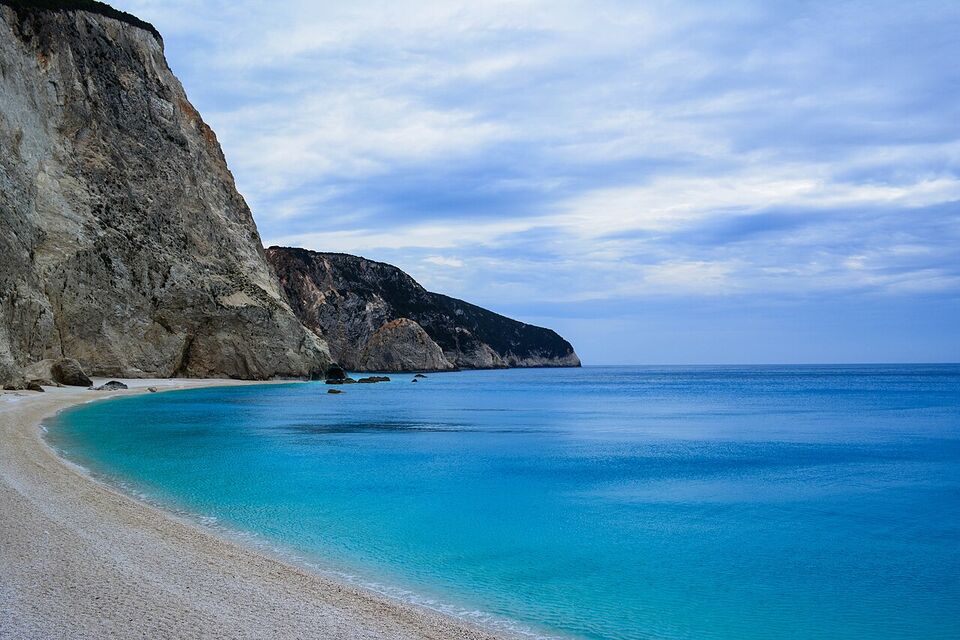
Greece has more coastline than almost any country in Europe, and the beaches range from developed sand strips with sunbeds, bars and water sports to bare coves reached by boat or a rough road. The right choice depends on what you want: facilities and shade, calm water for children, a quiet cove, snorkeling, or space to yourself. This page covers the best beaches by island, organized versus wild beaches, what sunbeds cost and the rules on free space, Blue Flag beaches, nudist beaches, sea safety, wind, water temperatures and lifeguards.
The swimming season is roughly late May to October, with the warmest water from late July to September. Beaches can be windy in July and August (see the meltemi section) and crowded around August 15. For the best months overall, see When to Go to Greece.
Best beaches by island
These are well-known, accessible choices rather than a ranking. Conditions change with wind, so ask locally which coast is sheltered on the day.
Crete
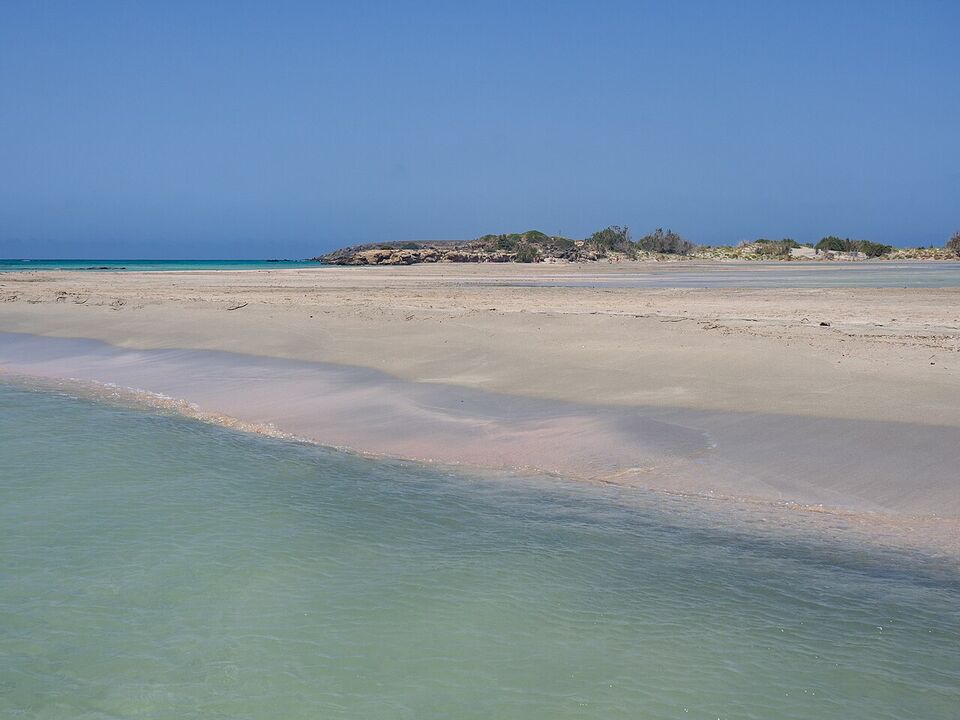
Elafonissi (southwest) has pale pink-tinged sand and shallow lagoon water. Balos (northwest, near Kissamos) is a lagoon reached by boat or a rough dirt road and then a walk. Preveli has a palm-lined river mouth and a steep path. Vai in the east has a palm grove. All can be crowded in summer. See Crete.
Santorini
Santorini's beaches are volcanic: dark sand and pebbles that get very hot, plus the red-cliff Red Beach near Akrotiri, which has been closed at times because of rockfall. Kamari and Perissa are long organized beaches. Vlychada is quieter with striking rock formations. Bring water shoes. See Santorini.
Mykonos
Mykonos has many organized beaches with clubs and loud music, plus quieter ones such as Agios Sostis in the north and Agios Stefanos. Beaches on the north coast catch the meltemi. See Mykonos.
Naxos
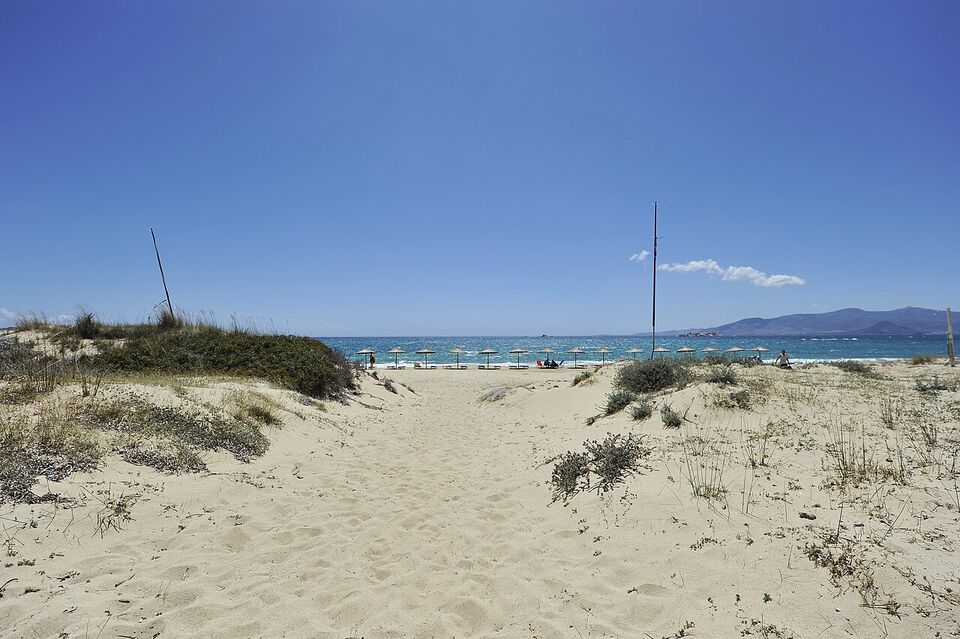
Naxos has long sandy beaches, shallow water and wind-friendly spots for windsurfing and kitesurfing. Agios Prokopios and Plaka are the main family choices. See Naxos, Paros and the Cyclades.
Paros and Antiparos
Paros has granite-sculpted coves at Kolymbithres and the windy Golden Beach for windsurfing and kitesurfing. Antiparos has small, calm beaches. See Naxos, Paros and the Cyclades.
Milos
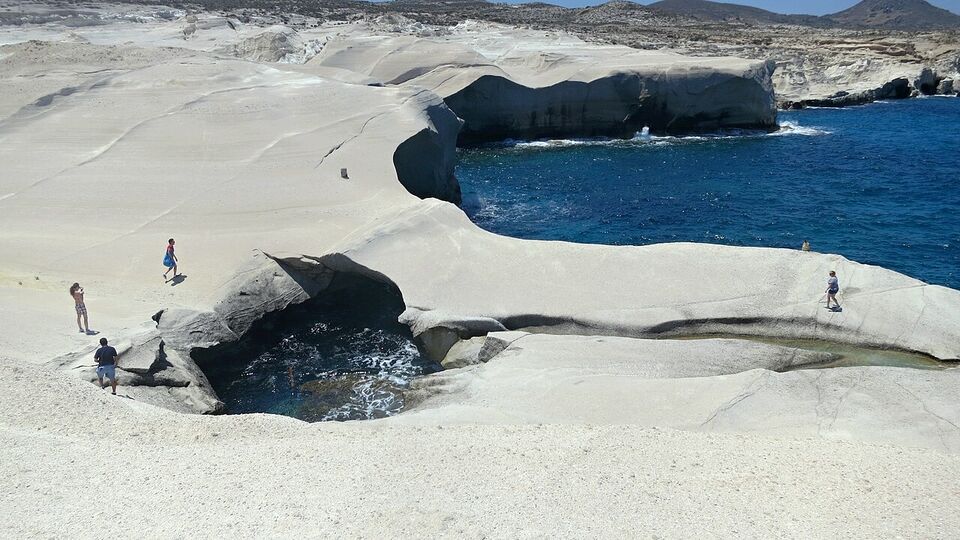
White volcanic rock at Sarakiniko looks like a moon landscape but is a rocky platform, not a sandy beach. Firiplaka has soft sand. Boat trips visit Kleftiko's sea caves. Rock edges can be sharp.
Ionian: Corfu, Zakynthos, Cephalonia, Lefkada
The Ionian Sea has white pebbles and turquoise water. Navagio (Shipwreck Beach) on Zakynthos is reached by boat; the clifftop viewpoint has had access limits for safety, so check before you go. Myrtos on Cephalonia and Porto Katsiki on Lefkada sit below steep cliffs. See Corfu and the Ionian Islands.
Rhodes and the Dodecanese
Tsambika is a long sandy bay. Prasonisi at the southern tip joins two seas and is a windsurfing center. Kos, Karpathos and Symi have good beaches too. See Rhodes and the Dodecanese.
On the mainland, Halkidiki (the three peninsulas east of Thessaloniki) has some of the most developed beach resorts, and the Peloponnese has long beaches near Nafplio and Pylos (Voidokilia). Beaches near Athens (Vouliagmeni, Glyfada, Lagonissi) are clubby, paid and busy on weekends; see Athens.
Watch out
Access to some famous beaches changes without notice because of rockfall, wildfire, protection rules or crowd limits. Check local news and the boat operator's site before you plan a day around Navagio, Red Beach on Santorini, Balos, Elafonissi or a protected island beach. Never take stones, shells or sand from a beach: it is illegal in protected areas and fines can be large.
Organized beaches versus wild beaches
An organized beach has sunbeds and umbrellas for rent, a bar or taverna, showers, toilets, water sports, often lifeguards and easy parking. An unorganized (wild) beach has nothing: no shade, no shop, sometimes no road. Many beaches are split, with a rented section and a free section.
Organized beaches suit families, anyone who needs shade, and anyone who wants to eat and drink by the sea. Wild beaches suit people who bring their own umbrella, water, food and trash bag. Take your trash with you. In summer, bring cash, since some beach bars have weak connections.
Sunbeds, prices and the rules
A pair of sunbeds with one umbrella costs about €10 to €30 at a typical organized island beach in high season (estimate; roughly $11 to $34). At beach clubs on Mykonos, Santorini, Paros and similar places, prices start around €50 and can reach well above €100 for a premium spot with a minimum food-and-drink spend. Prices drop in June and September. Ask the price before sitting down. In some places, a sunbed is free if you order a drink or meal; in others, it is not.
| Beach type | Pair of sunbeds + umbrella (estimate) | Notes |
|---|---|---|
| Simple organized beach, shoulder season | €8-€15 (about $9-$17) | Often free if you eat at the beach taverna |
| Typical organized beach, July-August | €15-€30 (about $17-$34) | Higher on Mykonos, Santorini, Paros, Rhodes town beaches |
| Beach club on a top island | €50-€150+ (about $56-$168+) | Often a minimum spend on food and drink; reserve ahead |
| Untouched protected beach | Not available | Bring your own shade and water |
Free space and public access
All Greek beaches are public. A beach operator rents a licensed area, but the operator must leave part of the beach and a strip along the waterline free for anyone to use. You may walk along the shore, swim and put your towel in the free zone without paying or buying anything. Operators may not block access paths.
The government's MyCoast app lists licensed concessions and lets visitors report violations such as sunbeds on the waterline or blocked access. Enforcement has tightened since 2024, and heavy fines apply to violations. The share that must stay free differs by beach, so look at the licensed area on the app rather than assuming a fixed amount.
Different from home
In the US, many beaches charge a day fee or parking and offer free chairs. In Greece, entering the beach is free, but chairs and umbrellas are rented by private operators. Don't feel obliged to rent one just because the staff greet you. Politely say you will use the free area.
Untouched beaches
251 beaches in protected Natura 2000 areas are designated "untouched". These allow no commercial sunbeds or umbrellas, amplified music, kiosks, water-sports rental or motor vehicles. Bring everything you need, including shade and water, and take all trash out. Check the list before you go, since it was extended in 2026.
Blue Flag beaches
The Blue Flag is an international award given each year for water quality, safety, facilities and environmental management. In 2026, Greece has 624 Blue Flag beaches, second in the world after Spain. The Halkidiki region has the most in the country (93), and the Crete region has 154. A Blue Flag means the beach meets set standards on the day it is awarded; it does not guarantee a quiet beach or that no jellyfish will turn up. Check the Blue Flag list online each spring, since flags are awarded annually.
Many Blue Flag beaches have lifeguards, toilets and accessible ramps, which makes the flag a useful filter for families with young children or limited mobility. Many beautiful beaches do not carry the flag, because they have no facilities to inspect.
Nudist beaches
Nudity is not generally allowed on public beaches, but naturism is accepted on designated beaches and tolerated on remote ones. Beaches often named as nudist-friendly include parts of Plaka on Naxos, Elia and Super Paradise on Mykonos, Lazarus Beach on Skiathos and Red Beach near Matala on Crete. Conditions change, so confirm locally, and on mixed beaches the nudist sections are usually at the far end. Do not undress on family beaches or near villages. If there is no sign, observe what others do before you decide. Topless sunbathing is common at most resort beaches.
Sea safety
Sea urchins
Sea urchins live on rocks and are common on rocky shores and in shallow coves. Their spines are painful and can break under the skin. Wear water shoes when entering from rocks, snorkeling, or swimming where the bottom is dark and rocky. Avoid kneeling on rocks. If you step on one, remove spines with tweezers, wash the area and seek care at a pharmacy or clinic if pieces remain or redness spreads. Do not rely on folk remedies. See Health and Medical Care.
Jellyfish
Jellyfish vary by year and place. Most Mediterranean species cause a short sting; the mauve stinger (Pelagia noctiluca) is the most common cause of irritating stings. Rinse the area with seawater (not fresh water), remove any tentacle pieces carefully, and ask a pharmacist about creams. Seek care for difficulty breathing, large reactions or stings in children. Local beach staff know when jellyfish are around.
Currents and waves
Currents near headlands and open beaches can be strong, especially on the north coasts during the meltemi. Red flags on beaches with lifeguards mean do not swim. Do not swim alone on isolated coves, with children unattended, or after drinking. Long open beaches can have strong pull on windy days.
Sun and heat
The summer sun is strong. Use water-resistant SPF 30 or higher, a hat and a shirt for snorkeling, and carry water. Beaches in the middle of the day can be very hot; plan swimming for morning or late afternoon.
The meltemi and which coast to choose
The meltemi is a strong northerly wind that blows across the Aegean from June to September, strongest in July and August, and strongest from mid-morning to sunset. It cools the heat but raises waves and blows sand and umbrellas, and it can delay or cancel ferries (see Greek Ferries and Island Hopping). The Cyclades, Dodecanese and Aegean islands feel it most.
Choose the sheltered side. On an island where the meltemi blows from the north, the south coast is typically calmer, and vice versa when the wind changes. Windy beaches are also the best for windsurfing and kitesurfing: Prasonisi on Rhodes, Golden Beach on Paros and Mikri Vigla on Naxos. The Ionian (west coast) and the Saronic Gulf are less affected. Ask your host or the beach bar which side is calm today, and check a wind forecast app the evening before.
When is the sea warm?
The Aegean and Mediterranean warm slowly. Water is cool in May, comfortable in June, warmest in August and early September, and still pleasant in October. The table shows average sea temperatures for two long-record stations: Heraklion on Crete and Rhodes. Other areas vary, and the northern Aegean is cooler.
| Month | Heraklion, Crete | Rhodes |
|---|---|---|
| April | 63°F (17°C) | 64°F (18°C) |
| May | 67°F (20°C) | 68°F (20°C) |
| June | 73°F (23°C) | 74°F (23°C) |
| July | 78°F (25°C) | 79°F (26°C) |
| August | 79°F (26°C) | 81°F (27°C) |
| September | 78°F (25°C) | 80°F (27°C) |
| October | 74°F (23°C) | 75°F (24°C) |
| November | 69°F (21°C) | 70°F (21°C) |
| December | 65°F (18°C) | 66°F (19°C) |
These averages come from climate tables and should be used as a guide only. Most visitors who feel the cold find 73°F (23°C) refreshing and 68°F (20°C) cold. Winter swimming is for the hardy. Many beach bars and hotels close from November to April; see Greece in November.
Lifeguards and beach facilities
Lifeguards are present on many organized beaches in summer, often marked by a tower and flags, but many Greek beaches have none. A beach without a lifeguard is unsupervised, and the sea can change quickly. Look for flags: green generally means calm, yellow caution and red no swimming, though flag systems vary.
- Water shoes for rocky entries and sea urchins
- Reef-safe sunscreen, a hat and a long-sleeved swim shirt
- Water, snacks and a bag for your trash on wild beaches
- A small amount of cash for sunbeds and kiosks
- A beach towel and a waterproof phone pouch
- A lightweight cover-up for walking to tavernas
For emergencies at sea, call 112 or the coast guard on 108. For wider safety and heat advice, see Is Greece Safe?, and for the hiking and outdoors options beyond the beach, see Hiking, Sailing and the Outdoors.
Insider tip
Arrive before 10 a.m. at famous beaches, or go after 4 p.m. when day-trip boats leave. Midweek is quieter than weekends, and September is warm with fewer people.
Add it to a route in the trip builder, or ask us to plan the hotels, trains and guides for you.