Do you need to speak Greek?
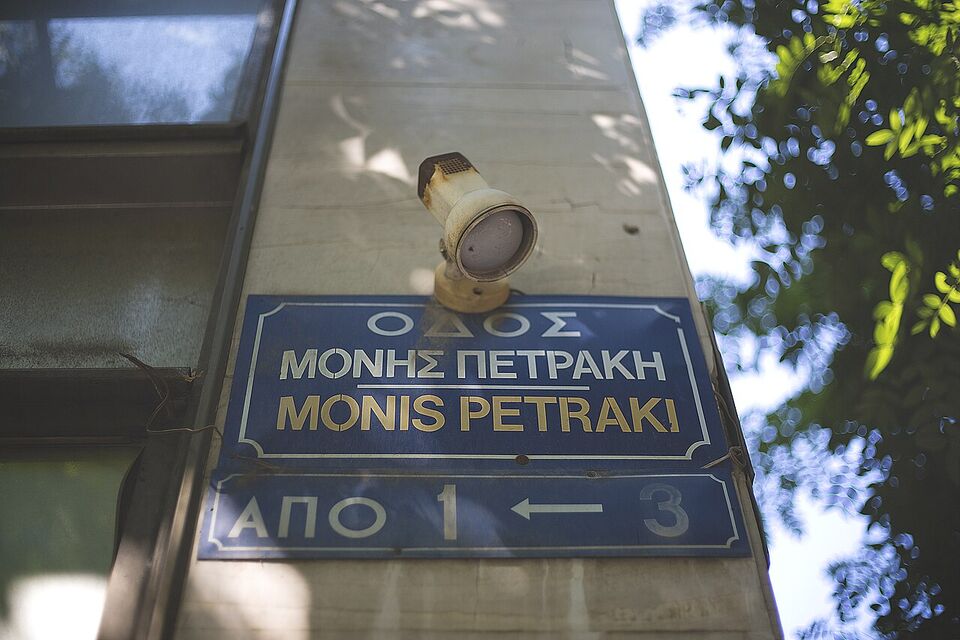
No. English is widely spoken in tourist areas, in hotels, at airports, on ferries and in most restaurants in Athens and on the islands, and many Greeks under 50 speak it well. Road signs in Greece show names in both Greek and Latin letters, as do most ferry boards and museums. You can travel for two weeks using only English and pointing.
That said, a dozen Greek words make a difference. Greeks respond warmly to kalimera (good morning) and efharisto (thank you), and in small villages, on a bus in the mountains or with older shopkeepers, English may run out quickly. This page gives you phrases in Greek script, so you can show them on your phone, with a simple way to say each one. The "Say it" column writes sounds as an American would read them, with the stressed syllable in capital letters. For manners to go with the words, see the etiquette guide.
How to read the "Say it" column
- Capital letters mark the stressed syllable: ef-khah-ree-STOH means stress the last part. Greek words have one stress mark, and getting it right matters more than any single vowel.
- kh is a throaty sound like the "ch" in Scottish "loch" or Hebrew "challah". If you cannot make it, a plain "h" is understood.
- dh is the soft "th" of "this", as in dheh-ksee-AH (right). Greek th is the hard "th" of "think".
- gh is a soft, voiced "g" made at the back of the throat. A plain "g" or "y" will be understood.
- Vowels are pure and short: ah as in "father", eh as in "bed", ee as in "see", oh as in "go", oo as in "food".
Insider tip
Most phone keyboards add Greek in a minute (Settings, Keyboard, Add Keyboard). It lets you type a place name that a taxi driver or a bus station clerk can read at once. You can also copy any Greek script from the tables below and show it on your screen. Greek questions end with a semicolon (;) where English uses a question mark.
Greetings
Greek has a formal "you" (esis, also plural) and an informal "you" (esi). With anyone older than you, in a shop or in an official setting, use the formal one. Friends and young people use the informal one at once, and Greeks will not mind a tourist who gets it wrong.
| English | Greek | Say it |
|---|---|---|
| Hello (formal, or to a group) | Γεια σας | yah-SAHS |
| Hello / bye (to a friend) | Γεια σου | yah-SOO |
| Good morning | Καλημέρα | kah-lee-MEH-rah |
| Good evening | Καλησπέρα | kah-lee-SPEH-rah |
| Good night | Καληνύχτα | kah-lee-NEEKH-tah |
| Goodbye | Αντίο | ahn-DEE-oh |
| See you later | Τα λέμε | tah LEH-meh |
| How are you? (formal) | Τι κάνετε; | tee KAH-neh-teh |
| Fine, thanks, and you? | Καλά, ευχαριστώ, εσείς; | kah-LAH, ef-khah-ree-STOH, eh-SEES |
| Nice to meet you | Χάρηκα | KHAH-ree-kah |
| My name is... | Με λένε... | meh LEH-neh |
| I'm from America | Είμαι από την Αμερική | EE-meh ah-POH teen ah-meh-ree-KEE |
The Greek for "hello" and "goodbye" is the same word, yassas or yassou. It literally means "health to you". Use it entering and leaving a shop.
Polite basics
Parakalo does a lot of work. It means "please", "you're welcome", "here you are" and "pardon?". If a waiter or shopkeeper says it to you, they are offering something or asking you to repeat yourself.
| English | Greek | Say it |
|---|---|---|
| Please / you're welcome | Παρακαλώ | pah-rah-kah-LOH |
| Thank you | Ευχαριστώ | ef-khah-ree-STOH |
| Thank you very much | Ευχαριστώ πολύ | ef-khah-ree-STOH poh-LEE |
| Yes | Ναι | neh |
| No | Όχι | OH-khee |
| Okay / all right | Εντάξει | en-DAHK-see |
| Excuse me (to get attention or pass) | Με συγχωρείτε | meh seeng-khoh-REE-teh |
| Sorry | Συγγνώμη | see-GHNOH-mee |
| I don't understand | Δεν καταλαβαίνω | dhen kah-tah-lah-VEH-noh |
| Do you speak English? | Μιλάτε αγγλικά; | mee-LAH-teh ahng-glee-KAH |
| I don't speak Greek | Δεν μιλάω ελληνικά | dhen mee-LAH-oh eh-lee-nee-KAH |
| Slowly, please | Πιο αργά, παρακαλώ | pyoh ar-GHAH, pah-rah-kah-LOH |
| Cheers! | Γεια μας | YAH-mahs |
If you use only three words, make them kalimera, parakalo and efharisto. The word for yes is nai, which sounds like "neh". Many Americans hear "no" and are confused. Say "yes" in English as well if the answer matters. More on the head tilt that goes with each word is in the etiquette guide.
At the taverna
In a taverna the server will usually bring a menu, a basket of bread and water. Many menus are in English, and many servers will recite the specials. These phrases are useful for the rest.
| English | Greek | Say it |
|---|---|---|
| A table for two, please | Ένα τραπέζι για δύο, παρακαλώ | EH-nah trah-PEH-zee yah DHEE-oh, pah-rah-kah-LOH |
| The menu, please | Τον κατάλογο, παρακαλώ | tohn kah-TAH-loh-ghoh, pah-rah-kah-LOH |
| I would like... | Θα ήθελα... | thah EE-theh-lah |
| Water | Νερό | neh-ROH |
| Wine (red / white) | Κρασί (κόκκινο / λευκό) | krah-SEE (KOH-kee-noh / lef-KOH) |
| Beer | Μπύρα | BEE-rah |
| Coffee | Καφές | kah-FEHS |
| I am vegetarian | Είμαι χορτοφάγος | EE-meh khor-toh-FAH-ghos |
| Without meat | Χωρίς κρέας | khoh-REES KREH-ahs |
| I am allergic to... | Έχω αλλεργία σε... | EH-kho ah-ler-YEE-ah seh |
| It is delicious | Είναι πολύ νόστιμο | EE-neh poh-LEE NOH-stee-moh |
| The bill, please | Τον λογαριασμό, παρακαλώ | tohn loh-ghar-yahz-MOH, pah-rah-kah-LOH |
Dishes you will see on menus, and how to say them: choriatiki (khor-yah-tee-KEE, village or "Greek" salad), tzatziki (dzah-DZEE-kee), souvlaki (soov-LAH-kee), moussaka (moo-sah-KAH), spanakopita (spah-nah-KOH-pee-tah, spinach pie). For what to order and how a Greek meal works, see the food guide.
Watch out
Tell the server about allergies in words and show the Greek phrase on your phone. Nuts, sesame and shellfish appear in dishes where an American would not expect them, and cooks may not know the English name. If your allergy is severe, say so clearly before you order, not after.
Ferries, buses and getting around
Ferry and bus terminals are where English signs are least reliable, and announcements are usually in Greek. Learn the words for "port", "gate" and "departure", and check your ticket for the boat name, gate number and time. Ferry gates are given at the port or on a board, not always on the ticket. For schedules and booking, see the ferries guide and the getting around guide.
| English | Greek | Say it |
|---|---|---|
| Port | Λιμάνι | lee-MAH-nee |
| Ship / ferry | Πλοίο | PLEE-oh |
| Ticket | Εισιτήριο | ee-see-TEE-ree-oh |
| One ticket to Naxos, please | Ένα εισιτήριο για Νάξο, παρακαλώ | EH-nah ee-see-TEE-ree-oh yah NAHK-soh, pah-rah-kah-LOH |
| What time does the ferry leave? | Τι ώρα φεύγει το πλοίο; | tee OH-rah FEV-yee toh PLEE-oh |
| Which gate? | Ποια πύλη; | pyah PEE-lee |
| Departure | Αναχώρηση | ah-nah-KHOH-ree-see |
| Arrival | Άφιξη | AH-feek-see |
| Is the ferry late? | Έχει καθυστέρηση το πλοίο; | EH-khee kah-thee-STEH-ree-see toh PLEE-oh |
| Bus stop | Στάση | STAH-see |
| Where does this bus go? | Πού πάει αυτό το λεωφορείο; | poo PAH-ee ahf-TOH toh leh-oh-foh-REE-oh |
| Taxi | Ταξί | tahk-SEE |
| To the airport, please | Στο αεροδρόμιο, παρακαλώ | stoh ah-eh-roh-DHROH-mee-oh, pah-rah-kah-LOH |
Allow time. Greek boarding can be informal and quick, and ramps close shortly before departure. Be at the port well ahead of the time on the ticket (see the ferries guide for how early). If a ferry is delayed because of wind, you will see the Greek word kathysterisi (delay) or akyrothike (cancelled) on a board or hear it announced.
Shopping
Shopkeepers in tourist areas quote prices in English. The words below help in markets, bakeries and small stores. A periptero (kiosk) sells water, snacks, transit tickets and phone cards on nearly every corner.
| English | Greek | Say it |
|---|---|---|
| How much is it? | Πόσο κάνει; | POH-soh KAH-nee |
| Too expensive | Πολύ ακριβό | poh-LEE ah-kree-VOH |
| Do you take cards? | Δέχεστε κάρτες; | DHEH-kheh-steh KAR-tes |
| I'm just looking | Απλώς κοιτάζω | ah-PLOHS kee-TAH-zoh |
| I'll take it | Θα το πάρω | thah toh PAH-roh |
| A bag, please | Μια σακούλα, παρακαλώ | mya sah-KOO-lah, pah-rah-kah-LOH |
| Receipt | Απόδειξη | ah-POH-dheek-see |
| Open | Ανοιχτό | ah-neekh-TOH |
| Closed | Κλειστό | klee-STOH |
| Tax-free form, please | Φόρμα επιστροφής ΦΠΑ, παρακαλώ | FOR-mah eh-pee-stroh-FEES fee-pee-AH, pah-rah-kah-LOH |
Ask for the receipt. Shops are required to issue one, and you need it for a VAT refund on larger purchases (see the shopping guide and the money guide).
Directions
You will often be given directions with a pointing hand and "ekei" (there). Maps on your phone are more reliable, but these words help you confirm.
| English | Greek | Say it |
|---|---|---|
| Where is...? | Πού είναι...; | poo EE-neh |
| Where is the bathroom? | Πού είναι η τουαλέτα; | poo EE-neh ee too-ah-LEH-tah |
| Left | Αριστερά | ah-rees-teh-RAH |
| Right | Δεξιά | dheh-ksee-AH |
| Straight ahead | Ευθεία | ef-THEE-ah |
| Near / far | Κοντά / μακριά | kon-DAH / mah-kree-AH |
| Can you show me on the map? | Μπορείτε να μου δείξετε στον χάρτη; | bo-REE-teh nah moo DHEEK-seh-teh stohn KHAR-tee |
| Pharmacy | Φαρμακείο | far-mah-KEE-oh |
| Hospital | Νοσοκομείο | noh-soh-koh-MEE-oh |
| Beach | Παραλία | pah-rah-LEE-ah |
Emergencies
Call 112 for any emergency. Operators are trained to handle English. Other numbers are 100 for police, 166 for an ambulance, 199 for fire, 108 for the coast guard and 171 for the tourist police. See the safety guide for more, and the health guide for medical care.
| English | Greek | Say it |
|---|---|---|
| Help! | Βοήθεια! | voh-EE-thee-ah |
| Fire! | Φωτιά! | foh-TYAH |
| Call the police | Φωνάξτε την αστυνομία | foh-NAHK-steh teen ah-stee-noh-MEE-ah |
| Call an ambulance | Καλέστε ασθενοφόρο | kah-LEH-steh ahs-theh-noh-FOH-roh |
| I need a doctor | Χρειάζομαι γιατρό | khree-AH-zoh-meh yah-TROH |
| I am ill | Είμαι άρρωστος (man) / άρρωστη (woman) | EE-meh AH-ros-tos / AH-ros-tee |
| I am lost | Έχω χαθεί | EH-kho khah-THEE |
| My passport was stolen | Μου έκλεψαν το διαβατήριο | moo EH-klep-sahn toh dhee-ah-vah-TEE-ree-oh |
| I need the US Embassy | Χρειάζομαι την αμερικανική πρεσβεία | khree-AH-zoh-meh teen ah-meh-ree-kah-nee-KEE prez-VEE-ah |
If you are in danger, shout and call 112 first, and use the phrases second. A bystander or hotel staff member will usually step in immediately.
Numbers and prices
Prices are given in euros (evro, ev-ROH). Cents are lepta. A price like €4.50 is said "four euros and fifty". Most servers will help in English, and the number is on the card reader or the bill.
| English | Greek | Say it |
|---|---|---|
| 1 | ένα | EH-nah |
| 2 | δύο | DHEE-oh |
| 3 | τρία | TREE-ah |
| 4 | τέσσερα | TEH-seh-rah |
| 5 | πέντε | PEN-deh |
| 6 | έξι | EH-ksee |
| 7 | επτά (also εφτά) | ep-TAH / ef-TAH |
| 8 | οκτώ (also οχτώ) | ok-TOH / okh-TOH |
| 9 | εννέα (also εννιά) | eh-NEH-ah / eh-NYAH |
| 10 | δέκα | DHEH-kah |
| 20 | είκοσι | EE-koh-see |
| 50 | πενήντα | peh-NEEN-dah |
| 100 | εκατό | eh-kah-TOH |
| Euro | ευρώ | ev-ROH |
Greek numbers 1, 3 and 4 change with the noun's gender (so "one" is ena, mia or enas), but the forms above are fine for prices and counting. Days of the week are Deftera (Monday), Triti, Tetarti, Pempti, Paraskevi, Savvato and Kyriaki (Sunday), and a Greek schedule is in 24-hour time on ferry tickets and boards.
Reading the Greek alphabet on signs
Greek has 24 letters. You do not need all of them. Many look like English letters, but several of them mean different sounds, and these are the ones that trip up Americans. Learn this short list and most signs become readable. Place names often appear in Latin letters too, but spelling varies (Piraeus can be Piraeus, Pireas or Peiraias), and Greek script helps you match a sign to the name on your ticket.
| Letter | Looks like | Sound | Example |
|---|---|---|---|
| Ρ ρ | P | R (rolled) | ΠΑΡΑΛΙΑ = beach (pah-rah-LEE-ah) |
| Η η | H | ee, as in "see" | ΗΛΙΟΣ = sun (EE-lee-os) |
| Χ χ | X | kh, a throaty "h" | ΧΩΡΑ = main town (khoh-RAH) |
| Ν ν | N (small ν looks like v) | n | ΝΕΡΟ = water (neh-ROH) |
| Υ υ | Y | ee (or "v/f" after a vowel, as in ef) | ΕΥΧΑΡΙΣΤΩ = thank you |
| Σ σ / ς | capital Σ looks like a sideways M or E | s (ς is the form at the end of a word) | ΕΞΟΔΟΣ = exit (EH-ksoh-dhos) |
| Β β | B | v | ΒΟΛΤΑ = stroll (VOHL-tah) |
| Π π | capital looks like a gateway; small π like n | p | ΠΛΟΙΟ = ship (PLEE-oh) |
| Γ γ | capital looks like a backward L; small γ like y | gh / y | ΓΥΝΑΙΚΩΝ = women |
| Δ δ | capital is a triangle | dh, soft "th" | ΔΕΞΙΑ = right |
| Θ θ | looks like a circle with a bar | th, as in "think" | ΘΑΛΑΣΣΑ = sea (THAH-lah-sah) |
Capital Greek letters do the heavy lifting on signs. Notice that "P" in Greek (Ρ) is an R, "H" (Η) is "ee", "X" (Χ) is "kh", "N" is the same as English, and "Y" (Υ) is "ee" or "v"/"f".
Signs you will see
| Sign | Greek | Say it |
|---|---|---|
| Exit | ΕΞΟΔΟΣ | EH-ksoh-dhos |
| Entrance | ΕΙΣΟΔΟΣ | EE-soh-dhos |
| Men | ΑΝΔΡΩΝ | ahn-DHROHN |
| Women | ΓΥΝΑΙΚΩΝ | yee-neh-KOHN |
| Closed | ΚΛΕΙΣΤΟ | klee-STOH |
| Open | ΑΝΟΙΧΤΟ | ah-neekh-TOH |
| Pharmacy | ΦΑΡΜΑΚΕΙΟ | far-mah-KEE-oh |
| Port | ΛΙΜΑΝΙ | lee-MAH-nee |
| Arrivals / departures | ΑΦΙΞΕΙΣ / ΑΝΑΧΩΡΗΣΕΙΣ | AH-feek-sees / ah-nah-KHOH-ree-sees |
| No entry / forbidden | ΑΠΑΓΟΡΕΥΕΤΑΙ | ah-pah-ghoh-REH-veh-teh |
| Taxi | ΤΑΞΙ | tahk-SEE |
Pharmacies show a green cross. ΑΝΔΡΩΝ (men) and ΓΥΝΑΙΚΩΝ (women) are the two to know for restrooms, since the symbols on doors are not always clear. The word ΩΡΕΣ before a time means "hours", and ΚΛΕΙΣΤΟ may appear on a gate for a siesta or holiday closure. At bus and ferry stations, line up destination names on your ticket with the board by matching the first few letters.
Different from home
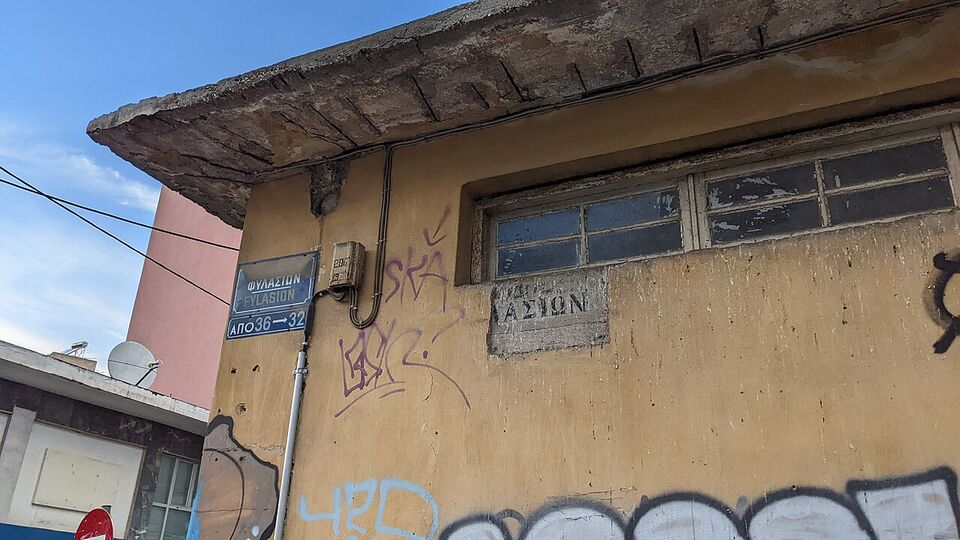
Greek road signs, ferry boards and menus often show two spellings of the same place: Greek script and an English transliteration. Transliteration is not standardized, so "Chania", "Hania" and "Xania" are all the same city. If a name does not match, compare the Greek letters or ask.
When English is enough, and how to learn a little
English works at hotels, airports, car-rental desks, ferry ticket windows, big museums, tourist restaurants and most shops in Athens, Thessaloniki, Crete, Santorini, Mykonos, Rhodes, Corfu and other busy places. Where it is less common: village bakeries, family tavernas off the beaten track, local bus drivers in the mountains, pharmacies in small towns and older residents. Even there, a phone translator app and patience solve nearly everything.
- Learn kalimera, kalispera, parakalo, efharisto, nai, ochi and signomi (sorry) before you land.
- Download the Greek language in an offline translation app, so it works on a ferry or in the mountains.
- Save the Greek script for your hotel's name and address and for your ferry port as a screenshot, to show a taxi driver.
- Know how to say your allergy in Greek if you have one.
- Keep 112 in your phone for emergencies. See the phones and connectivity guide for SIMs and apps.
Speaking Greek badly is welcomed. Greeks are proud of their language and treat any attempt as a gift. Expect your effort to be answered in English, and answer back in Greek anyway. For the cultural side of those exchanges, read the etiquette guide, and for planning the rest of your trip start at the planning guide.
Add it to a route in the trip builder, or ask us to plan the hotels, trains and guides for you.