Overview: how Greece fits together
Greece looks small on a map and moves slowly on the ground. A trip works best when you treat it as a series of hops: a flight or ferry to the islands, a bus or rental car on the mainland, and the Athens metro for the city. Most of the real planning work is about the sea, because every island runs on its own ferry and flight timetable, and those timetables change a lot between summer and winter.
This page gives you the whole picture in one place and points to the detailed guides. For boats, read Greek Ferries and Island Hopping. For cars, scooters and the International Driving Permit, read Driving in Greece. For the big-picture route, start with Plan Your Trip to Greece.
The simple rule we suggest: on the mainland, use buses and your feet; on the islands, use ferries between them and a mix of buses, taxis and a rental for getting around each one; in Athens, never rent a car.
Ferries and flights to the islands
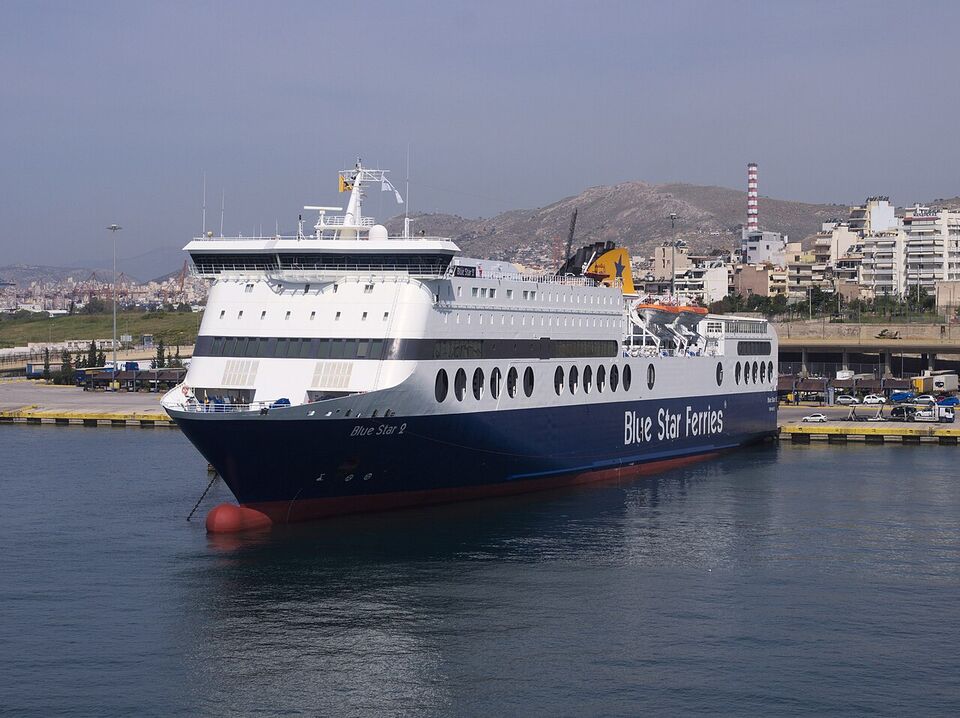
The Greek islands are connected by an enormous ferry network, and for most travelers the ferry is the default way to move between them. Boats range from large conventional ships with cabins and cafes to fast catamarans and hydrofoils. Companies include Blue Star Ferries, Seajets, Hellenic Seaways, Golden Star Ferries, Minoan Lines, ANEK and Fast Ferries. We cover how to choose, where to book and what to expect in our ferries guide.
Flying is the alternative when time matters. Aegean Airlines (which also operates the Olympic brand) and Sky Express fly from Athens to many islands, and most flights from Athens take under an hour. Islands with airports include Santorini, Mykonos, Paros, Naxos, Milos, Syros, Rhodes, Kos, Corfu, Kefalonia, Zakynthos, Skiathos and the Cretan cities of Heraklion, Chania and Sitia. Others, including Hydra, Ios, Folegandros, Sifnos, Patmos and the Saronic islands, have no airport and are reached by sea only.
Flights make most sense for three cases: you are going far (Rhodes, Crete, Corfu), you have limited days, or it is winter and high-speed boats have stopped. Sky Express also links some islands to each other without going through Athens, which can save a day on certain routes. Check the airline sites for the current network, since routes change by season. See also Flights to Greece for the flights from the US.
Insider tip
Small island planes have tighter baggage limits than transatlantic flights. Check the checked-bag weight on your fare before you book, and expect to pay extra for a second bag on some fares.
KTEL buses
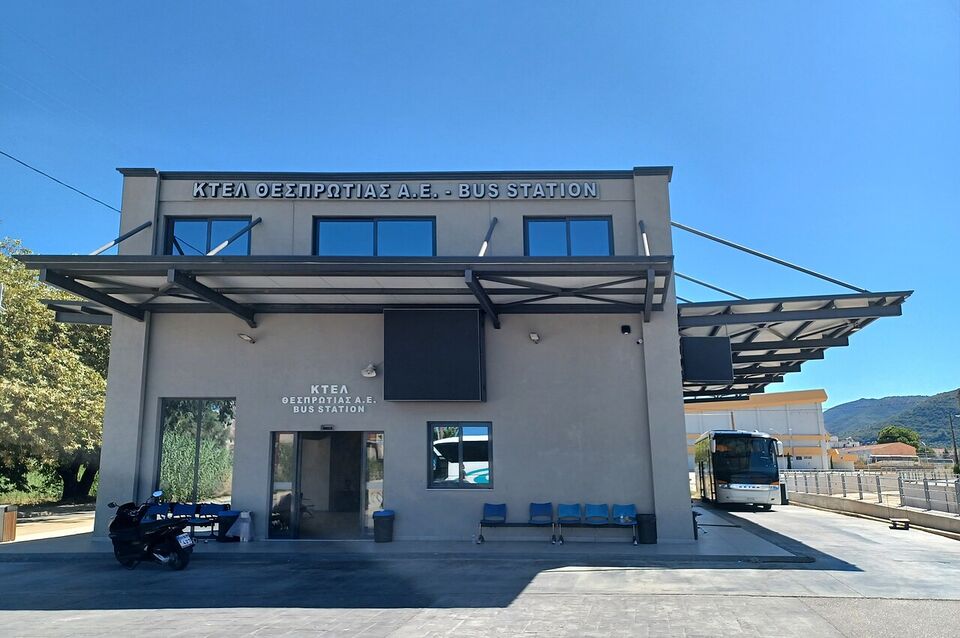
KTEL (KTEL, pronounced "kah-TEL") is the name for the regional intercity bus companies. Each region has its own company, so Athens to Delphi is run by a different KTEL than Athens to Nafplio. The buses are modern, air-conditioned and cheap, and they reach nearly every mainland town and many island villages. Long routes cost roughly €15 to €35 (about $17 to $39); check the regional KTEL site for the exact fare.
How to buy tickets
For the main routes from Athens, buy at the ticket counter at the station on the day, or online on the regional company's own website. On busy days (Friday afternoon, holiday weekends, summer) buy a day ahead. Local island and village buses often sell tickets on board or at a kiosk by the stop. Keep some cash, because small stations may not take cards.
Athens has two main long-distance bus stations. The Kifissos terminal serves the Peloponnese (including Nafplio) and western Greece; the Liosion terminal serves central Greece, including Delphi and the Trikala/Kalambaka route to Meteora. Both are in less central parts of the city, so take a taxi or the metro and then a short ride. Confirm the departure terminal on your ticket, because KTEL companies sometimes move departure points.
Main routes and times from Athens
| Route | Typical time | Notes |
|---|---|---|
| Athens to Delphi | About 3 hours | KTEL Fokidas from Liosion terminal; a few buses a day |
| Athens to Nafplio | About 2 hr 10 min | KTEL Argolidas from Kifissos terminal |
| Athens to Kalambaka (Meteora) | About 4.5 to 5.5 hours | KTEL Trikala via Trikala; the dependable option |
| Athens to Thessaloniki | About 5 to 6 hours | Train is a similar time; flights are about an hour |
| Heraklion to Chania (Crete) | About 2.5 hours | KTEL Crete runs the north-coast road |
The times above are typical and vary with traffic and the number of stops. Treat them as planning numbers and check the operator for your date. Our pages on Delphi and Meteora and the Peloponnese explain which of these are worth doing by bus and which are better with a car or a tour.
Trains
Greece's rail network is small. The national operator is Hellenic Train, and its main line runs from Athens north to Thessaloniki. The journey is about 4.5 to 5.5 hours, and works on the line after the storm damage of recent years sometimes replace part of the trip with buses. We cannot give you an exact timetable that will stay true, so check hellenictrain.gr or call 14511 before you plan around it.
A line toward Kalambaka, the town under Meteora, has had long disruptions since the 2023 storms. For Meteora we suggest planning on the KTEL bus via Trikala, and treating the train as a bonus if it is running. The Athens suburban railway (Proastiakos) is separate and useful: it connects the airport, Athens and Piraeus.
The islands have no trains. Thessaloniki's metro is new and useful in the city (see below), but does not reach the airport.
Different from home
There is no equivalent of an Amtrak corridor. The train is rarely the fastest or cheapest way across Greece, and flights and buses beat it on most routes. Plan around buses and check the train only for Athens to Thessaloniki.
Getting around Athens
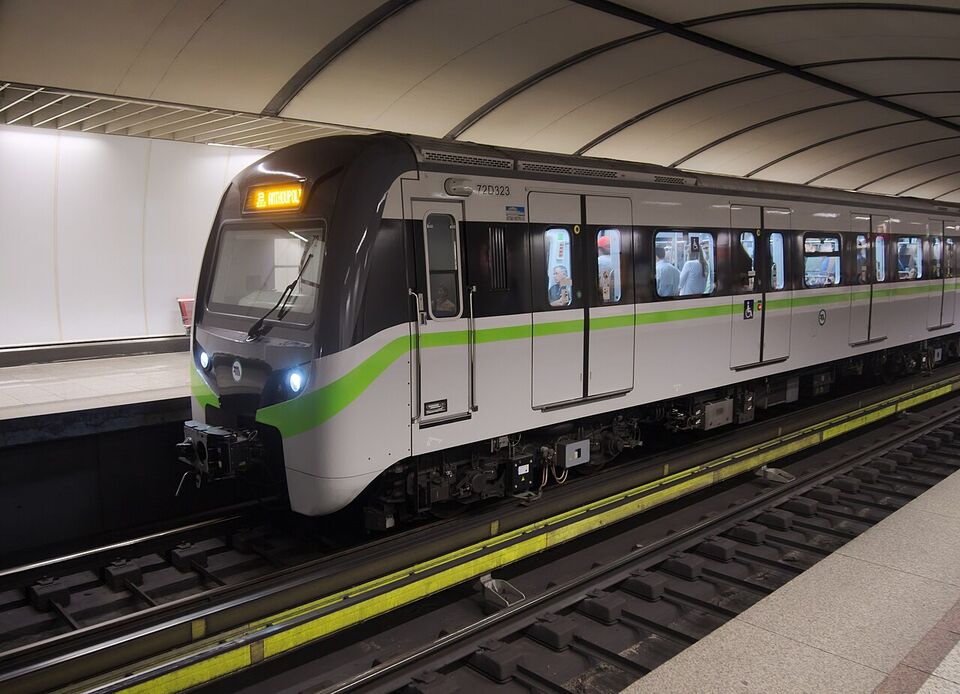
Athens has a good metro, a tram to the coast, buses and trolleybuses, all run by the same ticketing system. The metro is the fastest way between the airport, the center and Piraeus. More on neighborhoods and the city is in our Athens guide.
Tickets and passes (2026 prices)
| Ticket | Price | US$ | Notes |
|---|---|---|---|
| Single, 90 minutes | €1.20 | about $1.34 | Metro, tram, bus, trolleybus; not airport services |
| 24 hours | €4.10 | about $4.60 | From first validation; excludes airport |
| 5 days | €8.20 | about $9.20 | Excludes airport services |
| 3-day tourist ticket | €20 | about $22 | Includes one airport round trip |
| Airport metro or suburban rail | €9 one way | about $10 | €16 return, valid 30 days |
| Airport express bus | €5.50 | about $6.16 | X95 Syntagma, X96 Piraeus, X97 Elliniko, X93 Kifissos |
You can also tap a contactless Visa or Mastercard (physical card, Apple Pay or Google Pay) at metro gates and bus and tram validators. Each ride is €1.20, with a daily cap of €4.10. Use the same card or phone for every tap, and note that American Express is not accepted. Paper tickets must be validated at the gate or on board; inspectors do check, and fines are steep.
The metro takes about 40 minutes from the airport to Syntagma. The X95 bus takes about an hour or more in traffic. The metro runs daily from about 5 a.m. to midnight; Lines 2 and 3 run until 2 a.m. on Fridays and all night on Saturdays. Check the Athens metro site (stasy.gr) for current hours and works.
Pickpockets work the metro, especially on Line 1 and around the busiest central stations. Keep your phone and wallet in front pockets or a zipped bag.
Thessaloniki
Thessaloniki has a single metro line (Line 1, opened November 30, 2024, extended to Kalamaria in 2026) plus buses. A single urban ticket is €0.60 (about $0.67) for 70 minutes, and a 24-hour pass is €2.50 (about $2.80). Metro and buses need separate tickets. The airport bus is €2 (about $2.24). See Thessaloniki and Northern Greece.
Taxis and ride apps
Taxis in Greece are cheap by US standards and are the best way to cover short distances, carry luggage or get to a bus terminal. Athens taxis are yellow. The airport has a flat fare to the city center: €40 (about $45) by day (5 a.m. to midnight) and €55 (about $62) at night, with everything included.
In town, ask the driver to use the meter ("to metritis, parakalo"). The law requires taxis to accept cards, though not every driver does, so ask before you get in. Apps such as FREE NOW (formerly Beat) and Uber's taxi service let you order and pay in the app and see the fare estimate. App fares and availability vary by city, and on islands there may be few cars. Tourist-heavy islands in summer have long waits and high prices, so do not count on a taxi appearing at a beach at the end of the day.
Watch out
Do not accept a ride from someone who approaches you in the arrivals hall. Use the official taxi rank or an app. If a driver quotes a price for a meter ride that is far above the airport flat fare, say no and walk to the rank.
Rental cars: when you need one
You do not need a car for Athens, for Santorini or Mykonos town stays, or for island-hopping with short stays. You do want one on Crete, where distances are long and the best beaches and villages are far from bus lines, and in the Peloponnese, where Mycenae, Epidaurus, Monemvasia and the Mani are easier by car. A car also helps on Naxos and other large islands.
The simple rule: rent a car for the days you need it, at the airport or port of the island where you will use it, rather than keeping one for the whole trip. Many travelers rent for two to four days on Crete or Naxos. Full details on the International Driving Permit, age limits, insurance, tolls and rules are in Driving in Greece.
Save money
Automatic cars cost more than manuals and sell out first, so book early for summer. Picking up and dropping off at different places usually adds a fee.
Scooters and ATVs
Scooters and ATVs (quads) are common rentals on islands, and a lot of tourists are injured on them every year. Greek rules require a suitable motorcycle license category, and helmets are compulsory. Many travel insurance policies exclude ATVs and sometimes scooters. If you do not ride at home, an island with hills and gravel roads is a poor place to learn. Read the section in our driving guide before you rent.
Travel times between main places
These are rough, typical times, for planning. Add buffer for boarding, transfers and delays. Distances are approximate road distances.
| From and to | By road | By boat | By air |
|---|---|---|---|
| Athens to Delphi | About 110 miles (180 km), 2.5 to 3 hr | n/a | n/a |
| Athens to Nafplio | About 90 miles (145 km), 2 hr | n/a | n/a |
| Athens to Kalambaka | About 230 miles (370 km), 4 to 4.5 hr | n/a | n/a |
| Athens to Thessaloniki | About 310 miles (500 km), 5 hr | n/a | About 1 hr |
| Piraeus to Mykonos | n/a | 2 hr 40 min (high-speed) to about 5 hr | Under 1 hr |
| Piraeus to Naxos | n/a | 3 hr 15 min to 5 hr 30 min | Under 1 hr |
| Piraeus to Paros | n/a | 3 to 4.5 hr | Under 1 hr |
| Piraeus to Santorini | n/a | 5 to 8 hr (up to 9.5 with stops) | Under 1 hr |
| Piraeus to Heraklion | n/a | About 9 to 10 hr overnight | Under 1 hr |
| Piraeus to Rhodes | n/a | 13 hr or more | Under 1 hr |
| Igoumenitsa to Corfu | n/a | About 1.5 hr | n/a |
The ferry times above are ranges across companies and boat types; the faster time is a high-speed boat and the longer one a conventional ship, or one with stops. Santorini to Crete is a high-speed hop of roughly 1.5 to 2 hours in season, with a longer conventional option. Our ferries page has more on each route.
Building a route without wasted days
Every move costs a day, even if the trip itself is only three hours, because you pack, check out, get to the port, board, arrive and get settled. A few habits keep that cost down:
- Count moves, not stops. For a one-week trip, two bases is plenty. For ten days, three. For two weeks, three or four. See our planning guide for sample routes.
- Move in the morning. Many ferries leave early, and a late-morning arrival leaves you the rest of the day.
- Do not stack tight connections. Never book a flight home the same day as a ferry. Give a buffer of at least a night, because a delayed boat is common in summer wind (see ferries).
- Fly where the sea is long. Rhodes, Corfu and Crete each take a long boat ride; a short flight often saves a full day.
- Use Athens as the hinge. Most flights and ferries go through Athens or Piraeus, so a loop (Athens, islands, back to Athens) is easier than a line.
A reliable pattern is Athens for two to three nights, then a flight or ferry to the Cyclades, hopping between two islands, then a flight to Crete or home. Our Cyclades guide and island chooser show which islands link well.
Island buses, water taxis and local boats
Once you are on an island, the local bus is usually run by the island's own KTEL and is the cheapest way to cover the main route, such as Fira to Oia on Santorini or Naxos Town to Apollonas. Fares are a few euros. Buses connect the port, the main town and the best-known beaches, but they stop early in the evening and run less often outside July and August. Photograph the timetable at the bus stop, because online versions are often out of date.
Some places add small boats as transport. On Mykonos, water taxis link the southern beaches. On Crete, boats run to places with no road, such as Loutro and the beach at Sougia. Day-trip boats go to Delos from Mykonos, to the volcano from Santorini, and to the islands off Rhodes and Corfu. These are covered on the pages for each island, such as Mykonos and Santorini.
Small Greek islands often have a single taxi or none. If you are staying somewhere remote, ask your host to book a pickup from the port, and agree the price in advance. Many family-run places will meet you at the ferry, and some include it in the room rate.
Strikes, delays and what to do
Greece has occasional transport strikes, which can stop ferries, the Athens metro or taxis for a day. They are announced a few days in advance in the news and on the operator's site, and usually last 24 hours. If you have a flight or boat on a strike day, check with the operator and your hotel the day before. Keep your tickets and receipts, because a cancelled ferry normally gives you the right to a refund or a rebooking.
Ferry delays are more common than cancellations. In windy weather, boats wait in port, and a delay of an hour or two is normal on the Cyclades routes in July and August. Do not book a flight home on the same day as an island ferry. A buffer night in Athens near the airport costs less than a missed flight. More on wind and cancellations is in the ferries guide.
Getting around in winter
From late October to April, island transport thins out. High-speed boats mostly stop, ferries run less often, and some airport routes are cut. Buses on islands drop to a few runs a day. A winter route should have fewer hops and more buffer, and you should verify every leg on the operator's site for your travel date. See Greece in November for what is running now.
Add it to a route in the trip builder, or ask us to plan the hotels, trains and guides for you.