Overview
Greece produces some of Europe's most interesting wines, a long tradition of grape and anise spirits, and a coffee culture that has its own vocabulary. The easiest way to enjoy it is to ask for the local wine by the carafe with dinner, order ouzo or tsipouro with small plates, and drink iced coffee slowly like everyone else.
This page covers the grapes and regions worth knowing, winery visits, the main spirits (ouzo, tsipouro, raki, mastiha), Greek beer, coffee, the drinking age and public drinking, and what drinks cost. For what to eat with them, see Greek Food, and for Athens specifically, Food and Drink in Athens.
Greek wine: the grapes to know
Greek wine uses mostly native grapes with names that are hard to say but easy to order. Menus often list wine by the glass, half-liter or liter carafe (krasi in a kilo or imisi carafe), so you can try several without buying a bottle.
| Grape | Color and style | Where | Pairs with |
|---|---|---|---|
| Assyrtiko | White; dry, high acid, mineral, sometimes oaked | Santorini, also grown across Greece | Grilled fish, seafood, fried cheese |
| Moschofilero | White or pink-skinned; floral, light | Mantinia, Peloponnese | Salads, light starters, spicy dishes |
| Xinomavro | Red; firm tannin and acidity, aging potential | Naoussa, Amyntaio, northern Greece | Lamb, grilled meat, aged cheese |
| Agiorgitiko | Red; soft, fruity, from light to full-bodied | Nemea, Peloponnese | Moussaka, stews, souvlaki |
| Retsina | White or rosé flavored with pine resin | Attica and central Greece | Fried foods, mezedes, hot weather |
| Vinsanto | Sweet; sun-dried grapes, long aging | Santorini | Dessert, nuts, strong cheese |
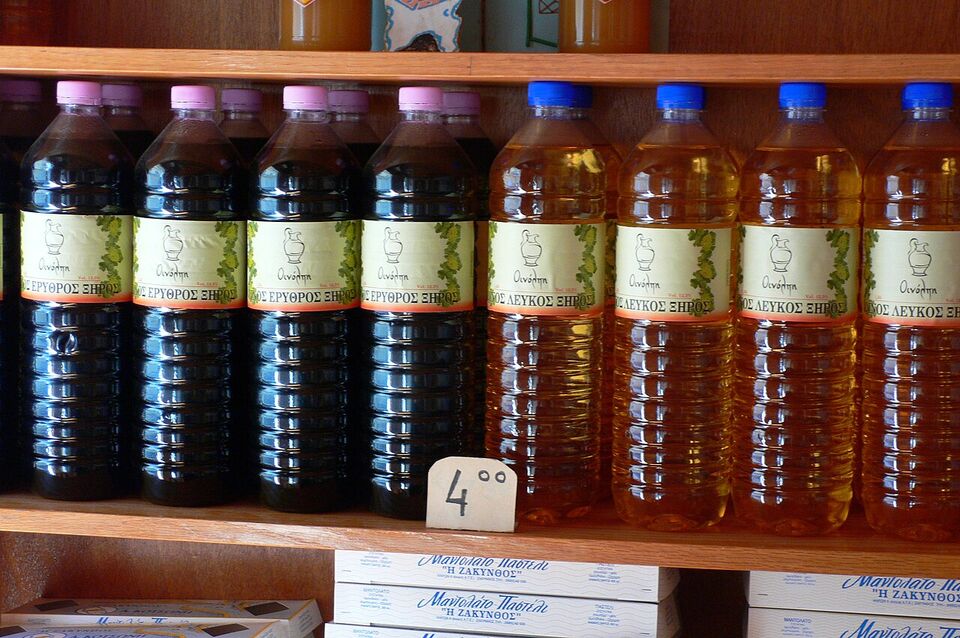
Retsina polarizes people. Pine resin was once used to seal wine containers, and the flavor stayed. Good modern retsina is cleaner and lighter than its reputation. Serve it very cold and try it with fried zucchini, anchovies or cheese before judging. In Athens, a small wine tavern may pour a house retsina straight from the barrel.
Other grapes and styles
Other names you may see: Roditis (a fresh, light white), Malagousia (aromatic white), Savatiano (the main grape in Attica), Mavrodaphne (a sweet red from Patras), Limnio (a red from the north), Kotsifali and Mandilari (Cretan reds), and Athiri and Aidani (Santorini whites, often blended with Assyrtiko). Wines labeled PDO (OPAP or OPE) follow regional rules; "Topikos Oinos" or PGI wines are local table wines with more freedom.
Wine regions
Santorini
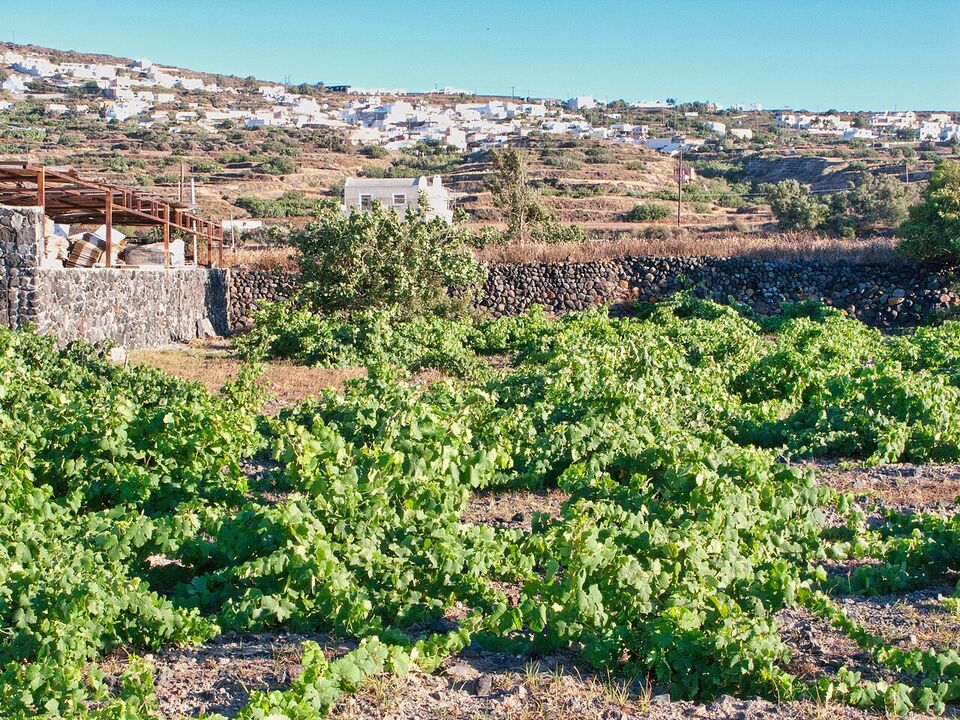
Vines on Santorini grow low and wound into baskets (kouloura) to resist wind and sun on volcanic ash soil. The result is a dry white with salt and citrus notes and a sweet Vinsanto. Several wineries sit on the caldera edge with terraces. See Santorini.
Nemea
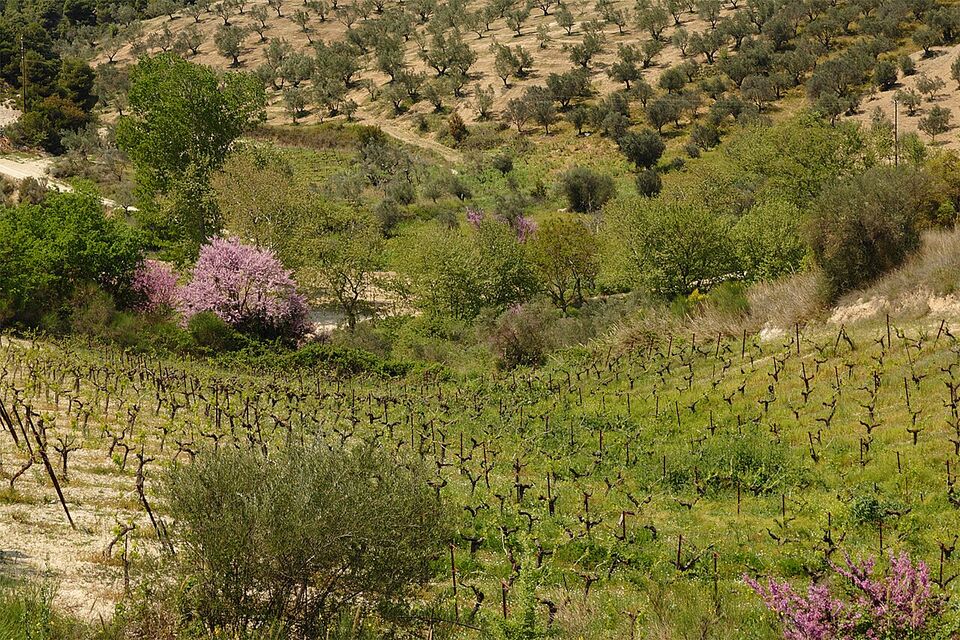
Greece's best-known red region, about 1.5 hours from Athens by car. Many wineries welcome visitors by appointment, and the area combines well with Nafplio and Mycenae. See The Peloponnese.
Naoussa
Xinomavro is often compared to Nebbiolo for its structure and acidity. The area is about 1.5 hours west of Thessaloniki; combine it with Vergina and the north. See Thessaloniki and Northern Greece.
Crete
Crete has one of Greece's largest wine areas, with local grapes and many family wineries around Heraklion, Peza and Archanes. See Crete.
Mantinia and Peloponnese uplands
Cool, high-altitude vineyards in Arcadia produce crisp aromatic whites. Good for a stop on a Peloponnese road trip.
Wine is also made on Paros, Naxos, Rhodes, Corfu, Cephalonia (Robola), Lemnos and the northern mainland, so ordering the local wine at an island taverna is easy.
Winery visits
Most Greek wineries are small and visit by appointment. Contact them a few days ahead by email or phone. Big estates in Santorini and Nemea have full visitor centers, set tasting menus and food pairings. Typical tastings run about €15 to €40 per person for three to five wines (estimate, varies by winery and season), and longer tours with food cost more. Many are closed or limited in winter.
- Plan one winery visit per half-day. Roads can be narrow, and tastings are more relaxed without a rush.
- Do not drive after tasting. The legal alcohol limit is 0.05% (0.02% for new drivers). Hire a driver, a tour or a taxi from the winery. See Driving in Greece.
- Spit buckets are normal, and you can order a tasting of fewer wines or share.
- Shipping from wineries to the US is complicated by state alcohol laws; ask the winery before you buy more than you can carry.
Ouzo and meze customs
Ouzo is a clear anise-flavored spirit, usually 37.5 to 40 percent alcohol. It turns cloudy when you add water or ice. Lesbos (Lesvos) is known as its home, and Plomari is the best-known producing area. Greek law protects the name, so authentic ouzo is distilled in Greece.
Order ouzo as you would wine: a small bottle or carafe with a glass of water, ice and a plate of small dishes (olives, cheese, octopus, fried fish, tomato and cucumber). Sip slowly. It is a social drink; two people may share a small bottle over two hours. Not a shot.
Insider tip
Add the water a little at a time rather than all at once, and stop when the taste suits you. If you find the anise too strong, a second glass of water or more ice softens it. Ouzo is also cooked into some seafood dishes, so you may taste it in a sauce.
Tsipouro, raki and mastiha
Tsipouro is a grape pomace spirit from the north (Thessaly, Macedonia, Epirus), similar to Italian grappa. In some northern towns, tsipouradika serve small dishes with each round of tsipouro, and the plates get bigger as you order more. Varieties with anise are sold alongside plain.
Raki or tsikoudia is Crete's pomace spirit, usually 40 percent alcohol, served cold in small glasses at the end of a meal and often free. On Crete, a host who offers raki is making a welcoming gesture. Accept it, and say "stin ygeia mas" (to our health).
Mastiha (mastic) is a liqueur flavored with resin from trees grown on the island of Chios. It tastes of pine and a little vanilla, and is served chilled. Mastic also appears in sweets and gum. A small bottle is a popular gift; see Shopping and Shipping Home.
Also look for Metaxa, a brandy-style spirit, and Greek liqueurs such as kumquat from Corfu and citrus from Naxos (kitron).
Watch out
Raki and tsipouro are strong and served in small glasses that look harmless. Drink water between rounds and eat. Do not buy unlabeled "homemade" spirits from roadside stands; poorly made spirits are a health risk, and sealed, labeled bottles from shops are safer for gifts. For health and medical help, see Health and Medical Care.
Greek beer and microbreweries
The mainstream Greek lagers are Mythos, Alfa, Fix and Vergina. They are light and served very cold. Craft beer has grown over the past decade, with microbreweries in Athens, Thessaloniki, the islands and the north making pale ales, IPAs and wheat beers. Many bars now stock Greek craft brands, and larger islands have brewpubs. Look for local names on the tap list rather than imported brands.
Beer is sold by the bottle (330 or 500 ml) or draft. Draft beer in a bar is often about 400 to 500 ml. Taverna beer arrives cold and expensive compared to wine by the carafe.
Coffee
Coffee is a social habit in Greece. People sit for an hour over a single coffee, and no one will hurry you. Order at the table, pay at the end.
| Coffee | What it is | Price (estimate) |
|---|---|---|
| Freddo espresso | Double espresso shaken with ice; served in a tall glass | €3.50-€5 (about $4-$5.60) |
| Freddo cappuccino | Freddo espresso topped with cold milk foam | €3.80-€5.50 (about $4.30-$6.20) |
| Greek coffee (ellinikos) | Finely ground coffee boiled in a small pot (briki); served in a small cup with grounds | €2-€3.50 (about $2.25-$3.90) |
| Frappé | Instant coffee shaken with water and ice, with optional milk and sugar | €3-€4.50 (about $3.40-$5) |
| Espresso, cappuccino, filter | As in the US, from café chains and cafes | €2.50-€5 (about $2.80-$5.60) |
With Greek coffee, specify sweetness when you order: skétos (no sugar), métrios (medium) or glykós (sweet). Let it settle for a minute and do not drink the grounds at the bottom. At the end, some people turn the cup over to read the pattern, a tradition that is more fun than serious.
A frappé is a Greek invention from the 1950s and still a classic in summer; a freddo is now more common. In winter, hot coffee and hot chocolate are standard, and many cafes also offer iced tea and juices.
How to order wine at a taverna
Most tavernas keep a house wine, white, red or rosé, poured from a barrel or tank into a metal or glass carafe. It is usually local, inexpensive and fine with the food. Ask "krasi hima" (wine from the barrel) and say white (lefko), red (kokkino) or rosé (roze). The standard sizes are a quarter liter (tetarto), half liter (misokilo) and liter (kilo).
Restaurants with a longer list usually offer many Greek bottles by the glass. If you are unsure, ask the waiter to suggest a local white for fish or a red for meat, and mention your budget. They will usually pick a good one. Bottled wine at a restaurant is typically marked up two to three times the shop price, so ordering the house carafe is the better deal.
A simple tasting plan
- Whites: Assyrtiko (dry, mineral), Moschofilero (floral), Malagousia (aromatic) and Roditis (fresh).
- Reds: Agiorgitiko (soft, fruity), Xinomavro (firm, structured) and a Cretan Kotsifali.
- Sweet: a glass of Vinsanto or Mavrodaphne with dessert.
- Spirits: a small ouzo or tsipouro with mezedes, and raki on Crete.
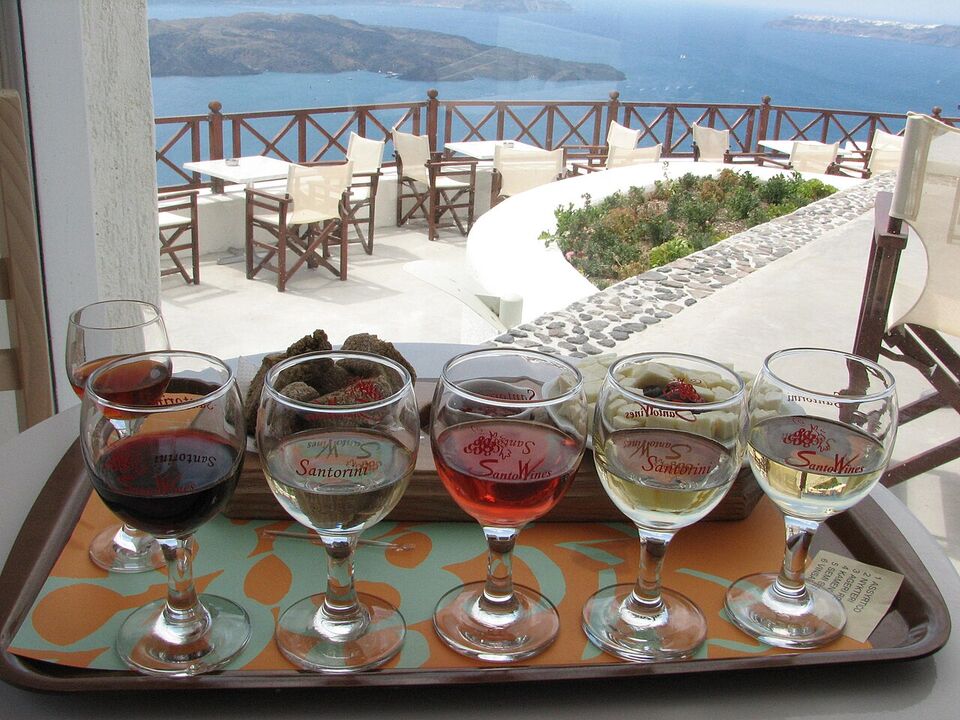
Wine shops (oinopoleio) in Athens and the islands often have tasting counters and staff who speak English. Wine bars in Athens, Thessaloniki and the island capitals serve flights of Greek wine by the glass, a good low-pressure way to compare grapes before you commit to a bottle.
Drinking age and public drinking
The legal age to buy or be served alcohol in Greece is 18. Bars, clubs and shops may ask for ID. Keep your passport or a photo of it with you; a US driver's license may not satisfy every bouncer.
Drinking in public is tolerated in many places, such as on a beach at sunset or in a square, but public drunkenness, noise at night and glass on beaches or at monuments can bring fines or police attention. Some towns and islands have local rules, and rules apply at archaeological sites and on ferries, so follow the signs. Do not drink and drive, and do not ride a scooter after drinking: injuries from rental-bike and scooter accidents are one of the most common problems for visitors (see Is Greece Safe?).
Different from home
The drinking age is lower than in the US, and alcohol is sold in supermarkets and kiosks (periptera) without restrictions on hours that Americans may expect. At the same time, Greeks rarely drink to get drunk at meals, and visible drunkenness is looked down on. Beer and wine at lunch is normal; hard liquor shots are not. Late-night bars in Athens, Mykonos and island resorts are more relaxed.
Bar prices
These are estimates for 2026. Prices rise in resort areas, at beach clubs and at sunset-view bars, where cocktail prices can be much higher.
| Drink | Typical price (estimate) | US$ |
|---|---|---|
| Local beer, bottle or draft | €4-€7 | about $4.50-$7.80 |
| Glass of wine | €5-€9 | about $5.60-$10 |
| Carafe of house wine (500 ml) | €7-€12 | about $8-$13 |
| Ouzo or tsipouro, small bottle | €3-€6 a glass; €8-€15 for a small bottle | about $3.40-$6.70 a glass |
| Cocktail | €9-€16 (more in resort bars) | about $10-$18 |
| Supermarket local wine bottle | €6-€15 | about $6.70-$17 |
Save money
Drink house wine by the carafe with dinner, buy bottles of wine and beer at supermarkets for the hotel balcony, and skip cocktail bars at sunset hours. Ask for the local wine; it is often the best deal on the list. For more budget tips, see Money in Greece.
Taking drinks home
US Customs allows returning adults aged 21 and older 1 liter of alcohol duty-free as part of the $800 allowance; additional amounts are subject to duty and may face state rules. Pack bottles in checked luggage wrapped in clothes. Bottles bought at the airport after security are usually sealed in a tamper-evident bag; keep it sealed and the receipt visible if you change planes, as liquid rules differ by airport. More on Shopping and Shipping Home.
Add it to a route in the trip builder, or ask us to plan the hotels, trains and guides for you.