The short answer
Pick Santorini if you want to see something unforgettable and spend your time on views, walks, wine and sunsets. Pick Mykonos if you want to swim, lie on a sandy beach and go out at night. If you have time for both, do both, in that order or the reverse, and keep one island to a short, relaxed stay.
The two islands are only about 90 miles (145 km) apart, but they feel very different. Santorini is a dramatic volcanic crescent with a shortage of good beaches; Mykonos is a dry, windy island of whitewashed lanes and golden beaches with a short, intense season. Both are crowded in July and August, both are expensive, and both are much easier in late May, June, September and early October. Our individual guides to Santorini and Mykonos go deeper; this page helps you choose.
Side by side
| Santorini | Mykonos | |
|---|---|---|
| Main appeal | Caldera views, sunsets, villages, wine | Beaches, beach clubs, nightlife, Delos |
| Beaches | Black or red volcanic sand and pebbles; fine for a swim, not a beach week | Sandy beaches along the south coast; the island's main draw |
| Nightlife | Relaxed bars and sunset drinks; a few clubs in Fira | Bars, clubs and daytime parties; late nights |
| Sights | Akrotiri, volcano trips, Fira-Oia walk | Delos by boat, old town, windmills |
| Food and wine | Assyrtiko, Vinsanto, wineries | Seafood, beach-club dining, a smaller wine scene |
| Crowds | Heavy in Oia and Fira, especially on cruise days | Heavy in town and at top beaches in July and August |
| Prices | High, especially caldera rooms and Oia | High, especially beach clubs, drinks and summer rooms |
| Getting around | Buses from Fira, taxis scarce in summer | KTEL buses, few taxis, sea taxis |
| Ferry from Piraeus | About 5 to 8 hr (up to 9.5 with stops) | About 2 hr 40 min to 5 hr |
| Flight from Athens | Under an hour | Under an hour |
| Season | April to October; caldera hotels open longest | May to early October; most businesses close November to March |
| Best for | Couples, views, first-timers, wine lovers | Beach lovers, groups, nightlife, a social trip |
The setting and the views
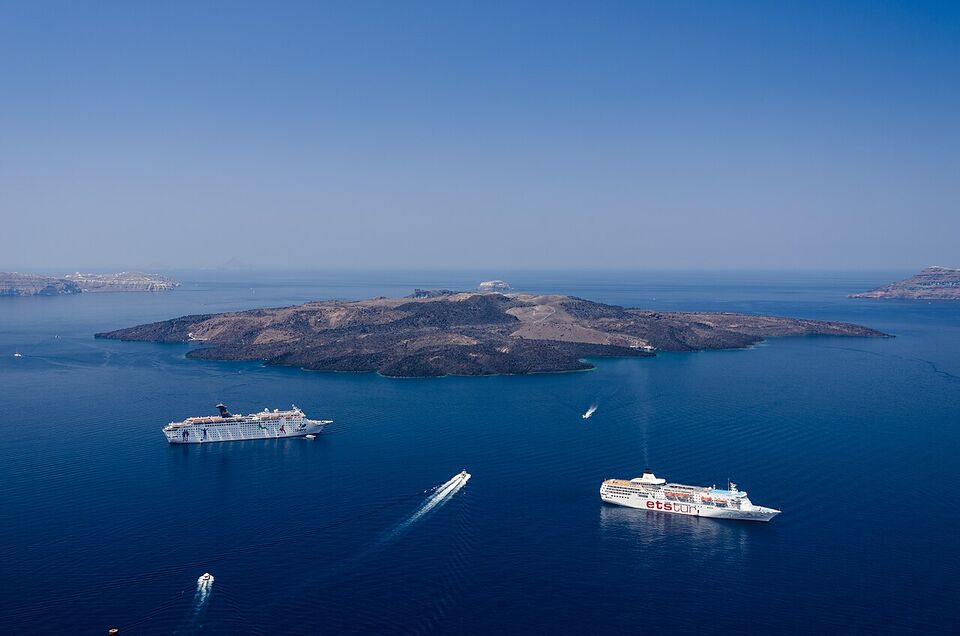
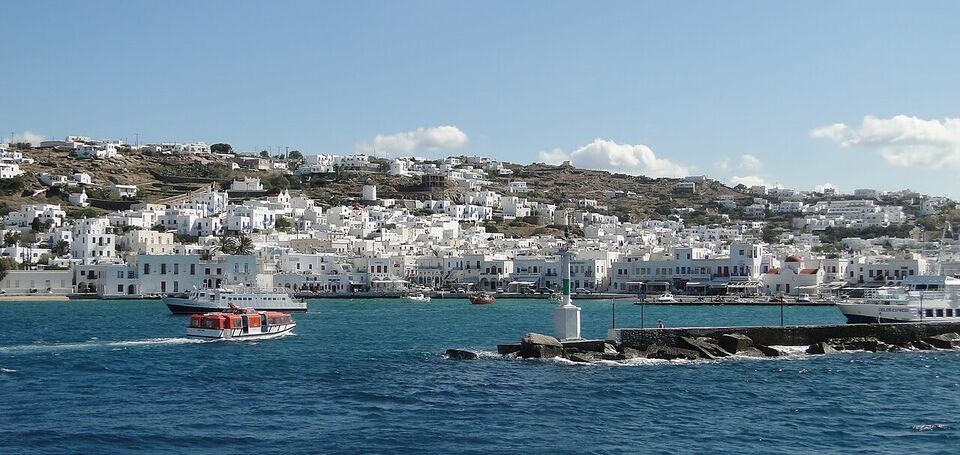
Santorini is the more striking place to look at. The island is what remains of a volcano that blew itself apart in a Bronze Age eruption, and the villages sit on the rim of the flooded crater, looking down 1,000 ft (300 m) or so to the water. That is a more dramatic setting than anything on Mykonos. Mykonos is quieter visually: a cubist town of white houses, a few windmills and a long coast of coves and hills.
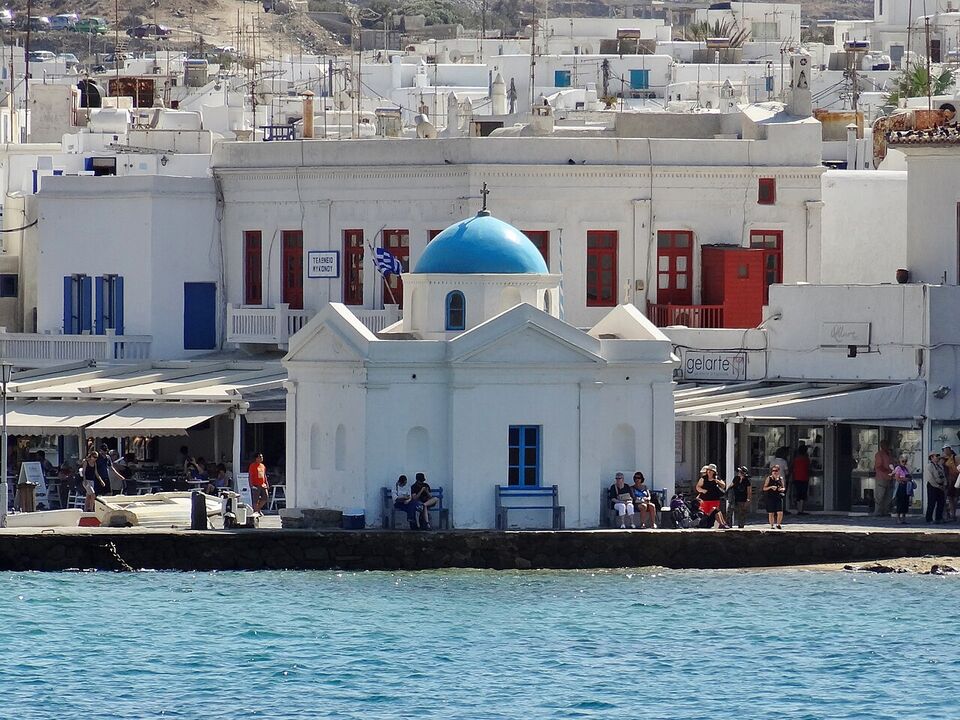
The cost of this is crowds in the same few places. Oia and Fira in Santorini are packed in the middle of the day, and the windmills and Little Venice in Mykonos fill at sunset. Both can be done calmly if you go early. See the "Oia, sunset and the crowds" section of the Santorini guide for the plan that works.
Beaches and swimming
If beaches matter, Mykonos wins. Platis Gialos, Paradise, Super Paradise, Agrari and Elia have sand, calm south-coast water and a choice from organized beach clubs to quieter stretches. The north is wilder and windier.
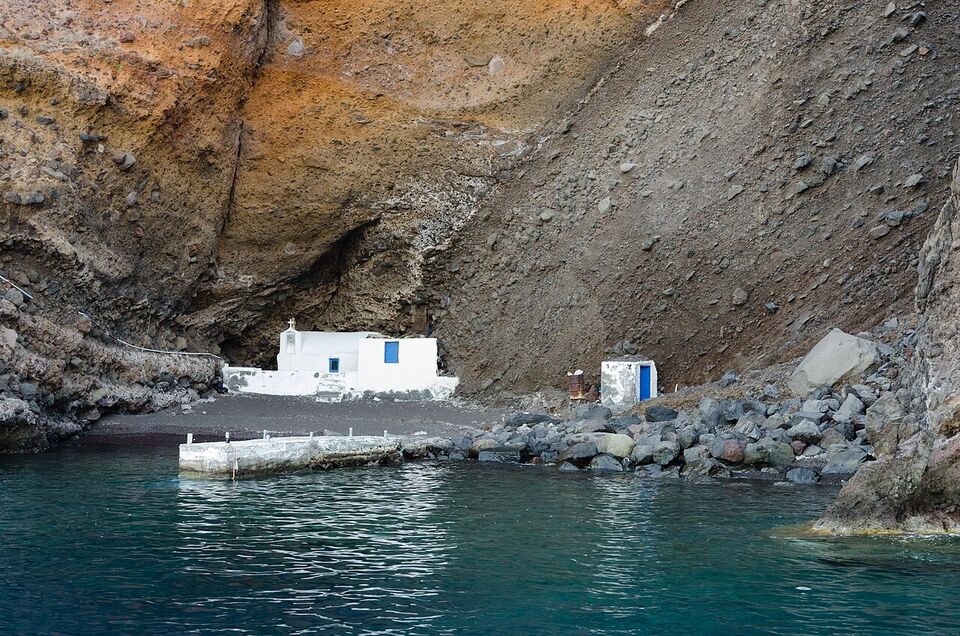
Santorini's beaches are volcanic and dark. Perissa, Perivolos and Kamari are pleasant, with long seafronts and tavernas, but the dark sand and pebbles get very hot, and many people spend the day at a hotel pool instead. Red Beach was closed after rockfalls in the early 2025 earthquakes, and we could not confirm that it has fully reopened. For more on swimming in Greece see beaches.
Nightlife and atmosphere
Mykonos is the party island: bars from late afternoon, dinners at 10 p.m., clubs after midnight and daytime parties on the south coast. It is also very inclusive and well known as welcoming to LGBTQ+ travelers.
Santorini evenings are about sunset and a long dinner with a view. Fira has bars and a few clubs, but most visitors are in bed early to catch a morning boat or a hike. If you want a social, noisy trip, Mykonos; if you want a calm one, Santorini.
Prices and costs
Both islands are costly, and the main driver is season and location rather than the island. The figures below are rough estimates for a mid-range traveler in peak summer, not quotes.
| Item (estimate, peak season) | Santorini | Mykonos |
|---|---|---|
| Double room, mid-range | €180 to €400 (about $200 to $450); caldera view more | €200 to €450 (about $225 to $505) |
| Dinner per person | €30 to €80 (about $34 to $90) | €40 to €100 (about $45 to $112) |
| Cocktail | €12 to €18 (about $13 to $20) | €14 to €22 (about $16 to $25) |
| Sunbed pair on a beach | €20 to €50 (about $22 to $56) | €40 to €100 (about $45 to $112) |
| Local bus ride | A few euros | A few euros |
These are our planning estimates and vary widely by beach, hotel and week. In May, June and late September expect rooms to cost a third or more less. Climate resilience fee is the same on both islands: €5 (about $6) per night for a 3-star hotel and €10 (about $11) for 4 stars in the April-October season, paid at check-out (2026 rates; see money). For a daily-cost framework see budget.
Save money
Skip the cliff-edge room on Santorini and stay in Fira, Firostefani or an inland village, then walk to the rim for sunset. On Mykonos, stay in Ornos or Ano Mera and skip the top beach clubs: sunbeds and drinks are where costs add up.
Season, weather and crowds
Both islands follow the same calendar. The season runs from about May to early October, with June and September the best compromise of warm water, open businesses and lower prices. July and August bring the heat, the highest prices and the meltemi wind, which is felt more on Mykonos's exposed north coast and can delay ferries on both islands.
Santorini keeps more open in the shoulder months, because its caldera hotels and restaurants stay open into late October, while Mykonos winds down quickly after the end of September, when beach clubs close. In winter, both are quiet and many businesses shut (see Greece in November and Greece in December). Cruise ships are a factor on both: Santorini capped arrivals at 8,000 passengers a day for 2026, and both islands charge cruise passengers a per-port fee (see cruises).
Getting there and getting around
Both islands have airports with flights from Athens in under an hour, and both have ferries from Piraeus: about 2 hr 40 min to 5 hours for Mykonos and 5 to 8 hours or more for Santorini, with fares from about €40 (about $45) one way. Mykonos is the easier one to reach by sea. Santorini's ferry port, Athinios, sits at the bottom of a steep road, about 20 to 30 minutes from Fira.
On the ground, neither island is simple without a car or a plan. Santorini has a bus network that radiates from Fira, and taxis that are scarce in summer. Mykonos has KTEL buses to the main beaches, few taxis and sea taxis in season. Rental scooters and ATVs are a frequent cause of injuries on both, and many insurance policies exclude them. For driving rules see driving in Greece.
Verdicts by traveler type
Couples and honeymoons
The caldera setting and sunsets are hard to beat, and quieter villages such as Imerovigli and Pyrgos give privacy. Choose Mykonos if both of you are beach and nightlife people.
First-time visitors
Santorini gives the picture-postcard Greek island in two or three days. If crowds and cost concern you, Naxos is easier and cheaper (see which island suits you).
Friends and groups
Beach clubs, nightlife and easy bar-hopping make it the island for social travel, as long as you plan on a bigger budget.
Families
Both are steep and crowded, and Santorini's stairs and cliffs make strollers hard. If you go, try Ornos (Mykonos) or Kamari and Perissa (Santorini), or consider Naxos, Paros or Crete.
Beach lovers
Its south coast offers real sand and a choice of beach styles. For still better beaches, look to Naxos, Milos or Crete.
History and culture
Santorini has Akrotiri, a preserved Bronze Age town; Mykonos has Delos, a much larger ancient sanctuary a boat ride away. See ancient sites.
Budget travelers
Both are costly. Go in May or September, or look at less-visited Cyclades such as Naxos, Paros or Syros.
How to see both
You can combine the two on a week-long trip. A balanced split is three nights on one and two or three on the other. Do the one you care about less first, so you finish with the best.
By sea, the two islands are linked in season by ferry. Fast boats often take about 2 to 3 hours, and conventional ferries longer; some sailings stop at Paros, Naxos or Ios. We could not confirm 2027 timetables, and services are far fewer from October to May. Check operators on the ferries guide, book summer sailings weeks ahead, and do not plan a tight same-day connection. Strong summer winds sometimes delay or cancel high-speed boats.
A popular flow is: fly into Athens, take a short flight or ferry to Mykonos, then ferry to Santorini, and fly back to Athens from Santorini (under an hour). This avoids retracing your route. If you also want Crete, a fast ferry links Santorini and Heraklion in under two hours in season (see Crete).
- Five nights
Mykonos then Santorini
Two nights in Mykonos (town, beach, optional Delos), a morning ferry, then three nights in Santorini (Imerovigli or Firostefani base, Akrotiri, a boat trip).
- Seven nights
Add a quieter island
Insert Naxos or Paros between the two, with about two nights there, for beaches and village life at lower prices (see the Cyclades guide).
Watch out
Do not schedule a ferry on your last day if you have an international flight from Athens. Build in a night in Athens, or fly on the last leg. See when to go for the wind and season.
Add it to a route in the trip builder, or ask us to plan the hotels, trains and guides for you.