Easter in 2027: the date and the week
Greek Orthodox Easter in 2027 falls on Sunday, May 2. The Western Easter that most Americans celebrate is March 28, 2027, so the two are five weeks apart this year. (In 2026 they were one week apart: Western Easter was April 5 and Orthodox Easter April 12.) The Orthodox church calculates the date using the older Julian calendar's rules, which is why the dates often differ.
Easter is the most important festival of the Greek year, more so than Christmas. For many visitors it is also the most moving time to be in Greece, and the one that needs the most advance planning. Holy Week (Megali Evdomada, "the Great Week") runs from Palm Sunday on April 25 to Easter Sunday on May 2, and it is filled with services, processions and traditional foods. The weeks before Easter are also a good time to be in Greece for the weather. See when to go for what spring is like, and festivals in Greece for the year's other dates.
Holy Week, day by day
- Apr 24-25
Lazarus Saturday and Palm Sunday
The week begins with Lazarus Saturday, when families in some regions bake lazarakia, small sweet breads in the shape of a figure. On Palm Sunday, churches hand out woven palm crosses and willow or bay branches.
- Apr 26-28
Holy Monday to Wednesday
Evening services, called the Bridegroom services, are held. Many Greeks eat simply and keep to a fast. Families start cleaning house and baking.
- Apr 29
Holy Thursday
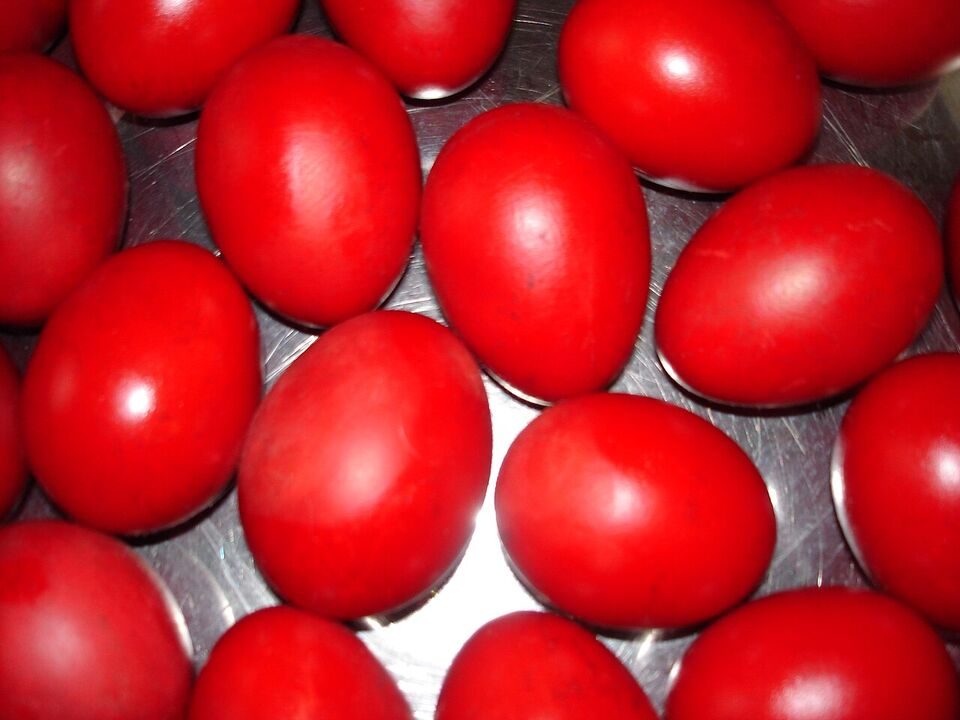
Women dye eggs red, usually in the morning, as a symbol of Christ's blood and the resurrection. In the evening, churches read the Twelve Gospels of the Passion. On Patmos, the abbot of the Monastery of Saint John the Theologian washes the feet of twelve priests in a public service called the Niptiras.
- Apr 30
Good Friday
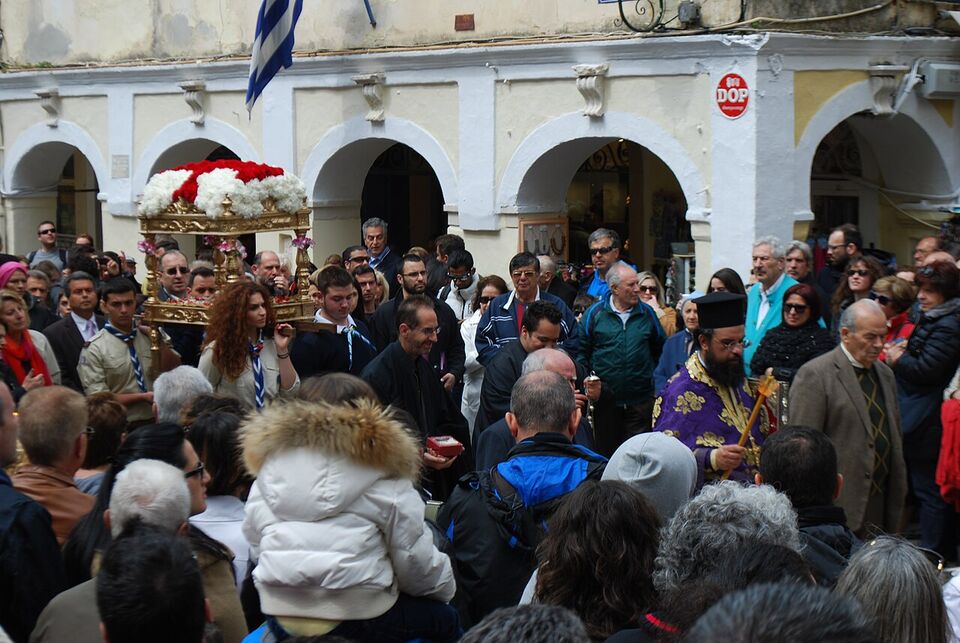
The most solemn day. Churches are draped in black, bells toll slowly, and flower-covered biers called the Epitaphios, which represent Christ's tomb, are carried through the streets in the evening. Crowds follow with candles, and processions stop at intersections for prayers. On Tinos, the Epitaphios is taken down into the sea in memory of lost sailors. Many families do not cook, and tavernas and bars are often quiet or shut.
- May 1
Holy Saturday
In the morning, a first Resurrection service is held in many churches, and on Corfu, residents throw clay pots from their windows (see below). The afternoon is quiet; people prepare for the midnight service and buy candles. In the evening comes the Anastasi, described next.
- May 2
Easter Sunday
A day of feasting. Lambs and goats roast on spits in yards, squares and tavernas from morning, music plays, and families gather for a long lunch. Easter Monday (May 3) is a public holiday and many people spend it in the countryside.
The midnight Resurrection (Anastasi)
The Resurrection service on Holy Saturday night is the center of Greek Easter. Services typically begin around 11 p.m. in a church or its courtyard, and times differ by parish. Near midnight, all the lights go out. The priest comes out with a single flame, calls out "Defte lavete fos" ("Come, receive the light"), and passes it to the nearest worshippers, who light the candle of the next person until the whole crowd glows. Then the priest announces "Christos Anesti" (Christ is risen), the bells ring, and everyone replies "Alithos Anesti" (Truly he is risen) and exchanges kisses on both cheeks.
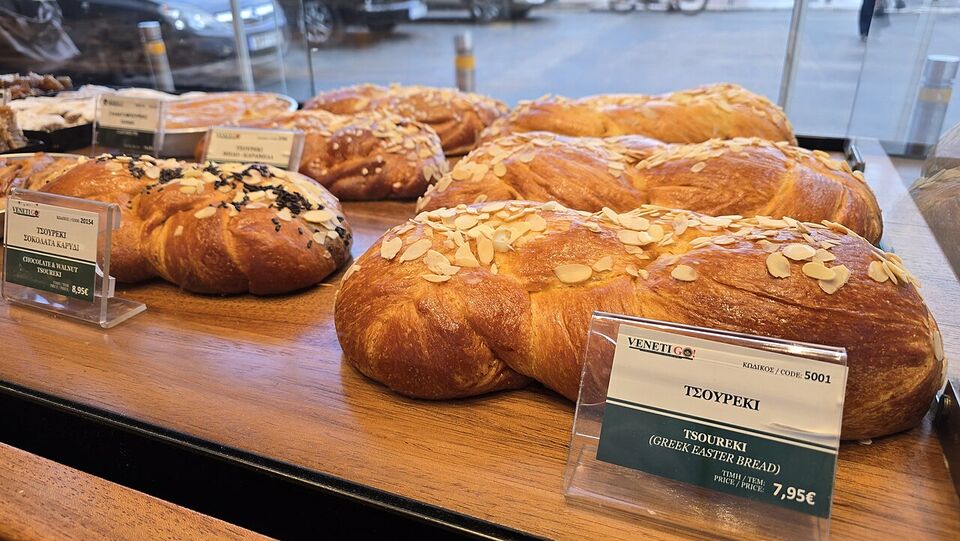
Outside, firecrackers (petardes) and fireworks go off and can be startlingly loud, especially in Athens and on the islands. Tradition says to carry the flame home and mark a cross on the door frame with the candle's smoke. At home, families break the fast with magiritsa, a soup of lamb offal, dill and lettuce, and begin the egg-cracking game (tsougrisma), in which two people knock the ends of their red eggs together and the one whose egg stays whole is said to have luck all year. The sweet bread tsoureki, flavored with mastic and orange, is served on Sunday.
Insider tip
Arrive by 10:30 p.m. if you want to stand inside the church, or by 11 p.m. to find space in the courtyard. Many parishes sell white candles (lambades) at the door or in the days before. Hold the candle low and shield the flame with a paper cup so it does not burn others, and stay for the first greeting before you leave; walking out right after midnight to watch the fireworks is normal and not rude.
Food on Easter Sunday
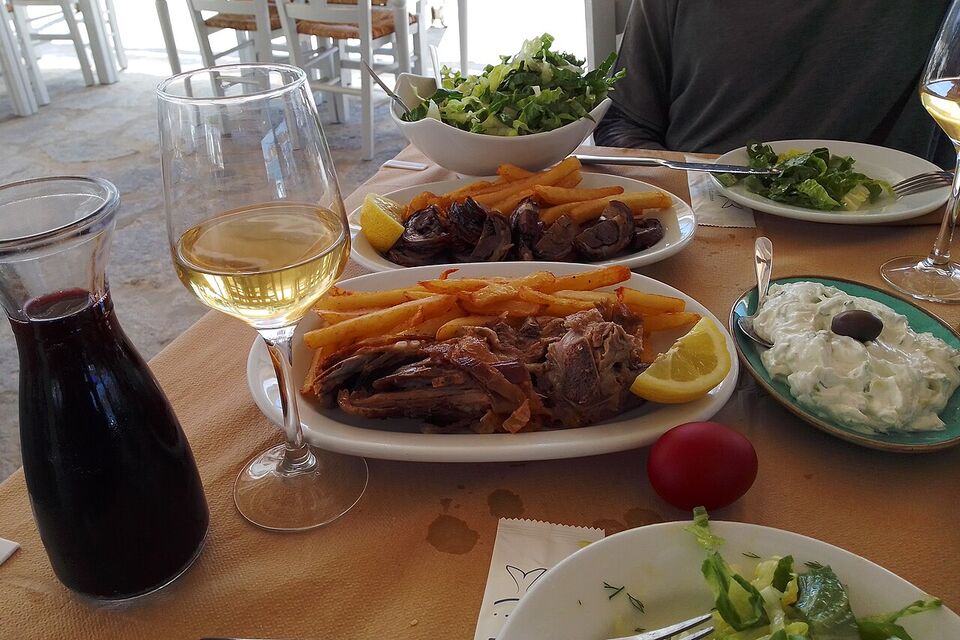
The Easter meal is a long, loud lunch that can start at noon and last until evening. Lamb is the centerpiece: whole on a spit (arni souvlas), or baked in the oven with potatoes. Alongside are kokoretsi (seasoned offal wrapped in intestine and grilled), salads, tzatziki, cheese pies and plenty of wine. The red eggs are placed on the table, and desserts include tsoureki and Easter cookies called koulourakia. During Lent and Holy Week, people eat nistisima, fasting dishes without meat and dairy; see Greek food.
If you are not invited to a Greek home, book a table at a taverna that serves a lamb lunch on Sunday. Many tavernas in cities and tourist towns stay open and may offer a set menu, but they fill up, so reserve by the week before. In villages, you will often see a spit turning in the square and may be invited to share a plate. Accept it, and offer something small in return.
Where to spend Easter
Corfu
The island's Easter is influenced by its Venetian past. On Holy Saturday morning, residents of Corfu Town throw large clay pots (botides) from balconies and windows onto the streets, a custom linked to renewal. Brass bands play in Good Friday processions. See Corfu and the Ionian islands.
Patmos
The Niptiras washing of the feet at the Monastery of Saint John the Theologian on Holy Thursday is the best-known ceremony. The island is small, quiet and serious. See Rhodes and the Dodecanese.
Chios
The rocket war (Rouketopolemos) at Vrontados, where two rival parishes fire thousands of homemade rockets at each other's bell towers around the midnight service. Viewing areas are limited and the event is risky; follow local guidance.
Hydra
Candlelit processions wind through the harbor and old town, with no cars on the island. It is the easiest island to reach from Athens for a weekend. See the Saronic islands.
Athens
Athens empties as people go to their home villages, leaving a quiet city. Reported crowds climb Lycabettus Hill with candles for the Resurrection at the Chapel of Saint George at the top; every neighborhood church also holds a service. See Athens.
Other villages
Leonidio in the Peloponnese releases hot-air balloons on Easter night. Tinos and Naxos (Polichni) take the Epitaphios to the sea. Marpissa and Prodromos on Paros hold open-air Passion plays.
Traditions can differ from year to year, and exact times are set by each parish and municipality in the weeks before Easter. Ask your hotel or check the municipality's site in April.
What closes and what runs
- Acropolis and state sites: the Acropolis is closed on Orthodox Easter Sunday (May 2, 2027) and on May 1, which is Labour Day and Holy Saturday. Hours are often shortened on Good Friday and Holy Saturday; check the site's page on hh.gr before you go.
- Shops and banks: most close from Good Friday afternoon, reopen briefly on Saturday morning (supermarkets are packed), and stay shut on Sunday and Monday. Stock up on groceries and cash earlier in the week.
- Transport: city buses, metro and trams run reduced holiday schedules from Good Friday to Monday. Intercity buses and ferries run, with extra sailings in the days around Easter.
- Restaurants: in tourist areas most stay open apart from Good Friday evening and part of Holy Saturday; in villages many close.
- Strikes: a transport strike is possible around May 1. Check the news a few days ahead. See festivals in Greece for the other 2027 holidays.
Ferries, flights and booking
Easter is one of the busiest times for travel in Greece. Athenians head to their home islands and villages from Wednesday or Thursday of Holy Week, and return on Monday evening or Tuesday. Ferries from Piraeus and Rafina to the islands fill, as do flights to Corfu, Crete and the larger islands. Add a day of slack at each end and avoid scheduling an international flight home on Easter Monday evening.
Ferry schedules for spring 2027 are released gradually through the winter; book as soon as your route appears, and use a flexible ticket if possible. Good Friday and Holy Saturday sailings tend to be thinner. Hotels on Corfu, Patmos, Chios and the Saronic islands should be booked months ahead, particularly for the Thursday-to-Sunday window. Rental cars on islands run out. See the ferries guide for how to book, and getting around Greece for buses and trains.
Watch out
Rooms in Athens can be cheap over Easter because locals leave, but the island you want may be sold out. Do not plan to "find a room when we arrive" on Corfu, Patmos or Chios. Also confirm that your hotel is open: some seasonal island hotels reopen only after Easter.
Etiquette at services
- Dress modestly: covered shoulders and knees. Women are not required to cover their heads, and men should wear long trousers. Wear shoes you can stand in for an hour or more.
- You may attend as a visitor. Stand at the back or side, do not walk in front of the procession, and do not take flash photographs or video of worshippers at close range.
- Switch off your phone. Non-Orthodox visitors do not take communion; standing quietly and watching is entirely fine.
- Greet with "Christos Anesti" after midnight and answer "Alithos Anesti." Kali Anastasi (good Resurrection) and Chronia Polla (many years) work in the days after.
- Watch the candle wax and your sleeves; keep children close in the crush and by the fireworks.
See etiquette for general customs, and Greek phrases for words to try.
Is Greece at Easter worth the planning?
Yes, if you can book early and accept the closures. The weather in early May is warm and mostly dry (Athens averages about 80°F, 27°C, in May), wildflowers are out, and the islands are not yet full of summer crowds. Sea swimming is cool, with the sea at roughly 65 to 68°F (18 to 20°C). It is a good time for the Peloponnese and Athens as well, with a calm city and the services as a bonus. The Easter dates and the key hours are on this page; nearer to the time, check each parish and municipality for the final program.
Add it to a route in the trip builder, or ask us to plan the hotels, trains and guides for you.