
Overview
Americans do not need a visa to visit Greece. A US passport lets you stay for up to 90 days in any 180-day period, for tourism or business, and you do not apply for anything before you fly. What has changed recently is the border itself: since April 10, 2026, non-EU visitors are enrolled in the EU's Entry/Exit System when they first arrive, which means fingerprints and a face photo at passport control.
This page covers what you need at the border (passport, 90/180 rule, EES), what is not required yet (ETIAS), and what you may and may not bring in or take out: duty-free allowances, cash, medicines, cannabis and antiquities. Rules at the border can change, so check the official pages listed at the bottom within a few weeks of your trip. For the rest of your planning, start with the trip planning page.
The short version: have a passport that is valid long enough, do not overstay, expect a slower line at passport control than before, declare large amounts of cash, and leave every stone where you found it.
Visa-free stays and the Schengen 90/180 rule
Greece is in the Schengen Area, a group of European countries with no routine border checks between them. Visitors from the US can spend 90 days within any rolling 180-day period in the whole Schengen Area, not 90 days per country. Days in France, Italy, Spain, Germany and Greece all count toward the same 90.
The 180-day window rolls. On any day, look back 180 days and count the days you were inside Schengen; that number must not be above 90. Partial days count as full days, so the day you arrive and the day you leave both count.
A worked example
Say you spend 30 days in Italy in April and May, go home for the summer, and then fly to Athens on September 20 for a long autumn trip. On September 20, the 180 days before it run back to about March 24. You already used 30 days, so you have 60 left. You could stay in Greece until about November 18 (a 60-day stay, counting both the first and last day). If you stay longer, you are overstaying even though you have been in Greece for less than 90 days.
Do not guess. The European Commission runs an official short-stay calculator where you enter your past entry and exit dates and your planned trip: EU short-stay calculator. Use it if you will be in Europe for more than about six weeks in total, or if you are combining Greece with other countries.
Different from home
In the US you can think of a visit as one country and one allowance. In Schengen, a month in Spain before Greece uses up part of your 90 days. Keep your own list of entry and exit dates, because the border record is the one that counts.
What happens if you overstay
Overstaying a Schengen stay can mean a fine, a ban on re-entering the area, and a note on your record that follows you at future crossings. With the Entry/Exit System in place, your dates are calculated automatically, so there is no longer a stamp to argue about. If something outside your control keeps you in Greece past your date (a medical emergency, for example), contact the local police or immigration office before the deadline, and see the safety page for emergency numbers and the US embassy.
If you want to stay longer than 90 days in total, you need a national long-stay visa or residence permit from Greece or another country. The options are on the long stays page.

Passport rules
Two sets of numbers circulate, and both are correct because they come from different bodies.
- The EU rule: your passport must have been issued within the last 10 years and must be valid for at least 3 months after the day you plan to leave the Schengen area.
- The State Department recommendation: six months of remaining validity from your arrival date.
Airlines apply the stricter reading at check-in, and some will refuse to board you if you are close to the limit. The practical rule is simple: if your passport expires within six months of your trip, renew it first. US adult passports are valid for 10 years, so the "issued within the last 10 years" rule rarely matters, but an older passport with an extension or a long validity can fail it.
The passport should also have at least a couple of blank pages and be in good condition. A damaged or water-stained passport can be refused.
Children
Every traveler, including babies, needs their own passport. Passports for children under 16 are valid for 5 years, so check the expiry date carefully. We could not confirm one official Greek rule that requires a parental consent letter for a child traveling with one parent, but airlines and border officers sometimes ask. If a child is traveling with only one parent, with grandparents or with a school group, a signed and notarized letter from the other parent or parents, with contact details, takes very little time and can save an argument at the airport.
Lost or stolen passport
Report the loss to the Greek police, then contact the US Embassy in Athens (91 Vasilisis Sophias Avenue, +30 210 721 2951) or the US Consulate General in Thessaloniki (43 Tsimiski Street, 7th floor, +30 2310 376 300). Bring a photocopy or a photo of your passport page, which you should keep separately from the passport, plus passport photos if you can. An emergency passport is usually the fastest route home.
The Entry/Exit System (EES) at Athens airport
The EES is the EU's digital border system for visitors from outside the EU. It has been fully operational at all Schengen external borders since April 10, 2026, including Greek airports and ports, and it replaces the passport stamp with a digital record.
What it records
On your first entry, the border officer or a self-service kiosk records:
- the details from your passport,
- a photo of your face, and
- fingerprints (children under 12 give the face photo only).
The system also records the date and place of each entry and exit. On later trips within the retention period (three years), the system recognizes you, and the check is normally faster. The system uses your record to calculate how many days you have used, which is why overstaying is easier to detect than before.
What you need to do
Nothing in advance. There is no fee, no registration and no form to fill in before you fly. If you are refused the biometrics, you can be refused entry.
The main effect for you is time. First-time enrollment adds a minute or two per person, and the queue at Athens in summer can be long. Port authorities have warned of longer waits at peak times, so do not count on a shortcut. We suggest planning for a longer wait than before, particularly if you land at the same time as several other transatlantic flights, and not booking a tight onward connection on the same day.
Insider tip
For a flight home to the US, we suggest arriving at least 3 hours before departure, and earlier on summer weekends, because exit checks now take longer too.
EES applies to everyone who enters from outside Schengen, including ferry passengers arriving from outside the zone (see below).
ETIAS: not required yet
ETIAS, the EU's planned travel authorization, is not required yet and no start date has been announced; when it starts it will cost €20 (about $22) and the EU will give several months' notice. It is an online approval, similar in spirit to the ESTA that Europeans use to visit the US, and it will apply to US citizens once it starts.
Some websites claim ETIAS is already mandatory, or sell "ETIAS applications" for a high fee. Do not use them. When ETIAS goes live there will be one official application, and the European Commission page on ETIAS says that it is currently not in operation and that no applications are being collected. Some older pages, including a few port pages, say ETIAS is expected by the end of 2026; treat those as out of date.
Watch out
Any site asking for your passport details and a payment for "ETIAS" is not official as of mid-November 2026. The only authorization you need to fly to Greece in 2026 is a valid passport.
Check the European Commission ETIAS page a few weeks before you book.
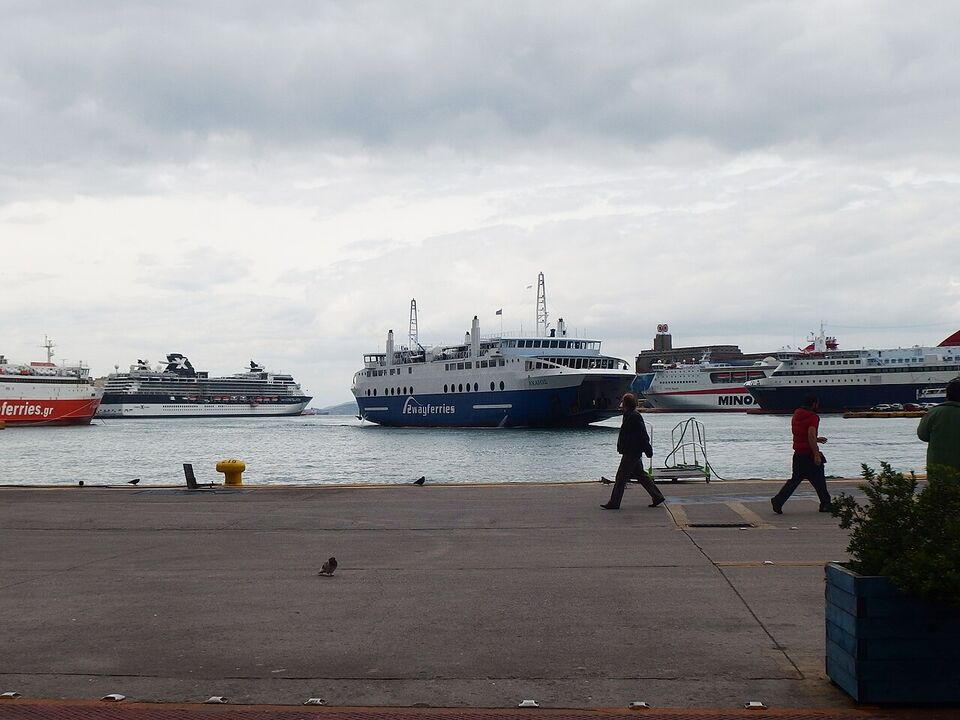

Arriving by ferry from Italy or Turkey
Many travelers arrive in Greece by sea, and the rules depend on where the ferry started.
From Italy
Italy and Greece are both in Schengen, so a ferry from Bari, Brindisi, Ancona or Venice to Igoumenitsa, Corfu or Patras is an internal crossing. There is normally no formal passport stamp, and no EES enrollment on the Greek side if you were already enrolled when you entered Schengen. However, you must still carry your passport, because ferry companies check identity when you board and the police can check at any time. We could not confirm the exact current practice at each Greek port, and checks on some routes are done at the departure port, so keep the passport and your original entry details handy.
Your 90/180 days continue to count as normal. If your first entry into Schengen is in Italy, that is where you are enrolled in the EES, and your Greek days count from that date.
From Turkey
Ferries from Turkey (for example, from Cesme to Chios, from Bodrum to Kos, from Marmaris or Fethiye to Rhodes, or from Kusadasi to Samos) cross the external border of the EU. You pass through passport control at the Greek port, and the EES applies there in the same way as at an airport. Allow extra time, especially in summer, when day-trip ferries to the islands near the Turkish coast are busy. Keep your passport with you and not in the luggage hold.
The same applies to ferries from Albania. Check the ferry operator's rules about arrival times at the port. See the ferries page for domestic routes and booking, and Greece with other European countries if you are combining several countries.
Cruise passengers
Cruise lines usually handle border formalities collectively, but you still need a valid passport. If a cruise starts outside Schengen, your first port call may be the entry point. See the cruises page.
Customs: what you can bring in
Greece follows the European Union's customs rules. When you arrive from outside the EU, you can bring in the following per adult (17 or over) without paying duty. These allowances are the standard EU limits; check the Greek customs authority (AADE) before you go if you plan to bring close to the limit.
| Item | Allowance per adult |
|---|---|
| Spirits over 22% alcohol | 1 liter |
| Fortified or sparkling wine up to 22% | 2 liters |
| Still wine | 4 liters |
| Beer | 16 liters |
| Cigarettes / cigars / tobacco | 200 / 50 / 250 g |
| Other goods (gifts, souvenirs, electronics) | €430 (about $482) by air or sea; €150 (about $168) for travelers under 15 |
Anything above the limit is charged duty plus Greek VAT of 24%. Keep receipts for expensive items like cameras and laptops, particularly if you buy them in the US and travel with them, because customs can ask where they came from.
Food, plants and animal products
You cannot bring meat, dairy, and other animal products from outside the EU, and that includes sandwiches with ham or cheese from the plane. Plants, seeds and soil need a phytosanitary certificate. Fresh fruit and vegetables are restricted, and the safest approach is to eat what you bring before landing. Pets have their own rules; see the pets page.
Cash: the €10,000 rule
If you carry €10,000 (about $11,200) or more, or the equivalent in dollars or other currencies, when you enter or leave the EU, you must declare it in writing. The limit applies to the total of cash, traveler's checks and similar items. Undeclared cash can be seized and you can be fined. For couples traveling together, each person is treated separately, but do not split money to avoid the form. Declaring is free and takes a few minutes. The rule for coming back into the US is also $10,000, using the CBP form, so see the money page for why you rarely need much cash.
Medicines
Bring any prescription medicine in its original packaging, labeled with your name, together with a doctor's letter (or prescription) that lists the generic name of the drug and the dose. Carry it in your hand luggage and keep the quantity to what you need for the trip, plus a small reserve.
Some medicines are controlled in Greece even when they are ordinary at home. The main examples are products containing codeine and other opioids, strong sleeping pills and tranquilizers, ADHD stimulants, and some medicines with pseudoephedrine. For these, the rules can include a special certificate or a permit from the Greek National Organization for Medicines (EOF) or, for narcotic and psychotropic drugs, a Schengen certificate issued by your doctor's health authority. Sources we found disagree on the exact paperwork, and we could not confirm the current process on an official Greek page. So if you take any controlled medicine, do this well before you go:
- Ask your doctor for a letter on letterhead with the diagnosis, the drug's generic name, the daily dose and the dates of your trip.
- Ask the Greek Embassy in Washington, or EOF, whether you need a permit for that specific drug.
- Keep the drug in the original pharmacy container, in your hand luggage.
- Do not mail medicine to Greece.
The US State Department's Greece page gives the same general advice: carry prescriptions in the original packaging with a doctor's note. For pharmacies, vaccines and insurance, see the health page.
Different from home
In Greece, many drugs that need a prescription in the US (some antibiotics, for example) are sold over the counter in pharmacies, but the reverse also happens. Do not assume your usual brand exists; know the generic name.
Cannabis and other drugs
Cannabis is illegal in Greece for recreational use. That includes cannabis products, seeds and CBD oil, which are listed as prohibited at the border. Medical cannabis exists, but it needs a Greek permit and a prescription, and a US medical card is not valid. Penalties for possession can include arrest, fines and prosecution, and being a tourist does not change that. Do not carry cannabis products in your luggage, even if they are legal where you live.
The same applies to every other illegal drug. If you are caught, the US Embassy can visit you and give you a list of lawyers, but it cannot stop the process.
Antiquities: do not take even a stone
Greece protects its cultural heritage more strictly than most countries. Taking any stone, shard of pottery, piece of marble or sand from an archaeological site or a protected beach is illegal, and the penalties can be strict, including fines and prosecution. The law makes no exception for small pieces, for pieces lying on the ground or for pieces that look like rubble. Treat it as a serious offense.
That applies to every site, including the Acropolis, Delphi, Olympia, Knossos and the smaller sites on the islands, and to the sea floor around them. Airport security teams find ancient fragments in luggage every year.
Buying souvenirs
Museum shops and licensed stores sell replicas, and you can take those out without problems. Be careful with real old objects, such as icons, coins, old maps, ceramics, manuscripts and jewelry. Exporting older cultural objects needs a permit from the Ministry of Culture; check the rules before you buy. If a dealer says a piece is "fine to take", ask for the written export permit. Without it, the item can be seized at the airport.
For shopping, VAT refunds and what you can bring back to the US, see the shopping and bringing things home page.
Bringing things home to the US
US Customs and Border Protection allows $800 of goods per person duty-free, including 1 liter of alcohol (for adults 21 or older). Olive oil and honey in sealed packages are fine; declare any food. Meat products are banned. Keep your receipts, and declare everything on your customs form.
Before you leave: a checklist
- Passport valid for at least 6 months after arrival (3 months after departure is the legal minimum).
- Your own list of past Schengen days if you have been in Europe in the last 180 days.
- Prescriptions in original packaging, with a doctor's letter; extra paperwork for controlled drugs.
- Photo of your passport page stored in your email or cloud account.
- Enrollment in the State Department's STEP program, which sends travel alerts and helps in a crisis.
- Travel insurance with medical evacuation; Medicare does not pay abroad.
The State Department rates Greece at Level 1, "Exercise normal precautions" (check travel.state.gov for updates). Most problems are petty crime, so read the safety page as part of your planning, then see flights to Greece for the next step.
Add it to a route in the trip builder, or ask us to plan the hotels, trains and guides for you.