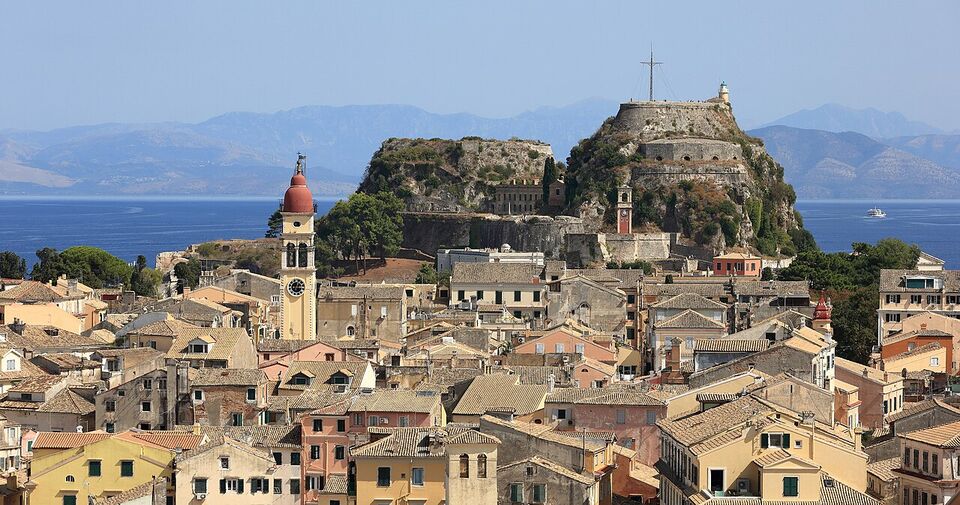
Overview: how Greece connects to the rest of the region
Greece is the southeast corner of the Schengen area, and its neighbors split into two groups. Italy and Bulgaria are inside Schengen, so the border is easy. Albania, North Macedonia, Turkey and Cyprus are outside it, so you go through passport control on the way out of Greece and again on the way back in. Americans need no visa for any of them for a normal holiday, which makes combining countries simple on paper.
What matters in practice is transport. The Aegean and the Ionian Sea are crossed by ferries that take anywhere from 20 minutes (Kos to Bodrum) to more than a day (Venice to Patras). Istanbul and the Balkan capitals are one to two hours away by plane. Albania and North Macedonia can be reached by road, but a rental car needs special permission first.
This page covers each option with times and fares we could confirm in November 2026, then the rules that trip people up: the Schengen 90-day clock, the new Entry/Exit System checks, and cross-border car rentals. For the basics of getting to Greece in the first place, see the flights guide and the entry rules; for the ferry network inside Greece, see the ferries guide.
Athens plus Istanbul
The most popular pairing. Two ancient capitals with very different feels, joined by a short flight. Works in any month; winter is cheap in both.
Greece plus Italy by ferry
An overnight ship replaces a flight and puts you in Bari, Brindisi, Ancona or Venice. Good if you want a slow, car-free leg.
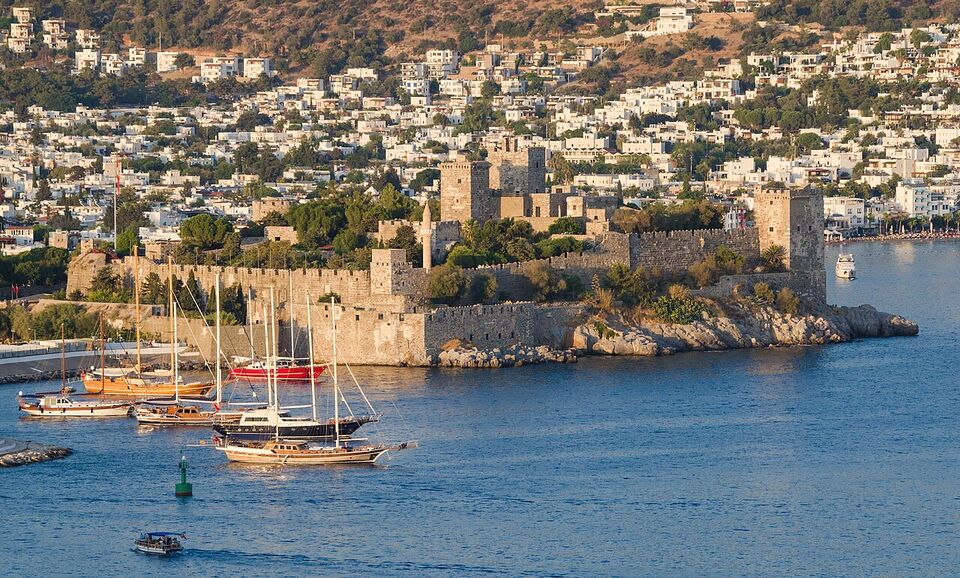
Dodecanese plus Turkey
Hop to Bodrum, Marmaris or Kusadasi for a day or a week. The short crossings make Turkey easy to add to an island trip.
Corfu plus Albania
A day trip to the Albanian coast and the ruins at Butrint, or a longer overland route north to Tirana.
Thessaloniki plus the Balkans
Skopje and Sofia are each a few hours from Thessaloniki, and both are straightforward by bus or car.
The Schengen clock and the Entry/Exit System
US citizens can stay in the Schengen area for 90 days in any rolling 180-day period without a visa. Greece, Italy, Bulgaria, Spain, France and Germany are all in it, and days in any of them use up the same 90. Days spent outside it do not count: that includes Albania, North Macedonia, Turkey, Serbia, the UK and Cyprus (which is in the EU but not in Schengen).
That arithmetic is useful if you are planning a long trip. Someone spending six weeks in Greece can step out to Turkey for a week and the week does not count against the 90. The reverse also applies: a quick trip to Albania does not "reset" anything. The clock only counts days inside.
Different from home
Since April 10, 2026, the EU's Entry/Exit System (EES) records every non-EU visitor at the external border with a face photo and fingerprints (children under 12: photo only). It is free and needs nothing in advance. Each time you return to Greece from Albania, Turkey or Cyprus you are crossing the Schengen border again, so allow extra time at passport control, especially at airports and ports in summer. The entry rules guide has the full details.
ETIAS, the EU's planned travel authorization, is not required yet and no start date has been announced. When it starts it will cost €20 (about $22) and the EU will give several months' notice. Check the entry rules guide before you book if you are traveling in 2027.
Your passport must be issued within the last 10 years and valid at least three months beyond the day you leave the Schengen area. The State Department recommends six months, and Turkey and Cyprus have their own passport-validity rules, so renew early if yours is close.
Ferries from Greece to Italy
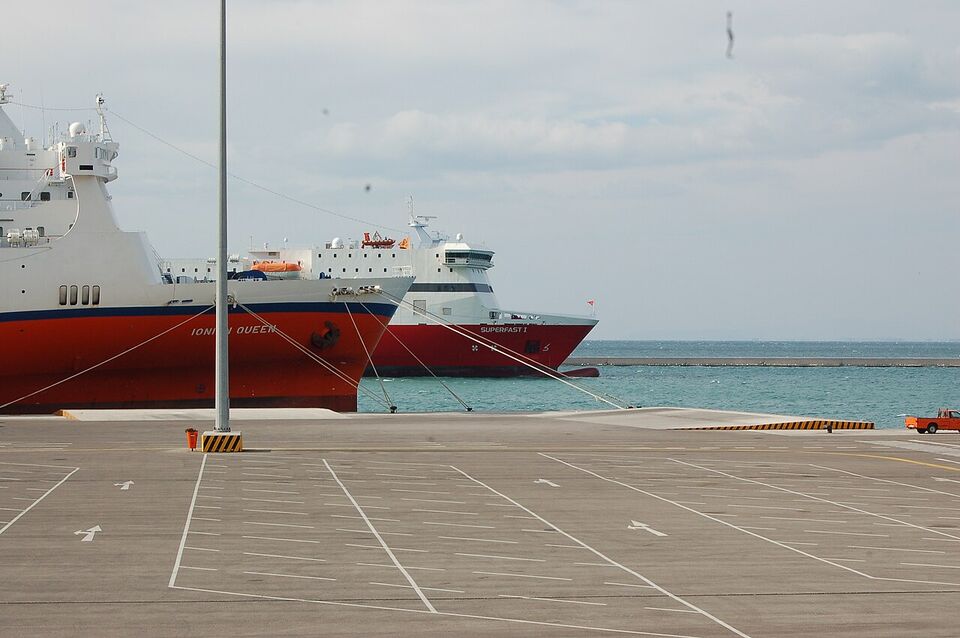
Ships to Italy leave from the western ports of Igoumenitsa (on the mainland, near Corfu) and Patras (in the Peloponnese). The main operators are Grimaldi Lines and Superfast Ferries, with a seasonal operator, Ventouris Ferries, added in summer on some routes. The routes below are the mainland services that run all or most of the year. Fares are "from" prices for a deck or seat ticket as listed by a booking site in November 2026; cabins, cars and high-season dates cost more, and the operators' own timetables are the final word.
| Route | Time | Frequency | Fare from (one way) |
|---|---|---|---|
| Igoumenitsa to Brindisi | About 8 hr (fastest) | At least daily | About €45 (about $50) |
| Igoumenitsa to Bari | 8.5-13 hr | 1-3 daily | About €65 (about $73) |
| Patras to Bari | About 16.5 hr | At least daily | About €76 (about $85) |
| Igoumenitsa to Ancona | 16.5-21.5 hr | 1-3 daily | About €89 (about $100) |
| Patras to Ancona | 21-27 hr | Up to 6 a week | About €117 (about $131) |
| Igoumenitsa to Venice | 25 hr or more | Up to 3 a week | About €117 (about $131) |
| Patras to Venice | 32-33 hr (via Igoumenitsa) | Up to 3 a week | About €129 (about $144) |
Summer-only routes also link Brindisi, Bari, Ancona and Venice with Corfu (roughly 7 to 26 hours, a few sailings a week from June to September). The Ravenna service no longer runs; Ancona is the nearest alternative.
Choosing a port
Brindisi to Igoumenitsa is the shortest and cheapest, which suits a traveler heading to Corfu, Epirus or the Meteora region. Bari gets you to Patras and the Peloponnese in an overnight sail (about 16.5 hours). Ancona and Venice are the choice if you are coming from Rome and Florence on one side or Venice and the north of Italy on the other, but the sailings are long, and the fares add up once you take a cabin.
Cabins are sold in several grades, from shared four-berth rooms to private cabins with windows. A deck ticket on a night crossing is possible but tiring; most people pay for at least a reclining seat. Cars, motorcycles and bicycles can be taken, and pets are allowed for a small extra fee, with rules about kennels or pet-friendly cabins that vary by operator. Early-booking discounts of 20 to 40 percent are typically offered from about December to March for the following summer.
Keep your passport with you, not in luggage. The crossing is between two Schengen countries, so in principle it is an internal journey, but ships can still be asked for ID and EES checks apply if you are arriving from a non-Schengen port. Check-in routines vary by port and operator, so carry your passport and arrive at the port early.
Insider tip
If you are heading from Italy to Athens, compare the ship with a cheap flight. A one-way ferry plus a transfer from Patras (about 2.5 hours by KTEL bus or train to Athens) is rarely faster than flying, but it is much more relaxed and lets you bring luggage without airline limits. See getting around Greece for the bus and train options from Patras.
Greek islands to Turkey
Small passenger boats link a handful of Greek islands to Turkish ports just offshore. Americans do not need a visa for Turkey: the State Department says US citizens on a tourist passport can enter for up to 90 days without one. The page still recommends six months of remaining passport validity, and Turkey asks for a passport valid 60 days beyond the end of your stay. The "door visa" you may read about is a scheme for Turkish citizens visiting Greek islands and does not affect Americans.
| Route | Time | Frequency | Fare from |
|---|---|---|---|
| Kos to Bodrum | 20-30 min | Up to 9 a day in season | About €25 (about $28) |
| Rhodes to Marmaris | About 1 hr | 2-4 a day, by season | About €60 (about $67) |
| Rhodes to Fethiye | About 1 hr 40 min | 1-2 a day | About €55 (about $62) |
| Samos to Kusadasi | 30 min-1.5 hr | Seasonal; several operators | About €39 (about $44) |
| Chios to Cesme | 20-40 min | Daily in summer; a few a week off-season | About €30 (about $34) |
| Lesvos (Mytilene) to Ayvalik | 45 min-1.5 hr | 2-3 on most days | About €30 (about $34) |
| Kastellorizo to Kas | 10-15 min | Up to 4 a day in summer | About €25 (about $28) |
These figures are the lowest listed one-way fares on a booking site and may be for one direction only; return tickets and high-season fares are higher. Several routes, especially from the smaller islands, can only be booked at the port or on the operator's own site, and winter timetables are much thinner: some routes drop to a few sailings a week or stop altogether. Check the day before and keep a flexible plan.
What happens at the border
You go through Greek exit control, then Turkish entry control, and do the reverse on the way back. Bring your passport (not a copy) and have a day or overnight bag; a day trip is possible, but allow a couple of hours extra in the port at each end. On your return to Greece you are entering the Schengen area again, so expect an EES check. Alcohol and tobacco bought in Turkey are subject to limits when you come back into the EU.
For which islands are worth a stop and how they connect, see Rhodes and the Dodecanese. For the practical side of a cross-border day, such as money (Turkey uses the lira, not the euro) and phone roaming (outside the EU, your US plan's own rules apply, so check it before you cross), see phones and data.
Flights to Istanbul, Cyprus and the Balkans
Flying is the practical choice for anything beyond the Aegean. All times below are typical gate-to-gate flight times from Athens; schedules and carriers vary by season, so check an airline site such as aegeanair.com for your dates.
- Istanbul: about 1 hr 40 min. Several carriers fly daily, including Aegean and Turkish Airlines. Istanbul has two airports on opposite sides of the city (IST, the main one, and SAW), so check which your ticket uses before you book a hotel.
- Cyprus (Larnaca and Paphos): about 2 hr. Cyprus is in the EU and uses the euro but is outside Schengen. Americans need no visa for stays under 90 days, and the State Department recommends six months of passport validity. Do not cross the UN buffer zone except at an official crossing point.
- Tirana (Albania): roughly 1.5 hr. Skopje (North Macedonia): roughly 1 hr 15 min. Sofia (Bulgaria): roughly 1 hr 15 min. Belgrade (Serbia): roughly 1 hr 40 min. Direct flights run most of the year, with fewer in winter.
If your starting point is the US, you can also book an open-jaw ticket, such as New York to Athens and Istanbul to New York. That avoids backtracking, and the cost is often similar to a round trip. Winter nonstops from the US to Athens are limited, so compare with a one-stop route through Istanbul or another European hub. The flights guide covers the Athens options.
Overland, buses connect Thessaloniki to Sofia, Skopje and Istanbul, and are cheaper than flying but slow. A train between Thessaloniki and Istanbul has not been a dependable option, so we would not plan around it.
Driving across the border
You can reach Albania, North Macedonia, Bulgaria and Turkey by road from northern Greece, but a rental car adds a rule: the rental company must approve the trip. Most contracts forbid taking a car outside Greece unless you ask, and some companies refuse entirely for Albania, North Macedonia or Turkey. Where it is allowed, expect a cross-border fee and an extra insurance document (a "green card" proof of cover) that must be issued before you leave the rental office.
Watch out
Driving a Greek rental car across a border without written permission can void your insurance. If the car is damaged or stolen, you may owe its full value. Ask for the permission in writing when you book, check it names the countries you plan to enter, and carry it with the car's papers. Carry an International Driving Permit too (get it from AAA before you leave); see driving in Greece.
- Bulgaria: a full Schengen member, including at land borders, since January 2025, so no passport control at the crossing in principle. Thessaloniki to Sofia is about 200 miles (320 km), roughly four hours. Bulgaria began using the euro in January 2026, so no currency exchange is needed.
- North Macedonia: reached by motorway from Thessaloniki through the Evzoni border crossing. Skopje is about 150 miles (240 km) from Thessaloniki, around three hours plus border waits. Americans can visit for up to 90 days without a visa.
- Albania: from Ioannina, the Kakavia crossing leads to Gjirokaster, about 40 miles (65 km) away. Other crossings link Kastoria with Korce. Americans can visit as tourists without a visa and stay up to one year. Roads improve each year, but rural driving is slower than the distances suggest.
- Turkey: the Kipoi crossing in Evros leads to Ipsala, with another at Kastanies. Athens to Istanbul by road is about 700 miles (1,100 km) and a long drive; most people fly.
Queues at Balkan crossings can run an hour or more in summer, especially on weekends and around holidays when expatriates travel home. Fuel in Greece costs about €2.10 a liter in November 2026 (about $9 a gallon); prices in Albania and North Macedonia are different, so fill up where it is cheaper.
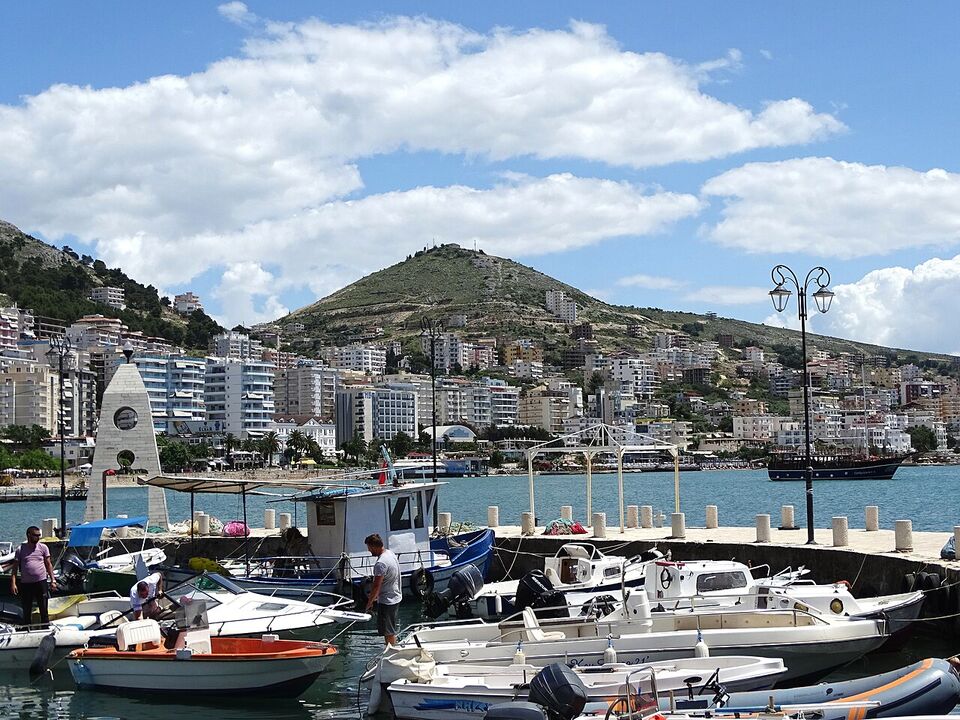
Corfu and Albania: the Saranda day trip
The Albanian town of Saranda faces Corfu across a narrow strait, and ferries run between Corfu Town or Corfu's northeast coast and the Saranda waterfront. Crossings take about 30 minutes on a fast catamaran or around 1 to 1.5 hours on a conventional ferry, with several sailings a day in summer and few in winter. Fares are generally a few tens of euros each way (check the operator for 2026-27 prices before you buy) and it is simplest to book the return at the same time.
From Saranda, the standard excursion is to Butrint, a site of Greek, Roman and Venetian ruins on a lagoon about 10 miles (17 km) south. It is a UNESCO World Heritage site with its own entry fee, payable in Albanian lek or euros. Many visitors book a guided tour on the Corfu side that includes the ferry, a coach to Butrint and lunch. A guided day is the easiest way to deal with the border, but you can also do it independently if you carry your passport and have a small amount of cash.
You will be through Greek exit control and Albanian entry control, and on the way back, Greek entry control with EES. Allow a margin before the last ferry. For the island itself, see Corfu and the Ionian islands.
Save money
For a single day in Saranda, a ferry-only ticket and a taxi or local bus to Butrint is cheaper than an organized excursion. In the off-season, when sailings thin out, a tour that includes the crossing can be the only practical way to get back the same day.
Classic routes and how long they take
- Athens + Istanbul
Two capitals in 10 to 12 days
Spend four to five days in Athens and nearby day trips (see day trips from Athens), fly to Istanbul for four nights, and fly home from there. Add a Cycladic island in the middle if you have two weeks.
- Italy + Greece
A ferry in the middle
Finish Italy in Bari or Brindisi, take the ship to Igoumenitsa, continue to Corfu or Epirus (see Epirus and Zagori), then to Athens. Or reverse it and start from Athens.
- Dodecanese + Turkey
Kos or Rhodes and the Turkish coast
Base yourself on Kos, cross to Bodrum for a day, and add Rhodes or Patmos. Alternatively, spend your last two nights in Turkey (Bodrum or Marmaris) and fly home from there. See Rhodes and the Dodecanese.
- Corfu + Albania
A day in Saranda and Butrint
Do it as a day trip from Corfu, or extend to Gjirokaster and Tirana if you have a rental car permitted for Albania.
- Thessaloniki + Balkans
Skopje and Sofia
Take a bus or drive from Thessaloniki (see Thessaloniki and the north) for a few nights in either capital. Combine with a flight home from Sofia or Skopje.
Before you go
- Count your Schengen days, and note the dates you will be outside the area.
- Check your passport: issued within 10 years, valid three months past your departure from Schengen, ideally six months.
- Book ferries to Italy early for summer (early-booking discounts usually run December to March) and cabins even earlier.
- Ask the car rental company for written cross-border permission and a green card before you pick up the car.
- Check your phone plan: outside the EU, roaming rules differ. See phones and data.
- Look at the winter timetable if you travel from October to April: many island and Turkey crossings run only a few days a week.
For planning a longer trip that mixes these pieces, the trip builder and the when to go page help match the season to the route. For the stay limits behind the Schengen clock, see long stays.
Add it to a route in the trip builder, or ask us to plan the hotels, trains and guides for you.