Overview: Greece's biggest island
Crete is the largest Greek island and feels more like a small country. It has its own food, its own dialect and music, a long Minoan history, mountains that carry snow into spring, and beaches with white, pink and gold sand. For most Americans the right plan is to take at least five days, base yourself at one end, and rent a car. If you can give it a week or more, you can see both Chania in the west and Heraklion and the north-east.
The island is long and thin: roughly 160 miles (260 km) from end to end and 7 to 37 miles (12 to 60 km) wide. A mountain spine runs down the middle, with the main towns and the road along the north coast and the wilder beaches on the south. Distances look short on a map and run long on the ground because mountain roads are slow. See our wider guides at Greece's Destinations and Which Greek Island Is Best for You? to compare Crete with the other island groups.
Getting there and getting around
Airports and ferries
Crete has two main airports. Heraklion (HER) is the busiest and is the best arrival for Knossos, the central and eastern coast and the south via the Messara plain. Chania (CHQ) is the better arrival for the west: Chania town, Rethymno, Balos, Elafonisi and Falassarna. Flights from Athens take under an hour (Aegean with Olympic and Sky Express), and both airports have seasonal links to other European cities. Ryanair has suspended its winter bases at Chania and Heraklion for 2026-27, so winter service is thinner. See Flights to Greece for transatlantic routings into Athens.
The overnight ferry from Piraeus to Heraklion takes about 9 to 10 hours, usually leaving in the evening and arriving early the next morning; cabins are sold by Minoan Lines, Anek and others. Chania (via the port of Souda) also has overnight sailings. In summer, high-speed boats run from Santorini to Heraklion in about 1 hour 35 minutes (seasonal and less frequent in winter), so Crete pairs easily with the Cyclades. Read Greek Ferries and Island Hopping for booking and weather advice.
Renting a car
Rent a car if you want beaches, villages and gorges. Book ahead for July and August, and ask for a small car that handles mountain bends. Bring your US license and an International Driving Permit: rental firms often ask for it and police can fine you without it. Gas costs about €2.10 a liter in November 2026, which is about $9 a US gallon. Our full advice is at Driving in Greece.
The main road along the north coast (the national highway, with sections of motorway) runs from Kissamos near Chania through Rethymno and Heraklion to Agios Nikolaos and Sitia. Chania to Heraklion is about 87 miles (140 km) and typically takes about 1 hour 45 minutes; Chania to Rethymno is about 38 miles (60 km). Roads to the south coast are twisting and slower, and some beach access roads are unpaved. Speed limits are 90 km/h (56 mph) on rural roads and 130 km/h (81 mph) on motorways.
Watch out
Give yourself more time than the map says. A 40-mile (65 km) drive to a south-coast beach can take two hours with hairpins, goats and slow trucks. Do not plan an airport run on the same day as a long south-coast outing.
Buses (KTEL) link the main north-coast towns and some resorts; there is also a limited service to a few south-coast spots, mainly in summer. Taxis are expensive over long distances. Check schedules locally.
Heraklion and Knossos
Heraklion is the largest city and the main hub; it is busy and practical rather than pretty, with a Venetian harbor fortress, a lively market street and two reasons to stop: the Archaeological Museum and Knossos. If you do not want a city base, stay on the coast and make Heraklion a day trip.
Knossos
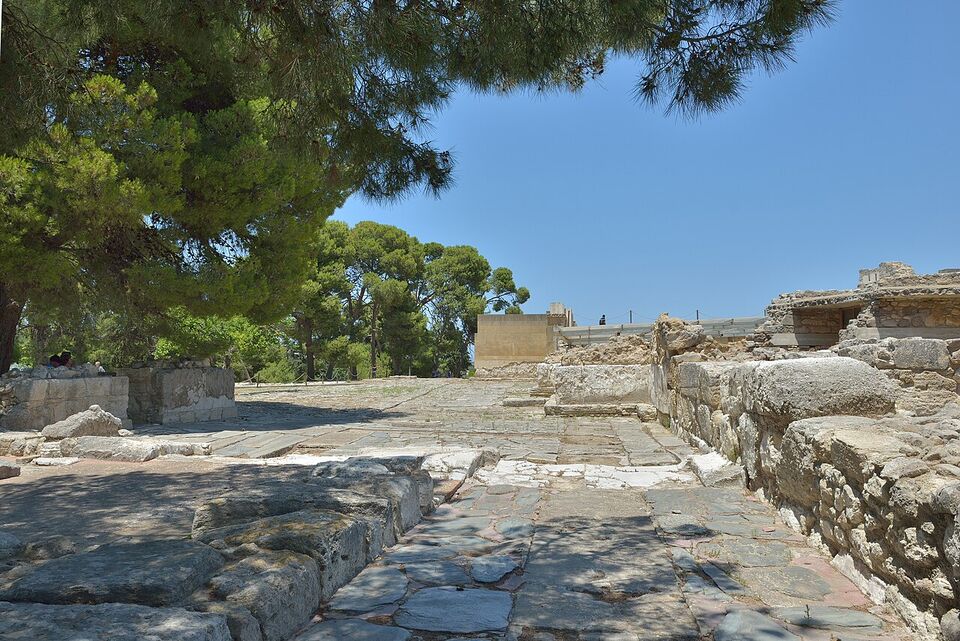
Knossos is the largest Minoan site on Crete, about 3 miles (5 km) south of Heraklion. It was a palace and ceremonial center that flourished about 3,500 to 4,000 years ago. Early 20th-century excavators rebuilt parts of it in concrete, which helps you picture the layout but means it is partly a reconstruction. Walk the Central Court, the Throne Room, the bull-leaping frescoes (copies; the originals are in the museum) and the storerooms with giant jars.
- Ticket: €20 ($22) adult (2026 price, under the April 2025 tiers). Free and reduced categories apply to EU citizens and students; non-EU visitors under 18 enter free. Reduced ticket €10 (about $11). Buy online at the Ministry of Culture's official ticket store, tickets.hh.gr; site details are on hh.gr. Avoid resellers that add a markup.
- Hours: Daily 8 a.m. to 8 p.m. from April 1 to August 31, closing earlier in steps through September and October (6 p.m. by late October); November 1 to March 31 daily 8 a.m. to 5 p.m. Last admission is 20 minutes before closing. Closed January 1, March 25, May 1, Easter Sunday, December 25 and 26.
- Best time: The first hour after opening. Tour buses arrive from mid-morning and there is little shade. Bring water and a hat.
- Free days: Admission is free on March 6, April 18, May 18, the last weekend of September, October 28, and the first and third Sunday of each month from November through March (next: November 15 and December 6, 2026). See Ancient Sites and Museums; on free days the site is very crowded.
Heraklion Archaeological Museum
The museum holds the world's main collection of Minoan art, including the Phaistos Disc, the snake goddesses, the "Prince of the Lilies" fresco and gold jewelry. It is a separate ticket: €20 (about $22) full, €12 (about $13) reduced. Hours are daily 8 a.m. to 8 p.m. April through October; in winter (November 1 to March 31) 8:30 a.m. to 3:30 p.m., except Wednesday 10 a.m. to 5 p.m. The 90 minutes you spend here make Knossos far easier to understand. See it first if you can, then go to the site.
Other Minoan and Roman sites are Phaistos and nearby Agia Triada on the Messara plain, Malia on the north coast, and Gortyn. Phaistos costs €15 (about $17) full and €8 reduced (winter hours 8:30 a.m. to 3:30 p.m. daily). For Malia and Gortyn, check prices and hours on hh.gr.
Chania, Rethymno and the west
Chania old harbor
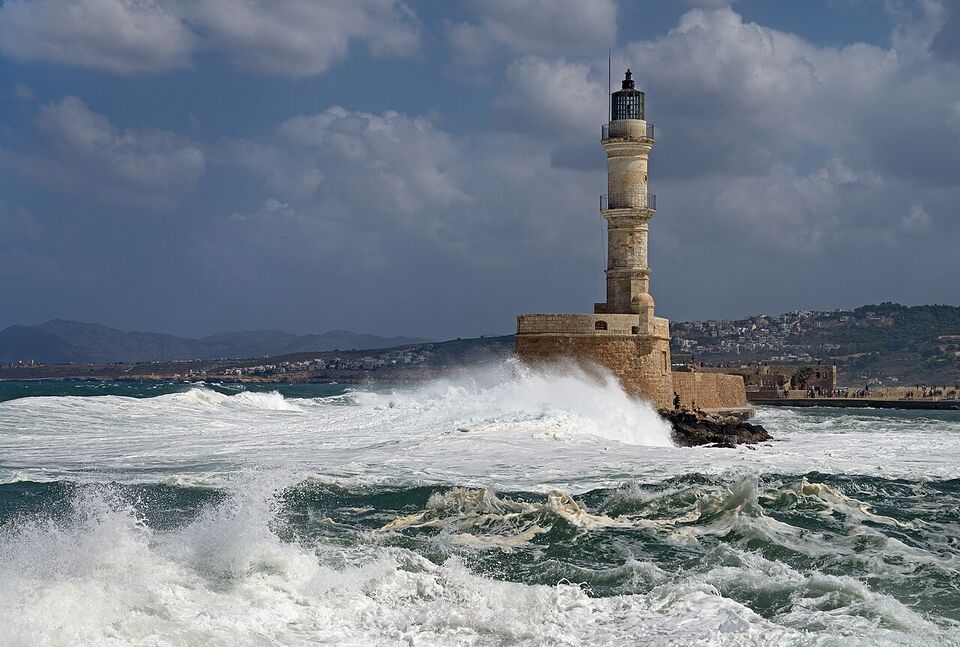
Chania is the most attractive town on the island and the best base for the west. Its Venetian harbor is lined with restaurants and ends in a lighthouse rebuilt in the 19th century; behind it the old town runs through the Splantzia and Topanas quarters with stone houses, small hotels and workshops. Look for the Venetian shipyards, the Firkas fortress at the harbor mouth and the covered municipal market. The old town is largely pedestrian and many streets are uneven, so wheel your luggage carefully or ask the hotel to send a porter.
Rethymno
Rethymno sits between Chania and Heraklion, about 38 miles (60 km) from Chania. It has a smaller Venetian harbor, a large fortress (the Fortezza) on a hill, a mix of Venetian and Ottoman buildings, and a long town beach. It makes a good overnight stop and a base for the central coast and for southern villages. The wildfire season of 2026 was severe in the Rethymno area: a fire near Krya Vrysi and the Preveli area burned about 12,000 acres (5,000 hectares) and caused evacuations around Agia Galini. Tourists returned to the area by early August, but check the situation before you plan southern Rethymno.
Elounda, Spinalonga and the east
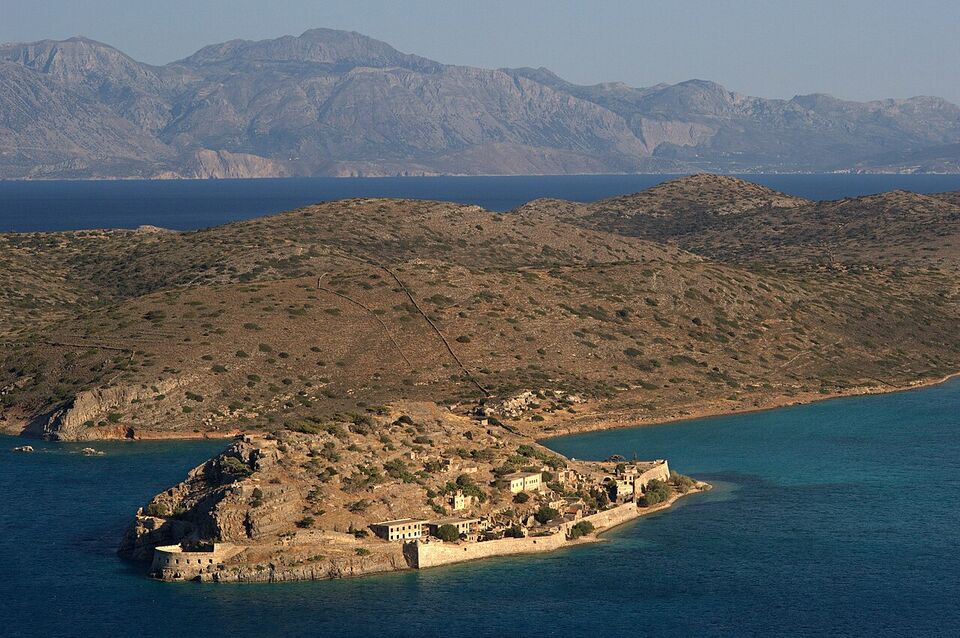
East of Heraklion the coast bends toward Agios Nikolaos and Elounda, a resort region with calm bays. Elounda is the departure point for boats to Spinalonga, a small fortified island that served as a leper colony until 1957. The fortress dates from the Venetian period, and walking its lanes and the former hospital buildings is a quiet half-day trip. The entry fee is €20 (about $22) full, €10 reduced; in winter the island is closed on Tuesdays and open 8:30 a.m. to 3:30 p.m. the other days. Boats from Elounda or Plaka cost extra, with different operators on different schedules. Go in the morning to avoid the heat.
Further east, the region of Sitia and Vai has palm-lined beaches, and the Minoan site of Zakros sits at a quiet end of the island. The Lasithi Plateau, high in the mountains, is a good day trip from the north-east. This eastern section is slower and quieter than the west; it works best if you are driving the whole island.
Beaches: Balos, Elafonisi, Falassarna, Preveli and the south
Crete's best beaches are far from the main towns. Plan one beach per day and start early.
Balos
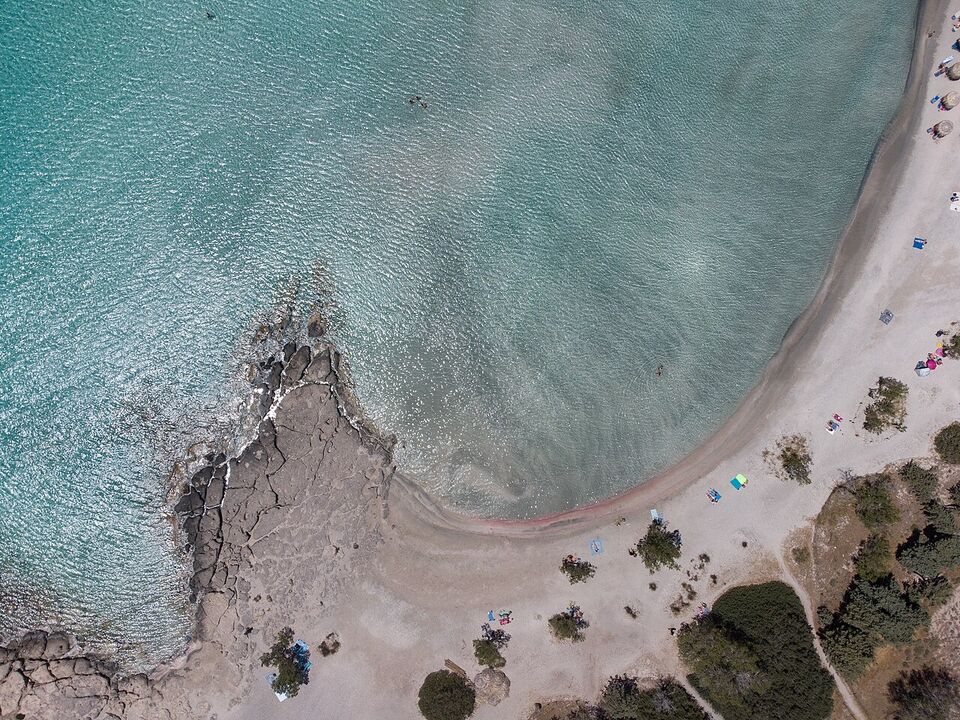
A shallow lagoon with pale sand on the Gramvousa peninsula. You get there by boat from Kissamos (usually combined with a stop at Gramvousa island) or by a rough dirt road to a car park and a steep path down. It is crowded at midday. Kissamos has proposed an online time-slot booking system for Balos, Elafonisi and Falassarna ahead of the 2027 season, but as of November 2026 it is a proposal, not a rule.
Elafonisi
A sandbar and lagoon where the sand is pink in places. The water is shallow and warm, which suits families. The road from Chania is long and winding (allow about two hours each way), so many people stay overnight nearby. It is very busy on summer afternoons.
Falassarna
A wide beach with clear water, near the ancient harbor site of Falassarna. It is exposed to wind and waves in some conditions. Good for sunset and easier to reach than Balos or Elafonisi.
Preveli
A palm-lined river meets the sea. You walk down from a car park to the beach. The 2026 wildfire in this part of Rethymno means you should check conditions and access before you go.
South coast: Sougia, Loutro, Agia Roumeli
Loutro and Agia Roumeli can be reached only on foot or by boat. They make quiet bases for walkers and are linked by boat to Sfakia and Paleochora.
Beach rules are changing in Greece. Concessions must leave a part of each beach free for the public, and a Blue Flag program awards cleaner beaches (Crete has more than any other region). See Beaches in Greece. Sea temperatures run about 73°F (23°C) in June, 78°F (25-26°C) in September and 69°F (21°C) in November in Heraklion.
The Samaria Gorge
The Samaria Gorge is the best-known hike in Greece, a 16 km (10 mile) walk through a National Park in the White Mountains. It is a one-way route: you start at the top, descend the gorge, and end at the coastal village of Agia Roumeli, where a ferry takes you to Sougia or Chora Sfakion, with buses back to Chania, Rethymno or Heraklion. Most hikers take a tour bus from the north coast, which handles the logistics. The walk takes 5 to 7 hours and is steep and rocky in places; wear real shoes, bring water, food and sun protection, and start early.
- Season: Closed for the season from November 1, 2026 to April 9, 2027 per the official ticket site. It usually opens in May depending on weather (in 2026 it fully opened on May 19). It can close in rain or high wind or fire risk, even in the summer.
- Fee: The entrance fee was €10 ($11) in 2025; check the 2027 price on the park's official ticket site. Children under 18 and seniors over 65 are reported to be free.
- Logistics: Enter at Xyloskalo, near Omalos. A shorter option is a walk from Agia Roumeli to the narrowest part ("the Gates") and back. Book the ferry and bus back in advance.
- Safety: Free helmets were available at both entrances in 2026. Hikers should carry water and tell someone their plan. For general safety advice, see Hiking, Sailing and the Outdoors and Health and Medical Care.
Other gorges include Imbros, Agia Irini and Kourtaliotiko, which reopened with controlled access in 2026. Tour operators and the park authority can tell you which are open.
Insider tip
If you do not want 16 km, take the ferry to Agia Roumeli and walk up the lower gorge to the Iron Gates and back (about 3 to 4 hours round trip, with no need for a bus transfer).
Mountain villages, food and raki
Inland Crete is where the island's food and village life are most intact. Good half-day drives include Archanes (wine and a Minoan site, near Heraklion), Anogia (weaving and music, on the slopes of Mount Ida), Zaros (spring water and trout), Spili, and the villages of the Lasithi Plateau. The White Mountains villages above Chania, such as Omalos, give mountain views.
Cretan cooking relies on local olive oil, herbs, greens and cheese. Try dakos (barley rusk with tomato and soft cheese), kalitsounia (small cheese or herb pies), staka (a rich dairy spread), lamb or goat baked slowly, snails (chochlioi) and wild greens such as horta and stamnagathi. Graviera is the main hard cheese. See Greek Food for a wider guide.
The local spirit is raki or tsikoudia, a clear grape-pomace spirit that many tavernas serve free at the end of a meal. Rakomelo is raki warmed with honey and cloves. Drink it in small glasses. See Greek Wine, Ouzo and Coffee for wine, ouzo and coffee.
Different from home
The bill may arrive with fruit or a small dessert and a bottle of raki that you did not order. It is a gift of hospitality and is not charged. Tipping is appreciated but not obligatory; rounding up or leaving a few euros is normal.
When to go and how many days
Crete has the longest season in Greece. April through June brings green hills, wildflowers and warm days, with the sea still cool. September and October are warm and quieter; the sea is at its warmest in September. July and August are hot (Heraklion averages about 83°F, or 28°C, but inland and on the south coast it is hotter) and beaches and sites are crowded. Fire risk is highest from May through October. In winter, towns stay open and mild, but most large resort hotels close from early November to late March. See When to Go to Greece and Greece in November.
- 5 days
West only
Base in Chania: harbor and old town; a day at Elafonisi or Balos; a day at the Samaria Gorge (in season); a day in Rethymno and the villages.
- 7 days
West plus Heraklion
Three nights in Chania, a stop in Rethymno, then three nights near Heraklion for Knossos, the museum and the Messara plain.
- 10 days
Across the island
Chania (3), south-coast village or Rethymno (2), Heraklion area (2), Elounda or Agios Nikolaos with Spinalonga (3).
Pair Crete with the Cyclades by fast ferry from Santorini, or add a few nights in Athens before your flight home. Details on Cyclades islands are in Naxos, Paros and the Cyclades.
Practical notes
- Money: Cards are widely accepted, but carry cash for village tavernas and parking. Prices here use €1 = US$1.12.
- Hotels: $ under $120 a night for a double, $$ $120 to $300, $$$ over $300. Guests pay the climate resilience fee per room per night (2026 rates: €2 to €15 in the April-to-October season depending on the hotel). Read Where to Stay in Greece.
- Wildfires: Call 112. Follow instructions from authorities and do not park on dry grass. Our safety guide is at Is Greece Safe?.
- Heat: Midday outdoor sites can close in heat waves. Plan sites for the morning.
Add it to a route in the trip builder, or ask us to plan the hotels, trains and guides for you.