Overview
Greece is an easy place to shop for food, crafts and small gifts, and most of what you want fits in a suitcase: olive oil, honey, herbs, sandals, ceramics, jewelry and worry beads. The details that catch people out are opening hours (shops close at odd times), the VAT refund (it needs paperwork before you check your bags), liquids rules on the plane, and the strict ban on antiquities. This page covers all of them, plus what US Customs allows.
For money, cards and cash, see Money in Greece. For tipping and buying food, see Greek Food. For wine and spirits, see Greek Wine, Ouzo and Coffee.
Store hours and Sundays
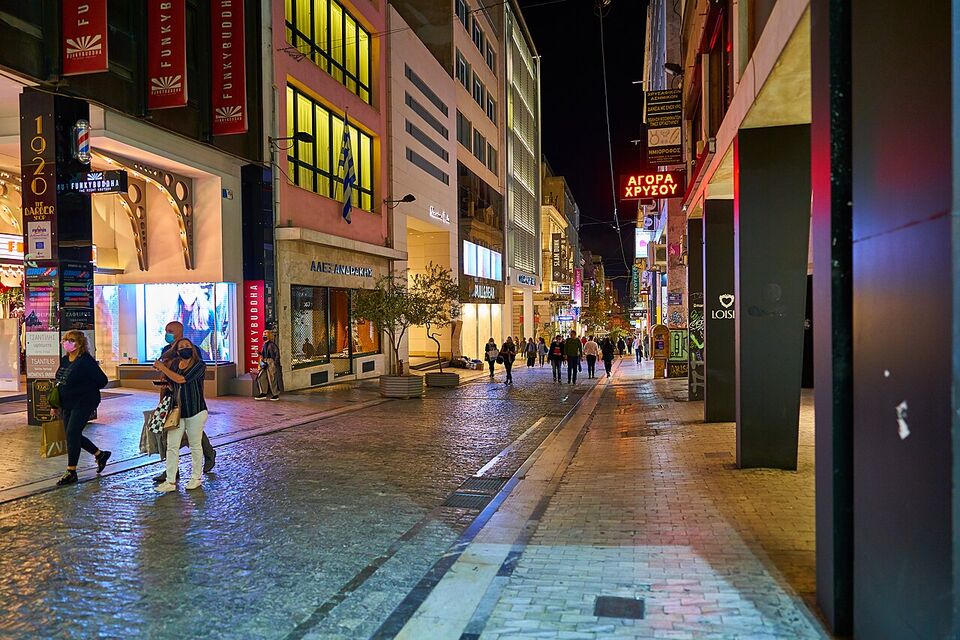
Greek shop hours follow a mix of national rules and local custom, and they differ between a traditional shop in a neighborhood and a store in a tourist area. A common pattern for small independent shops is to open in the morning, close in the early afternoon, and on some days reopen in the evening. On the other days, a shop may stay closed in the afternoon. Hours change by city, season and shop, so use opening hours on the shop's website or map listing as a guide, and expect exceptions.
- Tourist areas and large cities: most souvenir, jewelry and clothing shops are open daily, often until 9 or 10 p.m. in summer.
- Malls and supermarkets: long hours, usually open Monday to Saturday into the evening.
- Sundays: most shops are closed. In tourist zones (parts of Athens, the islands, resort towns) many stay open, especially in summer. Supermarkets are mostly closed, and some open on Sunday in tourist areas.
- Holidays: shops close on national holidays and Easter (see Easter in Greece and Festivals in Greece).
- Off-season: many island shops close from November to April.
Different from home
Do not count on a store being open all day, and plan your shopping for the morning or the evening. Do not assume a small shop in a village will be open on a Sunday or during the summer afternoon rest. If you need a particular item, check the opening hours on the map listing, or phone.
Pharmacies mark the nearest on-duty pharmacy on their door at night and on Sundays; see Health and Medical Care. Periptera (kiosks) sell water, snacks and toiletries almost around the clock.
What to buy
Olive oil
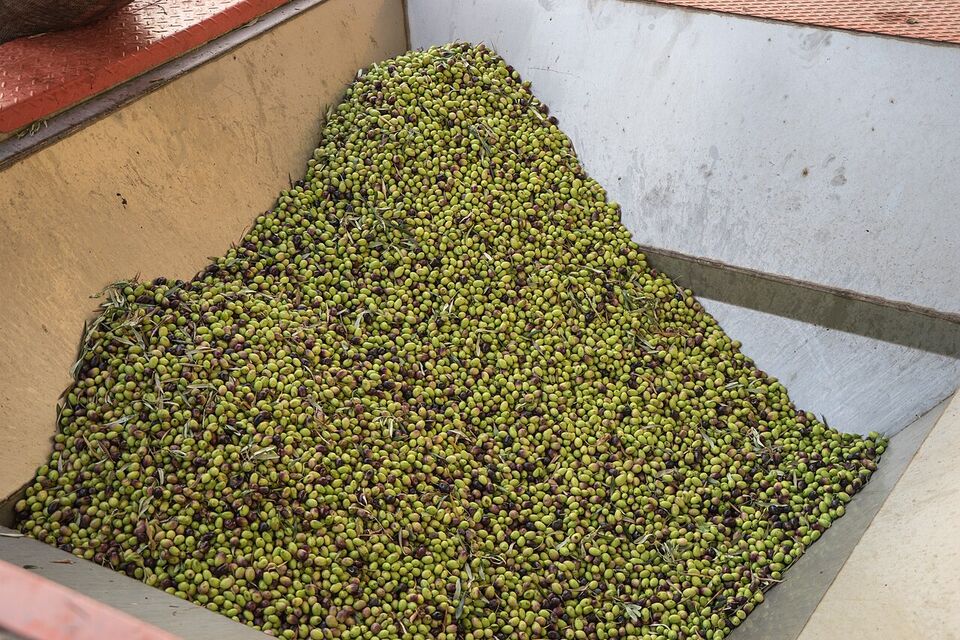
Greece produces some of the world's olive oil. Look for extra virgin oil in sealed tins or dark glass with the producer's name, harvest year and area. A 500 ml bottle is easy to pack. Expect about €10 to €25 (about $11 to $28, estimate) depending on quality.
Honey and herbs
Thyme honey from Crete and the islands, pine honey and mountain tea (tsai tou vounou) are common gifts. Dried oregano, thyme and sage are sold in bags by weight in markets.
Saffron
Greek saffron from the Kozani area is graded and sold in small boxes. Buy sealed products with an origin label.
Mastiha
Resin from the mastic trees of southern Chios is sold as tears, gum, sweets, cosmetics and liqueur. Easy to pack and widely available in Athens shops.
Leather sandals
Athens has sandal makers in the Plaka and Monastiraki area who make handmade leather sandals. Prices start around €40 to €80 for ready-made pairs (estimate); custom pairs cost more. Ask whether the leather is genuine and where it was made.
Ceramics
Hand-thrown pottery from Sifnos, Crete (Margarites) and Athens is sturdy and useful. Ask the seller to pack it in bubble wrap or a box, and carry it on the plane if you can.
Jewelry
Athens, Thessaloniki and the islands have many jewelers. Gold is sold by weight and carat. Ask for a receipt that gives the carat and weight.
Komboloi and sponges
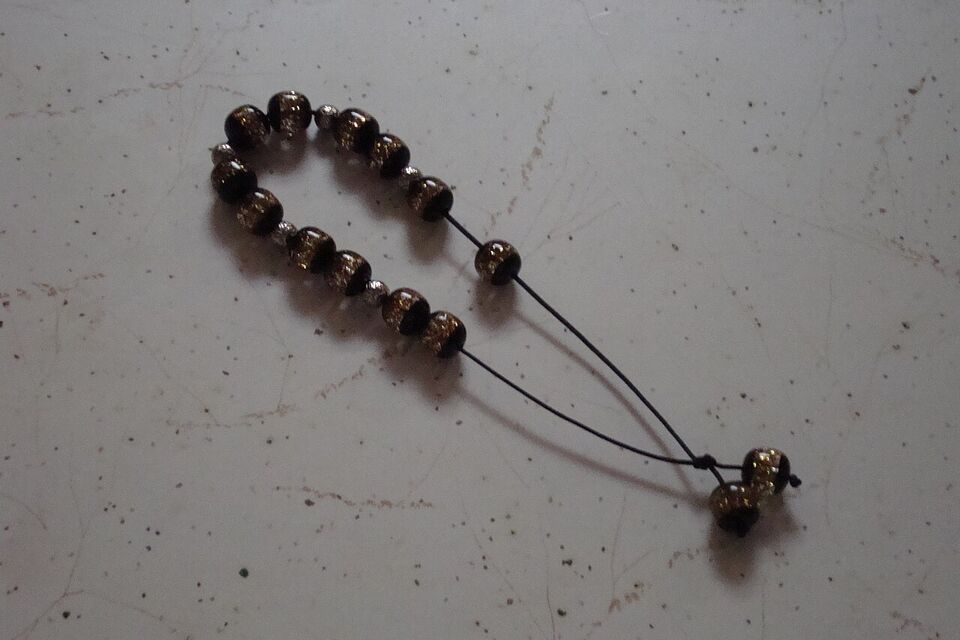
A komboloi (worry bead string) is a small, light and inexpensive gift. Natural sea sponges from Kalymnos and Symi are sold in tourist shops; ask whether they are natural. Prices range from a few euros to much higher.
Icons, reproduction ceramics and metalwork are also popular. Buy from established shops or workshops, not street vendors. Monastic shops and monasteries sell small icons, soap, candles and honey; a purchase there is a respectful way to support them. For folk art and gifts in Athens, see Athens. For markets, see Food and Drink in Athens.
Bringing olive oil and liquids home
Airlines limit liquids in carry-on bags to containers of 100 ml (3.4 oz) or less in one clear bag. Olive oil, honey, jam, spirits and wine above that size must go in checked luggage. You can buy duty-free liquids after security at the airport and carry them in a sealed bag, as long as you keep the receipt and the bag sealed on connecting flights. Check the rules for your connecting airport.
- Choose tins or plastic-sealed bottles, not glass, where possible.
- Wrap each bottle in clothing or bubble wrap, and put it in a zip bag in case of a leak.
- Put it in the middle of your checked suitcase, not near the edges.
- Keep the receipt and look for an origin label.
- Declare food on the US customs form.
Insider tip
If you do not want to carry heavy bottles, ask the shop or producer about shipping. Many olive oil and honey sellers pack for travel. Some will ship to the US, but costs and rules vary, and food shipments may need documentation.
Olive oil and honey in sealed commercial packs are fine to bring home. Meat products are banned. Declare all food, plants and seeds, and check the CBP website before you pack.
The VAT refund, step by step
Greek VAT is 24 percent on most goods. As a visitor from outside the EU, you can claim back the VAT on goods you take out of the EU unused in your luggage. The usual rules: your purchase must be at least €50 on one receipt, from a shop in the tax-free scheme (look for a "Tax Free" or "Global Blue" sign in the window), and the goods must leave the EU within a limited time. Services, food eaten in Greece and hotel stays do not qualify.
- Ask before you pay. At the till, ask "Tax free?" and show your passport. The shop prepares a refund form with your details and the purchase.
- Keep everything. Keep the receipt, the refund form and the goods unused and in your carry-on or checked bag.
- Go to customs before checking bags. At the last EU airport you leave from, find the customs desk for tax-free stamps before you check your bags, and show the goods, receipts, form and passport. If your goods are in your hand luggage, you can usually do this after check-in. Check the airport's instructions. Arrive early: lines can be long.
- Get the stamp. The officer stamps the form.
- Claim the refund. Take the stamped form to the refund operator's desk at the airport for a cash refund, or send it back for a card refund, depending on the operator. A fee is deducted, so the refund is less than the 24 percent shown.
If your flight leaves from another EU country, the customs stamp happens in the country where you leave the EU, not in Greece. Refund rules and operators change, so confirm the details with the shop at purchase and on the operator's site.
Watch out
The customs stamp happens before the goods go into checked luggage. If you check the bag first, you may have to retrieve it and miss your flight. Allow at least 30 minutes extra, and more at peak times, given the extra passport checks (see Entry Requirements for Americans).
Antiquities: never buy or take
Greek law protects antiquities and cultural property strictly. Real antiquities, even small pottery shards, coins, marble pieces or stones from archaeological sites, may not be bought, sold or exported without a Ministry of Culture permit, and permits are rarely issued for tourists. Taking any stone, shard, marble piece or sand from an archaeological site or protected beach is illegal. Fines can be large, and antiquities offenses can mean prosecution.
If a street seller or shop offers an "ancient" coin, lamp or statue, assume it is either fake or illegal to buy. Do not buy it. Buy a certified reproduction from a museum shop or an established gallery. Reproductions should come with a receipt and ideally a certificate or stamp stating that the item is a copy. Museum shops at the Acropolis Museum and the National Archaeological Museum sell copies and jewelry inspired by ancient designs. See Ancient Sites and Museums and Athens Sights.
Watch out
Older objects may also need an export permit from the Ministry of Culture. Antique icons, old maps and old jewelry can fall under cultural-property rules. When in doubt, ask the shop for the paperwork or do not buy.
Shipping home
For large or fragile items, shipping may be safer than carrying. Options include the Greek postal service (ELTA), international couriers, and shipping offices in Athens and tourist areas. Prices vary with weight, size and speed, so get a written quote that says who pays duties and taxes. Packages to the US can be delayed at customs.
- Insure valuable items and keep proof of value.
- Pack with new boxes and plenty of padding. Ask the shop if they ship, since many do.
- Do not ship food, plants or alcohol without checking the rules; some shipments are prohibited.
- Expect to pay US import duty on shipments that exceed the exemption, and note that the personal $800 exemption may not apply the same way to shipped goods.
- Keep the tracking number and receipts for claims.
Generally, anything you can carry that is under the weight allowance is easier and cheaper to carry than to ship. For airline baggage rules, see Flights to Greece.
US Customs: what you can bring back
US Customs and Border Protection (CBP) lets returning US residents bring home up to $800 of goods per person duty-free, if you meet CBP's conditions (a minimum time abroad and no use of the exemption in the previous 30 days; check the current wording on the CBP site). You must declare everything you bring back. The allowance covers gifts and purchases; items for resale do not qualify.
| Item | Rule |
|---|---|
| Goods for personal use and gifts | $800 per person duty-free; family members traveling together may combine |
| Alcohol | 1 liter duty-free per adult 21 or older; more is dutiable and subject to state rules |
| Tobacco | Limits apply (check CBP for current numbers) |
| Olive oil, honey (sealed) | Generally allowed; declare |
| Meat and meat products | Banned |
| Fresh fruit, plants, seeds | Restricted or banned; declare |
| Cheese and dairy | Depends on type and packaging; declare and ask |
| Antiquities | Illegal to export from Greece; do not buy |
CBP rules change, and some items are restricted by US law, so check the CBP website before you pack. Keep receipts handy and be honest on the form: failing to declare can mean fines and seizure of goods. For entry rules into Greece itself, see Entry Requirements for Americans.
Markets, prices and bargaining
Prices in Greek shops are fixed, and haggling is not the norm in regular stores. In open-air markets and with craft sellers, a small discount for several items or for cash is sometimes possible, but a polite request is enough and pushing hard is not welcome. Souvenir prices in the Plaka and Monastiraki areas of Athens and in island harbors are higher than in side streets, and the same olive oil or honey in a supermarket is often much cheaper than in a gift shop.
Check that items sold as handmade really are: ask where it was made, look for the maker's name on the item or label, and compare two or three shops before you buy. Cheap leather, "silver" jewelry and "natural" sponges are the usual items to check. Gold and silver jewelry is normally hallmarked for the metal, so ask to see the mark. Saffron, honey and oil are best bought sealed, with a producer's name and a lot or harvest date.
Save money
Buy olive oil, honey, herbs and sweets at a supermarket or a producers' shop or market instead of a harbor souvenir stall. Save the VAT refund for bigger purchases, since the operator's fee eats a large share of the refund on a €50 receipt. For budgeting, see the budget page.
A practical shopping plan
- Shop in the morning or evening, not at 2 p.m.
- Carry a card and some cash; small shops sometimes prefer cash
- Ask for the tax-free form at the till for purchases of €50 or more
- Pack liquids and fragile items in checked bags
- Keep receipts for customs and refunds
- Skip real antiquities; buy certified copies
- Leave a little space in your suitcase for gifts
Add it to a route in the trip builder, or ask us to plan the hotels, trains and guides for you.