The short answer
Yes, Greece is safe for American travelers. The US State Department's advisory is Level 1, "Exercise normal precautions," the lowest level, issued October 23, 2025 (check travel.state.gov for any later update before you fly). Violent crime against visitors is uncommon. The things that actually go wrong on a Greek trip are ordinary: a stolen wallet on the metro, a bar bill that makes no sense, a scooter crash, heat exhaustion, a canceled ferry, or in the worst case a wildfire that closes a road.
That is the real list, and nearly all of it is avoidable. This page goes through each risk, what to do about it, and the numbers to call. For health issues such as pharmacies, jellyfish and insurance, see the health guide.
What the State Department says
The advisory describes Greece as generally safe and flags a few specific things: petty crime in tourist areas (pickpocketing and purse-snatching, particularly on the metro and at tourist sites); demonstrations and strikes that can happen on short notice and disrupt transport; wildfires from April to October; earthquakes; flash floods, most common from October to February; extreme heat that can lead to site closures; high traffic fatality rates; and scams that target Americans. It also notes that terrorist groups have carried out attacks on Greek institutions in the past. That is standard wording for many European countries and it does not mean you should change your plans.
Enroll in the Smart Traveler Enrollment Program (STEP) at step.state.gov before you go. It sends you alerts and helps the embassy find you in a crisis. It costs nothing.
Petty crime and pickpockets
Pickpocketing is the most likely problem you will face, and Athens is where it happens. The State Department and the UK government both warn about theft of wallets, phones and passports on the metro and at crowded tourist sites, especially in central Athens.
- Metro Line 1 (the green line, from Piraeus to Kifissia through Monastiraki, Omonia and Victoria) is the classic hunting ground, and the airport train and bus can be too. Thieves work in teams: one person blocks the door or creates a jam, another lifts your wallet or phone.
- Omonia Square and the streets around it are rougher at night than other parts of the center. They are fine for a quick pass in daylight, but not where you want to wander late with a phone in hand.
- Monastiraki, the Plaka and the Acropolis approaches are crowded, and crowds attract thieves. A distraction (someone drops a map, asks a question, or "spills" something on you) is a common start.
- Cars and rentals. The State Department notes thieves break into cars and lodgings for passports and valuables. Never leave a passport or bags visible in a parked rental.
Simple habits that work
- Carry a phone and one card in a front pocket or a zipped cross-body bag worn in front, especially on the metro.
- Stand away from the doors on a crowded train and keep a hand on the bag.
- Leave the passport in the hotel safe and carry a photo of it. Keep a second card and some cash in a separate place.
- Do not hang your bag on a chair back or leave a phone on a cafe table.
- Use a contactless card or phone at the metro gate so you do not pull out a wallet. See the getting around guide.
- If you are robbed, report it at the local police station or call the tourist police on 171, then see the lost passport section below.
Insider tip
On the line from the airport to the center, put your bags on the luggage rack where you can see them, or keep them between your feet. Fresh arrivals with suitcases and jet lag are targets. Taking a licensed taxi at the fixed airport fare is an easy way to avoid the whole issue (see the Athens guide).
Scams to know
The Athens bar scam
A friendly person approaches you on the street, perhaps in Plaka, near Syntagma or around Monastiraki, and chats about where you are from. They suggest a drink at a nearby bar. Once you sit down, hostesses or staff appear, drinks arrive, and the bill is hundreds of euros. Sometimes there is a "lady friend" involved. The staff may block the door or call security until you pay. It is a known scam in Athens, and the safest rule is simple: do not follow a stranger to a bar, and look at the menu with prices before you order anything. If it happens, do not pay under pressure. Call 171 or 112 and say you are being forced to pay.
Restaurant bills, fish and "specials"
Fresh fish is sold by weight, and prices per kilo can be high. The "overpriced seafood" trap is a fish brought to the table, cooked and then charged at a price you never heard. Ask the price per kilo before ordering, ask them to weigh it, and check the total. Be careful with a waiter who recites "specials" without prices. A taverna's menu with prices, and the regular wine in a carafe, are the safest choices. A bread-and-cover charge of about €1 to €2 (about $1 to $2) per person is normal and not a scam.
Taxis
Official taxis are yellow with a "TAXI" sign on the roof. Insist that the meter is on, or agree a price before you start. Fixed fares exist from the airport: €40 (about $45) by day and €55 (about $62) at night to the city center. A driver who says the meter is "broken" is a warning sign: get out. Ask for a receipt. A licensed taxi-hailing app lets you see the driver and the price. Other common tricks include a longer route and a driver quoting a "tourist price" in a crowded port. Law requires taxis to take cards, though some drivers resist, so ask before you start.
Other scams
- Friendship bracelets and "gifts" pressed into your hand, followed by a request for money.
- Fake police who ask to see your wallet for "counterfeit money" checks. Real police do not do this. Offer to go to the station instead.
- Overpriced souvenirs and "ancient" antiquities sold on a beach or street. They are fakes, and real antiquities cannot be exported legally (see the shopping guide).
- ATM skimmers and "helpful" strangers at cash machines. Use machines inside bank branches when you can.
- Rental damage claims. Photograph the whole car, scooter or quad bike before you leave the lot, with the staff present.
- Ticket resellers at the Acropolis who sell timed-entry tickets at a mark-up. Buy from the official ticket store, tickets.hh.gr (tickets.hh.gr); site details are on hh.gr. See the Acropolis guide.
Protests, strikes and neighborhoods
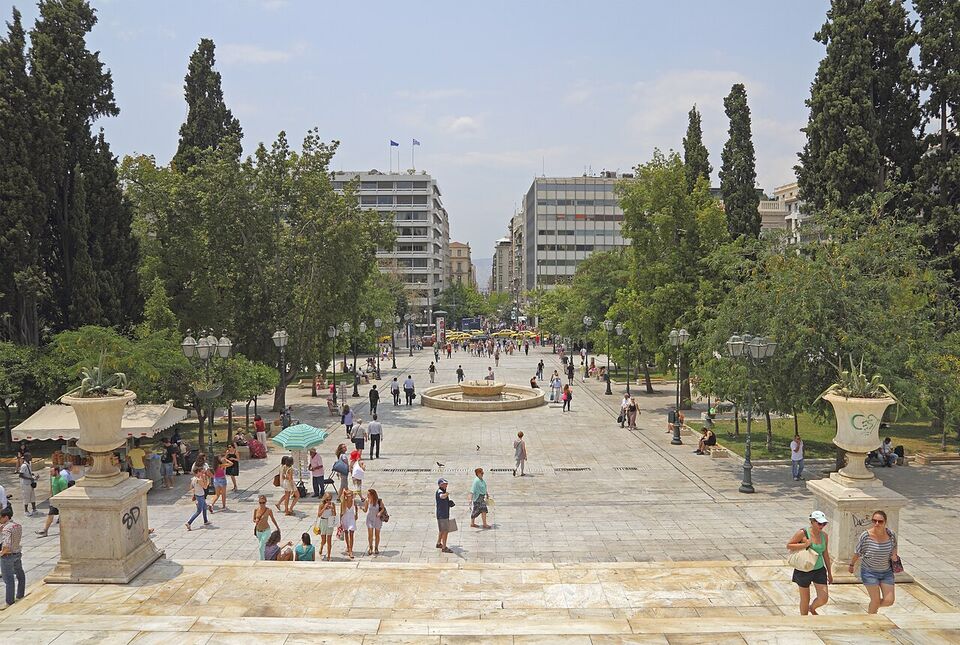
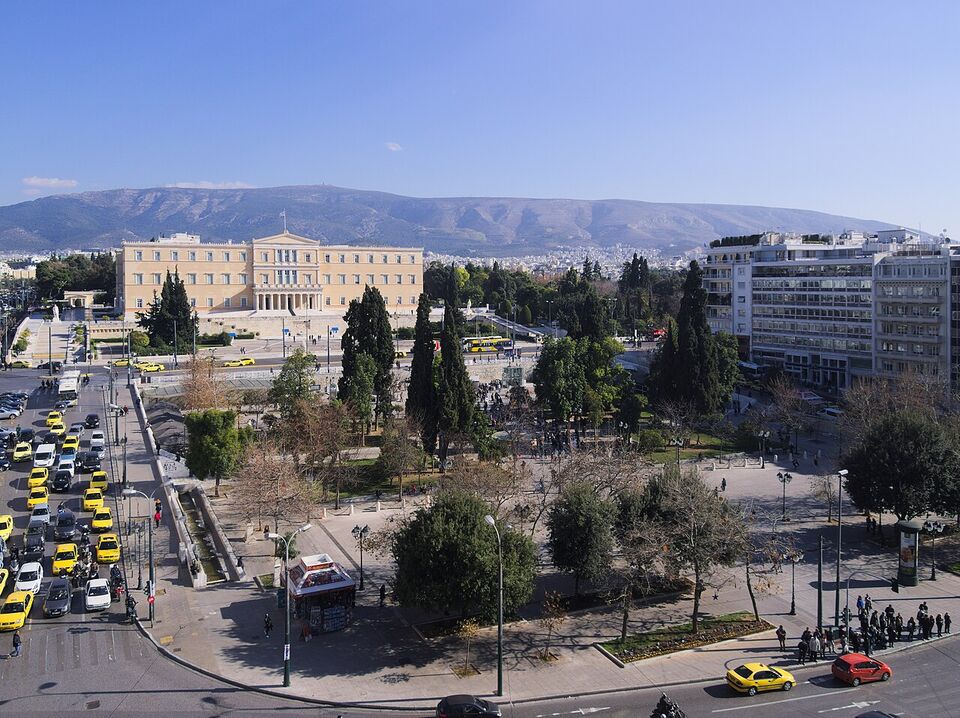
Demonstrations and strikes are a regular part of Greek public life. Most are peaceful and brief. Some turn violent, and the police sometimes use tear gas. The UK government notes that protests often gather around Syntagma Square, in front of Parliament, and may occur on May 1, November 17 and December 6. Every November 17 (the anniversary of the 1973 student uprising) a large march usually crosses central Athens and has traditionally ended near the US Embassy. December 6 is the anniversary of a teenager's death in 2008 and usually brings marches and some disorder in Exarchia, an area of Athens north of Omonia known for its protest culture.
- Avoid demonstrations. Leave if a march heads your way.
- Syntagma and Exarchia are not dangerous on an ordinary day. Exarchia has cafes, bookstores and street art, and many visitors pass through. At night it is rougher, and graffiti and some drug dealing occur. Use common sense.
- Strikes can close the Athens metro, buses, ferries (seamen's strikes), trains and even airports at short notice, usually for 24 hours. Check news and your carrier the day before travel, and leave a day of margin before an international flight. See the ferries guide.
- Museums and archaeological sites occasionally close for a strike. Sites sometimes announce this on the Ministry of Culture page.
Wildfires and heat
Wildfires are the most serious seasonal hazard in Greece. The State Department says they are frequent from April to October, especially in southern Greece and on the islands, and the UK government says the risk is high in the same months. The 2026 season was below the 20-year average by area burned, but it still killed 11 people and burned tens of thousands of hectares, including the season's biggest blaze in West Attica near Porto Germeno (11,339 hectares) and the Preveli fires in Rethymno, Crete (5,012 hectares).
Before you go and while you are there
- Turn on emergency alerts on your phone. Greece sends 112 messages to phones in an affected area, in Greek and English, with instructions to evacuate or stay inside. Do not ignore them.
- Follow @112Greece on X and check the Civil Protection daily fire-risk map. On "Category 5" (extreme) days, entry to forests, parks and some hills such as Lycabettus in Athens can be banned.
- Do not light fires or barbecues, and never throw cigarettes, glass or other litter into dry vegetation. Causing a fire, even by accident, is a criminal offense in Greece.
- If you see a fire, call 112 (or 199 for the fire service) and give your location.
If you are told to evacuate
Go at once. Authorities issue orders by 112 message, loudspeaker and police, and they usually name a place to go, often a nearby village, a beach or a port. Take passports, medicine and phones, leave the rest and follow the road traffic. If you are on a beach near a fire, officials or the coast guard may evacuate by boat. Do not go back for belongings. Tell your hotel or host where you are. Tell family at home you are safe. In rural areas, park in the open, not in dense brush, and do not drive into smoke.
Watch out
A rental car in the hills during a fire warning can be a trap, because narrow roads fill quickly and smoke cuts visibility. On a "very high" or "extreme" fire-risk day, choose beaches, towns and museums, not remote hikes or forest drives. Hotels and local officials will know the day's risk.
Heat
Heat waves are common in July and August and can push temperatures in Athens above 100°F (38°C). During severe heat the Ministry of Culture closes outdoor archaeological sites, including the Acropolis, in the middle of the day, typically from noon to 5 p.m. Plan site visits for the first hour after opening and book timed tickets for early slots (see the Acropolis guide). Drink water often, wear a hat, take a siesta, and use air conditioning. Heat illness is covered in the health guide. For timing, see the guide to when to go.
Earthquakes and Santorini
Greece sits on a seismically active zone, and small quakes happen often. Most are not felt. If a strong one strikes:
- Indoors: drop, cover and hold on under a sturdy table, away from windows and heavy furniture. Do not run outside while the building is shaking.
- Outdoors: move away from buildings, walls, balconies and power lines to open ground.
- On the coast: if the shaking is strong or long, move to higher ground in case of a tsunami, without waiting for a warning.
- Afterward: expect aftershocks, check for gas smells, follow 112 messages and call 112 only in a real emergency.
The UK government points to mysafetyplan.gov.gr (in Greek) for nearby assembly points. Your hotel will also have an evacuation plan on the room door.
Santorini
A strong earthquake swarm hit the Santorini area from late January 2025, and a state of emergency was declared in February 2025. It eased from mid-February 2025, and scientists presenting findings in February 2026 reported no sign of an imminent eruption. Tourism operates normally. If you stay in a caldera hotel, ask about its building rules and exits, and keep alerts on. Cruise ships are also limited to 8,000 passengers a day in 2026. See the Santorini guide. If conditions change, the Greek Civil Protection and 112 are the authoritative sources.
The sea, scooters and roads
The most common cause of tourist deaths and injuries in Greece is not crime. It is the sea and the road.
Swimming
People drown in Greek seas and pools every year. Many beaches have no lifeguard. Watch the flags where they exist (red means do not swim), never swim alone, keep small children within arm's reach, and avoid swimming in strong wind, which is common in the meltemi summer wind season, from June to September, particularly on exposed beaches. Never dive into unknown water: hidden rocks and shallow water are a danger. Alcohol and swimming do not mix. Currents near capes and narrow channels can be strong.
Scooters, ATVs and rental cars
Scooters and quad bikes (ATVs) cause many tourist injuries. Roads on islands are steep, narrow and gravelly, drivers are fast, and rented bikes are sometimes poorly maintained. A rider needs the right license: a moped needs at least an A1 category license, and a US motorcycle endorsement on an International Driving Permit counts. Helmets are compulsory for rider and passenger, and not wearing one may void insurance. Quad bike accidents are often excluded from travel insurance, and the rental firm's cover usually covers only third parties. If you have never ridden a motorcycle, an island hillside is the wrong place to learn. See the driving guide.
In a car, expect aggressive overtaking and narrow roads. The alcohol limit is 0.05% (0.02% for new drivers and motorcyclists). Take it slowly on mountain and island roads, and keep your passport out of sight in a parked car.
Different from home
Greece has some of the highest road fatality rates in the EU, as the State Department notes. Drivers sometimes use the shoulder as a slow lane and expect you to move over. Pedestrian crossings are often ignored, so look both ways even at a green light.
Solo, women and LGBTQ travelers
Greece is a popular destination for solo travelers, including women. Normal precautions apply: watch your drink in bars and clubs (the UK government advises watching friends' drinks), save your hotel's address in your phone, use licensed taxis or pre-booked rides at night, and tell someone your plans. Street harassment such as catcalling can occur, particularly around nightlife areas. Most resort islands have a strong party scene in summer, so be careful with strangers who offer rides or drinks.
The UK government also notes racially motivated attacks have occurred, mostly in inner-city areas of Athens. Visitors of color and others who stand out generally report fewer problems in tourist areas, but be aware at night in poorer central districts.
LGBTQ travelers
Same-sex sexual activity is legal, and same-sex marriage has been legal in Greece since February 2024. Anti-discrimination laws cover gender identity. Athens, Mykonos and some other islands have established LGBTQ scenes and are welcoming. Attitudes vary, and public displays of affection can draw disapproval in rural areas and on smaller islands, though open hostility toward tourists is uncommon. Greek Orthodox culture is traditional, and families and villages can be conservative.
Emergency numbers and what to do if something goes wrong
| Number | Service | Notes |
|---|---|---|
| 112 | EU emergency number | All emergencies; English spoken; also sends alerts |
| 100 | Police | Greek police |
| 166 | Ambulance | National emergency service (EKAB) |
| 199 | Fire service | Wildfires and building fires |
| 108 | Coast guard | Sea rescue, boat problems |
| 171 | Tourist police | English-speaking help for visitors, scams and theft |
When in doubt, dial 112. Operators route the call. Save the numbers before you go, and note that mobile signal in remote areas can drop, so call from the road or a high point if needed.
Lost or stolen passport
Report the loss to the local police and get a copy of the report. Then contact the US Embassy in Athens (91 Vasilisis Sophias Avenue, +30 210 721 2951; gr.usembassy.gov) or the US Consulate General in Thessaloniki (43 Tsimiski Street, 7th floor, +30 2310 376 300). Appointments are needed for an emergency passport, and you will need a photo, ID evidence such as a driver's license or a copy of the stolen passport, and the police report. From the US, Overseas Citizen Services answers at +1 888 407 4747, and from abroad at +1 202 501 4444. Photocopies of your passport kept separately make the process much faster. See the entry requirements guide for passport rules.
Insurance and documentation
Travel insurance with medical coverage and evacuation is strongly advised, because Medicare does not pay abroad and many US plans do not cover care outside the US. Keep a digital copy of your insurance policy, passport and prescriptions. See the health guide for details, and the FAQ for quick answers.
Save money
Many credit cards cover rental-car damage but not scooters, quads or boats. Read the policy before you decline the rental company's insurance, and consider a travel policy that covers medical evacuation and any motorcycle use. It costs far less than an airlift from an island.
Add it to a route in the trip builder, or ask us to plan the hotels, trains and guides for you.