Overview: the quiet east
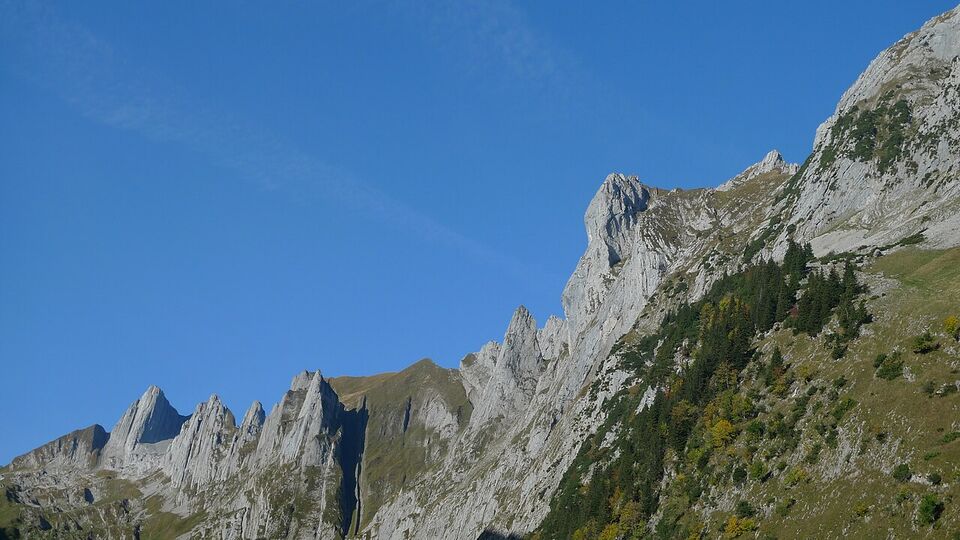
Eastern Switzerland is the part of the country that most visitors skip, and that is its appeal. The canton of Appenzell sits south of Lake Constance, an area of rounded green hills, small farms and a limestone ridge called the Alpstein, topped by the Säntis. The villages are known for painted and carved wooden houses, and the region for its spicy cheese and folk customs. Our regions overview shows where it sits on the map.
It suits travelers who prefer a quieter trip. If your plan is a list of famous peaks, you will find the east modest; if you want hiking without crowds, a village you can walk in 20 minutes, and local food, it is a good choice. For headline peaks, read our mountain excursions guide and the Interlaken page.
The region has two cantons: Appenzell Innerrhoden, with the village of Appenzell, and Appenzell Ausserrhoden, with villages such as Urnäsch and Herisau. The main town of the wider east is St. Gallen, which has a UNESCO-listed abbey district. The tourist office for Appenzell is at Hauptgasse 38 in the village.
Appenzell village
The village of Appenzell is the center of the region. Its main street, the Hauptgasse, is lined with houses whose facades are painted with flowers, animals and scenes, and with shops selling local products. The village is small: you can walk the main street and the side lanes in an hour or two, and stay longer if you visit a museum or a cheese dairy.
The tourist office lists its hours on its site. From January to March and in November, it is open Monday to Friday 9 a.m. to noon and 1:30 to 5 p.m., Saturday 10 a.m. to noon and 1:30 to 4 p.m., and Sunday 1:30 to 4 p.m. In December it is open Monday to Friday with the same hours, Saturday 9 a.m. to 4 p.m. and Sunday 11 a.m. to 4 p.m. Its hours from April to October are longer. The site also lists a guided tour of the village, a "Holiday Card" for guests in participating accommodation, and cheese-dairy demonstrations; ask the office what the card covers.
Events on the official calendar include Funkensonntag, the bonfire Sunday, on March 7, 2027, at 5 p.m. in Appenzell and Weissbad, and the Landsgemeinde on April 25, 2027, at 9 a.m. The Landsgemeinde is an open-air cantonal parliament held on the village square, where citizens vote by raising their hands. It is a rare survival of direct democracy, and it is a good reason to visit in late April if you are interested in how Switzerland works. See our festivals page for other events.
Ebenalp, the Wildkirchli and Seealpsee
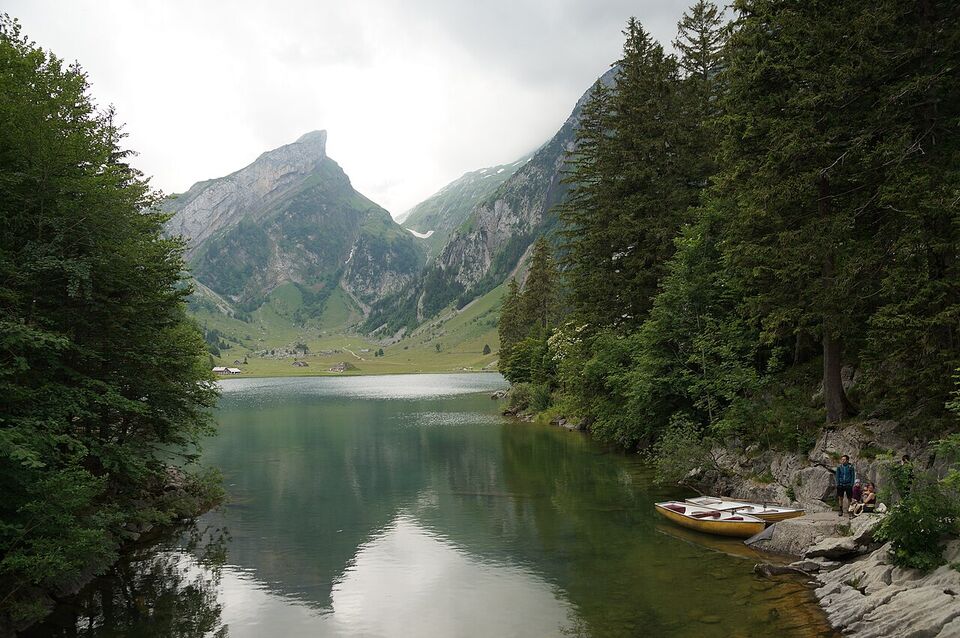
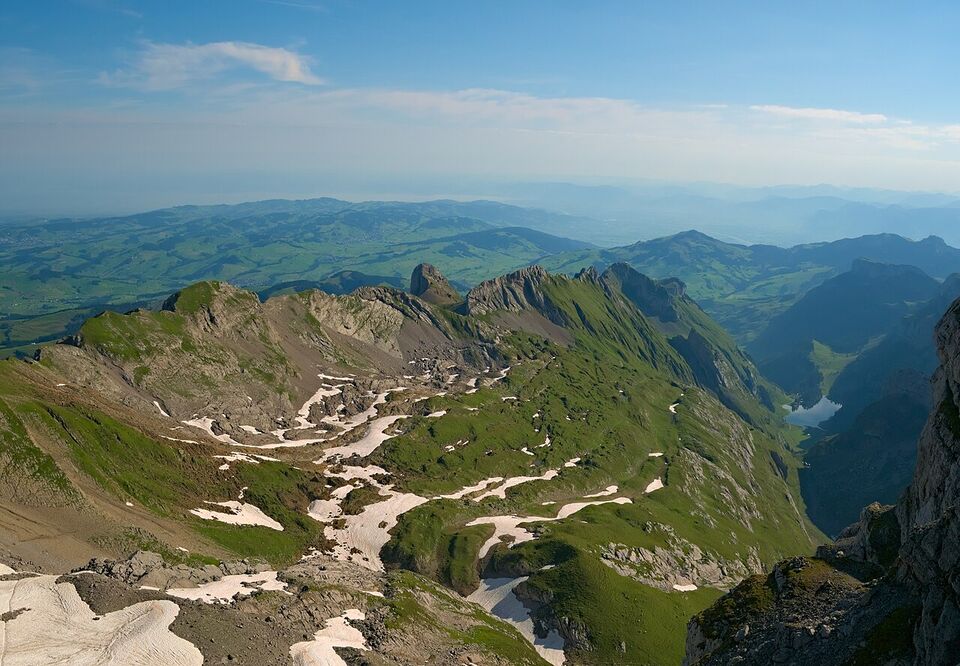
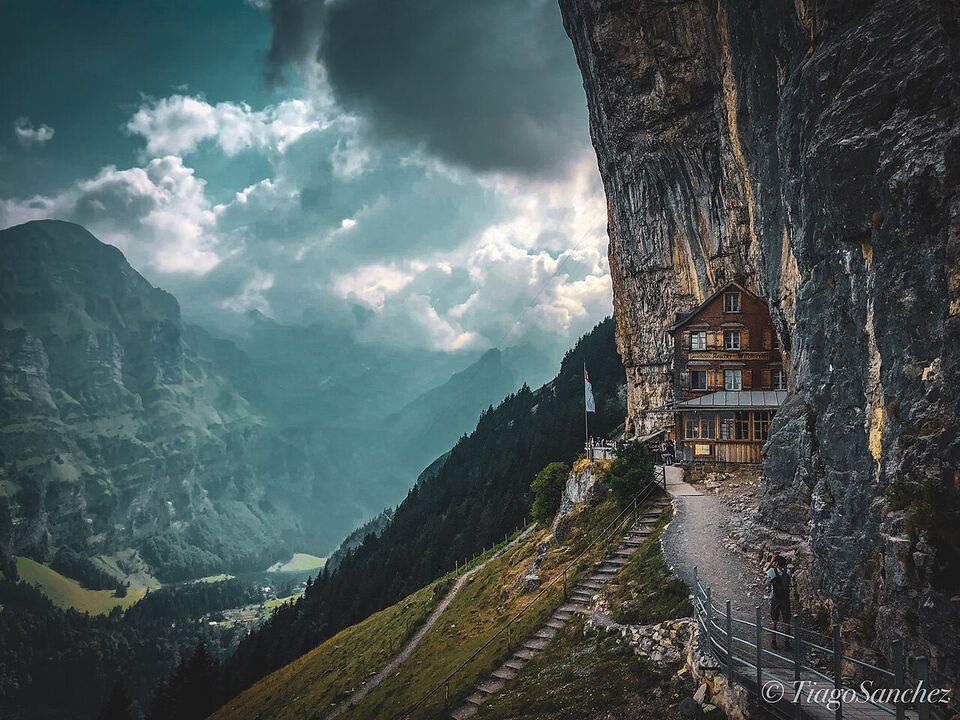
The Alpstein ridge is the region's hiking area. From the valley station at Wasserauen, a cable car goes up the Ebenalp, and from the top a path leads to the Wildkirchli, a small chapel and hermitage built into caves in the cliff. A mountain inn is nearby, and the paths from the top give wide views over the hills. A second classic walk goes to the Seealpsee, a small lake in a rocky bowl, reached on foot from Wasserauen in about an hour.
We have not seen 2026-27 timetables for these lifts and paths, so treat the details above as a guide only. Mountain lifts and trails in the Alpstein have seasons, and winter conditions can close paths. Before you plan a hike, check the Ebenalp cable car's timetable and status, any seasonal changes, and whether the access paths to the Seealpsee are open. Our hiking guide explains trail marking, safety and gear.
Watch out
Mountain weather changes fast. Check the MeteoSwiss forecast and the lift status on the morning you go, and carry layers, a rain jacket and water. In winter, snow and ice make many paths unsuitable without proper equipment. In an emergency, call 112 or Rega on 1414.
The Säntis, at 2,502 meters (8,209 ft), is the highest summit in the Alpstein and has a cable car from the Schwägalp pass. A third-party closure guide listed no closures for the Säntis cableway as of its September 2026 update, but check the operator before you go, since the lift has maintenance periods and the view depends on cloud.
St. Gallen and the Abbey Library
St. Gallen is the compact city of eastern Switzerland, with a traffic-free old town. Its abbey district is a UNESCO World Heritage site, and the Abbey Library (Stiftsbibliothek) is a Baroque hall of manuscripts that is among the city's main sights. Opening hours and ticket prices change, so check the library's website before you go, since parts of the abbey are closed on certain days.
St. Gallen works as a day trip from Zurich or as a stop on the way to Appenzell. It also has a textile history; the region was known for embroidery. Our day trips guide shows how to combine St. Gallen with Appenzell.
Lake Constance
Lake Constance (Bodensee) is shared by Switzerland, Germany and Austria. The Swiss shore, in the cantons of St. Gallen and Thurgau, has small harbors, promenades and boats. Rorschach and Romanshorn are Swiss ports on the lake, both reachable by train. Lake boats may run reduced timetables in winter, so check the operator. Crossing to the German or Austrian shore is usually easy because all three countries are in Schengen, but carry your passport.
The lake is a good addition to a warm-weather trip, with swimming and walking. In November to March, expect fewer boats and a gray, quiet shoreline. See our lakes guide for more.
Cheese and Appenzeller specialties
Appenzeller is one of the best-known Swiss cheeses. It is a hard cheese with a strong, spicy flavor, and the region has demonstration dairies where you can see it made. The village shops sell it, along with other local products.
Specialties include Appenzeller Käsefladen (also called Chäsflade), a cheese tart made with Appenzeller cheese, onions, eggs and cream, and Biber (also called Biberli), a gingerbread with a sweet almond filling. Both are well known in the region. Our Swiss food guide describes other regional dishes.
Different from home
Cheese in Switzerland is sold by weight, and you can ask the shop to vacuum-pack it for travel. Hard cheese is usually fine to bring home, but do not bring meat or sausage; check the CBP and APHIS websites for the current rules before you pack.
Silvesterchlausen and local customs
One of the region's best-known traditions is Silvesterchlausen, a New Year's custom in which groups of men in elaborate costumes, some with large headdresses, and heavy cowbells walk between farms and houses, yodeling to wish people a good year. It is held in villages such as Urnäsch and Herisau, around December 31 and again around January 13, which follows the old calendar. Dates vary by village, so check with the Appenzell tourist office or the village sites before you plan around them.
The region also has a strong folk music tradition, and in summer the cattle procession to and from the alpine pastures (Alpfahrt and Alpabzug) is a local custom. The exact dates vary each year, and typical cattle descents occur from mid-September to mid-October. Check local sites for dates.
Seasons and when to go
Summer and early fall are the main hiking season, when lifts and mountain inns run their fullest schedules and the cattle go up to and down from the pastures. Spring brings green hills and the Landsgemeinde in April, though high paths may still hold snow. Winter is quiet: the hills offer winter hiking and snowshoeing, and the village has a cozy feel, but many mountain inns close and lifts run reduced or seasonal timetables. In November, expect fog or low cloud on some days, and have a wet-weather plan.
The official tourism site lists winter hiking routes, snowshoeing and a toboggan run for families. Whatever the season, check lift status, trail conditions and the weather forecast on the day you go. Our when to go page explains how seasons differ across the country, and the December page covers the festive period.
Getting there and getting around
From Zurich, take a direct train to St. Gallen, which takes about an hour. From St. Gallen, a narrow-gauge regional railway runs to Appenzell, adding around 50 minutes. Another route runs through Gossau. Check the SBB app for connections, since Appenzell is not on the main line, and seasonal timetables change on December 13, 2026. If you hold a Swiss Travel Pass, ask the operator whether the regional railways are included on your pass or at a discount. See our pass guide and getting around page.
A regional railway line continues from Appenzell to Wasserauen, where the Ebenalp cable car starts (check the schedule). In the village you will walk. Hiking and trails are well marked, and the tourist office has maps.
Who it suits and what to do in wet weather
Appenzell suits travelers who like a rural pace, small towns and day hikes. Families can enjoy the farm animals, cheese demonstrations and gentle walks. It is less suited to readers on a first trip who want famous peaks, and the area has fewer big-ticket sights than Lucerne or Interlaken. A good pairing is one night in Appenzell between Zurich and Lucerne, or a day trip from Zurich combining St. Gallen and Appenzell.
In wet weather, the tourist office lists bad-weather ideas on its site. These include museums, a demonstration cheese dairy, a swimming pool, spa hotels, a bouldering hall and shops. If the rain is heavy, St. Gallen's indoor sights are a good alternative, and the abbey library is a short train ride away.
Insider tip
Stay in the village or nearby rather than in a larger city, and ask your host about the Appenzell Holiday Card. The official site lists "free arrival and departure" for guests, so check what is included.
Add it to a route in the trip builder, or ask us to plan the hotels, trains and guides for you.